
… it is far easier to protect against chemical munitions than against an equivalent amount of high explosives, a point made by Matthew Meselson. Let’s unpack that, because I think folks generally have an unrealistic assessment of the power of a chemical weapon attack, imagining tiny amounts to be capable of producing mass casualties. Now chemical munition agents have a wide range of lethalities and concentrations, but let’s use Sarin – one of the more lethal common agents, as an example. Sarin gas is an extremely lethal agent, evaporating rapidly into the air from a liquid form. It has an LD50 (the dose at which half of humans in contact will be killed) of less than 40mg per cubic meter (over 2 minutes of exposure) for a human. Dangerous stuff – as a nerve agent, one of the more lethal chemical munitions; for comparison it is something like 30 times more lethal than mustard gas.
But let’s put that in a real-world context. Five Japanese doomsday cultists used about five liters of sarin in a terror attack on a Tokyo Subway in 1995, deployed, in this case, in a contained area, packed full to the brim with people – a potential worst-case (from our point of view; “best” case from the attackers point of view) situation. But the attack killed only 12 people and injured about a thousand. Those are tragic, horrible numbers to be sure – but statistically insignificant in a battlefield situation. And no army could count on ever being given the kind of high-vulnerability environment like a subway station in an actual war.
In order to produce mass casualties in battlefield conditions, a chemical attacker has to deploy tons – and I mean that word literally – of this stuff. Chemical weapons barrages in the First World War involved thousands and tens of thousands of shells – and still didn’t produce a high fatality rate (though the deaths that did occur were terrible). But once you are talking about producing tens of thousands of tons of this stuff and distributing it to front-line combat units in the event of a war, you have introduced all sorts of other problems. One of the biggest is shelf-life: most nerve gasses (which tend to have very high lethality) are not only very expensive to produce in quantity, they have very short shelf-lives. The other option is mustard gas – cheaper, with a long shelf-life, but required in vast quantities (during WWII, when just about every power stockpiled the stuff, the stockpiles were typically in the many tens of thousands of tons range, to give a sense of how much it was thought would be required – and then think about delivering those munitions).
[…]
But that’s not the only problem – the other problem is doctrine. Remember that the modern system is all about fast movement. I don’t want to get too deep into maneuver-warfare doctrine (one of these days!) but in most of its modern forms (e.g. AirLand Battle, Deep Battle, etc) it aims to avoid the stalemate of static warfare by accelerating the tempo of the battle beyond the defender’s ability to cope with, eventually (it is hoped) leading the front to decompose as command and control breaks down.
And chemical weapons are just not great for this. Active use of chemical weapons – even by your own side – poses all sorts of issues to an army that is trying to move fast and break things. This problem actually emerged back in WWI: even if your chemical attack breaks the enemy front lines, the residue of the attack is now an obstruction for you. […] A modern system army, even if it is on the defensive operationally, is going to want to make a lot of tactical offensives (counterattacks, spoiling attacks). Turning the battle into a slow-moving mush of long-lasting chemical munitions (like mustard gas!) is counterproductive.
But that leaves the fast-dispersing nerve agents, like sarin. Which are very expensive, hard to store, hard to provision in quantity and – oh yes – still less effective than high explosives when facing another expensive, modern system army, which is likely to be very well protected against such munitions (for instance, most modern armored vehicles are designed to be functionally immune to chemical munitions assuming they are buttoned up).
This impression is borne out by the history of chemical weapons; for top-tier armies, just over a century of being a solution in search of a problem. The stalemate of WWI produced a frantic search for solutions – far from being stupidly complacent (as is often the pop-history version of WWI), many commanders were desperately searching for something, anything to break the bloody stalemate and restore mobility. We tend to remember the successful innovations – armor, infiltration tactics, airpower – because they shape subsequent warfare. But at the time, there were a host of efforts: highly planned bite-and-hold assaults, drawn out brutal et continu efforts, dirigibles, mining and sapping, ultra-massive artillery barrages (trying a wide variety of shell-types and weights). And, of course, gas. Gas sits in the second category: one more innovation which failed to break the trench stalemate. In the end, even in WWI, it wasn’t any more effective than an equivalent amount of high explosives (as the relative casualty figures attest). Tanks and infiltration tactics – that is to say, the modern system – succeeded where gas failed, in breaking the trench stalemate, with its superiority at the role demonstrated vividly in WWII.
Bret Devereaux, “Collections: Why Don’t We Use Chemical Weapons Anymore?”, A Collection of Unmitigated Pedantry, 2020-03-20.
April 2, 2023
QotD: The (in-)effectiveness of chemical weapons against “Modern System” armies
March 13, 2023
1949: HMS Implacable‘s Last Voyage | BBC Television Newsreel | Retro Transport | BBC Archive
BBC Archive
Published 19 Nov 2022HMS Implacable, a 149 year-old ship of the line — which survived the Battle of Trafalgar — embarks on her final, solemn voyage.
The figurehead, deck and stern cabin of this captured French ship are to be kept at the National Maritime Museum in Greenwich, but her hulk is to be towed out from Portsmouth dockyard and scuttled.
Originally broadcast 5 December, 1949.
(more…)
March 10, 2023
Tank Chats #168 | Vixen & Fox | The Tank Museum
The Tank Museum
Published 18 Nov 2022Join David Fletcher as he takes a look at the Vixen and Fox armoured cars.
(more…)
March 9, 2023
Look at Life – The Cherry Pickers (1965)
PauliosVids
Published 20 Nov 2018Following the 11th Hussars from Hanover to Coburg.
February 17, 2023
Spy ballooning has a remarkably long history (that’s clearly still ongoing)
In The Line, Scott Van Wynsberghe outlines the history of balloons in wartime and (as many are now aware from recent events) in peacetime:
China’s balloon spying is shocking on so many levels that you can take your pick. There is the ultra-flagrant violation of foreign sovereignty, the stunningly surreal air of denial exhibited by Beijing, and the fearful sense that something in the world order just lurched. There is also puzzlement: what, balloon spying is still a thing? Indeed it is, and its centuries-long history is instructive as to what China is now doing. It also makes clear that the U.S. is no innocent victim here but rather a past offender with a cleaned-up act.
Among the first major studies of aerial reconnaissance was a book brought out by military author Glenn B. Infield way back in 1970. In a way, Infield was charting unknown territory. When he addressed balloons in particular, he traced their use in spying to the many wars associated with the French Revolutionary and Napoleonic eras. In 1794, he related, the French military officer Jean-Marie-Joseph Countelle made an ascent at the city of Maubeuge in order to monitor enemy forces in the area. In the process, Countelle became the first balloon spy.
As technology improved, other firsts followed. By the 1850s, cameras were mounted on French military balloons. In the 1860s, during the American Civil War, Union forces battling the Confederacy used balloons trailing telegraphic wires, which transmitted immediate updates from the balloonists. Yet technology cut both ways. By the early 1900s, balloons had a nemesis in sight, in the form of winged and powered aircraft.
The inevitable showdown occurred in the First World War, and it was ugly. Large numbers of observation balloons were used by all sides in the conflict, and WWI historian Denis Winter claims the Germans alone deployed 170 of them in France by 1917. Typically, such balloons were tethered in place near the frontline, floating at several thousand feet, with telephone wires dangling to the ground. Although they seemed vulnerable, they were actually protected from below by anti-aircraft units, which blasted at any enemy plane that got too close. However, the reverse was also true, with balloons themselves being fired at from the ground. By 1915, says aviation writer Ralph Barker, the British were losing at least a dozen balloons a month from all forms of enemy action. Those balloonists who were not shot to pieces often had to bail out, putting their faith in parachutes that did not always work. (Horrified onlookers called them “balloonatics.”) The fighter pilots responsible for much of this mayhem — which they called “balloon-busting” — may not have had an easy time, but some of them scored heavily, with one Frenchman named Coiffard tallying 28 balloons. Although observation balloons managed to make it to the end of the war, it was a near-run thing. According to author Linda Hervieux, nobody after the war was talking about repeating that experience in any future fighting.
[…]
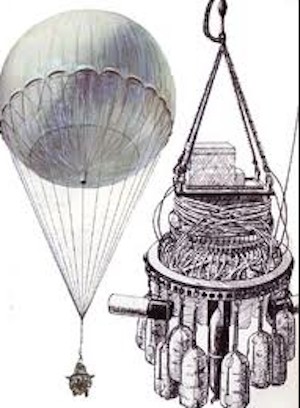
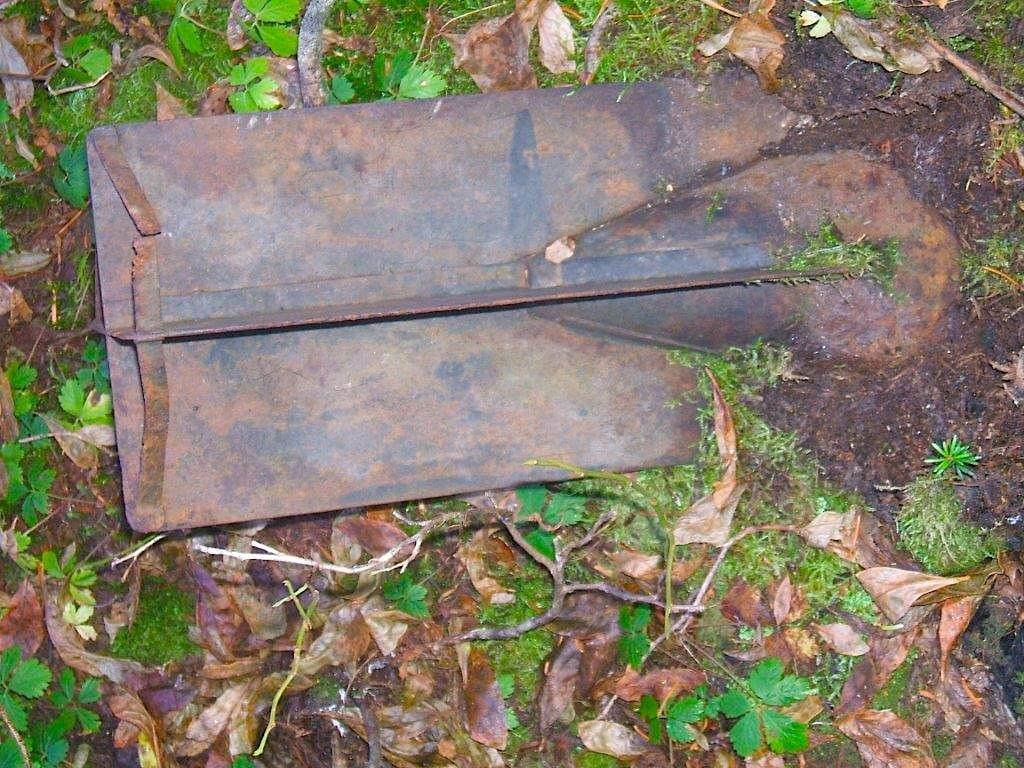
Once the Second World War was underway, some propaganda leafleting did occur, but secret balloon activity seemed to be at a low level. That was very misleading, because one of the tensest moments in ballooning history was playing out in the background, but it occurred amid so much security that the entire tale took years to emerge. In 1944, Japan launched the first of over 9,000 bomb-rigged balloons across the Pacific. Robert C. Mikesh, in a comprehensive 1973 monograph issued by the Smithsonian Institution, noted that almost a thousand of the balloons may have reached North America, but the true number is unknowable, because so many came down in remote wilderness. (One was found by forestry workers in British Columbia as late as 2014.) Mikesh tabulated 285 known incidents, ranging from Alaska all the way south to Baja California and as far inland as Manitoba. Both the U.S. and Canada clamped down hard on any news about the balloons, for fear of providing Tokyo valuable feedback about the results of the campaign. (In other words, balloon counterintelligence became a priority.) In general, the balloons did not cause a lot of harm, but one of them slaughtered six people in Oregon in 1945. By a strange fluke, one of the few groups in the U.S. that knew the full story of the balloons was an element of the Black community. The all-Black 555th Parachute Infantry Battalion was sent to the U.S. West to handle emergencies caused by the balloons.
The remains of a Japanese balloon bomb found in the Monashee Mountains near Lumby, BC in 2014. It was detonated on-site by the bomb disposal unit of Maritime Forces Pacific of the Royal Canadian Navy.
There is a strong temptation to blame the Japanese balloon bombs for what happened next, because the U.S. unaccountably entered the Cold War as the most pugnacious exponent of clandestine ballooning up to that time. Whatever the explanation, the epic struggle between the United States and the Union of Soviet Socialist Republics plunged U.S. ballooning into a tangle of psychological warfare, shadowy science, under-the-table finances, and clandestine belligerence indistinguishable from military attacks. Plus, UFOs and breakfast foods were involved (seriously).
February 12, 2023
Avro Vulcan: What made the Vulcan the best V bomber?
Imperial War Museums
Published 28 Apr 2021The Avro Vulcan Bomber, the most famous of the British V bombers, is known for its distinctive howl and delta wing. Initially one of the delivery agents of Britain’s independent nuclear deterrent during the Cold War, the Vulcan later fulfilled another role, undertaking the longest bombing raid in history for Operation Black Buck in the Falklands Campaign of 1982. One of the first operational RAF aircraft with a delta wing, this impressive Cold War jet has never lost its appeal. In this video, events and experiences coordinator Liam Shaw takes us through the extraordinary history and technological achievements of the Avro Vulcan. We go into the cockpit and hear first-hand from the people who flew this unique machine throughout its long and remarkable history.
(more…)
February 2, 2023
MAC Model 1947 Prototype SMGs
Forgotten Weapons
Published 12 Oct 2022Immediately upon the liberation of France in 1944, the French military began a process of developing a whole new suite of small arms. As it applied to SMGs, the desire was for a design in 9mm Parabellum (no more 7.65mm French Long), with an emphasis on something light, handy, and foldable. All three of the French state arsenals (MAC, MAS, and MAT) developed designs to meet the requirement, and today we are looking at the first pair of offerings from Chatellerault (MAC). These are the 1947 pattern, a very light lever-delayed system with (frankly) terrible ergonomics.
Many thanks to the French IRCGN (Criminal Research Institute of the National Gendarmerie) for generously giving me access to film these unique specimens for you!
Today’s video — and many others — have been made possible in part by my friend Shéhérazade (Shazzi) Samimi-Hoflack. She is a real estate agent in Paris who specializes in working with English-speakers, and she has helped me arrange places to stay while I’m filming in France. I know that exchange rates make this a good time for Americans to invest in Europe, and if you are interested in Parisian real estate I would highly recommend her. She can be reached at: samimiconsulting@gmail.com
(Note: she did not pay for this endorsement)
(more…)
February 1, 2023
What’s the Greatest Machine of the 1980s … the FV107 Scimitar?
Engine Porn
Published 19 Jan 2015Light, agile and very fast on all types of terrain, the fabulous Scimitar FV107 armoured reconnaissance vehicle was developed by car manufacturer Alvis, who were asked to build a fast military vehicle that was light enough to be airdropped — simply not an option for full sized battle tanks at the time, which averaged around 13 tonnes. [NR: I think they mean “light tanks” here, as MBTs of the era would have been more like 50+ tons.]
Alvis got the weight down to under 8 tonnes by using a new type of aluminium alloy and minimising armour rating in favour of speed. They built the Scimitar around a 220 horsepower, six cylinder, 4.2 litre Jaguar sports car engine with ground-breaking transmission that allowed differential power to each set of tracks. The result was a sports car of the the military world that might not be the toughest in the field, but could race its way out of trouble at speeds of up to 70 miles an hour.
What makes it great: A revolutionary armoured vehicle that brought the very best of British sports car performance to the battlefield.
Time Warp: The Scimitar was the only armoured vehicle to be used by the British Army in the Falklands War.
This short film features Chris Barrie taking the Scimitar for a spin.
(more…)
January 27, 2023
The return of the revenge of the bride of the Doomsday Clock
It’s amazing how much free publicity you can get by pulling out the hoary old Cold War propaganda tools, as Andrew Potter explains with the re-re-re-introduction of the Doomsday Clock bullshit:
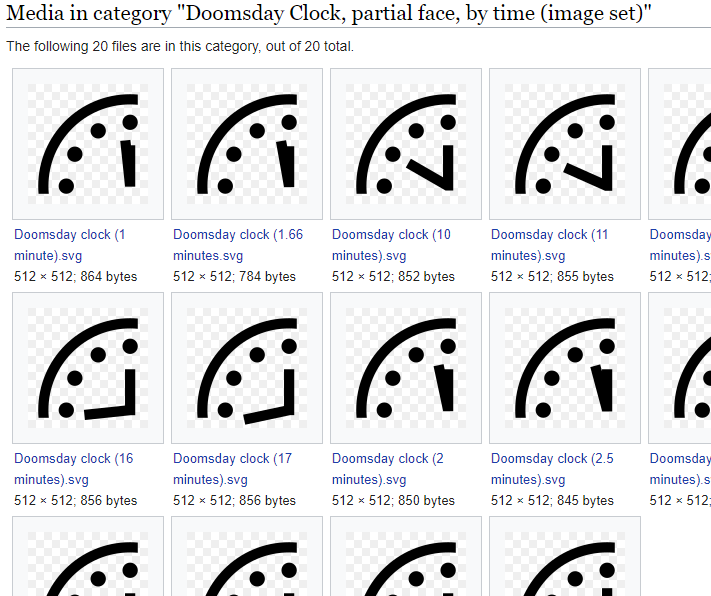
Earlier this week, the Bulletin of the Atomic Scientists moved the hands of its Doomsday Clock ahead by ten seconds, to 90 seconds to midnight. This is the closest the clock has ever been to midnight, and, according to the press release announcing the move: “Never in the Doomsday Clock’s 76-year history have we been so close to global catastrophe.”
If you’re under, say, 40 years of age or so, that paragraph is probably pure gobbledygook, the written equivalent of the squawk of a 2400 baud modem going through its handshaking protocols. But for those of us in the ever-dwindling cohorts of Gen-Xers and Baby Boomers, hearing about the movement of the Doomsday Clock is to be jerked back into a time marked by both profound moral clarity and deep existential anxiety.
A bit of background on the Doomsday Clock might help. It was a creature of the Cold War, founded in 1947 by some of the scientists who had worked on the Manhattan Project to raise public awareness of the threat of nuclear weapons. As the Bulletin puts it, the clock uses “the imagery of apocalypse (midnight) and the contemporary idiom of nuclear explosion (countdown to zero) to convey threats to humanity and the planet”. The decision to move or leave the minute hand of the Clock in place is made each year by the various trustees of the Bulletin, based on their evaluation of the world’s vulnerability to catastrophe.
The clock was initially set at a nice and relaxed seven minutes to midnight, and over the following few decades it was moved closer in response to clear nuclear threats, things like ramped-up testing of new bombs, nuclear proliferation, or rising Cold War tensions. During periods of detente or after the signing of arms reductions treaties, the minute hand would retreat. In 1991, it was moved back to 17 minutes to midnight after the dissolution of the Soviet Union.
For most of the second half of the 20th century, the Doomsday Clock was a healthy reminder of the most salient geopolitical fact of the era, which is that two superpowers were pointing thousands of nuclear weapons at one another.
But like many Cold War relics, the demise of the U.S.S.R. left it scrambling for a raison d’etre. In a bit of clever PR entrepreneurialism, the executive of the Bulletin of the Atomic Scientists turned the clock into a more generalized warning against war, climate change and other ecological or technological threats. The nadir of this shift in mission came on January 23rd 2020, when the Bulletin moved the clock’s hands to 100 seconds to midnight.
As the press release accompanying the ticking of the clock noted at the time, this put humanity “closer than ever” to catastrophe. Given that the clock had kept watch over our drive for self-destruction through the Suez Crisis, the Cuban Missile Crisis, the sabre-rattling Reagan administration, and the terrorist attacks of September 11, 2001, it makes one wonder just what happened in early 2020 to merit such a fearful move.
January 26, 2023
Tank Chats #165 | Striker | The Tank Museum
The Tank Museum
Published 30 Sept 2022In this weeks video, David Fletcher discusses the development and features of Striker, another vehicle from the CVRT family.
(more…)
January 12, 2023
Tank Chats #163 | Scorpion & Sabre | The Tank Museum
The Tank Museum
Published 9 Sep 2022In this episode of Tank Chats, David Fletcher details Scorpion and Sabre from the CVRT collection.
(more…)
December 15, 2022
Kraut Space Magic: the H&K G11
Forgotten Weapons
Published 25 Dec 2018I have been waiting for a long time to have a chance to make this video — the Heckler & Koch G11! Specifically, a G11K2, the final version approved for use by the West German Bundeswehr, before being cancelled for political and economic reasons.
The G11 was a combined effort by H&K and Dynamit Nobel to produce a new rifle for the German military with truly new technology. The core of the system was the use of a caseless cartridge developed in the late 60s and early 70s by Dynamit Nobel, which then allowed H&K to design a magnificently complex action which could fire three rounds in a hyper-fast (~2000 rpm) burst and have all three bullets leave the barrel before the weapon moved in recoil.
Remarkably, the idea went through enough development to pass German trials and actually be accepted for service in the late 1980s (after a funding shutdown when it proved incapable of winning NATO cartridge selection trials a decade earlier). However, the reunification with East Germany presented a reduced strategic threat, a new surplus of East German combat rifles (AK74s), and a huge new economic burden to the combined nations and this led to the cancellation of the program. The US Advanced Combat Rifle program gave the G11 one last grasp at a future, but it was not deemed a sufficient improvement in practical use over the M16 platform to justify a replacement of all US weapons in service.
The G11 lives on, however, as an icon of German engineering prowess often referred to as “Kraut Space Magic” (in an entirely complimentary take on the old pejorative). That it could be so complex and yet still run reliably in legitimate military trials is a tremendous feat by H&K’s design engineers, and yet one must consider that the Bundeswehr may just have dodged a bullet when it ended up not actually adopting the rifle.
Many thanks to H&K USA for giving me access to the G11 rifles in their Grey Room for this video!
(more…)
December 13, 2022
Egypt’s postwar Nazi military advisors
In The Critic, James Barr reviews a book on the roles of former Nazi military and political figures in the Egyptian forces, Nazis on the Nile: The German Military Advisers in Egypt 1949-1967 by Vyvyan Kinross:
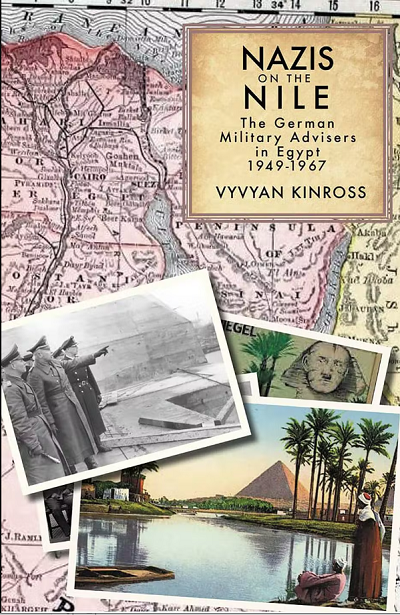
One of the paradoxes of the early postwar era is that, after Germany’s defeat, the Nazis were vilified at the same time that their expertise was sought after by both Cold War superpowers. Germans played key roles in both sides’ space programmes. Less infamous is the part they also went on to play in the Egyptian rocket programme, one of the subjects in this fascinating and disturbing book.
After suffering a humiliating defeat in the war that followed the establishment of Israel, the Egyptians wanted revenge. As the British had refused to help them — despite maintaining a deeply unpopular and large presence astride the Suez Canal — Egypt’s sybaritic King Farouq turned to his enemy’s enemy instead. In 1949 he commissioned an Afrika Korps general, Artur Schmitt, to review the Egyptian army.
Having checked in to a Cairo hotel under the name “Herr Goldstein”, Schmitt inspected Egyptian units and went on to Syria to survey Israel from the Golan Heights. The Egyptians’ failure to combine tanks, artillery and infantry effectively, he decided, explained their “inability to take advantage of the early stages of fighting to wipe the State of Israel off the map”.
Schmitt’s forthright conclusions were unwelcome, and he did not stay long. But some younger Egyptian army officers shared his views and, after they had overthrown Farouq in 1952, they picked up where the king had left off. Within days they offered Fritz Voss, the former head of the Skoda arms factory in Pilsen, the job of masterminding the retraining of the army and the establishment of a military industrial base that could produce jet aircraft and missiles.
Voss in turn invited old contacts to join him, including Wilhelm Beisner, an SS officer who had been part of Einsatzkommando Egypt, which would have spearheaded the Holocaust in Palestine had Rommel won at El Alamein. The Germans found Egyptian working conditions challenging. “Here one has to act much more slowly than in Prussia,” complained a German instructor who found “Oriental sloppiness” irritating. Of forty tanks lined up for a parade to celebrate the first anniversary of the coup, just twelve made it past the junta’s rostrum.
The author, Vyvyan Kinross, is a consultant by profession. He has advised Arab governments and clearly understands the fundamental problems. “The battle” for the Germans, he writes, “was always to reconcile finance, resourcing and the expertise required to execute a sophisticated manufacturing process with the challenging conditions and logistics that prevailed in a country that was late to industrialise and financially underpowered.”
December 6, 2022
The coming of the Korean War
In Quillette, Niranjan Shankar outlines the world situation that led to the outbreak of the Korean War in 1950:
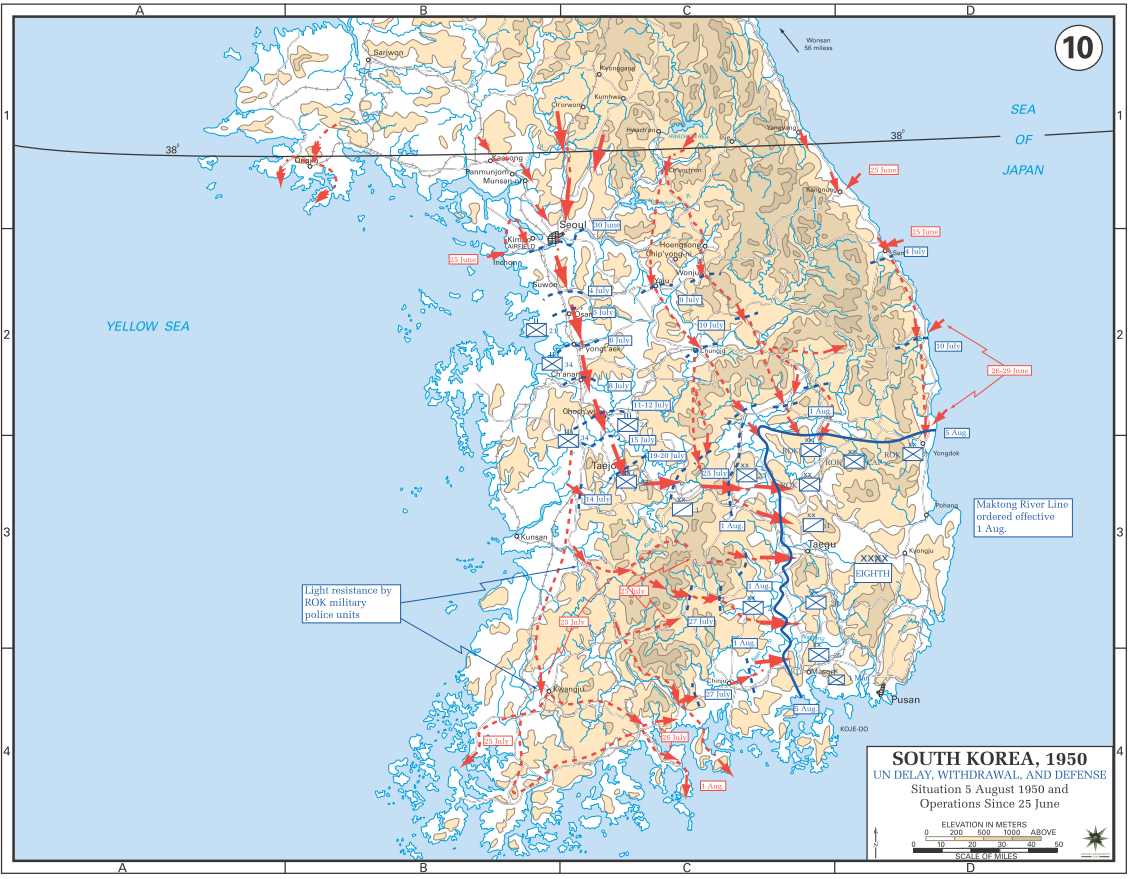
Initial phase of the Korean War, 25 June through 5 August, 1950.
Map from the West Point Military Atlas — https://www.westpoint.edu/academics/academic-departments/history/korean-war
The Korean War was among the deadliest of the Cold War’s battlegrounds. Yet despite yielding millions of civilian deaths, over 40,000 US casualties, and destruction that left scars which persist on the peninsula today, the conflict has never received the attention (aside from being featured in the sitcom M*A*S*H) devoted to World War II, Vietnam, and other 20th-century clashes.
But like other neglected Cold War front-lines, the “Forgotten War” has fallen victim to several politicized and one-sided “anti-imperialist” narratives that focus almost exclusively on the atrocities of the United States and its allies. The most recent example of this tendency was a Jacobin column by James Greig, who omits the brutal conduct of North Korean and Chinese forces, misrepresents the underlying cause of the war, justifies North Korea’s belligerence as an “anti-colonial” enterprise, and even praises the regime’s “revolutionary” initiatives. Greig’s article was preceded by several others, which also framed the war as an instance of US imperialism and North Korea’s anti-Americanism as a rational response to Washington’s prosecution of the war. Left-wing foreign-policy thinker Daniel Bessner also alluded to the Korean War as one of many “American-led fiascos” in his essay for Harper’s magazine earlier this summer. Even (somewhat) more balanced assessments of the war, such as those by Owen Miller, tend to overemphasize American and South Korean transgressions, and don’t do justice to the long-term consequences of Washington’s decision to send troops to the peninsula in the summer of 1950. By giving short shrift to — or simply failing to mention — the communist powers’ leading role in instigating the conflict, and the violence and suffering they unleashed throughout it, these depictions of the Korean tragedy distort its legacy and do a disservice to the millions who suffered, and continue to suffer, under the North Korean regime.
Determining “who started” a military confrontation, especially an “internal” conflict that became entangled in great-power politics, can be a herculean task. Nevertheless, post-revisionist scholarship (such as John Lewis Gaddis’s The Cold War: A New History) that draws upon Soviet archives declassified in 1991 has made it clear that the communist leaders, principally Joseph Stalin and North Korean leader Kim Il-Sung, were primarily to blame for the outbreak of the war.
After Korea, a Japanese imperial holding, was jointly occupied by the United States and the Soviet Union in 1945, Washington and Moscow agreed to divide the peninsula at the 38th parallel. In the North, the Soviets worked with the Korean communist and former Red Army officer Kim Il-Sung to form a provisional “People’s Committee”, while the Americans turned to the well-known Korean nationalist and independence activist Syngman Rhee to establish a military government in the South. Neither the US nor the USSR intended the division to be permanent, and until 1947, both experimented with proposals for a united Korean government under an international trusteeship. But Kim and Rhee’s mutual rejection of any plan that didn’t leave the entire peninsula under their control hindered these efforts. When Rhee declared the Republic of Korea (ROK) in 1948, and Kim declared the Democratic People’s Republic of Korea (DPRK) later that year, the division was cemented. Each nation threatened to invade the other and began preparing to do so.
What initially prevented a full-scale attack by either side was Washington’s and Moscow’s refusal to provide their respective partners with support for the military reunification of the peninsula. Both superpowers had withdrawn their troops by 1949 to avoid being dragged into an unnecessary war, and the Americans deliberately withheld weapons from the ROK that could be used to launch an invasion.
However, Stalin began to have other ideas. Emboldened by Mao Zedong’s victory in the Chinese Civil War and frustrated by strategic setbacks in Europe, the Soviet premier saw an opportunity to open a “second-front” for communist expansion in East Asia with Beijing’s help. Convinced that Washington was unlikely to respond, Stalin gave Kim Il-Sung his long-sought “green-light” to reunify the Korean peninsula under communist rule in April 1950, provided that Mao agreed to support the operation. After Mao convinced his advisers (despite some initial difficulty) of the need to back their Korean counterparts, Red Army military advisers began working extensively with the Korean People’s Army (KPA) to prepare for an attack on the South. When Kim’s forces invaded on June 25th, 1950, the US and the international community were caught completely off-guard.
Commentators like Greig, who contest the communists’ culpability in starting the war, often rely on the work of revisionist historian Bruce Cumings, who highlights the perpetual state of conflict between the two Korean states before 1950. It is certainly true that there were several border skirmishes over the 38th parallel after the Soviet and American occupation governments were established in 1945. But this in no way absolves Kim and his foreign patrons for their role in unleashing an all-out assault on the South. Firstly, despite Rhee’s threats and aggressive posturing, the North clearly had the upper hand militarily, and was much better positioned than the South to launch an invasion. Whereas Washington stripped Rhee’s forces of much of their offensive capabilities, Moscow was more than happy to arm its Korean partners with heavy tanks, artillery, and aircraft. Many KPA soldiers also had prior military experience from fighting alongside the Chinese communists during the Chinese Civil War.
Moreover, as scholar William Stueck eloquently maintains, the “civil” aspect of the Korean War fails to obviate the conflict’s underlying international dimensions. Of course, Rhee’s and Kim’s stubborn desire to see the country fully “liberated” thwarted numerous efforts to establish a unified Korean government, and played a role in prolonging the war after it started. It is unlikely that Stalin would have agreed to support Pyongyang’s campaign to reunify Korea had it not been for Kim’s persistent requests and repeated assurances that the war would be won quickly. Nevertheless, the extensive economic and military assistance provided to the North Koreans by the Soviets and Chinese (the latter of which later entered the war directly), the subsequent expansion of Sino-Soviet cooperation, the Stalinist nature of the regime in Pyongyang, Kim’s role in both the CCP and the Red Army, and the close relationship between the Chinese and Korean communists all strongly suggest that without the blessing of his ideological inspirators and military supporters, Kim could not have embarked on his crusade to “liberate” the South.
Likewise, Rhee’s education in the US and desire to emulate the American capitalist model in Korea were important international components of the conflict. More to the point, all the participants saw the war as a confrontation between communism and its opponents worldwide, which led to the intensification of the Cold War in other theaters as well. The broader, global context of the buildup to the war, along with the UN’s authorization for military action, legitimized America’s intervention as a struggle against international communist expansionism, rather than an unwelcome intrusion into a civil dispute among Koreans.
QotD: Mao Zedong’s theory of “Protracted War”
The situation for the Chinese Communists in 1938 was a difficult one. The Chinese Red Army has set up a base of power in the early 1930s in Jiangxi province in South-Eastern China, but in 1934 had been forced by Kuomintang Nationalist forces under Chiang Kai-shek to retreat, eventually rebasing over 5,000 miles away (they’re not able to straight-line the march) in Shaanxi in China’s mountainous north in what became known as The Long March. Consequently, no one could be under any illusions of the relative power of the Chiang’s nationalist forces and the Chinese Red Army. And then, to make things worse, in 1937, Japan had invaded China (the Second Sino-Japanese War, which was a major part of WWII), beating back the Nationalist armies which had already shown themselves to be stronger than the Communists. So now Mao has to beat two armies, both of which have shown themselves to be much stronger than he is (though in the immediate term, Mao and Chiang formed a “United Front” against Japan, though tensions remained high and both sides expected to resume hostilities the moment the Japanese threat was gone). Moreover, Mao’s side lacks not only the tools of war, but the industrial capacity to build the tools of war – and the previous century of Chinese history had shown in stark terms how difficult a situation a non-industrial force faced in squaring off against industrial firepower.
That’s the context for the theory.
What Mao observed was that a “war of quick decision” would be one that the Red Army would simply lose. Because he was weaker, there was no way to win fast, so trying to fight a “fast” war would just mean losing. Consequently, a slow war – a protracted war – was necessary. But that imposes problems – in a “war of quick decision” the route to victory was fairly clear: destroy enemy armed forces and seize territory to deny them the resources to raise new forces. Classic Clausewitzian (drink!) stuff. But of course the Red Army couldn’t do that in 1938 (they’d just lose), so they needed to plan another potential route to victory to coordinate their actions. That is, they need a strategic framework – remember that strategy is the level of military analysis where we think about what our end goals should be and what methods we can employ to actually reach those goals (so that we are not just blindly lashing out but in fact making concrete progress towards a desired end-state).
Mao understands this route as consisting of three distinct phases, which he imagines will happen in order as a progression and also consisting of three types of warfare, all of which happen in different degrees and for different purposes in each phase. We can deal with the types of warfare first:
- Positional Warfare is traditional conventional warfare, attempting to take and hold territory. This is going to be done generally by the regular forces of the Red Army.
- Mobile Warfare consists of fast-moving attacks, “hit-and-run”, performed by the regular forces of the Red Army, typically on the flanks of advancing enemy forces.
- Guerrilla Warfare consists of operations of sabotage, assassination and raids on poorly defended targets, performed by irregular forces (that is, not the Red Army), organized in the area of enemy “control”.
The first phase of this strategy is the enemy strategic offensive (or the “strategic defensive” from the perspective of Mao). Because the enemy is stronger and pursuing a conventional victory through territorial control, they will attack, advancing through territory. In this first phase, trying to match the enemy in positional warfare is foolish – again, you just lose. Instead, the Red Army trades space for time, falling back to buy time for the enemy offensive to weaken rather than meeting it at its strongest, a concept you may recall from our discussions of defense in depth. The focus in this phase is on mobile warfare, striking at the enemy’s flanks but falling back before their main advances. Positional warfare is only used in defense of the mountain bases (where terrain is favorable) and only after the difficulties of long advances (and stretched logistics) have weakened the attacker. Mobile warfare is supplemented by guerrilla operations in rear areas in this phase, but falling back is also a key opportunity to leave behind organizers for guerrillas in the occupied zones that, in theory at least, support the retreating Red Army (we’ll come back to this).
Eventually, due to friction (drink!) any attack is going to run out of steam and bog down; the mobile warfare of the first phase is meant to accelerate this, of course. That creates a second phase, “strategic stalemate” where the enemy, having taken a lot of territory, is trying to secure their control of it and build new forces for new offensives, but is also stretched thin trying to hold and control all of that newly seized territory. Guerrilla attacks in this phase take much greater importance, preventing the enemy from securing their rear areas and gradually weakening them, while at the same time sustaining support by testifying to the continued existence of the Red Army. Crucially, even as the enemy gets weaker, one of the things Mao imagines for this phase is that guerrilla operations create opportunities to steal military materiel from the enemy so that the factories of the industrialized foe serve to supply the Red Army – safely secure in its mountain bases – so that it becomes stronger. At the same time (we’ll come back to this), in this phase capable recruits are also be filtered out of the occupied areas to join the Red Army, growing its strength.
Finally in the third stage, the counter-offensive, when the process of weakening the enemy through guerrilla attacks and strengthening the Red Army through stolen supplies, new recruits and international support (Mao imagines the last element to be crucial and in the event it very much was), the Red Army can shift to positional warfare again, pushing forward to recapture lost territory in conventional campaigns.
Through all of this, Mao stresses the importance of the political struggle as well. For the guerrillas to succeed, they must “live among the people as fish in the sea”. That is, the population – and in the China of this era that meant generally the rural population – becomes the covering terrain that allows the guerrillas to operate in enemy controlled areas. In order for that to work, popular support – or at least popular acquiescence (a village that doesn’t report you because it supports you works the same way as a village that doesn’t report you because it hates Chiang or a village that doesn’t report you because it knows that it will face violence reprisals if it does; the key is that you aren’t reported) – is required. As a result both retreating Red Army forces in Phase I need to prepare lost areas politically as they retreat and then once they are gone the guerrilla forces need to engage in political action. Because Mao is working with a technological base in which regular people have relatively little access to radio or television, a lot of the agitation here is imagined to be pretty face-to-face, or based on print technology (leaflets, etc), so the guerrillas need to be in the communities in order to do the political work.
Guerrilla actions in the second phase also serve a crucial political purpose: they testify to the continued existence and effectiveness of the Red Army. After all, it is very important, during the period when the main body of Communist forces are essentially avoiding direct contact with the enemy that they not give the impression that they are defeated or have given up in order to sustain will and give everyone the hope of eventual victory. Everyone there of course also includes the main body of the army holed up in its mountain bases – they too need to know that the cause is still active and that there is a route to eventual victory.
Fundamentally, the goal here is to make the war about mobilizing people rather than about mobilizing industry, thus transforming a war focused on firepower (which you lose) into a war about will – in the Clausewitzian (drink! – folks, I hope you all brought more than one drink for this …) sense – which can be won, albeit only slowly, as the slow trickle of casualties and defeats in Phase II steadily degrades enemy will, leading to their weakness and eventual collapse in Phase III.
I should note that Mao is very open that this protracted way of war would be likely to inflict a lot of damage on the country and a lot of suffering on the people. Casualties, especially among the guerrillas, are likely to be high and the guerrillas own activities would be likely to produce repressive policies from the occupiers (not that either Chiang’s Nationalists of the Imperial Japanese Army – or Mao’s Communists – needed much inducement to engage in brutal repression). Mao acknowledges those costs but is largely unconcerned by them, as indeed he would later as the ruler of a unified China be unconcerned about his man-made famine and repression killing millions. But it is important to note that this is a strategic framework which is forced to accept, by virtue of accepting a long war, that there will be a lot of collateral damage.
Now there is a historical irony here: in the event, Mao’s Red Army ended up not doing a whole lot of this. The great majority of the fighting against Japan in China was positional warfare by Chiang’s Nationalists; Mao’s Red Army achieved very little (except preparing the ground for their eventual resumption of war against Chiang) and in the event, Japan was defeated not in China but by the United States. Japanese forces in China, even at the end of the war, were still in a relatively strong position compared to Chinese forces (Nationalist or Communist) despite the substantial degradation of the Japanese war economy under the pressure of American bombing and submarine warfare. But the war with Japan left Chiang’s Nationalists fatally weakened and demoralized, so when Mao and Chiang resumed hostilities, the former with Soviet support, Mao was able to shift almost immediately to Phase III, skipping much of the theory and still win.
Nevertheless, Mao’s apparent tremendous success gave his theory of protracted war incredible cachet, leading it to be adapted with modifications (and variations in success) to all sorts of similar wars, particularly but not exclusively by communist-aligned groups.
Bret Devereaux, “Collections: How the Weak Can Win – A Primer on Protracted War”, A Collection of Unmitigated Pedantry, 2022-03-03.


