Quotulatiousness

May 30, 2018

A point about cloaks

Filed under: History — Tags: — Nicholas @ 02:00

Lindybeige
Published on 28 Nov 2012

I shot this ages ago, but there were massive delays because the special effects for the weather were a nightmare and just refused to work. Anyway, recently I found the time to wrestle with the software again, and I never managed to get them to work properly, but at least I managed to find a long tedious convoluted work-around using two different editing packages.

Another thing I can say about the cloak I’m wearing in this, is that it turned out that the pattern on it was a very effective camouflage – acting a lot like modern military disruptive patterned materials. I have heard that the various tartans had colours in them to match the seasons, and were used for that purpose.

www.LloydianAspects.co.uk

March 25, 2018

The appearance of wealth

Filed under: Europe, Greece, History, USA — Tags: , , , — Nicholas @ 05:00

Victor Davis Hanson on how the wealthy once were eager to appear as distinct from the common herd as possible:

Even in the mostly egalitarian city-states of relatively poor classical Greece, the wealthy were readily identifiable. A man of privilege was easy to spot by his remarkable possession of a horse, the fine quality of his tunic, or by his mastery of Greek syntax and vocabulary.

An anonymous and irascible Athenian author — dubbed “The Old Oligarch” by the nineteenth-century British classicist Gilbert Murray — wrote a bitter diatribe known as “The Constitution of the Athenians.” The harangue, composed in the late fifth century B.C., blasted the liberal politics and culture of Athens. The grouchy elitist complained that poor people in Athens don’t get out of the way of rich people. He was angry that only in radically democratic imperial Athens was it hard to calibrate a man by his mere appearance: “You would often hit an Athenian citizen by mistake on the assumption that he was a slave. For the people there are no better dressed than the slaves and metics, nor are they any more handsome.”

The Old Oligarch’s essay reveals an ancient truth about privilege and status. Throughout history, the elite in most of the Western world were easy to distinguish. Visible class distinctions characterized ancient Rome, Renaissance Florence, the Paris of the nineteenth century, and the major cities of twentieth century America.

A variety of recent social trends and revolutionary economic breakthroughs have blurred the line separating the elite from the masses.

First, the cultural revolution of the 1960s made it cool for everyone to dress sloppily and to talk with slang and profanity. Levis, T-shirts, and sneakers became the hip American uniform, a way of superficially equalizing the unequal. Contrived informality radiated the veneer of class solidarity. Multimillionaires like Bruce Springsteen and Bono appear indistinguishable from welders on the street.

The locus classicus is perhaps Facebook owner Mark Zuckerberg, who wears T-shirts, jeans, and flip flops to work. His reported wealth of $71 billion makes him the world’s fifth-richest man. The median net worth of Americans is about $45,000. Zuckerberg is worth more than the collective wealth of about 1.5 million Americans — or about all the household wealth in Philadelphia put together. And yet, he looks perfectly ordinary. When I walk the Stanford campus — where many of the world’s wealthiest send their children — the son of a Silicon Valley billionaire looks no different from a machinist’s daughter on full support from Akron.

Second, technology has done its part to dilute superficial class distinctions. The nineteenth-century gap between a rich man in his fine carriage — with footman and driver — and someone walking three miles to work has disappeared. The driving experience between a $20,000 Kia bought on credit with $1,000 down and a $80,0000 Mercedes paid in cash is mostly reduced to the superficial logo on the hood and trunk. An alien from Mars could not easily distinguish, at least by sight, between the two cars. Even after a ten-minute ride, an alien might be puzzled: What exactly did that extra $60,000 buy?

March 18, 2018

QotD: National flags

Filed under: Business, Cancon, History, Quotations — Tags: , , , — Nicholas @ 01:00

If you have never investigated or thought through this odd phenomenon of national anthems, it might not occur to you that it is not OK to tamper with the lyrics. There was a time not so long ago when national flag etiquette was fairly severe. Flags were seen as essentially military emblems, and their use was informed by military protocols. When flags started to be turned into clothing and ironic art in the 1960s, and were exposed to the demoralizing effects of marketed consumer kitsch in the 1970s, these developments were greeted with unease. Not so much in Canada, of course: our flag was invented as a marketing device in a time of consumerism, and it had not been used to soak up oceans of blood, so it lacks the sobering associations other flags have. It had a virgin birth. We are quite welcome to slap it onto a backpack or a truck bumper.

The point is that flags can now be visually remixed with near-total freedom by artists and designers and inserted into all sorts of contexts with relatively little discomfort. If you want to put Donald Trump in an editorial cartoon with a gore-oozing Stars and Stripes, no contemporary American will kick up too much fuss. Yet the taboos around anthems, as Remigio Pereira discovered, seem to have grown stronger. And even as someone who was instinctively furious with him, I am not quite sure how this happened, or why.

Colby Cosh, “Let’s talk about anthems”, National Post, 2016-07-14.

March 3, 2018

How A Man Shall Be Armed: 11th Century

Filed under: Europe, History, Military — Tags: , , , — Nicholas @ 02:00

Royal Armouries
Published on 20 Feb 2017

Discover how a Norman knight of the 11th Century would be armed for battle with the finest equipment available.

February 23, 2018

“…the Trudeaus playing ‘Mr Dressup and Family’ in exotic locations on the taxpayers’ dime isn’t the problem”

Filed under: Cancon, India, Politics — Tags: , , , , , — Nicholas @ 03:00

The press is having a hard time presenting Justin Trudeau’s India trip in a positive light, which clearly pains the teeny-bopper Trudeau fan club that composes a large part of the Canadian media. Ted Campbell sees the trip as a series of wasted opportunities to begin healing the breach between India and Canada:

I’ve taken my time in commenting on the prime minister’s trip to India. To say that I’m very disappointed is to put it mildly … I’m disappointed and a little embarrassed to be a Canadian. But the Trudeaus playing “Mr Dressup and Family” in exotic locations on the taxpayers’ dime isn’t the problem. We have, in fact, a serious problem as far as India is concerned and we, Canada, one of India’s oldest and firmest friends is in danger of being seen as an adversary. That’s a problem and it is, in my mind, a HUGE problem for Canada.

As Vishnu Prakash, former Indian envoy to Canada, told Indian news site The Print on Monday, ““Over the years, the Canadian political establishment, across the spectrum (whether it is the NDP, Conservatives or Liberals) has been mollycoddling Khalistani elements. Under the Trudeau government, this has increased. He had himself appeared on a Khalistani platform in Toronto in April last year.” It, the “mollycoddling Khalistani elements,” has been going on since at least the 1980s, back when Indira Ghandi’s government cracked down (1984) and nearly provoked a civil war and even in 1985 when Air India flight 182 was bombed, almost certainly an attack organized by Canadians, in Canada, as retaliation. Then the governments of the day spent 20 years and over $100 million on an investigation that retired Supreme Court Justice John Major described as a “cascading series of errors” by the government, writ large, including, especially, the RCMP and CSIS. India was not impressed.

India was less impressed when Canadian political parties began to actively court the Canadian the entire Indo-Canadian community but failed to condemn Sikh separatism. Canadians, including Brian Mulroney, Jean Chrétien, Stephen Harper and Justin Trudeau have “explained,” correctly, that people are allowed to support unpopular causes here in Canada, so long as they don’t break our laws, but India, not unreasonably, given Canada’s own history of separatist violence, would like something more. But the Sikh vote is active and “efficient” and all parties want it and that seems, to India, anyway, to mean turning a blind eye to the (disputed) fact assertion that the Khalistan independence movement is centred in and funded from Canada … Prime Minister Trudeau made thing worse, according to The Hindu, when “On April 30, [2017] Mr. Trudeau addressed a parade for ‘Khalsa Day’, which included floats glorifying Sikh militant leaders Jarnail Singh Bhindranwale, Amreek Singh and former General Shahbeg Singh who were killed in the siege of the Golden Temple and Operation Bluestar in June 1984.” That act appears to have crossed a line, leading to what the whole world is now interpreting as a major diplomatic snub […]

The big issue is not the rather gentlemanly snub of Justin Trudeau by India’s highest officials; our prime minister appears more interested in having an all expenses paid vacation with his family than in doing the nation’s business in any event; the real issue is the Canadian political actions that made it politically necessary for Prime Minister Modi to administer that snub at all.

What Canada needs to do now is repair relations with India, and that may require Prime Minister Trudeau to look very, very closely at any ties any of his ministers may have with the Khalistan independence movement, he says there are none, and either making them sever all ties with separatists or severing them from the Liberal cabinet, caucus and even the Party. Andrew Scheer needs to do the same with the Conservatives and Jagmeet Singh needs to speak out for national unity ~ if it’s good for Canada then it’s good for India, too. On this issue, at least, politics should indeed, stop at the water’s edge.

Of course, when you allow things like this to happen, diplomacy becomes a much trickier profession than normal:

In Britain, the Daily Mail published the comments from a lot of Indians who have been offended by Trudeau’s choices of clothing on the visit so far:

Justin Trudeau has been ridiculed on social media by Indians for his ‘tacky’ and over the top outfit choices while on his first visit to their nation as Prime Minister.

While many praised his clothing during the first two days of his trip, patience was wearing thin by the time he attended a Bollywood gala on Tuesday night, before the tide turned against him on Wednesday.

Ministers, authors, journalists and ordinary Indians lined up to mock him on Wednesday, saying his wardrobe was ‘fake and annoying’.

Perhaps taking note of the criticism, the Canadian leader donned a suit on Thursday as he visited Jama Masjid, one of India’s largest mosques.

Leading the criticism was Omar Abdullah, former chief minister of Jammu and Kashmir, who tweeted on Wednesday saying Trudeau’s preening was ‘all just a bit much.’

‘We Indians do not dress like this every day sir, not even in Bollywood.’

Bhaavna Arora, a bestselling Indian author, also chimed in, accusing Trudeau of wearing ‘fancy dress’ and saying she found it ‘fake and annoying’.

Shekhar Gupta, founder of Indian newspaper The Print also mocked the Canadian Prime Minister, accusing him of ‘running a week-long “election campaign” in India in fancy dress.’

February 19, 2018

Why the Pith Helmet?

Filed under: Africa, Britain, History, Military — Tags: , , , — Nicholas @ 02:00

Major Sven Gaming
Published on 14 Apr 2017

Anyone love the old Zulu movie staring Michael Caine?

I do, but why did the British wear these awesome hats? Well watch and you will find out…

And a link to more info on these wonderful Helmets. http://www.throughouthistory.com/?p=3153

February 18, 2018

How WWI Got Women to Start Wearing Bras

Filed under: Business, History, WW1 — Tags: , , , — Nicholas @ 02:00

Today I Found Out
Published on 3 Oct 2016

In this video:

Corsets dominated the undergarments of wealthier women in the Western world for centuries, until WWI. So how did the war help popularize the bra? In a word, or two words in this case: metal shortage. The making of corsets required quite a bit of metal. Thus, in 1917, the U.S. War Industries Board asked American women to help their “men win the war” by not wearing or buying corsets.

Want the text version?: http://www.todayifoundout.com/index.p…

December 31, 2017

The Sopwith Snipe – WW1 Pilot’s Gear I THE GREAT WAR Special

Filed under: Britain, History, Military, Technology, WW1 — Tags: , , — Nicholas @ 04:00

The Great War
Published on 30 Dec 2017

Play Warthunder For Free:
https://warthunder.com/play4free?r=greatwar

Indy takes a look at the Sopwith Snipe and meets Trevor who shows us the typical gear of a WW1 pilot.

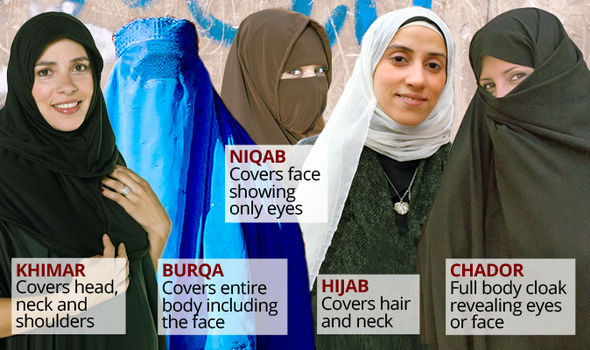
A contrarian view of hijabs, niqabs, and burqas

Filed under: History, Middle East, Religion — Tags: , , , — Nicholas @ 03:00

Western views of full-coverage clothing, including hijabs, niqabs, and burqas, may be concealing a hidden benefit to those who choose to wear such clothes voluntarily:

Hijabs, niqabs, and burqas — different sorts of coverings worn by Islamic women — are divisive apparel in the West, associated with patriarchal oppression, cultural outsiders, and even suicide bombers. Yet few accounts actually discuss the experiences of the women wearing the veils, and the freedom and anonymity coverings can afford if worn voluntarily.

Born in Pakistan and educated in America, Rafia Zakaria is the author of Veil, a new book which explores the history and shifting meanings of female coverings in Islamic countries and Western secular society. In a wide-ranging conversation, she talks with Reason‘s Nick Gillespie about the theological underpinnings of veils, their use as a means of controlling female sexuality, and how they have become markers of socio-economic status and virtue signaling.

Veils present a particular conflict for Western feminists. On the one hand, veils — especially burqas — are emblematic of regimes that are particularly oppressive to women. Feminists and others have moved to ban the wearing of veils in public in the name of female empowerment. But if a Muslim women wants to wear one, is she endorsing patriarchy and setting back the women’s rights movement or simply owning her own choices, especially in a culture that might itself be anti-Islamic?

November 8, 2017

Why Don’t Country Flags Use The Color Purple?

Filed under: Economics, History, Middle East — Tags: , , , , , , — Nicholas @ 02:00

After Skool
Published on 17 Oct 2017

For centuries purple dye was worth more than gold. The dye used to produce purple fabric came from a sea snail that only lived off the shores of modern day Lebanon. Because it was so rare, purple became associated with royalty. This is the reason you don’t see purple on country flags. It was just too expensive to produce.

Sometimes the simplest questions have extraordinary answers.

November 5, 2017

QotD: Explaining comparative advantage

Actually, it’s dead easy. No math, no arithmetic. It is in fact the soul of common sense. But you have to understand that comparative advantage is the principle of cooperation, as against competition. The word “advantage” gets us thinking of competition, which is perfectly reasonable in our own individual lives — we do compete with other businesses or other writers or whomever. But the system as a whole, whatever it is, does well of course by cooperating, in business or science or family life. It’s not all we do, admittedly. We also compete. But within a household or a company or a world economy the job is to produce a result in the best way, cooperatively. If you are running a household or a sports team or a world economy, you would want to assign roles to the various contributors to the common purpose sensibly. It turns out to be precisely on grounds of comparative advantage.

Consider Mum and 12-year old Oliver, who are to spend Saturday morning tidying up the garage. Oliver is incompetent in everything compared with Mum. He cannot sweep the floor as quickly as she can, and he is truly hopeless in sorting through the masses of rubbish that garages grow spontaneously. Mum, that is, has an absolute advantage in every sub-task in tidying up the garage. Oliver is like Bangladesh, which is poor because it makes everything — knit goods and medical reactors — with more labor and capital than Britain does. Its output per person is 8.4 percent of what it is in Britain. So too Oliver.

What to do? Let Mum do everything? No, of course not. That would not produce the most tidied garage in a morning’s work. Oliver should obviously be assigned to the broom, in which his disadvantage compared with Mum is comparatively least — hence “comparative advantage.” An omniscient central planner of the garage-tidying would assign Mum and Oliver just that way. So would an omniscient central planner of world production and trade. In the event, there’s no need for an international planner. The market, if Trump does not wreck it, does the correct assignment of tasks worldwide. Bangladesh does not sit down and let Britain make everything merely because Britain is “competitive” absolutely in everything. And in fact Bangladesh’s real income has been rising smartly in recent years precisely because it has specialized in knit goods. It has closed its ears to the siren song of protecting its medical reactor industry. It gets the equipment for cancer treatment from Britain.

Comparative advantage means assigning resources of labor and capital to the right jobs, whatever the absolute productivity of the economy. It applies within a single family, or within a single company, or within Britain, or within the world economy, all of which are made better off by such obvious efficiencies. Following comparative advantage enriches us all, because it gets the job done best. Policies commonly alleged to achieve absolute advantage lead to protection — that is, extortion, crony capitalism, and the rest in aid of “competitiveness.”

Dierdre N. McCloskey, “A Punter’s Guide to a True but Non-Obvious Proposition in Economics”, 2017-10-16.

October 24, 2017

More on Quebec’s niqab ban

Filed under: Cancon, Government, Law, Liberty — Tags: , , , , , — Nicholas @ 04:00

Ted Campbell is emphatically against Quebec’s attempt to ban facial coverings for Islamic women:

These laws are stupid … but they are worse than stupid, they are an assault on individual liberty by a bunch of political nincompoops.

Now, there are a number of variants of head and face coverings, they are especially common among some Muslim women …

… and some restrictions on some of them in some situations are, pretty clearly, justified on common sense or security-identification grounds. We, most of us, can probably agree that a lady should not wear a burqa or chador or even a niqab when she’s driving a car (it might restrict her vision) or when she is applying for a driving licence, which is a pretty common form of recognized identification … and it seems pretty clear that airport security should insist that a burqa or chador must be removed for security screening (to permit positive facial recognition).

But, why the hell does the state ~ the BIG, collective, state ~ care what any individual wears when (s)he boards a bus. It ought to care that she deposits the correct fare, of course, or taps her card to pay, but why does the state care if her face is covered? It’s arrant nonsense, and it is an infringement on a fundamental right.

    Reminder: you (and I, and Muslim women, too) have lots of rights but four of them are quite fundamental: life, liberty and property as defined by John Locke in 17th century England and privacy, as defined by Brandies and Warren in 19th century America. These rights all accrue to all individuals, only, and they, those individuals, need to have their fundamental rights protected against constant threats from collectives including religions, societies and states, themselves. These new laws, passed by big, collectivist states, are threats to individual liberties and must be challenged and overturned. Liberals, like Justin Trudeau, will not do it because they are progressives, not liberals, and because people like Justin Trudeau cannot think about fundamental rights … only about partisan, short term, political advantage.

Let me be clear about my own position:

  • Women may wear whatever they want for their own (good or not so good) reasons; but
  • It is wrong for anyone (including any father or husband or rabbi or provincial premier) to force women to dress in some certain way for social (including political) or religious reasons.

Your religion is a wholly private matter between you and your gods … you may never try to impose your beliefs on others, including your wife and children.

Why Women Fainted So Much in the 19th Century

Filed under: Health, History — Tags: , , , , , — Nicholas @ 02:00

Today I Found Out
Published on 8 Oct 2016

In this video:

Dropping like flies (or at least as far as many stories indicate), it seems as if well-bred ladies in the 1800s struggled to maintain consciousness when faced with even the slightest emotional or physical shock. Over the years there have been several theories as to why this seemed to happen, from the women’s garb to simply conforming to societal expectations.

Want the text version?: http://www.todayifoundout.com/index.php/2015/05/women-fainted-much-19th-century/

October 20, 2017

Quebec’s niqab ban

Filed under: Cancon, Government, Law, Liberty — Tags: , , , — Nicholas @ 03:00

Chris Selley on the Quebec provincial government’s latest anti-Muslim legislation:

It’s mostly about the Quiet Revolution. That’s what we’ve been assured by wise owl pundits about all this intolerant-looking rigmarole in Quebec. When polls show far more Quebecers than other Canadians hesitant to vote for a turban-wearing Sikh like NDP Leader Jagmeet Singh, the owls exhort us to contextualize: Quebecers’ rejection of the Catholic Church’s outsized role in their society left them suspicious of all public displays of religiosity (except Catholic ones, weirdly). This explains higher levels of antipathy toward other religious symbols as well, we are told: kippas, kirpans and hijabs. Hijabs specifically are antithetical to a uniquely French brand of feminism, the owls explain. We must understand that French Canadians, like the French, simply do not believe in multiculturalism; other cultures must adapt to and exist within the dominant one. Without understanding all this, we cannot comprehend what’s really happening.

Well, here’s what really happened Wednesday: after years of dithering, the Liberal government in Quebec City made it illegal to provide or receive government services with one’s face covered — which is to say no niqabs on university campuses, no niqabs at the police station, no niqabs on the bus or on the Métro. Not even the Parti Québécois’ much-loathed values charter proposed the latter. So what are we to make of this, owls? Was the Quiet Revolution, this proud rejection of church influence over the state, really about bestowing upon the state the power to tell religious people what they can and cannot wear on buses and trains? Shall we sing Gens du Pays?

How stupid do the Liberals think people are? How stupid do they think Canadian judges are? Stupid enough, apparently, to believe that this isn’t really about niqabs, but about a general outbreak of people riding public transit without their faces showing. Justice Minister Stéphanie Vallée said the rule applied equally to niqabs, balaclavas, dark sunglasses and anything else that might obscure all or part of the face. It’s a simple matter of “security, communication and identification.”

August 10, 2017

QotD: The comfortable shoe revolution

Filed under: Business, Quotations, Randomness — Tags: , , , — Nicholas @ 01:00

When I was a kid back in the 1960s and early 1970s, “shoes” still meant, basically, “hard leather oxfords”. Ugly stiff things with a high-maintenance finish that would scuff if you breathed on them. What I liked was sneakers. But in those bygone days you didn’t get to wear sneakers past a certain age, unless you were doing sneaker things like playing basketball. And I sucked at basketball.

I revolted against the tyranny of the oxford by wearing desert boots, which back then weren’t actually boots at all but a kind of high-top shoe with a suede finish and a grip sole. These were just barely acceptable in polite company; in fact, if you can believe this, I was teased about them at school. It was a more conformist time.

I still remember the first time I saw a shoe I actually liked and wanted to own, around 1982. It was called an Aspen, and it was built exactly like a running shoe but with a soft suede upper. Felt like sneakers on my feet, looked like a grownup shoe from any distance. And I still remember exactly how my Aspens — both of them — literally fell apart at the same moment as I was crossing Walnut Street in West Philly. These were not well-made shoes. I had to limp home.

But better days were coming. In the early 1990s athletic shoes underwent a kind of Cambrian explosion, proliferating into all kinds of odd styles. Reebok and Rockport and a few other makers finally figured out what I wanted — athletic-shoe fit and comfort with a sleek all-black look I could wear into a client’s office, and no polishing or shoe trees or any of that annoying overhead!

I look around me today and I see that athletic-shoe tech has taken over. The torture devices of my childhood are almost a memory. Thank you, oh inscrutable shoe gods. Thank you Rockport. It’s not a big thing like the Internet, but comfortable un-fussy shoes have made my life better.

Eric S. Raymond, “Eric writes about the shoes”, Armed and Dangerous, 2005-09-09.

« Newer PostsOlder Posts »

Powered by WordPress