Quotulatiousness

December 18, 2015

Canadian Forces report $4.4 million in lost, stolen, and damaged items

Filed under: Cancon, Military — Tags: , — Nicholas @ 04:00

Four point four million dollars might sound like a lot, but for an organization the size of the Canadian Forces (the largest department of the Canadian government), that’s actually a pretty reasonable figure. Embassy‘s Marie-Danielle Smith rounds up some of the highlights:

The Canadian Armed Forces are short more than $4.4 million worth of equipment stolen, damaged or lost—or discovered to have been lost — in the 2014-15 financial year, according to the government’s annual public accounts tabled in Parliament this month.

The Department of National Defence does not expect to recover much of this amount, says the document — there’s no Lost and Found for pistols or hammers.

In addition to more than $1.5 million in lost combat clothing alone, items that were stolen, damaged or lost included computers, machinery, technical equipment, transportation equipment, tools and weapons and accessories.

“DND and the CAF take all complaints and allegations of missing and stolen weapons seriously and all cases are investigated with due diligence by the proper authorities,” a spokesperson for the department, Ashley Lemire, said. “Every effort is made to account for weapons used in the performance of CAF mandates.”

Stolen items were worth $332,797. That’s a big jump from the year before, when a total of $44,568 in equipment was stolen from the Department of National Defence.

Part of the 2014-15 chunk includes the “theft of information technology equipment and computer peripheral” valued at $281,094.

Asked what type of equipment this is, or what exactly it is used for, Ms. Lemire said the information couldn’t be disclosed because the theft is currently before the provincial court of Ontario.

“As this matter is now before the courts, it would be inappropriate to discuss details that may affect the outcome of the court case,” she told Embassy in an email. The document says the department expects to recover the full cost in a future year.

Stolen items categorized as “tools” — only nine of them in 2014-15, worth $429 — included several types of knives, hammers, axes, cutter straps and rulers, Ms. Lemire said. Another 975 “tools” were reported lost.

November 7, 2015

DND briefings to the new minister

Filed under: Cancon, Military, Politics — Tags: , , , — Nicholas @ 03:00

It would be fascinating to find out if the Department of National Defence briefing to incoming minister Harjit Sajjan are quite as blatantly PR-focussed as the documents provided to former minister Jason Kenney when he took over the portfolio in February:

A new Liberal defence minister will inherit a self-conscious department that seems more than a little concerned about how it’s perceived by the public.

When Jason Kenney took over as national defence minister in February 2015, he was briefed with a thicker stack of papers about public opinion and media operations than about the North Atlantic Treaty Organization, the North American Aerospace Defense Command, Operation Reassurance and Operation Impact combined.

Embassy obtained the transition books for Mr. Kenney through an access to information request. Similar documents may be provided to a new minister when prime minister-designate Justin Trudeau names his Cabinet Nov. 4.

In a book about “Key Strategic Issues,” about 70 pages long, there are 17 pages worth of public opinion and media analysis, complete with graphs tracking Canadians’ perceptions of the department over years of polling data.

Conversely, only two pages of the document appear to be entirely devoted to Operation Reassurance in Central and Eastern Europe, two pages to Operation Impact in Iraq and Syria, four to NATO and two to NORAD.

[…]

Another transition book, titled “Who We Are and How We Work,” provided a broader departmental overview to the new minister of national defence.

Just shy of 70 pages, it includes information about ongoing Canadian Armed Forces operations, including all international engagements. It also gave the incoming minister a handy guide to key department officials, complete with photos and biographies.

A brief on strategic decision-making acknowledges that a prime minister or defence minister can make unilateral decisions on defence policy.

Cabinet does not need to sit together as a whole for major decisions to be made, the document explains.

“In some cases, a deployment decision will be made by a cabinet committee and, in others by the prime minister, or by the minister of national defence alone, or in conjunction with the minister of foreign affairs,” the transition book states.

H/T to MILNEWS.ca for the link.

November 2, 2015

The National Air Force Museum of Canada

Filed under: Cancon, History, Military, Technology — Tags: , , , , — Nicholas @ 03:00

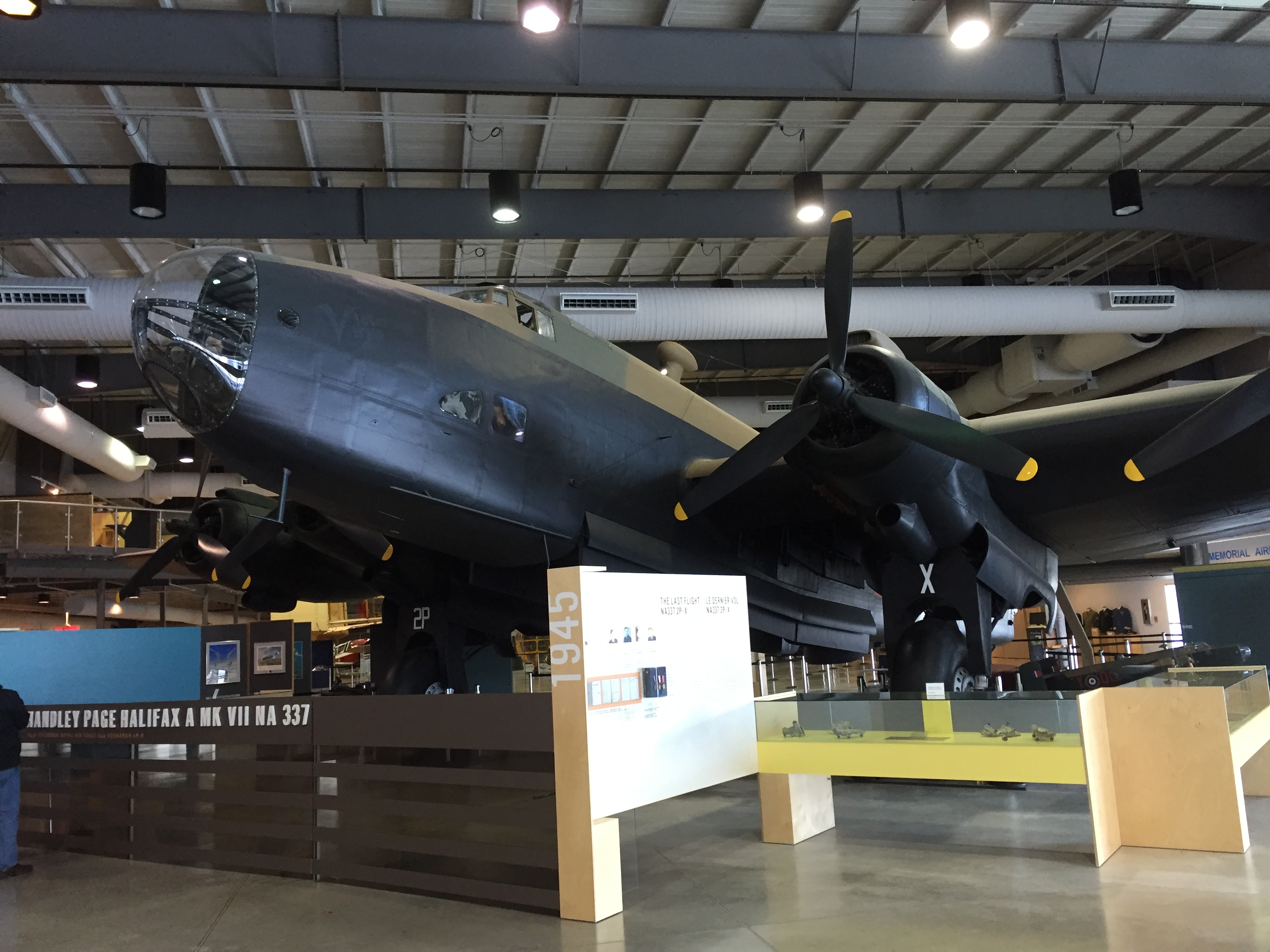
Elizabeth and I spent the weekend in the Bay of Quinte area, visiting Prince Edward County, Belleville, and Trenton. While we were in Trenton, we stopped in at the National Air Force Museum of Canada. While the Sea King may not be in the collection yet (at least, not in the collection visible to the public), many other Canadian Armed Forces aircraft are, including the prize of the museum, the Handley Page Halifax heavy bomber:

Handley Page Halifax 1

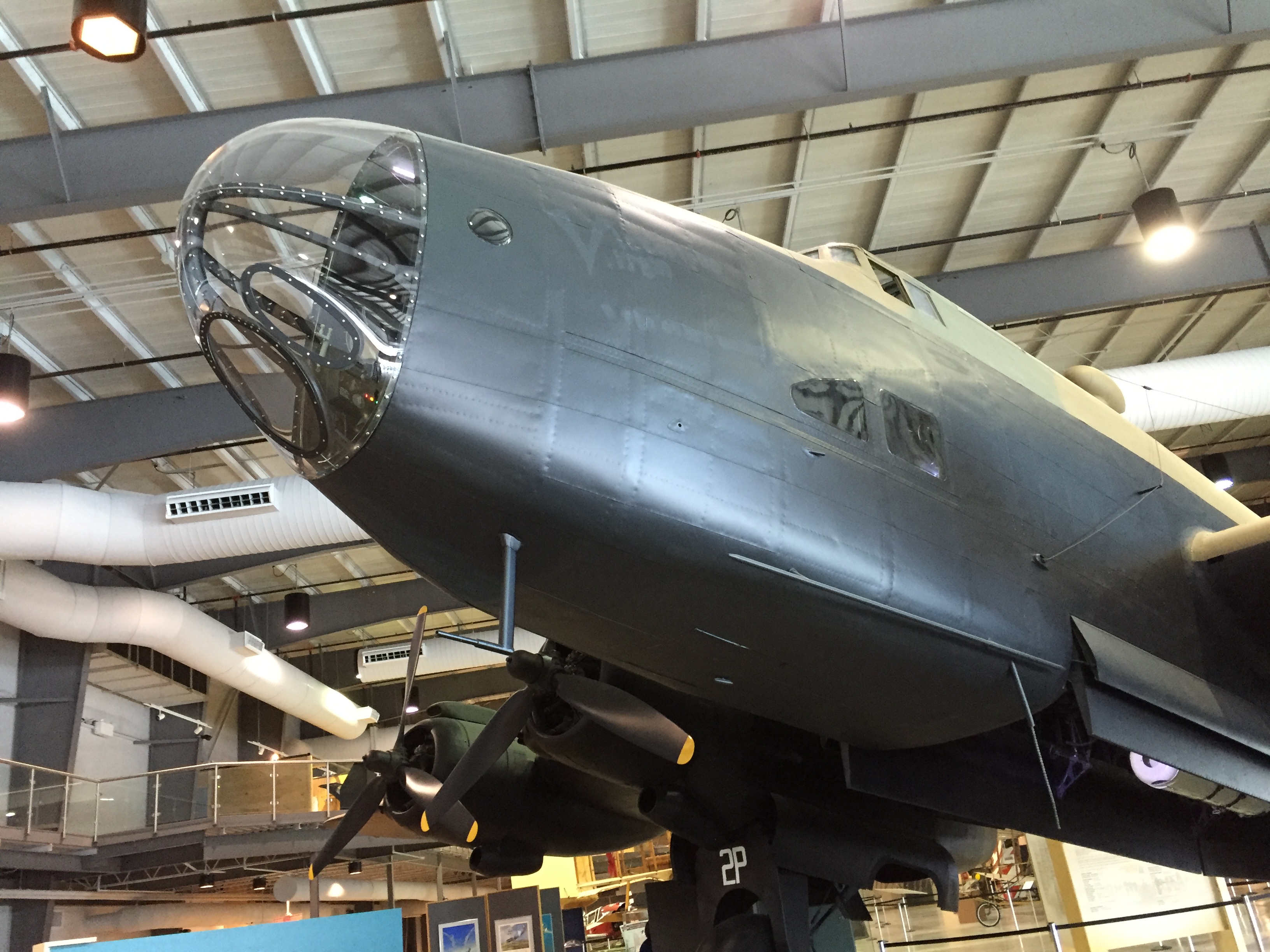
It’s a big enough aircraft that it’s hard to do it justice in a photograph.

Handley Page Halifax 2

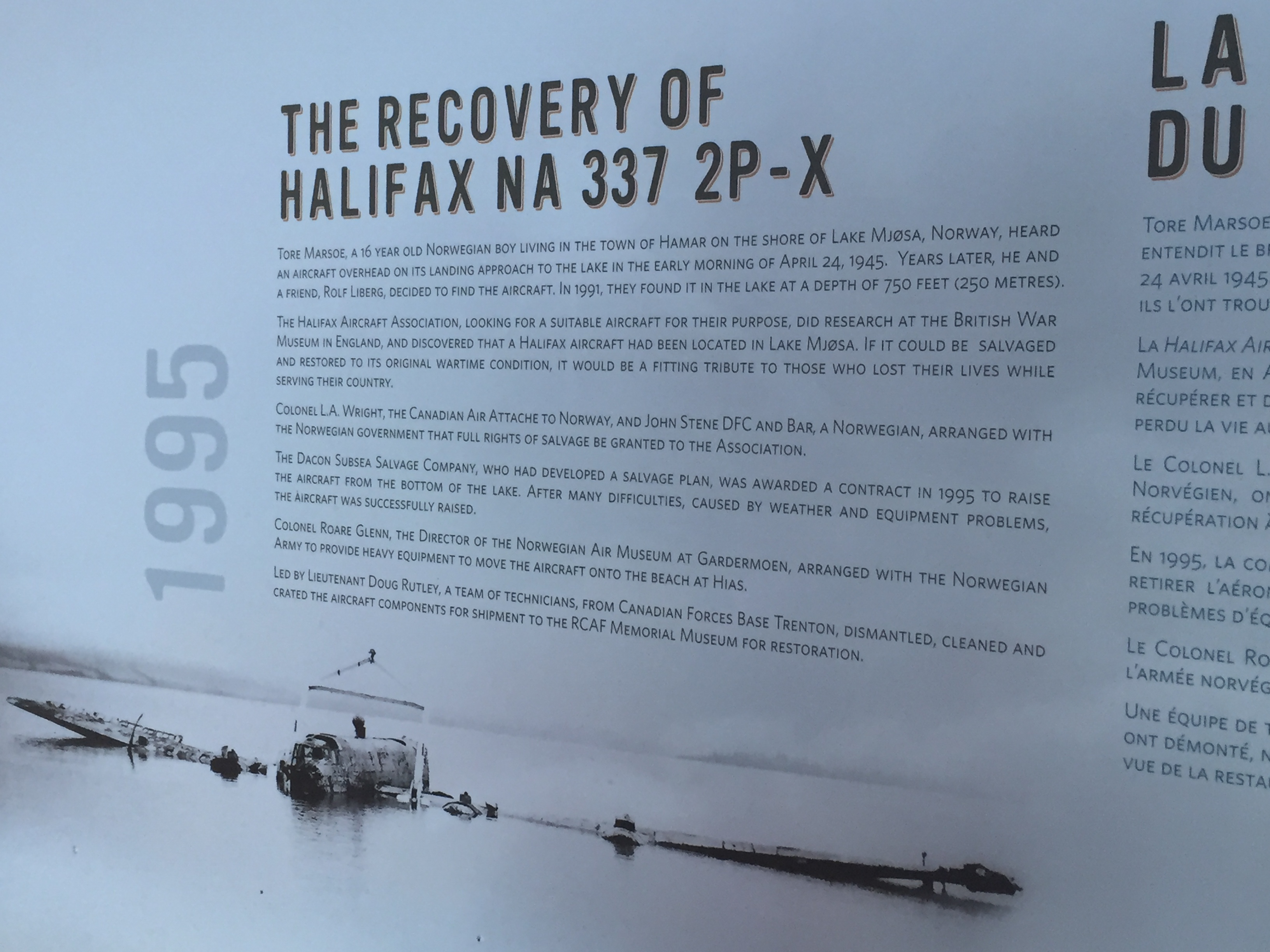
This particular restored aircraft was shot down late in the war on a mission to deliver supplies to Norwegian resistance fighters and later recovered from a Norwegian lake.

Handley Page Halifax 3

Other aircraft in the collection include a replica of the Silver Dart, the first powered aircraft to fly in Canada (February 23, 1909), a replica of the Burgess-Dunne floatplane, the first aircraft purchased for the Canadian military (September, 1914), a CF-86 Sabre, a CF-100 Canuck, a CF-5 Freedom Fighter, a CF-104 Starfighter, a CF-101 Voodoo, a CF-18 Hornet, a CP-107 Argus, a CC-130 Hercules, and a CP-102 Tracker among other aircraft.

October 14, 2015

Canadian defence … a still-relevant view from ten years ago

Filed under: Cancon, History, Military, Politics, WW1, WW2 — Tags: , — Nicholas @ 03:00

Instapundit linked to a ten-year-old post at Albion’s Seedlings, and I noticed that the next post there is still pretty much dead-on in describing why Canada’s military is in the state we still see today. Spoiler: the post is titled “Was Canada Ever Serious? Militia and Military Since Confederation“:

Initial chapters [of Canadian Brass: The Making of a Professional Army 1860-1939 by Stephen Harris, 1988] consolidate the early periods of Canadian military history as the British military staff digested the new geopolitical realities demonstrated during the American Civil War. Canada was to be spun loose politically in 1867 but its foreign policy and defense were to remain a very strange hybrid well into the 20th century. The WW1 period in Canadian Brass is divided into pre-war, a Sam Hughes [Militia Minister] WW1 period, and a post-Hughes WW1 period. An interbellum period gets thorough coverage and then WW2 is broken out into separate Military Planning, and Training & Education chapters.

The rather shocking message of this book is that the Canadian military has been the constant butt of political interference during the last 150 years except for two brief periods: WW2 proper, and 1951-1964. During virtually all other periods of Canadian history, the permanent (professional) military forces have been starved of funds, denigrated in public by all and sundry, and then ignored completely during mobilization for wartime. The only time in Canadian history that professional pre-mobilization plans were actually used was WW2. In all other eras, professional plans were ignored and politicians turned to various militia cronies to assemble, train, lead, and transport Canadian troops.

[…]

The author suggests, therefore, that lack of professionalism in the organization of the military led to unnecessary political crises (specifically the split between Quebec and English-speaking Canada), and, in the case of the First World War, the needless slaughter of the initial Canadian divisions (because they were led by totally unqualified militia officers with political connections). The WW1 crisis created by Minister of Militia Sam Hughes was the result of a totally mythical and exaggerated memory of militia superiority in the War of 1812 and the Fenian raids of 1866, and careful news management out of the Boer War. Militia were held to be a superior in all ways to a professional force, moral and martial. Government money for militias (urban and especially rural) was a traditional source of political patronage in Canada, frustrating British military advisers and Governor-Generals for literally generations (and ruining many Brit careers in the process). Such patronage methodically starved the professional units in a nascent professional Canadian Army of training, equipment, facilities, pensions, wages and prestige. The result was a professional army that wasn’t and an oblivious overconfident citizen-soldier militia that was destined for a horrific introduction to modern war.

The casualty situation got so bad by the late fall of 1916 that Hughes was dismissed, and a new generation of Canadian officers (all political appointees but survivors of the savage Darwinian selection at the front) began to lead, and promote their junior officers out of the ranks. The impact on morale and military success from early 1917 to the end of the First World War were dramatic. Canadian reputations for combat effectiveness essentially came out of this period.

[…]

It’s clear, in retrospect, that Canadian politicians and the Canadian public have had a long-standing expectation that the British (and then the US) were going to bail them out in any serious military situation. As a result, the professional Canadian military was seen as simply another source of political largesse for the party in power. It never had to be effective, and post-1964, it actually was designed not to be used at all … unification of the three services (Army, Navy, Air Force), and endless UN peace-keeping missions were an effective way to strip combat effectiveness and combat equipment out of the Canadian military. Harris provides all the necessary context and information for that conclusion but is politic enough to avoid much further commentary.

He does writes an interesting epilogue that delicately skirts around those post-1939 issues … and avoids touching the “third rail” of military bilingualism introduced in the 60s, which further degraded esprit de corps and combat effectiveness. After all, Mr. Harris was essentially writing about his own Cold War employer at the time of publication (1988), and probably wanted to keep his job. Nonetheless, it’s pretty clear that the Liberal dismantlement of the conventional Canadian military (after tactical nukes appeared in Europe in the 60s) was yet another iteration of the political manipulation of the permanent military and a return of the good old days of “jobs for the boys.” The sorry state of today’s Canadian military (a small but excellent antiterrorist force [JTF2] to protect the elite in Ottawa, and a sprinkle of blue helmet cannon fodder without adequate air transport) is therefore very much part of a proud Canadian political tradition stretching back 135 years. It’s not a mistake. It’s on purpose.

Ten years on, we don’t do the UN peacekeeping stuff to any great extent, but even with a “pro-military” government in power for most of that time, the Canadian Armed Forces are still starved for resources and up-to-date equipment (and procurement is still seen as a way to spread government money around to “deserving” regions rather than a way of getting the best tools for the money). Thanks to our unique strategic situation, Canada can still be a military free-loader — and glories in it.

September 22, 2015

An American view of Canada’s armed forces

Filed under: Cancon, Military — Tags: , , — Nicholas @ 02:00

The good folks at Strategy Page look at the last decade or so of the Canadian military, with an emphasis on the Canadian Special Operations Regiment:

In the last decade the Canadian defense budget has stayed about the same ($18 billion a year, adjusted for inflation) but the emphasis has changed. Now it’s all about new equipment for Canadian special operations troops, especially the Special Operations Regiment, a unit similar to the American Special Forces which Canada began forming a decade ago. That effort was a success, especially for the peacekeeping type operations Canada is so active in. Despite the enthusiasm for special operations the situation was different in 2006. That was because after cutting defense spending sharply since 1991 (and the end of the Cold War) there were more serious military problems to deal with. Back then it was agreed that the 1990s cuts were too deep and over $15 billion was allocated to improving transportation and logistical capabilities. Most of the new money went to replacing aging transport helicopters, and buying two logistical support ships, 21 transport aircraft and 2,300 trucks.

Canada’s defense spending, like everyone else’s, shrunk after the Cold War ended in 1991. For Canada, their lowest annual defense budget was $8.4 billion in 1998. Per capita, that was less than a third of what the United States was spending. At that point, spending began to increase in the face of a growing number of media stories on how Canadian troops were struggling with worn out, inoperable or unavailable weapons and equipment. A decade ago a new government got into office partially on its pledge to finally address all the material shortcomings in the military. Canada’s current defense budget is much higher as a result of that. Yet the Canadian defense spending is still less than half of what the United States spends, per capita. But during the Cold War, Canada deferred to the United States in most defense matters, including dealing with nuclear weapons threats, and protecting North America from foreign attack. While Canada outspent the United States, per capita, during both World Wars, this was reversed after World War II, when America became the main participant in the Cold War effort to contain the Soviet Union.

[…]

Apparently, the 750 man Canadian Special Operations Regiment is not a clone of the U.S. Special Forces. That’s because the basic training for Special Forces troops takes two to three years, and it then takes another few years in the field before the troops are ready for anything. Canada has had a small commando force for decades [the JTF2], and that provided the initial cadre of trainers and training facilities for the new regiment. The r Special Operations Regiment was, at least, initially closer in capability to the U.S. Army Rangers, who are very well trained light infantry. Over the next decade more members of the regiment will be put through the years of specialized training that will bring them up to something approaching the U.S. Special Forces standard. The American and Canadian ground forces have worked together for generations, so there will probably be some assistance from the U.S. Special Forces, to help the Canadians get going.

September 19, 2015

QotD: Why do we have armed forces?

Filed under: Cancon, Military, Politics, Quotations — Tags: , , — Nicholas @ 01:00

Polite Canadian society does not like to admit, though it is perfectly understood, that Canada’s presence is but dust in the military balance. It’s been about half a century since anyone regarded the Canadian military as a significant player. Current events in Iraq are not, whatever some conservatives might imagine, a replay of World War Two. This is a minor policing operation in which the middle powers are providing diplomatic cover for the actions of the Great Powers.

Among the relatively large nations of human history Canada is almost unique in one respect: We don’t strictly speaking need a military. There has not been a direct existential threat to Canada in more than a century. The only nation capable of invading is the one nation that would never try. Our security has been under written by either Britain or the United States for over two centuries. Tomorrow we could dispense with the whole of the Canadian Forces and, leaving aside the communities in which our few military bases are located, I doubt anyone would notice.

So why have a military when we don’t really need one?

Richard Anderson, “Macho Man”, The Gods of the Copybook Headings, 2014-10-10.

March 31, 2015

One for the zipperheads

Filed under: Cancon, Military — Tags: , , — Nicholas @ 05:00

Published on 27 Mar 2015

Digitized Leopard 2 systems improve mine protection, mobility, fire power.

March 25, 2015

Something for the gunners

Filed under: Cancon, Military — Tags: , , — Nicholas @ 02:00

Published on 18 Mar 2015

Howitzer’s new system allows troops to shoot and move faster.

Episode – 549

February 15, 2015

A new rifle for the Canadian Armed Forces?

Filed under: Cancon, Military, Weapons — Tags: , , — Nicholas @ 04:00

Popular Science has a brief overview of a proposed new small arm for the Canadian Armed Forces:

Maybe Canada’s Armed Forces are fighting a Wendigo infestation no one knows about. Perhaps they’re engaged in a secret war against Bigfoot and his moose army for control of the Northwest Passage. There’s also the reality that Canada is a NATO partner and fights regular wars overseas; Canadian troops fought alongside American ones in Afghanistan from 2001 until March 2014. Well, to make Canada ready to take on their next foe, Colt Canada just released a video demonstration of a new prototype gun for the Canadian military. And it looks ridiculous.

The gun is a “bullpup,” meaning the magazine is fed into the gun behind the trigger rather than in front. The main effect of the bullpup design is that rifles can be shorter without losing any effectiveness. The gun can install either a three-round grenade launcher or a shotgun. Shotguns are useful in close quarters, while grenade launchers give more range than just hand-tossing a small explosive. The main gun fires 5.56 ammo, a standard NATO round. Future plans for the gun include smart targeting systems, like those found in TrackingPoint rifles.

They also include a rather bland video of the proposed new weapon firing 5.56mm rifle rounds, 12-gauge shotgun shells, and 40mm grenades:

February 12, 2015

“… the Canadians have a reputation for being very effective in combat”

Filed under: Cancon, Middle East, Military — Tags: , , , — Nicholas @ 03:00

Strategy Page explains why Canadian military instructors in Kurdistan sometimes need to use their weapons even if they may not technically be “in combat”:

Canada has sent 625 troops (11 percent of them commandos) to train Iraqis (mainly Kurds) to more effectively fight ISIL. Canadian legislators (not to mention the media and many Canadians) insisted that these troops not be directly involved in combat. Then it became known that Canadian troops had, in the last three months, called in at least 13 air strikes on ISIL and in several instances Canadian commandos used sniper rifles to “neutralize” ISIL mortars and machine-guns. The military responded that this was not exactly involving Canadian troops in combat. Calling in air strikes is something you want to entrust to people with experience especially since Canada also has six F-18 fighter bombers operating over Iraq. Training Kurds to call in air strikes involves showing them how it is done. This is best done at the front line, and demonstrations by the more experienced Canadians is a very useful training technique.

The commandos firing on ISIL fighters was because some commandos were assigned as security for senior Kurdish commanders and Canadian advisors visiting the front lines. When the Canadians and Kurds came under fire the commandos quickly located and “neutralized” (killed or caused to flee) the ISIL men involved. Most of the critics accepted these explanations, which basically said that if you are going to train and advise combat commanders you have to spend some time near where the fighting it taking place. This is not only more realistic, but gives your trainers more credibility of your students can see their instructors in action.

November 2, 2014

Harper – “We will not be intimidated”. Reality? We’re intimidated.

Filed under: Cancon, Liberty, Religion — Tags: , , — Nicholas @ 09:12

The recent fatal attacks on Canadian soldiers on Canadian soil provoked a strong verbal reaction from the PM. Yet the actions of military commanders directly contradict what Mr. Harper said:

After the recent Islamist outrage in Ottawa, Canada’s Prime Minister Stephen Harper said, “let there be no misunderstanding. We will not be intimidated.”

[…]

Over in Canada after the latest atrocity, military personnel have been requested “to restrict movement in uniform as much as possible.” That request came from Rear Admiral John Newton, Commander of Maritime Forces Atlantic.

So the Canadian military’s response to Islamist aggression in Canada is to instruct military personnel to take off their uniforms. Is that defending our Western way of life? How is it “not being intimidated” when you are afraid to walk your own streets in your country’s uniform?

If Prime Minister Harper meant what he said about “not being intimidated”, was this not precisely the time to insist that Canadian values be respected by all citizens? As the Canadian journalist Mark Steyn commented:

“If we have to have dress codes on the streets of free societies, I’d rather see more men like Corporal Cirillo (the murdered Canadian soldier) in the uniform of the Argyll & Sutherland Highlanders — and fewer women in head-to-toe black body bags. — I’m tired of being told that we have to change to accommodate them.”

October 26, 2014

Canadians’ ambivalent views on the Canadian Armed Forces

Filed under: Cancon, Military — Tags: , , , — Nicholas @ 00:03

In Maclean’s, Jonathon Gatehouse reflects on the reaction of bystanders just after Corporal Nathan Cirillo was shot while standing guard at the Tomb of the Unknown Soldier in Ottawa, and how Canadians are still uneasy about the role of the military in Canadian society:

They came together with haste and purpose. Three civilians and two members of Canadian Forces, all working frantically to save the life of Cpl. Nathan Cirillo.

In the first minutes after the Hamilton reservist was shot twice at Canada’s National War Memorial on Oct. 22, it was passersby who joined in the challenge of trying to staunch the bleeding and keep his heart beating. Photos captured their desperation. A red-headed woman, her legs stretched out across the Tomb of the Unknown Soldier, administering artificial respiration while a uniformed man performs CPR. A man in a dark business suit helping to keep the blood where it was needed by holding the kilted Cirillo’s bare legs in the air. And two more — a grey-haired lady and a man in an army beret — applying pressure to his wounds. All of them as anonymous as the fallen combatant inside the granite sarcophagus that the soldier was guarding.

A discarded backpack leans against the tomb, next to a Thermos mug of morning coffee. A black attaché case has been tossed to the flagstones. Right beside that lie the two military assault rifles—one belonging to Cirillo, the other his regimental partner—perfectly stacked, stocks tucked tight against the brass foot of the monument. By the book, even though they were never loaded, per standard honour detail practice.

[…]

The Canadian public and its military have been out of sync over duties and mission for more than a decade. It is a gap that doesn’t make much sense. In the aftermath of 9/11, we have come to venerate first-responders — those who run toward danger — as local police, the RCMP and Parliament Hill security did in their shoot-out with Zehaf-Bibeau. But we remain slightly suspicious of the motives of people who volunteer to serve in the army, navy and air force, as if there is something nobler — and more Canadian — in playing defence than being on the offensive.

The events of the past week illustrate that we live in an age where such distinctions have been rendered meaningless. First the murder of Warrant Officer Patrice Vincent, run down by ersatz jihadi Martin Couture-Rouleau in a shopping mall parking lot in St-Jean-sur-Richelieu, Que. And now the death of Cpl. Cirillo at the hands of another “self-radicalized” fellow citizen. Like it or not, Canada is in this fight, abroad and at home. Facing enemies who don’t give credit for past good deeds, and have few, if any scruples about whom they target.

There’s a tradition that has sprung up in Ottawa over the past years. After the conclusion of the official Remembrance Day ceremony, members of the public approach the War Memorial, remove the poppy from their lapels, and lay them on the Tomb of the Unknown Soldier. It’s a small act of respect, and an attempt to connect with our fading, black and white past.

This year will be different. Not just because Nathan Cirillo died at that very spot, but because of what happened in his final moments. When a red-headed lawyer, a grey-haired nurse and a suit-clad government bureaucrat joined with a colonel and a corporal to try and save a soldier’s life, a page turned. The sacrifice, in full colour and public view, can’t be ignored. Everyone has become a witness. It is part of our present, and our uncomfortable future too.

October 25, 2014

They don’t like to brag…

Filed under: Cancon, Humour, Military — Tags: , — Nicholas @ 09:56

John Turner sent me this link. I found it quite amusing:

JTF2 brag sheet from imgur

Harper government to restore part of the military budget?

Filed under: Cancon, Government, Middle East, Military — Tags: , , , — Nicholas @ 09:49

In the Edmonton Leader-Post, Michael Den Tandt reported last week on the chances of the Canadian Armed Forces getting back at least some of the most recent budget cuts, in light of the increasing deployment tempo in Europe and the Middle East:

Even as the Harper Conservatives have deployed CF-18 fighter jets to Eastern Europe, and now to Kuwait to join the air war against Islamic State, also known as ISIL or ISIS, the Canadian Forces have seen their funding slashed. But that may be about to change, as the government considers adding back part or all of the $3.1 billion removed from the military’s piggy bank in last February’s budget.

Friday, it was reported here that Prime Minister Stephen Harper personally intervened recently to settle a dispute between Treasury Board, led by Tony Clement, and the Defence Department, led by Rob Nicholson, over a pending $800-million sole-sourced purchase of next-generation Sea Sparrow naval missiles from U.S.-based Raytheon Co.

Concerns that the acquisition under the U.S. government’s Foreign Military Sales program would tilt the scales in favour of the Raytheon-Lockheed-Martin group in a burgeoning transatlantic competition for up to $18 billion in subcontracts on DND’s new Canadian Surface Combatant fleet, were overruled. As were, apparently, any worries about the optics of making another large military purchase, a la F-35, without opening the process up to competing bids.

October 12, 2014

Changes to Canadian Army promotion ladder

Filed under: Bureaucracy, Cancon, Military — Tags: , — Nicholas @ 11:43

On the Army News page, this change in policy was posted on October 8:

This fall, the Canadian Army (CA) will implement an innovative program whereby Combat Arms promotions from Corporal to Master Corporal will be managed at the unit – instead of the national – level. This change, a positive outcome of the CA Renewal effort, is expected to save time and money and help the CA accelerate the progression of its “shining stars.”

The drive to work smarter and be more efficient can lead to a fresh examination of why things are done in a certain way. Such a review process may end up standing the status quo on its head, as was the case with Corporal-to-Master Corporal appointments in the Canadian Army (CA) Combat Arms trades.

The CA has four Combat Arms trades: infantry, armoured, artillery, and combat engineers. The majority of the personnel in these trades are privates or corporals located in field units where they perform their baseline jobs.

On the basis that no one knows their soldiers’ strengths and leadership qualities better than their own unit, authority to determine which corporals will be promoted to the appointment of Master Corporal is now given to the unit Commanding Officer (CO). The COs will now also be the ones to select soldiers with leadership potential for Primary Leadership Qualification (PLQ) training, which is a pre-cursor to promotion to Master Corporal.

This was achieved by eliminating the requirement to hold National-level promotion boards for Corporals in the Combat Arms. As a result, the CA will save time, reduce paperwork, simplify the selection process, cut back on costly postings and – most importantly – enhance the process of ensuring the right soldier is in the right place at the right time and with the right qualifications.

I can’t think of a more ridiculous way of managing the promotion process than managing it directly from the national level. The army sets standards for promotion to each rank nationally, and that makes sense, as soldiers can be detached from their parent unit for particular operations or short-term local requirements, so you want to see a certain level of standardization in training and education to make those detachments work as well as possible. But there’s a huge difference between setting standards and actually directly managing the promotions. You could make a case for it with senior NCOs and officers, but for junior ranks that seems an over-abundance of centralization.

« Newer PostsOlder Posts »

Powered by WordPress