Quotulatiousness

March 4, 2026

Jean Raspail’s The Camp of the Saints

Filed under: Books — Tags: , , , , — Nicholas @ 05:00

Like many, I’ve heard of Jean Raspail’s novel The Camp of the Saints but I’ve never seen a copy of it for sale and I certainly haven’t actually read it myself. At Postcards From Barsoom, John Carter discusses a rare thing: a newly translated printing of the book that iscurrently available for sale:
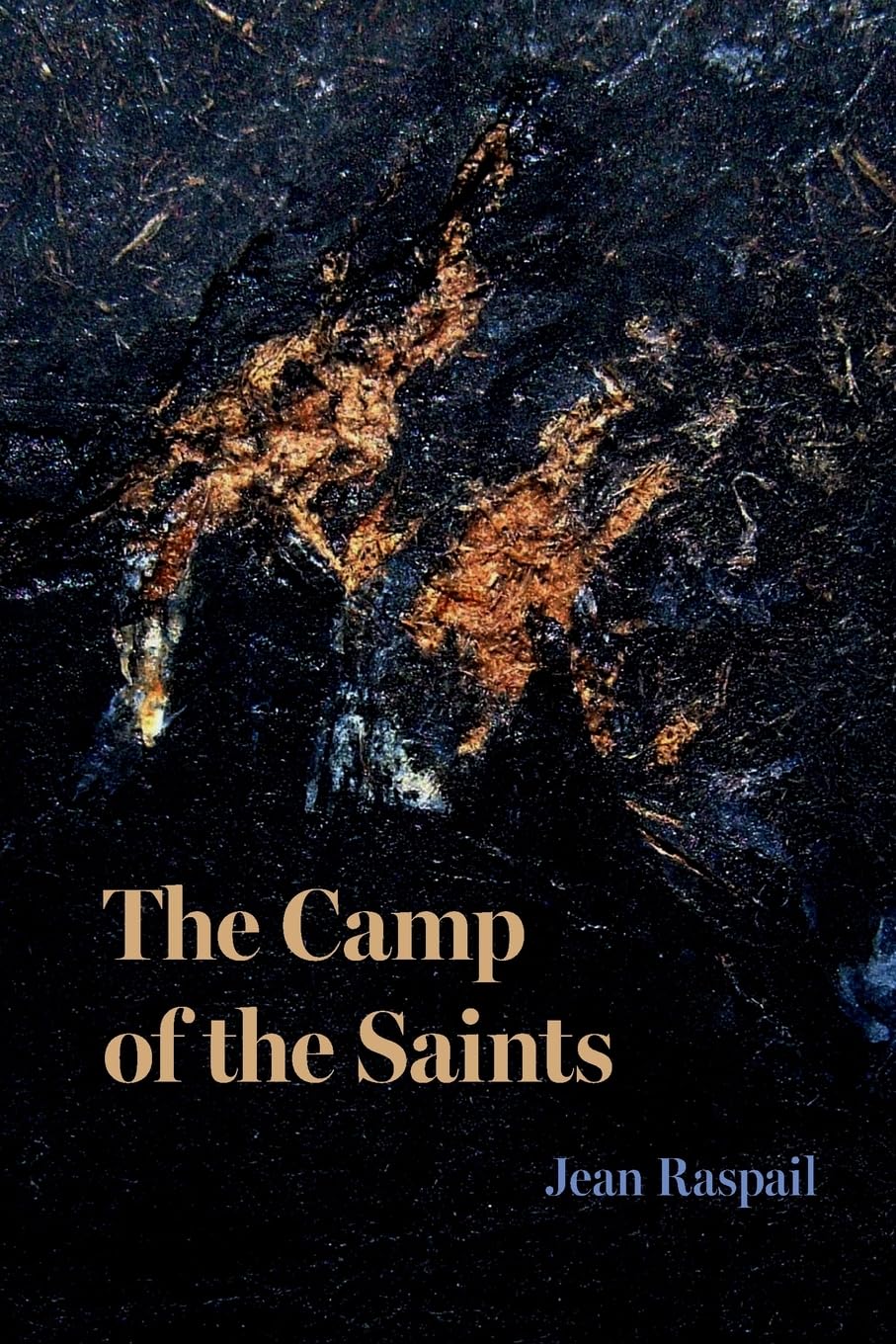
To call The Camp of the Saints prescient undersells it. At times, Raspail seems to be downright prophetic. Pope Benedict XVI plays a prominent role (albeit this is a character who could not be more different from Cardinal Ratzinger). Raspail also correctly predicted that Rhodesia would become Zimbabwe, which may have been easily foreseeable when Raspail was composing the work but still did not formally happen until 1980, seven years after the novel’s publication; while Raspail was writing, the Rhodesian Bush War was still in full swing. The Rhodies fought until the bitter end to prevent the breadbasket of Africa from being turned into Africa’s basketcase.

The Camp of the Saints is sometimes described as a dystopian novel, which should be read alongside 1984, Brave New World, Fahrenheit 451, Slaughterhouse 5, and C. S. Lewis’ That Hideous Strength. There’s something to be said for this interpretation. You get a pretty good description of the modern world with the Venn diagram overlap of the total state’s panoptic tyranny, the flattening of the human spirit into a mass-produced Last Man via the endless consumption of mass-produced trivial amusements, the death of literary curiosity, the imposition of forced egalitarianism, demon-worshipping transhumanist technocracy, and Raspail’s civilizational collapse via obsequious moral inversion.

Like every good dystopia, however, The Camp of the Saints is first and foremost a satire of the modern world, a warning about where things will head if certain sociopolitical trends are taken to their natural conclusion. Raspail’s work does not take place in some science-fictional near future, as the majority of other dystopias do: its world is technologically and politically indistinguishable from the world Raspail lived in, and still all too recognizable to us. It has been derided as a far-right racist tract, and Raspail’s depiction of the third world horde that subsumes the West is far from flattering, but his venom is directed primarily at the West’s own spineless cultural thought-leaders and political elites, who he identifies as the true and only possible architects of the world-historic catastrophe that he predicts.

The Camp of the Saints also has all the key tropes of a zombie apocalypse story.

The third world horde is depicted as a vast, ravenous, mindless beast comprised of individual members who are not at all fearsome or intimidating, but which triumphs through sheer numbers and slow but relentless advance, and which is defended by its revolting appearance and overpowering, nauseating stench. The migrants are the most wretched products of the slums of Calcutta, malnourished and sickly, afflicted by every kind of congenital defect, infectious disease, infirmity, and skin infection. Their leader is a monstrous, drooling idiot dwarf with lidless eyes, a toothless sphincter for a mouth, and stumps for limbs, who rides about on the shoulders of a giant coprophage. They make their way from India packed like human sardines in a fleet of rusting, dilapidated plague ships, wallowing their way towards Europe through the nauseating miasma that arises from the swamp of corpse-littered shit that they leave in their wake, spending their days listlessly staring out to sea and mindlessly copulating amidst their own putrifying filth. Merely to look upon the migrant horde is to be transfixed with a kind of a religious terror, overcome by its ugliness, paralyzed by pity. Soldiers forced to take even the smallest of aggressive actions against the horde, with only a few exceptions, throw down their weapons and run, not because they are terrified of the horde itself, but because they are terrified of their own conscience should they strike down a defenseless, pitiable wretch. In a few cases, soldiers take their own lives after being made to shoot. The horde’s primary weapon is the crushing psychological pressure that slams down on the souls all who behold it; better to give up and accept the inevitable than suffer the torment of fighting against it.

When the horde encounters a westerner, one of two things happens. Either the westerner is immediately killed by being trampled underfoot or torn limb from limb, or he is smoothly assimilated into the horde, becoming by and by indistinguishable from the innumerable wretches that comprise it. The zombies either eat you, or turn you into a zombie. Women of course are assimilated by rape.

Not everyone succumbs right away, of course. At the end of the novel a small group of psychologically resilient Frenchmen led by an army colonel and a right-wing government minister fall back to an abandoned mountain village. Inside the village’s borders they establish a micocosm of the old, pre-invasion French civilization. They defend their redoubt simply by shooting any migrants or white “assimilates” (as they immediately take to calling them) who get too close. The migrants and assimilates are easily seen, a constant presence shambling in the distance; they are just as easily picked off, being slow and unarmed, and the village’s inhabitants soon take to treating the hunt as a sport. Of course this refuge does not last long: the French air force, in what is implied to be its last act (for the new world will not be able to maintain airplanes) wipes the last surviving Frenchmen out in an airstrike. Racism can’t be tolerated, you see.

Finally, there are the delusional lunatics who imagine that they can befriend or master the horde, turning it to their own purposes or making common cause with it, and who are therefore instrumental in opening the gates to their and everyone else’s doom. Upon actually encountering the horde the madmen find only death or assimilation; the horde is utterly indifferent to any expression of friendship.

February 7, 2026

The Probability Broach: L. Neil Smith’s libertarian fever-dream

Filed under: Books, Liberty, Media — Tags: , , , , — Nicholas @ 04:00

Feral Historian
Published 6 Feb 2026

Equal parts political manifesto and wacky adventure story, The Probability Broach is usually not the first title people think of when they hear “libertarian sci-fi” but it almost always makes the list after further reflection. While ideologically-motivated fiction tends to preach more than entertain, L. Neil Smith makes his world so bonkers and whimsical that we almost can’t help seeing our own in a similar light, and in so doing reminds us that things are as they are ultimately because we chose to make it this way.

There’s some jumpcuts in this due to lack of good b-roll, but I suspect that most people who make it past the half-way point on this one are just listening anyway.

The artwork is from the graphic novel adaptation from Big Head Press https://www.bigheadpress.com/tpbtgn
I ordered a copy but the government-run postal system didn’t get it to me in time to use its illustrations of later chapters.

00:00 Intro
01:05 The Setup
03:15 Whiskey Rebellion
05:36 Confederacy
07:50 Property, Culture, and Capitalism
15:01 Cultural Assumptions
19:20 Interventionism
21:04 Choices, not Systems
(more…)

October 6, 2025

Fatherland: Alternate History with a Point

Filed under: Books, Germany, Media — Tags: , , , , — Nicholas @ 02:00

Feral Historian
Published 11 Oct 2024

The 1992 novel by Robert Harris is a great example of the otherwise generally mediocre “Germany won WWII” alternate history premise. By removing the regime from its current almost mythologized status as a unique and singular evil, instead portraying it as merely a repressive state in a Cold War, Fatherland illustrates an uncomfortable truth about realpolitik and atrocities.

00:00 Intro
00:55 The Case
02:20 Out of Myth, into the Mundane
06:13 Detente and Bureaucracy
09:11 HBO’s Adaptation
10:01 Ignoring Inconvenient Truths

CORRECTION: Somehow I put up a picture of Bormann when I was talking about Buhler.

🔹 Patreon | patreon.com/FeralHistorian
🔹 Ko-Fi | ko-fi.com/feralhistorian

And my own book, not alternate history, Ninti’s Gate is available on kindle and in paperback,
🔹 https://www.amazon.com/dp/B0CYXH9BWD

June 19, 2025

The Guns of the South: Checkmate, Alt-Hist Plausibility Sticklers

Filed under: Africa, Books, History, Military, USA, Weapons — Tags: , , , , , — Nicholas @ 02:00

Feral Historian
Published 24 Jan 2025

Harry Turtledove’s The Guns of the South gives us a look at a victorious Confederate States as they grapple with the consequences of slavery, war, and the challenges of building a new nation. It also skewers a favorite activity of alt-history readers, the nitpicking of plausibility in the points of divergence, by dropping South African time travelers with AKs into the middle of the Civil War.

00:00 Intro
02:08 America Will Break
04:49 Right and Left
05:36 CSA at odds with AWB
08:08 Forrest
10:16 Technology
13:16 “Why then …”

March 30, 2025

Dies the Fire and the Founder Effect

Filed under: Books, Economics, USA — Tags: , , , , , , , — Nicholas @ 02:00

Feral Historian
Published 15 Nov 2024

The first book in S.M. Stirling’s Emberverse series, Dies The Fire yanks modern technology out of the world and sets the stage for a multi-faceted exploration of how distinct cultures emerge from small isolated groups and the profound effect individuals can have the societies that coalesce around them.

00:00 Intro
01:28 Founders
03:37 Desperation
04:51 Flawed Assumptions
07:05 Composites and Rhymes
(more…)

February 28, 2025

Activists get the Toronto school board to agree to rename three schools

Filed under: Cancon, Education, History — Tags: , , , , — Nicholas @ 05:00

For people who utterly lose their minds when the Bad Orange Man changes the names of things, Toronto’s activists are still full-steam ahead to force the Toronto District School Board to rename three schools:

According to media reports, the TDSB has voted 11 to 7 to change the names of three schools: Dundas Junior Public School, Ryerson Community School and Sir John A. Macdonald Collegiate Institute. Evidently, a process will now start to choose a new name at each school. We shall see what they end up with, hopefully something better than “Sankofa”, which is the new name for Dundas Square, and has absolutely nothing to do with Canada.

There is nothing wrong, in principle, with changing a school name. Times change, and school names may need to change to reflect changing times. I attended a school which was named after a school board trustee who had served many decades prior to my time at that school. Would it make sense to change the name to that of a person who lived more recently and had a bigger impact on the community? Maybe schools should not be named after people at all, but rather should get their name from some more enduring aspect of the community, city, province, or country? These are fair questions.

But in these three TDSB cases, the reasons being given for the changes are part and parcel of an overall strategy by the activists running the school system to rewrite history according to their narrative of colonial oppression and the victimhood of Indigenous people and “people of colour”.

Two of the schools, Dundas Junior Public and Ryerson Community School, are named for men who have been accused of complicity in historical evils specifically for deemed connections to the slave trade and to do with the Residential Schools set up for First Nations children, but the third really is historical revisionism on the grand scale: the one named for Canada’s first prime minister:

Sir John A. Macdonald, first Prime Minister of Canada. circa 1875.
Photo by George Lancefield from Library and Archives Canada, MIKAN ID number 3218718.

The activists want our illustrious first Prime Minister’s name off a school because they say he knowingly, willfully, and intentionally starved Indigenous people in the Prairies.

This starvation narrative was popularized by James Daschuck’s 2014 book Clearing the Plains but this harsh indictment of Macdonald does not stand up to scrutiny, as his government actually spent more on famine relief for the Indigenous people in 1884 than on national defense.

Additionally, the Canadian approach to avoiding war through treaties doubtless saved tens of thousands of Indigenous (and no small number of settlers) lives, as a look south of the border, where upwards of 60 000 died in such wars at the time, will attest.

Macdonald’s government created the Northwest Police Force (later renamed the RCMP) to protect the native (and settler) population from American raids and slaughter, and Indigenous leaders at the time expressed their gratitude for it. He provided vaccination against smallpox to thousands of Indigenous people too.

It should also be mentioned that the catch-all complaint about Macdonald being somehow responsible for forcing Indigenous kids to attend IRS schools is baseless. Such schools were built at the request of Indigenous leaders according to treaties with the Crown and attendance was entirely voluntary during Macdonald’s lifetime. Indeed, mandatory school attendance only became mandatory along with such a requirement for all Canadian children in the early 20th century.

As mentioned at the opening of this article, 7 of 18 TDSB trustees voted “no” to the name changes. This is an encouraging sign that presenting a simplistic and misleading account of Canada’s past, and the people who shaped our history, in the service of affirming a putrid and deceitful narrative of oppressors Vs. victims in Canada is starting to lose its credibility. People are starting to demand a more comprehensive, nuanced, and accurate account of what really happened, and why. Yes, mistakes were made, and there were some bad actors, but by and large our history is one to be exceedingly proud of. We can learn from our mistakes and be an even greater country in the future.

October 2, 2024

QotD: Alternative history Operation Barbarossa

Trying to predict specific events is of course a mug’s game, but the trend lines are easy to spot. The danger is the nearly irresistible temptation to retcon psychological events into political decisions.

Knowing full well how dumb it is to bring up World War II on the Internet, consider that a pretty reasonable case can be constructed for Operation Barbarossa. Having purged all their competent, experienced officers, the Red Army had just gotten their clocks cleaned by the Finns in the Winter War. Yeah, the Soviets “won” in the end, but with that disparity of forces, there’s pretty much no possible “win” that doesn’t look like a loss … and the Soviets, to put it mildly, were nowhere near that best-case scenario. Moreover, even if you took the show trials for exactly that — kangaroo courts — their very existence showed there was a deep rift at the very top of the Soviet leadership. Anyone, not just Hitler, could be forgiven for thinking that the Soviet Union would collapse under one big sledgehammer blow.1

It works the other way, too. If we accept the “Suvorov Thesis”, that Hitler only attacked Stalin because Stalin was gearing up to attack Hitler, then we can easily construct a similar case from The Boss’s perspective: The Wehrmacht can’t play defense. The one time they came up against anything approaching a real opponent with technological parity (the Battle of Britain), it was at best a bloody draw, more than likely a stinging defeat. And the Hitler regime was reeling, internally. No show trials for der Führer, but Rudolf Hess, who was at least the number three man in the Reich and at the time Hitler’s heir apparent, had just defected to the British. Anyone, not just Stalin, could be forgiven for thinking that the Third Reich would collapse under one big sledgehammer blow.

See what I mean? Both of those cases are quite plausible, and fit with most known historical facts … and yet, they’re retcons. “Rationalizations” might even be a better word, because the thing is, even though those arguments are “logical”, and might indeed have been convincing to important people at the time, that’s not why Hitler did what he did, or why Stalin would’ve done what he would’ve done under the Suvorov Thesis. No, the truth is simpler, and much more horrifying: They would’ve done it anyway, because that’s who they were.

That’s what the Castle Wolfenstein people got right about the Nazis. Same deal with that Amazon show (which was interesting for a season) The Man in the High Castle. In the real world, there’s no possible way the Nazis could’ve invaded the USA, no matter how it turned out on the Eastern Front …

… but in the real world they would’ve tried nonetheless, somehow, because that’s just who they were. Everything Stalin, Khrushchev, et al did during the Cold War here in the real world, Hitler, Heydrich, and the gang would’ve done in the Castle Wolfenstein world where the Battles of Stalingrad and Kursk went the other way.2 They couldn’t have done any different, without being different people, and while it’s fun to speculate on questions like “who would’ve been the Nazi Gorbachev, who self-destructed the Reich by attempting however you say ‘perestroika‘ in German”, it’s not really germane.

Severian, “The Man in the High Chair”, Rotten Chestnuts, 2021-07-05.


    1. And Soviet losses were stupendous, utterly mind-boggling, in the first few months of Barbarossa. Tanks and planes destroyed in their tens of thousands, prisoners captured in millions. Even as it became clear that OKW had underestimated Red Army strength by orders of magnitude, it was still almost inconceivable that they had anything left to fight with. Just one more push …

    2. This is actually the world of a fun novel, Robert Harris’s Fatherland.

November 8, 2023

Sampling the alternate history field

Jane Psmith confesses a weakness for a certain kind of speculative fiction and recommends some works in that field. The three here are also among my favourites, so I can comfortably agree with the choices:

As I’ve written before, I am an absolute sucker for alternate history. Unfortunately, though, most of it is not very good, even by the standards of genre fiction’s transparent prose. Its attraction is really the idea, with all its surprising facets, and means the best examples are typically the ones where the idea is so good — the unexpected ramifications so startling at the moment but so obvious in retrospect — that you can forgive the cardboard characters and lackluster prose.

But, what the heck, I’m feeling self-indulgent, so here are some of my favorites.

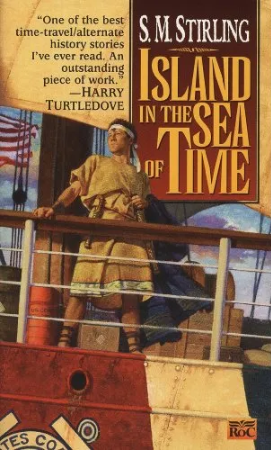
  • Island in the Sea of Time et seq., by S.M. Stirling: This is my very favorite. The premise is quite simple: the island of Nantucket is inexplicably sent back in time to 1250 BC. Luckily, a Coast Guard sailing ship happens to be visiting, so they’re able to sail to Britain and trade for grain to survive the winter while they bootstrap industrial civilization on the thinly-inhabited coast of North America. Of course, it’s not that simple: the inhabitants of the Bronze Age have obvious and remarkably plausible reactions to the sudden appearance of strangers with superior technology, a renegade sailor steals one of the Nantucketers’ ships and sets off to carve his own empire from the past, and the Americans are thrust into Bronze Age geopolitics as they attempt to thwart him. The “good guys” are frankly pretty boring, in a late 90s multicultural neoliberal kind of way — the captain of the Coast Guard ship is a black lesbian and you can practically see Stirling clapping himself on the back for Representation — but the villainous Coast Guardsmen and (especially) the natives of 1250 BC get a far more complex and interesting portrayal.1 Two of them are particularly well-drawn: a fictional trader of the thinly attested Iberian city-state of Tartessos, and an Achaean nobleman named Odikweos, both of whom are thoroughly understandable and sympathetic while remaining distinctly unmodern. The Nantucketers, with their technological innovations and American values, provide plenty of contrast, but Stirling is really at his best in using them to highlight the alien past.
  • Lest Darkness Fall, by L. Sprague de Camp: An absolute classic of the genre. I may not love what de Camp did with Conan, but the man could write! One of the great things about old books (this one is from 1939) is that they don’t waste time on technobabble to justify the silly parts: about two pages into the story, American archaeologist Martin Padway is struck by lightning while visiting Rome and transported back in time to 535 AD. How? Shut up, that’s how, and instead pay attention as Padway introduces distilled liquor, double-entry bookkeeping, yellow journalism, and the telegraph before taking advantage of his encyclopedic knowledge of Procopius’s De Bello Gothico to stabilize and defend the Italo-Gothic kingdom, wrest Belisarius’s loyalty away from Justinian, and entirely forestall the Dark Ages. If this sounds an awful lot like the imaginary book I described in my review of The Knowledge: yes. The combination of high agency history rerouting and total worldview disconnect — there’s a very funny barfight about Christology early on, and later some severe culture clash that interferes with a royal marriage — is charming. Also, this was the book that inspired Harry Turtledove not only to become an alt-history writer but to get a Ph.D. in Byzantine history.
  • […]

  • Ruled Britannia, by Harry Turtledove: Turtledove is by far the most famous and successful alternate history author out there, with lots of short pieces and novels ranging from “Byzantine intrigue in a world where Islam never existed” (Agent of Byzantium) to “time-travelling neo-Nazis bring AK-47s to the Confederacy” (The Guns of the South), but this is the only one of his books I’ve ever been tempted to re-read. The jumping-off point, “the Spanish Armada succeeded”, is fairly common for the genre2 — the pretty good Times Without Number and the lousy Pavane (hey, did you know the Church hates and fears technology?!) both start from there — but Turtledove fasts forward only a decade to show us William Shakespeare at the fulcrum of history. A loyalist faction (starring real life Elizabethan intriguers like Nicholas Skeres) wants him to write a play about Boudicca to inflame the population to free Queen Elizabeth from her imprisonment in the Tower of London, while the Spanish authorities (represented, hilariously, by playwright manqué Lope de Vega) want him to write one glorifying the late Philip II and the conquest of England. Turtledove does a surprisingly good job inventing new Shakespeare plays from snippets of real ones and from John Fletcher’s 1613 Bonduca, but of course I’m most taken by his rendition of the Tudor world. Maybe I should check out some of his straight historical fiction …

    1. Well, except for the peaceful matriarchal Marija Gimbutas-y “Earth People” being displaced from Britain by the invading Proto-Celts; they’re also “good guys” and therefore, sadly, boring.

    2. Not as common as “the Nazis won”, obviously.

I agree with Jane about Island in the Sea of Time, but my son and daughter-in-law strongly preferred the other series Stirling wrote from the same start point: what happened to the world left behind when Nantucket Island got scooped out of our timeline and dumped back into the pre-collapse Bronze Age. Whereas ISOT has minimal supernatural elements to the story, the “Emberverse” series beginning with Dies the Fire went on for many, many more books and had much more witchy woo-woo stuff front-and-centre rather than marginal and de-emphasized.

While I quite enjoyed Ruled Britannia, it was the first Turtledove series I encountered that I’ve gone back to re-read: The Lost Legion … well, the first four books, anyway. He wrote several more books in that same world, but having wrapped up the storyline for the Legion’s main characters, I didn’t find the others as interesting.

September 27, 2022

Sarah Hoyt on how Americans are mis-understanding the TV show Bridgerton

Filed under: Britain, History, Media, USA — Tags: , , , , — Nicholas @ 03:00

I don’t watch TV, so I haven’t seen the show myself, but apparently a lot of Blacks in the US are taking away the multi-racial casting of a parallel-universe TV show set in the Regency period as being a true representation of British history:

Anyway, all this came to a head with my watching the Bridgerton series. As other people know, it bothers the living daylights out of me to cast well-known historical figures as another race. Not because there can’t be decent actors of another race, but because I know there is a percentage of the population who takes fictional movies and shows as revealing “the truth”.

My mom, who is better educated (alas) than most American high school graduates is one of those. She will adapt her vision of the past according to some crazy movie she just watched. (The number of arguments I’ve had.)

For those who haven’t watched Bridgerton (bog standard regency romances, with gorgeous, if not period-accurate clothing) they cast a certain number of noblemen as black or indian or other “races” and the English Queen in Bridgerton is black.

The buried history in the mini-series (suggested and Heinleined in) is that black and white people coexisted in England side by side, until the king married a black Queen, and then suddenly mixed marriages were allowed.

This is obviously a fantastic parallel world history. Yes, there were black people in England in the regency. I’m sorry to tell you there were very few and 99% of them were slaves or servants brought by people who had lived in Africa.

There was no “black nobility” and no system of apartheid.

HOWEVER as we found out, American people absolutely believe this nonsense. They believe Queen Charlotte (mostly German, honestly) was “black” based on a very bad portrait and rumors of a Moorish ancestress. (Note this rumor was almost certainly political slander. Also that Moor at that time in the peninsula depending on whether in the South or the North might mean slim, small and tan, but did not mean AFRICAN.) Weirdly the best debunking I found was from Quora.

HOWEVER I also found endless pages of well-educated black-Americans celebrating Queen Charlotte for “Black history month”.

Let me also point out that both the Queen and her husband (Yes, mad King George) were ardent abolitionists and that did she have any legitimate hint of African blood ALL the opposition would have fixated on this, and the caricatures would have been next level. However this never happened. Queen Charlotte was and looked German, even if a portrait can imply “stereotypical” African features … As long as you remember that those features exist in a lot of other races, and that a lot of them are also Neanderthal.

Sure, if you go with the one drop theory, Queen Charlotte was black. So is everyone else. EVERYONE else, even those whose 23andme swears they’re pure Scandinavian. Because sometime in the last two thousand years all of us got an African ancestor, somewhere, on one of the many, many lines that fed into our family. (Note genealogy is also a lie to some extent, since it’s impossible to follow every single female (if you’re tracking the male. Vice versa otherwise) line that dropped into your family, and everyone who fed into every other of those lines.)

The problem is that it was the rats in the head of the American black producers of the series that led them to create this entire parallel universe which they THINK IS TRUE on the basis of “well the queen was black”. WITHOUT LOOKING.

And now those rats are reproducing everywhere, but most notably in black American heads, who now believe that “Well, the king married a black queen, so it must be true that the Americans rebelled to keep enslaving the black people”.

This is all not just arrant nonsense, but poisonous bullshit, and has no contact whatsoever with reality.

What can we do about it?

Correct it, ruthlessly, whenever we come across it. And keep pointing out that a queen who was blond and blue eyed was not in fact “black” unless everyone is. And that reading racial tea leaves is a pseudo-science, like phrenology.

I would very much appreciate if we could put this behind us so may family doesn’t keep getting asked “what is your racial background” by complete strangers. (And not just census takers, whom I like to answer with “human”.)

Look, in the end, the darkest African and the lightest Scandinavian have more in common with each other than not. To pretend otherwise is arrant nonsense.

Yes, our far-distant ancestors developed racism as a necessary survival tool (along with the uncanny valley discomfort) because you could fall into the hands of another hominin band and become “food”. (The chimps are less discriminating and will also eat babies of their own band.)

We are now past that, and I would like it not to return. Yes, there are physical characteristics that go with certain character traits, but it’s harder to track than you think, and they’re often things that have nothing to do with race, let alone racial stereotypes.

We all have one drop of slaves and enslaved, or saints, sinners, murderers, murder victims, kings and peasants, ascetics and whores. And we all have all the inclinations of all of mankind in varying degrees.
It’s what you make of it and with it that determines whether you can wear “human” as a crown, or in fact get cast out of the human race for shoving in line.

It’s time to stop with the nonsense.

December 8, 2021

What if the refugee flow was crossing the Channel the opposite way?

In The Critic, Joel Rodrigues considers what the media narrative would say if the constant stream of migrants from the EU to Britain was reversed, as all the major media outlets predicted would happen if Brexit went through:

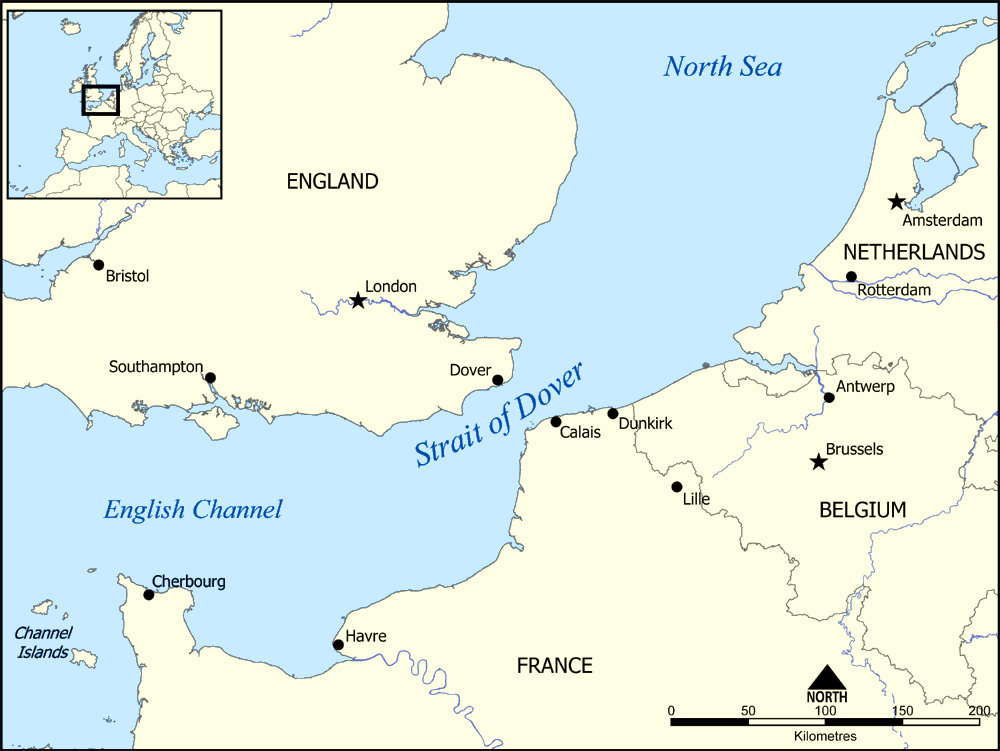
This map shows the location of the Strait of Dover between England and France, and part of the English Channel and the North Sea. It also shows nearby towns such as Dover, Calais, and Dunkirk.
Image created by NormanEinstein via Wikimedia Commons.

Imagine “tent” cities on the Kent coast, similar to “the Jungle” that existed in Calais up until 2016. These camps are the type of camps that the Remain campaign (wrongly) warned would spring up if Britain voted to leave the EU, as part of their Project Fear campaign. The tent cities are full of migrants, hoping to reach the French coast and the “sunlit uplands” of the European Union.

The camps are filthy, riddled with violent crime, and it is here that people traffickers sell spaces on dinghies to cross the channel for thousands of pounds a ticket. The British police and immigration services are aware of undocumented people living in squalor in the camps, but largely do nothing.

Occasionally a camp is cleared to placate the locals, but it quickly springs up somewhere else. The British government make no effort to document, accommodate or process the migrants living in appalling conditions on its territory. Instead, it blames the “pull factor of the EU’s single market”, saying that many of these migrants have family in France and want to live in a French or German speaking society. A junior British minister suggests that the black market economies in the EU are also a pull factor, and that there are a “lack of safe asylum routes” into the EU.

People smugglers continue operating from the British coast, and the migrant camps expand. Dinghies are now launched daily from the UK towards the continent. Police are aware of the launches, but do nothing. The RNLI and Royal Navy escort these flimsy boats until they are in EU waters, despite their not being seaworthy. Thousands succeed in making the crossing.

Then, tragedy strikes when a boat sinks. Statements are released from the British and French governments lamenting the loss of life. Trying to find a solution, Emmanuel Macron writes a letter to Boris Johnson urging increased collaboration, with joint patrols if necessary, to prevent a repeat of the tragedy.

The British government issue a response claiming that the perfectly conciliatory letter is in fact unacceptable, a “threat to British sovereignty”, and that France is uninvited from crisis talks. British media later reports that in a meeting with some of his advisors, Boris Johnson branded Emmanuel Macron as “a clown in charge of a circus”.

Imagine the media commentary and narrative in the UK surrounding such a situation, especially post-Brexit.

“Migrants die fleeing racist, Brexit-ridden, plague island,” says an op-ed in the Guardian. The comments are largely agreed that Boris Johnson is personally responsible for each of their deaths.

“UK condemned as using migrants to destabilise the EU’s single market,” reports the BBC. Parallels are also drawn in The Times between Boris Johnson and Belarus’ Lukashenko. There are mass demonstrations outside Parliament as the crisis worsens.
One can imagine the EU Commission swiftly and publicly denouncing the UK and drawing up sanctions. The Labour party would likely call it a national scandal, and demand resignations, as well as accusing the government of taking a hardline stance as cynical electioneering.

I searched for public domain or Creative Commons images of the English Channel migrant crisis, but came up surprisingly empty, hence the generic map to illustrate this post. I had expected to be inundated with lots of heart-rending images of desperate refugees, but not this time…

January 9, 2021

QotD: Heinlein’s “Future History”

Filed under: Books, Quotations, Space, USA — Tags: , , , , — Nicholas @ 01:00

I’ve been planning to write about Elon Musk’s Bowie-blasting space car ever since the video footage was transmitted back to Earth in the middle of this week. But I did not even notice until I sat down to the job that I have also been rereading Robert A. Heinlein’s “Future History” short-story cycle. This is not exactly a coincidence: I go back to the Future History every few years. This time I had one of those “Surprise! You’re old!” moments upon realizing that my cheap trade paperback of The Past Through Tomorrow, a collection of the Future History stories, must be 30 years old if it’s a day.

Written between 1939 and 1950 for quickie publication in pulp magazines, the Future History is a series of snapshots of what is now an alternate human future — one that features atomic energy, solar system imperialism, and the first steps to deep space, all within a Spenglerian choreography of social progress and occasional resurgent barbarity. It stands with Isaac Asimov’s Foundation trilogy as a monument of golden-age science fiction.

In some respects the Future History has not aged any better than one might expect. Like other young nerds who created the science-fiction canon, Heinlein was interested in rocketry before it was thought to have any practical use. And Heinlein was really, really good at acquiring or faking expert knowledge of those topics in which he happened to get interested. The man knew his Tsiolkovsky.

The result, in the key story of the Future History, is an uncannily accurate description of the design and launch of a Saturn V rocket. (Written before 1950, remember.) But because Heinlein happened not to be interested in electronic computers, all the spacefaring in his books is done with the aid of slide rules or Marchant-style mechanical calculators (which, in non-Heinlein history, had to become obsolete before humans could go to Luna at all). Heinlein sends people to colonize the moon, but nobody there has internet, or is conscious of its absence.

Colby Cosh, “Heinlein’s monster? The literary key to Elon Musk’s sales technique”, National Post, 2018-02-12.

September 11, 2020

Without the Battle of the Teutoburg Forest, European history would have been radically different

Filed under: Europe, Germany, History, Military — Tags: , — Nicholas @ 03:00

The folks at UnHerd are starting a series of “alt histories” to help explore the inflection points of history that may have led to a very different world, like the outcome of the Imperial Roman disaster in Germany’s Teutoburger Wald in 9AD:

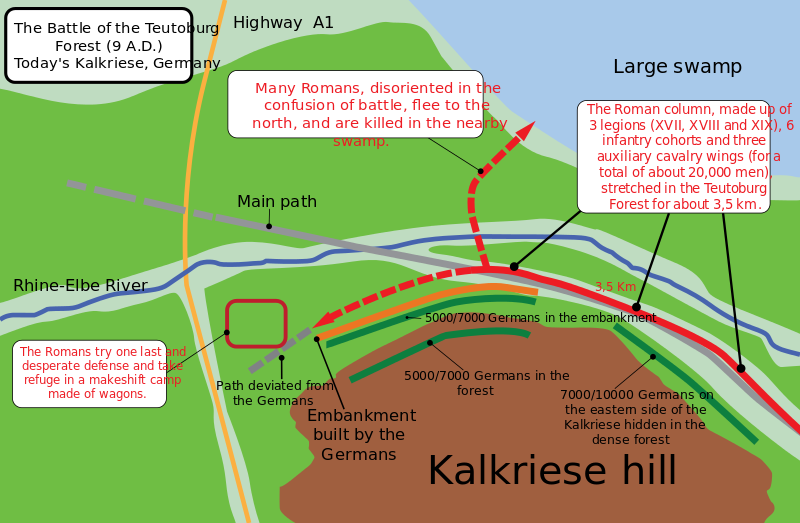
Map showing a tactical overview of the Battle of Teutoburg Forest including troop movement.
Map by Cristiano64 originally for a non-English Wikipedia page, which explains the weird translated captioning.

If history teaches us anything it’s that we should expect the unexpected. But history, unlike the news, is something that’s already happened. Historians, unlike journalists, see events in the rearview mirror. As a result, they’re rather prone to deterministic explanations. For instance, there’s the Whig view of history with its narratives of ever-increasing freedom. Marxists, meanwhile, situate historical events within an overarching process of class struggle. Indeed, from millenarians to environmentalists to the friends and foes of the Anglosphere, everyone’s trying to bend the arc of history.

[…]

For instance, why didn’t the Roman Empire conquer the German lands beyond the Rhine? A determinist might reach for some geographical explanation — the territory was inhospitable and the locals scary. And yet similar obstacles didn’t stop the the Romans from assimilating Britannia, so why not Germania too?

Well, because three Roman legions were wiped out at the Battle of the Teutoburg Forest, that’s why — and there was nothing pre-determined about that catastrophe. It required the mother of all ambushes, made possible by the extreme cunning of the German chieftain Arminius and the extreme gullibility of the Roman commander Varus. It could easily not have happened – and thus, untraumatised by such an unexpected and total defeat, the Romans might have extended the northern frontier to the Elbe or beyond.

What would a Romanised Germania have meant for the rest of history? It’s impossible to say, but we can imagine an unRomanised Gaul. The existence of France (and the French language) as we know it today depends on the fact that, two thousand years ago, the Romans conquered Gaul, but not Germania. Had things gone differently, French (and therefore British and therefore American) history would have developed along a very different path.

What this example also tells us is just how much of history depends on the character, abilities and decisions of particular individuals (contrast the ruthless brilliance of Julius Caesar in the case of Gaul with the trusting foolishness of Varus in the case of Germania). There’s something called the great man theory of history. It was a 19th Century idea and deeply unfashionable today, but while the individuals who change the course of history aren’t necessarily “great” or, indeed, men — there’s no doubting their existence.

They don’t have to be heroes or villains. In fact, they don’t have to have much authority of any kind. Their impact doesn’t even have to be the result of a deliberate decision. They just have to do the right (wrong) thing in the right (wrong) place at the right (wrong) time. For instance, someone, somewhere, did something that introduced the Covid-19 virus to the human population. Whether that was eating a bowl of bat soup or dropping a test tube in a laboratory we’ll probably never know; but whatever it was, it made all the difference.

That’s why we can’t leave alt history to the historians alone. While some of them might see merit in exploring counterfactuals, their commitment to academic rigour acts as a constraint upon their speculations. Quite right too, but there’s also a case for letting our imaginations run riot — and for that we need story-tellers.

August 1, 2020

Secret Briefing: The Pedersen Device

Filed under: History, Military, USA, Weapons, WW1 — Tags: , , , , , — Nicholas @ 02:00

Forgotten Weapons
Published 8 Aug 2016

http://www.patreon.com/ForgottenWeapons

Welcome to your briefing on the new equipment we are issuing for the Spring Offensive of 1919. With this new secret weapon, we can finally push the Germans out of France and end the war!

May 2, 2020

Gabriel Over the White House – “the most unapologetic celebration of fascism ever put on film”

Filed under: History, Media, USA — Tags: , , , , — Nicholas @ 05:00

Jack Cashill found this “gem” while watching Turner Classic Movies during the Wuhan Coronavirus lockdown and was amazed:

By now, I have seen most of TCM’s movies, but one aired this past week I had not even heard of. On a whim, I DVR’ed it. Good move. Called Gabriel Over the White House, this 1933 liberal wet dream proved to be the most unapologetic celebration of fascism ever put on film.

I watched it wide-eyed. The movie opens with the inauguration of Jud Hammond. A laissez-faire back-slapper, Hammond sees the White House as a way to enrich himself and reward his cronies, Depression be damned. The audience assumes Hammond is a Republican.

Out joyriding one day, Hammond crashes his car and lapses into coma. While still comatose, the Angel Gabriel visits Hammond and turns him into a committed and caring progressive. Is there another kind?

Upon waking, Hammond convenes his cabinet of corrupt self-servers and rejects their plea that the party must come first. Instead, Hammond insists their first priority be the American people. He refuses to use the U.S. Army against a marching mass of the unemployed and fires the secretary of state when he objects.

“I suggest you read the Constitution of the United States. You’ll find the President has some power,” Hammond warns his cabinet members. Some power? Fully indifferent to the Constitution, Hammond grabs all the power that can possibly be grabbed.

When the cabinet objects to his usurpation of power, Hammond fires the cabinet. When Congress threatens to impeach Hammond, he declares martial law and dispenses with Congress. When accused of being a dictator, Hammond argues that his is a dictatorship based on some imagined Jeffersonian principle of Democracy, namely the greatest good for the greatest number of people.

Now with total power, Hammond enacts a national banking law, stops foreclosures, provides direct aid to some 55 million farmers, circumvents private industry and launches his own “Army of Construction.”

A young aide, Hartley Beekman, and his female counterpart, Pendie Molloy, serve as something of a progressive chorus. “The way he thinks is so simple and honest that it sounds a little crazy,” says Beekman of Hammond.

“He’s doing the things you wanted,” Molloy answers. “And If he’s mad, it’s a divine madness. Look at the chaos and catastrophe sane men have brought about.”

The divine madness includes the creation of a Federal Police force, a subset of the Army, with young Beekman at its head. When the nation’s chief racketeer refuses to go back to his unnamed home country, Hammond warns him that the government is about to “muscle in on his racket” and federalize the sale of alcohol.

The racketeer fights back, and Beekman employs a legion of tanks Waco-style against the racketeers. When captured, the racketeers are all hauled before a three-man court martial headed by Beekman, promptly declared guilty, and executed en masse by a firing squad.

Several years ago, the movie was brought to my attention and I found this clip on YouTube that I suspect captures the essence of the film:

James Lileks describes it as “a remarkable movie. And I don’t mean ‘astonishingly good, technically superb, visually ingenious.’ I mean utterly insane.”

February 27, 2020

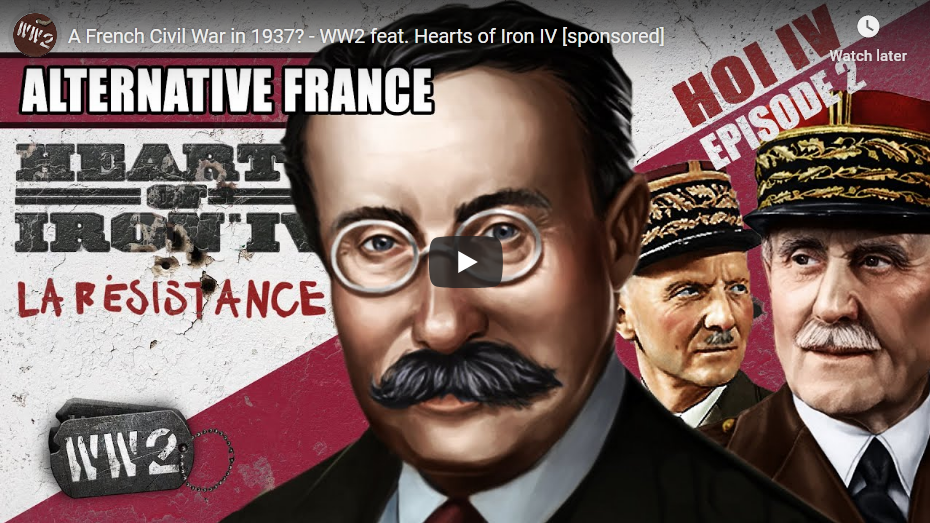
A French Civil War in 1937? – WW2 feat. Hearts of Iron IV [sponsored]

World War Two
Published 26 Feb 2020

This video is sponsored by Paradox Interactive. Indy shares his thoughts on what he thinks would have happened if the French would have decided to meddle in the Spanish Civil War – triggering a Civil War.

Hearts of Iron IV: La Résistance is now available! You can play Hearts of Iron IV for free until next Sunday, the 1st of March! Discover it here: https://pdxint.at/39Re5ld

Watch our first collab video with HoI4 about the Spanish Civil War here: https://youtu.be/7QE1hvH8ZVU
Watch our Between Two Wars episode on the Spanish Civil War here: https://youtu.be/ncUkPavahCU
Watch our Between Two Wars episode on the French February Revolution in 1934 here: https://youtu.be/tLm1gWnlcYw

Join us on Patreon: https://www.patreon.com/TimeGhostHistory
Or join The TimeGhost Army directly at: https://timeghost.tv

Follow WW2 day by day on Instagram @World_war_two_realtime https://www.instagram.com/world_war_t…
Join our Discord Server: https://discord.gg/D6D2aYN.
Between 2 Wars: https://www.youtube.com/playlist?list…
Source list: http://bit.ly/WW2sources

Written and Hosted by: Indy Neidell
Produced by: Spartacus Olsson and Astrid Deinhard
Directed by: Wieke Kapteijns
Executive Producers: Bodo Rittenauer, Astrid Deinhard, Indy Neidell, Spartacus Olsson
Creative Producer: Joram Appel
Post-Production Director: Wieke Kapteijns
Research by: Indy Neidell
Edited by: Guido Becker
Gameplay scenes: Sietse Kenter

Colorizations by:
Dememorabilia – https://www.instagram.com/dememorabilia/
Julius Jääskeläinen – https://www.facebook.com/JJcolorization/
Adrien Fillon – https://www.instagram.com/adrien.colo…
Daniel Weiss

Archive by Screenocean/Reuters https://www.screenocean.com.

A TimeGhost chronological documentary produced by OnLion Entertainment GmbH.

Older Posts »

Powered by WordPress