
The pop-culture image of elephants in battle is an awe-inspiring one: massive animals smashing forward through infantry, while men on elephant-back rain missiles down on the hapless enemy. And for once I can surprise you by saying: this isn’t an entirely inaccurate picture. But, as always, we’re also going to introduce some complications into this picture.
Elephants are – all on their own – dangerous animals. Elephants account for several hundred fatalities per year in India even today and even captured elephants are never quite as domesticated as, say, dogs or horses. Whereas a horse is mostly a conveyance in battle (although medieval European knights greatly valued the combativeness of certain breeds of destrier warhorses), a war elephant is a combatant in his own right. When enraged, elephants will gore with tusks and crush with feet, along with using their trunks as weapons to smash, throw or even rip opponents apart (by pinning with the feet). Against other elephants, they will generally lock tusks and attempt to topple their opponent over, with the winner of the contest fatally goring the loser in the exposed belly (Polybius actually describes this behavior, Plb. 5.84.3-4). Dumbo, it turns out, can do some serious damage if prompted.
Elephants were selected for combativeness, which typically meant that the ideal war elephant was an adult male, around 40 years of age (we’ll come back to that). Male elephants enter a state called “musth” once a year, where they show heightened aggressiveness and increases interest in mating. Trautmann (2015) notes a combination of diet, straight up intoxication and training used by war elephant handlers to induce musth in war elephants about to go into battle, because that aggression was prized (given that the signs of musth are observable from the outside, it seems likely to me that these methods worked).
(Note: In the ancient Mediterranean, female elephants seem to have also been used, but it is unclear how often. Cassius Dio (Dio 10.6.48) seems to think some of Pyrrhus’s elephants were female, and my elephant plate shows a mother elephant with her cub, apparently on campaign. It is possible that the difficulty of getting large numbers of elephants outside of India caused the use of female elephants in battle; it’s also possible that our sources and artists – far less familiar with the animals than Indian sources – are themselves confused.)
Thus, whereas I have stressed before that horses are not battering rams, in some sense a good war elephant is. Indeed, sometimes in a very literal sense – as Trautmann notes, “tearing down fortifications” was one of the key functions of Indian war elephants, spelled out in contemporary (to the war elephants) military literature there. A mature Asian elephant male is around 2.75m tall, masses around 4 tons and is much more sturdily built than any horse. Against poorly prepared infantry, a charge of war elephants could simply shock them out of position a lot of the time – though we will deal with some of the psychological aspects there in a moment.
A word on size: film and video-game portrayals often oversize their elephants – sometimes, like the Mumakil of Lord of the Rings, this is clearly a fantasy creature, but often that distinction isn’t made. As notes, male Asian (Indian) elephants are around 2.75m (9ft) tall; modern African bush elephants are larger (c. 10-13ft) but were not used for war. The African elephant which was trained for war was probably either an extinct North African species or the African forest elephant (c. 8ft tall normally) – in either case, ancient sources are clear that African war elephants were smaller than Asian ones.
Thus realistic war elephants should be about 1.5 times the size of an infantryman at the shoulders (assuming an average male height in the premodern world of around 5’6?), but are often shown to be around twice as tall if not even larger. I think this leads into a somewhat unrealistic assumption of how the creatures might function in battle, for people not familiar with how large actual elephants really are.
The elephant as firing platform is also a staple of the pop-culture depiction – often more strongly emphasized because it is easier to film. This is true to their use, but seems to have always been a secondary role from a tactical standpoint – the elephant itself was always more dangerous than anything someone riding it could carry.
There is a social status issue at play here which we’ll come back to […] The driver of the elephant, called a mahout, seems to have typically been a lower-status individual and is left out of a lot of heroic descriptions of elephant-riding (but not driving) aristocrats (much like Egyptian pharaohs tend to erase their chariot drivers when they recount their great victories). Of course, the mahout is the fellow who actually knows how to control the elephant, and was a highly skilled specialist. The elephant is controlled via iron hooks called ankusa. These are no joke – often with a sharp hook and a spear-like point – because elephants selected for combativeness are, unsurprisingly, hard to control. That said, they were not permanent ear-piercings or anything of the sort – the sort of setup in Lord of the Rings is rather unlike the hooks used.
In terms of the riders, we reach a critical distinction. In western media, war elephants almost always appear with great towers on their backs – often very elaborate towers, like those in Lord of the Rings or the film Alexander (2004). Alexander, at least, has it wrong. The howdah – the rigid seat or tower on an elephant’s back – was not an Indian innovation and doesn’t appear in India until the twelfth century (Trautmann supposes, based on the etymology of howdah (originally an Arabic word) that this may have been carried back into India by Islamic armies). Instead, the tower was a Hellenistic idea (called a thorkion in Greek) which post-dates Alexander (but probably not by much).
This is relevant because while the bowmen riding atop elephants in the armies of Alexander’s successors seem to be lower-status military professionals, in India this is where the military aristocrat fights. […] this is a big distinction, so keep it in mind. It also illustrates neatly how the elephant itself was the primary weapon – the society that used these animals the most never really got around to creating a protected firing position on their back because that just wasn’t very important.
In all cases, elephants needed to be supported by infantry (something Alexander (2004) gets right!) Cavalry typically cannot effectively support elephants for reasons we’ll get to in a moment. The standard deployment position for war elephants was directly in front of an infantry force (heavy or light) – when heavy infantry was used, the gap between the two was generally larger, so that the elephants didn’t foul the infantry’s formation.
Infantry support covers for some of the main weaknesses elephants face, keeping the elephants from being isolated and taken down one by one. It also places an effective exploitation force which can take advantage of the havoc the elephants wreck on opposing forces. The “elephants advancing alone and unsupported” formation from Peter Jackson’s Return of the King, by contrast, allows the elephants to be isolated and annihilated (as they subsequently are in the film).
Bret Devereaux, “Collections: War Elephants, Part I: Battle Pachyderms”, A Collection of Unmitigated Pedantry, 2019-07-26.
March 21, 2023
QotD: The elephant as a weapon of war
December 22, 2022
QotD: Sparta as the pre-eminent foe of tyranny
It also matters exactly how tyranny is understood here. For the ancient Greeks, tyranny was a technical term, meaning a specific kind of one-man rule – a lot like how we use the word dictatorship to mean monarchies that are not kingdoms (though in Greece this word didn’t have quite so strong a negative connotation). Sparta was pretty reliable in opposing one-man rule, but that doesn’t mean it supported “free” governments. For instance, after the Peloponnesian War, Sparta foisted a brutal oligarchy – what the Athenians came to call “The Thirty Tyrants” – on Athens; their rule was so bad and harsh that it only lasted eight months (another feat of awful Spartan statecraft). Such a government was tyrannical, but not a tyranny in the technical sense.
But the Spartan reputation for fighting against tyrannies – both in the minds of the Greeks and in the popular consciousness – is predicted on fighting one very specific monarchy: the Achaemenids of Persia. […] This is the thing for which Sparta is given the most credit in popular culture, but Sparta’s record in this regard is awful. Sparta (along with Athens) leads the Greek coalition in the second Persian war and – as discussed – much of the Spartan reputation was built out of that. But Sparta had largely been a no-show during the first Persian war, and in the subsequent decades, Sparta’s commitment to opposing Persia was opportunistic at best.
During the late stages of the Peloponnesian War, Sparta essentially allied with Persia, taking funding and ships first from the Persian satrap Tissaphernes and later from Cyrus the Younger (a Persian prince and satrap). Sparta, after all, lacked the economic foundation to finance their own navy and the Spartans had – belatedly – realized that they needed a navy to defeat Athens. And of course the Persians – and any Spartan paying attention – knew that the Athenian navy was the one thing keeping Persia out of Greek affairs. So Sparta accepted Persian money to build up the fleets necessary to bring down the Athenian navy, with the consequence that the Ionian Greeks once again became subjects to the Persian Empire.
Subsequent Spartan diplomatic incompetence would lead to the Corinthian War (395-387), which turned into a nasty stalemate – due in part to the limitations of Spartan siege and naval capabilities. Unable to end the conflict on their own, the Spartans turned to Persia – again – to help them out, and the Persians brokered a pro-Spartan peace by threatening the Corinthians with Persian intervention in favor of Sparta. The subequent treaty – the “King’s Peace” (since it was imposed by the Persian Great King, Artaxerxes II) was highly favorable to Persia. All of Ionian, Cyprus, Aeolia and Carnia fell under Persian control and the treaty barred the Greeks from forming defensive leagues – meaning that it prevented the formation of any Greek coalition large enough to resist Persian influence. The treaty essentially made Sparta into Persia’s local enforcer in Greece, a role it would hold until its defeat in 371.
If Sparta held the objective of excluding Persian influence or tyranny from Greece, it failed completely and abjectly. Sparta opened not only the windows but also the doors to Persian influence in Greece – between 410 and 370, Sparta probably did more than any Greek state had ever or would ever do to push Greece into the Persian sphere of influence. Sparta would also refuse to participate in Alexander’s invasion of Persia – a point Alexander mocked them for by dedicating the spoils of his victories “from all of the Greeks, except the Spartans” (Arr. Anab. 1.16.7); for their part, the Spartans instead tried to use it as an opportunity to seize Crete and petitioned the Persians for aid in their war against Alexander, before being crushed by Alexander’s local commander, Antipater, in what Alexander termed “a clash of mice”.
Bret Devereaux, “Collections: This. Isn’t. Sparta. Part VII: Spartan Ends”, A Collection of Unmitigated Pedantry, 2019-09-27.
May 23, 2022
QotD: The adoption of Astrology by the Greeks and Romans
This portability is not restricted merely to divination. Herodotus’ suspicion that quite a bit of Greek religion might have come from somewhere else has merit, though Anatolia, not Egypt, appears to be the main source (see: M.L. West, The East Face of Helicon (1999); and for the person already writing this comment, yes I am aware of Bernal’s Black Athena and no I am not convinced, nor are many specialists in the field). The Romans were open about importing gods from Greece and make a clear distinction between gods worshiped in traditional Roman manner and those imported from Greece (a quite small number) and thus whose rituals followed ritus graecus – rituals in Greek fashion.
In other cases, the foreign practice was modified to fit the culture it arrived in. The Romans adopted the cult of Cybele, an Anatolian goddess, during the dark days of the Second Punic War (the Senate made that decision based on a consultation with the Sibylline books, a written source of oracular prophecy we can talk about another day). Cybele was called Magna Mater (“Great Mother”) in Rome, and it seems made some modifications to her rituals, in particular possibly limiting the role of the Galli (eunuch priests) whose rituals and style seemed decidedly “unRoman” (though I should note that the scholarship here is contested and the issue and evidence complex).
The normal technical term for this kind of religious borrowing is syncretism, and it is a sort of interweaving of religious traditions that polytheisms both ancient and modern are exceptionally capable of. It is simply not hard to add one more god or one more ritual into a religious system that already assumes the existence of innumerable gods.
Bret Devereaux, “Collections: Practical Polytheism, Part III: Polling the Gods”, A Collection of Unmitigated Pedantry, 2019-11-08.
April 19, 2022
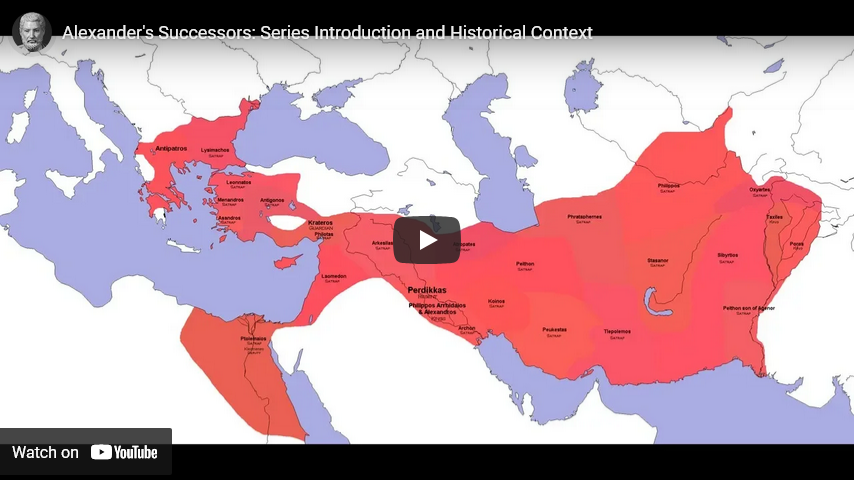
Alexander’s Successors (the Diadochi): Series Introduction and Historical Context
Thersites the Historian
Published 24 Nov 2018This video introduces my series on Alexander’s Successors by talking about what the series will be like and by going through the historical context that the viewer might need to understand the age of the Successors.
Patreon link: https://www.patreon.com/thersites
PayPal link: paypal.me/thersites
Twitter link: https://twitter.com/ThersitesAthens
Minds.com link: https://www.minds.com/ThersitestheHis…
Steemit/dtube link: https://steemit.com/@thersites/feed
Backup Channel: https://www.youtube.com/channel/UCUrD…
November 3, 2021
Halikarnassos: The Birthplace of History
Thersites the Historian
Published 24 Feb 2020A Greek polis which became the capital city of a Persian satrapy, Halikarnassos is best known as the birthplace of Herodotos and the site of the Mausoleum. A monarchy in a sea of aristocratic and oligarchic governments, Halikarnassos was one of the more unique places in the wider Greek world.
Patreon link: https://www.patreon.com/thersites
PayPal link: paypal.me/thersites
Twitter link: https://twitter.com/ThersitesAthens
Minds.com link: https://www.minds.com/ThersitestheHis…
Steemit/dtube link: https://steemit.com/@thersites/feed
BitChute: https://www.bitchute.com/channel/jbyg…
Backup Channel: https://www.youtube.com/channel/UCUrD…

August 30, 2021
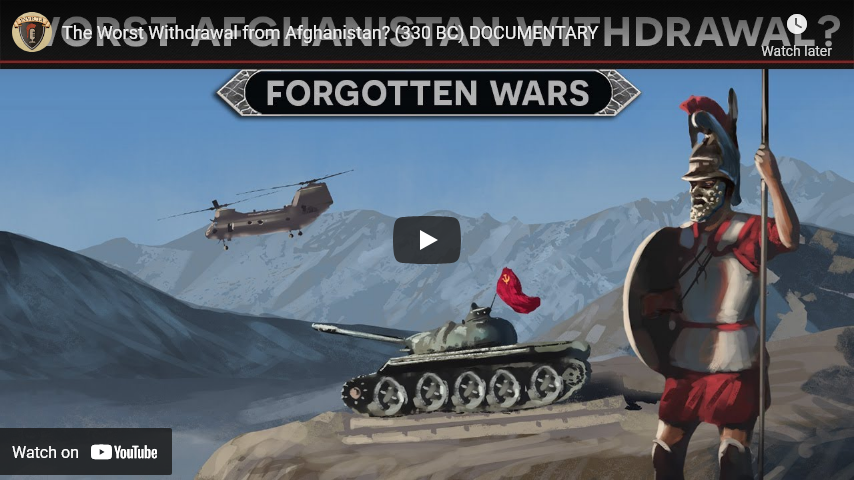
The Worst Withdrawal from Afghanistan? (330 BC)
Invicta
Published 28 Aug 2021Afghanistan has a long history of foreign invasions and withdrawals. Today we explore the first of these chapters with the campaigns of Alexander the Great. Signup for your FREE trial to Wondrium here: http://ow.ly/C3xs30rNLaU
As the last chapter of the US war in Afghanistan appears to draw to a close, the world watches armed and civilian forces alike conduct their final evacuations. However in these moments we hear echoes of the past. The history of the so-called “Graveyard of Empires” is filled with many chapters that tell of yet another major power that has been forced to withdraw after years of spilled blood and treasure. The most well-known instances have occurred in recent memory. However the pages of Afghan history go back thousands of years. Today I wanted to take a look at one of these first major military withdrawals that may just be the most FUBAR one on record; The evacuation of Alexander the Great’s Macedonian army from Afghanistan.
In order to contextualize this conflict we first begin with a quick overview of the history of Afghanistan. No country existed by that name or with those borders in antiquity and it was instead made up of a variety of tribal coalitions and minor kingdoms for much of its early history. However it would first see foreigners begin to claim its lands with the rise of the Median Empire and the succeeding Achaemenid Empire. The lands of modern Afghanistan would now be carved into a series of Satrapies such as Bactria, Gandara, Arakhosia, Drangaian, and Areia.
Following the Ionian Revolt and the Greco Persian Wars, the Kingdom of Macedon would rise to power and take on this ancestral conflict as a way to unify the Hellenic world behind its rule. Phillip II first began to plan and invasion of the Achaemenid Empire but it would be Alexander the Great who carried out this vision. He would campaign for several years through Anatolia, the Levant, Egypt, and Mesopotamia, consuming vast swaths of the enemy’s domains. However King Darius would escape to the east. Alexander initially pursued the Great King but when he was killed by his own Lieutenant, Bessus, Alexander set off against this traitor.
In this chase, Alexander the Great would be sucked into a multi-year war to subdue the eastern satrapies that made up modern Afghanistan. We cover the most significant events of this campaign, the establishment of occupying forces, and the eventual withdrawal of the army following the death of Alexander the Great. The ensuing settler revolt would make it (in my eyes) one of the most FUBAR Afghanistan withdrawals in history that would certainly be worthy of a Vice news documentary had it existed.
The Campaigns of Alexander the Great by Arrian
In the Footsteps of Alexander the Great by Michael Wood
Alexander the Great and Bactria: The Formation of a Greek Frontier in Central Asia by Frank Holt
The Greeks in Bactria and India by W. W. Tarn
On the revolt of the Greek settlers by DiodorusCredits:
Research: Invicta
Script: Invicta
Narration: Invicta
Artwork: Penta Limited#History
#Afghanistan
#Documentary
July 16, 2021
QotD: Thebes
Paul Cartledge makes the case for a central historical role for Oedipus’s home town. As scholarly as he is revisionist, his handsomely garnished Thebes is neither freckled with footnotes nor fancy with Gibbonian phrases. The Thebans’ exceptional capacity for disastrous decisions begins in mythology with the rejection by king Pentheus of the androgynous divinity Dionysus, dramatised in Euripides’s Bacchae.
There followed the king’s death at the hands of his own raving, Bacchanalian mother and the seismic ruin of the city. Homosexuality has no place in Cartledge’s index, but Oedipus’s father Laius, mythical king of Thebes, is the first man said to have swung both ways. The Sacred Band, in classical times, was a select Theban formation of pairs of male lovers, all full citizens.
However gay ancient Hellenes were (not all that, some say, certainly not all), the Sacred Band’s reputation suggests that a zest of scandal accompanied its bravura. Sexual aberration was integral to their city’s fame. Oedipus’s inadvertent marriage with his own mother, Jocasta, led to the mutual slaughter of their sons, as well as to the refusal of his daughter Antigone to marry Haemon, the prince chosen for her by King Creon. Creon then walled her up, the original ochi (NO!) girl. It needed the Athenian Sophocles to make a play out of it. Modern Greeks celebrate ochi day every 28 October, anniversary of the date in 1941 when their dictator, Ioannis Metaxas, refused to surrender to Mussolini and so refurbished himself as a national hero.
Thebes and the confederation of Boeotian states it headed figured on no honours board during the fifth century BC, presumed, until recently, to be the Golden Age of ancient Hellas. When Xerxes marched into Greece in 480 BC, the Theban oligarchs took advice from the Delphic oracle — they may well have leaned on it first — and so had a divine excuse for not offering any obstacle to the barbarian invaders.
Half a century later, the Thebans’ levelling of plucky little Plataea, the Athenians’ sole ally at Marathon, was a lowlight of the Peloponnesian war. It was matched only by their vindictiveness after defeating an Athenian army (including infantryman Socrates and the subaltern Alcibiades) at Delium. They left the enemy dead to rot rather than hand over the bodies.
[…]
Mythical Thebans figure again and again in the work of the great Athenian dramatists, almost always as bad examples. The city and its neighbours may have originated political federation, but it produced no remarkable artist, no Demosthenic orator, no great dramatist. As far as the arts are concerned, Cartledge cites only Pronomus, the pied piper whose mastery of the aulos (not so much flute as “double-oboe”) won wide renown. Nostalgic seniors may recall Danny Kaye’s line, “The oboe, it is clearly understood / Is an ill-wind that nobody blows good.”
Thebes specialised in wrong turnings. During its two decades of ascendancy in the fourth century BC, it sought to keep Macedon in its place by holding the young Philip II hostage. Having learnt the military skills of his captors, the unforgiving outsider returned to chasten them. His son Alexander finished the job by literally flattening the city, save for the house of its greatest poet, Pindar, and the temples of gods whose favours he hoped to enjoy when he set off to purge and pillage the Persians. No second Pindar hymned his conquests; the Greeks never took him for one of their own. His death in his early thirties prompted an immediate rebellion against Macedonian dominion.
Frederic Raphael, “Thick as Thebans”, The Critic, 2021-03-25.
May 9, 2021
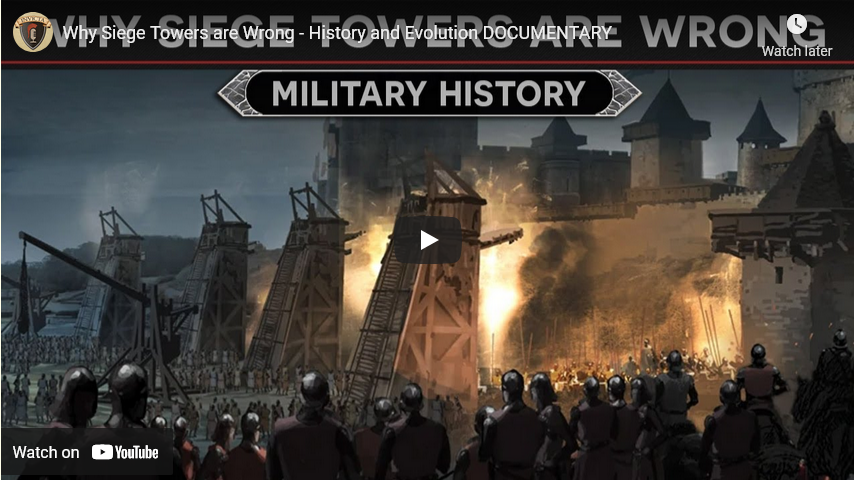
Why Siege Towers are Wrong – History and Evolution
Invicta
Published 1 Feb 2021The depiction of siege towers as massed, glorified troop elevators in most modern media is completely a-historic. In this video let’s reveal the true history of the Siege Tower.
Check out The Great Courses Plus to learn about daily life in the past: http://ow.ly/DWyz30rsjSX
In this video we explore the history of siege warfare and in particular the siege tower. This begins with our earliest civilizations in the Fertile Crescent. It is here in ancient Mesopotamia that people like the Assyrians began to experiment with new siege technology such as the siege tower. We look specifically at the best example of Assyrian Warfare and the Assyrian army with the Siege of Lachish. From here, siege technology would spread to nearby Egypt and across the Mediterranean. The Greeks picked it up and helped push the technology forward with great application in the campaigns of Alexander the Great. The Roman Army then adopted the Siege Tower and worked to perfect its application. We then finally turn to the use of the Siege Tower in the middle ages. Along the way we cover lots of specific examples like The Siege of Alesia, The Siege of Jerusalem, the Siege of Masada and much more.
#History
#Documentary
February 9, 2021
History Summarized: Alexander the Great
Overly Sarcastic Productions
Published 19 Sep 2017Linguistically speaking, Alexander means “Defender of Men” from the Greek “alexo“, defend, and “aner/ander“, man. I’ll never be able to not internally think of his name as just meaning “Alex-Man”.
Oh, yeah, also he conquered an empire or something? IDK. I stopped paying attention after his bland name.
PATREON: www.patreon.com/OSP
MERCH LINKS:
Shirts – https://overlysarcasticproducts.threa…
All the other stuff – http://www.cafepress.com/OverlySarcas…Find us on Twitter @OSPYouTube!

August 11, 2020
The Vanishing Aral Sea
The History Guy: History Deserves to Be Remembered
Published 22 May 2017The History Guy examines the Aral Sea and the confluence of geography and history.
The History Guy uses images that are in the Public Domain. As photographs of actual events are often not available, I will sometimes use photographs of similar events or objects for illustration.
Patreon: https://www.patreon.com/TheHistoryGuy
The History Guy: Five Minutes of History is the place to find short snippets of forgotten history from five to fifteen minutes long. If you like history too, this is the channel for you.
Awesome The History Guy merchandise is available at:
teespring.com/stores/the-history-guyThe episode is intended for educational purposes. All events are presented in historical context.
#history #thehistoryguy #worldhistory

February 4, 2020
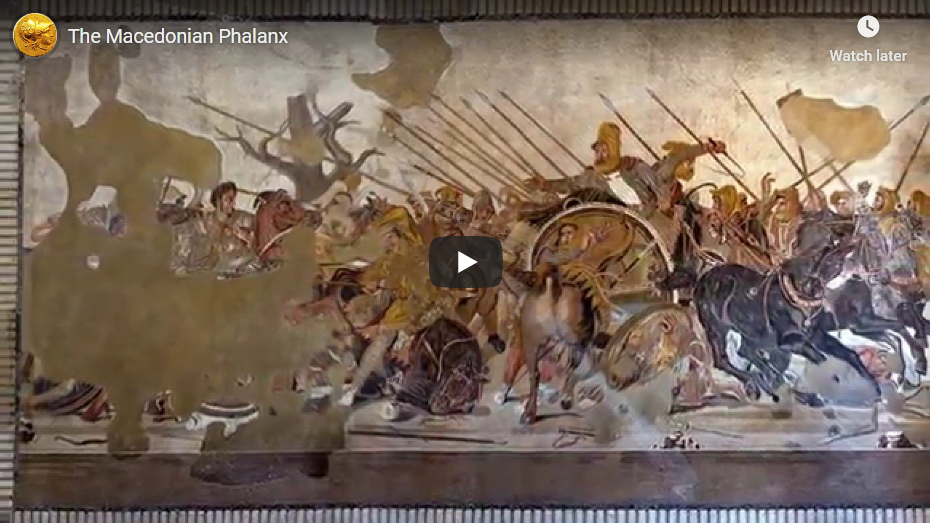
The Macedonian Phalanx
HistoryMatters
Published 30 Jan 2016A short introduction to the Macedonian phalanx, from conception to demise.
January 11, 2020
Logistics of Alexander the Great in His Campaign
Military History Visualized
Published 11 Jan 2016Patreon: https://www.patreon.com/join/mhv
Alexander the Great is well known for his tactics on the battlefield. Some aspect that is often forgotten is that victory on the battlefield requires well supplied troops. This is especially true, because Alexander’s conquest covered a vast area.
See the YouTube description for a lengthy sources list.
January 4, 2020
Blue’s Dumb History Tales #2
Overly Sarcastic Productions
Published 3 Jan 2020Happy new year, have some memes.
Our content is intended for teenage audiences and up.
DISCORD: https://discord.gg/y7uUnzJ
PATREON: https://www.Patreon.com/OSP
MERCH LINKS: https://www.redbubble.com/people/OSPY…
OUR WEBSITE: https://www.OverlySarcasticProductions.com
Find us on Twitter https://www.Twitter.com/OSPYouTube
Find us on Reddit https://www.Reddit.com/r/OSP/
December 2, 2019
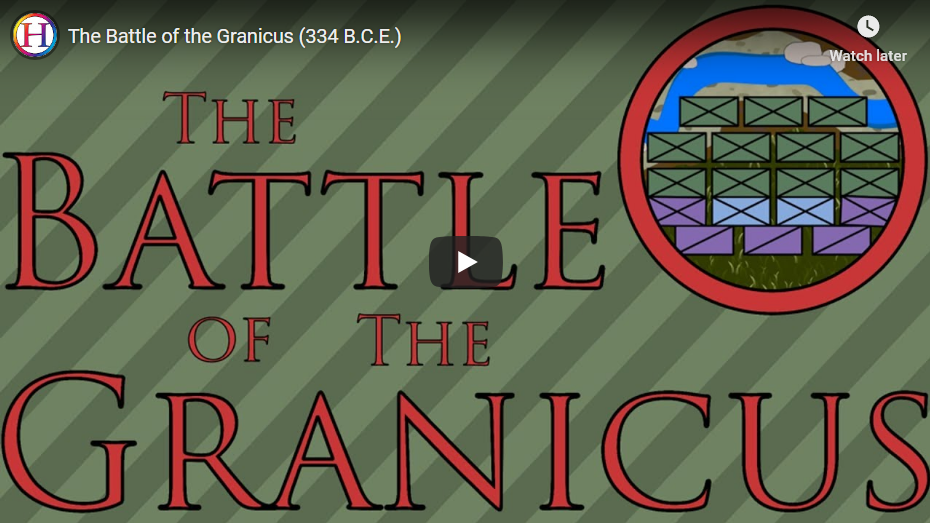
The Battle of the Granicus (334 B.C.E.)
Historia Civilis
Published 30 Nov 2019Patreon | http://patreon.com/HistoriaCivilis
Donate | http://www.paypal.com/cgi-bin/webscr?…
Merch | http://teespring.com/stores/historiac…
Twitter | http://twitter.com/HistoriaCivilis
Website | http://historiacivilis.comSources:
Arrian, The Anabasis of Alexander, Book 1 | https://amzn.to/37F4qo3
Diodorus Siculus, “The Library of History,” Book 17 | https://amzn.to/2qPDP71
Plutarch, “Parallel Lives: The Life of Alexander” | https://amzn.to/2QUHXxu
—
Ernst Badin, “The Battle of the Granicus: A New Look,” from “Collected Papers on Alexander the Great” | https://amzn.to/37zeuyO
Peter Green, Alexander of Macedon | https://amzn.to/2OogimY
Robin Lane Fox, Alexander the Great | https://amzn.to/2OlzZvx
Philip Freeman, Alexander the Great | https://amzn.to/35wVtv4Music:
“IMF,” by Dot
“Heliograph,” by Chris Zabriskie
“Infados,” by Kevin MacLeod
“The House Glows (With Almost No Help),” by Chris Zabriskie
“Hallon,” by Christian BjoerklundWe are a participant in the Amazon Services LLC Associates Program, an affiliate advertising program designed to provide a means for us to earn fees by linking to Amazon.com and affiliated sites.
April 7, 2019
Epic Moments in History – The 9 Lives of Alexander the Great
Invicta
Published on 4 Sep 2017Alexander the Great is one of the most famous historical figures of all time. Yet many are unaware of the 9 times he cheated death over the course of his epic campaigns into the east!
Support future documentaries: https://www.patreon.com/InvictaHistory
Twitter: https://twitter.com/InvictaHistoryVideo Credits:
Research – Invicta
Script: Invicta
Narration – Invicta
Artwork – Robbie McSweeney (https://www.artstation.com/artist/rob…)Bibliography:
Alexander the Great by Phillips Freeman
The Campaigns of Alexander by ArrianMusic: “Rome: Total War OST” by Jeff van Dyck
“Total War: Rome II OST” by Richard Beddow


