
… the scene [in Rings of Power] as a whole seems poorly executed. We’ve gotten some good views of the topography of this village and it is very small. The village is at a three-way road intersection, with the inn at the meeting point on what I am going to call the East side (we see the sun rising over it once and it faces Orodruin); the inn has a small fenced-in area behind it. Beyond that there are four small houses on the road and one further up the hill and the land slopes from high in the north and east to low in the south and west. Finally on the west side there is our small bridge over the stream; a forest directly abuts the village on the south side.
The first thing we see is the cavalry in a great mass riding down into the village with Orodruin clearly behind them; they must be approaching then along the East road. Then we see a 2-horse wide column of cavalry crossing the narrow bridge from the West (at 39:14), then a bunch of orcs gather up into a mass to engage that cavalry force as it gallops up the main road into the village (from 39:16 to 39:26) before getting hit by the vanguard of that column in a really dumb moment we’re going to come back to at 39:30. And now look up at the village above there again and note that it takes one cavalry column at full gallop 16 seconds to go from that bridge to the inn, but the massive wave of cavalry coming over the hill from the other direction has still not managed by this point to actually enter the village proper. They have, apparently, frozen completely solid the moment they were off screen.
So it seems like, while galloping wildly to the rescue of a village they didn’t know was under attack, the Númenóreans also took the time to carefully work their way around the village in order to strike it from two sides at once (somehow filtering through the forest without being noticed, rather than working around the more open terrain to the north side; I cannot communicate clearly enough that cavalry generally avoids moving through forests for a reason), then galloped in at full speed. But the one direction they do not attack from is the North road, which is the only area that is clear and unobstructed (good cavalry ground) and where the slope of the ground is favorable (they’d be charging down hill) with enough space to form up into a proper charge. Instead when we see Galadriel next, she is charging up that hill.
So on the one hand this battle plan doesn’t make any sense, but at the same time I feel I must note just how inferior this is as film-making to the battle scenes in The Lord of the Rings (or even, dare I say it, Game of Thrones). I had to rewatch these scenes, slowly and carefully multiple times to get any sense of where anyone was. By contrast, good battle scenes are careful to make sure the audience understands the geography of the space. Hell, the “battle” scenes in Home Alone are careful to establish the geography of the place (I found the video at that link, by the way, a very approachable introduction to some elements of film study). In The Lord of the Rings we get a lot of big wide shots at high altitude showing us where the armies are in relation to each other […]
Moreover, Peter Jackson’s cavalry doesn’t simply show up. In both of his Big Cavalry Rescues at Helm’s Deep and Minas Tirith he follows the same highly effective pattern of first revealing the presence of the cavalry, then pausing a moment for the cavalry to form up and to give the characters there time for some dialogue and character beats. At Helm’s Deep this is a short exchange between Éomer and Gandalf, while at Minas Tirith it is Théoden’s big defining character moment and speech. From a realism standpoint, it gives the audience time to understand where the cavalry is and how they’ve set up (and a sense that this is organized, planned and prepared).
But this brief delay before “the good stuff” also serves an obviously important emotional narrative aspect that Rings also loses here: it builds anticipation. By the time Théoden is giving his speech outside Minas Tirith, the audience has been waiting for about an hour since the beacons were lit for this very moment of emotional release, waiting for the score to be evened, waiting for the emotional satisfaction of the bad guys getting their come-uppance and so Jackson draws that out just a little bit longer, which builds the anticipation that creates that intense emotional response when the charge at last surges forward. You can even hear the emotions he wants you feel in the music, which starts low and subdued but builds and builds as Théoden sets up his army and gives his speech, booms across the charge itself but then cuts hard to silence in the moment of impact – the moment of greatest suspense (will the charge work?) – before surging back as the charge succeeds, culminating in a big overhead shot showing the good guys winning. It is not historically perfect, but the emotional beats land flawlessly and Rings just fumbles shockingly on both counts.
The resulting melee is also confusing. This village is tiny and while we don’t have a good idea of Adar’s remaining force, it isn’t huge because it seems to all fit in this village which looks to be a fair bit smaller than a regulation soccer pitch. A cavalry charge should be able to run from one side of this road to the other in under 10 seconds (moving at c. 12m/s, a rough horse’s gallop speed); the two leading edges of this charge should be slowing down to meet in the middle in well under five seconds. Consequently the decisive phase of this battle, the one in which orcs are trying to hold the open ground between the buildings (these wide mud streets) should last only seconds, but instead it draws out into a minutes-long melee because, as far as I can tell, the Númenóreans have next to no idea how to fight on horseback.
The thing is, fighting from horseback is quite hard but it is also quite simple. If using stirrups, one’s feet remain in the stirrups pretty much the whole time because the goal here is to retain a firm seat on the horse. Horse archers will sometimes stand up just a little in the stirrups to create a stable firing platform, but only a little bit and at speed an observer may not even notice they are standing at all. But showrunners, it seems, just love putting in all sorts of equestrian tricks; Game of Thrones had to make the Dothraki shoot while standing on the saddle (not a great idea), and so Rings of Power has to do some trick riding. In this case they have Galadriel flip over the side of her horse upside down to slash at an orc while dodging an arrow […]
A close look and you can see that this trick requires a special handhold on her saddle just for the purpose (just like the Game of Thrones standing horse-archers required special trick saddles for that stunt too). And she then cuts an orc’s head off while flipping herself back on to the horse, a sword-stroke that is traveling in the opposite direction of her horse’s movement (it is moving forward, she is swinging backwards), which she cannot brace properly and thus, if it had hit anything but CGI would have been a fairly weak strike; fortunately for Galadriel, CGI orcs are very flimsy so their heads come straight off. The whole thing is a too-clever-by-half effort to look cool, which I also find a bit confusing because Elves don’t seem to me to fight on horseback very often in the Tolkien legendarium; they do it from time to time, but the great elf heroes tend to fight on foot, so it’s not clear to me why Galadriel has to also be the best rider. But that routine is then topped by the baffling idiocy of Valandil here who, despite having a perfectly good sword (though he seems to have lost his spear in the fighting) decides his best plan of attack is to jump off of his horse and tackle two orcs […]
Needless to say a high speed falling dismount is a good way to injure yourself in an actual battle but also that jumping off of your horse is not a good use of you or the horse. Meanwhile the rest of the Númenórean cavalry seem to have mostly come to a stop and are now having stationary fights with orc infantry; some of them get pulled down off of their horses which, yes, is the predictable result of being stupid enough to bring your cavalry to a full stop without of any kind of mutually supporting formation or infantry support. I think many of the problems in this sequence stem from the apparent need to have this seem like a fight that could go either way, when in practice this should have been a short and decisive engagement the moment the cavalry arrived, given that the cavalry is more heavily armored, faster, has the advantage of surprise and presumably outnumbers the orcs given how small the village is. I suppose it might take a bit longer because Adar’s first wave of orcs are hitting their respawn timer so there were adds. Once again the utter inability of the show to keep track of just how many orcs there are ruins any sense of tension but also any hope of the battle making sense; it sure seemed like there were just a few dozen orcs left, which ought to make a battle against 300 armored riders a remarkably short and one-sided affair.
But the moment in this whole fight that broke me completely actually came quite early right after the Númenóreans crossed the bridge. […] I will admit that I burst out laughing when this happened: the horseman ride up in a pair holding on to opposite ends of a chain, which they then use to clothesline about two dozen orcs while steadily fanning out. Once again this is one of those too-clever-by-half Hollywood tactics moments, which defy both physics and logic. The first problem is that I’m not clear on how long this chain is: they need to be holding it tightly or it is just going to snag on the first impact, but they also fan out meaning they need to keep letting out more chain to cover the increasing distance between the two horses. In practice looking at the stills it seems like the chain isn’t under much of any tension at all, which would make it fairly useless as a weapon here – sure a metal chain will have some momentum to it, but not enough to knock multiple ranks of armored troops down.
But of course the broader problem is that if the plan is to merely smash into the orcs with a lot of kinetic force you should just trample them. Putting all of that impact energy in the chain is just going to pull the rider off of their horse since the sole point of contact for that energy is their arms. By contrast, medieval knightly cavalry eventually adopted high-backed saddles, couched lances and lance-rests on their armor all to help keep the knight in his seat through the force of a heavy impact at full speed (cavalry with or without these various devices might need to let their point trail at impact that it wasn’t pulled from their hand but rather the movement of their horse pulled it from their target, a motion pattern easily observed in the modern sport of tent-pegging). But just carrying a chain gives none of these advantages or options: if there’s enough force to knock down a half-dozen orcs, there’s enough force to knock a rider out of his saddle.
Of course in an actual battle this wouldn’t even get this far because the other disadvantage of this chain is that it sacrifice’s the reach of a spear. Now, credit where credit is due, the Númenóreans do seem to have standard issue spears (good!), except for these two guys with the chain (a tactic that only works when advancing two-by-two, which is a terrible way to fight, through a narrow space where cavalry should not be, but nevertheless apparently one the Númenóreans come ready for as standard). No one seems to use their spears on horseback (they shift to swords immediately), but at least they have them. The advantage of a spear or lance of course is that it is a weapon which can project beyond the head of the horse, thus reducing some of the reach advantage an infantryman might have, while concentrating all of the energy of impact at a single point.
But the riders here have to hold this silly chain on their laps, which puts it several feet behind the head of their horse and because it isn’t perfectly taut it lags their motion meaning that it impacts the orcs several feet behind that, which means – as you can see above – the entire horse has to gallop past the target orc before he is hit by the chain. Any any time during that operation that orc could strike at the horse or the rider, spilling them both to the ground and to make the whole thing worse because the riders can’t have a sword or a shield in their hands, they can’t even defend themselves if an orc decides to do this.
Much like the ships, much like the falling tower trap, much like the nonsensical ring forging, it is another instance of the creators attempting to be novel and clever without really understanding the historical practices they are working from. Cavalry tactics, like battle tactics, like ship design, like metalworking, were fields of human endeavor that absorbed the sharpest minds humankind has to offer and persistent experimentation and adaptation for centuries, resulting in highly tested, highly refined patterns of behavior. I will not say that improvement on those practices is impossible, but it would certainly be very hard, the sort of thing which would itself require extensive dedicated study and experimentation. It is not the sort of thing likely to be accomplished in a writer’s room brainstorming session, which is why efforts to “outsmart” the past tend to end up looking silly, rather than clever.
Bret Devereaux, “Collections: The Nitpicks of Power, Part III: That Númenórean Charge”, A Collection of Unmitigated Pedantry, 2023-02-03.
July 17, 2023
QotD: Cavalry combat in Rings of Power versus history
July 16, 2023
Tricksy Tucker Carlson “tricked conservatives into accidentally thinking that they don’t like the former vice-president”
Chris Bray helps dispel the hypnotic trance so many American conservatives have been suffering under:

Tucker Carlson busy hypnotizing innocent conservatives to think they hate poor Mike Pence.
A stupid trend is emerging in the coverage of campaign discourse.
By now you’ve probably seen footage of Tucker Carlson interviewing Mike Pence in Iowa, a discussion that produced a memorable exchange regarding Ukraine. Politico would like you to know that it was a kind of hypnosis routine, a mental hijacking in which Carlson tricked conservatives into accidentally thinking that they don’t like the former vice-president.
The former Fox News host, reports the all-seeing Sally Goldenberg, “primarily used his perch to press candidates on issues of importance to him: namely, the United States’ role in the ongoing war in Ukraine.” As the United States sends cluster munitions to Ukraine and calls up thousands of reservists for “combat-ready” service in Eastern Europe, a journalist is asking political leaders about Ukraine only because it’s a quirky itch his ego needs to scratch — a selfish personal cause, pursued for whatever odd reason. Here’s Goldenberg’s eighth paragraph, and compare it to what you saw with your own eyes:
Carlson — a fierce Trump defender who later soured on the ex-president — challenged, interrupted and contradicted the soft-spoken Pence at nearly every turn. As a result, the devout Christian candidate faced hostility and jeers at a summit that would have once provided him with a friendly audience.
The hostility and jeers were inorganic and manufactured; they didn’t happen because the audience didn’t like Pence or his answers, but as a result of the performative maneuvering of an interviewer who challenged and contradicted him. It’s simply not possible that the audience actually didn’t like Pence or his answer; rather, journalism’s David Blaine pulled a “hey, do you wanna see some magic?” on them, whisking them away into a world of illusion. Tucker Carlson entered a thousand helpless brains and drove a Pence-loving audience away like a bus. The story goes on the say that “establishment Republicans expressed dismay,” accusing Carlson of “pro-Kremlin misinfo.” They don’t have to write these stories any more — they can just cut and paste from all the previous versions.
This is a template for all future campaign coverage: Voters were accidentally hypnotized today into wrongfully [fill in blank] after [select: Tucker Carlson / Donald Trump] challenged and contradicted more responsible leaders.
Mass Suicide on Saipan – WW2 – Week 255 – July 15, 1944
World War Two
Published 15 Jul 2023Japanese troops and civilians commit mass suicide rather than surrender to the Americans in the Marianas; in Normandy, Caen has finally fallen to the Allies though the fight for St. Lo is not over; the Soviet offensives in the north take Vilnius and the fighting continues up in Finland, but the big eastern front news is the mighty new Soviet offensive in Western Ukraine. (more…)
“A school is a hole we fill with money”
One of the readers of Scott Alexander’s Astral Codex Ten has contributed a review of The Educated Mind: How Cognitive Tools Shape Our Understanding by Kieran Egan. This is one of a few dozen anonymous reviews that Scott publishes every year with the readers voting for the best review and the names of the contributors withheld until after the voting is finished:
I got a master’s degree in something like educational theory from a program whose name looked good on paper, and when I was there, one of the things that I could never quite make sense of was my professors’ and fellow students’ rock-solid assumption that schools are basically doing a good job.
Egan disagrees. He opens his book by laying that out:
Education is one of the greatest consumers of public money in the Western world, and it employs a larger workforce than almost any other social agency.
The goals of the education system – to enhance the competitiveness of nations and the self-fulfillment of citizens – are supposed to justify the immense investment of money and energy.
School – that business of sitting at a desk among thirty or so others, being talked at, mostly boringly, and doing exercises, tests, and worksheets, mostly boring, for years and years and years – is the instrument designed to deliver these expensive benefits.
Despite, or because, the vast expenditures of money and energy, finding anyone inside or outside the education system who is content with its performance is difficult.
Q: Oh, can it really be that bad?
Imagine a group of 100 American adults, chosen at random. They’ve sat through years of science lessons, so you decide to ask them some basic questions. What will they know?
Bryan Caplan, in his book Against Education, cites surveys of what Americans know about basic scientific concepts. Here’s what they find:
- of the hundred adults, 76 know that the center of the Earth is hot (this is good!)
- only 54 know that the Earth goes around the Sun
- only 50 know that not all radioactivity is man-made
- only 29 know that ordinary (as opposed to GMO) tomatoes have genes
Q: Well, those are facts, not understanding — and that’s just looking at American adults in general! Surely good schools are doing a better job educating than that?
Caplan cites a famous study by the educational psychologist Howard Gardner:
Researchers at Johns Hopkins, M.I.T., and other well-regarded universities have documented that students who receive honor grades in college-level physics courses are frequently unable to solve basic problems and questions encountered in a form slightly different from that on which they have been formally instructed and tested.
Q: Okay, but schools teach reading, writing, and math … right?
Basic literacy and numeracy: yes. Adult-level: no.
If you gave someone two editorials that clashed over interpreting economic evidence, what percent of American adults could compare the editorials? One U.S. Department of Education study that Caplan cites finds: just 13%.
And while 78% could “calculate the cost of a sandwich and a salad, using prices from a menu”, only 13% could “calculate an employee’s share of health insurance costs for a year, using a table that shows how the employee’s monthly cost varies with income and family size”.
Q: I’m afraid to ask about reasoning abilities.
Caplan quotes from a study that looked into how well college students were at applying academic learning to everyday life. The authors write:
The results were shocking. Of the several hundred students tested … the overwhelming majority of responses received a score of 0. Fewer than 1% obtained the score of 2 that corresponded to a “good scientific response”.
America isn’t so much of an outlier; numbers across the rest of the world are comparable. The 4.7 trillion-dollar question is why.
Cheap, Effective, Everywhere: The RPG-7
The Tank Museum
Published 7 Apr 2023Join Chris Copson as he presents our latest in Anti-Tank Chats. In this episode, we will delve into the fascinating history and practical applications of the RPG-7, a powerful anti-tank weapon.
(more…)
QotD: The girls’ locker room at school
This method of bra removal was part of a larger, elaborate set of rules, unwritten but ironclad, whereby the locker room was a place to be naked as little as humanly possible. Being in your underwear was okay, but only if you were clearly making haste to put on more clothing. The bathing facilities, it was understood, were for decoration only and not to be used; people still talked about the time a few years back when a girl named Katie, a transfer student from some other country, or possibly another planet, actually took a shower after gym class one day — here you would lower your voice to a dramatic whisper — in the nude.
This cautionary tale of Katie revealed the true nature of our shared pathology: it wasn’t just that we didn’t want to be seen naked, or to see each other naked. It was that allowing yourself to be seen naked signified something sinister about you. You had to be some kind of pervert, an exhibitionist weirdo who lacked the good sense to be ashamed of your body — which was, of course, disgusting, and should be hidden at all costs.
Obviously, this was not a healthy way to be. Obviously, we all had eating disorders. Obviously, the kids were not, in this particular case, all right — or right at all. It’s strange, then, that in 2023, the neuroses of a bunch of 15-year-old girls trying to hide their developing bodies from each other in an upstate New York locker room seem to have somehow become the basis for a new Western paradigm. Nudity is now seen as invariably sexual, highly suspicious, and probably dangerous, particularly to children.
Kat Rosenfield, “The case for getting naked”, UnHerd, 2023-04-12.
July 15, 2023
Environmental fanatics want to impose “austerity on steroids”
Brendan O’Neill points out the hypocrisy of the progressives who protest against anything smacking of government austerity — often merely a slowing down in the rate of increase of funding that they condemn as “cuts” — yet fervently desire to impose a form of austerity that would literally lead to hundreds of thousands or even millions of deaths:

There are countless contradictions on what passes for the left these days. We’re against sexism, they cry, and then they’ll while away entire days hounding every uppity broad who dares to question the trans ideology. We’re anti-racist, they say, even as they yell “Uncle Tom” at any person of colour who deviates from their white liberal orthodoxies. Be kind, they tweet, in between their venomous crusades against TERFs, gammon, boomers, deplorables, “semi-fascists”, you name it.
We’re against austerity, they insist, and yet then they agitate for an austerity of apocalyptic proportions. This, surely, is the most stark incongruity of the modern left. They rail against every library closure or reform of welfare payments as an intolerable assault on people’s living standards, and then they take to the streets in their thousands in support of a degrowth agenda that would plunge vast swathes of humankind into penury. They’re far meaner than any right-wing penny-pincher they claim to oppose.
[…]
Environmentalism is austerity on steroids. Consider one of JSO’s key demands: “No new oil or gas”. This would be – there’s no other word for it – psychotic. Not only would such a crazed policy instantly throw hundreds of thousands of people out of work, by decommissioning the rigs and mines where they make their living – it would also make it all but impossible to keep society going. The infantile moralism of modern greens would have us believe that vile oil and gas are only used to propel 4x4s and airplanes packed with the rich and other “bad things”. In truth, every facet of our lives requires energy from oil and gas. The delivery of foodstuffs, house-building, schools, hospitals, life-support machines, heaters to protect the elderly from death in winter – all need energy derived from fossil fuels. Or consider libraries. The left wept when Osborne’s cuts led to library closures, but you try running a library in your post-fossil-fuel dystopia. Without oil, gas, electricity and trees torn down to make books, libraries would cease to exist.
As Alex Epstein argues, to “rapidly eliminate fossil-fuel use” would make the world “an impoverished, dangerous and miserable place for most people”. Fossil fuels provide 80 per cent of the world’s energy. Just three per cent comes from solar and wind power, so beloved of green anti-modernists. And even that measly slice of global energy production is, in Epstein’s words, “totally dependent on fossil fuels, especially natural gas, for 24/7 back-up”. That is, if the wind doesn’t blow and the sun doesn’t shine, we have to crank up the fossil fuels. Ours is a world in which three billion people still use less electricity than your average American fridge. Agitating for less energy production in such a time is callous beyond belief. It would issue a death sentence on the world’s poor. George Osborne is Father Christmas in comparison with these crusaders against the gains and wonders of modernity.
The French Intifada
Ed West on the origins of the rising violence in French towns and cities:

I ran an image search for “Paris rioting” and there was a plentiful supply of fiery, eye-catching photos. Not all of these are from the most recent outbreak of violence, but they are certainly representative of how the legacy media is covering the situation.
The recent violence in Paris and elsewhere, which saw attempts to ram the home of a mayor, once again highlighted the trouble the country has with integration. But the French police union describing themselves as being “at war with vermin” illustrated the different mindset to the English-speaking world, and the far more belligerent approach to the problems of diversity.
Like Britain, the Netherlands, Germany and Sweden, France has had difficulties assimilating the children of immigrants from beyond Europe, yet its recent history has proved especially violent and troubled. Britain has jihadi terrorism – 2017 was especially grim – but it has never reached such intensity. Today, as over 130,000 police officers stand guard to protect the Republic on the day of its celebration, it is worth considering the journey that brought it to such a state.
Analysts have often compared Britain’s state multiculturalism with France’s system of laïcité, which tends to downplay the existence of “communities” even to the point of not taking demographic statistics. Although neither country’s approach has entirely been a success, France’s refusal to recognise immigrants as anything but French has often been blamed for the widespread sense of alienation.
Others point to the housing system, which tends towards concentrations of North and West Africans in suburban banlieues, or the less laissez-faire economic policy which results in higher unemployment (in exchange for better social security).
While they no doubt play a part, the biggest single difference is history, as Andrew Hussey recounted back in 2014 in The French Intifada, in particular France’s history with North Africa. To put it in British terms, imagine that Britain’s rule in Pakistan had involved not a small number of administrators and soldiers but instead hundreds of thousands of British settlers arriving in the country, many with the intention of making it a “new America” (i.e. driving the natives out).
That Britain had declared Pakistan an integral part of the country, and that, rather than scarpering in indecent haste when the empire began to disintegrate, Britain had dug in to preserve its rule in a sadistic war of independence, one in which natives and white settlers committed countless atrocities against each other.
And that this violence had spilled into Britain with assassination attempts and terrorism, by both sides, destabilising the country to the point where there was talk of a coup. And that this was happening just as large-scale immigration to the colonial power was taking place.
Britain experienced nothing like as much violence in the dying days of empire, and indeed the only real comparison with our history was the moment when there was almost all-out conflict between Britain’s Protestant and Irish Catholic populations before the First World War.
If French politicians so casually talk of “civil war” between its right wing and the Algerian-descended population, it is because it has already played out this conflict before – one that was never healed, and so invites a sequel.
One heartbeat away
Joe Biden is old and his age is clearly a factor in his declining ability to carry out his duties as President. If he dies or is forced to leave office before his term is up, Kamala Harris would succeed him. If that isn’t a scary thought, you haven’t been paying attention:

When it comes to preferences based on identity of one kind or another, it is difficult to know where to start with this insufferable and corrupt woman who may be the next President of the United States of America. First, she is a woman, or at least identifies as one. Second, she is a woman of colour. Third, she is black. Fourth, she is an Indian American woman. And last, but definitely not least, she is a woman of Afro-Caribbean heritage. In other words, she is highly qualified to achieve success in Biden’s America.
The daughter of two college professors, Kamala Harris is poised to become the first female president of the United States for one reason alone: her demographics. She is a very visible poster child for all that is wrong with the system of preferences and favoritism based on identity and immutable characteristics which has replaced the ideals of meritocracy and colour blindness.
Sadly, Vice President Harris is not alone. Those willing to trade their identity for professional advantage are growing in number by the day. Indeed, such individuals are being encouraged and are found aplenty throughout state and federal government, public schools and academia, corporations, and increasingly in law enforcement and the military.
Recently, Harris attended the Essence Festival of Culture, organised by Essence, a magazine aimed at black women. Asked to explain the role of culture in enhancing and securing the achievements of African-Americans, she treated her audience to one of her delectable word salads that have become the hallmark of her vice presidency.“Culture is …” she informs us after a slight pause, “it is a reflection of our moment and our time. Right?” she asks, seeking reassurance from her interlocutors. “And present culture is the way we express how we’re feeling about the moment and we should always find times to express how we feel about the moment. That is a reflection of joy. Because,” she adds, in an inexplicable allusion to Psalm 30, “[joy] comes in the morning,” before bursting into that cackling laughter which can engender suicidal thoughts in vulnerable people, including the current author.
She goes on: “We have to find ways to also express the way we feel about the moment in terms of just having language and a connection to how people are experiencing life. And I think about it in that way too.”
My goodness! Are those the words of a woman who could have access to the nuclear codes in just under two years? I am afraid they are. They are the words of someone whose rise to legislative and executive power has been determined entirely by the immutable characteristics of sex and race and the calculus of political advantage.
Only a nation which has abandoned the meritocratic values that made it great could produce such a paragon of ineffable mediocrity as Kamala Harris. Only a nation which has lost its aspirations to greatness will continue to elevate men and women to positions of high rank on the basis not of talent, ingenuity, and character, but demographic attributes that check the right boxes and ignore merit, privileging cosmetics over competence. If this madness continues (and it will take a lot more than the recent SCOTUS ruling to make it go away) such a policy will eventually spell doom for America, maybe sooner than you think.
Sherman Firefly – What were those wavy lines for?
Armoured Archives
Published 8 Mar 2023This video is going to take a quick look at those wavy lines you might see on some tank barrels, what did they do, and why? And was this ever an officially sanctioned project?
(more…)
QotD: Historical figures didn’t think of themselves as doing evil
If I thought it would help, I’d quote Machiavelli at them, to the effect that it’s impossible for a person to be thoroughly, consistently evil, even when it’s obviously to his best advantage. If I thought they were capable of grasping it, I’d follow by observing that this quote is just Machiavelli restating – in his inimitable style – the thoroughly conventional, utterly uncontroversial, indeed banal, opinion that people like to think well of themselves, and balk at doing things which make them bad people in their own eyes.
By that point, I’d have lost all but the sharpest undergrads, so I’d spell out the lesson Machiavelli intended us to take from his observation: While no one wants to think of himself as doing evil, when it comes to something that’s obviously advantageous, pretty much any rationalization will do.
Severian, “Acid”, Founding Questions, 2020-12-17.
July 14, 2023
How Hitler Approved His Own Assassination – WW2 Documentary Special
World War Two
Published 13 Jul 2023So far, the German resistance haven’t had much luck with their attempts to kill the Führer, Adolf Hitler. But now, the German war hero Claus von Stauffenberg, together with Friedrich Olbricht and Henning von Tresckow, drives the resistance forward. It’s time to kill Hitler. It’s time for Operation Valkyrie.
(more…)
Bread rationing in the United States during WW2
I haven’t studied the numbers, but I strongly suspect that most US government food rationing during the war was effectively theatre to encourage more support of the war effort: except in a very few areas, the US was more than self-sufficient in most foodstuffs. At the Foundation for Economic Education, Lawrence W. Reed recounts one of the least effective government moves in food rationing:
According to an old joke from the socialist and frequently underfed Soviet Union, Stalin goes to a local wheat farm to see how things are going. “We have so many bags of wheat that, if piled on top of each other, they could reach God himself!” the farmer told Comrade Stalin.
“But God does not exist,” the dictator angrily replied. “Exactly!” said the farmer. “And neither does the wheat.” Nobody knows what happened to the farmer, but at least Stalin died in 1953.
Soviet socialism, with its forced collectivism and ubiquitous bread lines, gave wheat a bad name. Indeed, it was lousy at agriculture in general. As journalist Hedrick Smith (author of The Russians) and many other authorities noted at the time, small privately owned plots comprised just three percent of the land but produced anywhere from a quarter to a half of all produce. Collectivized agriculture was a joke.
America is not joke-free when it comes to wheat. We are a country in which sliced bread was both invented and banned, and a country in which growing wheat for your own consumption was ruled to be an act of “interstate commerce” that distant bureaucrats could regulate. No kidding.
On this anniversary — July 7 — of both the birth in 1880 of sliced bread’s inventor and of the day in 1928 that the first sliced bread from his machine was sold, it’s fitting to recall these long-forgotten historical facts.
The Iowa-born jeweler and inventor Otto Rohwedder turned 48 on the very day the first consumer bought the product of his new slicing machine. The bread was advertised as “the greatest forward step in the baking industry since bread was wrapped” and it quickly gave rise to the popular phrase, “the greatest thing since sliced bread.” Before 1928, American housewives cut many a finger by having to slice off every piece of bread from the loaves they baked or bought. Sliced bread was an instant sensation.
Rohwedder earned seven patents for his invention. The original is proudly displayed at the Smithsonian Institution in Washington, D.C. He likely made a lot more money from the bread slicing machine than he ever did as a jeweler. He died in 1960 at the age of 80.
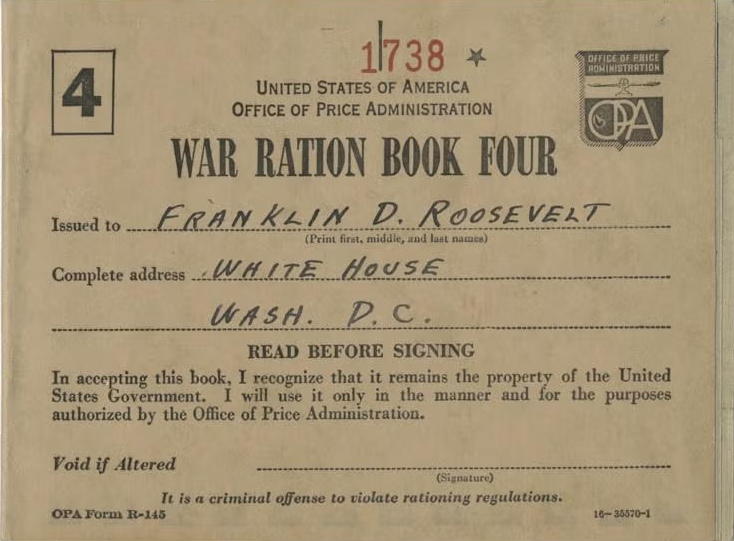
Enter Claude Wickard, Secretary of Agriculture under Franklin Roosevelt from 1940 to 1945. On January 18, 1943, he banned the sale of sliced bread. Exactly why seems to be in dispute but the most likely rationale was to save wax paper and other resources for war production. He rescinded the ban two months later, explaining then that “the savings are not as much as we expected.”
I’m sure Hitler and Hirohito were relieved.
MG-3: Germany Modernizes the Classic MG-42
Forgotten Weapons
Published 7 Apr 2023When the Bundeswehr was formed, it chose to simply continue using the MG42 as its standard GPMG. This was initially done by converting older MG42s to 7.62x51mm NATO as the MG1 (adopted in 1958), but progressed to production of a brand new version of the gun by Rheinmetall (adopted in 1968). The MG3 included improvements to the belt feed system, added integral antiaircraft sights, and allowed a rate of fire between 700 and 1300 rpm depending on the choice in bolt, buffer and booster. It was the standard German MG until finally being replaced by the MG5 in 2012 — and it is/was in use by nearly 4 dozen other countries as well. Today we are going to compare this transferrable, C&R MG3 to an original MG42 to see the improvements that were made.
(more…)
QotD: Resolving “disagreements” on Wikipedia
And if there isn’t anything going on back there at all, you should probably still take the main article with a grain of salt because you might be reading a bunch of “everybody knows” gibberish without too much thought behind it.
M.K. Freeberg, “Latest Wikipedia Talk Page Mess: Socialism”, Rotten Chestnuts, 2012-12-01.


