
Rex Krueger
Published 8 Nov 2023
(more…)
January 31, 2024
Don’t RUIN your workbench with 2x4s (use these tips instead)
Comments Off on Don’t RUIN your workbench with 2x4s (use these tips instead)
QotD: The inner-most “zones” outside a typical pre-modern city
Diagram of von Thünen’s model from The Isolated State, after Morley (1996), 62. The agriculture ring is subdivided by intensity (intensive, long-lay and three-field), but here I have merged them for simplicity. The agriculture zone is wider because it did, in fact, tend to cover a larger area. The fade in the pastoralism zone is meant to indicate shifts from ranching to transhumance.
We’ll start at the inside, right next to the city and move outward. Imagine each “zone” as a wider concentric circle, moving outward from the city (see the image to the right). Because transportation costs (especially overland) are so high, distance from the city plays a dominant role in how the land is used and thus consequently what the countryside around the city looks like. As you move further and further away, transportation costs interact with the structure of agriculture to make different activities make more sense, creating somewhat predictable patterns.
Land very close to the city is valuable because its produce can reach the market with much lower transportation costs (and pretty much always in a single day’s walk). As a result, if the land can support any kind of productive use, it will not be left empty. Instead, the land is going to be put to the most productive use possible. Improvements that – because of cost or labor – might not be attempted on less valuable land further out will likely be done in close proximity to the city. Stepping out of our ideal model for a moment: this is especially true of irrigation, since cities tend to be on waterways (especially rivers) anyway, making irrigation both more valuable due to low transport costs and easier to accomplish.
Thus land in this innermost zone is likely to be heavily improved (irrigation, terracing to get maximum space out of hills, etc). Labor use will also be intensive, both because it is readily available (you are right next to the major population center) and because labor costs are small compared to the high value of the land. If you have managed to get some farmland right outside the city gates, it is very much worth your time to hire whatever labor you need to get the most out of it, so as to recoup the cost of buying or holding such valuable land.
The other improvement one is likely to do in this zone, at least for growing crops, is make extensive use of fertilizer, which in this case generally means manure. The good news is that this zone is directly next to the city, with its intense concentration of animals and people producing manure, making manure cheaper (yes, people did pay for it). Extensive use of manure lets the fields stay under cultivation more often – being fallowed less frequently. At greater distance, the cost of the manure for this begins to outweigh the value of the extra crops, but so close to the city, land this valuable ought to be kept producing as much as possible.
So what kinds of land use does this lead to? The two key activities that von Thünen identifies are horticulture and dairying, to which I’ll add trough-fed animals like pigs (not quite dairy, but as we’ll see, similar from an economic perspective). Why? Horticulture – the intensive growing of fruits and vegetables, often in small “market gardens” – is labor intensive and offers a high economic yield for the space. Land used for horticulture can be kept under almost continual cultivation (if manured, but see above), but gardens can be fussy and demand quite a lot of labor, compared to hardier plants (like maize corn or wheat). Likewise, dairy animals (which, up close to a large city, will be stall-fed rather than grazed or else transported in “on the hoof” and grazed much further out) and pigs (fed by trough) don’t require much space and offer a high economic yield. Both also produce manure which is in demand near the city for the reasons described above.
The other reason to keep these activities so close to the city is access to the market, for two related reasons. First, fresh dairy products, meats and vegetables spoil rapidly, so they must be gotten to market quickly. Remember that this is a world without refrigeration, so as soon as the plant is picked, the cow is milked or the pig is killed, the clock is ticking on spoilage (yes, there are ways to preserve meat, of course – but we’re talking fresh animal products). Precisely because these foods don’t travel or keep well, they tend to be luxury products as well – something produced for the market and bought by rich non-farmers who live in the city.
So what kind of terrain should we see here? Not open grassland or nice wide open fields. Instead, expect small plots, with clustered buildings, typically clinging to the roads leading into the city. Now – especially in the post-gunpowder age – there might be laws forbidding certain kinds of structures close to the city walls (if the city is walled), which might create some open space (but typically not vast). Likewise, when looking at historical city maps, also be wary: this innermost land-use zone was often contained within the city walls of smaller cities.
The next zone – also quite close to the city in von Thünen’s model is – perhaps somewhat surprisingly – a forest zone. That’s not to say that this is generally wild, uncontrolled forest. The reason for a forest zone at such close distance to the city is to provide wood, particularly firewood for heating. Trees might be arranged intentionally along field separations or on spots of agriculturally marginal land close to the city. Forests like these in the Middle Ages would often have been coppiced or pollarded – that is, the trees would have been intentionally cut to produce lots of long, thin straight branches which can be easily harvested to produce nice, evenly sized bits of wood.
Wood is obviously at no risk of spoiling, but it is heavy and bulky, making a close supply valuable. Moreover, the city will need quite a lot of it, for cooking and heating. That said, trees can often be grown either on very marginal (for agriculture) land or else between fields and farms outside of the city, so these patches of forest might often go on land that is a touch too rough or poor for intensive agriculture, or otherwise be squeezed in between land used for other purposes. Still, it is quite common to find spots of forest next to cities and villages alike.
(To answer a quibble in advance: of course this assumes wood is a key heating element. Societies in more arid climates often lack sufficient wood and might use dung, while wet enough areas may use peat. Historically, London shifted over to using mineral coal earlier than most places. All of these choices will impact the role and importance of forest near the city.)
Bret Devereaux, “Collections: The Lonely City, Part I: The Ideal City”, A Collection of Unmitigated Pedantry, 2019-07-12.

Comments Off on QotD: The inner-most “zones” outside a typical pre-modern city
January 30, 2024
The foul “nudgers” are at it again at Cambridge
Christopher Gage reports on a recent fun-reducing experiment by paid psychological meddlers at Cambridge University:

“Wineglass” by quinn.anya is licensed under CC BY-SA 2.0 

 .
.
Researchers found they could “nudge” people into drinking less wine when they denied the unsuspecting blighters a large 250ml measure.
Last summer, these wholly well-adjusted people convinced 21 Cambridgeshire pubs and restaurants to offer only small or medium glasses of wine. The result left the boffins breathless. But sadly, not in the medical sense of the word.
When denied a large, vivifying glass of wine, the subjects drank eight percent less than usual, and the pubs didn’t lose any money — smaller measures cost more. Puritans: two. Oenophiles: nil.
The usual suspects cooked up this obscene waste of time and money. Professor Dame Theresa Marteau, director of the behaviour and health research unit at Cambridge University, boasts lurid form in control freakery.
Her previous studies read like an almanac of neurotic impulses. The mad mullah dreams of shrinking plates and sinking sodas. This finger-wagger-in-chief obsesses with the vinous, porcine masses and what they may slip into their faces when she’s not looking. Marteau chillingly laments that large wine glasses “increase the pleasure of drinking wine”.
The fundamentally nosey swear these are the first murmurs of Utopia. Next, they’ll bend boozing regulations into a truncheon to batter the gastronomic swine over its head. They don’t stop. First, they shrink the large glass. Then, the medium glass affects as the large. What happens next? Take a wild guess.
This is not the work of some rogue Colonel Kurtz. One Daily Telegraph writer seized on the study. Employing the presumptuous “we” beloved of oppressive minds, they offered tips to help us drink less, assuming we drink large wines only because we are weak-willed effigies desperate for professional helpers to show us what’s best for us.
Advocates of “nudging” drive themselves senseless over this psychological thimblerig. The potential to correct “undesirable” behaviour proves too great to resist. They are a species of featherless biped with which I share nothing but the right to a trial before a jury of my peers.
As I write, I’ve just returned from a five-mile jaunt with 33 pounds strapped to my back. Loading a bag with weights burns double the calories. Therefore, whatever I do after that trek is my business alone. On my desk is a large glass of Portuguese red blend. Beside that soul-tingling measure sits a smouldering, hand-rolled, menthol-tipped cigarette.
Why strangers stake their mental well-being on what others put into their bodies, I will never know. Why they wish I’d sit here choking on sparkling water and its vegetable equivalent — celery — I’ve not the foggiest of insights. All I do know, friends, is that I am not the one in dire need of a few sessions with a psychoanalyst. My professional advice: Seven letters. Vulgar slang. A phrasal verb rhyming with “duck cough”.
Comments Off on The foul “nudgers” are at it again at Cambridge
How did Justice Mosley manage to avoid mentioning the huge pachyderm in the room?
Donna LaFramboise on the amazing ability of people in power here in Canada to avoid noticing or acknowledging the most salient facts of a situation:
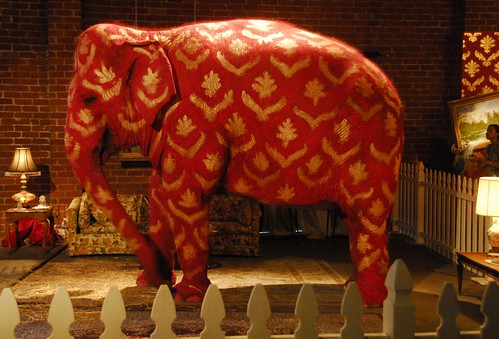
In the recent court ruling against Justin Trudeau’s use of the Emergencies Act, the elephant in the room was once again ignored.
Justice Richard Mosley is well aware that the Act is intended to be “a tool of last resort.” He says so twice in his decision, on pages 78 and 86. He also does a conscientious job of describing the arguments each side presented during various stages of the court battle.
Yet there is no indication, not even the slightest hint, that the bloody obvious received five minutes of the court’s attention: No government can claim to have exhausted all other avenues if it hasn’t even had a conversation with protesters.
It doesn’t matter who is doing the protesting, or what their cause happens to be. If you haven’t arranged a meeting, if you haven’t sat down and listened to people’s concerns, if you haven’t even tried to negotiate a resolution, it is not OK to reach for a last resort, nuclear option. That is beyond unreasonable. It is absurd.
In India, between November 2020 and November 2021, farmers protested three new pieces of agricultural legislation that were eventually repealed. Justin Trudeau publicly criticized the Indian government during that time. So let us compare and contrast.
According to the Indian Express, farmers unions called for a march to Delhi, the national capital, on November 26th and 27th. Delhi police said protesters wouldn’t be permitted to enter the city due to COVID restrictions, but the farmers came anyway. Water cannon and tear gas were used against them, but they eventually arrived in the north-west part of the capital.
On November 28th a cabinet minister “offered to hold talks with the farmers as soon as they vacate Delhi borders”. The farmers didn’t budge. The first round of talks with government took place, nonetheless, on December 3rd — a week after the Delhi protest began. Two days later, more talks took place. By December 30th, six rounds of negotiations had taken place.
In Canada, the government treated the truckers like mangy dogs rather than citizens. Not a single cabinet minister pursued dialogue. Not a single representative of the federal government met with the truckers between the time they began arriving in Ottawa on January 28th, 2022 and when police violently shut down the protest on February 18th and 19th. Get lost, peasants! was the government’s official position.
Comments Off on How did Justice Mosley manage to avoid mentioning the huge pachyderm in the room?
York University’s CUPE local apparently cribs their homework from the Völkischer Beobachter
York University’s contract and part-time instructors are represented by CUPE local 3903, who’ve distributed an eye-openingly anti-semitic document with the (implied) order to interrupt normal tutorials and replace the content with Palestinian propaganda:

Detail from an official “toolkit” distributed to York University contract and part-time faculty which claims that their employer is complicit in “genocide” by the mere tolerance of Jewish groups on campus.
Photo by A Toolkit on Teaching Palestine
A new toolkit circulated to York University teaching assistants instructs them to denounce Israel at every available opportunity, even when it has no apparent relevance to the subject being studied.
“Let us collectively divert this week’s tutorials to teaching on Palestinian liberation,” reads the 15-page document circulated by CUPE 3903, the union representing York’s contract and part-time faculty.
The document adds that tutorials should be diverted to condemnations of the “Zionist Israeli state” regardless of the course that the TA is supposed to be discussing.
“It is a medical issue. An arts issue. A feminist issue. A society issue. A political issue. A cultural issue. A geography issue. An engineering issue. An architecture issue,” it reads.
The document is filled with claims denouncing Israel as a genocidal “colonial project”. Canada is treated much the same, and is referred to alternately as the “Canadian settler state” or “Turtle Island”.
The mere presence of Jewish groups on campus is also referred to as evidence of York University’s “complicity” in genocide.
The document denounces the existence of sanctioned “Zionist cultural institutions”, making explicit reference to Hillel, the world’s go-to Jewish campus organization. York is also called an accessory to genocide because of its research links with the Hebrew University of Jerusalem.
The pamphlet even provides a script for TAs to read as they inform students that the tutorial will be cancelled in favour of becoming a “teach-in … for liberation.”
“Today, I open up our classroom to bring our attention on Gaza, to speak up and stand in solidarity with the Palestinian liberation movement, and contribute in ending Canada’s and York’s complicity with genocide and the settler-colonial occupation of Palestinian land and life,” reads one introductory line.
Comments Off on York University’s CUPE local apparently cribs their homework from the Völkischer Beobachter
The Most Expensive Machine Gun Ever Sold
Forgotten Weapons
Published Nov 6, 2023Morphy’s recently took the world record for the most expensive machine gun ever sold at public auction — with a transferrable FN Minimi. It sold for a winning bid of $490,000, which became a total price of $588,000 after adding the 20% buyer’s premium. Good heavens. So today, let’s consider why someone might speak THAT MUCH money for a Minimi …
(more…)
Comments Off on The Most Expensive Machine Gun Ever Sold
QotD: Science as religion for the rational
Even now I feel queasy using these religious metaphors and these analogies, because they are so pregnant with horror and oppression and mass death – Muslims screaming “Allahu akbar!” as they detonate suicide bombs, Christians with “Kill them all, God will know his own”. But this Buddha must be faced and killed for the sake of my own sanity. If I do not acknowledge and deal with the ways in which I feel like a religious person, I increase my risk that those emotions will sneak up on my thinking and make it unsane.
So I will say it out loud: science is the functional equivalent of worship for the rational human. In contemplating the wonder and vastness of the universe as it is, I find the equivalent of religious awe before the face of God. In struggling to understand the universe, scientists perform work as dedicated, heartfelt and ecstatic as religious devotion. Humility and self-discipline are even more proper to the scientist than they are to the believer; as the true believer seeks to know God’s will without the obstruction of ego, the true scientist seeks understanding of what is without the obstruction of ego.
Religion makes us the offer that if we believe, it will lift us out of ourselves – perfect us, teach us what is mere transient illusion and what is real and eternal. Science makes almost the same offer; that if we accept the discipline of rationality, we can become better than we are and learn what is really true. These two offers rest on very different ground, and religion’s offer is essentially false while science’s is essentially true – but psychologically, we receive both offers in the same way. They both plug into the same basic human fear of death and the unknown, and the same longing for transcendence.
So maybe science is my religion, after all. The question is definitional. Is it “religion” if it duplicates the emotional constellations of religious feeling without investment in the supernatural, or faith, or revelation, or dogma, or any of the usual content of religious belief?
Eric S. Raymond, “Maybe science is my religion, after all”, Armed and Dangerous, 2011-05-18.
Comments Off on QotD: Science as religion for the rational
January 29, 2024
What’s a little imaginary evidence among Laurentian co-conspirators?
Elizabeth Nickson may be speculating a bit ahead of the situation, but it really does look as if Trudeau is facing electoral disaster (but as long as Jagmeet honours their agreement, he doesn’t have to face the voters quite yet):
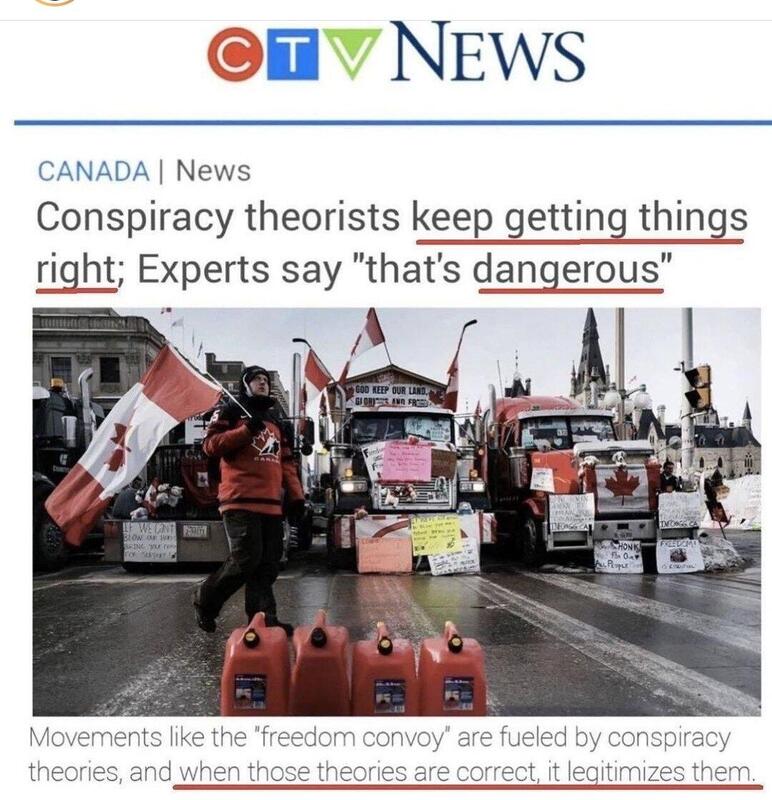
And just like that, Canada’s storied Liberal Party, in power for one hundred years, the country’s self-described “natural governing party,” is done. Before the ruling this week, Pierre Polievre’s Conservatives were projected to win 222 seats, according to Angus Reid’s January 21st poll, with the Liberals at 53 seats. Trudeau’s partner-in-crime, the fetching champagne socialist Jagmeet Singh, he of the mauve headwraps and Rolex watch? Twenty-five seats. With the decision, handed down by a federal judge, that Trudeau invoked the Emergencies Act illegally, to end the truckers’ protest in Ottawa and at border crossings in Ontario and Alberta, Canada’s ruling elite has given up. They cannot continue the fiction any longer.
To illustrate how ridiculous Canada’s public life is, the findings by the RCMP and government were entirely driven by a government-funded Non-Governmental Organization, the Canadian Anti-Hate Network, or CAHN. The group was used in a perfect illustration of the Iron Triangle of government and bureaucratic action. The government funds an anti-hate group, which immediately identifies opposition to the government, labels it as hate, feeds it to the police which proceeds to investigate.
The astroturfed outfit accused a podcaster of being a “white supremacist” and an “accelerationist”. The RCMP then provided CAHN’s “evidence” to legislators who then fed it to the subsidized media. Like a very, very good little girl, Canadian senator Paula Simons said he (the podcaster) wanted to “accelerate racial conflict to lead to the eventual creation of a White ethnostate”, during a debate in the house. None of this was found in any of the hundreds of hours of said podcast. Nevertheless, it was reported widely across the media as cold hard fact.
As in every single western democracy now staggering under unsustainable government-caused debt, the “natural ruling party” stood up for the thousands upon thousands of activist groups who besiege citizens with scare- and sob-stories meant only to increase the tax base for the Liberal elite. In recent years, to combat growing anti-government populism, elites in every western democracy have also supported political action groups meant to drive its enemies into the dirt. As reported by Michael Shellenberger and Matt Taibbi, these are coordinated through the Five Eyes and gamed at the World Economic Forum, in a cross-cultural assault by the elites on the people.
In short, CAHN drove virtually 100 percent of the evidence used to invoke the Emergencies Act. All of its accusations were found to be fake, fictionalized or exaggerated, as the attached FOIA documentation demonstrated. The outfit is a typical attack dog, staffed by members of the hard left, like this character, its face: Sue Gardner. These people are sent around the Stations of the Activist Cross, acquiring credits, awards and citations, to give themselves credibility, without having creating anything of value in the real world. The marshalling of the greedy hard left by corporatists to force ideological purity upon the middle and working classes was a masterful strategy. It, and its international cadres, are entirely focused on destroying the political power of the middle and working classes by accusing them of “racism” and “hate”.
Comments Off on What’s a little imaginary evidence among Laurentian co-conspirators?
Peter Hitchens isn’t onboard with the march to yet another war
Writing in the Daily Mail, Peter Hitchens decries the apparent drift by western politicians into yet another war:
Are we the baddies? What if the Ukraine war is just as stupid and wrong as the Iraq war, but the state propaganda has been more successful and hardly anybody has realised … yet?
Many people to this day still think the damaging and morally dubious Western attacks on Serbia and Libya were justified. Many still think the gory attempt to destroy Syria was a good thing. It took ages for opinion to swing on the Vietnam war, back in the 1960s. And, as one who opposed the Iraq war, I remember only too well just how many (who now think they were against it all the time) were fooled into backing Sir Anthony Blair and George W. Bush.
The issue is more pressing as generals and admirals warn we must live in a militarised society and prepare for what they think is an inevitable war against Russia. They could get their way. If you go on backing this policy, you could be condemning yourself, your children or grandchildren to a world of war, privation and perhaps conscription into some sort of military service.
[…]
This is what I have never been able to work out. We have a Defence Secretary, Grant Shapps, who has perfected the art of shouting loudly while carrying a very small stick – thunderous, belligerent declarations while our Armed Forces melt away thanks to neglect and badly targeted spending. Perhaps, if the long-feared Russian invasion of Western Europe takes place, we can fend it off by dispatching our troops on the pestilential e-scooters and e-bikes which are this former Transport Secretary’s major contribution to the nation.
Certainly these vehicles are terrifying to those not riding them. They have nearly killed me more than once. And, piled up in heaps, they make formidable obstacles, as the people of London are finding.
What Mr Shapps does not seem to grasp is that Britain became great by staying out of continental conflicts, and letting others do the fighting. Even in the battle against Bonaparte, we paid our European allies to do most of the hard work.
Our greatness ceased when bombastic moralising took over, in 1914. We flung ourselves, supposedly nobly, into a Russo-German war. Within two years we were bankrupt, and bereft of the flower of our young manhood.
People still refuse to believe me when I say accurately that Britain has not paid off its huge 1914-18 war debts (now worth about £40 billion) to the USA. But I promise you it is true.
Four years of terrible loss left the Russo-German problem unsolved and we had to do it all again in 1939. After that we were even more bankrupt, and in 1946 had to ration bread, like some desperate People’s Republic. But for many years afterwards we were largely governed by grown-ups who had fought in actual wars and been wounded, and had seen death very near them, or endured bombing and a war economy. And so we largely stayed out of major foreign trouble.
Comments Off on Peter Hitchens isn’t onboard with the march to yet another war
The residential school system in the historical record and in current politics
Barbara Kay discusses the residential school system debate that’s likely to become one of the issues in the next federal election:
“Canadians deserve to know the truth“, Pierre Poilievre told reporters earlier this week, regarding 2021 claims made — but never investigated — of unmarked graves at the Kamloops, B.C. Indian residential school. Poilievre said he was open to “a full investigation into the potential remains at Residential Schools”, wherever that may lead.
This is a bold move, taken in the full knowledge that the Liberals will put a demonizing spin on his comments, even though the Conservative leader also said that “the residential schools were an appalling abuse of power by the state and by the Church at the time”. If Poilievre feels confident to, as he put it, “stand in favour of historical accuracy” on this file, then he believes a critical mass of Canadians will support the proposal.
Trudeau’s government, by contrast, is wedded to the unquestioning, emotive approach to IRS history. From the day that First Nations announced the “discovery” of 215 unmarked graves in Kamloops, arising solely from a finding of “soil disturbances” by ground penetrating radar the Liberals sprang into supportive action. They were emboldened by an overzealous media, starting with the New York Times, which falsely claimed a “mass grave” had been found. Flags were lowered, and Trudeau issued a plangent apology for the children “whose lives were taken” at Kamloops.
Only there was no evidence of lives illicitly “taken”. To date, in spite of the government’s allocation of $7.9 million for the task, no excavation has been done at Kamloops. Excavations in other suspected sites have not turned up human remains. But the media long avoided contrarian copy. (Post columnist Terry Glavin’s May 2022 feature article on the graves in these pages broke the mainstream silence.)
Not that there wasn’t any published pushback. There was plenty, from a cadre of highly accredited scholars, investigative journalists, judges, lawyers and independent researchers, who have amongst themselves amassed probably a million hours of research into all facets of government-Indigenous relations, including the IRS. Only they appeared in non-mainstream media, such as C2C Journal, the Dorchester Review, True North, the Western Standard, the Frontier Centre for Public Policy, Quillette and in some cases their own substacks. For their pains, most of them were labelled “deniers” by media and politicians.
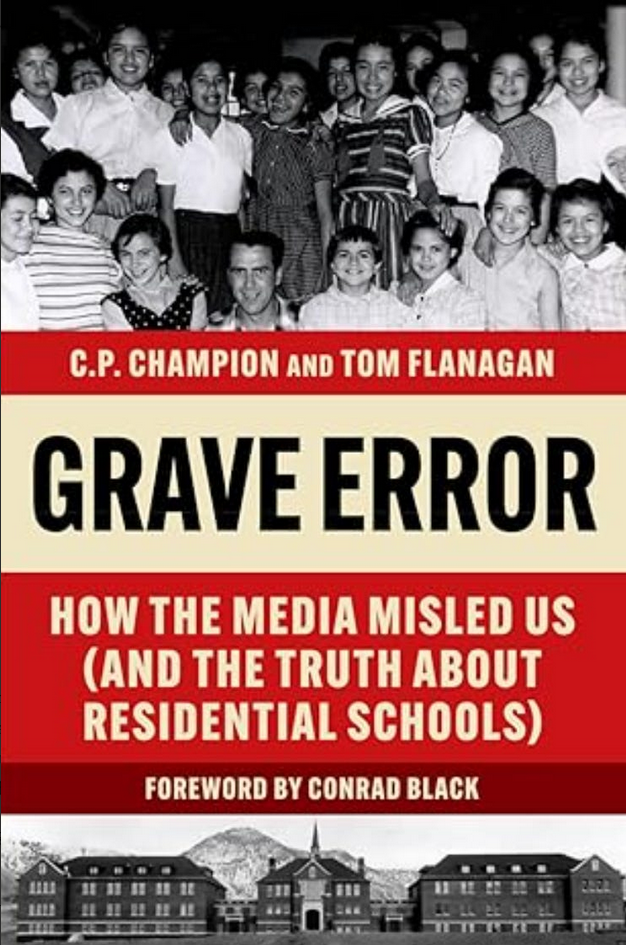
Excellent articles on the IRS by these indefatigable researchers have now been compiled into a single volume, Grave Error: How the media misled us (and the truth about residential schools), edited by historian Chris Champion, publisher of the Dorchester Review, and Tom Flanagan, professor emeritus of political science at the University of Calgary and chair of the Indian Residential Schools Research Group (I am an IRSRG board member).
Comments Off on The residential school system in the historical record and in current politics
Ancient Roman Garum Revisited
Tasting History with Max Miller
Published Nov 7, 2023
(more…)
Comments Off on Ancient Roman Garum Revisited
QotD: Amtrak’s improvements
No, Amtrak is in good shape. The cars have been rebuilt, the blankets no longer draw blood when they come in contact with human skin, the tracks are smoother, and the Pit of Hazy Death — the snack car — is now smoke-free.
That means it’s not packed with throaty-voiced semi-toothed drifters who emit a Pompeii-sized cloud of ash every time they start in on one of those up-from-the-ankles 20-minute hacking fits. And somehow — don’t ask me how — the general aromatic profile of the train is no longer “feet, with a top note of septic tank.” The train actually smelled good. Bravo, Amtrak.
James Lileks, “A windy narrative of a trip to Chicago”, Minneapolis Star-Tribune, 2004-12-19.
Comments Off on QotD: Amtrak’s improvements
January 28, 2024
We had to destroy the democracy to save it
Matt Taibi asks if there’s already an “electoral fix” in place, as we see more and more evidence that Joe Biden and the Democrats will stop at nothing to keep Trump — and would-be Democratic challengers — off the ballot completely:

The fix is in. To “protect democracy”, democracy is already being canceled. We just haven’t admitted the implications of this to ourselves yet.
On Sunday, January 14th, NBC News ran an eye-catching story: “Fears grow that Trump will use the military in ‘dictatorial ways’ if he returns to the White House”. It described “a loose-knit network of public interest groups and lawmakers” that is “quietly” making plans to “foil any efforts to expand presidential power” on the part of Donald Trump.
The piece quoted an array of former high-ranking officials, all insisting Trump will misuse the Department of Defense to execute civilian political aims. Since Joe Biden’s team “leaked” a strategy memo in late December listing “Trump is an existential threat to democracy” as Campaign 2024’s central talking point, surrogates have worked overtime to insert existential or democracy in quotes. This was no different:
“We’re about 30 seconds away from the Armageddon clock when it comes to democracy,” said Bill Clinton’s Secretary of Defense, William Cohen, adding that Trump is “a clear and present danger to our democracy”. Skye Perryman of Democracy Forward, one of the advocacy groups organizing the “loose” coalition, said, “We believe this is an existential moment for American democracy”. Declared former CIA and defense chief Leon Panetta: “Like any good dictator, he’s going to try to use the military to basically perform his will”.
Former Acting Assistant Attorney General for National Security at the U.S. Department of Justice and current visiting Georgetown law professor Mary McCord was one of the few coalition participants quoted by name. She said:
We’re already starting to put together a team to think through the most damaging types of things that he [Trump] might do so that we’re ready to bring lawsuits if we have to.
The group was formed by at least two organizations that have been hyperactive in filing lawsuits against Trump and Trump-related figures over the years: the aforementioned Democracy Forward, chaired by former Perkins Coie and Hillary Clinton campaign attorney Marc Elias, and Protect Democracy, a ubiquitous non-profit run by a phalanx of former Obama administration lawyers like Ian Bassin, and funded at least in part by LinkedIn magnate Reid Hoffman.
The article implied a future Trump presidency will necessitate new forms of external control over the military. It cited Connecticut Senator Richard Blumenthal’s bill to “clarify” the Insurrection Act, a 1792 law that empowers the president to deploy the military to quell domestic rebellion. Blumenthal’s act would add a requirement that Congress or courts ratify presidential decisions to deploy the military at home, seeking essentially to attach a congressional breathalyzer to the presidential steering wheel.
NBC’s quotes from former high-ranking defense and intelligence officials about possible preemptive mutiny were interesting on their own. However, the really striking twist was that we’d read the story before.
Summer, 2020. The TIP media blitz.
For over a year, the Biden administration and its surrogates have dropped hint after hint that the plan for winning in 2024 — against Donald Trump or anyone else — might involve something other than voting. Lawsuits in multiple states have been filed to remove Trump from the ballot; primaries have been canceled or invalidated; an ominous Washington Post editorial by Robert Kagan, husband to senior State official Victoria Nuland, read like an APB to assassins to head off an “inevitable” Trump dictatorship; and on January 11th of this year, leaders of a third party group called “No Labels” sent an amazing letter to the Department of Justice, complaining of a “conspiracy” to stop alternative votes.

Himmler Takes Command – WW2 – Week 283 – January 27, 1945
World War Two
Published 27 Jan 2024A new German Army Group has been formed, tasked with protecting the Reich from the east and commanded by none other than Heinrich Himmler, who has never held such a command. The Soviets are really on the move in the east and have even begun reaching the prewar German border. In the west the Allies have cleared the Roer Triangle and are also working hard to eliminate the Colmar Pocket. In the Far East the Americans are advancing on Luzon, and in Burma the Allies have success on the Arakan and the Shwebo Plain, and finally manage to re open the Burma Road with China.
01:27 Soviet advances in East Prussia
09:23 Hungary and the fight for Buda
11:19 Operations Nordwind, Cheerful, and Blackcock
14:23 Block 5
16:14 American advances on Luzon
18:55 Allied successes in Burma
22:06 Summary
22:26 Conclusion
(more…)
Comments Off on Himmler Takes Command – WW2 – Week 283 – January 27, 1945
Adolescence is “a profoundly unnatural life-stage”
Sarah Hoyt on the plight of the younger Millennials and the Gen Z kids in our over-supervised safety-at-all-costs culture today:
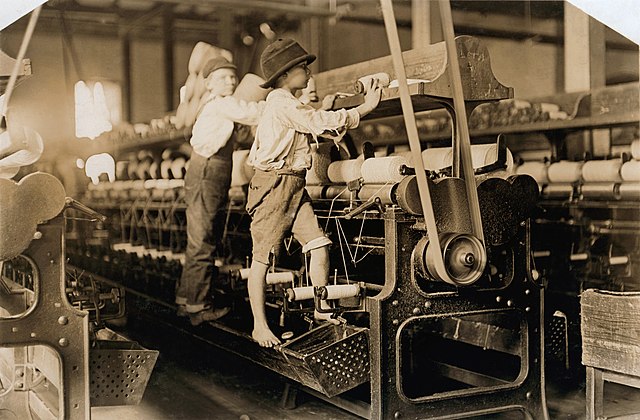
Child labour laws did generally get younger children out of dangerous places like mines, mills, and factories. Modern child labour laws instead keep young adults from gaining work experience in many cases.
Photo of pre-teen children working in a mill in Macon, Georgia in 1909. Photo NCLC.01581, Library of Congress via Wikimedia Commons.
Mostly, it gets attributed to “kids these days” but unless you have kids, these days, you don’t know how they are bound. And even if you do, you might not realize it, because all you see is the infantilization of a generation, and not that they, themselves, aren’t the ones doing the infantilizing, but all those “good rules” and regulations and laws are doing it.
I realized about 10 years ago that my son’s generation was about 10 years behind where we were. In their mid twenties they were doing things we did in our teens. It was disconcerting. And even I had no idea why, other than too much regimentation in school, too much of a never end of button counting, and not enough room or freedom to think or be on their own.
Since then … I’ve seen more. And a lot of the reason they are younger than we were is that the entire world is geared not to let them grow up. I mean, let’s be glad that — unprepared or not — they’re legal adults at 18, or people would be denouncing them for walking alone down the street, without an “adult” at 25.
There’s also … adolescence is in some ways a profoundly unnatural life-stage, and more or less invented in the 20th century. In the past, sure, people were children, and people grew to be adults, but there wasn’t this protracted time period where they were adults in size and at least some ability, but weren’t allowed to be adults: they weren’t allowed to earn or spend, or make their own decisions, for years.
The earn or spend thing is important. Kids used to grow along with their tasks. Read Tudor or colonial memoirs, and you find four year olds looking after cows or horses, or learning Latin, or other unlikely things even for twelve year olds in our time.
Mom went to work at 10 and started getting a salary. It wasn’t much, and 90% of it went to her parents’ budget. But she was working, holding down a job, doing things that were maybe not at adult level, but could lead to it, eventually, if she applied herself. This was normal for her generation. In my own generation, amid the working class, most people went to work at 10. Heck, amid the middle class, most people went to work at 15 or so, after 9th grade. Were they more mature than the rest of us that went all the way to college?
I wouldn’t have thought that at the time, but yes, of course they were. Most of my elementary school classmates were married, with kids by the time my biggest worries were final exams. Of course, with my intellectual pride I looked down on them but now I understand they were managing a very difficult job, which at the time I could not have done.
I always feel stunned and shocked when someone says the kids should be “holding down two jobs like I was at 16” or “working to pay their way through college”. (That last is a giggle as it has two impossibilities. Finding a job that pays enough after college which has a lot of make-work expectations, and making a full-time middle-class salary, which is what college costs these days.) Two Jobs. At 16. The difficulties in giving work to 16 year olds, increasingly restriction of hours, etc. combined with chaotic scheduling in the only unskilled jobs remaining (mostly just retail) means that until recently none of them could find A job. Let alone two. And the recently was during Covid. I haven’t seen so many little 16 year olds cashiering, or serving at tables recently. And that’s because most people I’m seeing are around my age: I guess unemployment is biting hard.
But you know, all these strong rules against “child labor” mean that most kids hit 18 or, if they’re going to college, 22 or — more likely, as most degrees (remember make work?) are taking 6 or 7 years — 24, with absolutely no job experience. Which means their applications aren’t even looked at. Not seriously.
Honestly, almost every young person — particularly young men — I know who found a job, and is doing relatively well, did so through contacts. Through friends of friends. Through knowing someone.
This is a bad sign, because it’s how Portugal functions, and it is not in any way shape or form meritocracy, which in turn contributes to other things falling apart.
But more and more what I’m seeing is young people hitting their mid twenties lost, and doing this, and doing that, and trying this and trying that, and nothing ever gels. To make things worse, they don’t have the habits mom had by 10, because they haven’t been allowed to acquire them.
There was a similar generation — one, while here we’re well into two — in Portugal, where unemployment was so bad (the generation before mine) that most people weren’t “established” on a path till their mid thirties. I’d guess about half of them never got the knack of it: of the day to day of working, fulfilling the work duties, just … the unglamorous day to day that makes us adults.
Comments Off on Adolescence is “a profoundly unnatural life-stage”


