I was never a serious globe-trotter and international flights were something I did on the company’s dime or rare trips back to England to visit family. But it was still theoretically possible for someone in my very middle-class cohort to travel extensively for fun. (No longer, of course, as my pension definitely wouldn’t stretch as far as airline tickets.) As Copernican points out, we’re looking at a future — indeed a very near future — where there will be a revived “Jet Set” where it is only the wealthy who can afford to travel:
With the creation of datacenters, artificial constructs, and global internet, being away no longer comes with the same psychological independence that it once did. Many are so hopelessly reliant on the noosphere that they can scarcely function without direct contact to it in one form or another. Particularly zoomers.1 Thus, the idea of “space” becomes as much cognitive as it is physical. Without the cognitive disconnection, the physical disconnection means nothing, and with Starlink now providing access literally anywhere, the wild is often perceived as just as observed and restricted as anywhere else.
The thesis of this argument is that luxury will no longer mean space away from other people (though there will always be a demand for that) but that the near-future will see a sort of throwback philosophy regarding luxury. The capacity to travel.
This article was instigated by recent news updates regarding the airline industry. Namely, that many airline companies are ripping out economy class seating to make space for luxury seats and suites. Simply put, the poor can no longer afford to travel, and many among the former middle-classes cannot either.
Travel is increasingly becoming an economy restricted to the wealthy, international travel even more so. This is something that should be considered when one considers a backup country.2
We see the influencers who once peddled their lifestyles in Dubai and Mexico quietly rolling back home. Part of that is the cost of frivolous travel, and part of that is the result of global instability. I purchased international plane tickets immediately before and after the crisis in the Strait of Hormuz, and the difference in price expressed more than a news article on the oil crisis ever could.
It is unlikely I’ll be traveling internationally again for the foreseeable future.
More, it’s unlikely many people will be traveling much for the foreseeable future at all. Business moguls, billionaires, and those who absolutely must show up in person, sure. But the average vacationer is not likely to lightly book a flight from Las Vegas to Tokyo. As the costs associated with travel increase, the heartland of the United States and the isolated villas to which the wealthy once flocked will see their own membership slowly contract.
One of the reasons why the wealthy prefer owning vacation homes in those places is due to the fact that other wealthy people live there. As that network begins to slowly contract, so too will the value of possessing property in those locations.
The price spikes are likely to be sticky. Those with dreams of the cost of gasoline, diesel, or jet fuel coming back down are (I think) delusionally hopeful. If the inflation of the last few years since the pandemic has demonstrated anything, it’s that enshitification can affect all industries, and once it has, it doesn’t tend to go away. Regardless of how the conflict in Iran goes, the new higher prices are functionally baked into the global economy. That will be its own can of worms for governments to untangle.3
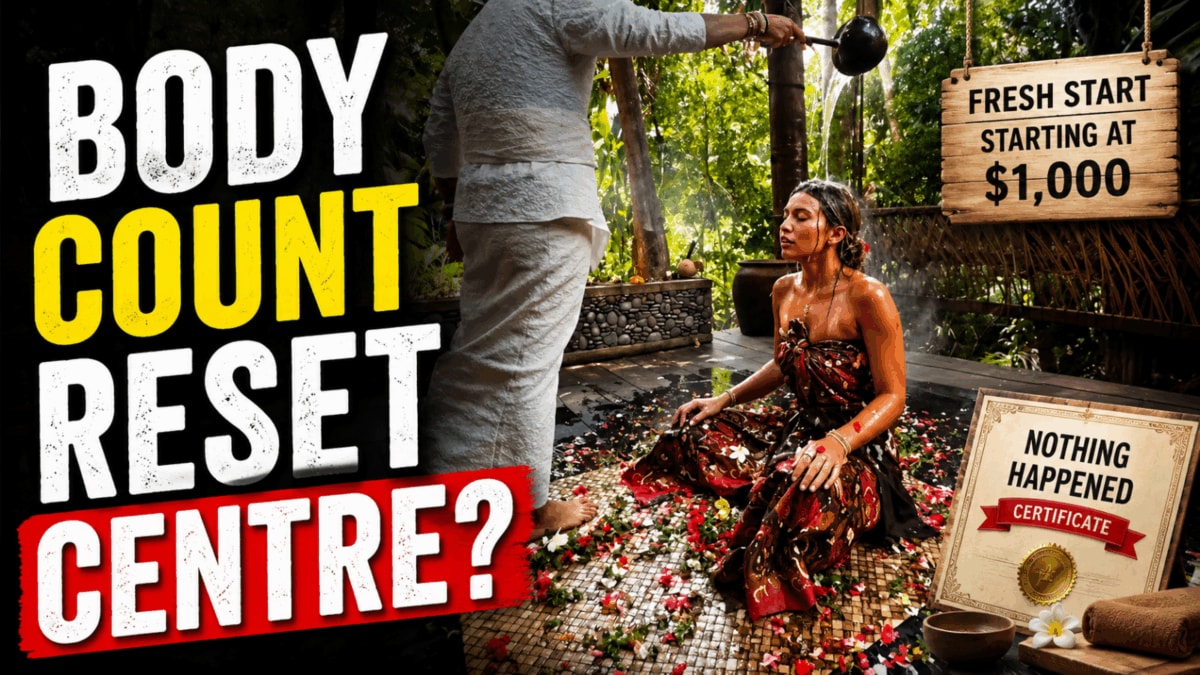
At least there’ll be fewer girls traveling to Brazil to get their body-count reset via the best grift I’ve ever heard of. Soon the trip there will cost more than the $13,000 “treatment”. Seems like a lot of trouble when an AI-partner can just validate all your delusions for you at home.
- About half the population now suffers from a degree of Nomophobia. That is the fear of being without a mobile connectivity device. For those individuals, the concept of being “away from people” is meaningless. Constant connection to the feed has become a psychologically ingrained state. Effectively, such people require a constant connection to the collective human psyche to the point that their sense of self relies on it.
Conceptualizing the Collective Unconscious of a People
- The Billionaire tendency to purchase bunkers in various parts of the world is truly impressive. We’re talking multi-billion dollar facilities built simply to afford these individuals not merely a sense of safety, but a place away from the rest of humanity. They’re buying themselves spiritual and physical space of their own.
- The United States has already floated the idea of a Diesel Export Ban. The US economy runs almost exclusively on Diesel fuel for big-box trucks shipping food and goods around the country. It’s among the least efficient systems globally, but permits people to live anywhere with a (relatively cheap) connection to the intercontinental road network. With the price of diesel now cresting $6 a gallon, it may well reach an unsustainable point for low-value goods. Thus, the consideration of an export ban. Banning diesel exports would preserve low(er) prices in the United States proper while forcing foreign nations to eat the cost on the international market.