
The Great War
Published on 19 Nov 2018Check Out Supremacy 1914: https://www.supremacy1914.com/index.p…
Financing and supplying the First World War was a huge economic undertaking that influenced the British, French, American and Italian economies profoundly and shaped the global balance of power.
November 21, 2018
Allied War Economy During World War 1 I THE GREAT WAR Special
Comments Off on Allied War Economy During World War 1 I THE GREAT WAR Special
November 17, 2018
The MG 08/15 Updated Between the Wars
Forgotten Weapons
Published on 25 Oct 2018https://www.forgottenweapons.com/the-…
http://www.patreon.com/ForgottenWeapons
In the aftermath of World War One, the Treaty of Versailles strictly limited the number of machine guns that the German military could keep in inventory. The main type that the Germans chose to keep was the MG08/15 (although a substantial number of MG08 guns were kept as well). Through the 1920s and 1930s, these Maxim guns were improved and updated in a variety of ways until finally replaced by the MG34 starting in 1936. Many of these updated 08/15s would be deployed in reserve areas during World War Two, but relatively few survive today. Today we are looking at one such gun, and noting the changes made to it compared to the 08/15 of World War One. Specifically:
* Anti-aircraft sights and mounting brackets
* Oiler bottle in the stock
* Bipod attachment at the muzzle
* New water drain and fill plugs
* Modified drum hanger bracket
* Feed block for both cloth Maxim belts and metal MG34 belts
* Leather pistol grip cover
* Top cover locking latchContact:
Forgotten Weapons
PO Box 87647
Tucson, AZ 85754If you enjoy Forgotten Weapons, check out its sister channel, InRangeTV! http://www.youtube.com/InRangeTVShow
Comments Off on The MG 08/15 Updated Between the Wars
November 16, 2018
The Victors & The Vanquished I THE GREAT WAR Epilogue
The Great War
Published on 15 Nov 2018G.J. Meyer: A World Undone
Martin Gilbert: The First World War
Peter Hart: The Great War
David Zabecki: The German Spring Offensives
Alexander Watson: Ring of Steel
Robin Neillands: Western Front Generals
Comments Off on The Victors & The Vanquished I THE GREAT WAR Epilogue
November 13, 2018
THE GREAT WAR IS NOT OVER
The Great War
Published on 12 Nov 2018The Patreon Page: https://www.patreon.com/thegreatwar
The following information — basically the same as what Flo discusses in the video above — was sent out to Patreon supporters:
July 14, 2014 was our first day with The Great War project. 4 1/2 years later, and we managed to not miss a single Thursday to bring you the latest weekly update from 100 years ago. We could not have done this without your support on Patreon. We are not exaggerating when we say that our show would have been cancelled several times if we had to rely on YouTube revenue alone. For that we, and the rest of the production team want to say: “Thank you!”
Now, in the last few weeks we were rather quiet here on Patreon but also on Social Media in general. The main reason for that was that we, the team who researched big parts of this project, who edited, animated and published all the episodes and we who responded to your questions and criticisms over the years needed to figure out what we want to do after 11/11/18.
We quickly realised that we want to continue working in the field of historical film production and with that in mind we will start our own company in early 1919, pardon 2019. So far, we were employees of Mediakraft, the company that initially financed this channel and kept it afloat before you all started supporting us on Patreon. But now we want to stand on our feet.
And the great news is, that The Great War will stay with us and with you in the future. We reached an agreement with Mediakraft that we can continue working on the channel and publish more content. For this content, we still need your support and we hope that you trust our capabilities based on the past 4 1/2 years.
From a historical perspective, 11/11/1918 may have marked the end of hostilities in the First World War but it certainly didn’t usher in an era of world peace – quite the contrary. New wars, more revolutions, difficult peace negotiations and the attempts to create a new world order all were pivotal moments in our world history and we want to continue to tell these stories on The Great War channel.
But, there is always a but, that doesn’t mean that we won’t change things up behind the scenes and on the channel. The first, and for you probably most important point, is that Indy has moved on to new projects (and we wish him all the best for that) which means we will be looking to find a new host. This won’t be easy and I know you will be nervous, but we are sure that we can find someone that can fill these shoes over time.
Moreover, we will probably move away from the weekly episode format that was also accompanied by two extra weekly uploads for the past years. This incredible high output meant that we couldn’t always focus on topics as much as they deserved and we know from the numbers on YouTube that it was an overwhelming amount of content for a lot of our fans, too. Instead we will probably move to less uploads but longer episodes with more detail, more polish, better animations and just overall try to take it to the next level.
To wrap this long post up, I want to kindly ask you to trust in our abilities, to be open for this new direction and most importantly to continue to support us here on Patreon as now independent creators. Over the next few weeks, I will send out more updates on this evolution of The Great War. Right now we want to publish the first new episode in early January. In the meantime, you can enjoy the epilogue episodes with Indy that we will put up in the future.
And if you have any questions or ideas, feel free to put them in the comments of this post, we will try to answer them to the best of my ability.
Flo & Toni
Producers of The Great War
Comments Off on THE GREAT WAR IS NOT OVER
The Maginot Line: Actually a Good Idea
Historigraph
Published on 13 Oct 2018If you enjoyed this video and want to see more made, consider supporting my efforts on Patreon: https://www.patreon.com/historigraph
My old video on the invasion of France in 1940, which is useful for background info to this video: https://www.youtube.com/watch?v=-4-l0…
Check out my Norway 1940 series: https://www.youtube.com/playlist?list…
► Twitter: https://twitter.com/historigraph
Sources:
James Holland, The War in the West – A New History Vol. 1: Germany Ascendant 1939-1941 (kindle edition)
Lloyd Clark, Blitzkrieg: Myth, Reality and Hitler’s Lightning War – France, 1940.
Alistair Horne, To Lose a Battle: France 1940.
Charles River Editors, The Maginot Line: The History of the Fortifications that failed to protect France from Nazi Germany during World War II.
Comments Off on The Maginot Line: Actually a Good Idea
November 12, 2018
Woodrow Wilson
In City Journal, Lance Morrow looks back at the successes and failures of President Wilson:
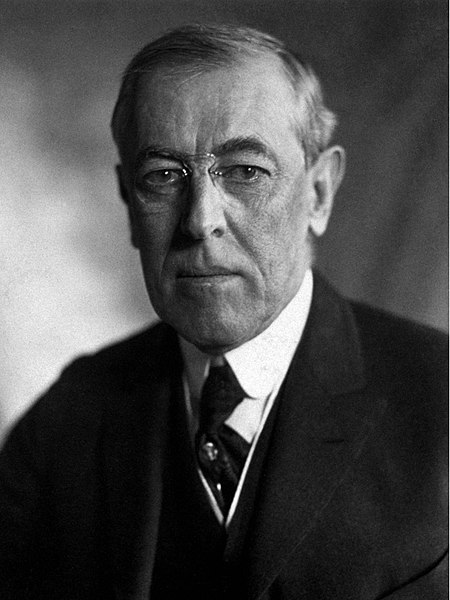
It’s been a century since President Woodrow Wilson arrived in Europe, weeks after the Armistice ending World War I. A crowd of 2 million cheered him in Paris. The papers called him the “God of Peace,” the “Savior of Humanity,” a “Moses from America.” He bowed, he tipped his silk top hat — the newsreel images come flickering to us from an earlier world. He sat down with Georges Clemenceau and David Lloyd George and the others to hash out the fiasco of the Versailles Treaty. He returned home to the fatal wrangle over the League of Nations with Henry Cabot Lodge in the Senate. Then came the cross-country tour to sell the treaty to the American people, his collapse on the train near Wichita, and, back in Washington, the terrible stroke and the long twilight — a sequence that led, further down the road, to Warren G. Harding and, in the fullness of time, to Adolf Hitler and World War II.
Woodrow Wilson, 1919
Photo via Wikimedia Commons.The Woodrow Wilson story is an American classic — a set piece, like the rise and fall of Joseph McCarthy, or the fable of John F. Kennedy. Of Wilson, the historian Barbara Tuchman wrote: “Since Americans are not, by and large, a people associated with tragedy, it is strange and unexpected that the most tragic figure in modern history — judged by the greatness of expectations and the measure of the falling off — should have been an American.”
People speak of “settled science.” One might also speak of “settled myth.” (The Kennedys are one of those.) But Wilson’s myth remains vexed and unsettled. He persists, in American memory, as a sort of botched paragon — a man who remains almost irritatingly alive and imperfect and somehow touching. The respect that he deserves is complicated — and so is the contempt. The same has been said of American idealism itself.
As with America, there are two basic versions of Wilson: the sacred and the profane. Was his greatness real or fake? He ranks in polls in the top quarter of American presidents, but with a dissenting asterisk. Was he the superbly effective Progressive president (who introduced the Federal Reserve and the graduated income tax and much else) and the prophet of twentieth-century internationalism? (Wait: Are we to thank Wilson for Vietnam? Iraq? Afghanistan?) Or was he the last fling of nineteenth-century moralism and hypocrisy — a Southern-born racist or near-racist, and a brute on the subject of civil liberties? (He tossed Eugene V. Debs in jail merely for disagreeing with him on the war, leaving it to Warren G. Harding to pardon Debs.) Some said that his mind was a Sunday school; others, that it was the pool of Narcissus. Yet he managed to be a great man all the same. It’s too bad that he did not leave the presidency, one way or another, in 1919, after the damage from his stroke became evident. Amazingly, even in the summer of 1920, the broken man had delusions of running for a third term. He felt embittered and betrayed when the Democratic nomination went to Governor James Cox of Ohio. Woodrow Wilson’s ego died harder than Rasputin.
An indispensable aspect of Wilson’s genius—and a key, perhaps, to his failure — was his lambent but vaguely narcissistic prose style, sweet in its clarities but sometimes too supple and manipulative. Unlike most presidents, he wrote his own speeches. He governed a good deal by means of language, and he used words to impose his will or to conjure up an ideal world that might be mistaken, from a distance, for the Kingdom of God. He was also a theatrical man, an actor, an excellent mimic: a performer. Was he Prospero? Or was he, in the end, Christ crucified? People spoke routinely of his messiah complex. At one point during the Paris Peace Conference, he seemed to suggest that he was actually an improvement on the messiah. Lloyd George listened in amazement as Wilson observed that organized religion had yet to devise practical solutions to the problems of the world. Christ had articulated the ideal, Wilson said, but he had offered no instructions on how to attain it. “That is the reason why I am proposing a practical scheme to carry out his aims.” Self-righteousness is tiresome in the end. Many concluded that Wilson should be remembered, without appeals to either religion or literature, as the stiff-necked, hypochondriacal son of a Presbyterian minister, led astray by his own moral vanity — either that, or as the uxorious hero of ladies’ teas. He loved the companionship of doting women but not necessarily that of strong men.
H.L. Mencken wrote of Wilson, shortly after the President’s death, in a review of The Story of a Style by Dr. William Bayard Hale:
Two or three years ago, at the height of his illustriousness, it was spoken of in whispers, as if there were something almost supernatural about its merits. I read articles, in those days, comparing it to the style of the Biblical prophets, and arguing that it vastly exceeded the manner of any living literatus. Looking backward, it is not difficult to see how that doctrine arose. Its chief sponsors, first and last, were not men who actually knew anything about the writing of English, but simply editorial writers on party newspapers, i.e., men who related themselves to literary artists in much the same way that Dr. Billy Sunday relates himself to the late Paul of Tarsus. What intrigued such gentlemen in the compositions of Dr. Wilson was the plain fact that he was their superior in their own special field — that he accomplished with a great deal more skill than they did themselves the great task of reducing all the difficulties of the hour to a few sonorous and unintelligible phrases, often with theological overtones – that he knew better than they did how to arrest and enchant the boobery with words that were simply words, and nothing else. The vulgar like and respect that sort of balderdash. A discourse packed with valid ideas, accurately expressed, is quite incomprehensible to them. What they want is the sough of vague and comforting words – words cast into phrases made familiar to them by the whooping of their customary political and ecclesiastical rabble-rousers, and by the highfalutin style of the newspapers that they read. Woodrow knew how to conjure up such words. He knew how to make them glow, and weep. He wasted no time upon the heads of his dupes, but aimed directly at their ears, diaphragms and hearts.
But reading his speeches in cold blood offers a curious experience. It is difficult to believe that even idiots ever succumbed to such transparent contradictions, to such gaudy processions of mere counter-words, to so vast and obvious a nonsensicality. Hale produces sentence after sentence that has no apparent meaning at all — stuff quite as bad as the worst bosh of the Hon. Gamaliel Harding. When Wilson got upon his legs in those days he seems to have gone into a sort of trance, with all the peculiar illusions and delusions that belong to a frenzied pedagogue. He heard words giving three cheers; he saw them race across a blackboard like Socialists pursued by the Polizei; he felt them rush up and kiss him. The result was the grand series of moral, political, sociological and theological maxims which now lodges imperishably in the cultural heritage of the American people, along with Lincoln’s “government for the people, by the people,” etc., Perry’s “We have met the enemy, and they are ours,” and Vanderbilt’s “The public be damned.” The important thing is not that a popular orator should have uttered such grand and glittering phrases, but that they should have been gravely received, for many weary months, by a whole race of men, some of them intelligent. Here is a matter that deserves the sober inquiry of competent psychologists. The boobs took fire first, but after a while even college presidents — who certainly ought to be cynical men, if ladies of joy are cynical women — were sending up sparks, and for a long while anyone who laughed was in danger of the calaboose. Hale does not go into the question; he confines himself to the concrete procession of words. His book represents tedious and vexatious labor; it is, despite some obvious defects, very well managed; it opens the way for future works of the same sort. Imagine Harding on the Hale operating table!
Comments Off on Woodrow Wilson
German U-Boat Line-Thrower Rifle Conversions
Forgotten Weapons
Published on 21 Oct 2018https://www.forgottenweapons.com/germ…
http://www.patreon.com/ForgottenWeapons
These two Gewehr 98 rifles were converted by the Mauser factory to be used as naval line-throwing rifles. The exact nature of the line and lead projectiles is not clear, but they are clearly original military conversions and came form the Geoffrey Sturgess collection. Entirely new stocks were made for these guns, with a substantially increased length of pull to mitigate the harsh recoil of line throwing. The magazines were blocked with wooden plugs, allowing only one short (blank) round to be held, but allowing that round to be depressed enough to close the rifle’s bolt over it and keep the chamber empty. The barrels were replaced with launch tubes, on 10 inches long with a 2 inch bore and the other 10.5 inches long with a 1.75 inch bore.
Contact:
Forgotten Weapons
PO Box 87647
Tucson, AZ 85754If you enjoy Forgotten Weapons, check out its sister channel, InRangeTV! http://www.youtube.com/InRangeTVShow
Comments Off on German U-Boat Line-Thrower Rifle Conversions
November 11, 2018
Armistice – But Peace? I THE GREAT WAR Week 225
The Great War
Premiered 4 hours agoOn November 11 1918, the German delegation and the Allies reach an agreement for an armistice. At the 11th hour the guns go silent and the First World War is over, well at least the guns go silent but is it a peace already? Germany is struggling with revolution and civil war at home, the break up of the Austro-Hungarian Empire causes a lot of chaos. And in Romania, the men are taking up arms again.
Comments Off on Armistice – But Peace? I THE GREAT WAR Week 225
Mark Knopfler – “Remembrance Day”
Bob Oldfield
Published on 3 Nov 2011A Remembrance Day slideshow using Mark Knopfler’s wonderful “Remembrance Day” song from the album Get Lucky (2009). The early part of the song conveys many British images, but I have added some very Canadian images also which fit with many of the lyrics. The theme and message is universal… ‘we will remember them’.
Comments Off on Mark Knopfler – “Remembrance Day”
In memoriam
A simple recognition of some of our family members who served in the First and Second World Wars:
The Great War
 Private William Penman, Scots Guards, died 16 May, 1915 at Le Touret, age 25
(Elizabeth’s great uncle)- Private Archibald Turner Mulholland, Argyll & Sutherland Highlanders, mortally wounded 25 September, 1915 at Loos, age 27
(Elizabeth’s great uncle) - Private David Buller, Highland Light Infantry, died 21 October, 1915 at Loos, age 35
(Elizabeth’s great grandfather) - Private Harold Edgar Brand, East Yorkshire Regiment. died 4 June, 1917 at Tournai.
(My first cousin, three times removed) - Private Walter Porteous, Durham Light Infantry, died 4 October, 1917 at Passchendaele, age 18
(my great uncle) - Corporal John Mulholland, Argyll & Sutherland Highlanders, wounded 2 September, 1914 (shortly before the First Battle of the Aisne), wounded again 29 June, 1918, lived through the war.
(Elizabeth’s great uncle)
The Second World War
- Flying Officer Richard Porteous, RAF, survived the defeat in Malaya and lived through the war
(my great uncle) - Able Seaman John Penman, RN, served in the Defensively Equipped Merchant fleet on the Murmansk Run (and other convoy routes), lived through the war
(Elizabeth’s father) - Private Archie Black (commissioned after the war and retired as a Major), Gordon Highlanders, captured at Singapore (aged 15) and survived a Japanese POW camp
(Elizabeth’s uncle) - Elizabeth Buller, “Lumberjill” in the Women’s Land Army in Scotland through the war.
(Elizabeth’s mother) - Trooper Leslie Taplan Russon, 3rd Royal Tank Regiment, died at Tobruk, 19 December, 1942 (aged 23).
A recently discovered relative. Leslie was my father’s first cousin, once removed (and therefore my first cousin, twice removed).
For the curious, the Commonwealth War Graves Commission the Royal British Legion, and the Library and Archives Canada WW1 and WW2 records site provide search engines you can use to look up your family name. The RBL’s Every One Remembered site shows you everyone who died in the Great War in British or Empire service (Canadians, Australians, New Zealanders, South Africans and other Imperial countries). The CWGC site also includes those who died in the Second World War.
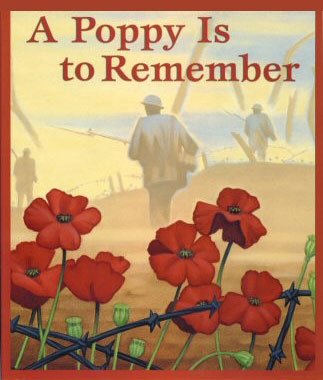
In Flanders fields the poppies blow
Between the crosses row on row,
That mark our place; and in the sky
The larks, still bravely singing, fly
Scarce heard amid the guns below.We are the Dead. Short days ago
We lived, felt dawn, saw sunset glow,
Loved and were loved, and now we lie
In Flanders fields.Take up our quarrel with the foe:
To you from failing hands we throw
The torch; be yours to hold it high.
If ye break faith with us who die
We shall not sleep, though poppies grow
In Flanders fields.Lieutenant Colonel John McCrae, MD Canadian Army Medical Corps (1872-1918)
Comments Off on In memoriam
How Peter Jackson ‘Brought To Life’ WW1 Footage In His New Film | RATED
Forces TV
Published on 10 Oct 2018Lord Of the Rings director Peter Jackson has seen footage of a mine explosion that his own grandfather was only a hundred yards away from on the Western Front at the time. He saw the footage while making his new film They Shall Not Grow Old.
Comments Off on How Peter Jackson ‘Brought To Life’ WW1 Footage In His New Film | RATED
QotD: “Chateau” generals and the modern Canadian Army
… the great British strategist, one of the “fathers” of modern armoured-mechanized-mobile warfare, Major General JFC “Boney” Fuller, wrote in the mid 1930s called Generalship: Its Diseases and Their Cure: A Study of the Personal Factor in Command. In it Fuller was harshly critical of what he saw as an old, fat (quite literally) and out of touch military command structure that was intent on fighting the last war, or even the one before that, and was unable to innovate or accept change. Too many generals, he suggested, were physically and mentally unfit for the stresses of modern war, they could not “rough it” with soldiers and actually needed to be in nice warm chateaux behind the lines while soldiers and colonels fought in the mud. This is related to something that the brilliant British soldier-scholar Field Marshal Lord Wavell said in his comments on “generalship:” commanders need to be “robust … able to withstand the shocks of war.” Fuller, especially, went to great lengths, and back two thousand plus years in history, to say that wars and military leadership require physical and mental vigour and that young people, often very young people can master both war and leadership. I suspect that both Fuller and Wavell would look at our modern Canadian Army, especially at our seasoned, experienced and relatively old sergeant section and tank commanders and so, “No, no, no! You’re wasting all that good training and experience at too low a level. Section commanders need only half that much training; those sergeants should be doing more and more important things.”
I believe that we, the Canadian public, need and deserve a more efficient and cost effective Army, and one way to make it so is to lower the ranks of junior leaders: tank and rifle section and tank troop and rifle platoon commanders. It should be harder but quicker for young soldiers to achieve the ranks of lance corporal, corporal and master corporal and command a tank or a rifle section ~ but the corporals and master corporals should be paid more. Junior officers should spend longer in the ranks of second lieutenant and lieutenant, and be paid more, while they are given the opportunities to master the basics of their profession. If you have first rate platoon commanders you’ll get good generals without too much trouble … if you don’t have a plentiful supply of really good tank troop and rifle platoon commanders then good generals will only appear now and again, by happy accident.
Ted Campbell, “The foundation (2)”, Ted Campbell’s Point of View, 2017-02-21.
Comments Off on QotD: “Chateau” generals and the modern Canadian Army
November 10, 2018
Emperor Karl’s last attempt for peace, 1917
Part of a post at Essays in Idleness from last month by David Warren:
As we approach the centenary of the Great Armistice, I see the plastic poppies circulating from the little boxes in the liquor stores. My thoughts turn to war qua war. Though sometimes necessary, it is not a good thing (“bad for children and animals” as the peaceniks say); and given the ambiance of our high-tech weaponry, little heroism is left to raise the tone. Contemporary battles are not confined to the soldiers, as once they could be. The devastation of cities and towns, the routine destruction of infrastructure, the civilian suffering that follows from that, must match or quite exceed ancient incidents of rapine.
While I’ve never thought war should be avoided at all costs, I recognize that the cost is very high. Opportunities for peace should not be overlooked, even while the carnage is in progress.
When, for instance, the newly-enthroned Emperor Karl of Austria-Hungary — “fanatic” Catholic Christian — discreetly proposed a separate peace to the allies in the spring of 1917, his agents were rebuffed, outed, and mocked. The Americans were coming to tilt our fortunes, the Germans were distracted overrunning the Russians, and while the Western Front was in catastrophic stasis, our nationalist politicians could now hope to utterly crush the foe. They would demand unconditional surrender.
The incident haunts my historical imagination. This was a serious opportunity to restore something close to the status quo ante, while resolving casus belli (very much plural) from Belgium and Alsace to Serbia and Constantinople on the principle of sweet reason. Drowned in the gunfire was this Blessed Karl’s expressly Christian plea. In an instant the decision was made, in the West, to persist till millions more were slain, and the conditions were assembled for international violence and totalitarianism through the next seventy years.
The gentlemen I call “the three stooges of the apocalypse” — Wilson, Lloyd George, Clemenceau — were all modern politicians, whose nationalist ideals were now buttressed by the vast democratic constituencies of countries at war, goaded on by the screaming headlines of a paper mass media. They wanted a New Europe, a New World Order, in which antiquated empires and all the sleepy old aristocratic polities would be smashed and replaced — with modern, ethically homogenous, democratic States. The consequences were unforeseeable to them, wrapped in their flags and the rhetoric of liberté, égalité, fraternité.
It was a war to end all wars! … Both the malice and the naivety were astounding.
Comments Off on Emperor Karl’s last attempt for peace, 1917
War Graves: Honouring the Fallen of the First World War | The Tank Museum
The Tank Museum
Published on 2 Nov 2018On a visit to the Cambrai Memorial to the Missing at Louverval, Curator David Willey took the opportunity to explore the Allied First World War graves. In this video he explains how they were set up by the Commonwealth War Graves Commission during WW1 and why they look the way they do.
SUBSCRIBE to The Tank Museum YouTube channel: ► http://www.youtube.com/channel/UChl-X…
Support the work of The Tank Museum on Patreon: ► https://www.patreon.com/tankmuseumVisit The Tank Museum SHOP: ►https://tankmuseumshop.org/
Press the little bell above to enable NOTIFICATIONS so you don’t miss the latest Tank Museum videos.
Twitter: ► https://twitter.com/TankMuseum
Tiger Tank Blog: ► http://blog.tiger-tank.com/
Tank 100 First World War Centenary Blog: ► http://tank100.com/ #tankmuseum #tanks
Comments Off on War Graves: Honouring the Fallen of the First World War | The Tank Museum
November 9, 2018
Revolution in Germany – Armistice in Austria I THE GREAT WAR Week 224
The Great War
Published on 8 Nov 2018Unrest within the German Empire is spreading, resentment against the war, the hunger and the elites is turning into revolutionary action and with a mutiny in Kiel the wheels begin to turn quickly. Austria signs an armistice, the Macedonian Front collapses, Romania might enter the war again and the new German political leaders send a delegation through the lines in France. Their goal: An Armistice.
Comments Off on Revolution in Germany – Armistice in Austria I THE GREAT WAR Week 224


