Quotulatiousness

March 11, 2020

QotD: Orthorexia

Filed under: Business, Food, Health, Media, Quotations, Science, USA — Tags: , , , , — Nicholas @ 01:00

The American media and our popular culture both celebrate a fear of safe, nutritious food if it is not labeled “organic.” To be consistent then, why don’t we also celebrate anti-vaxxers’ fear of safe vaccines, which are also not “organic?” To be clear, I am not an anti-vaxxer. I am strongly pro-vaccine. Everyone in my house is vaccinated, and I am appalled at the outbreaks of contagious diseases due to anti-vaxxers. But let’s be clear, a Venn diagram of those who obsess about organic food and anti-vaxxers will reveal a major overlap. If you know an anti-vaxxer, he is most likely committed to an organic diet.

Our culture accepts as a scientific fact that organic food is healthier than non-organic food. You can watch TV, read popular magazines, or listen to healthy-living gurus, and overwhelmingly you will be told that organic food is healthier than non-organic food. Recipes tend to call for organic produce and ingredients. And it goes beyond organic foods. Genetically-modified foods are slandered as “frankenfoods” concocted by mad scientists in a laboratory. Further, we are admonished to avoid anything that is not “natural.”

OK then. Vaccines are genetically modified, lab-made, and certainly not natural. Being anti-vax seems a logical extension of the natural, organic lifestyle.

I know several people — including family members — who have so completely bought into the natural-organic hype that they genuinely believe GMO and non-organic foods are poisonous. They would rather starve themselves and their children to death than ingest a gram of non-organic food. They look at the shelves of a regular grocery store and see rows and rows of poison. There is a medical term for this fear of safe healthy food — it’s called “orthorexia.” I am not shocked that some of these individuals are anti-vaxxers. Instead, I am shocked (and relieved) that some of the orthorexics I know actually do vaccinate themselves and their children.

Buck Throckmorton, “Organic Food & Anti-Vaxxers – Does The Fear of Safe Food Lead to Fear of Safe Vaccines”, Ace of Spades H.Q., 2019-12-08.

March 10, 2020

Thought-saving inventions

Filed under: Britain, History, Science, Technology — Tags: , , , — Nicholas @ 03:00

In the latest issue of his Age of Invention newsletter, Anton Howes considers the innovations that helped provide short-cuts for thought, rather than labour:

The world on Mercator projection between 85°3’4″S and 85°3’4″N, such that image is square. 15° graticule. Imagery is a derivative of NASA’s Blue Marble summer month composite with oceans lightened to enhance legibility and contrast. Image created with the Geocart map projection software.
Image by Strebe via Wikimedia Commons.

When we think of labour-saving inventions, the kind of labour that springs to mind tends to be manual. We think of machines replacing the muscle of limbs and the dexterity of fingers, and we worry about their effects on unemployment and unrest. But there’s a subset of labour-saving inventions that rarely gets discussed. They might best be called thought-saving.

A few weeks ago I mentioned the introduction of mathematical techniques to navigation. Before the mid-sixteenth century in England, pilots very rarely even knew how to calculate their latitude, let alone their longitude. But over the course of just a few decades, England became one of the world leaders in navigational improvements. A handful of mathematicians saved pilots the trouble of calculation, by coming up with tables, instruments, diagrams, and rules of thumb. In the process, they improved navigation’s accuracy, and ushered in an age of English dominance of the high seas.

The historian Eric H. Ash gives a few great examples. In the 1590s, the explorer John Davis shared a way to calculate the time of high tide, without requiring multiplication. Likewise, William Bourne, a self-taught mathematician and gunner, in the 1560s provided an easy means of calculating the linear distance in one degree of longitude, at any given latitude. He provided a diagram — really an instrument, even if it wasn’t made of wood or brass — which with just a simple piece of string could be used to derive the answer without needing to understand cosines, or really any trigonometry.

The mathematicians did the same with maps, too (after all, aren’t all maps thought-saving?) The sixteenth-century cartographic innovations simplified the pilot’s ability to chart a route, for example by taking away all need to worry about the curvature of the earth. The famous 1560s map projection of Gerardus Mercator stretched the distance between the lines of latitude as they got closer to the poles, so that charting a course on such a map was a simple matter of drawing straight lines rather than complex trigonometry. The Mercator projection may well make Africa look smaller than Greenland — it’s actually almost fifteen times as large — but it made life significantly easier for mariners. For similar reasons, the mathematician John Dee designed a special chart — what he called the “paradoxall compass” — to aid the English explorers who in the 1550s went in search of a northeast and northwest passage to Asia. Conventional charts made navigating high latitudes confusing, as the north pole was a straight line — the map’s top border. Dee’s map made things easier by putting the pole at the centre, as a point, with the lines of latitude as concentric circles.

March 9, 2020

One of the economic effects of the Coronavirus outbreak might actually be bottom-line positive

Filed under: Britain, Business, Europe, Health, USA — Tags: , , , — Nicholas @ 03:00

Tim Worstall explains:

“Trade Show Portfolio – Guy Lewis Photography” by Guy Lewis is licensed under CC BY-NC 4.0

One notable thing about tech events is that they tend to be in interesting places like Amsterdam and Barcelona, and you don’t get many self-employed attending. Because someone self-employed loses days of paid hours, has to pay for the flights and the tickets. And they can get the same stuff from YouTube or various learning sites like Lynda.com. Tech events are mostly a jolly for employees in bloated companies. You get 3 days out of the office, have some fun and the boss picks up the tab. Losing this will probably improve the bottom line. And “business conferences” are mostly the same.

For people working more from home, that’s a good thing. Reduced travel costs (time and petrol), less tiredness. This is gradually happening anyway, but Coronavirus has given it a boost.

And maybe everyone realises that a system of education inherited from the time before Gutenberg, when books were a scarce resource, is perhaps in need of reform. OK, you probably need to be at a university for cutting up cadavers in medicine, but for history or computer science you can probably do most of it from your parent’s spare room.

One thing about the way people work is that they often fall into habits. Change often comes from startups and small businesses because they don’t have habits. Sometimes, they’re even anti-habit. Someone in a large company sees something as wasteful and scraps it in the new company. Microsoft let their people wear what they wanted for work, rather than suits. And gradually, those new businesses replace the old. But there’s also sometimes crises that break habits. Someone is forced to do something and gets their eyes opened. They perhaps realise that the alternative works fine, or maybe better.

March 5, 2020

“Maybe … Trump’s victory caused an unusual number of spontaneous abortions in Ontario”

Filed under: Cancon, Health, Politics, USA — Tags: , , , , , — Nicholas @ 05:00

Colby Cosh on the recently published findings of a p-hacking conspiracy study on how the election of President Donald Trump was reflected in the birth ratio of liberals in Ontario:

Front view of Toronto General Hospital in 2005. The new wing, as shown in the photograph, was completed in 2002.
Photo via Wikimedia Commons.

On Monday there came a surprising piece of science news from BMJ Open, an open-access title affiliated with the British Medical Journal. It seems two researchers from Mount Sinai Hospital in Toronto, an endocrinologist and a statistician, have convinced themselves that the election of Donald Trump to the American presidency in November 2016 had a nerve-shattering effect on Ontario. The province of Ontario, that is, not the Los Angeles suburb.

Trump’s victory, according to the researchers, was so awful that, like a war or a disaster, it briefly altered the sex ratio in live births in the province. This is, I should say, a fairly well-established effect of extreme social traumas. When mothers experience physiological stress, the uterine environment becomes less hospitable, and male fetuses, more vulnerable to such changes, become less likely to survive pregnancy. (This makes sense from a Darwinian standpoint, because girls are more valuable than boys in replacing population after a calamity.)

In 2020 nobody should need me to say that a cute, counterintuitive scientific “result” like this, appearing in the newspapers on literally the day of its publication, should be greeted with extreme skepticism. The sex ratio at birth, always expressed in medical literature as a ratio of boys to girls, tends to hover around 1.06 under natural circumstances. (Even in an advanced civilization, things even out within the age cohort over the next 20 years as the lads explore dirt bikes, rock fights, and roofs.)

The Mount Sinai researchers, Ravi Retnakaran and Chang Ye, had records of the sexes of all children born in Ontario from April 2010 to October 2017. Even in a place as large as Ontario, the ratio naturally bounces around randomly between 1.1 and 1.0, and there are seasonal effects that the duo corrected for.

There is no obvious signature of a Trump effect in a scatterplot of the adjusted data, which serves as a warning that the effect being claimed may be an artifact of analysis. But when you apply “segmented regression” using the same parameters as Retnakaran and Ye, you find that the (unadjusted) ratio dipped to 1.03 in March 2017, the fifth month after Trump’s win, and then climbed to 1.08 in June and July before reverting to the long-term norm.

March 3, 2020

The bottled water and toilet paper hoarders of 2020

Filed under: Economics, Health, Media — Tags: , , — Nicholas @ 03:00

Arthur Chrenkoff on one of the oddest features of the current infectious disease panic:

“sold out of bottled water?” by Klara Kim is licensed under CC BY-NC-SA 2.0

This is happening alright, and it’s not some isolated incidents; on my Facebook news feed, at least half a dozen posts from friends in Sydney and Brisbane display photos of Venezuela-style empty shelves at their local supermarkets. The fear is real, and so is the hoarding.

OK, I can understand face masks and hand sanitisers walking off the shelves, as these are the crucial tools in containing the spread of the pandemic. Most face masks – as with so many other products in our shops – are made in China and in the current crisis conditions any new and additional supplies won’t make it out of the country, so whatever is already here is it. And it isn’t, as masks have been the first item to disappear from retail outlets from your local pharmacy to a Bunnings store.

I can also understand the non-perishable food supplies. Even though Australia could be quite self-sufficient if need be (minus the out of season imported fruit and veg), possibly people are stocking up not so much in fear the food will run out but out of reluctance to go out in the public in a few weeks’ time should the situation really turn into a zombie apocalypse. In any case, there is nothing wrong with having a well stocked pantry.

Where I start to no longer understand the consumers is bottled water. We are fortunate to live in a developed country where one can safely drink from a tap. There won’t be shortages of drinkable water under any circumstances – except for a complete societal collapse – and coronavirus is not a water-borne pathogen like those causing cholera or typhoid. If you are still paranoid, you can boil your water before ingesting (just make sure you cool it down).

But it’s the toilet paper that really gets me. Trust me, if things go really belly up, toilet paper is the least of your worries. Humanity has survived for tens of millennia without sanitary tissues, and in their absence any paper or rag or even running water will substitute nicely. Food, water, medicines, electricity, to name just four, are much more crucial in a time of crisis or emergency. Again, it’s true that a lot of toilet paper is manufactured in China or generally overseas and so potentially susceptible to shortages if manufacturing and international transport are affected as they are already. But how much toilet paper does your household require to function? Are you expecting you might need the iron rations of your favourite rolls to last for at least a few months? And if you think that you might not be able to restock on toilet paper until later this year, then – let me repeat myself – don’t you think you will have much bigger problems with ensuring your continuing survival to worry about?

As Norman Lewis points out, the worst hysterics are among the “elites”, not us lumpenproles:

Last week, the world stock markets suffered their worst week since the financial crisis in 2008, with $6 trillion wiped from shares and, in some markets, a sell-off at a rate not seen since the Great Depression almost a century ago. Why? Because global investors are in a panic about the potential economic fallout from the coronavirus epidemic.

Many commentators are making the point that this is mad. Ross Clark argues convincingly in the Spectator that the “most dangerous thing about coronavirus is the hysteria”. Philip Aldrick, economics editor of The Times, agrees. He says it is the “panic we should fear more than the virus itself”.

Our appetite for doom and fear of the unknown are offered as explanations for this behaviour. Risk culture and a predisposition to overreacting to threats are also certainly components of what is happening. But there is another equally important element linked to these that is not being raised – that this madness is not being driven by the “low-information”, knuckle-dragging, gullible ignorant masses, but by the information-rich, university-educated and refined global business and government elites.

The contrast between the responses to coronavirus from the elites and ordinary people has been stark. Even as the level of panic in the mainstream reporting around coronavirus has risen, ordinary people have just gotten on with their lives. The supposedly well-informed elites, who often accuse the “dumb” masses of being vulnerable to hysteria and “fake news”, have themselves been prodded into panic. Meanwhile, where they are not in lockdowns, ordinary people are still going to work, commuting, going to bars … They’re simply getting on with their lives, while taking note of the potential risks.

The elites are in free-falling panic; like a herd of wildebeest, panicked by the sight of a predator and rushing blindly across crocodile-infested waters, they have sparked a potential global economic meltdown. Meanwhile, we see stoic common sense, simple but profound wisdom, on the part of the “great unwashed”.

March 2, 2020

The Trouble With Tumbleweed

Filed under: Environment, Government, History, Russia, USA — Tags: , — Nicholas @ 06:00

CGP Grey
Published 1 Mar 2020

Director’s commentary: https://www.youtube.com/watch?v=rbHQO…

## Crowdfunders:

Bob Kunz, Steven Snow, John Buchan, Nevin Spoljaric, Donal Botkin, Phil Gardner, Chris Chapin, Richard Jenkins, Martin, Steven Grimm, سليمان العقل, Colin Millions, Michael Mrozek, Saki Comandao, Jason Lewandowski, Andrea Di Biagio, David F Watson, rictic, Ben Schwab, Marco Arment, Elliot Lepley, Shantanu Raj, emptymachine, Bobby, Chris Amaris, George Lin, Mikko, Derek Bonner, Derek Jackson, Orbit_Junkie, Ron Bowes, Tómas Árni Jónasson, Henry Ng, Jordan Earls, Joshua Jamison, Nick Fish, Nick Gibson, Robert Webb, Jeffrey Podis, Thunda Plum, Awoo, David Tyler, Fuesu, iulus, Kevin Costello, Michael Reilly, Tyler Bryant, Kermit Norlund, chrysilis, David Palomares, Erik Parasiuk, ken mcfarlane, Leon, Tristan Watts-Willis, Veronica Peshterianu, Bear, Emi, Esteban Santana Santana, Freddi Hørlyck, John Rogers, Maarten van der Blij, Peter Lomax, Rhys Parry, ShiroiYami, Dag Viggo Lokøen, John Lee, Maxime Zielony, Elizabeth Keathley, Frederick The Great, Luxe Gifts, Rebecca Wortham, Bryan McLemore

Music by Music by: http://www.davidreesmusic.com

Wikipedia says:

A tumbleweed is a structural part of the above-ground anatomy of a number of species of plants, a diaspore that, once it is mature and dry, detaches from its root or stem, and rolls due to the force of the wind. In most such species, the tumbleweed is in effect the entire plant apart from the root system, but in other plants, a hollow fruit or an inflorescence might serve the function. Tumbleweed species occur most commonly in steppe and arid ecosystems, where frequent wind and the open environment permit rolling without prohibitive obstruction.

Apart from its primary vascular system and roots, the tissues of the tumbleweed structure are dead; their death is functional because it is necessary for the structure to degrade gradually and fall apart so that its seeds or spores can escape during the tumbling, or germinate after the tumbleweed has come to rest in a wet location. In the latter case, many species of tumbleweed open mechanically, releasing their seeds as they swell when they absorb water.

The tumbleweed diaspore disperses seeds, but the tumbleweed strategy is not limited to the seed plants; some species of spore-bearing cryptogams — such as Selaginella — form tumbleweeds, and some fungi that resemble puffballs dry out, break free of their attachments and are similarly tumbled by the wind, dispersing spores as they go.

[…]

In the family Amaranthaceae (i.e. broadly defined to include Chenopodiaceae), several annual species of the genus Kali are tumbleweeds. They are thought to be native to Eurasia, but when their seeds entered North America in shipments of agricultural seeds, they became naturalized in large areas. In the cinema genre of Westerns, they have long been symbols of frontier areas. Kali tragus is the so-called “Russian thistle”. It is an annual plant that breaks off at the stem base when it dies, and forms a tumbleweed, dispersing its seeds as the wind rolls it along. It is said to have arrived in the United States in shipments of flax seeds to South Dakota, perhaps about 1870. It now is a noxious weed throughout North America, dominating disturbed habitats such as roadsides, cultivated fields, eroded slopes, and arid regions with sparse vegetation. Though it is a troublesome weed, Kali tragus also provides useful livestock forage on arid rangelands.

March 1, 2020

The Black Death of the 14th Century

Filed under: Europe, Health, History — Tags: , , , , , , — Nicholas @ 05:00

Ed West looks at what we know of the spread of the worst plague to hit western Europe in the 1300s:

Map showing the spread of the Black Death in Europe between 1346 and 1353.
Map by Flappiefh via Wikimedia Commons.

There had never been a terror like it, and the “Great Mortality” as it was known — and much later, the “Black Death” — has seared itself in the European imagination. It changed the culture and tested the institutions of the time, and as we anxiously await the arrival of another — thankfully far less deadly — contagion from Italy its legacy and impact are worth remembering.

Epidemics have been around as long as civilization. Plaga — from the Greek for “strike” or “hit” — devastated classical Athens in the 5th century BC, when the historian Thucydides nursed sufferers; the Antonine Plague — probably smallpox or measles — killed as many as five million Romans at the empire’s peak. Far more deadly was the Plague of Justinian in the sixth century, which had a toll of 25 million and emptied whole regions of the eastern (Byzantine) Empire. Only in the 21st century did researchers confirm that this was the same illness that would appear eight centuries later — the Bubonic Plague.

Empires were particularly affected by these horrific epidemics, because empires are a form of globalisation — bringing different people into contact with each other and, more dangerously, into contact with other mammals, who act as disease vectors.

Another danger is climate change, which might turn a mild virus into a deadly one, or cause disease-carrying animals to migrate. This is what happened during the 14th century when the northern hemisphere became considerably cooler, soon after the Mongols had created the largest contiguous empire in history.

Genghis Khan’s people have generally received a historical bad press — people are more likely to recall the pyramid of skulls and the Tigris flowing black and red — yet their rule had opened up trade routes, allowing goods and people to cross Asia. Whether brought at the point of a sword or a trade deal, globalisation always brings the new: new cultures, new ideas, new languages and new pathogens.

Yersinia pestis had been living on gerbils and other rodents in central Asia, but unstable climate conditions in 1330s caused the disease to jump onto the rat flea. It was killing people by 1339, and in the mid-1340s Christians first heard of a disease raging in the Islamic world, which some at least took as divine punishment for the crusades.

After two centuries of Holy War this was understandable, yet hatred was not universal and during these conflicts Italian merchants had continually done business with Muslims, much to the Church’s fury. Now this trade, once the source of prosperity and peace, proved deadly: plague reached Europe via the Genovese colony of Caffa on the Black Sea (now Feodosiya, in the Ukraine). In October 1347, four ships escaping the diseased city had turned up in Sicily, condemning Italy to its fate.

QotD: Women who “drag home strangers for a little nail-and-bail”

Filed under: Health, Quotations — Tags: , , , — Nicholas @ 01:00

There are those women who, in bringing some himbo home for a hookup, really go that extra mile — taking a lot of turns on the way so he’ll never again find his way back to their apartment.

So, no, Sex and the City‘s Samantha isn’t a completely fictional character in how, after sex, she brushes men off herself like large, penis-equipped crumbs. […] I referenced research from anthropologist John Marshall Townsend, who discovered that Samantha’s post-sex detachment is pretty atypical — that many women who intend to use and lose a guy often find themselves going all clingypants the next morning.

Understanding what allows the Samantha type to escape this takes separating the women who have casual sex from those who feel okay about it afterward.

Women have casual sex for various reasons. For some, it seems the feminist thing to do — to prove they can do anything a man can do, whether it’s working on an oil rig or dragging home strangers for a little nail-and-bail. Townsend notes that women hook up because they aren’t ready for a relationship, because they’re trying to punch up their sex skills, or — as with rock groupies — to get some small piece of a guy they know is out of their league. Other women see hookups as the “free candy!” they can use to lure some unsuspecting man into the relationship van.

There’s a widespread belief, even held by some researchers, that higher testosterone levels in women mean a higher libido, but testosterone’s role in female desire is like that Facebook relationship status: “It’s complicated.” Research by clinical psychologist Nora Charles, among others, suggests that “factors other than … hormones” are behind which women become the Princess Shag-a-lots.

Personality seems to be one of those factors. In looking at what’s called “sociosexuality” — what sort of person has casual sex — psychologist Jeffrey A. Simpson finds that extraversion (being outgoing, exhibitionistic, and adventure-seeking), aggressiveness, and impulsivity are associated with greater willingness to have an uncommitted tumble.

However, once again, all the reasons a woman’s more likely to have casual sex don’t stop her from getting tangled up in feelings afterward. The deciding factor seems to be where she falls on what the late British psychiatrist John Bowlby called our “attachment system.” According to Bowlby, how you relate in close relationships — “securely,” “anxiously,” or “avoidantly” — appears to stem from how well your mother (or other primary caregiver) sussed out and responded to your needs and freakouts as an infant.

If she was consistently responsive (but not overprotective), you’re probably “securely attached,” meaning you have a solid emotional base and feel you can count on others to be there for you. This allows you to be both independent and interdependent.

Being “anxiously attached” comes out of having a caregiver who was inconsistently there for you (perhaps because they were worn thin) or who was overprotective. This leads to fear and clinginess in relationships (the human barnacle approach to love).

And finally, being “avoidantly attached” is a response to a cold, rejecting caregiver — one who just wasn’t all that interested in showing up for you. Not surprisingly, perhaps to avoid risking all-out rejection by being too demanding, the avoidantly attached tend to adapt by becoming people who push other people away.

It’s avoidantly attached women who social psychologist Phillip Shaver and his colleagues find can have casual sex without emotional intimacy — and, in fact, tend to see their “discard after using” attitude as a point of pride. (It sounds better to be a “sexual shopaholic” than a person with unresolved psychological problems.)

Amy Alkon, “Shaggedy Ann”, Advice Goddess, 2016-09-27.

February 29, 2020

QotD: Perceived causes of madness during the Renaissance

Filed under: Books, Europe, France, Health, History, Quotations — Tags: , , , — Nicholas @ 01:00

Eventually the Renaissance became less of an impending threat and more of a fait accompli, and people’s worries died down a bit. Madness began to be treated more as ordinary immorality. This didn’t necessarily mean people freely chose to be mad – the classical age didn’t think in exactly the same “it’s your fault” vs. “it’s biological” terms we do – but it was considered due to a weakness of character in the same way as other failures.

In some cases, it was the result of an excess of passions, flightiness, or imagination: the most famous example is Don Quixote, who went crazy after reading too many fiction books. This was actually considered a very serious risk by practically all classical authorities, especially for women. Foucault quotes Edme-Pierre Beauchesne:

    In the earliest epochs of French gallantry and manners, the less perfected minds of women were content with facts and events as marvelous as they were unbelievable; now they demand believable facts yet sentiments so marvelous that their own minds are disturbed and confounded by them; they then seek, in all that surrounds them, to realize the marvels by which they are enchanted; but everything seems to them without sentiment and without life, because they are trying to find what does not exist in nature.

And a newspaper of the time:

    The existence of so many authors has produced a host of readers, and continued reading generates every nervous complaint; perhaps of all the causes that have harmed women’s health, the principal one has been the infinite multiplication of novels in the last hundred years … a girl who at ten reads instead of running will, at twenty, be a woman with the vapors and not a good nurse.

Novels weren’t the only danger, of course. There were other hazards to watch for, like waking up too late:

    The moment at which our women rise in Paris is far removed from that which nature has indicated; the best hours of the day have slipped away; the purest air has disappeared; no one has benefited from it. The vapors, the harmful exhalations, attracted by the sun’s heat, are already rising in the atmosphere.

Also, freedom:

    For a long time, certain forms of melancholia were considered specifically English; this was a fact in medicine and a constant in literature … Spurzheim made a synthesis of all these analyses in one of the last texts devoted to them. Madness, “more frequent in England than anywhere else,” is merely the penalty of the liberty that reigns there, and of the wealth universally enjoyed. Freedom of conscience entails more dangers than authority and despotism. “Religious sentiments exist without restriction; every individual is entitled to preach to anyone who will listen to him”, and by listening to such different opinions, “minds are disturbed in the search for truth.”

These are a very selective sampling of quotes from just one of Foucault’s many chapters, and some of them are separated by centuries from others, but the overall impression I got was that conformity/wholesomeness/clean living was salubrious, and deviations from these likely to cause madness. Essentially, if you deviate from your humanity a little bit of the way – by failing to be a godly, sober-living, and industrious person – then that can compound on itself and make you lose practically all of your humanity. You will end up a feral madman, little different from a beast.

Scott Alexander, “Book review: Madness and Civilization”, Slate Star Codex, 2018-01-04.

February 23, 2020

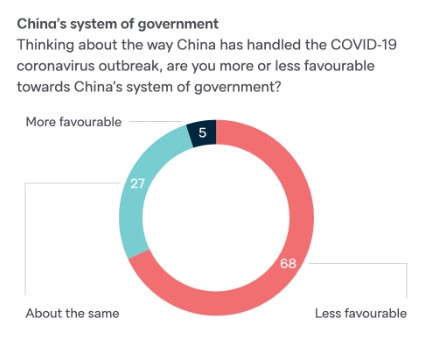
China’s government and the coronavirus epidemic

In Quillette, Aaron Sarin shows how the Chinese government has systematically failed to respond adequately to the epidemic which broke out late in 2019in Wuhan and risks “losing the Mandate of Heaven”:

As of this writing, the epidemic’s death toll is still rising, and many of these deaths can ultimately be traced to the paranoid rigidity of the Xi Jinping administration. By late December 2019, doctors in Wuhan were already sounding the alarm over cases of what appeared to them to be SARS. Instead of listening to their warnings, the authorities summoned eight of these doctors for a dressing-down. They were warned of the punishments they could face for “rumour-mongering.” News of their detention was broadcast to tens of millions: a clear message to anyone else who might have been thinking about discussing viruses in public.

The Party’s leaders actually knew enough to be worried by this point — they alerted the World Health Organisation on December 31st — and yet still they hid the truth from the public. This neurotic obsession with secrecy has certainly cost lives. If the medical community had been informed of the outbreak back in December, hospitals could have stockpiled the necessary supplies. But now there are drastic shortages, and patients are dying in hallways and waiting rooms.

Even the critics of authoritarian dictatorship will usually agree that the system beats democracy for sheer efficiency, but the coronavirus debacle has turned that old wisdom on its head. Where we might have expected cold and methodical governance, we have found dithering bureaucrats, unable to take a step in any direction, paralysed by what Xu Zhangrun calls “systemic impotence.” Weeks went by and citizens swarmed in and out of Wuhan, picking up the virus and transporting it to the far corners of the country. Local government officials stayed quiet, wary of the heavy hand of Xi Jinping. On January 23rd, a citywide quarantine was finally announced, but eight long hours passed before it was enacted — time enough for a million or more to flee the city.

The Wuhan lockdown was repeated in other parts of the country (most recently the southern megacity of Guangzhou), and some observers praised the speed with which new hospitals were constructed from scratch. These very visible displays of its power aside, the Party has moved far too slowly at every stage of the crisis. Diagnostic testing required samples to be sent all the way to a laboratory in Beijing, and this delayed the distribution of testing kits to many of the hospitals in Wuhan. Even when testing kits were available, patients still found themselves trapped in a Kafka-esque web of bureaucracy. According to Reuters, the tests have been refused to people who fail to make it through a complex reporting system involving hospital authorities, district authorities, city health authorities, and disease control officials.

None of this should come as a surprise. The cliché about the efficiency of authoritarian systems was always, on closer analysis, something of a low-resolution image. In the old days of the Soviet Union, speedy industrial growth obscured the reality of a fragile system largely devoid of autonomous decision making. During the 1920s, the Communist Party’s state planning committee Gosplan was established with the impressive-sounding mission of creating a series of five-year plans to govern the economy. But over the next 70 years, the vast majority of these plans were radically revised and rewritten, or more frequently ignored altogether in favour of Joseph Stalin’s arbitrary dictates. Indeed, Gosplan actively tried to avoid making decisions at all, because committee members knew Stalin would have them shot and replaced if their ideas produced unwelcome results. In the end, fear saps the efficiency of all authoritarian regimes, and the Chinese Communist Party is no exception.

Li Wenliang has emerged as the most vivid symbol of the Party’s latest failure. Li was one of the Wuhan doctors disgraced for discussing the coronavirus on social media. A few days after his police warning, he contracted the virus himself, and on February 6th he died. It was during the period of Li’s short illness that the Party apparently realised its error and decided to absolve the doctors, but still the central government would accept no blame for the tragedy. Instead, the Supreme Court (which is controlled by the CCP) scolded the local government in Wuhan — an unusual move, no doubt designed to create a scapegoat for surging public anger. The truth is that the city’s officials had been faced with an impossible job. They obediently followed orders, and now they will be punished for it.

QotD: Go eat bugs, plebs!

Filed under: Environment, Food, Health, Media, Quotations — Tags: , , , , — Nicholas @ 01:00

What is this creepy obsession with the elite telling us to eat bugs? Every few weeks, some mainstream media outlet has one of its gooey writers go off on how delicious and nutritious insects supposedly are, and it’s downright bizarre. The latest piece of pro-pillbug propaganda is from the formerly prestigious Economist, “Why Eating Bugs Is So Popular In Congo,” where the author assures us that “The creepy superfood is rich in protein and magnesium.” Thanks, but I think I’ll get my protein and magnesium in a manner that does not involve gobbling grubs.

What is with these people?

This bug bingeing is a running theme in the mainstream media. The New York Times, taking a break from passively aggressively correcting its garbage takes, asks “Why Aren’t We Eating More Insects?” The answer is, of course, “Because they are insects, you weirdos.”

CNN goes on about “Bugs: The Food That Can Feed, And Maybe Save, The Planet,” as if Brian “Tater” Stelter is going to give up stuffing Cheetos in his talk-hole in exchange for caterpillars.

And National Geographic manages to do the impossible and make us hate the United Nations even more by informing us that the “U.N. Urges Eating Insects,” and offering us “8 Popular Bugs to Try.” Popular with whom?

The Economist is talking about people munching millipedes in Congo, and you have to wonder why we would take Congo’s lead in anything. It’s the Congo – you should carefully examine what the Congo does, then do the opposite. That goes for other strange countries too. Frankly, foreign countries are generally terrible and there is not a lot that other countries have to teach us – I lived on two other continents and this bizarre notion liberal Americans have about other countries being better than us is grossly misplaced. Other countries are mostly terrible.

Exhibit A: They eat bugs.

Do you think the people of Congo are saying, “Beef? Pass. Hand me that plate of maggots!” You don’t eat grasshoppers because you have other options. No one’s first choice is fruit flies.

Kurt Schlicter, “Tell The Nags To Go Pound Sand”, Townhall.com, 2019-11-19.

February 15, 2020

Disrupting railways as an activist tactic appears to work really, really well

As Colby Cosh writes, for all the issues Alberta has with the government in Ottawa, nobody seriously suggested messing up the railways to get attention. Perhaps they should have:

“DSC02285” by Bengt 1955 is licensed under CC BY-NC 2.0

It never occurred to us to mess with the rail network in Eastern Canada — to inconvenience the precious commuters of the Golden Horseshoe — as a means of gaining negotiating leverage. Actually, I’m sure some people must have suggested it, but they would have been written off as selfish, dangerous idiots advocating counterproductive tactics.

The economic impact of the rail protests is big, but surely comparable, at the moment, to that of a big storm. Yet because a B.C. Aboriginal community is carrying its fight with the B.C. government to the guts of Canada, the clamour over whether large public works are now possible at all in Canada has instantly achieved new and unfamiliar volume levels.

The Coastal GasLink that is the source of the strife is a provincially regulated work running from Dawson Creek to the coast; unlike the vastly more expensive problems Alberta has encountered, this technically isn’t an issue for the wider federation at all. Except, whoops, it is! Because someone decided to make it one!

The levels of irony dazzle the imagination. The Canadian West was settled by means of passenger rail, which is supposedly one reason it was chosen as a target by the radicals supporting the Wet’suwet’en hereditary chiefs in their pipeline fight. But intercity commuter rail no longer really exists between the West Coast and Hamilton. The West is ultimately as dependent on rail freight as the East, and maybe more so, but it was that commuter inconvenience that gave rise to an immediate sense of national crisis, while Calgary and Saskatoon and Winnipeg snoozed.

And climate-change activists found themselves blocking rail lines in “solidarity” with the Wet’suwet’en, even though the chiefs’ fight is a question of territorial principle rather than carbon sins. This put the greenies in the position of opposing and thwarting actual rail travel. They admit this is anomalous; nobody likes to attach the word “hypocritical” to himself.

One of the protesters pointed out to the Star‘s Alex Boyd how dependence on rail — dependence of the sort that they spend 364 days a year advocating for intra-city commuters — facilitates unlawful, obstructive protest as a means for the self-anointed to “put pressure on decision-makers.” It is a little harder to block paved roads than railroads, and much harder to sabotage them, if it comes to that — which it might have if the police had used force to immediately disperse the protests. For some, this counts as a feature of rail, not a bug.

February 11, 2020

Hydrogen – the Fuel of the Future?

Filed under: Europe, Science, Technology — Tags: , , , — Nicholas @ 06:00

Real Engineering
Published 20 Apr 2018

Thank you to Shell for sponsoring this video. Listen to the Intelligence Squared Podcast for more: https://www.intelligencesquared.com/i…

Instagram:
https://www.instagram.com/brianjamesm…

Additional Reading: https://go.shell.com/2qLmhWv

Get your Real Engineering merch at: https://standard.tv/collections/real-…

Patreon:
https://www.patreon.com/user?u=282505…
Instagram:
https://www.instagram.com/brianjamesm…
Twitter:
https://twitter.com/Fiosracht

My Patreon Expense Report:
https://goo.gl/ZB7kvK

Thank you to my patreon supporters: Adam Flohr, darth patron, Zoltan Gramantik, Henning Basma, Karl Andersson, Mark Govea, Mershal Alshammari, Hank Green, Tony Kuchta, Jason A. Diegmueller, Chris Plays Games, William Leu, Frejden Jarrett, Vincent Mooney, Ian Dundore, John & Becki Johnston. Nevin Spoljaric, Kedar Deshpande

Music:
“Sydney Sleeps Alone Tonight” by eleven.five & Dan Sieg [Silk Music]
“Hydra” by Huma-Huma, and “Dawn” by Andrew Odd [Silk Music]
Silk Music: http://bit.ly/MoreSilkMusic

February 9, 2020

The lightbulb conspiracy again

I’ve banged on a few times over the years about lightbulbs, specifically about our government’s passionate desire for us to abandon the tried-and-tested (and cheap) incandescent bulbs to move first to (ultra-expensive, dim, and potentially dangerous) compact fluorescent bulbs and now to (cheaper, but still not living up to longevity promises) LED bulbs instead. Tim Worstall explains how governments were persuaded to enforce this crony capitalist plot over the years (he’s discussing the European market, but Canadian regulators were doing exactly the same thing):

We all recall when we used to use incandescent light bulbs. Simple, cheap, the result of a century’s worth of fiddling with the basic technology to make it around and about right for the use to which it was put.

A spiral compact fluorescent bulb (CFL).
Image by Sun Ladder via Wikimedia Commons.

Then they were banned. Sure, there was that energy and thus planet saving argument but that was always very weak indeed. It was an excuse, not the actual reason itself. The reason was that the big three manufacturers, Phillips, Osram and GE, had invested heavily in the next generation of technology, compact fluorescents. These cost not pennies per bulb but pounds. Rather better profit margins that is. Oh, and also, not subject to that crippling competition from China.

So, we get the EU ban on incandescents, driven entirely by the manufacturers. There’s a lot of the Baptist and Bootlegger in here given the environmentalist support for it.

The problem with the technology being the use of mercury in those bulbs.

An aside, I made my living for a number of years selling weird metals that are added to that mercury. I do actually know quite a bit about the nuts and bolts here. I’m also out of the business and have been for a decade and more. So it’s knowledge driving this, not knife sharpening.

Mercury’s not good stuff to have floating around. So, what happens next? Yep, a decade or a bit more after the incandescents were banned so now they’re coming for the CFLs.

The mercury issue was not as well publicized here in Canada as it was in Australia, for example:

How many of them have looked up the Environment Department’s website to find what its bureaucrats falsely describe as the “simple and straightforward” precautions to take against poisoning should one of these lamps smash:

  • Open nearby windows and doors to allow the room to ventilate for 15 minutes before cleaning up the broken lamp. Do not leave on any air conditioning or heating equipment which could recirculate mercury vapours back into the room.
  • Do not use a vacuum cleaner or broom on hard surfaces because this can spread the contents of the lamp and contaminate the cleaner. Instead scoop up broken material (e.g. using stiff paper or cardboard), if possible into a glass container which can be sealed with a metal lid.
  • Use disposable rubber gloves rather than bare hands.
  • Use a disposable brush to carefully sweep up the pieces.
  • Use sticky tape and/or a damp cloth to wipe up any remaining glass fragments and/or powders.
  • On carpets or fabrics, carefully remove as much glass and/or powdered material using a scoop and sticky tape; if vacuuming of the surface is needed to remove residual material, ensure that the vacuum bag is discarded or the canister is wiped thoroughly clean.
  • Dispose of cleanup equipment (i.e. gloves, brush, damp paper) and sealed containers containing pieces of the broken lamp in your outside rubbish bin – never in your recycling bin.
  • While not all of the recommended cleanup and disposal equipment described above may be available (particularly a suitably sealed glass container), it is important to emphasise that the transfer of the broken CFL and clean-up materials to an outside rubbish bin (preferably sealed) as soon as possible is the most effective way of reducing potential contamination of the indoor environment.

February 8, 2020

ESR on the Wuhan coronavirus

Filed under: China, Government, Health, Media — Tags: , — Nicholas @ 05:00

He’s backing away from his — to me unfathomable — earlier belief in the accuracy of official Chinese government statistics:

My willingness to believe the official line didn’t stem from any credulity about what the Chinese government would do if it believed the truth wouldn’t serve. As Communists they are lying evil scum pretty much by definition, and denial would have been politically attractive for as long as they thought they could nip the pandemic in the bud. I thought their incentives had flipped and they would now be honest as a way of assisting their own countermeasures and seeking international help.

My first clue that I was wrong about that came from a friend who is plugged into the diaspora Chinese community. According to him, there is terrifying video being sent from Chinese clans to the overseas branches they planted in the West to prepare a soft landing in case they have to bail out of China. Video of streets littered with corpses. And of living victims exhibiting symptoms like St. Vitus’s Dance (aka Sydenham’s chorea), which means the virus is attacking central nervous systems.

My second clue was the Tencent leak. […] the takeaway is that there is now reason to believe that as of Feb 1st the actual coronavirus toll looked like this: confirmed cases 154023, suspected cases 79808, cured 269, deaths 24589.

Compare that with the Johns Hopkins tracker numbers for today, a week later: Confirmed cases 31207, cured 1733, deaths 638. Allowing for the Tencent leak being roughly one doubling period earlier, the official statistics have been lowballing the confirmed case number by a factor of about 8 and the deaths by a factor of about 80. And then inflating cures by a factor of about 12.

Even given what I’d heard about the video, I might have remained skeptical about the leak numbers if someone (don’t remember who or where) hadn’t pointed out that the ratio between reported cases and deaths has been suspiciously constant in the official Chinese statistics. In uncooked statistics one would expect more noise in that ratio, if only because of reporting problems.

So my present judgment, subject to change on further evidence, is that the Tencent-leak numbers are the PRC’s actual statistics. And that has a lot of grim implications.

« Newer PostsOlder Posts »

Powered by WordPress