Here is the iron law of medical — in fact all scientific — studies in the modern world: most do not replicate. This has always been true of studies that supposedly find some link between doing [thing we enjoy] and cancer. This of course does not stop the media from running with initial study results based on 37 study participants as “fact”. The same is true for studies of new drugs and treatments. Most don’t pan out or are not nearly as efficacious as early studies might indicate. We have seen that over and over during COVID.
Warren Meyer, “A Couple of Thoughts on Medical Studies Given Recent Experience”, Coyote Blog, 2021-08-31.
December 10, 2021
QotD: The media and the replication crisis
December 8, 2021
Pandemic authoritarianism in the EU will be the death of Europe’s liberal traditions
In Spiked, Brendan O’Neill says we’re watching the “death of Europe” driven by the authoritarian instincts of government and EU leaders in thrall of public health officials:
Europe is on a precipice. It has marched, blindly, towards something very much resembling tyranny. Austria will shortly criminalise those who refuse the Covid vaccine. Germany looks set to follow. Ursula von der Leyen, president of the European Commission, is wondering out loud if every member state should do likewise and make offenders of those who reject this form of medication. In Italy you are deprived of your livelihood rather than your liberty if you say no to vaccination: the unvaxxed are not permitted to work. Anywhere. In Greece, everyone over the age of 60 must pay the government 100 euros for every month they remain unvaxxed. As if the Greek government, in cahoots with its masters in Brussels, had not immiserated Greek pensioners enough already.
Police in Rotterdam opened fire on people protesting against Covid restrictions. Three were seriously injured. Austrian cops have wielded batons and shields against the thousands who took to the streets of Vienna to say no to mandatory vaxxing. In Brussels, the black, bureaucratic heart of the EU project, water cannons and tear gas were unleashed upon citizens agitating against vaccine passes. The irony is almost too much: in the European quarter of Brussels, the very part of Europe in which the modern European sensibility was forged by politicians, experts and technocrats, ordinary people make a blow for freedom and the forces of this supposedly liberal new continent beat them down. Rarely has modern Europe’s bluster about “human rights” and “respect” been so savagely exposed.
What is happening in Europe right now is nothing short of terrifying. We are not merely witnessing another round of Covid restrictions. This isn’t just the introduction of another set of emergency measures that some people believe are necessary to stave off the latest Covid wave and the Omicron threat lurking on the horizon. No, we are living through a chilling overhaul of the entire relationship between the state and the individual, with the state empowered to such an extraordinary degree that it can now instruct its citizens on what to inject into their bodies, and the individual so politically emaciated, so denuded of rights, that he no longer even enjoys sovereignty over himself, over that tiny part of the world that is his own body and mind. We are witnessing the violent death of European liberalism and the birth pangs of a new and deeply authoritarian era.
Many seem not to recognise how serious a development mandatory vaccination is. Even those of us who are pro-vaccination, who have been happily vaxxed against Covid-19, should look with nothing less than horror upon the proposal that it should be an offence not to be vaccinated; that a citizen should be fined thousands upon thousands of euros if he refuses this treatment. One of the ideas being discussed in Austria ahead of its mandatory vax law that will be introduced in February is that citizens who refuse vaccination will be summoned to a local court. If they ignore the summons twice they will face a fine of 3,600 euros. If they continue ignoring the state’s demand that they receive medical treatment that they do not want, they’ll be fined 7,200 euros. These are life-ruining fines. There is no talk – yet – of imprisoning people who reject the vaccine, but the Austrian state is making it crystal clear that it will happily wield its power to propel the unvaxxed into destitution.
[…]
This spells the end of freedom as we know it. Bodily autonomy is the foundation stone of self-government, and self-government is the thing that gives freedom meaning. If we do not enjoy sovereignty over our minds and our flesh, then we are not free in any meaningful way. And it won’t just be the minority of people who feel forced to receive the vaccine whose freedom will suffer under this new regime of state power over people’s bloodstreams and muscles and flesh – everyone’s freedom will. The state diktat determining that only those who receive a certain form of medical treatment will get to enjoy freedom will make freedom itself contingent upon doing what the state wants you to. Even the vaxxed will not be truly free people in this world. Rather, we will be the beneficiaries of state favour, the enjoyers of small privileges, in return for our agreeing to receive an injection. We will have a license from on high to go about our daily lives. And we will know that that license could swiftly be revoked if we refuse medical treatment in the future. The redefinition of “freedom”, the making of liberty contingent upon submission to medicine, will throttle the rights of all of us – vaxxed and unvaxxed alike.
December 7, 2021
Sarah Hoyt on the nonsense of so many pandemic measures
Posting at Instapundit, Sarah Hoyt lists some of the many, many poor and even counter-productive public-health-theatre measures most western governments have been indulging in since the beginning of 2020:
Let’s say you’re one of those insane people who dismissed the low numbers of death/serious illness aboard the Diamond Princess because apparently people on cruise ships have “top quality medical care” (Coo-ey! Is the sky made of candy floss in your world?) in what world — even a candy floss sky one — did it make sense to close local grocery stores but keep Walmart open? In what world did it make sense to direct flow in stores so everyone crammed in through the same door, and everyone walked the same path (thereby a crowded/grimy, etc. path)? In what world did reducing hours of stores make sense? In what world did it make sense to wear a mask to your table then remove it to eat? (Are you less contagious when sitting?) In what world did curfews make sense? In what world did mask mandates outside in botanic gardens and zoos make sense? In what world did it make sense that you were hectored for getting out and driving around, while remaining your car?
In what world did the government stomp on every — no matter how crackpot or inocuous — rumored treatment? In what world, despite all studies to the contrary, do two layers of thin fabric stave off viral infection? In what world are doctors and nurses laid off by the thousands during a supposed pandemic? And finally in what world does it make any sense that a completely ineffective — if not (the numbers are not trustworthy in the sense that we can’t trust anything from collection to reporting, but in the UK there are indications that way) counterproductive — vaccine is being forced on the population by government mandate?
The deaths of so many people — thanks to dodgy statistical reporting and frequent moving-the-goalpost sleights of hand we may not know exactly how many — are tragic, but the deliberate destruction of public trust in our governments, healthcare systems, and media reporting will continue for a long, long time to come. The Wuhan Coronavirus has not been the civilization-wrecker we were all told to fear, but the breakdown in trust will make us all more vulnerable the next time a serious disease strikes. Trust is earned, slowly, and rebuilding lost trust will be a much slower process.
December 4, 2021
Things I never expected to read on the CBC website — “…frantically firing up the gaslights and moving the goalposts on COVID restrictions and vaccinations”
Canada’s state broadcaster has been — as you would expect — a staunch supporter of every government initiative to limit free speech and the rights of Canadians in tackling the Wuhan Coronavirus pandemic. They’ve consistently portrayed any concerns or doubts about draconian government action as irrational, anti-science conspiracy theories and the people raising such concern as effectively “enemies of the people”. As such, I never expected to see anything like this CBC Opinion piece by Allan Richarz:
Listen closely and one might be able to discern the unmistakable sounds of our elected and unelected officials frantically firing up the gaslights and moving the goalposts on COVID restrictions and vaccinations.
It was a precipitous but inevitable shift from “two weeks to flatten the curve” to get the jab or lose your job, and unsurprisingly, there is still more to come.
Met the provincial vaccination targets? Great; but now it’s time for a booster. Ready for the “temporary” vaccine passport system to expire? Sorry, we need to extend it through spring; proving once again that if you give the government an inch on your rights, they will go for the mile every time.
Less than a year ago, government and public health officials touted vaccination as a panacea to end the pandemic. It’s safe, effective and will allow the country to put COVID behind us, we were told. To that end, citizens were encouraged, prodded and eventually threatened to get their shots, with holdouts demonized by politicians at all levels. Yet, in Ontario, even as the province exceeded by weeks its vaccination and case number targets of the government’s phased reopening plan, citizens were offered only breadcrumbs in return: moving up Phase 3 reopening by just a few days, with no plans at the time for a complete reopening.
And now, with new case numbers in Ontario essentially split evenly between the unvaccinated and fully vaccinated and questions about waning vaccine efficacy, the goalposts shift again with the rollout of booster shots elsewhere in the country and calls for expanded eligibility.
One does not need to look hard to guess what the next step will be across Canada. In Israel and France, the definition of fully vaccinated was changed to include boosters; those six months out from their second dose, or first booster, are now considered unvaccinated, and their vaccine passport privileges suspended.
H/T to SDA for the link.
December 3, 2021
“Power corrupts and absolute power …” is something governments are not eager to give up, post-pandemic
Miguel Castaneda quotes Lord Acton’s famous aphorism (which I truncated in my headline) and warns of the consequences of giving governments too much power:
“Power corrupts and absolute power corrupts absolutely”. The words of Lord Acton, a fierce opponent of state power, are sadly no less relevant today than they were at his time of writing.
Over the past 20 months, the authoritarian approach of Western leaders has been justified by our representatives as a necessary response to a global emergency. Whether that’s true or not is up for discussion, however, one thing remains clear: such attitudes have handed governments a level of power that, left unchecked, severely curtails individual rights.
This path is not unique to the UK, nor is it unique to Europe. We’re seeing a near global normalisation of state overreach. Lockdowns in many liberal democracies have been brought in suddenly and without thorough scrutiny.
In this country, at no point were other methods to address the pandemic tested. They were barely even suggested. And with little counter from the mainstream media, the UK and others have normalised shutting down the country for the purpose of virus control.
It was only a few months ago that Australia locked over 5 million people after identifying a single case. A severe overreaction which likely contributed to the dramatic fall in Australian Prime Minister Scott Morrisson’s approval ratings of the handling of the pandemic, which fell from 85 per cent at the start of the pandemic to 47 per cent in the latest poll in August.
A commonly overlooked consequence of these authoritarian practices is the precedence it sets for how governments can and should act when faced with novel challenges. It has been predicted that future pandemics will become more frequent, and perhaps more deadly. Are we going to react again by shutting entire populations in their homes?
Looking to the continent, the ease at which governments are bringing in authoritarian measures should be an international scandal. Take Austria, where a national lockdown has just been extended until at least December 11th. Or Germany, which has announced today a de facto lockdown for the unvaccinated, and is debating bringing in a policy of mandatory vaccinations.
This extreme way of thinking is a new virus spreading across the Western world. Spain, France, Italy, Greece and Australia have all seen similar policies introduced.
December 1, 2021
Polling bias in a time of pandemic
At The Daily Sceptic, Mike Hearn looks at the often incredible poll results turned up by YouGov that seem to indicate that well over half the population of Britain are budding medical fascists who want nothing more than a full-on pandemic tyranny from now to the end of time:
Recently YouGov announced that 64% of the British public would support mandatory booster vaccinations and another polling firm claimed that 45% would support indefinite home detention for the unvaccinated (i.e., forced vaccination of the entire population). The extreme nature of these claims immediately attracted attention, and not for the first time raised questions about how accurate polling on Covid mandates actually is. In this essay I’m going to explore some of the biases that can affect these types of poll, and in particular pro-social, mode and volunteering biases, which might be leading to inaccurately large pro-mandate responses.
There’s evidence that polling bias on COVID topics can be enormous. In January researchers in Kenya compared results from an opinion poll asking whether people wore masks to actual observations. They discovered that while 88% of people told the pollsters that they wore masks outside, in reality only 10% of people actually did. Suspicions about mandate polls and YouGov specifically are heightened by the fact that they very explicitly took a position on what people “should” be doing in 2020, using language like “Britons still won’t wear masks”, “this could prove a particular problem”, “we are far behind our neighbours” and most concerning of all – “our partnership with Imperial College”. Given widespread awareness of how easy it is to do so-called push polling, it’s especially damaging to public trust when a polling firm takes such strong positions on what the public should be thinking and especially in contradiction of evidence that mask mandates don’t work. Thus it makes sense to explore polling bias more deeply.
[…]
Given the frequency with which large institutions say things about COVID that just don’t add up, it’s not entirely surprising that people are suspicious of claims that most of their friends and neighbours are secretly nursing the desire to tear up the Nuremberg Code. But while we can debate whether the chat-oriented user interface is really ideal for presenting multi-path survey results, and it’s especially debatable whether YouGov should be running totally different kinds of polls under the same brand name, it’s probably not an attempt to manipulate people. Or if it is, it’s not a very competent one.
When I was much younger, I’d very occasionally get a call on our land line from a polling firm. I’d sometimes take part in the poll, although I don’t recall every seeing any of the polls I took part in being published later. After a few years, I stopped taking part and now I hang up as soon as it’s clear that the call is from a polling company. Apparently I’m far from alone in this learned aversion to dealing with polls:
Online panel polling solves the problem of low phone response rates but introduces a new problem: the sort of people who answer surveys aren’t normal. People who answer an endless stream of surveys for tiny pocket-money sized rewards are especially not normal, and thus aren’t representative of the general public. All online panel surveys face this problem and thus pollsters compete on how well they adjust the resulting answers to match what the “real” public would say. One reason elections and referendums are useful for polling agencies is they provide a form of ground truth against which their models can be calibrated. Those calibrations are then used to correct other types of survey response too.
A major source of problems is what’s known as “volunteering bias”, and the closely related “pro-social bias”. Not surprisingly, the sort of people who volunteer to answer polls are much more likely to say they volunteer for other things too than the average member of the general population. This effect is especially pronounced for anything that might be described as a “civic duty”. While these are classically considered positive traits, it’s easy to see how an unusually strong belief in civic duty and the value of community volunteering could lead to a strong dislike for people who do not volunteer to do their “civic duty”, e.g. by refusing to get vaccinated, disagreeing with community-oriented narratives, and so on.
In 2009 Abraham et al showed that Gallup poll questions about whether you volunteer in your local community had implausibly risen from 26% in 1977 to a whopping 46% in 1991. This rate varied drastically from the rates reported by the U.S. census agency: in 2002 the census reported that 28% of American adults volunteered.
November 30, 2021
The Surprising and Forgotten History of Helium
The History Guy: History Deserves to Be Remembered
Published 28 Jun 2019Humanity didn’t recognize the second most abundant element in the known universe until the nineteenth century. A significant source on earth wasn’t discovered until 1903. The discovery and understanding of the element helium played a central role in some of the most important scientific discoveries of the modern era, and helium continues to change the world today.
This is original content based on research by The History Guy. Images in the Public Domain are carefully selected and provide illustration. As images of actual events are sometimes not available, images of similar objects and events are used for illustration.
All events are portrayed in historical context and for educational purposes. No images or content are primarily intended to shock and disgust. Those who do not learn from history are doomed to repeat it. Non censuram.
Find The History Guy at:
Patreon: https://www.patreon.com/TheHistoryGuy
The History Guy: History Deserves to Be Remembered is the place to find short snippets of forgotten history from five to fifteen minutes long. If you like history too, this is the channel for you.
Awesome The History Guy merchandise is available at:
teespring.com/stores/the-history-guyScript by THG
#thehistoryguy #helium #science
November 27, 2021
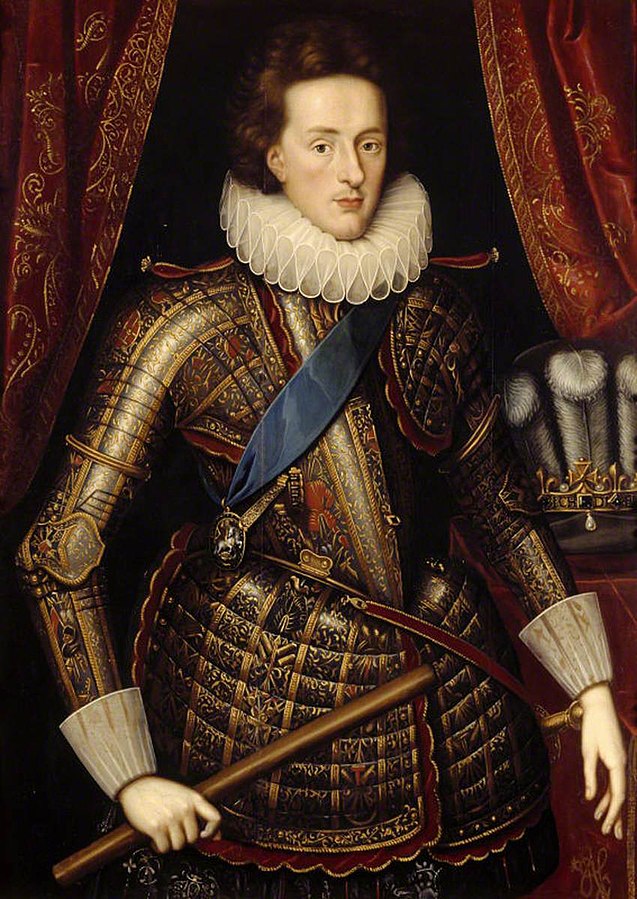
King James I and his hatred of tobacco smoking — “so vile and stinking a custom”
Anton Howes recounts some stories he uncovered while researching English patent and monopoly policies during the Elizabethan and Stuart eras:
… some of the most interesting proclamations to catch my eye were about tobacco. Whereas tobacco was famously a New World crop, it is actually very easy to grow in England. Yet what the proclamations reveal is that the planting of tobacco in England and Wales was purposefully suppressed, and for some very interesting reasons.
James I was an anti-tobacco king. He even published his own tract on the subject, A Counterblaste to Tobacco, just a year after his succession to the English throne. Yet as a result of his hatred of “so vile and stinking a custom”, imports of tobacco were heavily taxed and became a major source of revenue. Somewhat ironically, the cash-strapped king became increasingly financially dependent on the weed he never smoked. The emergence of a domestic growth of tobacco was thus not only offensive to the king on the grounds that he thought it a horrid, stinking, and unhealthy habit — it was also a threat to his income.
What I was most surprised to see, however, was just how explicitly the king admitted this. It’s usual, when reading official proclamations, to have to read between the lines, or to have to track down the more private correspondence of his ministers. Very often James’s proclamations would have an official justification for the public good, while in the background you’ll find it originated in a proposal from an official about how much money it was likely to raise. There was money to be made in making things illegal and then collecting the fines.
Yet the 1619 proclamation against growing tobacco in England and Wales had both. The legendary Francis Bacon, by this stage Lord High Chancellor, privately noted that the policy might raise an additional £3,000 per year in customs revenue. And the proclamation itself noted that growing tobacco in England “does manifestly tend to the diminution of our customs”. Although the proclamation notes that the loss of customs revenue was not usually a grounds for banning things, as manufactures and necessary commodities were better made at home than abroad, “yet where it shall be taken from us, and no good but rather hurt thereby redound to our people, we have reason to preserve”. Fair enough.
And that’s not all. James in his proclamation expressed all sorts of other worries about domestic tobacco. Imported tobacco, he claimed, was at least only a vice restricted to the richer city sorts, where it was already an apparent source of unrest (presumably because people liked to smoke socially, gathering into what seemed like disorderly crowds). With tobacco being grown domestically, however, it was “begun to be taken in every mean village, even amongst the basest people” — an even greater apparent threat to social order. James certainly wasn’t wrong about this wider adoption. Just a few decades later, a Dutch visitor to England reported that even in relatively far-flung Cornwall “everyone, men and women, young and old, puffing tobacco, which is here so common that the young children get it in the morning instead of breakfast, and almost prefer it to bread.”
[…]
Indeed, policymakers thought that the domestic production of tobacco would actively harm one of their key economic projects: the development of the colonies of Virginia and the Somers Isles (today known as Bermuda). Although James I hoped that their growth of tobacco would be only a temporary economic stop-gap, “until our said colonies may grow to yield better and more solid commodities”, he believed that without tobacco the nascent colonial economies would never survive. Banning the domestic growth of tobacco thus became an essential part of official colonial policy — one that was continued by James’s successors, who did not always share his more general hatred of smoking. Although the other justifications for banning domestic tobacco would soon fall away, that of maintaining the colonies — backed by an increasingly wealthy colonial lobby — was the one that prevailed.
November 26, 2021
The more government tries to do, the less well it does everything
In what I suspect will be a long, long series of stories illustrating government’s ever-increasing appetite for control and decreasing ability to competently discharge its authority, Matt Gurney says he remembers to the day when he realized the Canadian government didn’t have a clue in an emergency. ANY emergency:
It seems a very long time ago now, but let me set the stage for you: this was just days after March 12th, the Thursday most North Americans seem to agree marked the real beginning of it all here — the day the NBA and NHL suddenly shut down and, in Toronto at least, the schools closed. Though the prime minister wouldn’t officially ask Canadians to come home from abroad for a few more days, thousands were landing at our airports each day. The federal government had said that enhanced screening had been established to meet them. Sadly, this wasn’t exactly, you know, true. I knew this for a fact: I’d been out of the country with my wife and children, arriving home the day before Joly’s press conference. I’d expected screening, questions, temperature checks, pamphlets, PA announcements — to be blunt about this, I expected a gigantic hassle. Hell, I wanted to be hassled and sternly ordered home for 14 days of isolation. Nope! Here’s how I described our arrival in a column in the National Post:
[We] were processed by an automated kiosk with a touchscreen (that is hopefully being regularly cleaned). It scanned our passports and took photos of my wife and I — our children, being under 12, were exempt from photographing. Alongside the usual questions about value of purchased goods and whether we’ll be visiting a Canadian farm, there was a question asking whether we had recently visited Iran, Italy or China’s Hubei province. I (honestly) clicked no. The kiosk printed out a form, which I handed to a customs officer. He glanced at it, asked where we were returning from, looked at our passports for the barest moment, and welcomed us home. [The] entire process took barely six minutes.
No questioning about symptoms. No temperature screening. No information about mandatory 14-day self-isolation. No signage, or at least not obvious signage. No multi-language pre-recorded PA announcements with public health details. My wife did see a pamphlet listing COVID-19 symptoms, but nothing about self-isolation was noted. (Photos have circulated on Twitter claiming to show updated pamphlets given out at airports containing self-isolation information; we did not receive one on Saturday night.)
Our hassle-free arrival, to be clear, was not what was supposed to be happening. Worse, the federal government really seemed to have no idea what the facts on the ground actually were. Bill Blair was tweeting out complete nonsense that had absolutely no relation to what was actually happening. Provinces and cities were surging their own people to the airports to assert some order, since the federal government was clearly completely incapable of getting a handle on the situation, probably because it was blissfully unaware that there was a situation.
So that was bad.
But the next day, our first day back, was when it got really scary.
Joly had been at a cabinet meeting, and afterward, tried to project confidence and calm. She was full of smiles when she addressed the media, saying that there’d be announcements to come the next day. The Globe and Mail‘s Marieke Walsh, doing a vastly better job containing her temper than I would have, demanded to know why Canadians sitting at home were being teased about an announcement instead of just told what the announcement was. Joly had no real answer to that really, really good question, and just tried to smile her way through it, until David Lametti tried to save her by lavishing praise on the leadership of … Patty Hajdu, our then-health minister.
Read that paragraph again. Joly. Lametti. Hajdu. It’s a miracle any of us are still alive.
November 24, 2021
QotD: Homeopathy
The people who wanted money to pay for homeopathic cancer treatment were also, considered as a group, into every other form of quackery you can imagine. Of the 220 campaigners surveyed, 85 mentioned pursuing some kind of dietary anti-cancer magic. Sixty-eight were gobbling nutritional or herbal supplements. Thirty were megadosing with vitamin C. The list goes on, at astonishing length, past acupuncture all the way to magnets. It seems that if you believe in homeopathy, it is possible for you to believe in anything.
Colby Cosh, “Two researchers fashion a tapestry of GoFundMe desperation”, National Post, 2019-01-09.
November 22, 2021
A new study may show that “Justinian’s plague” reached Britain before Constantinople
Instapundit linked to a news release on a recent Cambridge study on the plague which devastated the Byzantine Empire during the reign of Justinian I, but which may have come through an as-yet undiscovered northern European path that reached the British Isles well before appearing within the Eastern Roman territories:

Illustration of the Hagia Sophia from European History: An outline of its development by George Burton Adams, 1899.
Wikimedia Commons
“Plague sceptics” are wrong to underestimate the devastating impact that bubonic plague had in the 6th–8th centuries CE, argues a new study based on ancient texts and recent genetic discoveries.
The same study suggests that bubonic plague may have reached England before its first recorded case in the Mediterranean via a currently unknown route, possibly involving the Baltic and Scandinavia.
The Justinianic Plague is the first known outbreak of bubonic plague in west Eurasian history and struck the Mediterranean world at a pivotal moment in its historical development, when the Emperor Justinian was trying to restore Roman imperial power.
For decades, historians have argued about the lethality of the disease; its social and economic impact; and the routes by which it spread. In 2019-20, several studies, widely publicised in the media, argued that historians had massively exaggerated the impact of the Justinianic Plague and described it as an “inconsequential pandemic”. In a subsequent piece of journalism, written just before COVID-19 took hold in the West, two researchers suggested that the Justinianic Plague was “not unlike our flu outbreaks”.
In a new study, published in Past & Present, Cambridge historian Professor Peter Sarris argues that these studies ignored or downplayed new genetic findings, offered misleading statistical analysis and misrepresented the evidence provided by ancient texts.
Sarris says: “Some historians remain deeply hostile to regarding external factors such as disease as having a major impact on the development of human society, and ‘plague scepticism’ has had a lot of attention in recent years.”
Sarris, a Fellow of Trinity College, is critical of the way that some studies have used search engines to calculate that only a small percentage of ancient literature discusses the plague and then crudely argue that this proves the disease was considered insignificant at the time.
Sarris says: “Witnessing the plague first-hand obliged the contemporary historian Procopius to break away from his vast military narrative to write a harrowing account of the arrival of the plague in Constantinople that would leave a deep impression on subsequent generations of Byzantine readers. That is far more telling than the number of plague-related words he wrote. Different authors, writing different types of text, concentrated on different themes, and their works must be read accordingly.”
November 21, 2021
British Columbia’s annus horribilis
In The Line, Jen Gerson does a distressingly good imitation of Cassandra’s warnings … and just like Cassandra, her words are probably going to be ignored until things get much worse:

“A job well done by @RCAF_ARC’s 442 Transport & Rescue Squadron. Using 3 CH149 helicopters and supported by a CC115 Buffalo, the Sqn evacuated 311 people, 26 Dogs and a Cat to safety in Agassiz after being trapped by landslides on roads in BC.
RCAF Operations, Nov 16, 2021 (https://twitter.com/RCAFOperations/status/1460664604648947721)”
So now here it is. We have flooding so acute that we are airlifting food supplies to small towns in British Columbia cut off by destroyed transport routes that it may take weeks to repair. The damage has cut off rail and road links from the city of Vancouver to the rest of Canada. Not only does this trap all the rail and truck resources now stranded in the isolated areas, it also cuts off one of the largest ports in North America in the midst of a global supply chain crisis.
On top of that, many of those economists who told us inflation was not going to happen are now hedging their bets. Oh, and we are still dealing with a pandemic, and its lingering health and economic damage.
Once again we have proven ourselves utterly dependent on the military to manage a domestic crisis — a military that is so profoundly underfunded and under equipped that it has reached a state of generational decline. (For more on that, read Matt Gurney’s piece in The Line from yesterday [linked here].)
Meanwhile, we’ve been writing here at The Line about the utter collapse of our institutional capacity; the unavoidable fact that our governments seem totally unable to anticipate obvious, immediate, and pressing disasters. A recent example of that came from the federal government’s failure to sound the alarm on COVID-19 back in 2020. However, the residents of British Columbia sure didn’t get the same kind of notice of imminent danger that their American counterparts surely did.
God help us if a really bad winter storm hits somewhere in this country over the next six to eight weeks. Another severe ice storm, or a real blizzard; I genuinely fear we would have people starving to death in their homes for lack of resources to spare to dig them out.
I am a 37-year-old woman who had never seen an empty shelf in a grocery store until COVID-19. Now I’m seeing scenes out of Kamloops supermarkets that look like something out of The Walking Dead. No serious shortages in 35 years — and now I’ve seen two episodes of panic buying clearing out the shelves in the past two.
We keep on acting as if this disaster is the peak. This is the worst year ever, and we’re going to get back to normal any minute now.
Maybe.
But what if we don’t?
November 20, 2021
DicKtionary – M is for Mathematics – Newton and Hooke
TimeGhost History
Published 19 Nov 2021Today we turn away from killers and sociopathic rulers and look at two men from the world of science. Isaac Newton and Robert Hooke were certainly very intelligent and creative, but were they dicks as well?
(more…)
November 19, 2021
“We don’t even fund our search-and-rescue units properly. That’s the least controversial thing the military does.”
In The Line, Matt Gurney discusses the situation of the Canadian Armed Forces as domestic demands escalate (especially in the Vancouver area this week), and the already under-staffed units strain to meet Canadians’ needs:

“A job well done by @RCAF_ARC’s 442 Transport & Rescue Squadron. Using 3 CH149 helicopters and supported by a CC115 Buffalo, the Sqn evacuated 311 people, 26 Dogs and a Cat to safety in Agassiz after being trapped by landslides on roads in BC.
RCAF Operations, Nov 16, 2021 (https://twitter.com/RCAFOperations/status/1460664604648947721)”
If you’ve heard of General Wayne Eyre, Canadian Army, it’s probably because he’s currently the acting chief of the defence staff — that’s the top officer in the Canadian Armed Forces, in command of the army, navy and air force. He got the job after the last CDS got entangled in the sexual misconduct scandal now roiling the military. Gen. Erye stands a pretty good chance of being the next CDS on a full-time basis, assuming the government ever gets around to making a decision on that front. Given the attention the Liberals usually give the military, this is not a guarantee.
If you’d heard of Gen. Eyre before all the weirdness alluded to above, there’s a decent chance it’s because of a pretty stark warning he sounded not long ago. Interviewed by the Canadian Press, the general, then head of the army, warned that the military was simply too small to do all that was being asked of it. Specifically, he warned that increasingly frequent domestic deployments were interfering with the military’s ability to conduct large-scale, multi-unit exercises. In typical Canadian fashion, the general reached for a hockey metaphor to describe why such large exercises are essential, and told the CP, “It’s like a hockey team that would never train, never play on the ice together, and then all of a sudden being thrown into an NHL game and be expected to win.”
There are other concerns with increasing domestic deployments, which the CP noted were becoming larger as well as more frequent in line with worsening natural disasters. They exhaust personnel and wear out equipment. But the point was made — the general was telling Canadians that our world was changing, and our military was struggling to keep up. Military guys usually aren’t verbose or particularly expressive. The fact that Gen. Eyre gave this interview at all was notable on its own.
The interview was published on Jan. 20, 2020, by the way, on a day when hundreds of troops were helping Newfoundlanders dig out after a nasty winter storm. Anyone recall what else was getting underway back in early 2020?
As I write this column, I’m watching a press conference from British Columbia government officials, addressing the massive damage done by recent floods and landslides. It’s an unusually emotional press conference. That’s not a criticism, but simply an observation from a journalist who’s watched more of these than he can remember over the years. The ministers are clearly possessed by the enormity of this problem; the minister of transportation aptly described the province’s transportation network as “crippled.” Major highways and railways are either underwater or blocked by debris. Some others seem to have been partially destroyed, the ground beneath them simply gone. Many communities in B.C. are now entirely cut off from the outside world or have, at best, extremely limited access; helicopters are hauling supplies in and stranded people out. The city of Vancouver, Canada’s third largest, is essentially detached from the rest of the country unless one wants to take a huge detour through the United States, which only reopened its land border to Canadians a few days ago.
The economic toll of cutting off the Port of Vancouver from the rest of the country, at a time when supply chain disruptions are already biting hard, is going to be gigantic. Economist Trevor Tombe did some quick math and estimated it at over $2 billion a week in trade between B.C. and the rest of the country that’s just been wiped off the national GDP, not to mention the direct costs of actually fixing the damaged infrastructure, of repairing property damaged or destroyed by the tragedy and, sadly, and the massive losses to farmers in property and livestock, much of which has drowned. This is a big, big economic hit to Canada.