Mustard
Published on 8 Apr 2018In 1974, a French train sets a speed record, exceeding 250 miles per hour. But this train is unlike any other before it. Instead of rolling on wheels, it hovers on a cushion of air. In the 1970’s hovertrains were seriously being considered the solution to slow, antiquated railways, which increasingly had to compete with new superhighways and even intercity air travel.
Without the rolling resistance of train wheels, hovertrains promised greater efficiency and much higher speeds. By feeding high pressure air through lifting pads, hovertrains float on a cushion of air much like a hovercraft.
One of the most widely known hovertrain prototypes was called the Aerotrain. Lead engineer Jean Bertin and his team in France, designed several versions, including one that could carry 80 passengers. The i80HV was powered by a turbofan sourced from an airliner, producing over twelve thousand pounds of thrust. At the front, a 400 horse power gas-turbine supplied high-pressure air to hover the twenty loaded train a quarter of an inch off its guideway. The British and Americans also experimented with hovertrain technology, incorporating the linear induction motor for improved efficiency. British research led to the development of the RTV-31 Tracked Hovercraft, and the American’s developed several prototypes, culminating in the development of the Urban Tracked Air Cushion Vehicle (UTACV).
But like their counterpart the Maglev, Hovertrains failed to revolutionize rail. Hovertrains, Maglevs, or any other innovative alternative to rail has to compete with nearly a million miles of rail line already in existence. With stations and infrastructure built-out in nearly every city in the world. The limitations of conventional railways were overcome not a single innovative leap forward, but by incremental improvements. Existing rail networks were modernized with sections of track that could handle higher speeds. New signaling technologies were developed along with more advanced wheelsets.
April 29, 2018
Pipe Dreams: What Happened To Hovertrains?
April 20, 2018
Knocking Out The Hejaz Railway I THE GREAT WAR Week 195
The Great War
Published on 19 Apr 2018While the Germans are still advancing in Flanders (Operation Georgette), the other fronts are not always quiet. In Palestine, the British forces and the Arab Revolt are taking the initiative again. T.E. Lawrence (Lawrence of Arabia) and the Arab Revolt are attacking the vital Hejaz Railway, a major transport factor for the Ottoman Empire.
April 8, 2018
Premier Wynne’s crazy (high speed) train proposal
I usually start any criticism of new railway line proposals with a disclaimer that I’m actually very pro-railways. I do so because it’s absolutely true and it kind of hurts me to shoot down these wonderful-sounding schemes just because they make no economic sense whatsoever. Last week, Jen Gerson found herself doing exactly the same thing while discussing the Ontario Liberal proposal for a new high speed passenger line:
It would be good to preface this column with a confession. I love trains. I loved taking trains while tooling about in Europe in my ‘20s. I would happily trade additional travel time to enjoy the comforts of a train in favour of airport security and an airline seat.
[…]
Train lovers like myself often like to lament the fact that Canada is the only G7 nation without a high-speed rail line, as if that fact makes us technologically backward — as opposed to merely sparsely populated.
But as Feigenbaum points out, there are only two high-speed rail lines anywhere in the world that make any money after factoring in build and operating costs: Tokyo to Kyoto, and Paris to Lyon. “There is another line in Japan that breaks even. All of the rest of the High Speed Rail projects in the world lose money and some lose a lot of money,” Feigenbaum says.
“In the North American context, you need at least 3 million people in each of the metropolitan areas [you’re serving]. You need incredibly high population density in both of these cities. You need very good inner-city transit systems and you need generally low rates of car ownership.”
Toronto qualifies as a reasonable high speed rail hub by this definition. Windsor does not.
And she doesn’t even mention the almost-universal cost overruns on major infrastructure projects like this, nor delays in obtaining equipment (especially if the winning bidder is Bombardier).
I swear I have squandered days of my life thinking about this train to Windsor and I’ve come to the conclusion that it is an onion of stupid. Every layer you peel away reveals some new and terrible aspect that doesn’t make any sense.
Fortunately, this is almost certainly just an election promise that will never actually go further than some lovely animations and perhaps a few physical scale models for politicians’ photo ops leading up to the vote. It will then probably disappear from the picture even if the Liberals get back into office.
April 5, 2018
Amtrak decides to abandon one of its few profitable sidelines
Kevin Keefe discusses the recent Amtrak announcement that it will be discontinuing support for private railcar movements on Amtrak trains:
Amtrak’s announcement last week that it intends to shut down most of its haulage of private cars and its support for special trains was a stunner. Within hours, hundreds or perhaps thousands of people working in the heritage end of railroading scrambled to react.
It hasn’t taken long for a credible protest movement to take root. An official objection was made to Amtrak on behalf of the American Association of Private Car Owners, and a similar move is expected from the Rail Passenger Car Alliance. Railfan social media has erupted with protest exhortations. As of this morning, more than 7,000 people have signed a petition at change.org.
Meanwhile, in this moment of limbo, a number of plans have been put on hold. The Fort Wayne Railroad Historical Society has postponed ticket sales for its September 15-16 “Joliet Rocket” trips on Chicago’s Metra, featuring Nickel Plate 2-8-4 No. 765. The operators of West Virginia’s famed New River Train fall foliage trips — a 51-year tradition — are faced with closing up shop. Like all private-car owners, the Washington, D.C., Chapter, NRHS, might wonder when its heavyweight Pullman Dover Harbor might once again turn a wheel. Countless other organizations face the same dilemma.
In announcing the new policy, Amtrak President and CEO Richard Anderson cited three main reasons why the company feels this move is necessary: operational distractions from providing for special moves, a failure to capture “fully allocated profit margins,” and delays to paying customers on scheduled trains.
One thing Anderson didn’t mention in his announcement, but should have: the subsidy the American taxpayer gives to prop up his corporation every year. In 2017, that largesse amounted to $1.495 billion.
Anderson’s complaints about the effects of special moves are specious. Amtrak has plenty of “operational distractions,” but most of them have little to do with factors related to private cars or special trains, the grateful operators of which strive mightily to make their moves seamless. As for delays, why isn’t Anderson pointing the finger at the real culprits, some of their Class I partners for whom delaying a passenger train is second nature? As for relative profitability, if it’s true that the “special trains” business operates in the black, how can Amtrak walk away from it? Where else does Amtrak make a profit?
March 26, 2018
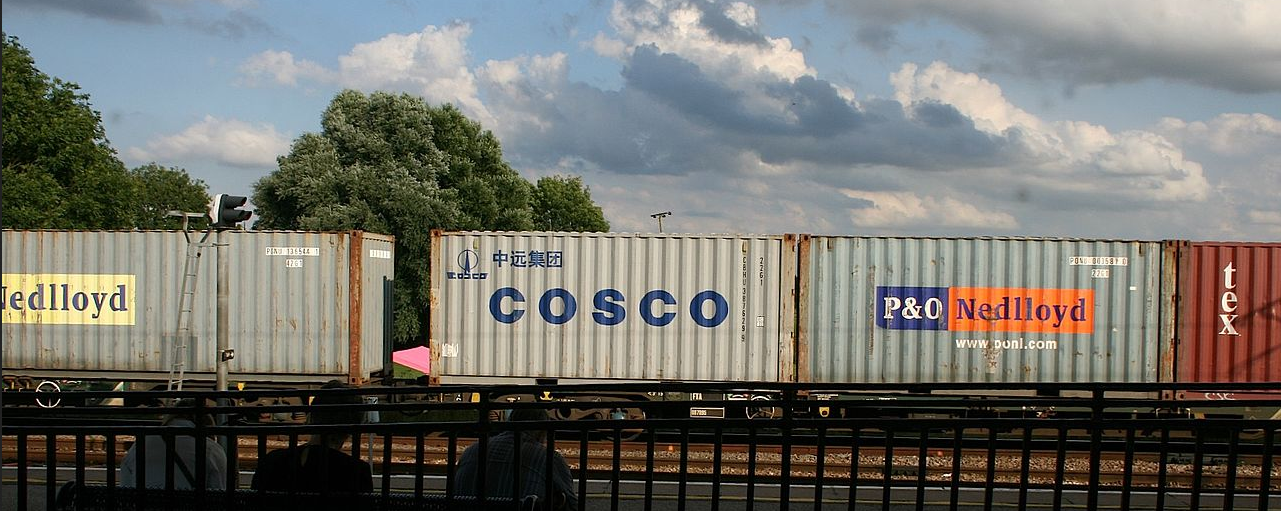
The container revolution in shipping
Is there anything as ubiquitous as the humble shipping container these days? There’re used for all kinds of “second career” purposes, but it’s easy to miss just how important to the growth in international trade … and the rise in global wealth … those containers have been. Marc Scribner gives a quick shout-out to the container:
One of the most underappreciated drivers of the modern global economy is the humble shipping container. Widely adopted internationally in the second half of the 20th century, intermodal containers largely supplanted break bulk cargo — the bags, barrels, pallets, and crates that must be individually loaded and unloaded onto ships, railcars, and trucks.
Intermodal containers are standardized in size and design, allowing them to be stacked onto large container ships, which can transport thousands of containers. In port, containers can be lifted onto railcars and flatbed trucks, enabling quick access to inland distribution centers and manufacturing facilities.
Containerization dramatically reduced costs all around. Fewer dockworkers were needed to load and unload vessels and larger ships were built thanks to stackable containers. Fewer ports were needed to transport an increasing volume of goods and freight insurance rates fell due to their durability and securability.
These transportation cost declines due to containerization have been estimated to have increased the volume of world trade far more than the proliferation of free trade agreements since the end of World War II. This means, according to recent research published in the Journal of International Economics, that while trade policy was important (and CEI is a strong supporter of trade liberalization), technological change in the shipping industry was responsible for enabling more trade among countries than improvements in government policy. It is important to note that for global commerce going forward, however, government policy is likely to be more important as containers have already been widely adopted, particularly in wealthy industrialized countries.
March 16, 2018
How Rifles & Railroads influenced Warfare in the 19th Century
Military History Vlogs
Published on 23 Feb 2018The introduction of the breech-loading rifle and the railroad had a tremendous influence on Warfare in the 19th Century. Although, not everyone was as fast or able to adopt then the Prussians. Austria, France and Russia had major issues. Most notably visible in the Austro-Prussian War (1866) and Franco-Prussian War (1870-1871).
February 27, 2018
The Czechoslovak Legion’s Odyssey Through Russia I THE GREAT WAR Special
The Great War
Published on 26 Feb 2018The Czechoslovak Legion wanted to return home or continue the fight for independence even when peace on the Eastern Front was declared. But they needed to cross the whole of Civil War torn Russia for this.
February 8, 2018
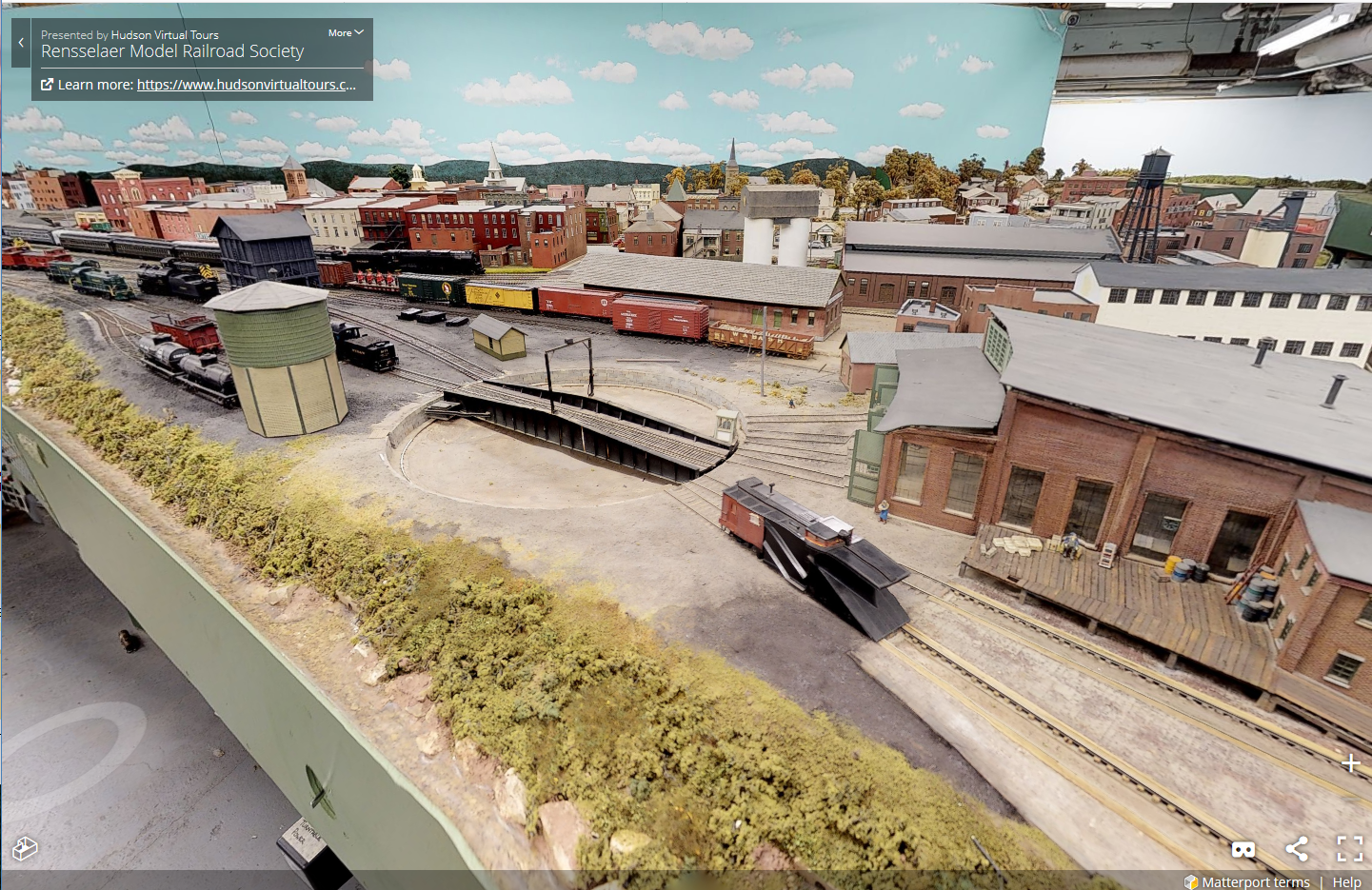
A virtual tour of the Rensselaer Model Railroad Society’s NEB&W layout
John McCluskey shared this link on one of my mailing lists, and it’s well worth the visit: https://my.matterport.com/show/?m=e6d8iA5vGQ5. I visited the New England, Berkshire & Western layout at Rensselaer Polytechnic about twenty years ago, and the society has been busy working on it, so that while I recognize a lot of the scenes, they’ve clearly added to or upgraded them from my visit.
December 21, 2017
Manufacturing model trains in China
Jason Shron (who glories in living the “hoser” stereotype) runs a small Canadian company that manufactures 1:87 scale model trains, doing the majority of the actual manufacturing in China. Even there, rising standards of living mean that small companies like Rapido Trains need to be on the lookout for ways to economize, as illustrated in this short video:
December 18, 2017
The Canadian | Mighty Trains
Quest TV
Published on 19 Mar 2017The Canadian is VIA Rail’s iconic passenger train, which travels between Vancouver’s Central Station and Toronto’s Union Station on a three-day, four-night journey. Mighty Trains takes the 4,466km journey, which traverses much of the country, through the Rocky Mountains, Prairies, boreal forest and lakes of Northern Ontario.
December 7, 2017
Fifty years since the end of the 20th Century
In early December 1967, the New York Central finally had to give up on their famous passenger train, the 20th Century Limited between New York City and Chicago. Kevin Keefe tells the sad story:

The streamlined steam locomotive New York Central Hudson No.5344 “Commodore Vanderbilt”, as it left Chicago’s LaSalle Street station pulling the 20th Century Limited.
Photo via Wikimedia
I don’t know what I was doing on the afternoon of December 3, 1967, but I know where I should have been: on the platform of Union Station in South Bend, Ind., awaiting the passage of the last westbound edition of New York Central’s legendary 20th Century Limited. That’s right, it’s been 50 years since NYC pulled the plug on what was generally considered the “world’s most famous train.” The final runs of trains 25 and 26 were unceremonious, as depicted in various photos that ran in the March 1968 issue of Trains. But “unceremonious” doesn’t begin to do justice to the westbound edition: it arrived in Chicago’s La Salle Street Station hours late due to a freight derailment the night before in eastern Ohio. Just looking at these sad images from December 2-3, 1967, you can image how relieved NYC and its president, Al Perlman, must have been to be done with the train once and for all.
The economics that drove NYC’s decision were brutal. As author Fred Frailey reported in his terrific book Twilight of the Great Trains, the Century’s traditional patrons deserted the train. “On May 20, 1967,” wrote Frailey, “the westbound Century carried but 18 people in coach, 34 in the sleepercoach (budget sleeper) and 40 in sleeping cars; its eastbound counterpart had 31 in coach, 42 in sleepercoach and 20 in the sleepers. In other words, you could have seated almost everyone in one seating in the twin-unit dining car.”
Editor David P. Morgan understood the passenger-train economics that drove Perlman to kill the Century, but in that March ’68 issue of Trains he couldn’t suppress his disgust at NYC’s cavalier behavior for the last runs: “Such a train deserved better than the noiseless euthanasia it received. Kansas doodlebugs have been lopped off with as much ceremony.”
The most poignant images of that day are images of both trains 25 and 26 pausing alongside a wet platform at Buffalo’s Central Terminal, their two observation cars that night, Wingate Brook and Hickory Creek, headed in opposite directions to die forever.
Photos of the 20th Century Limited on the final run at the link.
November 10, 2017
Model Railroad – 1950 Educational Documentary – WDTVLIVE42
wdtvlive42 – Archive Footage
Published on 20 Oct 2017An introduction to model railroads, featuring the O-Scale layout of the Westchester Model Railroad Club.
QotD: Dissing model railroaders
I hate it when nonmodelers talk about model trains.
http://www.dailymail.co.uk/news/article-3264325/My-favourite-tracks-ones-trains-says-Rod-Stewart-Singer-reveals-books-second-hotel-room-models-play-tour.html
http://www.therichest.com/expensive-lifestyle/money/rod-stewart-model-train-collection/I’m not a lover of rock music so when Model Railroader did a writeup of Rod Stewart’s layout a few years back, I said who? Then I read the article and said wow, that’s great work. Especially when it was obvious that Mr. Stewart did the work himself. A great model railroad isn’t something you can just buy, no matter how rich you are. It’s a labor of love that involves developing real skills and tens of thousands of hours of painstaking work. Most model railroads are never finished and disappear when their builders pass on, making them more or less ephemeral works of art.
To call what Mr. Stewart does, “playing with trains” is a direct insult. Nobody says about even the crappiest painter or sculptor that they are just “playing with paint” or “playing with clay.” The same for all sorts of hobbies Yet the tone that you get when you admit to modeling trains is almost always the same. Somehow building model train is playing with toys and you are doing something childish. Somehow the idea that trains come in “sets” never seems to go beyond the train around the tree.
Which couldn’t be farther from the truth. Model railroading involves a great number of skills that most hobbies don’t have. For instance, you don’t get too far before you realize that your favorite prototype train is just not being made, or isn’t being made in your railroad’s paint scheme. So you get out the saw and cut up that train set locomotive and add other parts, ending by repainting the engine in your colors. Now you want a spur track on your railroad to service an industry. You might need to learn how to make your own track. That industry, well that might involve digging into historical archives to figure out what the building did before it became a shopping mall. As for how the railroad looks, those train set trees and vacuum formed tunnel get old fast, so you learn how to form hills and rocks, filling the hills with trees, that look like trees. You research that stuff too. In fact model railroading involves researching, photographing and studying far more than just the trains because the train need a reason to run and country to run through.
Almost no other hobby than model trains gets the kind of ridicule that model railroaders do. Some of that is, unfortunately, self-inflicted as model railroaders aren’t above poking a little at each other. Still, I’m not sure what causes the stigma that goes with small trains. Yet no other hobby requires the number of skills that model railroading, if done well does. You work with more kinds of tools, frequently through magnification than just about anything else. I’ve seen hobbyist machinists for instance talk about having to deal with “small parts” that were larger than a typical modeling project.
J.C. Carlton, “Rod Stewart And His Trains”, The Arts Mechanical, 2016-03-17.
November 1, 2017
James May’s Top Toys
railwayman2013
Published on 2 Jan 2013I love hornby trains !!!
October 6, 2017
Sabotage In The Desert – Battle of Broodseinde I THE GREAT WAR Week 167
The Great War
Published on 5 Oct 2017While the regular British forces were advancing towards Jerusalem and Baghdad, T.E. Lawrence and the Arab Revolt were causing havoc behind the lines. This week 100 years ago, they were continuing to attack the important Hejaz railway which was one of the vital supply routes for the Ottoman Army. On October 4, the Battle of Broodseinde was fought near Ypres and the costly British victory there caused real headaches for German general Erich Ludendorff.