
Few things are more likely to precede defeat than the conviction that you are on the verge of victory. One hundred years ago, in the spring of 1917, Germany had every reason to believe that it would triumph over its enemies in the First World War. France had been bled white in repeated attacks on the German army’s fortified lines, England was suffering from shortages of both munitions and military manpower, and Russia was descending into a revolution that would, within a year, enable Germany and its Austro-Hungarian allies to shift enormous numbers of troops and guns to the Western Front. Yet the entry of the United States into the war on April 6, 1917, proved to be the counterweight that shifted the balance. By the autumn of 1918, the fond hope of Germany victory had been exposed as a delusion. The ultimate result of the Kaiser’s war was the destruction of the Kaiser’s empire, and of much else besides.
What is true in war is true also in politics. Hubris is nearly always the precedent to unexpected defeat. In 1964, Lyndon Johnson won a landslide victory; less than four years later, LBJ could not even win his own party’s nomination for re-election. In 1972, Richard Nixon was re-elected in a landslide; less than two years later, he was forced to resign from office. More recently, after George W. Bush’s 2004 re-election, some imagined that this victory was the harbinger of a “permanent Republican majority” — a GOP electoral hegemony based on a so-called “center-right” realignment — but two years later, Democrats captured control of Congress and in 2008 Barack Obama was elected president. Obama’s success in turn led Democrats to become overconfident, and Hillary Clinton’s supporters believed they were “on the right side of history,” as rock singer Bruce Springsteen told a rally in Philadelphia on the eve of the 2016 election. Unfortunately for Democrats, history disagreed.
Robert Stacy McCain, “Why Is the ‘Right Side of History’ Losing?”, The American Spectator, 2017-04-05.
April 19, 2017
QotD: Hubris and Nemesis, or pride goeth before the fall
April 18, 2017
Examples of the “Paranoid Thriller” genre
In the latest Libertarian Enterprise, J. Neil Schulman discusses a type of book that he characterizes as the Paranoid Thriller:
It’s probably no surprise to anyone who’s read my books, but I’m a long-time fan of what might best be called the Paranoid Thriller.
“Paranoid Thriller” isn’t a book publishing category. You won’t find such a classification in the Library of Congress, or in the shelving system of Barnes and Noble. Amazon.com has the most cross-referenced indexing system of any bookseller I can think of and even it doesn’t seem to have that as a sub-category of fiction.
Technically — because these stories are often set in the “near future” or “the day after tomorrow” or sometimes in an alternate history — the Paranoid Thriller is a sub-genre of science fiction. But usually, beyond the element of political speculation, there are none of the usual tropes of science fiction — extraterrestrials, space, time, or dimensional travel, artificial intelligence, biological engineering, new inventions, scientists as action heroes, virtual realities, and so forth.
I’m sure even this list shows how outdated I am when it comes to what’s being published as science-fiction these days, which within the publishing genre has abandoned all those cardinal literary virtues of clarity, kindness to the reader, and just good storytelling in favor of all those fractal fetishes that previously made much of “mainstream” fiction garbage unworthy of reading: dysfunctional characters, an overwhelming sense of helplessness and despair, and of course hatred of anything ever accomplished to better the entire human race by old dead European-extraction white men.
[…]
The Paranoid Thriller is step-brother to the Dystopian novel, such as Yvgeny Zamyatin’s We, Ayn Rand’s Anthem, Aldous Huxley’s Brave New World, and George Orwell’s Nineteen-eighty-four, and brother to the espionage novel — everything from Ian Fleming’s James Bond novels to John Le Carre and Tom Clancy’s spy novels; and at least kissing cousin to alternate history thrillers like Brad Linaweaver’s 1988 Prometheus Award-winning novel, Moon of Ice, about a Cold War not between the United States and the Soviet Union but between a non-interventionist libertarian United States and a victorious Nazi Germany.
Some examples of the Paranoid Thriller:
In books, let’s start with Sinclair Lewis’s 1935 novel It Can’t Happen Here, the story of an American president who rises to power by enforcing a Mussolini-type fascism in America, published three years after the movie Gabriel Over the White House enthusiastically endorsed such a presidency, well into the presidency of Franklin Delano Roosevelt who did it for real, and a year after Adolf Hitler became the Führer of Germany.
Three years before Jack Finney’s novel The Body Snatchers was serialized in Colliers, Robert A. Heinlein’s 1951 Doubleday hardcover novel, The Puppet Masters crossed genre between futuristic science-fiction and the Paranoid Thriller — in effect creating an entire new genre of Paranoid Science-Fiction Horror — in which unlike H.G. Wells’ invaders from Mars in The War of the Worlds who had the decency to exterminate you, the alien invaders instead jumped onto your back and controlled your brain making you their zombie.
But then again, Heinlein had already created the Ultimate Paranoid Thrillers in his 1941 short story “They” and 1942 novella “The Unpleasant Profession of Jonathan Hoag” — over a-half-century before The Wachowski Brothers’ 1999 movie The Matrix — in which the entire world is a vast conspiracy to convince one man of its reality.
Jumping two decades forward I’ll use as my next example Ayn Rand’s 1957 epic Atlas Shrugged, in which the Soviet- refugee author warned how the United States — by following the path of a kindler, gentler socialism — could end up as the fetid garbage dump that had devolved from her once European-bound Mother Russia.
April 14, 2017
Alberta’s new problem of “rising income support caseloads”
Colby Cosh sounds a warning note for Alberta’s NDP government:
… there is a danger — I say this with glum certainty that this centuries-old accepted truth will incite tantrums — in permitting the dole to grow too large. One need only look at the United States’s current addiction to federal and other disability programs. The U.S. reformed welfare as Alberta (and eventually Ontario) did, but disability schemes involving armies of doctors, lawyers and administrative judges became an equally huge species of para-welfare.
The result is a national orgy of prescription opioids and suicide, as policy inertia encourages millions to make a bad back or a trick knee the centre of an unproductive, isolated life. The bottle of OxyContin absolves and soothes; Donald Trump wins a presidential election.
I want no part of anything like this for Alberta. During my lifetime the province has been an economic colony, obsessed with competitiveness and quite short on the state’s version of “compassion.” We all knew we would get NDP economic policy when we voted NDP. They have un-flattened taxes, revived groovy ’70s industrial planning, taxed carbon, regulated farms, run planet-sized deficits, and sheltered the bureaucracy while businesses choked and private-sector workers struggled.
Only the very inattentive could have been unprepared for most of this, as a price to be paid for hosing out the Conservative stable, or even as a desirable correction. Welfare numbers signify a more fundamental, threatening change. It is one that the New Democrats may find more dangerous to its electoral future than all the rest put together, if Ontario history is any guide.
The growth in welfare rolls that can take place in a year may take 10 to reverse. And, of course, such growth suggests that other NDP nostrums, like hiking the minimum wage, aren’t working out. Why would anyone at all require state income support in labour’s paradise? Do NDPers need to look far to find a stalking, wrathful, hyperconservative Mike Harris figure in Alberta?
Eugene Volokh: Free Speech on Campus
Published on 4 Apr 2017
Eugene Volokh has a few things to say about things that aren’t supposed to be said. Volokh, a professor of free speech law at U.C.L.A., has seen books banned, professors censored, and the ordinary expression of students stifled on university campuses across the nation.
Volokh believes free speech and open inquiry, once paramount values of higher education, are increasingly jeopardized by restrictive university speech codes. Instead of formally banning speech, speech codes discourage broad categories of human expression. “Hate speech. Harassment. Micro-aggressions,” Volokh says. “Often they’re not defined. They’re just assumed to be bad, assumed they’re something we need to ban.”
Edited by Todd Krainin. Cameras by Meredith Bragg and Jim Epstein.
QotD: How to negotiate
All negotiations are defined by something called the ZOPA: the Zone of Possible Agreement. The boundaries of that zone are defined by another buzzword, the BATNA: the best alternative to negotiated agreement.
The ultimate deal has to be better for both sides than their BATNA. Anything that either side considers worse than no deal at all is outside of the ZOPA, and no amount of strategery is going to get you there. Getting rid of Social Security and Medicare: outside of the ZOPA. Raising tax rates to Danish levels: outside of the ZOPA. Single-payer health care: outside of the ZOPA. Defunding Planned Parenthood: outside of the current ZOPA.
Is the ZOPA fixed? Nope. If a Republican president were in the White House, and a few more Republicans were in the Senate, defunding Planned Parenthood might well be feasible. The massacre at Newtown moved the ZOPA on gun control leftward. The financial crisis made all sorts of previously unthinkable things — like TARP and a nearly $900 billion stimulus bill — eminently feasible. The ZOPA moves all the time, which is why we’re no longer debating the free and unlimited coinage of silver at a ratio of 16 to 1.
But note that these movements didn’t come from some sort of deft negotiation strategy. They came from external events that changed the BATNA of one side or the other. Note too that even though the ZOPA had shifted in his favor, President Obama lost on gun control because he included an assault weapons ban in his list of demands as a bargaining chip, and the other side decided to walk away instead of negotiating a deal.
How did this happen? Because the bargaining chips you include send signals about your intent, and how serious you are about negotiating — and they can therefore change the facts on the ground in ways that hurt you rather than help you.
Imagine that you tried negotiating for a car by announcing that you intended to pay no more than $2,400 for a fully-loaded new truck. Would this improve your bargaining position? Of course not; the salesman would decide that you were wasting his time, and go find another customer. Similarly, if the car salesman announced that he wanted $100,000 for a well-used Camry, that wouldn’t make you more willing to pay $30,000 for it; it would make you go seek a dealer who wasn’t obviously crazy.
Megan McArdle, “Let’s See What Republicans Learn From Losing Boehner”, Bloomberg View, 2015-09-25.
April 11, 2017
The return of Jane Galt
Megan McArdle, who used to blog as “Jane Galt”, did an Ask Me Anything on Reddit:
I’m Megan McArdle, a columnist for Bloomberg View, covering business, economics, public policy and the latest in kitchen gadgets. Ask me anything!
[…]
[–]LegalInspiration 5 points 6 hours ago*
In the short, medium, and long terms, generally speaking, would you say the US as a political and civil society is screwed? If so, how screwed would you say it is? If that’s too argumentative, maybe a more polite way to phrase it is: Do you see the gradual disruption of national unity post WWII as something that will cycle within a set of sustainable boundaries, or will the trend continue long term to the point where the US is no longer sustainable as a coherent and singular entity?
[–]janegalt[S] 4 points 5 hours ago
A couple of decades ago, I toyed with the idea of writing a novel where the US broke up into two countries: Liberalstan and Fundamentalistalia. Back then I thought it was a metaphor; now I’m less sure. The country feels more divided than it has in my lifetime, or that of my parents. It may be the worst it’s been since the Palmer Raids; maybe the worst since the Civil War.
That said, to quote Adam Smith, “There’s a lot of ruin in a nation”. I think we have plenty of room to turn it around. But I think to do so, we need to think creatively about a kinder, gentler nationalism. Not the kind that says “Whee, let’s invade other countries”, but the kind that emphasizes love of country and the things we have in common–not the love we’ll grudgingly dole out after the nation has perfected itself, nor the things we’ll have in common after all those wretches in the other half of the country see the light and/or die. But love of each other right now, despite our many flaws.
Every country needs a certain amount of myth making, and a certain amount of irrational pride in itself to hold it together. That’s particularly true for America, which can’t derive a national identity from, well, not being America. I think a lot of people imagined that tearing down all the myth making, and disparaging that irrational love of country, would turn us into good global citizens. Only it turns out that the opposite of nationalism isn’t globalism; it’s tribalism. And the tribes are gearing up to make war on each other in a way that the US hasn’t seen for a long time.
[…]
[–]TJIC1 4 points 6 hours ago
You are libertarian – but a “pragmatic” one who suggests / acknowledges that gov is necessarily going to end up in pretty much every corner of everything, and that the space of reasonable policy debate is small changes at the margin. This seems to suggest that we will never repeal FDR innovations like ignoring the 9th and 10th amendment, changing commerce clause to read “Federal gov can do whatever it wants”, etc. What’s the best we can hope for for liberty? What we have today – a modern welfare state where USG consumes 30% of economy and regulates everything from toilet flushing to proper woods to make a guitar fretboard from?
…or a welfare state where USG consumes 50% of the economy?
…or 90%?
[–]janegalt[S] 5 points 5 hours ago*
The gap between real and ideal for libertarians is certainly wide, and I am less hopeful than I was twenty years ago that we’ll ever close it. I hate the “read whatever the government wants to do into the Constitution” jurisprudence that was required to enable the New Deal, and the fact that judges have appointed themselves to replace poets as the unacknowledged legislators of the world.
At some point as a commentator you have to decide whether to advocate for first best or eighth best policy. I’ve generally decided to advocate for what I think is politically realistic, rather than what I think is ideal. I think you need both kinds though–the compromisers need the hardline idealists to provide a sort of compass point, and the idealists need the compromisers to provide the actual movement in the right direction.
That said, this last election was very bad for libertarian ideas, representing a rejection of both our ideas about social policy, and those about political economy. I think libertarians have a lot of hard work ahead thinking about where we can realistically make advances in the next decade or so. I wish I knew the answer to that. My best guess is: the middle class entitlement state is not going to be rolled back. There may be some room for progress on America’s incredibly inefficient regulatory state, which would be a great boon for both economic liberty, and growth. I think the GOP will try to do tax cuts, but will fail to accomplish anything significant, for much the same reasons that their health care bill failed: there’s no money, and no public appetite for a tax cut that mainly benefits the affluent-to-rich (as it will have to, because at this point, the middle class and below don’t pay significant income taxes).
That said, we should also remember the progress that has been made on the liberty front. In 1944, FDR had the head of Montgomery Ward arrested for thwarting his war planning board; in 1952 Truman nationalized the steel mills. That stuff doesn’t happen any more, and a lot of the worst New Deal regulations have gone away. Police practices are way better than they were before Miranda and other decisions made sure that defendants knew their rights (I’m not saying they’re perfect, but they’re definitely better). And if you’re a minority or a woman, all sorts of legal discrimination has been erased over the last fifty years. Those are major victories for libertarians, and we shouldn’t think that there’s some golden age we’re falling away from. We’ve lost a few, but we’ve won a few too.
April 8, 2017
The “Three Stooges of the Apocalypse”
David Warren takes a well-deserved kick at Lloyd George, Clemenceau, and (especially) Woodrow Wilson:
A century has now passed since President Wilson disowned President Washington’s advice to his successors — to stay out of European conflicts — and war was declared by the United States on Germany. A moral preener, Wilson justified himself by declaring an even more extravagant mission to go with it:
“The world must be made safe for democracy.”
However large, a war is just a war. It should have a beginning and an end. As my old Indian girlfriend explained, “Too much war only leads to peace. Too much peace only leads to war.” As most people prefer peace, most of the time, it is well that war is not a permanent condition. But a war to some idealistic purpose can get very large, and go on for a long time, and morph into conditions which resemble peace, but are not peace. We’ve been making the world safe for democracy for at least a century. By now we have far too much.
[…]
In my view, that Great War, that Totaler Krieg, hasn’t ended yet. The old etiquette, that war was for soldiers — that non-combatants should be non-involved — became a thing of nostalgia. Vast conscript armies had been summoned, and would never be fully demobilized. The men I call the “Three Stooges of the Apocalypse” — Wilson, Lloyd George, Clemenceau — clinched at Versailles this new normal. It was not simply the punitive terms that were imposed on the war’s losers, but a more fundamental reorganization of all national and international affairs: “statecraft” became “policy.”
For Wilson was also the pioneer of progressive schemes to change the American way of life. He was, in some sense, a second Washington, consolidating a second American Revolution that had begun more modestly with Lincoln and the Union victory in the Civil War. America would be recreated, along bureaucratic lines, in a tireless campaign for full secularization, under centralized government control. The general mobilization of the First World War, now in America as well as Europe, created a new opportunity, by accustoming men to following orders; by the propaganda that made them identify with huge abstractions.
This is of course an inexhaustible topic, at which I pick away, in my attempts to explain if only to myself what makes our world so different from all preceding. It embraces more than any single force or event. We must also go back to the Prussian invention of the welfare state, and for that matter to the Gatling gun. Post-modernity is an invention of modernity, as modernity was an invention of the Middle Ages. The contemporary revolution has antecedents that may be found in the Enlightenment and in the Reformation. (What will post-modernity beget?)
April 7, 2017
QotD: You may not have to be crazy to be President, but it helps
Does Mr. Trump really have serious psychiatric problems as increasing numbers of shrinks are suggesting?
Since in their DSM-5 [PDF] (Diagnostic and Statistical Manual of Mental Disorders, Fifth Edition), the Mental Health Guild has classified just about every possible combination of human emotion and behavior as a psychiatric disorder, they can certainly find Mr. Trump — along with the rest of us — has conditions they would gladly treat but not necessarily cure. For a nice fee, of course.
They suggest he’s grandiose, antisocial, narcissistic, and paranoid etc. And, since an Australian study found that 1 in 5 CEOs are psychopaths, we can probably add that and/or “sociopath” to the list.
And they say he’s deceitful and tells lies, so far, at least 129 of ’em. And counting. Well, DUH! That IS how politicians get elected after all. And most of the folks who manage to get a shot at the position are quite accomplished at it.
Bill Clinton was notable, and his wife is no slouch. Obama was quite slick at it and Dubya & Company told 935 thoroughly documented whoppers to get “us” to attack, kill, maim, and displace hundreds-of-thousands of innocent Iraqi men, women and children. Etc.
So, since as POTUS (President Of The United States), Mr. Trump will almost certainly be responsible for killing, etc. large numbers of innocent folks, being a bit of a sociopath — maybe even a psychopath — will help. And to feel better about it — and possibly avoid PTSD — he can follow previous Presidents and call most of those innocent victims “collateral damage” instead of “murder victims.”
The bottom line is that to serve as president, sociopathy etc. has become helpful and lying is necessary. As Historian Zinn put it, “If governments told the truth, they wouldn’t last very long.”
L. Reichard White, “Is Trump Nuts? Does it Matter?”, Libertarian Enterprise, 2017-03-26.
April 5, 2017
“… if you’re on the side that says the other guy isn’t entitled to a side, you’re on the wrong side“
Mark Steyn on the amazing discovery that a “female, atheist, black, immigrant” is really a white supremacist!
Over the weekend, I swung by Judge Jeanine’s show to talk about one of the most malign trends of our time: the ever more open refusal by one side to permit those on the other side to speak. As I always say, I don’t care what side you pick on the great questions of the age – climate change, gay marriage, Islam, transgendered bathrooms, whatever – but, if you’re on the side that says the other guy isn’t entitled to a side, you’re on the wrong side. […]
They don’t want to participate in the debate, and win it. It’s easier to shut it down and save themselves the trouble. Case in point:
Ayaan Hirsi Ali Tour Cancelled
Citing security issues, the Somalian-born activist calls off her scheduled Australian tour…Let’s just expand that “Somali-born activist” précis a little. She’s not a dead white male like me or Charles Murray. As someone once said, Ayaan Hirsi Ali is everything the identity-group fetishists profess to dig: female, atheist, black, immigrant. But, because she does not toe the party line on Islam, her blackness washes off her like a bad dye job on a telly anchorman – and so do her femaleness and godlessness and immigrant status. And in the end she is Charles Murray, or Geert Wilders – or even David Duke. A black Somali woman is, it turns out, a “white supremacist”.
Ayaan Hirsi Ali is someone who fled genital mutilation and arranged marriage in a backward, barbarous society to come to the west and live in freedom. Her first stop was the Netherlands. But the director of the film she wrote, Theo van Gogh, was murdered in the street, and the man who shot him then drove two knives through what was left of his chest pinning to it a five-page death-threat promising to do the same to Ayaan. So she was forced to leave the Netherlands, and has lived with round-the-clock security ever since. Now she has to cross Australia off the list, too. Where’s next? Can she speak in Sweden? Or Canada? Ireland or Germany? She left Somalia to live as a western woman, only to watch the west turn itself into Somalia, incrementally but remorselessly, at least as far as free speech is concerned.
April 3, 2017
Ici Londres: Karl Marx didn’t get a single thing right
Published on 22 Mar 2017
April 1, 2017
Hello Angry Losers
Published on 31 Mar 2017
A Word To The Patronising Minority
March 31, 2017
QotD: Government as Superman … reality as Kryptonite
… politics is all details. And each of those tiny little details has to be endlessly negotiated, because the system is set up precisely to frustrate a powerful guy with a big idea. You may recall your middle school social studies teacher talking about “checks and balances.” This is what that looks like. Kryptonite, if you will.
So there is no shortcut around the long days spent debating whether the tax credit should be 3.45 percent or 3.65 percent, and drafting pages of legislation that amend some obscure subclause of the immigration code to read “that” rather than “which,” and ending up with a middling, pork-riddled program that costs too much and doesn’t do anything close to what its visionary proponents promised.
Governing is not like building a building; it’s not like running a business. It’s like, well, trying to herd three branches of government in roughly the same direction. These branches are composed of thousands of people, each of whom has their own agenda, and represents millions more, each of whom has their own agenda, and will hound out of office anyone who strays too far from it. This is a wildly ponderous and inefficient way to do anything, which is why I am a libertarian; almost anything can be done better when you’re not trying to build it by a committee.
But in a representative democracy, this is what we have. There is no superhero strong enough to overcome the villain. There is actually not even a villain to defeat, only the unslayable amoeboid agglomeration of 300 million citizens’ worth of unenlightened self-interest. In the immortal words of P.J. O’Rourke: “Every government is a parliament of whores. The trouble is, in a democracy the whores are us.”
Megan McArdle, “Voters Want Change. Candidates Disappoint. Repeat.”, Bloomberg View, 2015-08-21.
March 28, 2017
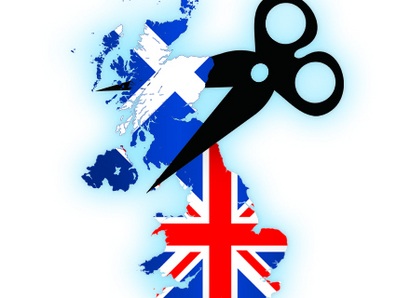
The next Scottish referendum
Brendan O’Neill says that despite the common assertion that those in favour of Brexit can’t object to Scottish independence, the people who supported Brexit have a strong case to argue against Scotland splitting away from the United Kingdom:
The argument is that if you backed Brexit, then you haven’t got a leg to stand on when it comes to opposing Nicola Sturgeon’s latest stab at Scottish independence. They’re the same thing, innit? ‘No one involved in Brexit, or who supported Brexit, can make any argument against Scottish independence except emotional ones’, says a writer for the Spectator.
Actually, the opposite is the case. Brexiteers are precisely the right people to put the case against Scottish independence. Because the argument against Scottish independence is the same as the argument for Brexit. Namely that people should not shy away from democracy, with all the debate and disagreement and difficulties it involves, but rather should embrace it. That instead of hiding from our responsibility to engage in national public life, or handing that responsibility over to ‘expert’ external bodies who will do decision-making on our behalf, we should accept this responsibility, and cherish it. Where Brexit represented a brave reclaiming of the institution of democracy, Scottish independence is driven by a sense of exhaustion with it, and by a rather elitist urge to opt out of it.
To many observers, Brexit and Sturgeon’s campaign for Scottish independence are the same thing: attempts to rupture longstanding unions. (Very longstanding in the case of the UK: 310 years. Not so much in the case of the EU: 24 years.) But the bigger, more important question is surely why these unions are being called into question.
[…]
For leftists in particular, many of whom threw their lot in with the idea of Scots independence during the Indy Ref of 2014, Scottish independence is attractive precisely to the extent that it allows them to circumvent what they see as the backward, Tory-esque thinking of a majority of Brits, especially English people. They, and also many in the SNP, fantasise that Scotland is a progressive, socialist-at-heart nation, and these fine instincts are being stymied by the votes and attitudes of dumb English people. Solution? Cut yourself off. Avoid even having to have the argument with the ignorant masses, never mind having to win it, by creating your own siphoned-off pseudo-independent nation in which you’ll always get your own way.
As one left commentator said during Indy Ref, the left’s flirtation with Scottish nationalism is driven in part by its irritation at ‘the sheer scale of the defeats suffered by the left’. One radical writer described Scottish nationalism as a ‘potential escape mechanism’ for leftists north of the border tired of living under governments in Westminster elected by the low-information right-wing hordes south of Hadrian’s Wall. And that’s what ‘independence’ is for Sturgeon and Co, too: an ‘escape mechanism’, a means of fleeing from the consequences of democracy into your own aloof, agreeable statelet.
This is why this independence movement seems to have so little to do with actual independence, as confirmed by the SNP’s desire to break from Westminster only to wrap itself in the interfering arms of the oligarchy in Brussels: because modern Scottish nationalism isn’t about independence at all. Except, perhaps, independence from the masses. From the British throng. From democracy. From a demos that has proven so disappointing to always-angry Scottish nationalists and to British leftists who see an independent Scotland, shorn of the millions who currently make up British democracy, as an opportunity to create the state-socialist utopia that they know a majority of Brits would find unappetising.


