
Published on 3 Sep 2015
The Western Front has been relatively quiet the whole summer while the Russians were on their Big Retreat. The French and British generals have been busy trying to find a new strategy to overcome the stalemate. The Germans weren’t sitting idle while awaiting the next big French offensive, they fortified their positions even using concrete. At the same time in the East, Tsar Nicholas II personally takes over military command and fires Grand Duke Nicholas Nikolaevich for the catastrophic casualties the Russian Army faced this summer. But his timing could not be worse.
September 4, 2015
The Western Front Awakens – The Tsar Takes Over I THE GREAT WAR – Week 58
Comments Off on The Western Front Awakens – The Tsar Takes Over I THE GREAT WAR – Week 58
September 1, 2015
French Pistols of World War 1 featuring Othais from C&RSENAL I THE GREAT WAR – Special
Published on 31 Aug 2015
The next live event will be on September 3 6pm CET. Othais will introduce us to German rifles and pistols. You can already find a few episodes about them online on his channel: http://bit.ly/OthaisChannel
This is the 2nd part of our special episodes on French small arms of WW1 and how they were used in battle. Othais explains the problems of manufacturing pistols like the Ruby Mle 1915 on a big scale. The French “Lebel revolver” also known as Model 1892 has a few interesting features like being a single action and a double action revolver at the same time. Particularly, the unusual reloading mechanism has a fascinating military history.
Comments Off on French Pistols of World War 1 featuring Othais from C&RSENAL I THE GREAT WAR – Special
Byzantine Empire: Justinian and Theodora – VI: Fighting for Rome – Extra History
Published on 25 Jul 2015
Belisarius has only just taken Neapolis when the king of the Ostrogoths is overthrown. The new king, Vitiges, withdraws from Rome entirely to consolidate his power, allowing Belisarius to take Rome without a fight. But after Vitiges gathers his troops, he marches to retake Rome. He springs a surprise attack on Belisarius at the Salarian Bridge, which the Roman general barely escapes. Now he must survive in a city under siege, invening ship mills to continue producing the grain that feeds the city and training the civilians as soldiers. He holds off the Ostrogoths until reinforcements from Justinian arrive. After an indecisive battle, he agrees to a truce with Vitiges, which gives him time to position his troops. When the Ostrogoths break the truce, Belisarius is ready for them and crushes their force to drive them finally out of Rome.
Comments Off on Byzantine Empire: Justinian and Theodora – VI: Fighting for Rome – Extra History
August 30, 2015
Argentina’s decaying armed forces
Argentina is, once again, suffering the consequences of populist-but-incompetent governance, and the state of the armed forces clearly reflect the economic woes of the country. Last year, Rowan Allport contrasted the Argentinian military in the late 1970s leading up to the Falkland War with the hollow shell of today:
It is difficult to believe from the vantage point of 2014, but in 1978, Argentina came within hours of invading Chile. The scheme arose as a result of a conflict between the two countries regarding the ownership of the Picton, Nueva and Lennox islands, which are situated at the western entrance to the Beagle Channel – a waterway running between the Pacific and Atlantic Oceans. The plan envisaged the seizure by the Argentine military of these and a number of other islands, to be followed shortly after by an invasion of mainland Chile, with the intent of capturing the capital Santiago and other key population centres. From this position, the Argentine leadership believed that it would be in an unassailable position to force Chile into a beggar’s peace regarding its territorial demands. Whilst the operation was ultimately aborted at the last minute, it was the then government’s belief that Buenos Ares had the ability to exercise hard power on a substantial scale – together the domestic economic crisis it was experiencing – that ultimately led it to once again travel down the path of aggression with the invasion of the British-governed Falkland Islands in 1982. Although Argentina did not expect the British to attempt to retake the territory and ultimately lost the conflict, its armed forces were – in addition to performing the initial amphibious assault which captured the islands – able to deploy a carrier group, surface action groups and submarines into the South Atlantic, and managed to inflict significant losses on the British using modern anti-ship weapons and a substantial fleet of jet aircraft.
Flashing forward over three decades, the Argentine Armed Forces find themselves in a calamitous state. The depleted Argentine Navy rarely puts to sea, is desperately short of spare parts, and much of the ordinance carried by its ships is past its expiration date. 2012 saw the training ship ARA Libertad seized in Ghana on the orders of a hedge fund seeking reparations from the Argentinian government [blogged here]. Shortly afterward, the corvette ARA Espora was stranded in South Africa for seventy-three days after the German company hired to repair a mechanical fault refused to carry out the work as a result of the Argentine government’s unpaid bills. Then, in a final indignity, 2013 saw the sinking of the decommissioned destroyer ARA Santísima Trinidad in port as a consequence of poor maintenance [blogged here]. The Argentine Air Force largely consists of a collection of obsolete aircraft mostly dating back to the 1970s, which are frequently grounded due to poor serviceability. The Argentine Army has deployed on operations without some of even the most basic equipment and rarely has the resources for training.
So how did this situation arise? As with most such calamities, the root causes are both financial and political. The story of Argentina’s economic fall from grace – both historical and contemporary – is well known. In 1914, Argentina was the tenth wealthiest country in the world, but a century later it has fallen to fifty-fourth place. The last three decades has seen the country careen from crisis to crisis. During the 1980s, Argentina was crippled by inflation and external debt. The free market reforms begun under President Carlos Menem allowed a short reprieve, but a succession of financial crises in Mexico, Brazil, Russia and South East Asia during the 1990s – combined with a failure to tackle numerous underlying domestic economic issues and corruption – sowed the seeds of further catastrophe. In 1998, Argentina’s economy fell into a depression, climaxing with the largest debt default in human history. Though a commodities boom and a currency devaluation allowed room for a brief recovery, the increasing use of interventionist economic policies by the government, along with the 2008 global financial crash and attempts by so-called ‘vulture funds’ to obtain payment for debts on which Argentina had previously defaulted led the country back into crisis, forcing another default in 2014.
So how bad is it now? Argentina is being forced to retire the last of their supersonic jet fighters because they can neither maintain nor replace them:
According to IHS Janes
“The Argentine Air Force is drastically cutting staff working hours and decommissioning its last fighter aircraft amid continuing budget issues.
A recently published daily agenda indicates that the service’s working hours have been significantly reduced, from 0800 to 1300; rationing of food, energy consumption, and office supplies has been directed headquarters staff and property residents; and only the minimum personnel required to staff headquarters, directorates, and commands are working.
These orders, issued on 11 August, take effect 18 August. A next step will cut Monday and Tuesday as working days. Moreover, air force officials said any aircraft taken out of service will not undergo maintenance for now.”
This leaves the Argentine military with just two types of jet aircraft A-4’s and IA-63’s and both are subsonic, decades old and barely serviceable. Argentina had looked into buying new Gripen’s from Sweden via Brazil but this was vetoed by the United Kingdom which makes a large number of internal components for the aircraft. They had also looked at JF-17’s from China, but the JF-17s proved too expensive to modify.
Comments Off on Argentina’s decaying armed forces
August 29, 2015
The US Army/USMC replacement for the Humvee
At Breaking Defense, Colin Clark explains why the recent contract award to build the first batch of Joint Light Tactical Vehicles (JLTV) to Oshkosh is kind of a big deal:
You wouldn’t have known it from the way the Army announced it, but the service awarded arguably its most important contract in a decade this evening to build the first 17,000 Joint Light Tactical Vehicles (JLTV) to Oshkosh.
“The JLTV production contract is a historic win for Oshkosh Corporation and more than 300 suppliers in 31 states across the country, and most importantly, for America’s warfighters,” says Charles Szews, Oshkosh CEO. Oshkosh beat back impressive efforts by Lockheed Martin and AM General to win today’s $6.75 billion contract. We’ll find out in the next 10 days if either or both of them file a protest. Many observers expect just that and the program officials at this evening’s briefing were unwilling to say virtually anything about why Oshkosh won or the strengths or weaknesses of any of the three competitors. They clearly feared giving someone grounds for a protest. Scott Davis, head of the Army’s Program Executive Office Combat Support & Combat Service Support, told us “there is no expectation of a protest,” but his language was very carefully chosen. They may not expect a protest, but that doesn’t mean they aren’t worried one will be filed.
Sen. Tom Cotton, in whose state the Lockheed version would have been built, appeared to open the door to political pressure to change the results when he issued a statement this evening that included the pledge that “as Lockheed Martin explores their next steps, we stand ready to assist them however we can.” Since the fixed price low rate initial production contract with eight options has been awarded, about the only next step would be a protest.
How committed was Lockheed Martin to this competition? It bought partner BAE Systems’ entire wheeled vehicle production line and physically moved it from Sealy, Texas to Camden, Ark.
The JLTV will replace most of the US military’s Humvees, the iconic vehicle built by AM General. The Marines are getting 5,500 JLTVs and the rest go to the Army. Up to 40,000 JLTVs will be built through 2040.
Comments Off on The US Army/USMC replacement for the Humvee
August 28, 2015
The Battle of Hill 60 – Lunatic Persistence in Gallipoli I THE GREAT WAR – Week 57
Published on 27 Aug 2015
Peter Hart described the state of the Gallipoli campaign in 1915 as “lunatic persistence in the face of the obvious” – and the Battle of Hill 60 proved just that. Outgunned and with a lack of artillery support, the battle was one of the bloodiest days on the peninsular near Constantinople. The Ottoman capital was still out of reach for the Entente to capture. Meanwhile, the war spread to the Indian border region and on the Western and Eastern Front the carnage continued in the air and on ground.
Comments Off on The Battle of Hill 60 – Lunatic Persistence in Gallipoli I THE GREAT WAR – Week 57
August 25, 2015
The French Rifles of World War 1 featuring Othais from C&RSENAL I THE GREAT WAR – Special
Published on 24 Aug 2015
Check out C&Rsenal for more background information on historic firearms: http://bit.ly/HistoricGuns
In the very first edition of our livestream with Othais from C&Rsenal, he introduced us to the French guns of World War 1, such as the Berthier carbine or the Lebel rifle. This is the first summary of our session surrounding the rifles that the French took into battle and their design. If you are curious to find out more about these, check out Othais’ videos where he goes into even more detail about the individual firearms. In the second summary we will talk about French pistols.
The next live session will be on September 3 and we will talk about German rifles and pistols. You can ask questions for that episode using the hashtag #OthaisGermanGuns
Comments Off on The French Rifles of World War 1 featuring Othais from C&RSENAL I THE GREAT WAR – Special
We finally find someone (not funded by Lockheed Martin) who likes the F-35
Okay, I poke a bit of fun … there are defenders of the F-35 who are funded by other stakeholders … I kid, I kid! Here’s a contrarian take by Think Defence justifying the UK’s F-35 commitment:
In the 7 years I have been dribbling my thoughts into Think Defence there are a few things on which I have been consistent; the ISO container is the greatest invention since the Bailey Bridge, commonality is not a dirty word, logistics are critically important, and, the F-35B is worth it.
Yet to be discovered tribes in the middle of the Amazonian rain forest could not have failed to notice the untrammelled hype that surrounds the F-35 in general, and the STOVL F-35B in particular. The amount of coverage is staggering, some of it informed, some of it not. Being developed under the un-staring eye of social media and a long line of people who seem to live for being critical has exposed every developmental misstep to ruthless criticism. Reports are often selectively quoted, conclusions drawn without context, over-simplification of complex subjects is rife and correlation confused with causation.
It is also an extremely polarising aircraft, read anything on-line and it seems you are either a Lockheed Martin shill or thick as mince critic who knows nothing.
I suspect, the reality is somewhere between, whilst the F-35 is not the cure for cancer, it is not cancer either.
Although I have written about the F-35B many times, including this 5 part series, this is the first for a while
Into this toxic environment I go, a look at the F-35B.
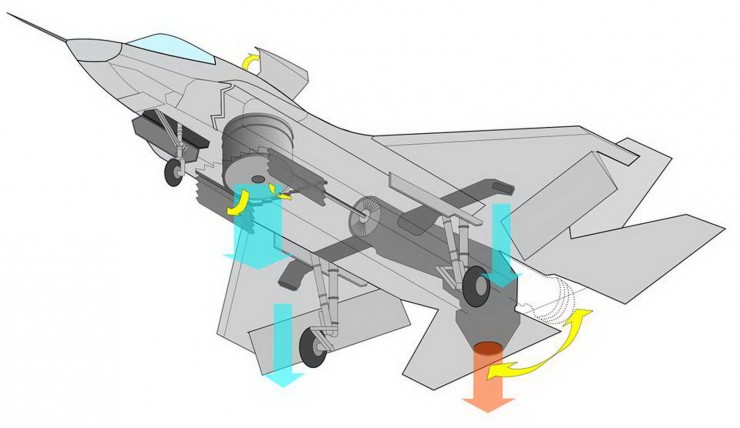
Comments Off on We finally find someone (not funded by Lockheed Martin) who likes the F-35
Byzantine Empire: Justinian and Theodora – V: Impossible Burden of Fate – Extra History
Published on 18 Jul 2015
The conquest of Carthage and the North African provinces was just the beginning for Justinian’s ambition. He must have Rome. But like Carthage, he must find a reason to attack the Ostrogoths who now hold it. And like Carthage, this reason is given to him when the Ostrogothic Queen Amalsuntha, his ally, is murdered. But unlike Carthage, Belisarius now has only 7500 men, barely half of what he had for North Africa. He sails out anyway, making his first stop at the island of Sicily. All the cities except Panormus surrender to him, and Panormus he takes quickly by seizing their harbor with his ships. Meanwhile, Justinian has bribed the Franks to invade Italy from the north while another his generals marches from the east. But just when the Ostrogothic king is on the verge of surrender, disaster strikes. The other Byzantine general dies, and Belisarius is forced to return to Carthage to quell a revolt. The conquest loses its momentum and the Ostrogothic king imprisons the Roman ambassador. Justinian will not be stopped, and orders Belisarius to return to Italy once North Africa is secure. Alone, Belisarius marches up the coast of Italy until he meets resistance at Neapolis. With his forces too thinned to mount a siege, he engineers a sneak attack by invading through the pipe of a dried, broken aqueduct. Neapolis falls and the way now lies open to Rome.
Comments Off on Byzantine Empire: Justinian and Theodora – V: Impossible Burden of Fate – Extra History
August 23, 2015
The Falklands War – The Untold Story
Published on 19 Aug 2013
Falklands Crisis was a 1982 war between Argentina and the United Kingdom. The conflict resulted from the long-standing dispute over the sovereignty of the Falkland Islands and South Georgia and the South Sandwich Islands, which lie in the South Atlantic, east of Argentina.
H/T to Ghost of a Flea for the link.
Comments Off on The Falklands War – The Untold Story
August 21, 2015
Escalation At Sea and Russia Up Against the Wall I THE GREAT WAR – Week 56
Published on 20 Aug 2015
The Entente was in desperate need of American supplies and so the German submarine campaign in the Atlantic was a real problem. The British started to run false flag operations with so called Q-Ships to hunt down U-Boats which lead to the so called Baralong Incident this week. In the meantime, Russia was standing up against the wall as the fortresses of Kovno and Novogeorgievsk were falling to the Germans leading to a catastrophic loss in men, equipment and supplies.
Comments Off on Escalation At Sea and Russia Up Against the Wall I THE GREAT WAR – Week 56
Allocating the blame for “Operation Jubilee”
In a BBC post from a few years back, Julian Thompson looks at the Dieppe raid:
On 19 August 1942, a disastrous seaborne raid was launched by Allied forces on the German-occupied French port of Dieppe. Why was such a raid ever undertaken? Because, with Germany operating deep in the Soviet Union, the Russians were urging the Allies to relieve the pressure on them by opening a second front in north-west Europe.
At the same time the British Chief of Combined Operations, Rear Admiral Louis Mountbatten, was agitating for a practical trial beach landing, against real opposition, for his troops. In the face of this pressure, Churchill decided that Operation Rutter, a ‘hit and run’ raid on Dieppe, should go ahead.
[…]
Churchill and the Chiefs of Staff — the heads of the Navy, Army and Air Force, who met daily to discuss strategy and advise Churchill — were responsible for this disastrous misjudgement. But, because no written record exists of the Chiefs of Staff approving the raid in its final form, it has sometimes been suggested that it was really Mountbatten who remounted it without authorisation. This is almost certainly nonsense.
The Chiefs of Staff disliked Mountbatten, regarding him as an upstart foisted on them by Churchill, so any unauthorised action on his part would have given them the ammunition to recommend his removal. Since Mountbatten was not removed, and the Chief of the Imperial General Staff, General Sir Alan Brooke, in his frank and detailed diary, makes no mention of his having exceeded his authority, it seems unlikely that Mountbatten can be accused of mounting the raid without authority.
General Brooke was in the Middle East from 1 August 1942, returning on the 24th, after the event. This was unfortunate, for, as the most forceful and intelligent of the Chiefs of Staff, had he been in Britain in the days preceding the raid, he might have persuaded Churchill to call it off.
Much has been said since about the fact that the Dieppe raid was a necessary precursor to the great amphibious operations that were to follow, in terms of the lessons learned and experience gained. Mountbatten pursued that line all his life. But as Chief of Combined Operations, he did bear some of the responsibility for mounting the operation, so one can only comment, ‘he would say that, wouldn’t he?’
The disaster did point up the need for much heavier firepower in future raids. It was recognised that this should include aerial bombardment, special arrangements to be made for land armour, and intimate fire support right up to the moment when troops crossed the waterline (the most dangerous place on the beach) and closed with their objectives.
However, it did not need a debacle like Dieppe to learn these lessons. As judged by General Sir Leslie Hollis — secretary to the Chiefs of Staff Committee and deputy head of the Military Wing of the War Cabinet with direct access to Churchill — the operation was a complete failure, and the many lives that were sacrificed in attempting it were lost with no tangible result.
Comments Off on Allocating the blame for “Operation Jubilee”
Donald Trump didn’t say this … but it’s easy to imagine that he would
It’s a tough life as a modern day satire writer, as what seems outrageously funny one day becomes news one short news cycle later. Here’s Duffelblog doing their best to get out ahead of the breaking news about Donald Trump’s GOP campaign:
Opinion: Everyone In The Military Is A Coward
The following is an op-ed written by Donald Trump, a candidate for President of the United States.That’s right, I said it. All of you in the military and your veteran brothers and sisters are a bunch of cowards. More than that, you’re a bunch of damn pussies. I’m not telling you something we don’t all know — I just have the balls to say it. Pure titanium. Made in America. Patent pending.
Let’s look at your track record. You’ve been in Afghanistan over twice as long as that loser McCain spent being a bitch in Hanoi, and you still haven’t won the war.
Iraq is more fucked up than it was before we invaded. You burned children in Vietnam, and you still couldn’t win that war. At least there were whores in Vietnam, but you wouldn’t catch me dead there. The only whores I bang are grade-A Phillies.
In fact, when has America ever won a war? Don’t try and tell me World War II. Russia won that shit, and we had to drop an A-bomb because your pansy asses couldn’t finish the job. “The Greatest Generation?” Please. Those assholes got half a million Americans killed. I like drones that win.
And then Tamara K. linked to this in her Twitter feed:

Comments Off on Donald Trump didn’t say this … but it’s easy to imagine that he would
August 18, 2015
Capturing the Horrors – The Art of World War 1 I THE GREAT WAR Special
Published on 17 Aug 2015
The beginning of the 20th century saw rapid changes to the understanding of the fine arts and the First World War was a big catalyst for all the new art movements of Modernity like Cubism, Expressionism or Impressionism. Countless painters like Otto Dix or Max Beckmann used their paintings to process the horrors they had lived through. Before this war, paintings used to glorify soldiers and generals, but the new schools of art couldn’t be further from that and so it is no wonder that the Nazis displayed a lot of World War 1 paintings in their exhibition of degenerate art (“Entartete Kunst“) before World War 2.
Comments Off on Capturing the Horrors – The Art of World War 1 I THE GREAT WAR Special
Byzantine Empire: Justinian and Theodora – IV: Vanquishing the Vandals – Extra History
Published on 11 Jul 2015
Thirty-nine days after the disastrous Nika Riots ended with the slaughter of 30,000 civilians, Justinian directed the city to rebuild the Hagia Sophia. Together, they built an even greater cathedral — but Justinian was not satisfied. He was called a Roman emperor, but he did not rule Rome itself. He resolved to reconquer the west, starting with Carthage in Africa, which had been conquered by Vandal tribes and turned into the seat of their budding empire. When the cousin of the Vandal king overthrew him for being pro-Roman and a follower of Rome’s orthodox Christianity, Justinian had his excuse for war. He stirred up rebellion in the Vandal colonies, creating a distraction while he sent his general Belisarius to Carthage with a small army of men. Belisarius landed successfully and moved on Carthage, winning the support of the local people on his way. Gelimer teamed up with his brothers in two separate attempts to crush Belisarius and drive him out of Carthage, but after both of his brothers died, Gelimer lost his will to fight. He broke, and the Vandal resistance broke with him. Justinian awarded Belisarius a triumph, the greatest honor a Roman general could receive, but it would turn out to be the last formal triumph Rome would ever see.
Comments Off on Byzantine Empire: Justinian and Theodora – IV: Vanquishing the Vandals – Extra History


