
Published on 12 May 2017
LSD, mushrooms, and ecstasy are finally getting attention from serious medical researchers. And their findings are astounding.
—-
A recent study found that MDMA-assisted therapy could help veterans suffering from PTSD. Another paper from Johns Hopkins presented evidence that therapy in conjunction with psilocybin mushrooms can help ease the mental suffering of terminal cancer patients.These findings, among others, were presented at the 2017 Psychedelic Science Conference in Oakland, California, where researchers gather every few years to discuss the potential medical applications of psychedelics, including LSD, psilocybin mushrooms, and MDMA. The field has exploded thanks to reforms at the Food and Drug Administration that allow researchers, for the first time in decades, to study the effects of these drugs.
The organizer of the conference was the Multidisciplinary Association for Psychedelic Studies (MAPS), which is also funding much of this breakthrough research.
“It’s a fundamental right to explore one’s own consciousness,” says MAPS founder Rick Doblin. “We have the freedom of the press, the freedom of assembly, and the freedom of religion, and all those are based on the freedom of thought.”
At this year’s conference, Reason talked to researchers about the past, present, and future of this controversial and promising area of medical research.
Produced by Zach Weissmueller. Shot by Alex Manning and Weissmueller. Music by Kai Engel, Selva de Mar, and Lee Rosevere.
May 13, 2017
Psychedelic Drugs: The Future of Mental Health
May 12, 2017
Jeremy Clarkson talks speed camera politics – Top Gear – Series 1 – BBC
Uploaded on 12 Apr 2007
The Top Gear boys, Jeremy Clarkson, Richard Hammond and James May discuss the politics of speed cameras…
QotD: Don’t talk to the police without legal counsel
“Don’t talk to law enforcement without consulting a lawyer” is simple advice. Anyone can follow it. Most of us understand why it’s a good idea. But too many people reject the advice because of a common and misplaced fear. It’s the fear that if they don’t return that detective’s call immediately, if they don’t invite the FBI agents at their door in and answer their questions, if they don’t cooperate, they will be seen as the sort of person who wants a lawyer. They will be seen as someone suspicious. They will lose the opportunity to “clear all this up” by “cooperating.”
If I say I want to talk to a lawyer, won’t I make things worse?
No. Almost certainly not.
When you view any interaction as your only opportunity to “cooperate,” you’re accepting a false premise, a law enforcement pressure tactic calculated to get you to act against your best interests and better judgment. On television, cops constantly tell suspects “you have to talk now, talk first, or we’ll give a deal to your buddy.” On television, that proposition is presented as true. But real life isn’t like television. In real life, that “now or never” proposition is almost always false. In 21 years practicing criminal law, I have never seen a circumstance where stopping the interview and talking to a lawyer would have destroyed someone’s opportunity to talk to law enforcement and resulted in harm to their best interests. There’s always been another chance, once the client has talked to a lawyer and taken advantage of competent advice about the situation.
The police want you to talk immediately, now, when they are unexpectedly at your front door. They want you to be startled, nervous, out-of-sorts. They want you to blurt things out — either admit true things that they can use against you, or make false statements that they can disprove and use to show you’re a liar. They don’t want you to have time to collect your thoughts, to refresh your memory about the events they are asking about, to look at any relevant documents or evidence, or to figure out the legal significance of the situation. The police know that’s against your best interests. They know that you should talk to a lawyer first. How do you know that they know that? You know because police officers consistently push for state laws and union rules allowing them to talk to a lawyer, review evidence, and take advantage of a waiting period before being interviewed about use-of-force incidents.
Good people — honest people — tend to think “I’ve done nothing wrong, so if I tell the truth now, I can clear this up.” They think “talking can’t hurt me because I haven’t done anything wrong, and because I won’t lie.” It would be wonderful if that were true, but it’s not.
Ken White, “‘If I Just Talk To The Police I Can Clear This Up’ — The Dangerous Delusion”, Brown, White & Osborn, 2015-09-24.
May 10, 2017
Raging Bitch, Good Shit, and Flying Dog Beer’s Fight for Free Speech
Published on 10 May 2017
“I’ve lived my life as a pro free enterprise person,” explains Flying Dog Brewery CEO Jim Caruso. “Not pro business. Pro free enterprise, pro consumer choice, artisanal manufacturing.”
—
A central player in America’s craft beer revolution, Caruso is dedicated to creating something special both inside and outside the bottle. Famed artist Ralph Steadman, best known for his iconic illustrations for work by Hunter S. Thompson, creates all of Flying Dog’s labels. It was Steadman who spontaneously wrote on his first commissioned label “good beer, no shit.” And it was this label that kicked of Flying Dog’s first — but not last — fight with government censors.Caruso sat down with Reason’s Nick Gillespie to talk about his run-ins with the state, why he is a libertarian, and the how his values keep him happy.
“I’m a happy person. And I attribute that to living as an individual, taking self responsibility, self reliance, but connected to society. It’s not a lone ranger sort of thing.”
Cameras by Meredith Bragg, Todd Krainin, and Mark McDaniel. Edited by Bragg.
May 6, 2017
Supreme Court to review Prohibition-era inter-provincial alcohol regulations
Alan White reports that the Supreme Court of Canada has agreed to hearing an appeal of a New Brunswick court decision:
The Supreme Court of Canada has agreed to hear an appeal of a New Brunswick court ruling that declared it unconstitutional to limit the amount of alcohol someone can bring into the province.
At the centre of the case is Gerard Comeau of Tracadie, N.B. He was acquitted by a provincial court judge of exceeding provincial importation limits on beer and liquor that can be brought into New Brunswick.
Comeau was charged in 2012. RCMP had stopped him after he entered New Brunswick from Quebec with 14 cases of beer and three bottles of liquor. New Brunswick’s Liquor Control Act sets a personal importation limit of 12 pints of beer or one bottle of alcohol or wine.
Provincial court Judge Ronald LeBlanc ruled the liquor restriction was unconstitutional because Sec. 121 of the 1867 Constitution states products from any province “shall … be admitted free into each of the other provinces.”
Lawyer Ian Blue, who acted as part of Comeau’s defence team on behalf of the Canadian Constitution Foundation, says the case stands to have major implications.
Blue said the federal and provincial governments are currently discussing trade matters pertaining to NAFTA, milk marketing boards, softwood lumber tariffs, but “they’re not looking at this Comeau case.”
“This Comeau case, with the Supreme Court decision, could have more profound effects on interprovincial trade barriers than President Trump could,” said Blue. “That’s how important this case is.”
May 1, 2017
Math is hard … and in Oregon it can lead to hard time
Did you know that you have to be certified by an Oregon regulatory agency to do certain kinds of math? Mats Järlström has discovered just how draconian the state can be about unauthorized mathematizing:
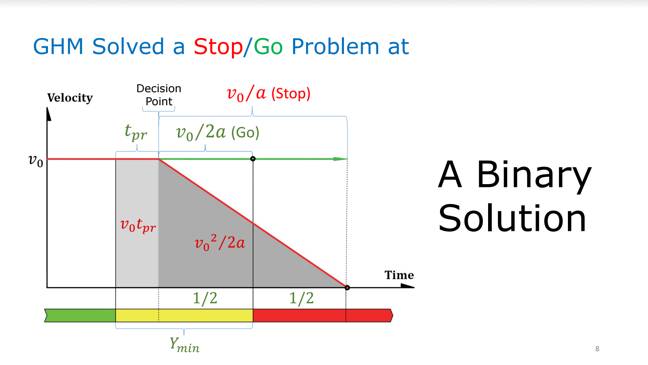
After exploring the math behind traffic light timing, Järlström concluded that the formula, created in 1959, accounted for only two yellow light scenarios: driving straight through the intersection, or stopping.
So Järlström decided to try to improve the math managing the transition time from yellow to red, in order to allow a driver traveling through an intersection with a yellow light to slow down and turn without being flagged for a red light violation. And in early 2015 he shared his proposal with the media, policymakers, and those interested in the traffic technology.
“It’s not rocket science,” Järlström said in a phone interview with The Register. “It took me about 40 minutes to figure it out.”
For communicating his findings in five emails, the Oregon State Board of Examiners for Engineering and Land Surveying in March, 2015 opened an investigation. In August 2016, the rules body found [PDF] that Järlström had engaged in unlicensed engineering and assessed a $500 fine.

Even better, if he persists, he may even face jail time for his unlicensed mathematical crime spree.
Järlström paid the fine but fears his ongoing interest in traffic light timing will lead to further penalties. Violating the Act could subject him to $1,000 in civil penalties, $6,250 in criminal fines, and as much as a year in jail.
April 25, 2017
Ned Kelly 3 – Extra History
Published on 1 Apr 2017
Ned Kelly has never shot a man. Until now.
Support Extra History on Patreon! https://www.patreon.com/ExtraCredits/
April 23, 2017
QotD: Unthinking conservative support for the police fuels the public’s growing distrust
Here is what conservatives do not understand — they did this. The hatred you see for cops in this country? It is all on them. They are the cause behind modern hatred of American police officers because while cops were taking kids on nickle rides and were beating suspects with hoses; were mistreating inner city blacks in a fashion conservative whites would never have allowed should it have occurred in their own neighborhoods; were torturing suspects and beating bartenders in Chicago; were shooting dogs to death for no reason and skating due to horrifying laws that shield them from any sort of consequence for their actions, those same conservatives were bowing and scraping and licking the boots of every police officer who happened to come walking by. Then, when one, random cop gets pistol whipped and claims that this was the fault of all who dared to criticize his profession, suddenly conservatives work themselves into a spittle inflected frenzy that they could not seem to manage when cops were doing far worse to their fellow citizens.
Where was the howling right-wing outrage when a cop beat a woman in a bar and his buddies tried to protect him from rightful consequences? Where was this conservative anger and angst when marines, those wonderful soldiers that conservatives adore so very much, were killed during ridiculous no-knock SWAT raids that, in a legitimately free society, never should have even been conducted?
They were nowhere — they did not say a word, they hardly cared. When black and Hispanics were provably tortured by the police, they hardly cared. When marines were killed, there was not a peep from the right and we had to rely on those evil anti-American progressives and libertarians to even discuss the matter.
And then they have the audacity to criticize me for daring to be too mean to the poor widdle boys and girls of our national constabulary. Well, respectfully, I don’t feel too bad about criticizing cops and attacking the unreasonable and often criminal actions of American police officers, and I will continue whether or not I have the permission of National Review or The Blaze or any other conservative media outlet. Maybe one day, if conservatives actually begin to care about the ‘small government’ ideals they’re constantly babbling about but never exercising, they’ll join me in my protest against illegitimate police activity. Until that day, though, I will continue to assume that conservatives are all talk and bluster and mindless blather, and that they don’t actually give a good Goddamn about any of the ideals they pretend to hold.
J.R. Ireland, “Cops Deserve Rightful Criticism No Matter What Whiny, Boot Licking Conservatives Might Like to Pretend”, Locust Kings, 2015-08-20.
April 20, 2017
We now know that there are more than 30,000 registered gun owners in London
What’s disturbing about the knowledge is that London’s Metropolitan Police revealed that information to a private company and may have violated British privacy laws in the process:
London gun owners are asking questions of the Metropolitan Police after the force seemingly handed the addresses of 30,000 firearm and shotgun owners to a direct mail marketing agency for a commercial firm’s advertising campaign.
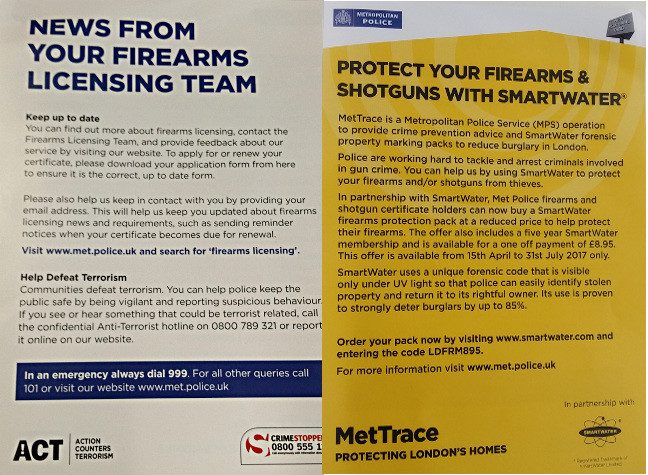
The first any of the affected people knew about the blunder was when the leaflet (pictured below) landed on their doormats in Tuesday’s post.
Titled “Protect your firearms and shotguns with Smartwater”, the leaflet – which features Met Police logos – advises firearm and shotgun certificate holders to “buy a firearms protection pack at a reduced price” of £8.95.
Smartwater is basically invisible ink. You mark your property using it and if you are burgled, police can use a UV light reader to see who rightfully owns stolen items. The company behind it was formed by an ex-police detective and his industrial chemist brother, and the firm has since forged very close links with a number of UK police forces. Its website boasts of the “traceable liquid’s” crime-reducing properties, something that police actively endorse.
[…]
The front and reverse of the Metropolitan Police Smartwater firearms leaflet
Questions were immediately raised as to whether the Met had broken the law. The data protection statement that both police and certificate holders agree to is found in Firearms Form 201 (PDF), the application form for a firearm certificate. It says:
I understand that all information submitted will be handled in accordance with the Data Protection Act 1998 and the Freedom of Information Act 2000 and connected legislation. I understand and give consent for information contained within my application form or obtained in the course of deciding the application to be shared with: my GP, other government departments, regulatory bodies or enforcement agencies in the course of either deciding the application or in pursuance of maintaining public safety or the peace.
Note: Any information shared will be shared in accordance with data sharing protocols. We do not share your personal or company details with other applicants or members of the public and treat information in connection with the application in confidence, but individuals should be aware that we may be required to disclose some information in accordance with the legislation referred to above.
The Register has made the Information Commissioner’s Office aware of the breach and is awaiting a statement from the data watchdog.
April 18, 2017
Ned Kelly – II: Under Suspicion – Extra History
Published on 25 Mar 2017
Ned’s second venture as a bushranger brought him to the attention of the local police. He did time in prison, then tried to clean up his act, but became frustrated by the suspicion that continued to dog him.
April 15, 2017
Federal marijuana bill “is about as good a framework as we had any right to expect”
Chris Selley looks at the Trudeau government’s marijuana legalization framework, as revealed on Thursday:

The fact is, though, this is about as good a framework as we had any right to expect from the Canadian government. The feds will insist upon a safe and controlled supply chain, with licenses and inspections; you may keep four plants at home — an indulgence I would have bet against; promotional materials will be severely restricted in much the same way as for tobacco; the minimum age will be 18; and the maximum limit on the amount of dried flower you can carry around in public will be 30 grams — same as it is in Washington state and Colorado.
Retail and all the questions that go with it are the provinces’ problem, just as they should be. (In theory, a buzz-kill province could set the legal age at 105 and the public possession limit at zero, though the government says mail order would be available in provinces that don’t have a retail sector.)
The feds will balance out all this wanton permissiveness with tough talk of putting “organized crime” out of business and protecting our children from weed. (The maximum sentence for giving marijuana to a minor is 14 years in prison!)
And now we see whether it actually happens — by summer 2018, or at all.
The news Thursday was full of worries and concerns and potential reasons why it might not. They range from legitimate-but-surmountable to downright silly.
Yes, the science of THC impairment behind the wheel is inexact. So I guess pot-consuming car-drivers had better take that under advisement. THC-impaired driving is already illegal, after all.
There is the bewilderingly persistent supposed issue of Canada’s obligation to prohibit drugs under UN conventions on narcotic and psychotropic substances. This week, the University of Ottawa’s Global Strategy Lab released a 27-page paper explaining “how Canada can remain party to the conventions without either withdrawing … or amending them.” It’s all very interesting, but why not just withdraw from the damn things?
[…]
Frankly, I’m amazed the Liberals have come even this far at a time when they’re walking on eggshells around the Trump administration. To the extent it has articulated a pot policy, it has been the opposite of the relatively laissez-faire approach the Obama administration took toward states that decided to legalize. Attorney-General Jeff Sessions talks about marijuana the way General Ripper in Dr. Strangelove talks about communists.
That will make legalization all the more impressive an achievement if the Liberals pull it off — and all the more damaging a self-inflicted wound if they don’t.
April 14, 2017
Eugene Volokh: Free Speech on Campus
Published on 4 Apr 2017
Eugene Volokh has a few things to say about things that aren’t supposed to be said. Volokh, a professor of free speech law at U.C.L.A., has seen books banned, professors censored, and the ordinary expression of students stifled on university campuses across the nation.
Volokh believes free speech and open inquiry, once paramount values of higher education, are increasingly jeopardized by restrictive university speech codes. Instead of formally banning speech, speech codes discourage broad categories of human expression. “Hate speech. Harassment. Micro-aggressions,” Volokh says. “Often they’re not defined. They’re just assumed to be bad, assumed they’re something we need to ban.”
Edited by Todd Krainin. Cameras by Meredith Bragg and Jim Epstein.
April 10, 2017
Audit Hollywood!
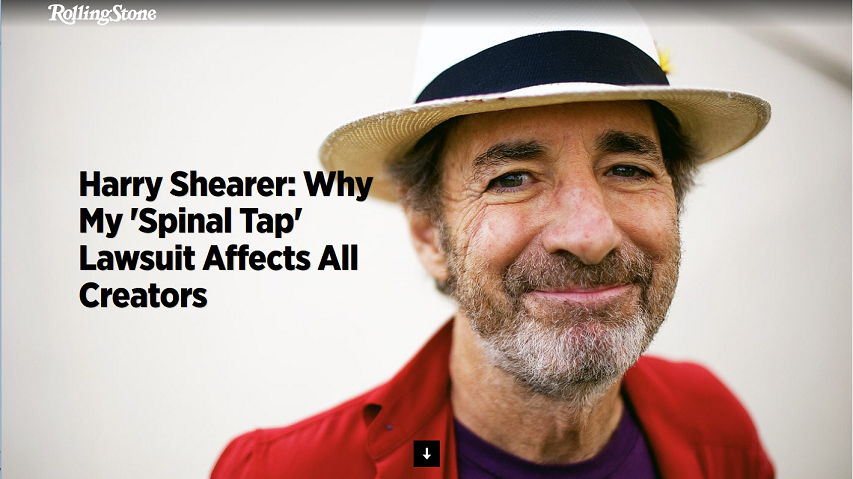
Harry Shearer has launched a suit against the owners of the movie Spinal Tap after he and his co-stars earned a pitiful sum on merchandise and music royalties, despite the film’s continuing popularity. Movie studios and music conglomerates use impenetrable and complex accounting “rules” to hide any profits (as profits need to be shared with actors, directors, musicians, and writers):
Behind the ambitious, creative talent that is Hollywood lies a darker side of the entertainment industry little appreciated by the ordinary moviegoer. It’s an opaque world of film financing, revenue accretion and minimal profit share. If exposed, as our Spinal Tap lawsuit against Vivendi aims to do, fans will no doubt be horrified at the shameful gravy train that rolls for corporate rights holders at the expense of creators. So far, challenges to media conglomerates’ comfortable status quo provoke little more than derision, since the power balance is so skewed in their favor. But, for how much longer?
Spinal Tap began as a mock rock band that we four – Rob Reiner, Christopher Guest, Michael McKean and myself – developed for an appearance on a TV pilot at the end of the 1970s. On our own initiative, we wrote and recorded most of the songs and performed them live in several music clubs around L.A. before any cameras rolled. The ultimate movie was truly, in the words of Michael McKean, “the result of four very stubborn guys working very hard to create something new under the sun.”
[…]
Unfortunately, “Hollywood accounting” isn’t a practice confined to California. Within the success story that is the European film and television industry, which generated €122 billion in 2013, less than one-third of 1 percent was shared with the writers and directors of the works created. A peculiar definition of “fairness,” you might say.
Under French law, filmmakers should be paid a fee for their work plus an ongoing remuneration proportionate to the exploitation of their creation. In reality, less than 3 percent of French writers and directors receive anything more than the initial payment of that minimum guarantee. And 70 percent of all European film directors are asked to defer a proportion of their original fees (as we, the creators of This is Spinal Tap, originally agreed to do).
The Europeans are simply following Hollywood’s lead; however, Spinal Tap‘s rights are determined by US law. In fighting for creators’ rights against a French conglomerate, Spinal Tap is simply pursuing a legal path well-trodden by our American creator peers. The well-known science-fiction “flop” of a film, Return of the Jedi, has apparently never gone into profit despite earning almost $500 million worldwide. Harry Potter and the Order of the Phoenix, apparently “lost” almost $170 million.
A Man For All Seasons – Giving the Devil the Benefit of Law
Published on Aug 8, 2012
From Robert Bolt’s classic A Man for All Seasons (1966), directed by Fred Zinnemann, starring Paul Scofield as Thomas More, the famous English lawyer, philosopher, and Renaissance humanist.
Alice More: “Arrest him!”
Sir Thomas More: “For what?”
Alice More: “He’s dangerous!”
Margaret More: “Father, that man’s bad!”
Sir Thomas More: “There’s no law against that.”
William Roper: “There is: God’s law!”
Sir Thomas More: “Then God can arrest him.”
Alice More: “While you talk, he’s gone.”
Sir Thomas More: “And go he should, if he were the Devil himself, until he broke the law!”
William Roper: “So, now you’d give the Devil the benefit of law!”
Sir Thomas More: “Yes! What would you do? Cut a great road through the law to get after the Devil?”
William Roper: “Yes! I’d cut down every law in England to do that!”
Sir Thomas More: “Oh? And when the last law was down, and the Devil turned ’round on you, where would you hide, Roper, the laws all being flat? This country is planted thick with laws, from coast to coast — man’s laws, not God’s! And if you cut them down, and you’re just the man to do it, do you really think you could stand upright in the winds that would blow then? Yes, I’d give the Devil benefit of law, for my own safety’s sake.”
April 6, 2017
On legalization the feds are headed the wrong way
Libertarian Party of Canada leader Tim Moen looks at the public safety aspects of Justin Trudeau’s marijuana legalization plans:
If we are concerned about public safety we need to make it more attractive for people to grow, distribute and consume cannabis legally than illegally so that there is engagement with public safety mechanisms. Right now it is far more attractive for people to grow and consume illegally. Cannabis is easy to produce, you just need seeds and dirt, and there is a high demand for it. A regime that restricts legal supply through onerous licensing and prohibitions will drive up illegal supply to meet the demand.
We were seeing a trend towards improved public safety. Storefronts offered customers a safe place to buy cannabis from businesses that had a vested interest in developing a reputation for quality and safety. Small- to medium-sized growers have been operating in the sunlight where public safety officials like me could inspect and educate. Cannabis was emerging from the shadows and the problems associated with illicit activity were fading away.
All the Trudeau government had to do was notice what was going on and end the rules that made it difficult for public safety to emerge. Instead, over the past month we have seen a hard crackdown on storefront cannabis dispensaries. Coordinated raids have occurred across the country and some business owners are facing financial ruination and life in prison at the same time the Trudeau government has announced legalization by the summer of 2018. The message to the cannabis industry is loud and clear, “Fall in line with the regime, or else.”
The federal government is poised to adopt the report of The Task Force on Marijuana Legalization and Regulation as the way forward and this is cause for serious concern from a public safety perspective. The Task Force recommends a requirement for a federal license to grow cannabis commercially. If you’re one of the hundreds of small- to medium-sized dispensaries currently operating in the sunlight your days are numbered. If you are a customer of one of these dispensaries you will be faced with a choice of big government-approved corporation or local black market dealer.
It’s not clear why customers would choose the low quality, limited access, unreliable cannabis that a few big government-approved corporations would provide over locally grown craft cannabis. Imagine if growing tomatoes required a federal license and there was a coordinated effort to raid local growers and sellers who did not have a federal license. Would people stop putting tomato seeds in dirt? Would people drive past an unlicensed farmer selling big, fresh, juicy tomatoes from a roadside stand on their way to a licensed grocery store which may have some small, pale, nearly-spoiled tomatoes in stock? It is naive to imagine people are going to follow stupid rules that they can easily avoid following, yet this naivety has permeated cannabis prohibitionism and continues to permeate the thinking of cannabis legislators.


