
Published on 5 Mar 2017
On February i got a few days away to relax from everything. I left you with some automatic videos, so you wouldn’t be without new documentaries and i went on holiday to Athens, Greece. I wanted to share a little bit about what i saw. This video is the first video made by me. (Be good, please!)
May 16, 2017
11 Things to see in Athens
Comments Off on 11 Things to see in Athens
May 15, 2017
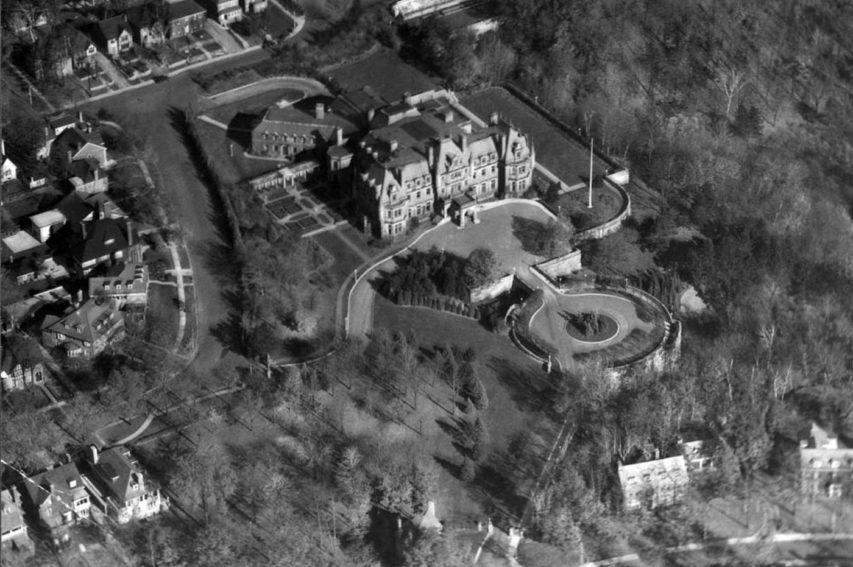
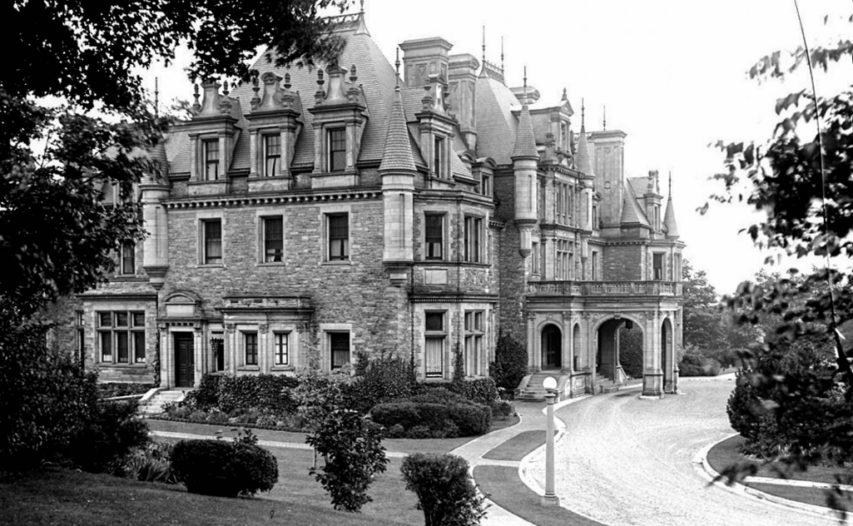
Chorley Park, Ontario’s lost viceregal mansion
Chris Bateman on the odd history of Ontario’s fourth official home of the Lieutenant Governor:
Lieutenant Governor of Ontario Elizabeth Dowdeswell is one of four Canadian viceregal representatives to be (officially) homeless. Toronto pulled down its last government house, an astonishingly opulent mansion even among its Rosedale neighbours, in 1959 in the name of cost saving.
Just over a century ago, on 15 November 1915, the first official guests were welcomed inside the grand hall of Ontario’s million dollar palace. Twenty years later it was be derelict. Chorley Park is now largely forgotten, save for the small piece of it that remains on the edge of the Don Valley.
[…]
The province, however, had other ideas. It rejected Gage’s offer and forged ahead with the Rosedale site, known as Chorley Park, after the town of Chorley in Lancashire, England, the birthplace of Toronto alderman John Hallam.
The final design for the grand residence was drawn up by Francis R. Heakes – the province’s official architect also responsible for the Whitney Block on Queen’s Park Crescent – in the style of a French Loire Valley château.
Heakes’ blueprint borrowed heavily from submissions to the 1911 design competition, including many of the exterior details and the floor plan, and was limited to a budget of $215,000.
Chorley Park in Rosedale
[…]
The ongoing cost of maintaining the ostentatious mansion proved to be its eventual undoing. The Conservative provincial government found the cost even harder to justify as the Depression began to take hold in the 1920s.
Despite voices calling for the house to be abandoned, it lingered on as the official home of Ontario’s lieutenant-governor until 1937 when the fine furnishings and fixtures were stripped out and sold at auction.
When world war two began, the gutted interior was converted into a military hospital for wounded soldiers.
Chorley Park met its eventual end in 1959 when, with the last of the patients gone and a brief period as a refuge for Hungarian immigrants fleeing the revolution over, the Metro government under Fred Gardiner ordered the building torn down.
Comments Off on Chorley Park, Ontario’s lost viceregal mansion
May 14, 2017
Junkers Fighter Planes – Whiter Feather Movement – Swiss Invasion Plans I OUT OF THE TRENCHES
Published on 13 May 2017
Chair of Wisdom Time! This week Indy talks about Junkers fighter planes, the plans for an invasion of Switzerland and he Whiter Feather Movement.
Comments Off on Junkers Fighter Planes – Whiter Feather Movement – Swiss Invasion Plans I OUT OF THE TRENCHES
May 13, 2017
The Physics of World War 1 Planes feat. The Great War Channel
Published on 29 Apr 2017
Comments Off on The Physics of World War 1 Planes feat. The Great War Channel
May 12, 2017
The Macedonian Standoff – The Five Nation Army Is Repelled I THE GREAT WAR Week 146
Published on 11 May 2017
Italy, France, Serbia, Britain and Russia joined forces at the Macedonian Front and the “five nation army” wants to break through the lines held by Bulgaria with some German support. But the Bulgarian defences can withstand the attack and so Maurice Sarrail is forced to abandon all hopes for a breakthrough. Meanwhile another offensive is about to proceed at the Italian front which had been quiet all winter.
Comments Off on The Macedonian Standoff – The Five Nation Army Is Repelled I THE GREAT WAR Week 146
May 9, 2017
US Joins WW1 – Spring Offensives 1917 I THE GREAT WAR Summary Part 9
Published on 8 May 2017
After a rather quiet winter, the war erupts into action in 1917. Not only do the United States join the war after weeks of unrestricted submarine warfare and the uncovering of the Zimmermann Telegram. The British and French launch their own spring offensives. In the East, chaos spreads in post-revolutionary Russia and Lenin returns from exile. And in Mesopotamia the British take Baghdad.
Comments Off on US Joins WW1 – Spring Offensives 1917 I THE GREAT WAR Summary Part 9
Historical ingratitude
In the latest Libertarian Enterprise, D.J. Webb asks what Europe — individual European nations, not the EU — owe to Britain:
I do believe that historical perspective is important, and that we should deal with other nations on the basis of historical memory. For example, we recall in our dealings with Greece and Italy that these countries have been of vital importance to the historical development of civilization in Europe, and at a long remove, we should be cognizant of the cultural and economic advantages bestowed on the Roman province of Britannia by the Romans. At a minimum, they evoke in us a residual affection. Of course, as history recedes, the ability of these countries to demand a special status owing to their illustrious history has to decline too. But some recognition of the achievements of the most glorious nations and what they have done for all of European civilization is in order.
Britain is a special country — we are told in the media and in the schools today that this is not the case — but a cursory reading of history shows that we are of vital importance to Europe. Economically, we gave the world the industrial revolution and capitalism. Politically, democracy and human rights (even where absurdly misinterpreted) are among our gifts to the world. Culturally, literature, drama and film are among the arts to which we have made great contributions that remain to this day part of the canon of world literature. Scientifically, Europe looks to us for having provided electricity, railways, automobiles, planes, computers, the telephone, television and the Internet. It is not an exaggeration to state that the prosperity of the whole of Europe, and indeed of every country in the world, comes on the back our our ancestors’ — and not their ancestors’ — achievements. English children should grow up with a knowledge of and pride in this.
Geopolitically, we have always sought to prevent combinations on the Continent, and stood against the Habsburgs and Imperial Spain, Napoleonic France, the Kaiser’s Germany and Nazi Germany. We also made an outsized contribution in the Cold War. Numerous European countries owe their freedom to us. I do not deny that historical memory works both ways. Maybe — I say this for the purpose of discussion — the prominence of Polish airmen in the Battle of Britain provides us with good reason to take, if possible and where facilitated by Poland’s own foreign policy, a pro-Polish view of modern international affairs, and if we need immigrants going forward, we could well consider prioritising Poland, as well as Czechs, Belgians, Frenchmen, Canadians, Australians and New Zealanders, all represented in the Battle of Britain. However, there is no other European country that can lay claim to being the author of European freedom. True, Russian blood was expended to an immense degree in the defeat of Germany, but many European countries will be mindful that Russia was ultimately engaged in its own war of imperial conquest of Eastern Europe.
We are special, and do deserve recognition in Europe. Yet we get none. Or less than none, as all 27 EU countries have agreed to try to punish Britain for asserting its sovereignty. Would Luxembourg be free today without Britain? Jean-Claude Junker’s treatment of Britain is disgusting from a Luxembourgeois national. Does he not know that Luxemburgers huddled round the wireless in the 1940s listening to the World Service, hoping or praying that Britain or America would come to their salvation? I cannot abide the continental Europeans who refuse to acknowledge this. They will end up making an enemy of Britain, with long-term consequences.
It’s time to realise that the European nations we liberated were not worth it. They turned out to be ingrates. We need to face up to this. We wasted the lives of our servicemen for nothing. Who would wage war to liberate Belgium now?
Ned Kelly – IV: Kelly Country – Extra History
Published on 8 Apr 2017
Hunted by the police, the Kelly Gang decided to strike back instead of hiding. Since he blamed the rich for all his troubles, Ned took aim at the banks and pulled off a pair of brazen robberies that helped win him renown across the countryside.
Comments Off on Ned Kelly – IV: Kelly Country – Extra History
May 8, 2017
“… it’s inconceivable that a book called Fascism for Kids would ever be printed by a reputable publisher”
Jarrett Stepman reviews a new MIT translation of Communism for Kids:
In order to make the deadliest ideology of the 20th century palatable to young Americans, Communism for Kids is coming to a bookstore near you.
This newly released book from MIT Press “proposes a different kind of communism, one that is true to its ideals and free from authoritarianism.”
The death toll from communist regimes in the 20th century is well-documented. One study found that more people were killed under communism than homicide and genocide combined, and only 9 million more people were killed in World War I and World War II combined than under governments of this ideology.
Another study showed how the mass killings of civilians by their own governments took an immediate nosedive after the collapse of the Soviet Union and international communism.
According to the Amazon synopsis, the book weaves a fairy tale of “jealous princesses, fancy swords, displaced peasants, mean bosses, and tired workers.”
It is bewildering why MIT Press would publish a book that cutesies up the political creed that gave the world Joseph Stalin, Mao Zedong, Fidel Castro, and many more of the world’s most prolific mass murderers. None of these brutal dictators are mentioned in the book, according to The Washington Free Beacon.
Communism seemingly gets a pass to be reimagined as a sweet fable while it’s inconceivable that a book called Fascism for Kids would ever be printed by a reputable publisher.
[…]
This odd attempt to get kids into communism is unlikely to spawn a new generation of true believers on its own, but it does highlight the growing problem for younger Americans who are generally clueless about even recent history.
As The Daily Signal previously reported, a study from the Victims of Communism Memorial Foundation found that millennials in particular are stunningly ignorant about what occurred under the Soviet Union and other communist regimes just a generation ago.
One-third of millennials surveyed actually believe that more people were killed under former President George W. Bush than under Soviet dictator Stalin.
As suggested, a copy of George Orwell’s Animal Farm would be a far more accurate and informative gift than this piece of whitewash.
Comments Off on “… it’s inconceivable that a book called Fascism for Kids would ever be printed by a reputable publisher”
Spanish Civil War – Lessons NOT Learned – The British, French & US
Published on 28 Mar 2017
The Spanish Civil War (1936-1939) was probably the most significant war between the First and the Second World War. [M]any important lessons were learned and NOT learned by the British, French, US, German, Italian and Soviet Forces.
Military History Visualized provides a series of short narrative and visual presentations like documentaries based on academic literature or sometimes primary sources. Videos are intended as introduction to military history, but also contain a lot of details for history buffs. Since the aim is to keep the episodes short and comprehensive some details are often cut.
Comments Off on Spanish Civil War – Lessons NOT Learned – The British, French & US
May 7, 2017
Joffre The Imbecile – Nivelle’s Catastrophe I OUT OF THE ETHER
Published on 6 May 2017
It’s time to shine a light on some of the great comments we received and in the past days you guys had a lot to say about Nivelle and the French High Command in general.
Comments Off on Joffre The Imbecile – Nivelle’s Catastrophe I OUT OF THE ETHER
The Importance of Institutions
Published on 2 Feb 2016
In today’s video, we discuss a topic critical to understanding economic growth: the power of institutions.
To better shed light on this, we’re going to look at an example that’s both tragic and extreme.
In 1945, North and South Korea were divided, ending 35 years of Japanese colonial rule over the Korean peninsula. From that point, the two Koreas took dramatically different paths. North Korea went the way of communism, and South Korea chose a relatively capitalistic, free market economy.
Now — what were the results of those choices?
In the ensuing decades after 1945, South Korea became a major car producer and exporter. The country also became a hub for music (any K-pop fans out there?), film, and consumer products. In stark contrast, North Korea’s totalitarian path resulted in episodes of famine and starvation for its people.
In the end, South Korea became a thriving market economy, with the living standards of a developed country. North Korea on the other hand, essentially became a militarized state, where people lived in fear.
Why such an extreme divergence?
It all comes down to institutions.
When economists talk about institutions, they mean things like laws and regulations, such as property rights, dependable courts and political stability. Institutions also include cultural norms, such as the ones surrounding honesty, trust, and cooperation.
To put it another way, institutions guide a country’s choices — which paths to follow, which actions to take, which signals to listen to, and which ones to ignore.
More importantly, institutions define the incentives that affect all of our lives.
Going back to our example, in the years after 1945, North and South Korea took dramatically different institutional paths.
In South Korea, the institutions of capitalism and democracy, promoted cooperation and honest commercial dealing. People were incentivized to produce goods and services to meet market demand. Businesses that did not meet demand were allowed to go bankrupt, allowing the re-allocation of capital towards more valuable uses.
Against that grain, North Korea’s institutions produced starkly different incentives. The totalitarian regime meant that the economy was centrally planned and directed. Most entrepreneurs didn’t have the freedom to keep their own profits, resulting in few incentives to do business. Farmers also didn’t have enough incentive to grow sufficient food to feed the population. This was due in part to price controls, and a lack of property rights.
As for capital, it was allocated by the state, mostly towards political and military uses. Instead of going towards science, or education, or industrial advancement, North Korea’s capital went mostly towards outfitting its army, and making sure that the ruling party remained unopposed.
And now, look at how different the two countries are as a result of those differing institutions.
When it comes to economic growth, institutions are critically important. A country’s institutions can have huge effects on long-term growth and prosperity. Good institutions can help turn a country into a growth miracle. Bad institutions can doom a country to economic disaster.
The key point remains: institutions are important.
They represent the choices that a country makes, and as the Korean peninsula shows you, choices on this scale can have staggering effects on a nation’s present, and future.
Comments Off on The Importance of Institutions
May 6, 2017
History of the Royal Navy – Steam, steel and Dreadnoughts (1806-1918)
Published on 1 Mar 2013
Here’s also an older post covering the technological challenges faced by the Royal Navy in the post-Napoleonic era, and some of the reasons for all those “weird” ship designs in the Victorian era.
Comments Off on History of the Royal Navy – Steam, steel and Dreadnoughts (1806-1918)
May 5, 2017
The Battle of Arleux – Robert Nivelle Gets Fired I THE GREAT WAR Week 145
Published on 4 May 2017
The Battle of Arras continued in smaller scale attacks this week 100 years ago. Fighting focused on Arleux and the Scarpe river. Neither of these battles was able to repeat the success of the early Arras offensive. The casualties of the Nivelle Offensive were now costing Robert Nivelle his job as he was still blaming everyone but himself.
Comments Off on The Battle of Arleux – Robert Nivelle Gets Fired I THE GREAT WAR Week 145
QotD: The British Army before WW1
When the Duke of Wellington described the British army as “the scum of the earth, enlisted for drink,” he was probably speaking no more than the truth. But what is significant is that his opinion would have been echoed by any non-military Englishman for nearly a hundred years subsequently.
The French Revolution and the new conception of “national” war changed the character of most Continental armies, but England was in the exceptional position of being immune from invasion and of being governed during most of the nineteenth century by non-military bourgeoisie. Consequently its army remained, as before, a small profession force more or less cut off from the rest of the nation. The war-scare of the [eighteen-]sixties produced the Volunteers, later to develop into the Territorials, but it was not till a few years before the Great War that there was serious talk of universal service. Until the late nineteenth century the total number of white troops, even in war-time never reached a quarter of a million men, and it is probable that every great British land battle between Blenheim and Loos was fought mainly by foreign soldiers.
George Orwell, “Democracy in the British Army”, Left, 1939-09.
Comments Off on QotD: The British Army before WW1


