
Published on 31 Aug 2015
The ninth in a series of short films about some of the vehicles in our collection presented by The Tank Museum’s historian David Fletcher MBE.
While the heavy tanks were designed for direct attacks against enemy trenches the Tank Corps also wanted a lighter, faster tank to work with the cavalry over open country. Designed by Sir William Tritton and built by Fosters of Lincoln the Medium A, or Whippet, was the only such tank to see service with the Tank Corps, starting in 1918.
May 21, 2017
Tank Chats #9 Whippet – Medium A
Comments Off on Tank Chats #9 Whippet – Medium A
May 19, 2017
Tenth Battle of The Isonzo River – Trotsky Arrives in Petrograd I THE GREAT WAR Week 147
Published on 18 May 2017
The Italian Front has been quiet over the winter and while the Austrians used the time to improve their defences, the Italian Army prepared another offensive near the Isonzo River. At the same time, Leon Trotsky arrives in Petrograd which will ensure the further complication of the situation in Russia after the Revolution.
Comments Off on Tenth Battle of The Isonzo River – Trotsky Arrives in Petrograd I THE GREAT WAR Week 147
May 18, 2017
World of Warships – HMS Hood
Published on 17 May 2017
Look up in the sky! Is it a bird? Is it a plane? No don’t be silly, it’s HMS Hood. Bugger off with your Superman jokes, Jingles.
Comments Off on World of Warships – HMS Hood
May 17, 2017
Sid Meier interview
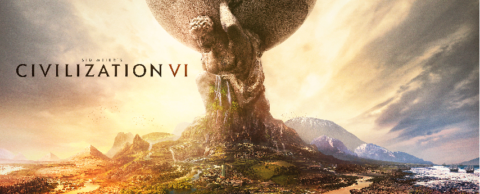
Last week, Chris Suellentrop talked to the legendary Sid Meier about the Civilization series and other games:
The first Civilization was released more than a quarter-century ago in 1991, after being developed by a team of two – Meier and Bruce Shelley – that grew to 10 at its largest. Meier estimated recently that the budget for the game was around $170,000. He did the programming, the design, and the artwork. “It was kind of an audacious game for us to make,” Meier said during a talk about the game’s development at this year’s Game Development Conference in San Francisco. “6,000 years of history in 640k.”
The Civilization series has now sold almost 40 million copies, according to Take Two, which owns Firaxis. Sid Meier’s Civilization VI, the most recent entry in the series, was released last year. (Even though Meier’s name is on it, the lead designer was Ed Beach.)
At GDC, Meier talked to Glixel for almost an hour with boyish enthusiasm about what makes Civilization work, why Firaxis turns to a new lead designer with almost every sequel, and that whole thing with having his name on the box.
How did it feel to deliver a postmortem on Civilization at the Game Developers Conference to mark the 25th anniversary of the game’s release?
In between the time Civ 1 came out and now, the Internet appeared, modding appeared, Reddit appeared, mobile appeared. So many things have happened in that time. But it’s all within a lifetime.At Firaxis, Civ has been the pillar of what we do. We’re able to find a freshness in it by bringing in different designers. It’s one of the unique things about Civilization. Each iteration is led by a different person. There’s almost a Civ burnout. Once you’ve done a Civ, you’re kind of burned out and somebody else comes in with some fresh ideas.
[…]
What makes a good Civ game?
What happens in the player’s imagination. What we discovered afterwards, just by luck, kind of, was what fueled this “one more turn” phenomenon was the idea that, in your mind, you were always projecting what was going to happen next and what was going to happen three turns from now, what was going to happen eight turns from now. You had multiple irons in the fire. You were exploring this continent. You were dealing with troublesome neighbors. And you had this wonder that was always about to be built. So you were always anticipating what comes next.A good Civ game has that quality, and it’s based in part on the turn-based nature of it. You have the time to imagine what’s going to happen next. You have the time to project your strategy, your ideas into the future. There’s also the anticipation not only of what you’re about to do but what the game’s about to do to you. Genghis Khan is going to show up. Or they’re going to finish the wonder before you. So there’s all those things that you are looking forward to and anticipating.
Comments Off on Sid Meier interview
May 16, 2017
Exploring Fort Douaumont With The VERDUN Developers I THE GREAT WAR Special
Published on 15 May 2017
Join our Live Stream with the Developers: http://twitch.com/tgw_series
Check out Verdun: http://www.verdungame.com/We went to the Verdun area in France this winter and visited Fort Douaumont together with the developers of the video game VERDUN. They rebuilt the fort in their game and their knowledge of the sight shows when Indy is walking through the fort.
Comments Off on Exploring Fort Douaumont With The VERDUN Developers I THE GREAT WAR Special
Terry Teachout remembers Dragnet
I vaguely remember watching Dragnet on TV, but the version I watched is apparently just a pale imitation of the original series:
If you’re fifty or older, you won’t need to be told the source of these half-recalled phrases: “The story you are about to see is true.” “This is the city.” “I carry a badge.” “My name’s Friday.” If you’re much younger than that, though, I doubt that you’ll remember Dragnet with any clarity. In the early days of network television, Dragnet was the most successful of all cops-and-robbers TV shows, as well as the most influential. It’s still influential — every episode of Law and Order bears its indelible stamp — but TV has since moved in flashier directions, and I doubt that the narrative conventions brought into being by Jack Webb, the director, producer, and star of Dragnet, will remain conventional for much longer.
For baby-boom TV viewers, Dragnet is both iconic and ironic. The version of the show that ran on NBC from 1967 to 1970, in which Webb was partnered by Harry Morgan, was an exercise in unintended self-parody, full of hippy-dippy druggies and the earnest cops who locked them up and threw away the key. A few of the episodes remain effective in their quaint way, but most are embarrassingly stiff. Part of the problem was that Sergeant Joe Friday, Webb’s character, was the squarest of squares, and it was already chic to smirk at such straight-arrow types by the time I reached adolescence. My father watched Dragnet religiously, though, so I did, too, little knowing that what I was seeing each week was a recycled, watered-down simulacrum of the real thing.
The real Dragnet was the black-and-white version that aired from 1951 to 1959. That series, in which Webb was partnered by Ben Alexander, was pulled out of syndication long ago and has never been legitimately reissued on DVD, nor is any “official” version, so far as I know, currently in the works. Fortunately, a few dozen episodes were inadvertently allowed to go out of copyright, and it’s easy to track down copies of them. […]
Like the later color version, the Dragnet of the Fifties was a no-nonsense half-hour police-procedural drama that sought to show how ordinary cops catch ordinary crooks. The scripts, most of which were written by James E. Moser, combined straightforwardly linear plotting (“It was Wednesday, October 6. It was sultry in Los Angeles. We were working the day watch out of homicide”) with clipped dialogue spoken in a near-monotone, all accompanied by the taut, dissonant music of Walter Schumann. Then and later, most of the shots were screen-filling talking-head closeups, a plain-Jane style of cinematography that to this day is identified with Jack Webb.
The difference was that in the Fifties, Joe Friday and Frank Smith, his chubby, mildly eccentric partner, stalked their prey in a monochromatically drab Los Angeles that seemed to consist only of shabby storefronts and bleak-looking rooms in dollar-a-night hotels. Nobody was pretty in Dragnet, and almost nobody was happy. The atmosphere was that of film noir minus the kinks — the same stark visual grammar, only cleansed of the sour tang of corruption in high places. But even without the Chandleresque pessimism that gave film noir its seedy savor, Dragnet was still rough stuff, more uncompromising than anything that had hitherto been seen on TV. In 1954 Time called the series “a sort of peephole into a grim new world. The bums, priests, con men, whining housewives, burglars, waitresses, children and bewildered ordinary citizens who people Dragnet seem as sorrowfully genuine as old pistols in a hockshop window.”
Comments Off on Terry Teachout remembers Dragnet
The Virtual Lorenz machine
At The Register, Gareth Corfield discusses the new virtual coding device simulating the WW2 German Lorenz cipher machine:

The National Museum of Computing has put an emulation of an “unbreakable” Second World War German cipher machine online for world+dog to admire.
The Virtual Lorenz machine has been launched in honour of WW2 codebreaker Bill Tutte, the man who broke the crypto used in the twelve-rotor cipher machine.
As The National Museum of Computing (TNMOC) puts it, Tutte’s work “shortened the conflict” – even though he had never even seen the cipher machine or its crypto scheme, the breaking of which the museum added was “the greatest intellectual feat of the war”.
TNMOC unveiled the Virtual Lorenz today to celebrate Tutte’s 100th birthday. Built by computing chap Martin Gillow, the simulation accurately reproduces the whirring of the cipher wheels (you might want to turn it down as the “background whirr” is a little too realistic).
The BBC profiled the “gifted mathematician” a few years ago, highlighting how the Lorenz machine whose secrets Tutte cracked was “several degrees more advanced than Enigma”, the cipher famously cracked by Tutte’s colleague Alan Turing. Tutte cracked the Lorenz in about six months, reverse-engineering its workings by reading intercepted Lorenz messages. When the Allies wanted to fool Hitler into believing the D-Day landings would take place in a false location, our ability to read Lorenz was critical for confirming that the ruse had worked – saving thousands of soldiers, sailors and airmen’s lives.
[…]
The Virtual Lorenz can be found here. Word to the wise – it’s not on an HTTPS site, so if you’re hoping to use it to thwart GCHQ, you might want to think again.
Comments Off on The Virtual Lorenz machine
11 Things to see in Athens
Published on 5 Mar 2017
On February i got a few days away to relax from everything. I left you with some automatic videos, so you wouldn’t be without new documentaries and i went on holiday to Athens, Greece. I wanted to share a little bit about what i saw. This video is the first video made by me. (Be good, please!)
Comments Off on 11 Things to see in Athens
May 15, 2017
Chorley Park, Ontario’s lost viceregal mansion
Chris Bateman on the odd history of Ontario’s fourth official home of the Lieutenant Governor:
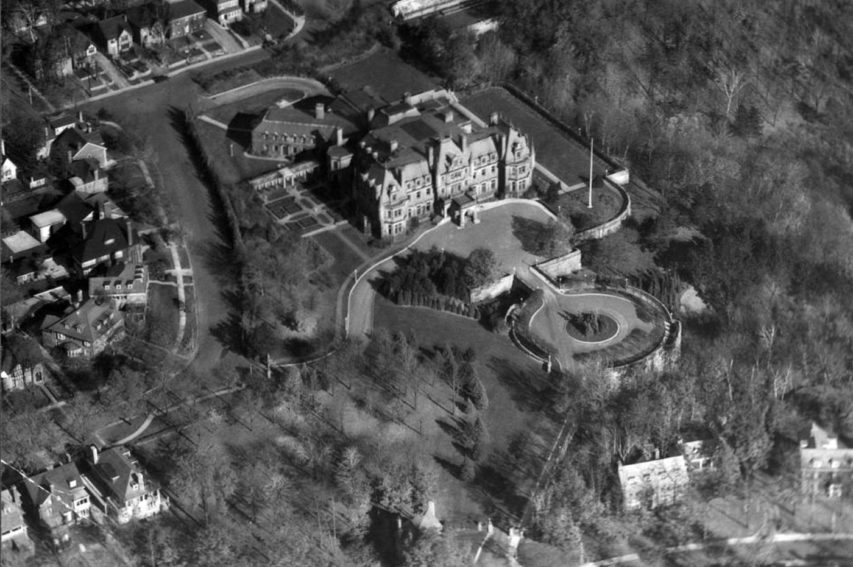
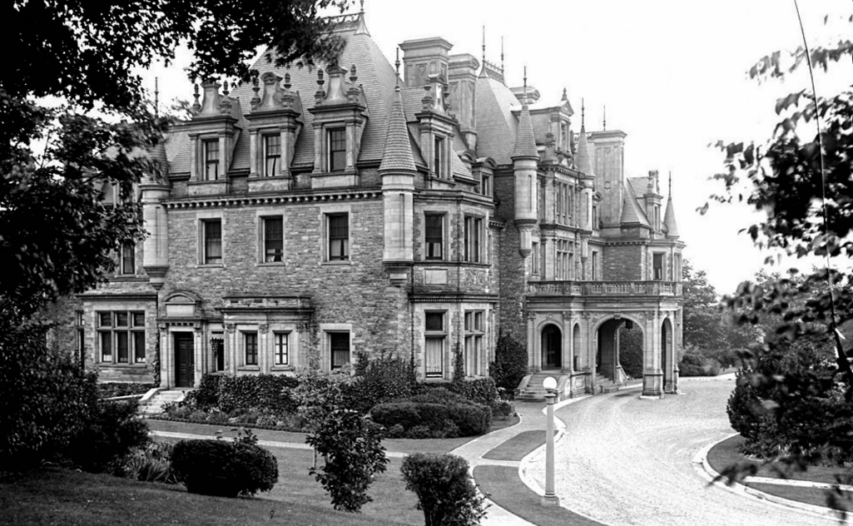
Lieutenant Governor of Ontario Elizabeth Dowdeswell is one of four Canadian viceregal representatives to be (officially) homeless. Toronto pulled down its last government house, an astonishingly opulent mansion even among its Rosedale neighbours, in 1959 in the name of cost saving.
Just over a century ago, on 15 November 1915, the first official guests were welcomed inside the grand hall of Ontario’s million dollar palace. Twenty years later it was be derelict. Chorley Park is now largely forgotten, save for the small piece of it that remains on the edge of the Don Valley.
[…]
The province, however, had other ideas. It rejected Gage’s offer and forged ahead with the Rosedale site, known as Chorley Park, after the town of Chorley in Lancashire, England, the birthplace of Toronto alderman John Hallam.
The final design for the grand residence was drawn up by Francis R. Heakes – the province’s official architect also responsible for the Whitney Block on Queen’s Park Crescent – in the style of a French Loire Valley château.
Heakes’ blueprint borrowed heavily from submissions to the 1911 design competition, including many of the exterior details and the floor plan, and was limited to a budget of $215,000.
Chorley Park in Rosedale
[…]
The ongoing cost of maintaining the ostentatious mansion proved to be its eventual undoing. The Conservative provincial government found the cost even harder to justify as the Depression began to take hold in the 1920s.
Despite voices calling for the house to be abandoned, it lingered on as the official home of Ontario’s lieutenant-governor until 1937 when the fine furnishings and fixtures were stripped out and sold at auction.
When world war two began, the gutted interior was converted into a military hospital for wounded soldiers.
Chorley Park met its eventual end in 1959 when, with the last of the patients gone and a brief period as a refuge for Hungarian immigrants fleeing the revolution over, the Metro government under Fred Gardiner ordered the building torn down.
Comments Off on Chorley Park, Ontario’s lost viceregal mansion
May 14, 2017
Junkers Fighter Planes – Whiter Feather Movement – Swiss Invasion Plans I OUT OF THE TRENCHES
Published on 13 May 2017
Chair of Wisdom Time! This week Indy talks about Junkers fighter planes, the plans for an invasion of Switzerland and he Whiter Feather Movement.
Comments Off on Junkers Fighter Planes – Whiter Feather Movement – Swiss Invasion Plans I OUT OF THE TRENCHES
May 13, 2017
The Physics of World War 1 Planes feat. The Great War Channel
Published on 29 Apr 2017
Comments Off on The Physics of World War 1 Planes feat. The Great War Channel
May 12, 2017
The Macedonian Standoff – The Five Nation Army Is Repelled I THE GREAT WAR Week 146
Published on 11 May 2017
Italy, France, Serbia, Britain and Russia joined forces at the Macedonian Front and the “five nation army” wants to break through the lines held by Bulgaria with some German support. But the Bulgarian defences can withstand the attack and so Maurice Sarrail is forced to abandon all hopes for a breakthrough. Meanwhile another offensive is about to proceed at the Italian front which had been quiet all winter.
Comments Off on The Macedonian Standoff – The Five Nation Army Is Repelled I THE GREAT WAR Week 146
May 9, 2017
US Joins WW1 – Spring Offensives 1917 I THE GREAT WAR Summary Part 9
Published on 8 May 2017
After a rather quiet winter, the war erupts into action in 1917. Not only do the United States join the war after weeks of unrestricted submarine warfare and the uncovering of the Zimmermann Telegram. The British and French launch their own spring offensives. In the East, chaos spreads in post-revolutionary Russia and Lenin returns from exile. And in Mesopotamia the British take Baghdad.
Comments Off on US Joins WW1 – Spring Offensives 1917 I THE GREAT WAR Summary Part 9
Historical ingratitude
In the latest Libertarian Enterprise, D.J. Webb asks what Europe — individual European nations, not the EU — owe to Britain:
I do believe that historical perspective is important, and that we should deal with other nations on the basis of historical memory. For example, we recall in our dealings with Greece and Italy that these countries have been of vital importance to the historical development of civilization in Europe, and at a long remove, we should be cognizant of the cultural and economic advantages bestowed on the Roman province of Britannia by the Romans. At a minimum, they evoke in us a residual affection. Of course, as history recedes, the ability of these countries to demand a special status owing to their illustrious history has to decline too. But some recognition of the achievements of the most glorious nations and what they have done for all of European civilization is in order.
Britain is a special country — we are told in the media and in the schools today that this is not the case — but a cursory reading of history shows that we are of vital importance to Europe. Economically, we gave the world the industrial revolution and capitalism. Politically, democracy and human rights (even where absurdly misinterpreted) are among our gifts to the world. Culturally, literature, drama and film are among the arts to which we have made great contributions that remain to this day part of the canon of world literature. Scientifically, Europe looks to us for having provided electricity, railways, automobiles, planes, computers, the telephone, television and the Internet. It is not an exaggeration to state that the prosperity of the whole of Europe, and indeed of every country in the world, comes on the back our our ancestors’ — and not their ancestors’ — achievements. English children should grow up with a knowledge of and pride in this.
Geopolitically, we have always sought to prevent combinations on the Continent, and stood against the Habsburgs and Imperial Spain, Napoleonic France, the Kaiser’s Germany and Nazi Germany. We also made an outsized contribution in the Cold War. Numerous European countries owe their freedom to us. I do not deny that historical memory works both ways. Maybe — I say this for the purpose of discussion — the prominence of Polish airmen in the Battle of Britain provides us with good reason to take, if possible and where facilitated by Poland’s own foreign policy, a pro-Polish view of modern international affairs, and if we need immigrants going forward, we could well consider prioritising Poland, as well as Czechs, Belgians, Frenchmen, Canadians, Australians and New Zealanders, all represented in the Battle of Britain. However, there is no other European country that can lay claim to being the author of European freedom. True, Russian blood was expended to an immense degree in the defeat of Germany, but many European countries will be mindful that Russia was ultimately engaged in its own war of imperial conquest of Eastern Europe.
We are special, and do deserve recognition in Europe. Yet we get none. Or less than none, as all 27 EU countries have agreed to try to punish Britain for asserting its sovereignty. Would Luxembourg be free today without Britain? Jean-Claude Junker’s treatment of Britain is disgusting from a Luxembourgeois national. Does he not know that Luxemburgers huddled round the wireless in the 1940s listening to the World Service, hoping or praying that Britain or America would come to their salvation? I cannot abide the continental Europeans who refuse to acknowledge this. They will end up making an enemy of Britain, with long-term consequences.
It’s time to realise that the European nations we liberated were not worth it. They turned out to be ingrates. We need to face up to this. We wasted the lives of our servicemen for nothing. Who would wage war to liberate Belgium now?
Ned Kelly – IV: Kelly Country – Extra History
Published on 8 Apr 2017
Hunted by the police, the Kelly Gang decided to strike back instead of hiding. Since he blamed the rich for all his troubles, Ned took aim at the banks and pulled off a pair of brazen robberies that helped win him renown across the countryside.
Comments Off on Ned Kelly – IV: Kelly Country – Extra History


