
Extra Credits
Published on 16 Sep 2017Charles XII had gone to the Ukraine hoping for supplies and reinforcements, especially from the cossacks led by Ivan Mazeppa. But Peter the Great was hot on his trail, and had no intention of letting him off that easy.
September 18, 2017
Great Northern War – IV: Clash of Kings – Extra History
Comments Off on Great Northern War – IV: Clash of Kings – Extra History
5 Medieval Dynasties That Still Exist Today
Published on 18 Aug 2017
The medieval period produced a lot of powerful dynasties which fought for influence and wealth in Europe. These families where once the most powerful people on the planet, but who and where are they today? Here are 5 Medieval dynasties that still exist today.
Comments Off on 5 Medieval Dynasties That Still Exist Today
QotD: …of (some of) the people, by (some of) the people…
… it IS possible to have a Res Publica – by the people – government, but only as long as it is by the ‘deserving’ few. The worst excesses of these proto-democracies can be undercut by an extreme limiting of the franchise – preferably to an effective oligarchy of voters narrow enough to be more self-interested in keeping control against the uneducated and undisciplined rule of the genuine majority, but this is hard to achieve. The Serene Republic of Venice achieved it for almost a thousand years by limiting the franchise to the great and the good families, and the early United States managed to hold it together for about 90 years by limiting it by racial profiling as well as property franchise… but note that both were, like all the Greek and Roman republics, slave based societies: so their claims to be genuine democracies are hopelessly confused to anyone with a consistent or comprehensible ideological viewpoint. In their case ‘the people’ simply meant, the deserving few that we will allow to vote.
This limiting of the franchise to the deserving actually continues in very successful – one could even say the ONLY successful – republics of the modern world. The ancient Greek and Roman franchises were honestly based on ‘those who contribute get a say’. Contribution a that time being buying the expensive armour yourself, putting in the training time, and taking the risk in the front lines of battle: to prove you put the good of the state and your fellow citizens above your own interests. (Though it is notable that their Republics almost instantly graduated to imperialistic and aggressive expansion, which pretty quickly made republican government unworkable, and inevitably led to such champions of democracy as Alexander the Great and Julius Caesar.)
The only long term successful modern Republic – Switzerland – still has compulsory military service; as does Israel, the only successful democracy ever established in the Middle East.
The other ways to limit the franchise – Like the first (1770’s), second (1860’s) and third (1880’s) American attempts of a franchise limited by race/property; or the first (1790’s), second (1820’s) or third (1860’s) French attempts at a property based franchise (which often saw as few as 20% of people with a vote): were actually much less successful than the equivalent slow Westminster style expansions of the franchise under a developing constitutional monarchy. (No Western Westminster system state has ever had a coup, let alone a civil war.) France has had 5 republics, 3 monarchies and 2 emperors in less than 200 years; and the United States has similarly run through several major reformations of their race/property franchise system since their – 600,000 dead – little debate about their system.
(The American comparison with France is amusing. The first American republic was smashed by the Confederate Defection; the second was an anti-democratic imposition on the South – with no voting rights for Confederate ‘activists’ – after the Confederacy War of Independence was crushed; the third ‘republic’ was when the white southerners were re-enfranchised and promptly disenfranchised the blacks who had been the only voters in the south for the previous 20 years – and whose elected black representatives had not been allowed in the front door or the dining rooms of Congress; the fourth republic… well you get the idea. The US system, with all its defections, jumps and retreats, simply can’t be called a continuously expanding development the way Westminster systems are.)
Nigel Davies, “The ‘Arab Spring’, 1848, and the 30 Years War/s”, Rethinking History, 2015-09-19.
Comments Off on QotD: …of (some of) the people, by (some of) the people…
September 17, 2017
Mercenaries – War of the Pacific – Russian WW1 Remembrance I OUT OF THE TRENCHES
The Great War
Published on 16 Sep 2017It’s time for another episodes from the chair of wisdom, this week we talk about mercenaries in the war, the influence of the War of the Pacific and Russian WW1 war graves.
Comments Off on Mercenaries – War of the Pacific – Russian WW1 Remembrance I OUT OF THE TRENCHES
But is it full of eels? If not, feel free to visit the British Hovercraft Museum
In their continuing series of “Geeks’ Guide to Britain”, The Register takes a trip to the former HMS Daedalus, a Fleet Air Arm seaplane training base that is now home to the Hovercraft Museum:
Did you know that the word “hovercraft” was once patented? And did you know that Great Britain is a world leader in the design and manufacture of the floaty transporters, and has been for half a century?
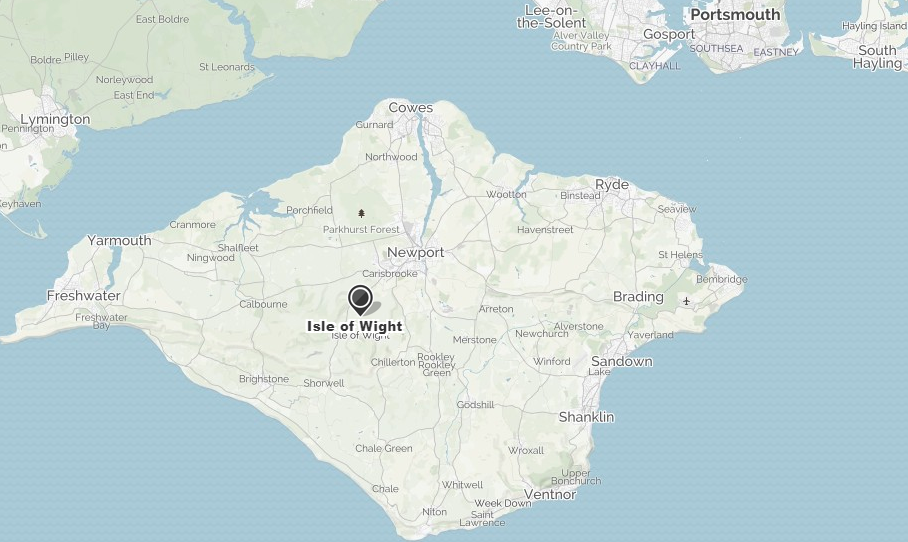
These and other surprising facts – including that some of the largest commercial hovercraft ever to be used in revenue service spent their lives shuttling booze cruisers back and forth across the English Channel – can be found at the Hovercraft Museum, at Lee-on-Solent in the south of England.
A century ago, what is now the site of the museum was known as HMS Daedalus and used as a Fleet Air Arm seaplane base. Back in the early days of aviation, and especially naval aviation, the station was at the forefront of naval and aviation technology alike. Seaplanes and skilled pilots were in great demand by the Royal Navy for anti-submarine patrols, and a new training base had to be set up to fill the service’s demand.
Thus came about the “temporary” Naval Seaplane Training School at Lee-on-Solent, with the new training school being based around a large local property, Westcliffe House. Slipways and hangars were duly erected, with the former leading down into the waters of the Solent itself; of the latter, one of the original J-class hangars, capable of being erected by just 15 men, survives to this day.
[…]
To truly appreciate the hovercraft, one should actually ride one of the things. This is easily done by a short journey along the coast from Lee-on-Solent to Britain’s only scheduled hovercraft service, which operates between Portsmouth and the Isle of Wight.
Operated by Hovertravel, whose sister company Griffon Hoverwork also builds the craft operated by the company, the service runs about every half an hour during the day, with more frequent services during the morning rush hour and a gradual winding-down into the evening.
Comments Off on But is it full of eels? If not, feel free to visit the British Hovercraft Museum
Why are some people left-handed? – James May’s Q&A (Ep 39) – Head Squeeze
Published on 20 Sep 2013
“Once thought to be in league with the devil, left-handed people, while not especially evil, are indeed special in many ways. James May explains all in this Head Squeeze video.
In mediaeval times lefties were believed to be in league with Beelzebub himself, this gave rise to the word sinister from the Latin ‘sinistra’ meaning of the left. Later on scientists proposed that left-handed people had their brains wired differently, which turned out to be only partially true.
Most of us, between 75 to 90 percent use the left hemisphere of our brains to speak and understand language. The other hemisphere is used to control our dominant hand. Research has shown however that only 30 per cent of left-handers have reversed brain lateralisation, or indeed no dominant side at all.
Genetics play a big part in your dominant hand. If you have two left-handed parents, there is 26 per cent chance that you will be too. This is double the average odds.
There are some statistical advantages and disadvantages to being left-handed. Schizophrenia, dyslexia and ADHD are more prevalent. However susceptibility to arthritis and ulcers is less.
Left-handed people do well in sport and fighting, as the majority of people are not used to going up against such opponents. There is evidence that they are more creative too with a disproportionate amount of artists painting with their left hand.
In terms of famous left-handed people, four out of the last seven presidents have been – President Obama, Clinton, Bush senior and Ford.
However as only those who are true lefties know, the world is stacked against them. Dozens of daily household items we take for granted, from corkscrews to scissors, even books, are designed for the right-handed majority.
Comments Off on Why are some people left-handed? – James May’s Q&A (Ep 39) – Head Squeeze
September 16, 2017
Moral and philosophical conflict in Wilhelmine Germany
At Samizdata, Paul Marks looks at intra-German conflicts that were played out during and after the First World War:
The conflict between German Generals Falkenhayn and Ludendorff was over a lot more than military policy – indeed Falkenhayn made some horrible mistakes in military tactics, for example allowing himself to be pushed into continuing the Verdun offensive much longer than he intended (at least much longer than he later claimed had been his original intention), and insisting that General Fritz Von Below recapture any position he lost to the British in the Somme offensive – an order that led to terrible German casualties.
The conflict may have been presented as a military one (between the “Westerner” Falkenhayn and the “Easterner” Lundendorff ) over whether to concentrate German military resources in the West or the East – but it was really a lot more than a dispute over military policy. Nor was it really a dispute over the form of government – as neither Falkenhayn or Ludendorff was a democrat. It was fundamentally a MORAL (ethical) dispute.
General Lundendorff had absorbed (even more than Kaiser Wilhelm II had) the moral relativism and historicism that had become fashionable in the German elite in the decades running up to the First World War – ideas that can be traced all the way back to (in their different ways) such philosophers as Hegel and (far more) Fichte, whereas General Falkenhayn still clung to concepts of universal justice (morality) and rejected such things as the extermination or enslavement of whole races, and the destruction of historic civilisations such as that of Russia. Lundendorff, and those who thought like him, regarded Falkenhayn as hopelessly reactionary – for example thinking in terms of making peace with Russia on terms favourable to Germany, rather than destroying Russia and using the population as slaves. In the Middle East Falkenhayn came to hear of the Ottoman Turk plan to destroy the Jews (as the Armenian Christians had been destroyed), and he was horrified by the plan and worked to frustrate it. Advanced and Progressive thinkers, such as Ludnedorff, had great contempt for Reactionaries such as Falkenhayn who did not realise that ideas of universal justice and personal honour were “myths” only believed in by silly schoolgirls. Falkenhayn even took Christianity seriously, to Lundendorff this was clearly the mark of an inferior and uneducated mind. And Falkenhayn, for his part, came to think that his country (the Germany that he so loved) was under the influence of monsters – although while their plans to exterminate or enslave whole races and to control (in utter tyranny) every aspect of peacetime (not just wartime) life remained theoretical, he never had to make the final break.
The conflict continued into the next generation. Famously Admiral Canaris (head of German military intelligence) became an enemy of the National Socialists – not because he was a believer in a democratic form of government, but because he believed that the Nazis were a moral outrage violating the most basic principles of universal truth and justice. But the point of view in Germany opposed to men such as Admiral Canaris. the point of view that made itself felt in such things as the German Declaration of War upon France in 1914 – a pack of lies, and (perhaps more importantly) a deliberately OBVIOUS pack of lies (in order to make a philosophical point – as the President of France, a philosopher, noticed at once), had long had nothing but contempt for the very idea of universal objective truth and justice.
I’d always thought that the rise of Fascism and Communism in the 1920s was primarily due to the political chaos and material privations suffered by German citizens through the latter stages of WW1 and continuing through the Versailles Treaty negotiations. Paul shows that the groundwork for both strains of totalitarian thought were already well underway even before the catastrophe of 1914. Of course, as I think I illustrated in the origins of WW1 posts, nothing about the situation in Europe at that time was simple or straight-forward.
Comments Off on Moral and philosophical conflict in Wilhelmine Germany
“Mead” – The Drink That Fell From Favor
Published on 31 Aug 2017
Mead was a very popular drink during the 17th century and before, but fell out of favor by the 18th century due to the rise of Beer and Ale. Nevertheless, recipes for Mead can be found in books written in the 1700’s and today Jon goes in depth on this fascinating drink.
Comments Off on “Mead” – The Drink That Fell From Favor
QotD: The US housing market
… up until fairly recently, the home mortgage market was the most conservative financial market out there. The market was not a big money maker because risks were very low and the money was steady. The home mortgage market was the realm of community banks who held the mortgages as assets for the life of the loan. It was the 3-6-3 lifestyle. Borrow from the financial markets at three percent, make home mortgages at six percent and hit the links at 3:00 PM. That all changed in the early 1990’s when Democrat policymakers passed the Community Reinvestment Act and then forced banks to make loans that were far more risky in areas that the banks, for good reasons traditionally stayed away from. Then through Fannie Mae and Freddie Mac the “policymakers” bundled the good and bad paper and sold it on the financial markets creating the current mess. What I don’t understand is how increased home ownership was supposed to increase rents.
Home ownership has been a policy of multiple administrations since WW2, as has suburbanization. There are a bunch of reasons for this. One big one was that the policymakers were, for a bunch of reasons, not fond of urban life. It was considered dirty, old fashioned and perhaps most importantly a big target. This was not a small consideration to people coming back from all those ruined cities overseas.
John C. Carlton, “Who ‘Stole’ The Country’s Wealth, The Rich, Or Government ‘Policy Makers?'”, The Arts Mechanical, 2015-10-16.
Comments Off on QotD: The US housing market
September 15, 2017
Attempted Military Coup in Russia – The Kornilov Affair I THE GREAT WAR Week 164
Published on 14 Sep 2017
The situation in Russia further escalates as Lavr Kornilov attempts to gain complete power with a military coup. The result is a disaster for him and thousands of armed Bolsheviks in the streets of Petrograd.
Comments Off on Attempted Military Coup in Russia – The Kornilov Affair I THE GREAT WAR Week 164
QotD: The sexist TV shows of the 1960s
Speaking of a different world, there was one big barrier to entry into [the original Star Trek]: its ladies. I’m still not quite sure how to deal with the way women were treated in the show. I’ve found that when watching many movies or shows from the ’60s and ’70s, it’s incredibly hard to relate the characters — not just because plot pacing was slower and diction was different than it is on TV today, but because I’m almost guaranteed to be disappointed by the way the story treats women. Generally, one just has to accept that there is going to be out-and-out sexism in a lot of old movies and TV, and you can either toss out the whole thing or watch it from afar like you’re in a museum, analyzing an ancient culture.
Megan Geuss, “I watched Star Trek: The Original Series in order; you can too, Or: Filling the gaps in your cultural knowledge is equal parts boring and fun”, Ars Technica, 2015-09-05.
Comments Off on QotD: The sexist TV shows of the 1960s
September 14, 2017
Ken Burns and Lynn Novick: The Vietnam War Is the Key to Understanding America
Published on 13 Sep 2017
Nick Gillespie interviews Ken Burns and Lynn Novick about their new documentary series: The Vietnam War.
The Vietnam War led to more than 1.3 million deaths and it’s one of the most divisive, painful, and poorly understood episodes in American history.
Documentarians Ken Burns and Lynn Novick have spent the past decade making a film that aims to exhume the war’s buried history. Their 10-part series, which premieres on PBS next week, is a comprehensive look at the secrecy, disinformation, and spin surrounding Vietnam, and its lasting impact on two nations. The 18-hour film combines never-before-seen historical footage, with testimonies from nearly 80 witnesses, including soldiers on both sides of the conflict, leaders of the protest movement, and civilians from North and South Vietnam.
A two-time Academy Award winner, Burns is among the most celebrated documentary filmmakers of our time, best-known for the 1990 PBS miniseries The Civil War, which drew a television viewership of 40 million. He and Novick are longtime collaborators, and in 2011 she co-directed and produced Prohibition with Burns. In 2011, Reason’s Nick Gillespie interviewed Burns that film and the role of public television in underwriting his work.
With the release of The Vietnam War, Gillespie sat down with Burns and Novick to talk about the decade-long process of making their new film, and why understanding what happened in Vietnam is essential to interpreting American life today.
Produced by Todd Krainin. Cameras by Meredith Bragg, Mark McDaniel, and Krainin.
Full interview transcript available at http://bit.ly/2x0e5U4
Comments Off on Ken Burns and Lynn Novick: The Vietnam War Is the Key to Understanding America
What Is The Funniest Language? – Stephen Fry’s Planet Word – BBC
Published on 24 May 2015
Stephen Fry looks at what he thinks is the funniest language along with comedians Stewie Stone and Ari Teman. Taken from Fry’s Planet Word.
Comments Off on What Is The Funniest Language? – Stephen Fry’s Planet Word – BBC
QotD: The 1970s economic mess
He then goes on to blather about the policies of the 1970’s. I lived through the 1970’s and what you need to understand was that the governing motive of policymakers then was panic. The “policymakers,” by and large Democrats, screwed up as badly as possible and just couldn’t get a grip on what [the problems] really were.
John C. Carlton, “Who ‘Stole’ The Country’s Wealth, The Rich, Or Government ‘Policy Makers?'”, The Arts Mechanical, 2015-10-16.
Comments Off on QotD: The 1970s economic mess
September 13, 2017
Adpocalypse Update – Out Of The Trenches Platform – Italy Trip I THE GREAT WAR
Published on 12 Sep 2017
Thank you to yukka.nl for the programming effort and support with the OOTT platform.
OOTT-Platform: https://outofthetrenches.thegreatwar.tv
September 18 – Meeting at Kobarid, Slovenia: http://bit.ly/Kobarid
September 19 – Meeting at Vittorio Veneto, Italy: http://bit.ly/VittorioVeneto
September 20 – Meeting at Lagazuoi: http://bit.ly/LagazuoiWW1
Merchandise (EU): https://shop.spreadshirt.net/thegreatwar/
Merchandise (US): https://shop.spreadshirt.com/thegreatwar/Flo has a few news to share with you concerning the YouTube “Adpocalypse” and more.
Comments Off on Adpocalypse Update – Out Of The Trenches Platform – Italy Trip I THE GREAT WAR


