
Matsimus
Published on 24 Dec 2018The M551 Sheridan was a light reconnaissance tank developed by the American company General Motors in May 1960 under the designation XM551. In November 1965 approval was given for the type classification of the XM551 as Limited Production and a four-year production contract was awarded to the Allison Motor Car Division of General Motors Corporation. In May 1966 the Sheridan was classified as Standard A and by this time production was well under way with the first production vehicle being completed in June 1966. Production continued until 1970 by when 1700 M551S (or General Sheridans) had been built, of which 1570 were still in service with the US Army in 1970. The role of the M551. as originally conceived, is to function as the main reconnaissance vehicle for armour, infantry and airborne operations and arms teams not employing main battle tanks. Late in 1978, it was announced that the M551 would be phased out of service and replaced by the M60A1 MBT, apart from those vehicles allocated to the 82nd Airborne Division (57) and Arkansas National Guard (12), 330 have been assigned to the National training Center at Fort Irwin, California. These are essentially basic M551s but with visual modifications to the outside to disguise them as “OPFOR force” vehicles such as BMP-1 and ZSU-23-4.
Hope you enjoy!!
💰 Want to support my channel? Check out my Patreon Donation page! https://www.patreon.com/user?u=3081754
My PO Box: Matthew James 210A – 12A Street N Suite #135 Lethbridge Alberta Canada T1H2J
DISCORD: https://discord.gg/B7cbXgy
🐦Twitter: https://twitter.com/MatsimusGaming(DISCLAIMER: This video is for entertainment purposes only. The views and opinion come from personal experience or information from public accessible sources.)
January 21, 2019
M551 “Sheridan” AR/AAV | DESIGN DISASTER!
January 20, 2019
Swedes not Sweden to Finland’s Rescue – WW2 – 021 – January 19 1940
World War Two
Published on 19 Jan 2019As the Winter War rolls on the only help the Finns are getting are from volunteers. The Western Allies still have their thoughts on Norway, little do they know that the Phony War almost ends this week…
Follow WW2 day by day on Instagram @World_war_two_realtime https://www.instagram.com/world_war_t…
Between 2 Wars: https://www.youtube.com/playlist?list…
Join us on Patreon: https://www.patreon.com/TimeGhostHistory
Or join The TimeGhost Army directly at: https://timeghost.tvWritten and Hosted by: Indy Neidell
Produced and Directed by: Spartacus Olsson and Astrid Deinhard
Executive Producers: Bodo Rittenauer, Astrid Deinhard, Indy Neidell, Spartacus Olsson
Research by: Indy Neidell
Edited by: Iryna Dulka
Map animations by: Eastory
Community Manager: Joram AppelColorizations by Spartacus Olsson and Norman Stewart.
Photos of the Winter War are mostly from the Finnish Wartime Photograph Archive (SA-Kuva).
Eastory’s channel: https://www.youtube.com/channel/UCEly…
Archive by Screenocean/Reuters https://www.screenocean.comA TimeGhost chronological documentary produced by OnLion Entertainment GmbH
Thumbnail depicts First Sergeant John Horseholm and Åke Ek of the Swedish Volunteer Battalion in 1944
https://www.flickr.com/photos/jenosco…
Colorised by Jared Enos https://www.flickr.com/people/jenosco…
January 19, 2019
Stopper 37mm: A Simple South African Riot Control Gun
Forgotten Weapons
Published on 29 Dec 2018http://www.patreon.com/ForgottenWeapons
Cool Forgotten Weapons merch! http://shop.bbtv.com/collections/forg…
The Stopper is a simple 37mm single shot riot control gun designed by Andries Piek in 1980. The South African police services were at that time using 37mm guns made by Federal Labs in the US, dating back to the 1930s, and the international embargo on South Africa made it impossible to get parts and do basic maintenance on those arms. So Piek (whose other work included the BXP carbine/SMG and design improvements to the LDP/Kommando) whipped out the Stopper in all of two weeks to provide a new domestic-production 37mm weapon for the police.
The Stopper is a simple break-action gun, with a manually cocked, single action, hammer-fired trigger mechanism. Two versions were made, one with the front grip and one without, and all were fitted with collapsing stocks. Production began in 1982 and ran until 1999, by Mitco Special Products under the Milkor name.
As an interesting postscript, Piek was inspired by seeing Christopher Walken using a Mannville 25mm revolving gas gun in the movie Dogs of War to make something similar in 37mm or 40mm. The gun he designed to this end became the Milkor MGL, adopted by South Africa in 1983 and by the US Marine Corps in 2005.
Contact:
Forgotten Weapons
PO Box 87647
Tucson, AZ 85754
January 18, 2019
Xenophon’s Anabasis, Memorabilia, and Symposium
I’ve read an English translation of Xenophon’s Anabasis, but I only know a little bit about the Memorabilia, so Eve Browning‘s essay at Aeon was quite interesting:
The Anabasis is the first military memoir in the history of Western literature, and it recounts Xenophon’s experiences in the Persian campaign of Cyrus against his brother King Artaxerxes, and the long march ‘up country’. Since Xenophon waited several decades to commit these memories to writing, some have argued that they cannot be accurate. But as anyone who has listened to combat veterans will know, there’s a lot about the remembrance of past tours of duty that time cannot soften nor the years wear away.
Xenophon also wrote histories, portraits of leaders, practical treatises on horse training, hunting and running a household, among other things. An enduring theme that runs through much of his writing, and which has received scholarly attention in recent years, is that of leadership. What makes a good leader? What kind of leader can induce humans to endure hardships and expend effort toward a common goal? What exemplary traits mark out a leader and allow him or her to execute the requisite tasks with skill, induce a harmonious fellowship among those for whom he is responsible, maintain loyalty and mission clarity among the ‘troops’, whomever they might be? It is not difficult to see the formative roots of these questions, and of Xenophon’s answers to them, in that literally death-defying, embattled 2,000-mile march up-country to the sea.
Xenophon also wrote down his remembrances of a local philosopher named Socrates. Those who know Socrates mainly through the writings of Plato – Xenophon’s near-exact contemporary – will find Xenophon’s Socrates something of a surprise. Plato’s Socrates claims to know nothing, and flamboyantly refutes the knowledge claims of others. In the pages of Xenophon’s Memorabilia, however, Socrates actually answers philosophical questions, dispenses practical life advice, provides arguments proving the existence of benevolent gods, converses as if peer-to-peer with a courtesan, and even proposes a domestic economy scheme whereby indigent female relatives can become productive through the establishment of a textile business at home.
Socrates’ conversation, according to Xenophon, ‘was ever of human things’. This engaged, intensely practical, human Socrates can be refreshing to encounter. Anyone who has felt discomfort at how the opponents of Plato’s Socrates suffer relentless public refutations and reductions to absurdity can take some comfort in Xenophon’s Socrates who ‘tries to cure the perplexities of his friends’.
For instance, what could be more enchanting than a Socrates who solo-dances for joy and exercise, so unlike the Socrates we know from Plato? In Xenophon’s Symposium, Socrates asks the Phoenician dance-master to show him some dance moves. Everyone laughs: what will you do with dance moves, Socrates? He replies: ‘I’ll dance, by God!’ A friend of Socrates then tells the group that he had stopped by his house early in the morning, and found him dancing alone. When questioned about it, Socrates happily confesses to solo-dancing often. It’s great exercise, it moves the body in symmetry, it can be done indoors or outdoors with no equipment, and it freshens the appetite.
Another surprising side of Xenophon’s Socrates is shown through his encounter with a person who not only doesn’t honour the gods, but makes fun of people who do. To this irreligious person, Socrates presents a careful and persuasive line of reasoning about the designed usefulness of all elements of creation. For humans and many other animals, there are ‘eyes so that they can see what can be seen, and ears so that they can hear what can be heard’, eyelids, eyelashes, molars and incisors, erotic desire to aid procreation; all these are ‘the contrivance of some wise craftsman who loves animals’. And what about the cosmos as a whole? ‘Are you, then, of the opinion that … those surpassingly large and infinitely numerous things are in such an orderly condition through some senselessness?’ Human beings even have the spiritual capacity to perceive the existence of gods, ‘who put in order the greatest and noblest things’, and ‘they worry about you!’
H/T to Never Yet Melted for the link.
Tank Chats #41 Sherman Firefly | The Tank Museum
The Tank Museum
Published on 28 Jul 2017A Tank Chat from David Fletcher on an inspired British modification. As an all-round, general purpose tank the Sherman was one of the best of World War II, but by 1943 it was getting past its prime. An officer at Lulworth Camp, near Bovington, came up with the idea of fitting a better gun, the British 76.2mm, known as the 17 pounder. The new design would be known as the Sherman Firefly.
Support the work of The Tank Museum on Patreon: ► https://www.patreon.com/tankmuseum
Or donate http://tankmuseum.org/support-us/donateSUBSCRIBE to The Tank Museum YouTube channel: ► http://www.youtube.com/channel/UChl-X…
Press the little bell above to enable NOTIFICATIONS so you don’t miss the latest Tank Museum videos.
Twitter: ► https://twitter.com/TankMuseum
Tiger Tank Blog: ► http://blog.tiger-tank.com/
Tank 100 First World War Centenary Blog: ► http://tank100.com/ #tankmuseum #tanks
QotD: Political colours in the US and Canada
We, Conservatives, were a coalition from the very beginning, in Canada. We were, of course, the Liberal-Conservative Party under Sir John A, reflecting the alliances formed between Ontario and Atlantic Canadian Tories and Louis Hippolyte Lafontaine’s moderate Parti bleu in Quebec. This was in contrast to the Liberals who were formed by the Clear Grits from Upper Canada and the Papineau’s radical Parti rouge in Quebec.
(So Quebec has always been central to both Conservative and Liberal political success in Canada and it was Quebec that gave us our modern Conservative blue and Liberal red icons ~ which are opposite to the Democratic blue and Republican red in the USA.)
Ted Campbell, “Our Conservative Roots”, Ted Campbell’s Point of View, 2017-03-05.
January 17, 2019
How effective was the Tiger really?
Military History Visualized
Published on 18 Dec 2018There are quite many debates about the Panzerkampfwagen VI Ausführung E & B – the Tiger & Königstiger – tanks, so in this video we look at how effective or ineffective these panzers were in combat. This means we look at doctrine, kill to loss ratios, mission accomplishment and various other issues.
»» SUPPORT MHV ««
» patreon – https://www.patreon.com/mhv
» subscribe star – https://www.subscribestar.com/mhv»» SOCIAL MEDIA ««
» twitter – https://twitter.com/MilHiVisualizedMilitary History Visualized provides a series of short narrative and visual presentations like documentaries based on academic literature or sometimes primary sources. Videos are intended as introduction to military history, but also contain a lot of details for history buffs. Since the aim is to keep the episodes short and comprehensive some details are often cut.
January 15, 2019
Celtic Myth – The Isle of Destiny – Extra Mythology – #1
Extra Credits
Published on 14 Jan 2019Join the Patreon community! http://bit.ly/EMPatreon
Inis Fáil is the Isle of Destiny, in Ireland. It was here that the Children of the Danu were sent on a quest to find their destiny, but they would have to encounter the Fir Bolg first…
QotD: Masochistic anglophobia
Within the intelligentsia, a derisive and mildly hostile attitude towards Britain is more or less compulsory, but it is an unfaked emotion in many cases. During the war it was manifested in the defeatism of the intelligentsia, which persisted long after it had become clear that the Axis powers could not win. Many people were undisguisedly pleased when Singapore fell or when the British were driven out of Greece, and there was a remarkable unwillingness to believe in good news, e.g. el Alamein, or the number of German planes shot down in the Battle of Britain. English left-wing intellectuals did not, of course, actually want the Germans or Japanese to win the war, but many of them could not help getting a certain kick out of seeing their own country humiliated, and wanted to feel that the final victory would be due to Russia, or perhaps America, and not to Britain. In foreign politics many intellectuals follow the principle that any faction backed by Britain must be in the wrong. As a result, ‘enlightened’ opinion is quite largely a mirror-image of Conservative policy. Anglophobia is always liable to reversal, hence that fairly common spectacle, the pacifist of one war who is a bellicist in the next.
George Orwell, “Notes on Nationalism”, Polemic, 1945-05.
January 14, 2019
Sun Yat-sen – An Army in Exile – Extra History – #3
Extra Credits
Published on 12 Jan 2019Sun Yat-sen spends the next ten years following his London adventures trying to organize the rebellion in Tokyo — and ends up not recruiting just Chinese reformers, but radical fighters from Japan and the Philippines too.
Join us on Patreon! http://bit.ly/EHPatreon
Lysander Spooner and the US postal system
Naomi Mathew recounts the battle between anarchist Lysander Spooner and the United States Post Office:
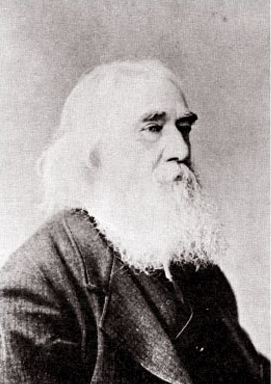
This is a story about a philosopher, entrepreneur, lawyer, economist, abolitionist, anarchist — the list goes on. As his obituary summarizes, “To destroy tyranny, root and branch, was the great object of his life.” Although he is rarely included in mainstream history, Lysander Spooner was an anarchist who didn’t merely preach about his ideas: He lived them. No example illustrates this better than Spooner’s legal battle against the US postal monopoly.
Born in 1808 in Athol, Massachusetts, Lysander Spooner was raised on his parent’s farm and later moved to Worcester to practice law. Eventually, he found himself in New York City, where business was booming — but not for the Post Office.
The Postal System of the 1840s
In Spooner’s day, government subsidized the cost of building infrastructure used for mail routes. Postage rates paid for these subsidies, which in turn made the rates expensive. For example, in 1840 it cost 18.75 cents, over a quarter of a day’s wages, to send a letter from Baltimore to New York.
Corruption was another issue facing the post office. Positions appeared to change after each election cycle, indicating political cronyism. Congress was also under pressure from the coach contractor lobby, and favorable postage routes were often given to contractors with political connections. Thanks to a legal monopoly it had enjoyed since the Confederation, the Post Office remained the sole legal mail business despite its skyrocketing costs and corruption.
In his book Uncle Sam, The Monopoly Man, William Wooldridge describes how high postal costs led some to defy postal laws: Traveling individuals doubled as temporary, private postmen. By the 1840s, these illicit services were chipping into government revenues. Eventually, a court ruled it legal for individuals (but not companies) to carry mail. As a result, underground mail enterprises sprung up. Agents covertly used the existing rails, coaches, and steamboats to transport letters. It is estimated that in 1845, a third of all letters were transported by private mail firms.
QotD: Eisenhower’s Middle East policy about-face
Unlike some American presidents, however, Eisenhower learned from his mistakes. In 1958, five years after being sworn into office, he reversed course. Rather than suck up to Egypt, Ike deployed American Marines to Lebanon to shore up President Camille Chamoun, who was under siege by Nasser’s local allies.
“In Lebanon,” Eisenhower wrote in his memoirs, “the question was whether it would be better to incur the deep resentment of nearly all of the Arab world (and some of the rest of the Free World) and in doing so risk general war with the Soviet Union or to do something worse — which was to do nothing.” That is almost verbatim what the British said to justify their own war against Nasser when Eisenhower slapped them with crippling sanctions.
Reality forced the United States into a total about-face. Ike’s entire Middle Eastern worldview collapsed. Even before sending the Marines to Lebanon he announced that America was taking Britain’s place as the pre-eminent power in the Middle East. He had to start over even if he didn’t want to. “Nasser,” Doran writes, “the giant who rose from the Suez Crisis, crushed Eisenhower’s doctrine like a cigarette under his shoe.”
What happened between the Suez Crisis and Eisenhower’s intervention in Lebanon? A couple of things.
Ike’s hope to bring Syria into the American orbit alongside Turkey and Pakistan collapsed in spectacular fashion. So many Syrians swooned over Nasser after Egypt’s victory in the Suez Canal that Syria, astonishingly, allowed itself to be annexed by Cairo. Egypt and Syria became one country—the United Arab Republic—with Nasser as the dictator of both.
Washington’s attempt to groom Saudi Arabia as a regional counterbalance to Egypt also hit the skids when Nasser accused the Saudis of trying to assassinate him and foment a military coup in Damascus. The Saudis responded by shoving King Saud aside and replacing him with his Nasserist younger brother, Crown Prince Faisal.
The final blow came with the brutal overthrow of the pro-Western Hashemite monarchy in Iraq and the mutilation of the royal family’s corpses in public, thus toppling the last pillar of America’s anti-Soviet alliance in the Middle East. Eisenhower had no choice but to stop being clever and return to the first rule of foreign policy: reward your friends and punish your enemies.
Michael J. Totten, “We Are Still Living With Eisenhower’s Biggest Mistake”, The Tower Magazine, 2017-02.
January 13, 2019
The Red Army Regroups to Crush Finland – WW2 – 020 – January 12 1940
World War Two
Published on 12 Jan 2019After the chaotic invasion and catastrophic losses of the first weeks of the Winter War, the Soviet Army has learnt their lesson. Further west the Wehrmacht is ready to move, as long as the skies stay clear.
Follow WW2 day by day on Instagram @World_war_two_realtime https://www.instagram.com/world_war_t…
Between 2 Wars: https://www.youtube.com/playlist?list…
Join us on Patreon: https://www.patreon.com/TimeGhostHistory
Or join The TimeGhost Army directly at: https://timeghost.tvWritten and Hosted by: Indy Neidell
Produced and Directed by: Spartacus Olsson and Astrid Deinhard
Executive Producers: Bodo Rittenauer, Astrid Deinhard, Indy Neidell, Spartacus Olsson
Research by: Indy Neidell
Edited by: Iryna Dulka
Map animations by: Eastory
Community Manager: Joram AppelColorizations by Spartacus Olsson and Norman Stewart.
Photos of the Winter War are mostly from the Finnish Wartime Photograph Archive (SA-Kuva).
Eastory’s channel: https://www.youtube.com/channel/UCEly…
Archive by Screenocean/Reuters https://www.screenocean.comA TimeGhost chronological documentary produced by OnLion Entertainment GmbH
Canada’s role in India’s nuclear weapons development program
Canadian nuclear technology was critical to India for helping them develop their first nuclear weapons (although the Canadian reactor was supposed to be used only for civilian purposes):
Maybe you have heard the story of how India got the Bomb with Canada’s inadvertent help. We sold India a nuclear reactor called CIRUS in 1954 on an explicit promise that the facility would only be used for peaceful purposes. When India astonished the world with its first nuke test in May 1974, having upgraded the fuel output from CIRUS, it duly announced that it had successfully created a Peaceful Nuclear Explosive. The permanent consequence was, for better or worse, a nuclear-armed Subcontinent.
This is old news to enthusiasts of Cold War history. Here’s the new news: it almost happened twice. Canadian technology was almost used by another country to break into the nuclear club.
In November, historians David Albright and Andrea Stricker published a new book called Taiwan’s Former Nuclear Weapons Program: Nuclear Weapons On-Demand. The book pulls together the previously sketchy story of Nationalist China’s covert nuclear research, which had its roots in the postwar exodus of Chiang Kai-shek and the Kuomintang party (KMT). Albright and Stricker describe decades of effort by the offshore Republic of China on Taiwan to play a double game with nuclear weapons.
At first Taiwan engaged in sneaky nuclear research — it turns out that if you research nuclear safety you learn a lot about nuclear explosions — and it tried to create a plutonium stockpile on the sly. But their scientists left too many clues: a plutonium-based nuke requires processed plutonium metal, and that is hard to make without raising suspicions. The Indian test of 1974 was an important wake-up call to the world, and the nonproliferation establishment and the U.S. Department of State started to get nervous about Taiwan.
After a 1977 confrontation with American officials, who could hardly be ignored by the vulnerable Republic of China, the KMT deep state tried subtler methods to create the “on-demand” weapon described in the title. Taiwan committed formally to nonproliferation and full U.S. inspections of their facilities, but sought to be able to make low-yield nukes within three to six months in the event of a Communist invasion from the mainland.


