Jabzy
Published 25 Jan 2015Finally broke into the Ancient Period
January 21, 2020
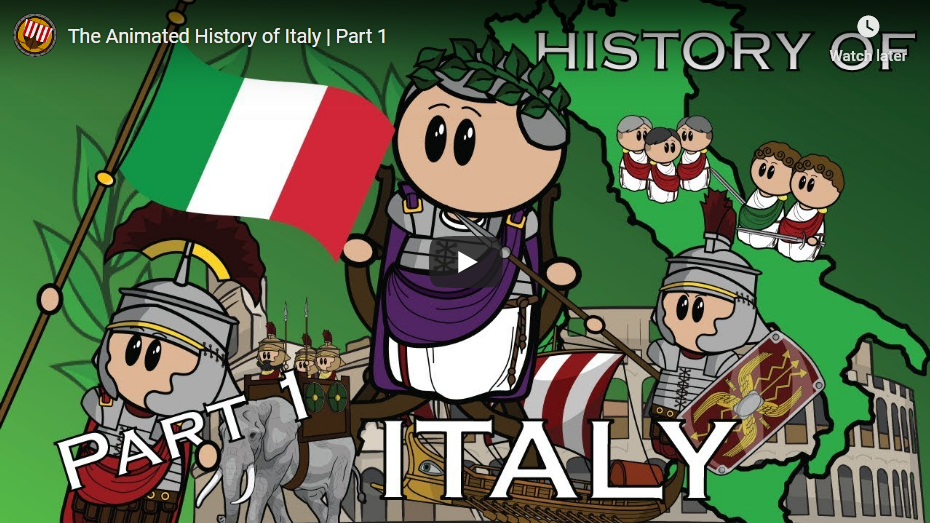
Punic Wars | 3 Minute History
QotD: “Safe spaces” do not produce strong people
What, after all, is the effect of shielding people from contrary opinions by designating and maintaining, under color of law or regulation, “safe spaces” for this or that minority? Does it make them stronger? Better able to deal with a harsh world? Does it change that objective world to something less harsh? No and no and no; it does none of that. Do you gain grit in a safe space? Ha. Do you learn endurance in a safe space? Oh, please.
No, It merely makes of them mollycoddles, weaklings, and in some important ways barely or not even human. That’s the effect of a safe space, to render those who hide in them weak and ignorant.
There are things worse than the safe space, though. That only weakens your brain by making sure you never have to reason about or argue in defense of your beliefs. And, at least, this moral weakening and brain-deadening thing is voluntary. Much worse is the movement to restrict free speech and to manipulate speech for political ends. This does what the safe space does, of course, but a simple saunter down memory lane shows it does so much more. Want to starve ten or twenty or fifty million of your own people to death? Want to gas a few million members of a despised minority? Want to hack to death half a million countrymen? Job one is attack speech.
Don’t you find it odd that your teachers have led you away from any history that would tend to show you that destruction and perversion of free speech is generally followed by massive murder? Don’t you find it a little odd that they place offending someone as worse somehow than starving, gassing, or shooting them to death?
Tom Kratman, “It’s Up to You, Millennials. Deflect or Be Doomed”, Milo, 2017-12-06.
January 20, 2020
Pyrrhus of Epirus: Enemy of Rome
History Time
Published 2 Dec 2017A brief look at one of the first and greatest adversaries of the Romans.
Some of the maps used in this and other History Time videos were produced by the incredible Battles of the Ancients. Check out the awesome website below for your ancient history fix.
http://turningpointsoftheancientworld.com/Music:-
Two Steps From Hell – “Hearts of Courage”
https://www.youtube.com/watch?v=eYj8c…
BrunuhVille – “Song of the North” (Alt. Version)
https://www.youtube.com/watch?v=RHAFr…
Adrian Von Ziegler – “Moonsong”
https://www.youtube.com/watch?v=ifQ3J…If you liked this video and have a spare dollar you can help to support the channel here:-
http://www.patreon.com/historytimeUKAre you a budding artist, illustrator, cartographer, or music producer? Send me a message! No matter how professional you are or even if you’re just starting out, I can always use new music and images in my videos. Get in touch! I’d love to hear from you.
I’ve also compiled a reading list of my favourite history books via the Amazon influencer program. If you do choose to purchase any of these incredible sources of information, many of which form the basis of my videos, then Amazon will send me a tiny fraction of the earnings (as long as you do it through the link) (this means more and better content in the future) I’ll keep adding to and updating the list as time goes on:-
https://www.amazon.com/shop/historytimeI try to use copyright free images at all times. However if I have used any of your artwork or maps then please don’t hesitate to contact me and I’ll be more than happy to give the appropriate credit.
—Join the History Time community on social media:-
Patreon:-
https://www.patreon.com/historytimeUK
Instagram:-
https://www.instagram.com/historytime…
Twitter:-
https://twitter.com/HistoryTimeUK
Gaming India’s colonial and post-colonial history
In Quillette, Jonathan Kay looks at two wargames that deal with different aspects of Indian history:
… the peoples whom Europeans encountered in the Americas were skilled and inventive combatants who often put white men to flight (or worse) despite their enormous disadvantage in technology and (ultimately) manpower. In many cases, First Nations (as we now call them in Canada) fought fiercely with one another, too, and had well-developed military traditions that Europeans variously feared, admired and adopted. And they would make fitting protagonists for any modern boardgame designer willing to reject the current fashion of presenting indigenous peoples as holy elves of the forest.
What would such a game look like? A good example comes to us in the form of GMT Games’ 2019 release, Gandhi: The Decolonization of British India. This is the latest entry in GMT’s COIN series, which is designed to model guerrilla wars and other unconventional conflicts through the use of cards that represent historical events. As in other games of the genre, such as Fire in the Lake (Vietnam), People Power (Insurgency in the Philippines, 1983-1986) and Colonial Twilight (The French-Algerian War, 1954-62), the game doesn’t present a simple narrative of good versus evil, but a more complex narrative in which all sides have at least some ulterior motives that are at odds with their official propaganda. In Gandhi, there are four players, one each controlling the Raj, the Indian National Congress, the Muslim League and the “Revolutionaries.” The latter three all share the goal of some kind of national independence, but each pursues its own (often mutually antagonistic) methods, with the Revolutionaries using violence to undercut the more pacifistic Congress, and the Muslim League playing off Congress, the Revolutionaries and the Raj in order to protect the interests of the country’s Islamic minority. (Historians of Canada would note that diplomacy and warfare with and among First Nations often was similarly complex.)
The game is unpredictable and complex, since each player will pursue different strategies in the country’s many different zones, making and breaking de facto partnerships depending on the circumstances. Amid all of this gaming chaos, the moral logic of decolonization remains a central theme of the game. But by the end of things, you realize that the ejection of the British from India was a big and messy project, as history typically is. While Spirit Island was created with the goal of mainlining anti-colonialism directly into the boardgame experience, Gandhi gets to the same theme obliquely by way of amoral realism, doing a better job pedagogically in the process.
A key aspect of Gandhi is that the Raj has agency: It is not reduced to the status of automaton-villain, as in Spirit Island. But there are limitations to the imaginative ecosystem that players inhabit: Every one of the four players has to take on their assigned role without questioning their underlying, game-dictated objective — including the Raj player, who must, start to finish, exert himself in defence of a colonial project that now is widely viewed as being on the wrong side of history. The other three factions likewise remain prisoners of their parochial regional, religious and doctrinal differences, which, historically, would contribute to millions of deaths in the chaos that accompanied the British exit.
Which brings me to the fourth and final colonialism-themed game I will discuss: the acclaimed 2017 release John Company, by Indiana-based designer Cole Wehrle. In theory, John Company is also a game about British colonialism in India. But here’s the rub: The players all act as competing factions within the commercial innards of John Company (a nickname for the British East India Company). On one hand, the players have a co-operative goal — to keep the company afloat as it manages the enormous expense of creating and operating a colonial apparatus on the subcontinent. But I can attest that far more of players’ mental energy goes into fighting each other for the spoils of war and trade. Indeed, much of the game consists of exchanging favours and bribes among players, as each attempts to leverage positions of power within the company to extract revenues, plunder and positions of influence.
As the game progresses, you notice, almost as an afterthought, that great things are afoot within India: New trade routes are created, military battles are fought, whole regions go into revolt and are pacified, with many (fictional) lives hanging in the balance. But as a player, you barely notice any of this — except to the narrow extent these events can be exploited as a source of wealth, since the way you win the game is by accumulating enough cash and baubles to retire your functionaries into gilded clubs and country houses back in England.
And what of the actual Indians who lived and died under the Raj? They don’t appear at all in the game, for John Company‘s real play arc exists within the corrupt solipsism of intra-corporate deal-making. Which sounds horrifyingly amoral. But when the game’s over, you realize: That’s the whole point. The colonialists who ran India — like those who came to North America and every other place on the map, from South America to the Belgian Congo to China — typically weren’t motivated by a desire to destroy and subjugate. They were out to make a buck, either as lone freelancers in a canoe, or bureaucrats pulling levers within some gigantic corporate behemoth. The horrifying, often genocidal murder and mayhem was a by-product of greed. Which doesn’t make it better. But it does make the narrative more comprehensible in regard to governing our future behaviour as human societies — since we all are vulnerable to spasms of greed, while true evil for its own sake is a rare thing.
Games teach you about the forces of history not by listing a set of facts for you to memorize, but by creating a rules system that effectively pushes you to act in a certain way — whether as a colonialist, revolutionary or deity. If the game is well-designed, then those actions make a certain kind of internal sense. That dark logic is what stays with you — as an explanation of why people acted a certain way at a certain time. It’s always easy to judge historical figures. It’s harder, but ultimately more interesting and valuable, to understand them.
Lanchester MkI: Britain’s First Emergency SMG
Forgotten Weapons
Published 5 Sep 2017Sold for $16,100 (transferrable).
The Lanchester MkI was the first British effort to produce a domestic submachine gun during World War II. The British military had rejected these types of arms as “gangster guns” prior to the war, and did not see them as useful in a military context. Well, that opinion changed rather quickly as they watched the German blitzkrieg sail through continental Europe.
The very first solution was to purchase Thompson SMGs from the United States, but these were extremely expensive weapons, and not a suitable long term plan. The next solution was to reverse engineer a pair of German MP28 SMGs captured in Ethiopia. This was done by a Sterling company engineer named George Lanchester, and it was a successful project. Both the Royal Navy and Royal Air Force purchased the guns (although the RAF would cancel its order later, and the guns would pretty much all go to the Royal Navy).
Mechanically, the Lanchester is a very close copy of the MP28, with a few stylistic changes. These include the use of an SMLE pattern stock, the addition of a bayonet lug for a 1907 pattern bayonet, and the use of brass or bronze for the magazine housing instead of steel. The original MkI Lanchesters were select-fire, with a lever to allow semi or full-auto fire. This was removed with the simplified MkI* pattern, however.
The Lanchester would be quickly followed by the Sten gun, which offered much cheaper and faster manufacture, and the British Army would use huge numbers of Stens. The Lanchester would stay in service for decades after the war, though, serving on many naval vessels in British service and with other nations when British ships were sold as surplus.
http://www.patreon.com/ForgottenWeapons
Cool Forgotten Weapons merch! http://shop.bbtv.com/collections/forg…
If you enjoy Forgotten Weapons, check out its sister channel, InRangeTV! http://www.youtube.com/InRangeTVShow
January 19, 2020
Mao Against Everyone – China at War and Civil War – WW2 – 073 – January 18, 1941
World War Two
Published 18 Jan 2020The Chinese Communists and Nationalists clash while they’re also both facing Japanese armies in the North. And although the Communists are not the obvious victor this week, the battle has bigger ramifications. Other action takes place in Cambodia and the Mediterranean.
Join us on Patreon: https://www.patreon.com/TimeGhostHistory
Or join The TimeGhost Army directly at: https://timeghost.tvFollow WW2 day by day on Instagram @World_war_two_realtime https://www.instagram.com/world_war_t…
Join our Discord Server: https://discord.gg/D6D2aYN.
Between 2 Wars: https://www.youtube.com/playlist?list…
Source list: http://bit.ly/WW2sourcesWritten and Hosted by: Indy Neidell
Produced and Directed by: Spartacus Olsson and Astrid Deinhard
Executive Producers: Bodo Rittenauer, Astrid Deinhard, Indy Neidell, Spartacus Olsson
Creative Producer: Joram Appel
Post-Production Director: Wieke Kapteijns
Research by: Indy Neidell
Edited by: Mikołaj Cackowski
Map animations: Eastory (https://www.youtube.com/c/eastory)Colorizations by:
– Dememorabilia – https://www.instagram.com/dememorabilia/
– Julius Jääskeläinen – https://www.facebook.com/JJcolorization/Sources:
Imperial War Museum (E872; E 6600)
Narodowe Archiwum CyfroweSoundtracks from Epidemic Sound:
Phoenix Tail – “At the Front”
Johannes Bornlof – “Death And Glory 2”
Johannes Bornlof – “Last Man Standing 3”
Yi Nantiro – “Watchman”
Johan Hynynen – “Dark Beginning”
Reynard Seidel – “Deflection”
Bonnie Grace – “Imperious”Archive by Screenocean/Reuters https://www.screenocean.com.
A TimeGhost chronological documentary produced by OnLion Entertainment GmbH.
Cursus honorum – Aediles
Historia Civilis
Published 6 Feb 2015Patreon: https://www.patreon.com/HistoriaCivilis
Website: https://www.historiacivilis.com
Twitter: https://twitter.com/HistoriaCivilisMusic is “Clap Your Hands” by Jahzzar (http://betterwithmusic.com)
January 18, 2020
Economic interventions during the Roman republic and empire
Even during the republican period, state intervention in the economy — usually to “fix” another problem already caused or exacerbated by previous interventions — often made the situation worse. Fortunately there’s a lot of ruin in a nation, but over a long enough run, you do reach the economic end-game:

“The Course of Empire – The Consummation of Empire” by Thomas Cole, one of a series of five paintings created between 1833 and 1836.
Wikimedia Commons.
Debt forgiveness in ancient Rome was a contentious issue that was enacted multiple times. One of the earliest Roman populist reformers, the tribune Licinius Stolo, passed a bill that was essentially a moratorium on debt around 367 BC, a time of economic uncertainty. The legislation enabled debtors to subtract the interest paid from the principal owed if the remainder was paid off within a three-year window. By 352 BC, the financial situation in Rome was still bleak, and the state treasury paid many defaulted private debts owed to the unfortunate lenders. It was assumed that the debtors would eventually repay the state, but if you think they did, then you probably think Greece is a good credit risk today.
In 357 BC, the maximum permissible interest rate on loans was roughly 8 percent. Ten years later, this was considered insufficient, so Roman administrators lowered the cap to 4 percent. By 342, the successive reductions apparently failed to mollify the debtors or satisfactorily ease economic tensions, so interest on loans was abolished altogether. To no one’s surprise, creditors began to refuse to loan money. The law banning interest became completely ignored in time.
The original “dole” was implemented as part of the reforms of the Gracchi brothers, and quickly became a major part of government spending:
Gaius, incidentally, also passed Rome’s first subsidized food program, which provided discounted grain to many citizens. Initially, Romans dedicated to the ideal of self-reliance were shocked at the concept of mandated welfare, but before long, tens of thousands were receiving subsidized food, and not just the needy. Any Roman citizen who stood in the grain lines was entitled to assistance. One rich consul named Piso, who opposed the grain dole, was spotted waiting for the discounted food. He stated that if his wealth was going to be redistributed, then he intended on getting his share of grain.
By the third century AD, the food program had been amended multiple times. Discounted grain was replaced with entirely free grain, and at its peak, a third of Rome took advantage of the program. It became a hereditary privilege, passed down from parent to child. Other foodstuffs, including olive oil, pork, and salt, were regularly incorporated into the dole. The program ballooned until it was the second-largest expenditure in the imperial budget, behind the military. It failed to serve as a temporary safety net; like many government programs, it became perpetual assistance for a permanent constituency who felt entitled to its benefits.
In the imperial government, economic interventions were part and parcel of the role of the emperor:
In 33 AD, half a century after the collapse of the republic, Emperor Tiberius faced a panic in the banking industry. He responded by providing a massive bailout of interest-free loans to bankers in an attempt to stabilize the market. Over 80 years later, Emperor Hadrian unilaterally forgave 225 million denarii in back taxes for many Romans, fostering resentment among others who had painstakingly paid their tax burdens in full.
Emperor Trajan conquered Dacia (modern Romania) early in the second century AD, flooding state coffers with booty. With this treasure trove, he funded a social program, the alimenta, which competed with private banking institutions by providing low-interest loans to landowners while the interest benefited underprivileged children. Trajan’s successors continued this program until the devaluation of the denarius, the Roman currency, rendered the alimenta defunct.
By 301 AD, while Emperor Diocletian was restructuring the government, the military, and the economy, he issued the famous Edict of Maximum Prices. Rome had become a totalitarian state that blamed many of its economic woes on supposed greedy profiteers. The edict defined the maximum prices and wages for goods and services. Failure to obey was punishable by death. Again, to no one’s surprise, many vendors refused to sell their goods at the set prices, and within a few years, Romans were ignoring the edict.
Actually that last sentence rather understates the situation. The Wikipedia entry describes the outcome of the Edict:
The Edict was counterproductive and deepened the existing crisis, jeopardizing the Roman economy even further. Diocletian’s mass minting of coins of low metallic value continued to increase inflation, and the maximum prices in the Edict were apparently too low.
Merchants either stopped producing goods, sold their goods illegally, or used barter. The Edict tended to disrupt trade and commerce, especially among merchants. It is safe to assume that a black market economy evolved out of the edict at least between merchants.
Sometimes entire towns could no longer afford to produce trade goods. Because the Edict also set limits on wages, those who had fixed salaries (especially soldiers) found that their money was increasingly worthless as the artificial prices did not reflect actual costs.
History Summarized: Classical India
Overly Sarcastic Productions
Published 17 Jan 2020Classical and Medieval Indian History is a tale of constant flux — but in between the dozens and hundreds of states at play across the peninsula, there are clear trends that arise. Let’s take this chapter of history as an opportunity to dig into different types of sources, and try and wrap our heads around a story that doesn’t fit neatly into a single chronology.
FURTHER SOURCES: The Discovery of India by Jawaharlal Nehru, “A History of India” by Michael H. Fisher (lecture courtesy of The Great Courses).
Our content is intended for teenage audiences and up.
PATREON: https://www.Patreon.com/OSP
DISCORD: https://discord.gg/y7uUnzJ
MERCH LINKS: https://www.redbubble.com/people/OSPY…
OUR WEBSITE: https://www.OverlySarcasticProductions.com
Find us on Twitter https://www.Twitter.com/OSPYouTube
Find us on Reddit https://www.Reddit.com/r/OSP/
The innovative 1720s
In the latest Age of Invention newsletter, Anton Howes says the real Roaring Twenties were back in the eighteenth century:
Last week I called the 1720s an era of schemes. 1720 was the year of the South Sea Company’s crash, as well as the collapse of John Law’s Mississippi Company in France. But the decade saw some oft-neglected innovations too. As I never tire of saying, Britain’s extraordinary acceleration of innovation was about all industries, not just the famous ones of cotton, coal, iron, and steam — a point that the 1720s demonstrate perfectly.
For a start, it was the decade in which smallpox began to be systematically eradicated through inoculation. Lady Mary Wortley Montagu, having observed the procedure in the Ottoman Empire, had her daughter inoculated in London following an outbreak in 1721. The same epidemic prompted the trialling of inoculation in New England, and the reports of these successes provided the statistical evidence for it to be more widely spread. Soon, through Lady Montagu’s aristocratic connections, even the royal children were being inoculated. Inoculation was still dangerous — it was decades before non-deadly cowpox was discovered to also confer immunity to smallpox — but the 1720s marked the beginning of the end for one of humanity’s greatest killers.
[…]
Most famous, however, was the search for longitude. When at sea, it was relatively easy to tell how far north or south you were, but not how far east or west. The implications for navigation were immense. William Whiston, a protégé of Newton, was in 1714 instrumental in lobbying for the creation of a substantial government prize for a solution, and spent much of the following decades trying to win it. His earliest proposal, along with the mathematician Humphrey Ditton, was for ships anchored at fixed locations to essentially shoot fireworks at fixed intervals. By comparing the difference between seeing and hearing the flashes, you might calculate your longitude (it’s actually not that dissimilar to the principle that underlies GPS).
Marine chronometer “Copie No. 18″, Thomas Mudge, Jr., Robert Pennington, Richard Pendleton, et al, London, 1795 – Mathematisch-Physikalischer Salon, Dresden.
Photo by Daderot via Wikimedia Commons.But unlike with the medical advances, the poets were having none of it. As one of them rather crudely put it:
The longitude miss’d on
By wicked Will Whiston;
And not better hit on
By good master Ditton.
So Ditton and Whiston
May both be bepist on;
And Whiston and Ditton
May both be beshit on.Whiston and the other longitude-searchers also investigated using the earth’s magnetic variation — he produced perhaps the first map with isogonic lines, indicating where compass needles dipped — as well as solar eclipses. And as longitude could be found on land by looking at the eclipses of Jupiter’s moons, he tried to develop telescopes so that they could observe such events on the unsteady sea.
Nonetheless, the solution came from one of George Graham’s friends, the clockmaker John Harrison. Starting in the 1720s, Harrison developed a timekeeping device — the marine chronometer — that would keep its accuracy despite the rocking and rolling and atmospheric changes from being at sea. By comparing your local time with the time at Greenwich shown on the chronometer, you could calculate your longitude. (Though by the time his device came into use in the 1770s, another method had been discovered that involved observing the moon).
And of particular interest to woodworkers who also have historical interests:
While scientific minds sought the longitude, consumer items were also being transformed. In the 1720s, a ship’s carpenter to Jamaica, Robert Gillow, was among the first to import mahogany to Britain, creating a tradition of furniture-making in Lancaster that even the fashion-conscious French would come to regard jealously.
Tank Chats #59 Sherman Grizzly | The Tank Museum
The Tank Museum
Published 16 Nov 2018David Willey, Tank Museum Curator, presents a Tank Chat on the Sherman Grizzly.
This version of the Sherman was built in Canada from October 1943. After the fall of France, the Canadians began making their own vehicles, beginning with the Ram tank based on the M3 Lee chassis before moving on to a modified M4 Sherman. Only about 180 were produced.
This vehicle is currently on loan to the Heeresgeschichtliches Museum Wien.
Support the work of The Tank Museum on Patreon: ► https://www.patreon.com/tankmuseum
Visit The Tank Museum SHOP: ► https://tankmuseumshop.org/
Twitter: ► https://twitter.com/TankMuseum
Tiger Tank Blog: ► http://blog.tiger-tank.com/
Tank 100 First World War Centenary Blog: ► http://tank100.com/ #tankmuseum #tanks #tankchats
January 17, 2020
Zionism, Arabism & Colonialism in the Middle East | BETWEEN 2 WARS I 1936 Part 1 of 3
TimeGhost History
Published 16 Jan 2020After more than twenty years of colonial management, promises made but few promises kept and ethnic & cultural clashes in the area, unrest in the Middle East erupts in violence. A series of movements originate in this time, with long lasting consequences.
Watch our episode about the Middle east in the 1920s here: https://youtu.be/y6tSvRbvh2s
Join us on Patreon: https://www.patreon.com/TimeGhostHistory
Hosted by: Indy Neidell
Written by: Joram Appel
Directed by: Spartacus Olsson and Astrid Deinhard
Executive Producers: Bodo Rittenauer, Astrid Deinhard, Indy Neidell, Spartacus Olsson
Creative Producer: Joram Appel
Post-Production Director: Wieke Kapteijns
Research by: Joram Appel
Fact-Checking by: Jonas Srouji
Edited by: Daniel Weiss
Sound design: Marek KaminskiSources:
Arab by LINECTOR from the Noun Project
Bomb by P Thanga Vignesh from the Noun ProjectColorizations by:
– Dememorabilia – https://www.instagram.com/dememorabilia/
– Adrien.Colorisation – https://instagram.com/adrien.colorisa…
– Norman StewartSoundtracks from Epidemic Sound:
– “Dawn Of Civilization” – Jo Wandrini
– “The Inspector 4” – Johannes Bornlöf
– “Easy Target” – Rannar Sillard
– “First Responders” – Skrya
– “Not Safe Yet” – Gunnar Johnsen
– “Deflection” – Reynard Seidel
– “The Charleston 3” – Håkan ErikssonA TimeGhost chronological documentary produced by OnLion Entertainment GmbH.
From the comments:
TimeGhost History
42 minutes ago (edited)
We have already covered “Carving up the Middle East” in one of our first Between Two Wars episodes (watch here: https://youtu.be/y6tSvRbvh2s), but we felt like we had to return to the area one more time as all that carving had quite some consequences. This means that a large part of this episode is about colonialism, Zionism, Arabism, race and ethnicity. I’m also aware of the complicated modern-day conflict in the area, many of which originate in [the events covered in] this episode. However, we would like the comment section to be reserved for debating the history. We’re not going to engage with people discussing modern-day issues and politics, and we’re going to be quite strict in monitoring any racist or otherwise hateful comments.Cheers,
Joram