Quotulatiousness

October 11, 2009

Hot, Hot, Hot!

Filed under: Food, Humour, Randomness — Tags: — Nicholas @ 01:17

Jeremy Clarkson makes the acquaintance of “limited-edition Insanity private reserve” hot sauce:

It’s an American chilli sauce that was bought by my wife as a joky Christmas present. And, like all joky Christmas presents, it was put in a drawer and forgotten about. It’s called limited-edition Insanity private reserve and it came in a little wooden box, along with various warning notices. “Use this product one drop at a time,” it said. “Keep away from eyes, pets and children. Not for people with heart or respiratory problems. Use extreme caution.”

Unfortunately, we live in a world where everything comes with a warning notice. Railings. Vacuum cleaners. Energy drinks. My quad bike has so many stickers warning me of decapitation, death and impalement that they become a nonsensical blur.

The result is simple. We know these labels are drawn up to protect the manufacturer legally, should you decide one day to insert a vacuum-cleaner pipe up your bottom, or to try to remove your eye with a teaspoon. So we ignore them. They are meaningless. One drop at a time! Use extreme caution! On a sauce. Pah. Plainly it was just American lawyer twaddle.

A valid point: if everything these days carries warning labels, the actual level of concern for ordinary consumers drops . . . so real warnings are drowned out by the hundreds of bogus ones put there merely to avert lawsuits, not to provide useful information about the product.

The pain started out mildly, but I knew from past experience that this would build to a delightful fiery sensation. I was even looking forward to it. But the moment soon passed. In a matter of seconds I was in agony. After maybe a minute I was frightened that I might die. After five I was frightened that I might not.

The searing fire had surged throughout my head. My eyes were streaming. Molten lava was flooding out of my nose. My mouth was a shattered ruin. Even my hair hurt.

H/T to Dave Slater for the link.

October 6, 2009

Another bulletin from the “Institute of Obvious Findings”

Filed under: Food, Health, Law, USA — Tags: , , — Nicholas @ 16:02

New York City has the most “progressive” laws on the books for labelling fast food menu items. The intent was to ensure that customers would be aware of the calorie and nutrition values of food before ordering, with the hope being that people would deny their tastebuds and order less fattening foods. A recent study found — to nobody’s surprise — that this hasn’t been working:

A study of New York City’s pioneering law on posting calories in restaurant chains suggests that when it comes to deciding what to order, people’s stomachs are more powerful than their brains.

The study, by several professors at New York University and Yale, tracked customers at four fast-food chains — McDonald’s, Wendy’s, Burger King and Kentucky Fried Chicken — in poor neighborhoods of New York City where there are high rates of obesity.

It found that about half the customers noticed the calorie counts, which were prominently posted on menu boards. About 28 percent of those who noticed them said the information had influenced their ordering, and 9 out of 10 of those said they had made healthier choices as a result.

But when the researchers checked receipts afterward, they found that people had, in fact, ordered slightly more calories than the typical customer had before the labeling law went into effect, in July 2008.

The laws were changed because paternalists in power thought that consumers were being gulled against their better instincts, and that merely pointing out the information in a hard-to-miss fashion would assist these poor, weak-willed eaters to trim back on calories and fat. It doesn’t work because people like eating food that’s calorie-rich and fattening. You’re not going to change that without instituting literal rationing: and don’t think they haven’t considered it.

July 30, 2009

Organic food shock: no better than non-organic

Filed under: Environment, Food, Science, Wine — Nicholas @ 07:59

This is another one of those “someone paid money to conduct the study?” studies. Organic food has been a boon to certain producers, but it doesn’t provide the kind of benefits most purchasers expect:

But organic is certainly more expensive. A new study in the American Journal of Clinical Nutrition finds:

On the basis of a systematic review of studies of satisfactory quality, there is no evidence of a difference in nutrient quality between organically and conventionally produced foodstuffs. The small differences in nutrient content detected are biologically plausible and mostly relate to differences in production methods.

The study was commissioned by Britain’s Food Standards Agency.

I’ve been skeptical about the claims for “organic” products for quite some time. Similarly, I’m not convinced that there’s any great value in the “biodynamic” model for wine. My strong suspicion is that the same general quality of wine would be produced without all the new age woo-woo mystic crap, because the vineyard owner or manager is paying closer attention to the vines. That, IMO, is the key.

July 19, 2009

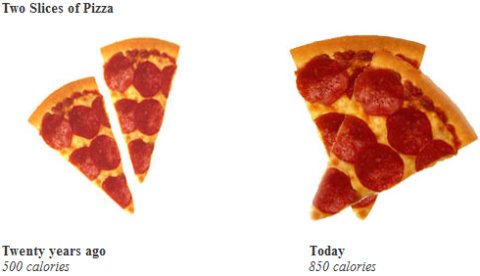
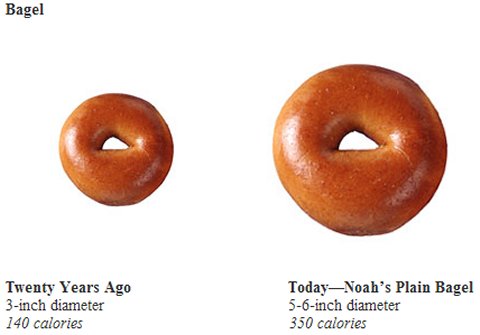
Learn something new everyday

Filed under: Food, Randomness — Nicholas @ 00:53

H/T to Craig Zeni, who sent along this valuable bit of knowledge:

July 13, 2009

When the data doesn’t support your claims, obscure it!

Filed under: Food, Science — Tags: , , — Nicholas @ 12:31

Ronald Bailey looks at the too-good-to-be-true claims made for caloric reduction as a life-extending tool:

Last week, two research teams reported to great fanfare that restricting the calories consumed by rhesus monkeys had extended their lifespans. Calorie restriction is thought to increase longevity by boosting DNA repair. The idea is that the mechanism evolved so that creatures on the verge of starvarion could live long enough to reproduce when food becomes plentiful again. But did the experiments really show the CR works?

In my earlier blogpost on the research results, I noted that some experts quoted in the New York Times were not convinced. Why? Because the difference in actual death rates between the dieting monkeys and the free feeding monkeys was not statistically significant.

This doesn’t necessarily derail the notion that calorie restriction may be associated with increased lifespan, but the way this study was performed does not appear to prove anything due to rigging of the data.

(Cross-posted to the old blog, http://bolditalic.com/quotulatiousness_archive/005577.html.)

« Newer Posts

Powered by WordPress