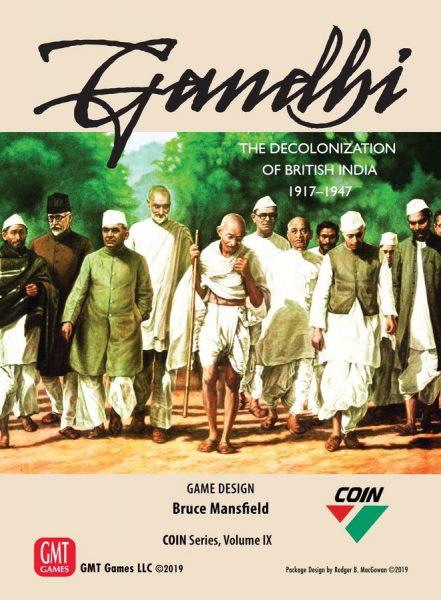
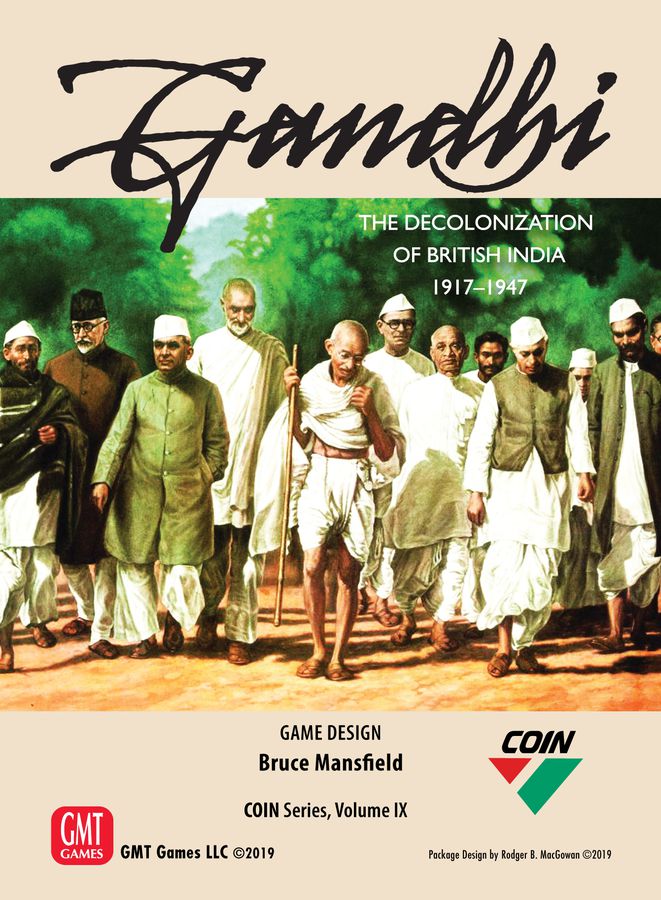
Although the movie [Gandhi] sneers at this reasoning as being the flimsiest of pretexts, I cannot imagine an impartial person studying the subject without concluding that concern for Indian religious minorities was one of the principal reasons Britain stayed in India as long as it did. When it finally withdrew, blood-maddened mobs surged through the streets from one end of India to the other, the majority group in each area, Hindu or Muslim, slaughtering the defenseless minority without mercy in one of the most hideous periods of carnage of modern history.
A comparison is in order. At the famous Amritsar massacre of 1919, shot in elaborate and loving detail in the present movie and treated by post-independence Indian historians as if it were Auschwitz, Gurkha troops under the command of a British officer, General Dyer, fired into an unarmed crowd of Indians defying a ban and demonstrating for Indian independence. The crowd contained women and children; 379 persons died; it was all quite horrible. Dyer was court-martialed and cashiered, but the incident lay heavily on British consciences for the next three decades, producing a severe inhibiting effect. Never again would the British empire commit another Amritsar, anywhere.
As soon as the oppressive British were gone, however, the Indians — gentle, tolerant people that they are — gave themselves over to an orgy of bloodletting. Trained troops did not pick off targets at a distance with Enfield rifles. Blood-crazed Hindus, or Muslims, ran through the streets with knives, beheading babies, stabbing women, old people. Interestingly, our movie shows none of this on camera (the oldest way of stacking the deck in Hollywood). All we see is the aged Gandhi, grieving, and of course fasting, at these terrible reports of riots. And, naturally, the film doesn’t whisper a clue as to the total number of dead, which might spoil the mood somehow. The fact is that we will never know how many Indians were murdered by other Indians during the country’s Independence Massacres, but almost all serious studies place the figure over a million, and some, such as Payne’s sources, go to 4 million. So, for those who like round numbers, the British killed some 400 seditious colonials at Amritsar and the name Amritsar lives in infamy, while Indians may have killed some 4 million of their own countrymen for no other reason than that they were of a different religious faith and people think their great leader would make an inspirational subject for a movie. Ahimsa, as can be seen, then, had an absolutely tremendous moral effect when used against Britain, but not only would it not have worked against Nazi Germany (the most obvious reproach, and of course quite true), but, the crowning irony, it had virtually no effect whatever when Gandhi tried to bring it into play against violent Indians.
Despite this at best patchy record, the film-makers have gone to great lengths to imply that this same principle of ahimsa — presented in the movie as the purest form of pacifism — is universally effective, yesterday, today, here, there, everywhere. We hear no talk from Gandhi of war sometimes being a “necessary evil,” but only him announcing — and more than once — “An eye for an eye makes the whole world blind.” In a scene very near the end of the movie, we hear Gandhi say, as if after deep reflection: “Tyrants and murderers can seem invincible at the time, but in the end they always fall. Think of it. Always.” During the last scene of the movie, following the assassination, Margaret Bourke-White is keening over the death of the Great Soul with an English admiral’s daughter named Madeleine Slade, in whose bowel movements Gandhi took the deepest interest (see their correspondence), and Miss Slade remarks incredulously that Gandhi felt that he had failed. They are then both incredulous for a moment, after which Miss Slade observes mournfully, “When we most needed it [presumably meaning during World War II], he offered the world a way out of madness. But the world didn’t see it.” Then we hear once again the assassin’s shots, Gandhi’s “Oh, God,” and last, in case we missed them the first time, Gandhi’s words (over the shimmering waters of the Ganges?): “Tyrants and murderers can seem invincible at the time, but in the end they always fall. Think of it. Always.” This is the end of the picture.
Richard Grenier, “The Gandhi Nobody Knows”, Commentary, 1983-03-01.
September 8, 2019
QotD: The Amritsar massacre and the partition of India
September 7, 2019
Mark Steyn – “So the Remainer leaves, putting a question mark over whether the Leaver can remain”
Despite the lovely scenery outside his cabin window … I guess that should be “porthole” … Mark Steyn still finds time to comment on the circus at Westminster:

“Palace of Westminster”by michaelhenley is licensed under CC BY-NC-SA 2.0
Greetings from the Mark Steyn Cruise, currently sailing the beautiful Inside Passage of Alaska. Across the continent and an ocean, Westminster continues to be roiled by Brexiteers and Remoaners locked, like the latter seasons of Dynasty, locked in ever more demented plot twists. Today Her Majesty’s Government suffered its first resignation since Boris Johnson took over as Prime Minister. The Minister for Universities and Science quit, and is leaving Parliament. His name is Jo Johnson. Any relation? Why, yes. He’s Boris’ brother. In the normal course of events, no normal person knows who the Minister for Universities is, or indeed that such a post exists, or, if aware of this grand office, what the chap who holds it does all day long: He ain’t a heavy, he’s his brother — that’s all. But the junior Johnson, a Remainer, has walked out on the senior Johnson, a Leaver, so it’s the biggest thing since Cain fired his Secretary of State for Sheep-Herding. Boris was his brother’s keeper, but he couldn’t keep him. So the Remainer leaves, putting a question mark over whether the Leaver can remain.
~All sides are throwing around media accusations of “constitutional outrage”, ever since Boris got the Queen to prorogue Parliament and was instantly ungraded from PM to Caudillo of the new dictatorship. I am more sympathetic to the charges against his opponents: Jeremy Corbyn, Leader of Her Majesty’s Loyal Opposition, has been claiming for months to want a general election. Indeed, there is no reason not to have one. On Tuesday the Prime Minister formally lost his majority, when some Tory nobody I’d never heard of crossed the floor and became a Liberal. So Boris and his team cannot govern. Indeed, even their minority is shrinking by the hour, as he removes the whip, expels and deselects those who vote against him on Brexit.
And yet Corbyn voted down Boris’ motion for a general election — because the Opposition Leader is determined to force the Government to enact not its own but the Opposition’s policy, by making Boris go to Brussels, grovel, and beg for another extension of Britain’s zombie membership in the European Union. To put it in American terms, the legislative branch wants to maintain the executive branch in power purely as its dead-eyed sock puppet. That is certainly a constitutional abomination, and, cautious as she is in such matters, I have no doubt the Queen regards it as such.
~Why is Corbyn doing this? Isn’t an Opposition Leader supposed to bring down the Prime Minister so he can force an election and replace the bloke? Yes, but Corbyn would lose that election, and Boris would likely win. The guff about the will of Parliament and the people’s representatives obscures the reality — that this situation exists because of the ever wider chasm between the people and their representatives, between a citizenry that voted to leave the European Union and the fanatically Remainer Liberal Democrats, openly Remainer Celtic nationalists, covertly Remainer Labour Opposition, and semi-Remainer Tory backbench all determined to subvert the will of the people. You can dress that up in all kinds of parliamentary flimflam, but, when politicians who’ve been bleating about a “people’s vote” for over a year refuse to let the people vote, you know these tribunes of the masses have gone rogue and left the masses far behind.
September 5, 2019
The “Stop the Coup” movement and the chances for a British general election
Brendan O’Neill on the recent political upheavals in the Mother of Parliaments as Boris Johnson lost his parliamentary majority and the “Stop the Coup” activists celebrate by backing away from the election they claimed they wanted all along:

“Palace of Westminster”by michaelhenley is licensed under CC BY-NC-SA 2.0
The ridiculousness of the “Stop the Coup” movement is now starkly exposed. For the past week a few thousand members of the obsessively anti-Brexit urban elites have taken to the streets to accuse Boris Johnson of behaving like a dictator by suspending parliament for a few more days than is normal. “It’s a coup d’état!”, they hysterically cry. And yet now our supposed dictator, the author of this foul, anti-democratic coup, is offering people a General Election, and how have the “Stop the Coup” saps responded? By saying they don’t want one.
What a momentous self-own. They have literally traipsed through the streets saying “Britain is a dictatorship” and “Boris has stolen our democracy”. Now, Boris hasn’t only disproven this claptrap (dictators don’t usually suggest holding an election). He has also helped to expose the fact that if anyone is agitated and even disgusted by the idea of democracy right now, it isn’t the imaginary jackbooted generals of Downing Street – it’s the pseudo-democratic Remainer elite.
All of them are running scared from the idea of a General Election. Labour has made clear that it will not be backing the call for an election, at least not until No Deal Brexit has been legally taken off the table. “We are not going to dance to Boris Johnson’s tune”, said Labour’s shadow Brexit secretary Keir Starmer this morning when asked if the party would back Boris’s General Election proposal in parliament later today. An election on Boris’s terms would be a “trap” for Labour, he said.
Jo Swinson, leader of the Lib Dems, is against an election too. And her justification is very revealing indeed. In the Commons she said “It is vital that this House acts with responsibility and does not tip our country into an election at a point when there is any risk that we will crash out of the European Union during that election campaign or immediately after.” With added emphasis she declared: “We must act responsibly.”
… but not democratically. After all, elected MPs know far better what’s good for the country than the majority of Britons who voted in favour of Brexit.
September 4, 2019
English spelling – a bit mad, but perhaps the best system around
Lindybeige
Published on 12 Nov 2015Support me on Patreon: https://www.patreon.com/Lindybeige
Many people think that the English system of spelling is just mad. The random quirks of history have certainly played their part, and today we have spellings that follow so many different rules that at times it can seem just random. However, here I argue that actually the fact that our spelling does not match our pronunciation is a strength, not just a weakness.
I see from the comments that several viewers have misunderstood me, and have thought that I am saying that only when people are reading English do they recognise words in the same way as we recognise faces. No, this is how people read in all languages. This being the case, phonetic spelling is not such a great advantage, since people are not decoding the words using sound, and spelling based on derivation has advantages.
Lindybeige: a channel of archaeology, ancient and medieval warfare, rants, swing dance, travelogues, evolution, and whatever else occurs to me to make.
September 3, 2019
The Forgotten Soldiers of the Revolutionary War
Townsends
Published on 25 Jan 2018Get the book here! ▶ https://www.amazon.com/Hessians-Three…
Visit Our Website! ▶ http://www.townsends.us/
Help support the channel with Patreon ▶ https://www.patreon.com/townsend
Sign up for the YouTube Mailing List! ▶ http://www.townsends.us/youtube_list.htm
QotD: Fencing out the London poor
I see that the railings are returning — only wooden ones, it is true, but still railings — in one London square after another. So the lawful denizens of the squares can make use of their treasured keys again, and the children of the poor can be kept out.When the railings round the parks and squares were removed, the object was partly to accumulate scrap-iron, but the removal was also felt to be a democratic gesture. Many more green spaces were now open to the public, and you could stay in the parks till all hours instead of being hounded out at closing times by grim-faced keepers. It was also discovered that these railings were not only unnecessary but hideously ugly. The parks were improved out of recognition by being laid open, acquiring a friendly, almost rural look that they had never had before. And had the railings vanished permanently, another improvement would probably have followed. The dreary shrubberies of laurel and privet — plants not suited to England and always dusty, at any rate in London — would probably have been grubbed up and replaced by flower beds. Like the railings, they were merely put there to keep the populace out. However, the higher-ups managed to avert this reform, like so many others, and everywhere the wooden palisades are going up, regardless of the wastage of labour and timber.
George Orwell, “As I Please” Tribune, 1944-08-04.
September 1, 2019
366 Days of Crushed Hopes, Suffering and Death – WW2 – 053 – August 31 1940
World War Two
Published on 31 Aug 2019As the war turns one year old, there seems to be no end in sight. The Luftwaffe starts targeting civilian areas of London, the peoples of Eastern Europe switch country without moving houses, in occupied territory the population continues to be terrorized, and an end to the Chinese war that has been raging on for years now seems ever further away.
Join us on Patreon: https://www.patreon.com/TimeGhostHistory
Or join The TimeGhost Army directly at: https://timeghost.tvFollow WW2 day by day on Instagram @World_war_two_realtime https://www.instagram.com/world_war_t…
Join our Discord Server: https://discord.gg/D6D2aYN.
Between 2 Wars: https://www.youtube.com/playlist?list…
Source list: http://bit.ly/WW2sourcesWritten and Hosted by: Indy Neidell
Produced and Directed by: Spartacus Olsson and Astrid Deinhard
Executive Producers: Bodo Rittenauer, Astrid Deinhard, Indy Neidell, Spartacus Olsson
Creative Producer: Joram Appel
Research by: Indy Neidell
Edited by: Karolina Dołęga
Map animations: EastoryColorisations by Norman Stewart and Julius Jääskeläinen https://www.facebook.com/JJcolorization/
Sources:
Soviet occupation of Bessarabia and Northern Bukovina. Military parade in Kishinev on the 4th of July 1940, ANRM, Fototeca, 24950 from http://anr.infoideea.ro/basarabia1940…Eastory’s channel: https://www.youtube.com/channel/UCEly…
Archive by Screenocean/Reuters https://www.screenocean.com.A TimeGhost chronological documentary produced by OnLion Entertainment GmbH.
From the comments:
World War Two
6 days ago (edited)
Tomorrow, the war turns one year old, just like our channel. It doesn’t feel like a year, but when you think about what has happened all over the world since the Germans invaded Poland, it feels like a lifetime. Since then, our project has grown significantly, with new editors, community managers, and other people that help us out to make this series the best that it could be. We owe that to each and every one of you who stuck around and watched, shared, and engaged with our channel. We’re especially grateful to our supporters on Patreon and the TimeGhost website. It’s your support that makes this show possible and helps us to keep improving our quality. Our next goal is to raise enough money to go abroad and film on location, so that we can give you a real look of what it was like, and get in-depth knowledge from local historians. So please, support us on Patreon at https://www.patreon.com/TimeGhostHistory or at our website at https://timeghost.tv.A big virtual hug from all of us,
The TimeGhost Team
August 31, 2019
Young Recruits, French Planes, and Graf Spee – WW2 – OOTF 003
World War Two
Published on 30 Aug 2019How young were British soldiers? Could Graf Spee have gotten away? What was the French air force like? Questions, questions, questions – from you no less! With answers from us Out of the Foxholes.
Join us on Patreon: https://www.patreon.com/TimeGhostHistory
Or join The TimeGhost Army directly at: https://timeghost.tvFollow WW2 day by day on Instagram @World_war_two_realtime https://www.instagram.com/world_war_t…
Join our Discord Server: https://discord.gg/D6D2aYN.
Between 2 Wars: https://www.youtube.com/playlist?list…
Source list: http://bit.ly/WW2sourcesImage sources:
Drawing Morane-Saulnier M.S.406 C1 and Dewoitine D.520 fighters : KaboldyWritten and Hosted by: Indy Neidell and Nicholas Moran
Produced and Directed by: Spartacus Olsson and Astrid Deinhard
Executive Producers: Bodo Rittenauer, Astrid Deinhard, Indy Neidell, Spartacus Olsson
Creative Producer: Joram Appel
Research by: Indy Neidell, Nicholas Moran, and Joram Appel
Edited by: Wieke KapteijnsEastory’s channel: https://www.youtube.com/channel/UCEly…
Archive by Screenocean/Reuters https://www.screenocean.com.A TimeGhost chronological documentary produced by OnLion Entertainment GmbH.
From the comments:
World War Two
39 minutes ago
One day before the war has being going on for a whole year, we look back at some stuff from 1939 and 1940. And once again Nicholas Moran, the Chieftain https://www.youtube.com/user/TheChieftainWoT joins us to answer your questions. This time he leaves his main turf (tanks) to dive into his other area of expertise; naval battles. Please remember that we can’t field questions from the comments so if you want submit a new question do it here: https://community.timeghost.tv/c/Out-of-the-Foxholes-QsComing out with Out of the Foxholes has been a bit of a challenge as we try to master the crazy amount of stuff going on in our main episodes. But thanks to the fantastic collaboration of the TimeGhost Army on https://www.patreon.com/TimeGhostHistory and https://timeghost.tv we are constantly expanding our capacity and we hope to come out with these a bit more often now! For now, enjoy and remember that tomorrow our first anniversary episode comes out!
August 30, 2019
QotD: Racism in London during WW2
A few days ago a West African wrote to inform us that a certain London dance hall had recently erected a “colour bar”, presumably in order to please the American soldiers who formed an important part of its clientele. Telephone conversations with the management of the dance hall brought us the answers: (a) that the “colour bar” had been cancelled, and (b) that it had never been imposed in the first place; but I think one can take it that our informant’s charge had some kind of basis. There have been other similar incidents recently. For instance, I during last week a case in a magistrate’s court brought out the fact that a West Indian Negro working in this country had been refused admission to a place of entertainment when he was wearing Home Guard uniform. And there have been many instances of Indians, Negroes and others being turned away from hotels on the ground that “we don’t take coloured people”.It is immensely important to be vigilant against this kind of thing, and to make as much public fuss as possible whenever it happens. For this is one of those matters in which making a fuss can achieve something. There is no kind of legal disability against coloured people in this country, and, what is more, there is very little popular colour feeling. (This is not due to any inherent virtue in the British people, as our behaviour in India shows. It is due to the fact that in Britain itself there is no colour problem.)
The trouble always arises in the same way. A hotel, restaurant or what-not is frequented by people who have money to spend who object to mixing with Indians or Negroes. They tell the proprietor that unless he imposes a colour bar they will go elsewhere. They may be a very small minority, and the proprietor may not be in agreement with them, but it is difficult for him to lose good customers; so he imposes the colour bar. This kind of thing cannot happen when public opinion is on the alert and disagreeable publicity is given to any establishment where coloured people are insulted. Anyone who knows of a provable instance of colour discrimination ought always to expose it. Otherwise the tiny percentage of colour-snobs who exist among us can make endless mischief, and the British people are given a bad name which, as a whole, they do not deserve.
In the nineteen-twenties, when American tourists were as much a part of the scenery of Paris as tobacco kiosks and tin urinals, the beginnings of a colour bar began to appear even in France. The Americans spend money like water, and restaurant proprietors and the like could not afford to disregard them. One evening, at a dance in a very well-known cafe some Americans objected to the presence of a Negro who was there with an Egyptian woman. After making some feeble protests, the proprietor gave in, and the Negro was turned out.
Next morning there was a terrible hullabaloo and the cafe proprietor was hauled up before a Minister of the Government and threatened with prosecution. It had turned out that the offended Negro was the Ambassador of Haiti. People of that kind can usually get satisfaction, but most of us do not have the good fortune to be ambassadors, and the ordinary Indian, Negro or Chinese can only be protected against petty insult if other ordinary people are willing to exert themselves on his behalf.
George Orwell, “As I Please” Tribune, 1944-08-11.
August 27, 2019
The Secret Invention That Made D-Day Possible | INTEL
Forces TV
Published on 7 Jun 2019As much as the success of D-Day was down to the bravery of soldiers … it was made possible by inventions and new machines. These Mulberry Harbours were a real World War 2 engineering victory.
More Mulberry: https://www.forces.net/d-day/mulberry-harbours-how-allies-floated-concrete-win-d-day
Forces Net D-Day Hub: http://forces.net/dday
August 25, 2019
The Battle of Britain is a Bitch – WW2 – 052 – August 24 1940
World War Two
Published on 24 Aug 2019This week, the communists attack the Japanese in the Battle of 100 Regiments. Meanwhile in Europe, the Battle of Britain enters phase three with the Luftwaffe actively targeting British airfields.
Join us on Patreon: https://www.patreon.com/TimeGhostHistory
Or join The TimeGhost Army directly at: https://timeghost.tvFollow WW2 day by day on Instagram @World_war_two_realtime https://www.instagram.com/world_war_t…
Join our Discord Server: https://discord.gg/D6D2aYN.
Between 2 Wars: https://www.youtube.com/playlist?list…
Source list: http://bit.ly/WW2sourcesWritten and Hosted by: Indy Neidell
Produced and Directed by: Spartacus Olsson and Astrid Deinhard
Executive Producers: Bodo Rittenauer, Astrid Deinhard, Indy Neidell, Spartacus Olsson
Creative Producer: Joram Appel
Post-Production Director: Wieke Kapteijns
Research by: Indy Neidell
Edited by: Iryna Dulka
Map animations: EastoryColorisations by Norman Stewart and Julius Jääskeläinen https://www.facebook.com/JJcolorization/
Sources:
IWM: H7019, H005772, Q 7928
Color of Trotsky and Soviet leaders by Klimbim
Mercader picture from a public mural by Grahame Miller Ware, Wikimedia Commons
Icons by Sergey Tikhonov, Ely Wahib and Ivan Boyko from iconfinder.comEastory’s channel: https://www.youtube.com/channel/UCEly…
Archive by Screenocean/Reuters https://www.screenocean.com.A TimeGhost chronological documentary produced by OnLion Entertainment GmbH.
From the comments:
World War Two
2 days ago
Last Sunday, we had our one year anniversary livestream in which we talked about the last year, our current challenges and the plans for the road ahead, and answered a lot of your questions. We explained how we want to increase our Patreon income to be able to travel to the known and unknown locations of World War Two. To do so, you can help us by supporting us on https://www.patreon.com/TimeGhostHistory or https://timeghost.tv. Literally every dollar counts. If you’d like to see the livestream I mentioned, you can check that out right here -> https://youtu.be/EKws1jNIAmECheers,
Joram
August 23, 2019
Sterling S11: Donkey in a Thoroughbred Race
Forgotten Weapons
Published on 26 Jun 2019http://www.patreon.com/ForgottenWeapons
Cool Forgotten Weapons merch! http://shop.bbtv.com/collections/forg…
In the 1960s, the Sterling company began to worry about the prospects of continued sales of the Sterling (Patchett) SMG, especially in light of new competitors like the H&K MP5. Its chief design engineer, Frank Waters, created the S11 as a gun to replace the classic Sterling. The S11 was based on a simple stamped/folded steel receiver, and was intended to have a lower unit cost than the Sterling. It kept the excellent Patchett magazine, but had a barrel and sights offset to the left side, and offered two separate bayonet lugs – one for the No5 rifle and one for the L1A1/FAL.
Unfortunately for Sterling, it was determined that the tooling cost would have made the S11 actually more expensive than the existing guns, whose tooling costs had been long since covered. Also, the S11 was just not a very good or very reliable design – a “donkey in a thoroughbred race” to quote one Sterling manager. This one prototype was the only example ever made, and the project was shelved in 1967 in favor of expanding into more civilian models of the original Sterling.
Many thanks to the Royal Armouries for allowing me to film and disassemble this one of a kind submachine gun! The NFC collection there – perhaps the best military small arms collection in Western Europe – is available by appointment to researchers:
https://royalarmouries.org/research/n…
You can browse the various Armouries collections online here:
https://royalarmouries.org/collection/
Contact:
Forgotten Weapons
PO Box 87647
Tucson, AZ 85754
August 21, 2019
British-EU negotiations under Boris Johnson
In a speech to Slovak journalists, Sean Gabb outlines what he expects the British government to be doing about Brexit now that May has been put out to pasture and Boris Johnson is in charge:

Prime Minister Boris Johnson at his first Cabinet meeting in Downing Street, 25 July 2019.
Official photograph via Wikimedia Commons.
Here, I come to a digression on the nature of how Britain is governed. My country is not particularly democratic. At the same time, there is no cabal of evil persons directing all events and appointments from behind the scenes. This is generally not how ruling classes operate. A more realistic model can be taken from Ian Kershaw’s analysis of the National Socialist revolution in Germany. This proceeded with limited central direction. Before 1939, the leaders were concerned mostly with foreign policy, after that with fighting a big war. Instead, the revolution was decentralised. Reliable men were put in key positions and told to “work towards the Fuhrer” – that is, to act in any situation as they might imagine Hitler himself would act. The result was often administrative chaos. The benefit was that the leadership could concentrate on what it saw as the essentials, and more local knowledge could be used in the overall revolution than would otherwise have been possible.
This is largely how things work in Britain. Our own Transformation is not driven by detailed orders from the Shadowy-Ones-on-High, but by creating a bias within every useful institution to those who are broadly in favour of the Transformation. The benefit is a constrained diversity of approaches that can be presented as a genuine diversity of opinion. The disadvantage is that executive power lies in this country where it has since 1701 – that is, in the hands of the Ministers of the Crown, who are accountable to the House of Commons. If the Prime Minister turns out to be a fool, and the other ministers are too cowardly to stab him in the back, there is no easy way to remove him.
I come at last to the Brexit strategy of the new Government. These people are not right-wing extremists who can eventually be forced to give in. Just like Theresa May, they see Brexit as a problem that needs to be solved. If they could wave a magic wand, they would roll back the calendar to 2016 and make sure that Remain won the Referendum. Or they would roll it back a little farther and make sure the Referendum was not called that year, or at all. But they cannot. Instead, they have to deal with the effects of leaving a political fool in charge for three years of the Brexit process.
Theresa May had one job after 2016. This was to produce the minimal departure I have mentioned. Instead, she negotiated a Withdrawal Agreement that caused a storm of outrage among the English. The details of what this Withdrawal Agreement contained are, again, unimportant. What does matter is that the Withdrawal Agreement was published in English on the European Commission website, and millions of us read its 585 pages. We may not have been that interested in the details of our membership. But the details of our “withdrawal” were unacceptable. She tried three times to force it through the House of Commons. Each time, a majority of some very trashy people were terrified to be seen supporting it. Anyone else less stupid would have tried something else. Instead, Theresa May treated us with open contempt. Whether or not we really cared about it, we had been asked if we wanted to remain in the European Union. Having voted “No!” we expected some show of respect for our clear instructions. We did not welcome a Brexit-in-Name-only.
At first, the damage was confined to the possibility of a Labour Government. Then, with the rise of the Brexit Party, the system as a whole moved towards a crisis of legitimacy. The European elections of the month before last were seen as the second Referendum the Remainers had demanded. It was won by the Leavers. The Conservative were crushed. Labour was humiliated. It seemed that a general election would, for the first time, produce a bloc in the House of Commons of Members opposed not only to the peripheral issue of the European Union, but also to the Transformation.
So Theresa May had to go, and she was replaced by Boris Johnson. His own inclination, I have no doubt, is to get a few cosmetic changes to the existing Withdrawal Agreement, and then tell us he is a diplomatic genius. His problem is that this will no longer do. Theresa May has left too much poison in those waters. Brexit must now be more meaningful than was at first projected. Last week, there was an election in Wales to fill a vacancy in the House of Commons – a bye-election. This should have been won by the Conservatives. Instead, the Brexit Party took enough Conservative votes to give the seat to one of the opposition parties – not the Labour Party, which did badly. The political arithmetic is that anything less than a No-Deal Brexit or a diplomatic triumph will mean a collapse of the Conservative vote at the next general election. And this will not mean a Labour Government, but political chaos and a crisis of legitimacy.
In a post at the Continental Telegraph, Alex Noble shows the quite different political trajectories of Change UK (or whatever they’re calling themselves this week) and the Brexit Party:
[Simon Jenkins in the Guardian claims that] the majority of Britain want to stay in the EU.
Is he right?
Well, the recent defectors from the main parties clearly believed he was – Chuka Umunna, Anna Soubry et al abandoned their positions to form the CUKs and provide the disenfranchised British masses with the staunch Remainer party they had all been failing to demand for so long.
They came out of the blocks fast, called in favours with journalists to get favourable press coverage, and burst upon the political consciousness of Great Britain like a glitter-filled Zeppelin of cross-party europhilia.
And then … oh the humanity.
Whereas Brexit geezer Nigel Farage sauntered out of the blocks under withering crossfire from the establishment and its pet churnalists, and immediately went hypersonic – from 0% to 20% before the establishment pollsters could unlimber their clipboards and stutter their leading questions.
Up and down the country, the British voter was encouraged to overlook the Brexit Party by an establishment still traumatised by the referendum, with pollsters snidely relegating the party to the column entitled “Other” during their obfuscatory enquiries.
And the British voter seized them by the lapels and yanked them into a ferocious Brexit headbutt.
The desperate EU stooges in the Tory party, realising their puppet Treason May was fatally wounded, threw her under the bus and began their Stop Boris campaign, but all the manufactured scandalettes failed to prevent the Johnson Juggernaut from roiling over them and into Downing Street.
For now, the Brexit Party have stalled on 20% – they hold their position now like a lioness crouched in the long grass, waiting for Boris Johnson to reveal the slightest Remainer tendencies. And if he does, the catastrophic injuries he and his party will suffer will make Theresa May’s mauling look like the amuse bouche at the Marquis de Sade’s final soundproofed basement party.
August 19, 2019
The Peterloo Massacre
In Spiked on Friday, Brendan O’Neill marked the 200th anniversary of a brutal suppression of thousands of protestors demanding the right to vote in Britain:

The Peterloo Massacre by Richard Carlile (1790-1843)
To Henry Hunt, Esq., as chairman of the meeting assembled in St. Peter’s Field, Manchester, sixteenth day of August, 1819, and to the female Reformers of Manchester and the adjacent towns who were exposed to and suffered from the wanton and fiendish attack made on them by that brutal armed force, the Manchester and Cheshire Yeomanry Cavalry, this plate is dedicated by their fellow labourer, Richard Carlile: a coloured engraving that depicts the Peterloo Massacre (military suppression of a demonstration in Manchester, England by cavalry charge on August 16, 1819 with loss of life) in Manchester, England.
All the poles from which banners are flying have Phrygian caps or liberty caps on top. Not all the details strictly accord with contemporary descriptions; the banner the woman is holding should read: Female Reformers of Roynton — “Let us die like men and not be sold like slaves”.
Manchester Library Services via Wikimedia Commons.
Today is the 200th anniversary of the Peterloo Massacre, when working people in Manchester were attacked and murdered by cavalry forces for daring to demand the right to vote. And what is our political class doing on this anniversary of such an important event in British political history? They are plotting, tirelessly, to overthrow something that millions of working-class people, and others, voted for: Brexit. They are doing what the Peterloo butchers did, only by political means and court cases rather than with bayonets and sabres. Our current political rulers may not physically attack the masses for having the temerity to use their democratic voices — not yet, anyway — but they view us with the exact same seething, elitist contempt as those who did attack the masses in St Peter’s Field on 16 August 1819.
Around 60,000 men, women and children gathered in St Peter’s Field in Manchester 200 years ago to demand parliamentary representation. They wanted that most basic and essential democratic right: the right to vote. The teeming industrial city of Manchester had no elected MPs in parliament. The old “rotten boroughs” system meant that often sparsely populated rural areas sent MPs to the Commons, involving much patronage and sometimes even the buying of votes by wealthy aspiring politicians, while newly industrialised cities full of the growing urban working classes had little to no political representation. Against a background of post-Napoleonic Wars economic depression and a fast-spreading radical desire for meaningful democratic change, the tens of thousands of marchers arrived in St Peter’s Field with a clear demand: let us vote, let us speak.
What happened next is well known. They were attacked by cavalry forces. Troops on horseback wielded sabres against the democratic crowd. They slashed and stabbed, killing 18 people. Around 500 were injured. The slaughter was given the name “Peterloo” as an ironic comparison to the Battle of Waterloo that took place four years earlier, in 1815. The bourgeoisie’s assault on the working-class democrats of Manchester had a deep impact on the radical psyche. New movements emerged in subsequent years, including the Chartists, the working-class movement for democratic representation. But it would be decades before the right to vote had been established across society. In 1867 some working-class men got the right to vote. In 1918, all men and some women got the right to vote. In 1928, finally all women got the vote. The General Election of 1929, 110 years after the march to St Peter’s Field, was the first election in which all adults had the right to vote.
The 200th anniversary of this bloody assault on working-class democrats ought to be a major occasion. It should be a reminder of the incredible, heroic sacrifices earlier generations made to secure people’s right to express themselves, to vote, and to see their votes be enacted. And yet while some in the political and media class will today pay lip service to the heroes of St Peter’s Field and express regret about the massacre of 18 of them, most of the elites will be too busy to do anything of the kind. Busy doing what? Trying to override and crush the votes of 17.4million people, which includes millions of working-class people and eight million women. It is a genuinely alarming and revealing moment: the 200th anniversary of the Peterloo Massacre arrives and the political set is engaged in an effective coup against the people; in a war against “No Deal Brexit” (which really just means a war against Brexit); in a concerted effort to force the ignorant public, as they see us, to vote for a second time and to give the “right” answer on this occasion.
Joan of Arc – Lies – Extra History
Extra Credits
Published on 17 Aug 2019Writer Rob Rath talks about all the cool stories and facts we didn’t get to cover in our recent series on the hated and beloved Joan of Arc.
Join us on Patreon! http://bit.ly/EHPatreon
From the comments:
Extra Credits
2 days agoRecommended reading:
– Joan of Arc: A History, by Helen Castor
– Joan of Arc by Herself and Her Witnesses, by Régine Pernoud
– Orléans, 1429: France Turns the Tide, by David Nicolle
4:01 – really cool side characters that didn’t make the final video script (but did show up in Game of Thrones??)
8:12 – multiple versions of Joan’s meeting with Charles
10:48 – all the other famous people we didn’t mention, including Gilles de Rais
13:11 – Joan really did have excellent tactical acumen, which we had to gloss over in her later battles
19:55 – what’s next on Extra History
21:17 – Six Degrees of Walpole