The Tank Museum
Published 17 Jan 2020Part 2 of a two-part episode on Challenger 2 [part 1 was posted here]. As David Willey had so much to say about this British in-service vehicle, it has been split into two parts. The second part examines the Challenger 2 in service. David talks to soldiers currently serving on the Challenger 2, looks at where it has seen service and some of the tank’s features. With thanks to the British Army for their assistance.
Support the work of The Tank Museum on Patreon: ► https://www.patreon.com/tankmuseum
Visit The Tank Museum SHOP: ►tankmuseumshop.org
Twitter: ► https://twitter.com/TankMuseum
Instagram: ► https://www.instagram.com/tankmuseum/
Tiger Tank Blog: ► http://blog.tiger-tank.com/
Tank 100 First World War Centenary Blog: ► http://tank100.com/
#tankmuseum #tanks #challenger2 #britisharmy #davidwilleytankchat #davidwilleychallenger2
January 26, 2021
Tank Chats #92 | Challenger 2: Part 2 | The Tank Museum
January 24, 2021
The Formalization of Extermination – The Wannsee Conference – WW2 – 126 – January 23, 1942
World War Two
Published 23 Jan 2021Nazi Germany’s “Holocaust by Bullets” has already claimed over a million lives over the past 8 months; this week German authorities hold a conference to streamline and systematize the process of extermination. Gas will now be the preferred method of murder. The Japanese are murdering Allied soldiers that fall into their hands as they advance ever closer to Singapore. The Soviet offensive continues along the entire Eastern Front, but the orders and objectives grow ever more confusing and chaotic. In North Africa, Erwin Rommel launches a surprise offensive against the Allies and make a lightning advance the final two days of the week.
Join us on Patreon: https://www.patreon.com/TimeGhostHistory
Or join The TimeGhost Army directly at: https://timeghost.tvFollow WW2 day by day on Instagram @ww2_day_by_day – https://www.instagram.com/ww2_day_by_day
Between 2 Wars: https://www.youtube.com/playlist?list…
Source list: http://bit.ly/WW2sourcesWritten and Hosted by: Indy Neidell
Director: Astrid Deinhard
Producers: Astrid Deinhard and Spartacus Olsson
Executive Producers: Astrid Deinhard, Indy Neidell, Spartacus Olsson, Bodo Rittenauer
Creative Producer: Maria Kyhle
Post-Production Director: Wieke Kapteijns
Research by: Indy Neidell
Edited by: Iryna Dulka
Sound design: Marek Kamiński
Map animations: Eastory (https://www.youtube.com/c/eastory)Colorizations by:
– Norman Stewart – https://oldtimesincolor.blogspot.com/
– Mikołaj Uchman
– Jaris Almazani (Artistic Man) – https://instagram.com/artistic.man
– Adrien Fillon – https://www.instagram.com/adrien.colo…Sources:
– IWM SE 4819
– Mil.ru
– Bundesarchiv
– ammo by Nociconist, Fruits by Icongeek26, Oil Tank by Mangsaabguru, from the Noun Project
– JoJan from Wikimedia Commons
– Yad Vashem 1427_85, 2CO1, 4613_360Soundtracks from the Epidemic Sound:
– Rannar Sillard – “Easy Target”
– Flouw – “A Far Cry”
– Fabien Tell – “Weapon of Choice”
– Reynard Seidel – “Rush of Blood”
– Edward Karl Hanson – “Spellbound”
– Johan Hynynen – “Dark Beginning”
– Johannes Bornlöf – “The Inspector 4”
– Gunnar Johnsen – “Not Safe Yet”
– Rannar Sillard – “Split Decision”
– Howard Harper-Barnes – “London”
– Christian Andersen – “Barrel”
– Cobby Costa – “From the Past”Archive by Screenocean/Reuters https://www.screenocean.com.
A TimeGhost chronological documentary produced by OnLion Entertainment GmbH.
January 23, 2021
Innovation is infectious … you catch it from other innovators
An interesting notion on how people innovate or invent is discussed in Anton Howes’ latest Age of Invention newsletter:
… my research on the Industrial Revolution has yielded a general model of how to think about it.
Core to the model is the observation that innovation spreads from person to person. It is a mentality, that we pick up from others. Of my sample of inventors, active c.1550-1850, the vast majority of them had had some kind of contact with an inventor before inventing anything themselves. So far, I’ve found evidence of that contact for about 83% of them, and for the remainder we frankly know next to nothing about them anyway. On the balance of probability, I suspect that all inventors had and continue to have such prior contact, even if the evidence has been lost to the mists of time.
Supposing I’m right about this — and there’s also more recent evidence from the largest and most detailed ever study of modern American inventors to support it — then such exposure to an inventor is the ultimate cause of innovation. Everything else we worry about when promoting innovation, from funding to intellectual property rights, or from education to social acceptance, is in a sense downstream of it.
Absent any exposure to inventors, people simply don’t become inventors. Knowing about invention as an activity is a necessary precondition to becoming an inventor yourself. The vast majority of people never innovate, for the very simple reason that it never occurs to them to do so. People are faced with problems all the time, but they generally have all sorts of pre-existing responses to them. Famine? The millennia-old response was to tighten belts or starve. Not to try to innovate with agricultural techniques. Trade route collapse? The millennia-old response was to take the hit, or try to shift to other familiar markets. Not to try to send ships into the icy unknown. As I’ve noticed time and time and time again, necessity is not the mother of invention. It only appears that way in retrospect — it’s when faced with a crisis that pre-existing inventors step forth to solve problems in ways they had already been investigating. Without them, there would be no such innovative response. Crises have an effect on the direction of invention — that is, on what problems people identify and then try to solve — but not on its underlying supply.
But this is not to say that exposure to an inventor is sufficient. Supposing you do meet an inventor. Your contact might be too fleeting to have an impact, or you might not be predisposed to be inspired by them. You might lack curiosity, or be distracted by some other preoccupation. Or perhaps the inventor you met might not be an especially inspiring person. Some people are simply more interesting than others. So from an initial spring of people who come into contact with inventors, we can immediately narrow the flow of new inventors down to those for whom such exposure actually had an impact.
But we then have to narrow it down further. Of the people who have met an inventor and been inspired by them, some might be distracted by other activities, or be dissuaded by social barriers, or lack the resources to tinker around with things, whether it be money or time.
January 22, 2021
QotD: The enclosure movement, in historical fact and in Marxist imagining
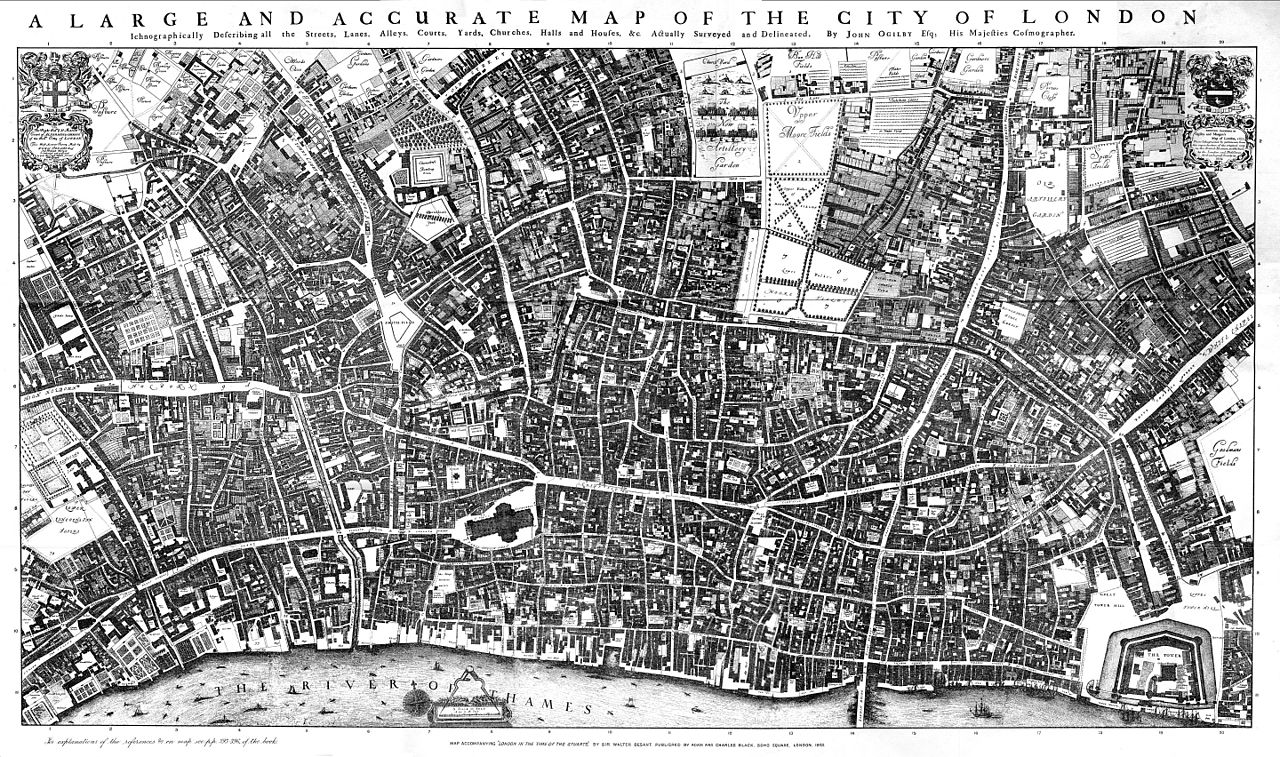
Consider, for example, that the tenfold increase [in the population of London] was in the period before the expropriative parliamentary enclosures of Marxist legend, when state fiat was used to deny smaller farmers their ancient, customary rights to use the land near their villages. While the very first of these enclosure acts appeared as early as 1604, parliamentary enclosure only really got going from the mid-eighteenth century. Instead, for the period in question, enclosure happened in a piecemeal way, with the open fields gradually dissolving as farmers exchanged or sold their tiny strips of land, over time amalgamating them into larger, privately controlled plots. With ownership concentrated in fewer and fewer hands, it became relatively easy to gain the unanimity needed to suspend common rights. The process played out in myriad ways all over the country, sometimes with amicable agreement and voluntary exchange, sometimes with ruthless monopolising of the land, with the already-large owners systematically buying out their neighbours. In some cases it involved the consolidation of existing arable land, in others it meant the conversion of forest, heath, marsh, or fen — the traditional “wastes”, to which the poorer villagers might have had various customary rights to gather firewood for fuel, or to graze their cattle, or to hunt for small game — into land that could be used for farming or pasture.
How this process played out all depended on extremely specific, local conditions. But on the whole it was slow — piecemeal enclosure had been happening to varying degrees since at least the fourteenth century. It’s hard to see how such a sporadic and piecemeal process could have led to such consistently and increasingly massive numbers flocking specifically to London. Indeed, the fact that they singled out London as their target suggests that this narrative might have it back-to-front. Some economic historians argue that it was the prospect of higher wages in the ever-growing metropolis that induced farmers to leave the countryside in the first place, selling up or abandoning their plots to those they left behind. Rather than enclosure pushing peasants off the land and into the city, London’s specific pull may instead have thus created the vacuum that allowed the remaining farmers to bring about enclosure. Otherwise, why didn’t the peasants simply flock to any old urban centre? The second-tier cities like Norwich or Bristol or Exeter or Coventry or York would all have been far less dangerous.
Anton Howes, “London the Great”, Age of Invention, 2020-10-20.
January 20, 2021
Tank Chats #92 | Challenger 2: Part 1 | The Tank Museum
The Tank Museum
Published 20 Dec 2019Part 1 of a two-part episode on Challenger 2. As David Willey had so much to say about this British in-service vehicle, it has been split into two parts. This first part looks at the design and development of Challenger 2. With thanks to the British Army for their assistance.
Challenger 1 video: https://www.youtube.com/watch?v=Lwcx7…
Support the work of The Tank Museum on Patreon: ► https://www.patreon.com/tankmuseum
Visit The Tank Museum SHOP: ►tankmuseumshop.org
Twitter: ► https://twitter.com/TankMuseum
Instagram: ► https://www.instagram.com/tankmuseum/
Tiger Tank Blog: ► http://blog.tiger-tank.com/
Tank 100 First World War Centenary Blog: ► http://tank100.com/
#tankmuseum #tanks
January 19, 2021
QotD: British foods
… it is worth listing the foodstuffs, natural or prepared, which are especially good in Britain and which any foreign visitor should make sure of sampling.
First of all, British apples, one or other variety of which is obtainable for about seven months of the year. Nearly all British fruits and vegetables have a good natural flavour, but the apples are outstanding. The best are those that ripen late, from September onwards, and one should not be put off by the feat that most British varieties are dull in colour and irregular in size. The best are the Cox’s Orange pippin, the Blenheim Orange, the Charles Hoss, the James Grieve and the Russet. These are all eaten raw. The Bramley Seedling is a superlative cooking apple.
Secondly, salt fish, especially kippers and Scottish haddocks. Thirdly, oysters – very large and good, though artificially expensive. Fourthly, biscuits, both sweetened and unsweetened, especially those that come from the four or five great firms whose names are a trademark. Fifthly, jams and jellies of all kinds. These are usually best when home-made, with the exception of strawberry jam, which is nearly always better as a manufactured product. Some varieties not often seen outside Britain are blackcurrant jelly, bramble jelly (made of blackberries) marrow jam with ginger, and damson cheese, an especially stiff kind of jelly which can be cut in slabs. In addition, no one who has not sampled Devonshire cream, Stilton cheese, crumpets, potato cakes, saffron buns, Dublin prawns, apple dumplings, pickled walnuts, steak-and-kidney pudding and, of course, roast sirloin of beef with Yorkshire pudding, roast potatoes and horseradish sauce, can be said to have given British cookery a fair trial.
The only alcoholic drinks which are native to Britain, and are all widely drunk, are beer, cider and whiskey. The cider is fairly good (that brewed in Herefordshire is the best), the beer very good. It is somewhat more alcoholic and very much bitterer then the beers of most other countries, all save the mildest and cheapest kinds being strongly flavoured with hop. Its flavour varies greatly from one part of the country to another. The whiskey exported from Britain is mostly Scottish, but the Irish kind, which is sweeter in taste and contains more rye, is also popular in Britain itself. One excellent liquor, sloe gin, is widely made in Britain, though not often exported. It is always better when home-made. It is of a beautiful purplish-red colour, and rather resembles cherry brandy, but is of a more delicate flavour.
Finally, a word in praise of British bread. In general it is close-grained, rather sweet-flavoured bread, which remains good for three or four days after being baked. It is seen at its best in the kind of double loaf. Rye bread and barley bread are hardly eaten in Britain, but the wholemeal wheat bread is extremely good. The great virtue of British bread is that it is baked in small batches, in a rather primitive way, and therefore is not at all standardised. The bread from one baker may be quite different from another down the street, and one can range about from shop to shop until one is suited. It is a good general rule that small, old-fashioned shops make the best-flavoured bread. Throughout a great deal of the North of England the women prefer to bake their bread for themselves.
George Orwell, “British Cookery”, 1946. (Originally commissioned by the British Council, but refused by them and later published in abbreviated form.)
January 17, 2021
Hector Drummond on Boris “Cane-Toad” Johnson
As a teaser to attract new subscribers to his Patron and SubscribeStar pages, Hector Drummond shared this piece on the ecological disaster of Australia’s 1930s cane-toad importation and the similar political disaster of Boris Johnson in Britain:
In the 1930s Queensland farmers were facing trouble with large numbers of cane beetles eating the sugar crops that were an important part of the state’s economy. So the Bureau of Sugar Experiment Stations came up with a cunning plan. They would import some cane toads (a native of middle and south America), because cane toads ate cane beetles. This was sure to solve the problem in a trice. One-hundred and two cane toads were duly imported into the state, from Hawaii as it happened, to do the job.
Unfortunately this soon became a classic case of the cure being worse than the disease. In fact it wasn’t any cure at all because the cane toads didn’t bother much with the cane beetles, and instead ate everything else they could wrap their tongues around. The other thing they did was multiply at an explosive rate. These days there are estimated to be 200 million cane toads in Australia, mainly in Queensland, and they cause havoc with the native fauna, not least because they have nasty poison-producing glands on the back of their head which the native animals have no naturally-evolved defence against. Curious pet dogs who mess about with a toad can die.
In 2019 Britain was facing its own crisis. It had become obvious to half the country that Theresa May’s Conservative government was deliberately trying to prevent Brexit from happening. As the other parties were even worse, the only hope for a real Brexit to take place was if a new pro-Brexit leadership in the Conservative party could be installed. After a titanic struggle, this finally happened, and Alexander “Boris” Johnson became the new leader, with Michael Gove and advisor Dominic Cummings at his side.
Unfortunately Johnson has proven to be Britain’s own version of the cane toad, a cure that is vastly worse than the disease. Johnson, at least, proved to be more able than his Australian counterpart at doing the job that was required of him. Whereas the Australian toad was about as interested in cane beetles as Olly Robbins was in getting the UK out of the EU, Johnson at least gave us a middling type of Brexit which, as fudged as it was, was at least far better than anything any of his fellow MPs could have got.
But in terms of being worse than the disease, Cane-Toad Johnson has proven to be far, far more destructive than the cane toad ever was. The cane toad, after all, is merely an ecological pest, whereas Johnson has proved to be a dangerous menace to the country’s liberty, prosperity and health. The poison from his glands has leached into our very life. We have become like domestic dogs who have been forced to lick them every day.
January 16, 2021
Howard Anglin reviews The Riotous Passions of Robbie Burns
The Line now apparently also does book reviews:
I don’t know what I was expecting before I picked up John Ivison’s new book, The Riotous Passions of Robbie Burns, but it was not this. In my head, I’d already started composing the end of my review. Something round and pat and full of holiday hygge like: “So light the fire, pour yourself a dram of Annandale whisky, and enjoy …” Because Ivison grew up in Dumfries, where Burns spent the last years of his life, I suppose I expected a more personal narrative, not a work of historical fiction. One expects fiction from political journalists in their day jobs, not in a labour of love composed off the clock.
What I really expected was more of Burns’ poetry — the source of his enduring fame, after all — and less of his person, which was the source of his contemporary infamy. Instead, Ivison gives us something more interesting and unusual: the poetry of Burns’ non-poetic speech. Ivison has taken snippets, and sometimes cribbed whole paragraphs from, Burns’s copious surviving correspondence and woven them into dialogue that carries the story of the poet’s stay in Edinburgh between 1786 and 1788. By putting Burns’ actual words into his mouth, even if sometimes out of context, Ivison gives the reader a direct and plausible impression of Burns the man. We hear verbatim both the coarse tavern wit and the elemental passion that spilled into his prolific verse — sometimes into unprintable doggerel (literally: his poems later collected as The Merry Muses of Caledonia were banned as obscene in the U.K. until 1965), sometimes into achingly beautiful verses like “Flow gently, sweet Afton” or “Ae Fond Kiss.”
Ivison’s book sets us in Edinburgh at a time when, as he writes, “it was said if you stood at the Mercat Cross with a pistol, you could hit 50 geniuses, 50 bankers, 50 lawyers and 50 rogues at any given hour” (no doubt allowing for some overlap between latter two categories). Our narrator and guide is the newly-arrived and impressionable young lawyer’s apprentice, John Bruce, a composite and Zelig-like stand in for many young men of the poet’s acquaintance. (The only record of Burns meeting a John Bruce that I can find was a Rev. John Bruce, Minister of the Highland town of Forfar, whom the poet found “pleasant, agreeable and engaging.”) Through Burns, Bruce and the reader are introduced to the ways of women, drink, the printing business, drink, aristocratic libertinism, and a little more drink.
The two main plots, such as they are, link Bruce and Burns to the notorious escapades of Deacon Brodie, whom Burns met in real life, and to the poet’s long, futile, but apparently sincere courtship of the unhappily-married Agnes (sometimes Nancy) Maclehose. The real life letters between Burns and Maclehose, written under the pseudonyms “Sylvander” and “Clarinda,” make for moving reading and, in this telling, for surprisingly convincing dialogue between Burns and Maclehose and between Burns and Bruce. The text is especially affecting when the poet is in the grip of what he called his “low spirits & blue devils” and his usually florid speech turns fatalistic, brooding, and palpably human.
But the plots are not the point of this charming book; they are frames on which to hang Burns’s words and excuses to showcase Edinburgh as it was coming of age as an intellectual and commercial capital, with all the growing pains that entailed. Filling the city with historical characters, Ivison shows us the city as Burns found it, its population bursting out of the overbuilt medieval closes and wynds that lined the Royal Mile running down the hill from the castle and spreading across the North Bridge to New Town and down to the sea port at Leith.
January 15, 2021
The Lady Juliana | The 18th-Century All-Women Prison Ship
Weird History
Published 13 Nov 2019A tale as wild as the Seven Seas, the story of the Lady Juliana, a special convict ship full of prisoners sent to Australia, is one of the strangest in the continent’s history. The Lady Juliana had a specific mission: carrying a cargo of female prisoners the British government hoped would help reform the struggling convict colony in New South Wales. This motley crew of British women ultimately had a lasting impact on the history of Australia.
#prisonship #australia #weirdhistory
January 12, 2021
Tank Chats #91 | Centurion Conway | The Tank Museum
The Tank Museum
Published 13 Dec 2019Here David Fletcher examines a prototype variant of the Centurion – the Conway, fitted with the American 120mm gun.
Support the work of The Tank Museum on Patreon: ► https://www.patreon.com/tankmuseum
Visit The Tank Museum SHOP: ►tankmuseumshop.org
Twitter: ► https://twitter.com/TankMuseum
Instagram: ► https://www.instagram.com/tankmuseum/
Tiger Tank Blog: ► http://blog.tiger-tank.com/
Tank 100 First World War Centenary Blog: ► http://tank100.com/
#tankmuseum #tanks
January 10, 2021
Washington DC Abandons The Troops in the Field – WW2 – 124 – January 9, 1942
World War Two
Published 9 Jan 2021The US government realizes that it cannot send help to relieve the US and Filipino forces in the Philippines, but it does not tell those forces. Meanwhile in the USSR, a huge Red Army offensive against entrenched German forces begins along the entire frontline. The Germans have pulled back in North Africa, though, to consolidate. The Japanese enter Manila and advance in Malaya, but are forced to withdraw in China.
Join us on Patreon: https://www.patreon.com/TimeGhostHistory
Or join The TimeGhost Army directly at: https://timeghost.tvFollow WW2 day by day on Instagram @ww2_day_by_day – https://www.instagram.com/ww2_day_by_day
Between 2 Wars: https://www.youtube.com/playlist?list…
Source list: http://bit.ly/WW2sourcesWritten and Hosted by: Indy Neidell
Director: Astrid Deinhard
Producers: Astrid Deinhard and Spartacus Olsson
Executive Producers: Astrid Deinhard, Indy Neidell, Spartacus Olsson, Bodo Rittenauer
Creative Producer: Maria Kyhle
Post-Production Director: Wieke Kapteijns
Research by: Indy Neidell
Edited by: Iryna Dulka
Sound design: Marek Kamiński
Map animations: Eastory (https://www.youtube.com/c/eastory)Colorizations by:
– Julius Jääskeläinen – https://www.facebook.com/JJcolorization/
– Jaris Almazani (Artistic Man) – https://instagram.com/artistic.man?ig…
– Carlos Ortega Pereira, BlauColorizations – https://www.instagram.com/blaucolorizations
– Norman Stewart – https://oldtimesincolor.blogspot.com/
– Michał UchmanSources:
– IWM FE 239
– Supermarine Spitfire By Joel Wisneski from the Noun Project
– Container by Shocho from the Noun ProjectMusic from Epidemic Sound:
– “Easy Target” – Rannar Sillard
– “Deflection” – Reynard Seidel
– “Growing Doubt” – Wendel Scherer
– “Secret Cargo” – Craft Case
– “Trapped in a Maze” – Philip Ayers
– “Not Safe Yet” – Gunnar Johnsen
– “Underlying Truth” – Howard Harper-Barnes
– “Spellbound” – Edward Karl Hanson
– “On the Edge of Change” – Brightarm Orchestra
– “Split Decision” – Rannar Sillard
– “Out the Window” – Wendel SchererArchive by Screenocean/Reuters https://www.screenocean.com.
A TimeGhost chronological documentary produced by OnLion Entertainment GmbH.
January 6, 2021
January 5, 2021
Tank Chats #89 | Universal Carrier | The Tank Museum
The Tank Museum
Published 22 Nov 2019David Fletcher takes a look at the Second World War Universal Carrier, a light tracked armoured vehicle and the most produced armoured fighting vehicle of WW2.
Support the work of The Tank Museum on Patreon: ► https://www.patreon.com/tankmuseum
Visit The Tank Museum SHOP: ►tankmuseumshop.org
Twitter: ► https://twitter.com/TankMuseum
Instagram: ► https://www.instagram.com/tankmuseum/
Tiger Tank Blog: ► http://blog.tiger-tank.com/
Tank 100 First World War Centenary Blog: ► http://tank100.com/
#tankmuseum #tanks
January 3, 2021
The Formation of the United Nations! – WW2 – 123 – January 2, 1942
World War Two
Published 2 Jan 2021At the ongoing Arcadia Conference, 26 nations sign the Declaration of the United Nations. Otherwise it is very much a week of motion and changes in motion: in the USSR the Soviets are on the move in the center and the Crimea, the Japanese are slowing their movement in China, the Americans are finishing their movement in the Philippines, and the Axis are moving backward in North Africa. The Luftwaffe also decides that Malta must be eliminated as a base for the Allies.
Join us on Patreon: https://www.patreon.com/TimeGhostHistory
Or join The TimeGhost Army directly at: https://timeghost.tvFollow WW2 day by day on Instagram @ww2_day_by_day – https://www.instagram.com/ww2_day_by_day
Between 2 Wars: https://www.youtube.com/playlist?list…
Source list: http://bit.ly/WW2sourcesWritten and Hosted by: Indy Neidell
Director: Astrid Deinhard
Producers: Astrid Deinhard and Spartacus Olsson
Executive Producers: Astrid Deinhard, Indy Neidell, Spartacus Olsson, Bodo Rittenauer
Creative Producer: Maria Kyhle
Post-Production Director: Wieke Kapteijns
Research by: Indy Neidell
Edited by: Iryna Dulka
Sound design: Marek Kamiński
Map animations: Eastory (https://www.youtube.com/c/eastory)Colorizations by:
– Julius Jääskeläinen – https://www.facebook.com/JJcolorization/
– Mikolaj UchmanSources:
– Election1960 from Wikimedia
– Battleship by Anand Prahlad from the Noun Project
– Supermarine Spitfire by Joel Wisneski from the Noun Project
– Afrrs from Wikimedia
– National Portrait Gallery
– BundesarchivArchive by Screenocean/Reuters https://www.screenocean.com.
A TimeGhost chronological documentary produced by OnLion Entertainment GmbH.