
The thing I always hated hearing from my grandfather was how modern music was terrible and not fit for civilized people. He was a man of his age and class, so he used colorful euphemisms to describe popular music. Even as a kid, I understood that every generation has their soundtrack. Maybe never having known anything but a world where pop culture dominated, this came naturally to me, while my grandfather still recalled an age before everyone had a radio and television. Maybe he knew things I couldn’t know.
Either way, I’ve always just assumed that once I passed my mid-20’s, pop music was no longer for me. Some stuff would be appealing, but most would be aimed at kids and strike me as simplistic and repetitive. There were some good bands in the 90’s that I liked, but most of it was not my thing. By the 2000’s, I was unable to name popular groups or the songs at the top of the charts. Today, I have not heard a single note from any song on the current top-40. On the other hand, I’m sure I’ve heard some version of all of it.
That may be why music sales have collapsed. A 15-year old can go on YouTube or Spotify and find fifty versions of the current pop hits, going back before their parents were born. They can also find stuff from previous eras that was remarkably well done and performed by people with real talent. Justin Timberlake may be very talented as a singer, but no one is confusing him with Frank Sinatra. It’s simply a lot easier for young people to see that pop music is just manufactured pap from Acme Global Corp.
“The Z Man”, “The Soundtrack Of This Age”, The Z Blog, 2018-03-15.
July 3, 2020
QotD: Pop music
July 1, 2020
British Railways: Goodbye To Steam aka Railway Modernisation (1958) | British Pathé
British Pathé
Published 13 Apr 2014This archive footage from 1958 depicts British Railways’ journey to modernisation and the transition away from steam-powered trains.
For Archive Licensing Enquiries Visit: https://goo.gl/W4hZBv
#BritishPathé #History #Railway #Trains #BritishRailways
(FILM ID:1549.07)
Full title reads: “Goodbye To Steam”Intertitle reads: “British Railways meet the challenge of the age of abundant power”
Angle shot, railway engine going past camera. GV Outside one of the large London Railway stations showing railway lines and train coming out of station. CU Man in signal box, pan to show him pulling levers. CU Signal going up. GV Train coming towards camera. GV Steam train. GV Aerial shots steam train. CU Man filming from plane. CU man in plane fitting equipment and then giving thumb’s up sign. GV Aerial shot, railway lines. CU Man filming from plane. Steam train going along line. SV Draughtsmen in office. CU Men looking through magnifier at a plan. CU Magnified picture of plan, zoom to show Railway chiefs seated round table with plan, among them is Sir Philip Warter. SV Elevated, railway chiefs looking at plan. CU One of the railway executives. SV Man with model of section of railway line which he places on the table and the railway executives study it. CU Sign reading “Kent Coast Electrification Widening to Provide Four Tracks”, pan to show railway line with only two tracks. GV Kent Coast line with men on bridge. SV Bridge with surveyor. CU Surveyor looking through theodolite. GV Tracking shot of men working. GV Men working at side of railway line with clouds of smoke coming from wood. CU New diesel engine. CU Sir Brian Robertson talking to train driver. CU People watching. CU Sir Brian Robertson blowing whistle. CU Int. diesel engine with driver operating controls. SV Diesel train moving out of station. CU Driver of diesel train. CU. Sir Brian Robertson sitting in carriage. LV Through window of diesel cab as train enters tunnel. SV Three engines on lines. CU Front of one of the engines with plate reading “Cornish Riviera Express”. CU Driver. SV Cornish Riviera Express in station. SV Woman taking in washing because smoke is billowing up from railway lines beside her garden. GV Cornish Riviera Express coming towards camera.
CU Front of steam train “The Bristolian”. SV along top of engine as blows off steam. CU Hand pulling chain. CU valve. GV Platform. CU shovelling coal. GV As train goes along. CU Driver of train. CU Driver. CU Fireman. CU Fire with coal being shovelled. SV Looking over coal tender. SV From driver’s cab of train going under bridge and out the other side. CU Driver. GV From driver’s cab of railway lines with another steam train. SV Int. class for instruction of diesel engine drivers. CU Lecturer talks about metal object. CU Men looking at machinery. SV Royal Scot in station. CU Driver of Royal Scot. GV Activities on platform in which Royal Scot is standing. GV Royal Scot leaving station. GV Building with sign, “English Electric Co. Ltd. Preston”. GV Int. of workshop showing men working on armatures. GV Ext. of building with “Vulcan Locomotives” painted on wall. GV Int. of workshop showing men working on railway engines. CU Man working inside railway engine. GV Workshop. SV Diesel train in station. CU Driver of diesel. GV railway lines in front of train as it moves along. SV Int. dining car in diesel train with attendant pouring coffee. GV Looking through cab window of railway lines in front of train as it goes under bridge and straight past station. CU Glass panel in door with “York Signal Box, Strictly Private”, door opens. SV Man sitting at control panel of box, he reaches over to controls. CU Man’s hands working controls. CU Plan on wall showing different lines and points. CU Hand pushing buttons. CU Signals. CU Point on lines. GV Steam train along lines. CU Train in museum. CU Compartment of old train. SV Ancient train “Locomotion 1828”. SV Diesel Locomotive. CU “Deltic” written on side. GV Deltic. GV Train in station. Various shots in Deltic carriage. SV Coal trucks. SV Railway worker attaching pipe to train. GV Calder Hall Nuclear / Atomic Power station. GV Electrical pylons and cables. GV Diesel train “Sir Brian Robertson” in platform with crowds. GV Crowds. SV “Sir Brian Robertson” unveiled by Mr Grand, General Manager of the Western Region of British Railways. SV Crowd. SV Sir Brian Robertson by train. CU Sign “Sir Brian Robertson”. GV The “Sir Brian Robertson” leaving Paddington Station. SV Steam train letting out smoke. CU Signals. GV Steam train. CU Train over the points. GV steam train leaving clouds of smoke.
BRITISH PATHÉ’S STORY
Before television, people came to movie theatres to watch the news. British Pathé was at the forefront of cinematic journalism, blending information with entertainment.

June 30, 2020
In the final analysis, there is only one taxpayer – you
Ted Campbell comes out in favour of some form of negative income tax for Canada:
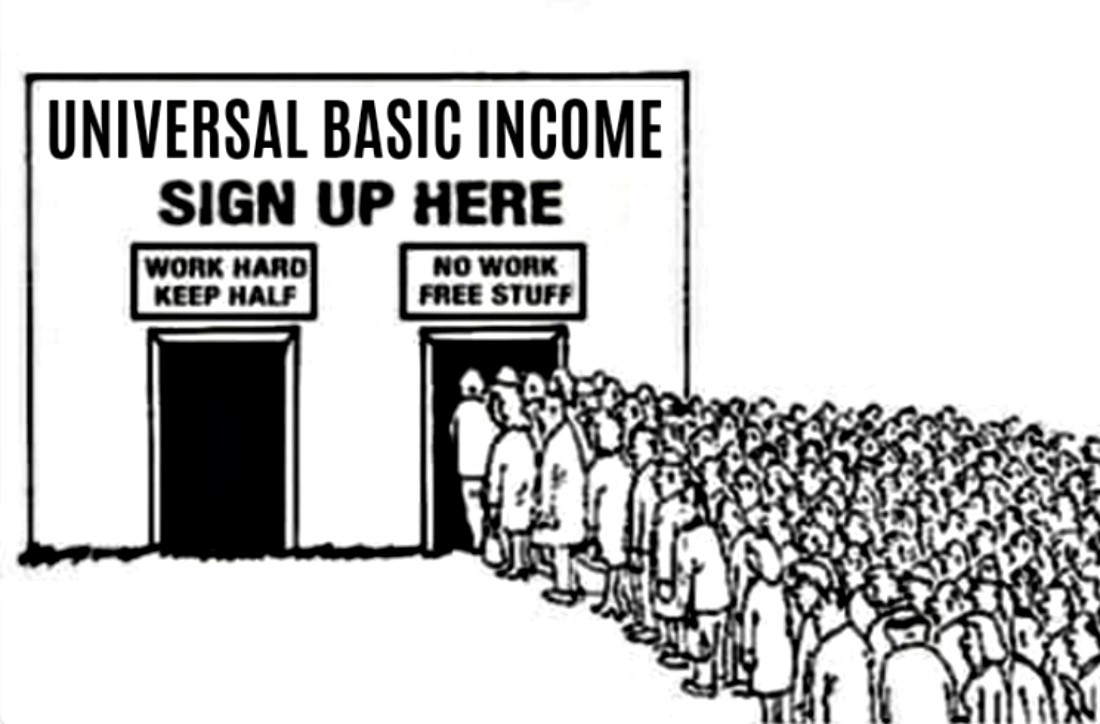
Cartoon that appeared with Michael K. Spencer’s article “Is Universal Basic Income really a solution?” at https://medium.com/@Michael_Spencer/is-universal-basic-income-really-a-solution-c0d6d95f100e
My first and, I believe, the most important thing to understand about taxes is: there is only one taxpayer; it is you and me and individuals like us. Corporations do not pay taxes ~ they pass every single penny of the taxes assessed to them on to us, their customers. You and I and your and my family and friends pay 100% of all corporate taxes.
A tax on income is a tax on savings which is, in turn, a tax on investment which means it is a tax on jobs.
Flate rate taxes are unfair to the poor, but progressive income taxes, while fairer, take money away from investment in jobs.
Consumption taxes (sales taxes and the HST/GST) are, to some extent, voluntary: consume less and you pay less in taxes. Where consumption is not discretionary ~ say on food ~ the tax system may be used to make consumption taxes at least somewhat progressive.
Corporate taxes ~ ALL corporate taxes ~ are just consumption taxes that are collected in an inefficient and expensive manner. It would be much, much better tax policy to raise the federal GST by 1 or 2 points and cancel ALL corporate taxes. Having a zero federal corporate tax rate would make Canada a much, much more attractive place in which to do business; companies would want to open plants and offices here ~ meaning more, new, good jobs for Canadians.
Income taxes have far too many exceptions and exemptions and deductions and so on. Federal income taxes should be clear and simple and the Canada Revenue Agency should be able to automatically provide a tax bill to about 98% of Canadians. That may mean a thorough (and time-consuming and politically unpopular) overhaul of the complete tax system.

June 28, 2020
Why is the British government buying part of OneWeb?
As Tim Worstall points out, the British government’s decision to buy 20% of the satellite company OneWeb doesn’t actually make any economic sense:

… OneWeb – in which the UK will own a 20% stake following the investment – currently operates a completely different type of satellite network from that typically used to run such navigation systems.
“The fundamental starting point is, yes, we’ve bought the wrong satellites,” said Dr Bleddyn Bowen, a space policy expert at the University of Leicester. “OneWeb is working on basically the same idea as Elon Musk’s Starlink: a mega-constellation of satellites in low Earth orbit, which are used to connect people on the ground to the internet.
The actual answer is that we don’t need to buy into anyone’s system at all. Just as we shouldn’t have into [EU satellite system] Galileo in the first place.
For, d’ye see, GPS is a public good. The US allows anyone to use the signals. Not that they can really stop people doing so either. Not unless they take the whole system down.
So, there’s the US system, free for all to use. A global public good – this means it doesn’t matter who provides it, it is there. It also means we don’t need our own. Which, in turn, means we don’t and didn’t need the Galileo system, let alone another one after we’ve left that.
As I said, politics not even asking the right question. They’re asking “which new system should we have?” when the correct questions is “why do we need a new system?” and given that the answer to the second is we don’t therefore the first is entirely moot.
Even setting aside the question of what the satellite system will be capable of, as the market is already in the process of developing and deploying the equipment, why does the British government think its investment is necessary?
June 27, 2020
QotD: The cost of military equipment
So why does this cause so much confusion? Well, it all has to do with what gets reported. Someone who is trying to make the case that some program is outrageously expensive and should be cancelled is going to lump together development and procurement, divide by the number of systems involved, and then publish the resulting number. But, particularly when we’re discussing the cost of a system about to enter production, that’s very different from the actual numbers. To give a well-known example, the B-2 is generally reputed to have cost about $2 billion/plane in the 90s. However, this is the total program cost divided by the 21 airframes. If we’d decided to buy 22 B-2s instead of the 21 we did buy, the extra plane would have cost only $700 million or so. Admittedly, the B-2 is a rather extreme case, and usually the share of R&D cost is less than the procurement (flyaway) cost, but it’s illustrative of the power of this kind of framing.
“bean”, “Military Procurement – Pricing”, Naval Gazing, 2018-03-09.
June 26, 2020
Progressive hate for nuclear power
In Quillette, Michael Shellenberger discusses the demands of some climate activists who also reject the best solutions to the problems they foresee:
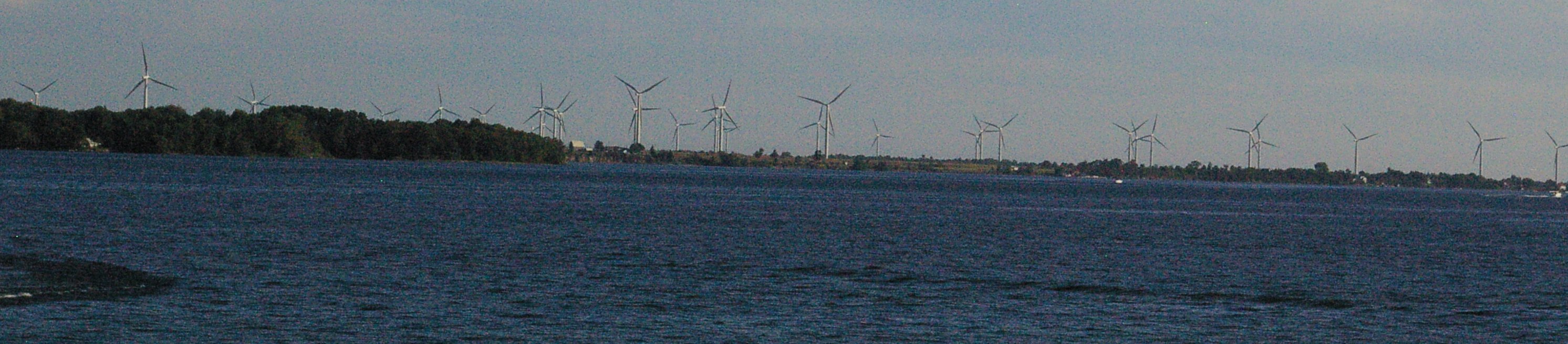
For the last decade I have been obsessed with a question: Why are the people who are the most alarmist about environmental issues also opposed to all of the obvious solutions?
Those who raise the alarm about food shortages oppose expanding the use of chemical fertilizers, tractors, and GMOs. Those who raise the alarm about Amazon deforestation promote policies that fragment the forest. And those who raise the alarm about climate change oppose nuclear energy, the largest source of zero-emissions energy in developed nations. Why is that?
It is not an academic question for me. I have been a climate activist for 20 years and an energy expert for 10 of them. I was adamantly against nuclear energy until about a decade ago when it became clear renewables couldn’t replace fossil fuels. After educating myself about the facts, I came to support the technology.
Over the last five years, I have campaigned, as founder and president of my small and independent nonprofit research organization, Environmental Progress, to expand the use of nuclear energy. During that time our main opponents have not been climate skeptics or even the fossil fuel industry but rather other climate activists.
This is the case around the world. It is climate alarmist Democrats and Greens who are seeking to shut down nuclear plants in the US and Europe. Greta Thunberg last year condemned the technology as “extremely dangerous, expensive, & time-consuming,” which is false. And Green New Deal architect Rep. Alexandria Ocasio-Cortez (AOC) has advocated closing the Indian Point nuclear plant in New York, which is now being replaced with natural gas.
In nearly every situation around the world, support for nuclear energy from climate activists like Thunberg and AOC would make the difference between nuclear plants staying open or closing, and being built or not being built. Had Thunberg spoken out in defense of nuclear power she likely could have prevented two reactors in her home nation of Sweden from being closed. Had AOC advocated for Indian Point rather than condemned it as dangerous, it could likely keep operating, for at least 40 years longer.
That’s because the main problem facing nuclear energy is that it’s unpopular — and far more among progressives than conservatives, and far more among women than men. There are no good technical or economic reasons that nations from the US and Japan to Sweden and Germany are closing their nuclear plants. Center-left governments are closing them early in response to the demands of progressives and Greens — the very same people who are claiming climate change will kill billions of people.
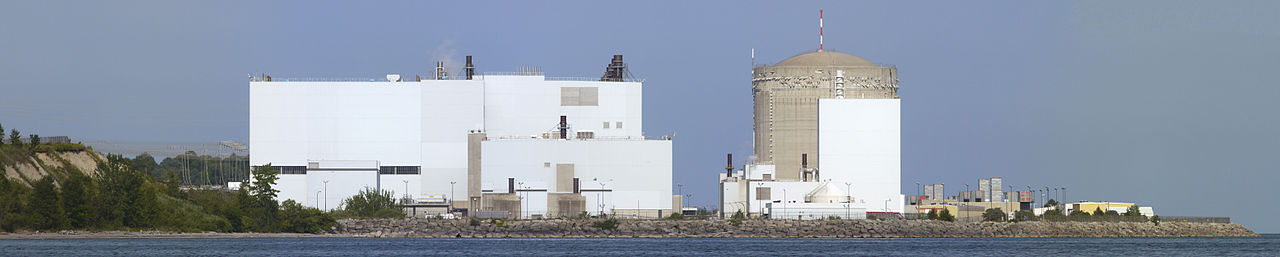
Darlington Nuclear Generating Station in Clarington, Ontario.
Photo by Óðinn via Wikimedia Commons.
Some prominent environmental groups have a pecuniary interest in replacing existing nuclear generating stations with natural gas and “renewable” energy sources, but money isn’t the only reason for the widespread opposition to nuclear power:
Sierra Club, NRDC, and EDF have worked to shut down nuclear plants and replace them with fossil fuels and a smattering of renewables since the 1970s. They have created detailed reports for policymakers, journalists, and the public purporting to show that neither nuclear plants nor fossil fuels are needed to meet electricity demand, thanks to energy efficiency and renewables. And yet, as we have seen, almost everywhere nuclear plants are closed, or not built, fossil fuels are burned instead.
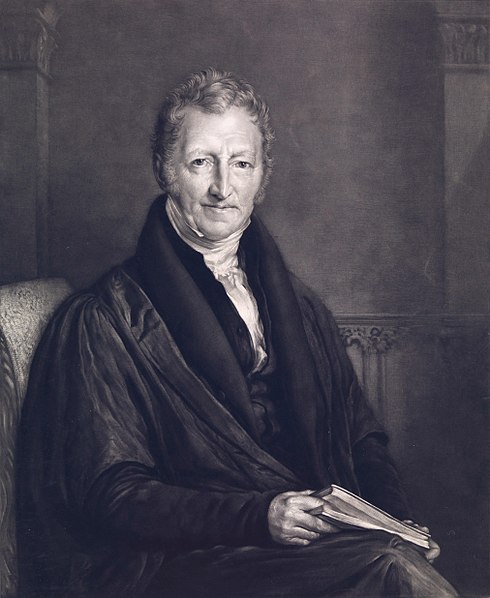
Thomas Malthus.
Portrait by John Linnell, 1834, via Wikimedia CommonsBut it’s not just about money. It’s also about ideology. Anti-nuclear groups have long had a deeply ideological motivation to kill off nuclear energy.
Policymakers, journalists, conservationists, and other educated elites in the ’50s and ’60s knew that nuclear was unlimited energy and that unlimited energy meant unlimited food and water.
We could use desalination to convert ocean water into freshwater. We could create fertilizer without fossil fuels, by harvesting nitrogen from the air, and hydrogen from water, and combining them. We could create transportation fuels without fossil fuels, by taking carbon dioxide out of the atmosphere to make artificial hydrocarbons, or by splitting water to make pure hydrogen gas.
Nuclear energy thus created a serious problem for Malthusians — followers of widely-debunked 18th-century economist, Thomas Robert Malthus — who argued that the world was on the brink of ecological collapse and resource scarcity. Nuclear energy not only meant infinite fertilizer, freshwater, and food but also zero pollution and a radically reduced environmental footprint.
In reaction, Malthusians attacked nuclear energy as dangerous, mostly by suggesting that it would lead to nuclear war, but also by spreading misinformation about nuclear “waste” — the tiny quantity of used fuel rods — and the rapidly decaying radiation that escapes from nuclear plants during their worst accidents.
There is a pattern: Malthusians raise the alarm about resource depletion or environmental problems and then attack the obvious technical solutions. In the late 1700s, Thomas Malthus had to reject birth control to predict overpopulation. In the 1960s, Malthusians had to claim fossil fuels were scarce to oppose the extension of fertilizers and industrial agriculture to poor nations and to raise the alarm over famine. And today, climate activists reject nuclear energy in order to declare a coming climate apocalypse.
June 25, 2020
Capitalism and slavery
In Quillette, Matthew Lesh explains why glib claims that slavery was somehow “essential” to early capitalism or that slavery was the cause of western wealth just don’t hold up to any historical scrutiny:
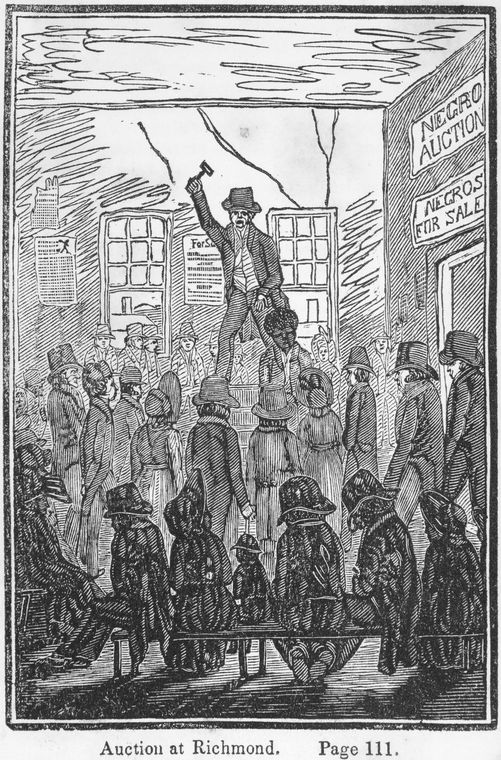
Auction at Richmond. (1834)
“Five hundred thousand strokes for freedom; a series of anti-slavery tracts, of which half a million are now first issued by the friends of the Negro” by Wilson Armistead and “Picture of slavery in the United States of America” by George Bourne.
New York Public Library via Wikimedia Commons.
It has become a common trope that slavery and the slave trade is responsible for the industrial revolution, if not our entire modern prosperity. Slavery is often called capitalism’s “dark side.” A recent column in the Guardian claimed the slave trade “heralded the age of capitalism” and Guardian columnist George Monbiot said on Twitter: “The more we discover about our own history, the less the ‘trade’ on which Britain built its wealth looks like exchange, and the more it looks like looting. It meant extracting stolen resources and the products of slavery, debt bondage and land theft from other nations.” The same line has been taken by London Mayor Sadiq Khan, who tweeted: “It’s a sad truth that much of our wealth was derived from the slave trade.”
But what did the “father of modern economics,” Adam Smith, actually think about slavery? And is it responsible for our modern prosperity?
Adam Smith argued not only that slavery was morally reprehensible, but that it causes economic self-harm. He provided economic and moral ammunition for the abolitionist movement that came to fruition after his death in 1790. Smith was pessimistic about the potential for full abolition, but he was on the side of the angels.
Smith’s The Wealth of Nations, published in 1776, contains perhaps the best known economic critique of slavery. Smith argued that free individuals work harder and invest in the improvement of land, motivated by their interest in earning a higher income, than slaves. Smith refers to ancient Italy, where the cultivation of corn degraded under slavery. The cost of slavery is “in the end the dearest of any,” Smith writes.
His thinking about slavery can be traced further back. In the Lectures on Justice, Police, Revenue and Arms, delivered in 1763 long before Britain’s abolitionist movement was formalised, Smith writes:
Slaves cultivate only for themselves; the surplus goes to the master, and therefore they are careless about cultivating the ground to the best advantage. A free man keeps as his own whatever is above his rent, and therefore has a motive to industry.
Smith describes how serfs in Western Europe — in feudal relationships with lords — were progressively transformed into free tenants as they acquired cattle and tools. Harvests were more evenly divided between landlord and tenant to encourage better use of land, and tenants eventually progressed to simply giving the landlord a sum for lease. As government became more established, the influence of lords over the lives of tenants was also loosened.
Capitalism was, as Marx described, the next stage in human development after feudal slave relations. Smith’s commercial society is in direct opposition to a slave society. Smith, at his core, is an advocate for individuals being free to specialize and trade, including to trade their labor. Everyone acting with regard to their “own interest,” not because of coercion, creates general prosperity.
Smith’s case against slavery is proven by history: The huge uptick in human prosperity came largely after the end of feudal relations and the abolition of slavery and the slave trade. We are many magnitudes richer than when lords held slaves, or even chattel slavery proliferated in the Americas. The setting free of humanity led to extraordinary innovation and entrepreneurialism. This is only possible, as Smith argued, when individuals can benefit from the fruits of their own labor (slaves cannot hold property in their own name, and hence cannot trade or choose to specialise).
We didn’t become rich because a few hundred years ago people toiled on farms in awful conditions. In fact, the opposite. “It was precisely the replacement of human muscle power with that of steam and machines which did away with the vileness of chattel slavery and forced labor,” Tim Worstall has explained.
June 19, 2020
The economy isn’t all huge corporations and government
Paul Sellers reminds us that the economy is far more than just the big names that get mentioned in the financial pages:

An example of the kind of one-man businesses Paul is talking about.
Independents in micro-businesses are few and far between and often hard to discover, despite the internet’s ever-increasing web of enterprises. The backbone of British industry is made up of small, independent people striving to retain a measure of individualism, independence and entrepreneurialism in their lives. Statistics from 2019 show that in Britain there were 5.82 million small businesses responsible for 99.3% of the total business output in the UK.
Small businesses here comprise those with 0-49 employees and digging deeper still into what might at first seem more irrelevant than relevant is that the niche that small businesses fill in the real world of enterprise. Over 76% of businesses are operated by one-man bands; single-person enterprises who operate alone comprise almost 4.5 million men and women. With an additional 1.15 million micro-business (1-9 employees) around 95% of businesses here operate on a strength of under just 10 people. So over 99% of small to medium business enterprises, that’s zero to 249 employees, but only 0.6% have a workforce of 50-249 employees. Less than 4% are small businesses with 10-49 staff members and get this, over 95% operate as micro-businesses with 0-9 employees. What does this tell you about businesses output? What it tells me is how little of this is newsworthy by the mass media manufacturing companies (Like BBC News and ITV, Sky and so on) who constantly tell us about how many this massive company or that massive company is laying off and how little this really affects our economy because the little guys still get out into their little micro-shops and make what cannot work work.
June 15, 2020
African History Disproves Guns Germs and Steel by Jared Diamond
The Cynical Historian
Published 26 Oct 2019There’s a question in the history profession that if sufficiently answered could not only reshape how we conceive ourselves, but reveal the best course of action for politics around the world. What makes the West strong? While there are many answers, the most popular of these has been Jared Diamond’s Guns Germs and Steel. You’ll see his argument all over the place, including a NatGeo documentary. But of course it has its detractors, to the point that some historians consider it pseudo-history. Now I think that’s going too far, but there are enough problems with his thesis that we can’t take it as the final answer to these questions. So let’s talk about that.
————————————————————
errata
10:32 – not “Blaut’s theory” but “Diamond’s theory” (thx PunkSci)
————————————————————references:
James M. Blaut, Eight Eurocentric Historians: The Colonizer’s Model of the World, Volume Two (New York: The Guilford Press, 2000), 149-172. https://amzn.to/2YFt0iQMichael C. Campbell and Sarah A. Tishkoff, “African Genetic Diversity: Implications for Human Demographic History, Modern Human Origins, and Complex Disease Mapping,” Annual Review of Genomics and Human Genetics 9 (22 September 2008): 403-433.
Jared Diamond, Guns Germs and Steel: The Fates of Human Societies (New York: WW Norton, 1997). https://amzn.to/2GK6AqI
Martin W. Lewis and Karen E. Wigen, The Myth of Continents: A Critique of Metageography (Berkeley: University of California Press, 1997). https://amzn.to/2H0ylv7
Richard York and Philip Mancus, “Diamond in the Rough: Reflections on Guns, Germs, and Steel,” Human Ecology Review 14, no. 2 (2007): 157-162.
https://thetruesize.com
————————————————————
Support the channel through PATREON: https://www.patreon.com/CynicalHistorianLET’S CONNECT:
Subreddit: https://www.reddit.com/r/CynicalHistory/
Discord: https://discord.gg/Ukthk4U
Twitter: https://twitter.com/Cynical_History

The Battle that Saved an Army | Arras 1940 | The Tank Museum
The Tank Museum
Published 17 May 2020Encircled by the Germans in North-West France, the Battle of Arras, 21st May 1940, was a successful Allied counter-attack which allowed French and British troops to be evacuated at Dunkirk. Curator David Willey, presents his talk on the WW2 Battle of Arras from home.
For more on the Blitzkrieg see David’s Tank Story Hall tour https://www.youtube.com/watch?v=eysQa…
Support the work of The Tank Museum on Patreon: ► https://www.patreon.com/tankmuseum
Visit The Tank Museum SHOP & become a Friend: ► https://tankmuseumshop.org/Twitter: ► https://twitter.com/TankMuseum
Instagram: ► https://www.instagram.com/tankmuseum/
Tiger Tank Blog: ► http://blog.tiger-tank.com/
Tank 100 First World War Centenary Blog: ► http://tank100.com/

June 14, 2020
The cat’s in the bag … once. Twice is a different matter altogether
David Warren discusses some specific cats and bags:

A building burning in Minneapolis following the death of George Floyd.
Photo by Hungryogrephotos via Wikipedia.
You can get a cat into a bag twice, as someone said (I think it was me); but the second time it has to be dead. This would be the reasoning behind my prediction that a second general lockdown will not even be attempted; but it must be qualified. For many of the people who imposed the first one were demonstrably insane, and they haven’t yet been removed from public office.
The same could be said about our impending “summer of love,” or hot season of race riots, already endured a half-century ago. That cat has been put into that bag before. This time is bound to be a different story.
It is fairly strictly a party question, now. The “theory” behind the lockdowns — to avoid overloading the hospitals in Manhattan — proved a crock, but there is a more cogent alternative theory. The Democrats in Natted States Merica guessed that destroying the “Trump economy,” and encouraging “peaceful” riots in the cities, was the only way they could defeat Trump, having tried other methods to remove him. And for a party of convinced abortionists, defeating Trump takes priority over mere human lives. We’ll see in November whether their Caracas strategy is the final winner.
To be fair, as they say at Instapundit, the Repubs have historically played along with this, and agreed to take responsibility and blame for almost purely Democrat measures. A good example is race, where the party of slavery, the Ku Klux Klan, eugenic birth control to reduce the black population, and Jim Crow laws, presents itself to captive media as the champion of the black man against “systemic racism”; while the party of Lincoln apologizes for itself. That the devil is at large in American politics is, to my mind, an irresistible hypothesis.
The refusal of this Trump fellow to play this game, as his predecessors did, drives Democrats berserk. He actually fights back, to their consternation. It didn’t help that they were so proximate to berserk already.
QotD: The seen gains and unseen losses of high tariffs
It’s easy to rejoice when a wall, literal or figurative, enriches you. And it’s even easier when the destruction wrought elsewhere by that wall is invisible. When a tariff wall causes people in Louisiana and Oregon to pay higher prices for steel made in Pittsburgh, no one can know how they would otherwise have used the extra funds they now pay to Pennsylvania steel producers. But those funds must be diverted from somewhere.
Yet because those somewheres are many, no one domestic industry suffers any great loss from higher steel tariffs. The destruction wrought by tariff walls is dispersed and, hence, invisible. But the sum of the losses is greater than the gain to domestic steel producers.
Americans on the whole are made poorer.
Don Boudreaux, “Mr. Trump, don’t build those walls!”, Pittsburgh Tribune-Review, 2016-11-22.
June 12, 2020
QotD: Homelessness in America
90% of the homeless in America and the hard core ones are people with mental health issues, people with drug abuse issues and people who have found they can live without having to do anything for it, and can be “free” and outside society. I’ve overheard conversations in the park, and I suppose that most of the people who “dropped out” in the sixties are dead, but a lot of them are alive and going from soup kitchen to free clinic, with a bit of begging in between.
Yes, there are entire families in this system, including homeless children – but for them to stay in it, the parents need to have some sort of serious issue. Otherwise, even if they can’t find work, there is assistance available to get them at least into public housing, which, nightmarish though it is, is not living in the park.
I’m not going to pretend this doesn’t happen to normal families too – see where I came very close to that level and more than once too – but normal families usually tend to bounce back. They go through a few months of mess and horror, and then they claw back to some semblance of normalcy. (This might change as our economy dives and programs of necessity get cut. The ones for the DESERVING poor will be cut first, of course, since they rarely riot.)
The problem with this is that when people get appalled at the conditions the homeless live in and start offering “homeless services” there is an entire network, not just of homeless but of social workers who direct the homeless to the cities with better services.
I swear to you and I’m not even joking that right now there are plenty more homeless on Colorado Springs streets than in Denver, despite the Springs being much smaller.
The Springs also has its soup kitchens and other services downtown and within easy walking distance of each other.
This means downtown businesses are closing, except for bars and restaurants which can control access. And that the library is of course a place to camp in the cool/warm during the day.
It means more than that. We moved within easy driving distance of downtown, because when we lived downtown when we first came to Colorado Springs, I used to take walks every day. When we moved to our little mountain village, without these, I gained ten pounds a year. I used to love walking downtown, dropping by the deli and the three bookstores (only one left, and it’s MOSTLY a restaurant now) checking out the other little shops which ranged from yarn to weird import crafts.
Now those are gone. Worse – the last two times I walked downtown alone (i.e. without commanding the muscle, aka older son to go with me) someone FOLLOWED me and I had to employ stuff from my childhood to lose them. Once it was a large and addled looking male, and yes, he was following me. And once it was TWO large and addled looking males. For the icing on the cake – not related to this, but from a blog entry – I clicked on the sex offenders registry. Yes, I know, a lot of people there are there because someone accused them and was never proven. Our local one at least has notes on whether it’s accusation, trial or conviction and also whether the crime was against children or adults.
The downtown zipcode is FULL of registered sex offenders who’ve done hard time and who have committed their crimes against adults. The faces are very familiar from my walks, and yep, one was the guy who tried to follow me.
Sarah Hoyt, “Of Books, Compassion And Cruelty A Blast From The Past From June 2013”, According to Hoyt, 2020-03-10.
June 11, 2020
In 1929, the warning sign was getting stock tips from shoeshine boys and elevator operators
In 2020, as Jay Currie suggests, the warning sign might be robinhood.com:
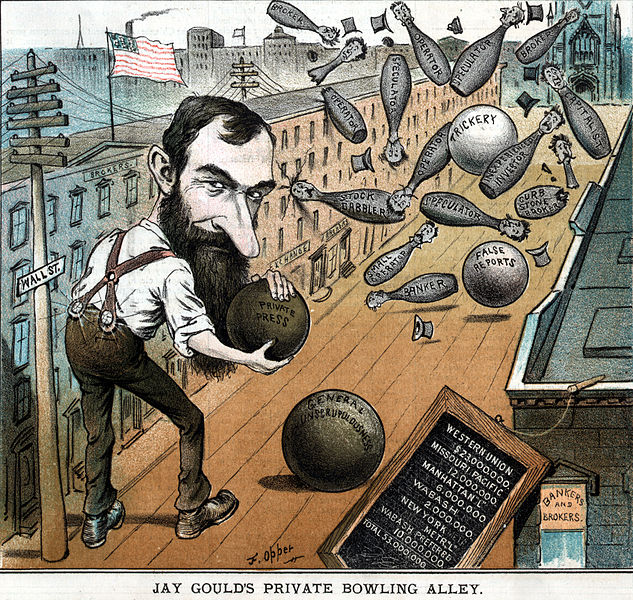
“Jay Gould’s Private Bowling Alley.” Financier and stock speculator Jay Gould is depicted on Wall Street, using bowling balls titled “trickery,” “false reports,” “private press” and “general unscrupulousness” to knock down bowling pins labeled as “operator,” “broker,” “banker,” “inexperienced investor,” etc. A slate shows Gould’s controlling holdings in various corporations, including Western Union, Missouri Pacific Railroad, and the Wabash Railroad.
From the cover of Puck magazine Vol. XI, No 264 via Wikimedia Commons.
In the winter of 1928 Joe Kennedy, father of JFK and major stock market player, stopped to get his shoes shined. The shoeshine boy leaned in and said, “Buy Hindenburg”. Kennedy began unwinding his positions saying, “You know it’s time to sell when shoeshine boys give you stock tips. This bull market is over.”
I had a similar experience in late 1999 when a friend took out a mortgage on her condo to buy shares in the billion dollar online copy paper empire. She had a perfectly good job in retail garden supplies. Remembering Kennedy, I advised another friend that her Nortel was looking a bit overbought. As it happened she sold quite near the peak.
The 2020 equivalent of the shoeshine boy is the perfect storm is the free trading platform, robinhood.com. This is a nicely designed site where you can trade shares on your computer or phone. It has become very, very popular with younger, new investors. My late 1990’s day trading pals would have killed for this sort of interface and no brokers fees. It has spawned a whole host of reddit chats, twitter streams and countless YouTube videos on the excitement of swing trading. (One fun spot to watch Robinhood is the https://robintrack.net/leaderboard which shows which stocks the people on Robinhood are buying. It is a bit slow and buggy but a great front row seat.)
What is striking about the robinhood.com world is that it revolves around trading rather than any sort of “investing”. You hop into APPL in the morning, see if you can make a couple of bucks by noon and move onto the next thing. And Apple is a real, solvent, company.
Robinhood has been in the news recently because the herd has charged into the shares of a number of companies which are either in or near bankruptcy. Hertz Rent-a-Car dropped from $20 to $0.50 in three months as the market realized that with no travelers there would be no car rentals. Interestingly, we learn from robintrack.net that at $20 there were a little over 1000 users holding, as Hertz crashed the Robinhood users piled in, at $0.55 there were 44,000 and there are now 158,000. And many will have made money, lots of money, trading the gyrating price from $0.50 to back up to $5.00.
In the run up to the crash of October 1929, long after Joe Kennedy had pulled his money from the market, retail traders were coining it trading the “swings” on margin accounts. It didn’t matter what the company actually did, it was going up. The same “irrational exuberance” was a big feature in the dot com bubble.

The “Fearless Girl” statue faces the Arturo Di Modica “Charging Bull” on Wall Street (Wikipedia)
The lessons of the 1929 crash and the 2000 dot com bust were simple – get out early and be in no hurry to get back in. Right now the dinosaurs like Buffet and Ichan are sitting on stacks of cash. Just like Joe Kennedy was when Wall Street swan dived in October 1929. They got that cash by selling their shares to shoeshine boys and the bright lights at Robinhood.
June 9, 2020
It was scientifically inevitable for the Communists to win the Cold War – as foretold in the prophecies
Sarah Hoyt on the “script” that progressives operated under during the Cold War and almost unchanged in detail to the present day, too:

Krushchev, Brezhnev and other Soviet leaders review the Revolution parade in Red Square, 1962.
LIFE magazine photo by Stan Wayman.
… the Cold War had two sides: the USSR and our elites, who had been corrupted and taken over for a long time thanks to the communist agents who had long-marched through our media, our entertainment and our bureaucracy.
Heinlein claimed the Democrats had been taken over by communists, secretly, by the 40s. I have no reason to doubt him. I’m sure most of the bureaucracy and governments in Europe had been taken over that way also.
Even so called conservatives assumed communism would eventually win, because according to the numbers coming out of the USSR and the reporters visiting the USSR — anyone know where Duranty is buried? there should be a line to piss on his grave — they were just so much more efficient. Scientific governance, you know? And anyway, technology was going to be so advanced that most humans would be unemployable, and by the way, there were more and more humans every year, so it was impossible to have all these bourgeois luxuries. So communism, efficient, compassionate, communism was the future, the only way.
The realists who saw it was the only way were willing to do anything to bring it about. Because the people who weren’t as intelligent/well informed would otherwise destroy the world and bring about unimaginable catastrophe.
“Conservatives” were merely those who wanted communism to arrive slower and be a little less violent. Communism with a human face. Socialism on the way to communism. Easing us into our role as cogs in the machinery of the future — where there was no room for personal frills or really emotions — with gentle pneumatic shocks, instead of with the excesses of the Russian and Soviet revolution.
All of this btw is based on three glaring fallacies (phaluscies, since you have to be a dickhead to believe them particularly now.)
1- People are a drain not an asset. They are also a sort of robot incapable of changing behavior in response to changing circumstances.
2- Wealth can’t grow, nor can the carrying capacity of the Earth improve. So since humans can’t respond to reduced infant mortality by having fewer children, the only way to feed everyone is to reduce everyone’s rations. Forever.
3- It is possible for “the best”, properly educated people to be utterly selfless and to administer everyone’s wealth equally and for the common good. They will not revel in power, nor will they avail themselves of any excess. Because, they are absolutely moral and all seeing.
Note the left is still running this script. And some on the right too (Hello, Pierre Delecto!) not to mention all of Europe, left and right. Also note #1 conflicts with the left idea that they can bring about a future in which humans change to be all selfless, etc. But that’s actually complicated and tied in to their myths, which honestly are a Christian heresy, complete with paradise lost.
I know when they started out, the USSR thought it could “engineer” a new human. Homo Sovieticus. But I don’t know enough of Soviet myth to know what underlay that. Maybe it was a behaviorist thing and they thought humans could be trained into being completely selfless automatons. I know by the time I was reading communist theorists (no, I didn’t buy their arguments, but I was required to read them, given when and where I grew up) in the seventies, the philosophy had fallen prey to the agitprop notion that people in madhouses in the US were political prisoners just as in the USSR. (BTW this is part of what underlay the closing of the madhouses.) And that was part of a push in the seventies, as the malfeasance of USSR was starting to be glaring, amid escaped dissidents and escaping information. The push was to “prove” that both systems were equally bad. (The left is still flogging that dead equine, too. So Cubans and Venezuelans are starving? So how many people die of anomie and not being loved enough under capitalism? REEEEE.) So, since Soviets put dissidents in mad houses, so did we. But that necessitated that people who widdled on themselves and/or thought they were a lampshade with a set of dishes thrown in be completely sane “political dissidents”. The only way to do this was to attribute anything communists don’t like to “insanity brought about by capitalism.” This led to crazier byways of thought. For instance, it led to the idea of the pre-historic, pre-agriculture paradise, where everyone was equal, there was no poverty, need, greed, or the heartbreak of psoriasis. A sub-branch of the church believed women were in charge and everyone worshiped the mother goddess. And some of these “scientific, atheist socialists” also believe the goddess actually exists, though G-d doesn’t.
David Friedman had a different formulation for the utopian world many progressives wish for the rest of us:
In the ideal socialist state power will not attract power freaks. People who make decisions will show no slightest bias towards their own interests. There will be no way for a clever man to bend the institutions to serve his own ends. And the rivers will run uphill.


