Quotulatiousness

May 1, 2014

Rethinking Canadian broadcast regulation

Filed under: Bureaucracy, Business, Cancon, Media — Tags: , , , , , — Nicholas @ 07:27

On Google+, Michael Geist posted a few thoughts on hitting the reset button in Canadian broadcast regulation:

The Broadcasting Act is a complex statute that lists more than twenty broadcasting policy goals. Yet for decades, Canadian policy has largely boiled down to a single objective: Maximizing the benefits from the broadcasting system for creators, broadcasters, and broadcast distributors such as cable and satellite companies.

Consumers were nowhere to be found in that objective and it showed. Creators benefited from Canadian content requirements and financial contributions that guaranteed the creation of Canadian broadcast content. Broadcasters flourished in a market that permitted simultaneous substitution (thereby enabling big profits from licensing U.S. content) and that kept U.S. giants such as HBO, ESPN, and MTV out of the market for years in favour of Canadian alternatives. Cable and satellite companies became dominant media companies by requiring consumers to purchase large packages filled with channels they did not want in order to access the few they did.

As I mentioned in a conversation last night, the Canadian market for broadcast, telecommunications, and internet providers has been carefully managed by the government to minimize the whole messy “competition” thing and ensure quasi-monopoly conditions in various regions across the country. The regulators prefer a small number of players in the market: it makes it easier to do the “regulation” thing when you can fit all the regulated players around a small table, and it also provides post-civil service career opportunities for former regulators. Having a larger number of competing organizations makes the regulation game much more difficult and reduces the revolving door opportunities for former regulators.

Stephen Harper moves to 9th on the longest-serving PM list

Filed under: Cancon, History — Tags: , — Nicholas @ 06:42

It hasn’t been a banner year so far for Prime Minister Stephen Harper. David Akin notes that it’s Harper’s birthday today and that he’s now our 9th longest-serving PM:

Today is Prime Minister Stephen Harper’s 55th birthday. It is also is his 3,005th day in office. (The Library of Parliament counts his first day as Feb. 6, 2006, the day he and his first cabinet were sworn in.)

At 3,005 days in office, the country’s 22nd prime minister is its 9th longest-serving prime minister.

Here’s the top 14 as of today:

  1. William Lyon Mackenzie King: 7,824 days in office
  2. John A. Macdonald: 6,934 days
  3. Pierre Elliott Trudeau: 5,620 days
  4. Wilfrid Laurier: 5,565 days
  5. Jean Chrétien: 3,689 days
  6. Brian Mulroney: 3,202 days
  7. Robert Borden: 3,195 days
  8. Louis St. Laurent: 3,139 days
  9. Stephen Harper: 3,005 days
  10. John Diefenbaker: 2,130 days
  11. R.B. Bennett: 1,902 days
  12. Lester Pearson: 1,824 days
  13. Alexander Mackenzie: 1,796 days
  14. Paul Martin: 786 days

April 26, 2014

Condo conflicts

Filed under: Bureaucracy, Cancon, Law, Politics — Tags: — Nicholas @ 09:15

In Maclean’s, Tamsin McMahon describes some of the unexpected down-sides for condo dwellers:

As thousands of homebuyers flock to condos for the promise of affordable home ownership and carefree living, they’re learning that life in a condominium is far different from the suburban houses where so many of us were raised.

Never mind that owning a condo usually means sharing your walls, floors and ceilings with your neighbours. Canadian condos are rife with internal politics, neighbour infighting and power struggles stemming from the complicated network of condo boards, owners, investors, tenants and property managers.

In some buildings, the rule book governing what owners can and can’t do with their property can span 70 pages. Disputes over issues such as pets, squeaky floors and visitor parking spots are escalating into epic and costly court battles. “They are little fiefdoms,” says Don Campbell, senior analyst with the Real Estate Investment Network, who owns several condos in B.C. “Each one has a king. Many of the people who get elected to the boards have time on their hands, and this is the only place in their world where they have power. Unfortunately, that starts to go to their heads.”

[…]

As a legal entity, the condominium (sometimes called “strata”) has existed in Canada for more than 40 years, ever since a boom in high-rise construction and innovations in property law essentially allowed developers to privatize the air space above the ground and carve it into small blocks that could be sold for profit. Many of the original condos were designed to encourage low-income Canadians living in rental housing in big cities to embrace home ownership, while the middle class continued its inexorable march to the suburbs. The condo boom of the past decade has, however, been marked by a renewed interest in urban living, driven by increasing numbers of Canadians who want to live closer to where they work, along with a cultural and environmental backlash against suburban sprawl, with its commuter traffic and car-induced smog. The rising number of people putting off marriage and children, as well as seniors living longer, has also helped fuel demand for smaller homes.

To understand how quickly we’ve shifted from detached homes to condominiums, consider that condos made up less than 10 per cent of all homes built in our 10 largest cities before 1981, but more than a third of those built in the last decade — around 413,000 out of roughly 1.2 million new homes. While the majority of those are clustered in the big cities — Toronto, Montreal and Vancouver — condominiums are going up everywhere from St. John’s to Regina to Victoria. Cities as different as Guelph, Ont., and Whitehorse are now building more condos than single-detached houses. More than 1.6 million Canadian households, or 12 per cent, now live in condos. Despite the focus on the investor market, close to 70 per cent of the people living in condos are owners, not renters.

The shift toward condo living is both more recent and more profound in Canada than it has been south of the border. The U.S. National Association of Realtors estimates that, last year, 77 per cent of first-time buyers in the U.S. purchased detached homes, compared to just 53 per cent of Canadians. Meanwhile, 17 per cent of Canadian buyers say they intend to purchase condos this year, compared to just seven per cent of American buyers. We can thank our red-hot housing market for the difference: The average Canadian house price last month was $406,372, compared to a median of US$189,000 in the U.S. (The average price of a condo in Canada was $312,800 in February, compared to US$187,900 in the U.S.) Skyrocketing house prices are forcing more first-time buyers into condos in order to get a foothold in the housing market. Some aren’t prepared for the life they encounter there.

April 22, 2014

Half the fleet is in for repair

Filed under: Cancon, Military — Tags: , — Nicholas @ 10:50

As I’ve pointed out before, navies require more ships to do certain jobs because naval vessels require extensive service, repair, and upgrade work such that up to a third of a given ship’s working life will be spent in port and out of service. The Royal Canadian Navy is at a very low point in vessel availability right now:

Of a total of 33 main ships and submarines, 15 are being repaired or undergoing upgrades, while another four are at a lesser state of readiness as they conduct tests on recently installed and modernized systems.

“This is our most challenging year but we have a plan to make sure we have ships available all the time,” Commodore Brian Santarpia, director general, navy strategic readiness, said in an interview with the Citizen. “We’re still quite confident we can fill all the tasks given to us.”

The navy’s 12 frigates are being upgraded as part of the Halifax-class modernization program. Involving $5 billion worth of work, the project will see engineering, radar and weapon systems upgrades, as well as other improvements made to the vessels, Santarpia said.

As part of that process, five frigates are unavailable for operations because they are either in dry-dock or being prepared for the upgrade process.

The Halifax-class frigates are considered the backbone of the navy.

As vessels come out of the modernization process, they go through various stages of readiness as the new systems are being verified and tested and the crew conducts training. “They are available for operations, just not at the very highest levels,” Santarpia explained.

Defence analyst Martin Shadwick said the situation is a result of having a “compact” maritime force and a large number of aging vessels that had to be modernized.

“The navy has known this period was approaching but in the short term they don’t have much choice but to live with it,” said Shadwick, a strategic studies professor at York University in Toronto.

He said a further crunch time for the maritime force will come in the next four years. That is when three aging destroyers, which provide command and control as well as overall air defence for naval task groups, are removed from service.

At that point, the navy goes from the 15 frigates and destroyers, which are the mainstays of the service, down to 12 frigates. In addition, the navy will be without supply ships to provide fuel and provisions at sea. Those two aging ships are to be retired before 2019 and their replacements will not be ready in time.

Under normal circumstances, the RCN would have about 10 frigates and two destroyers available, with the other ships in varying stages of refit, maintenance, and repair. With the recent engine room fire on board HMCS Protecteur, the navy is far more restricted in the kinds of activities it can undertake (only one support ship, HMCS Preserver is available). And let’s just not talk about the state of the RCN’s submarines.

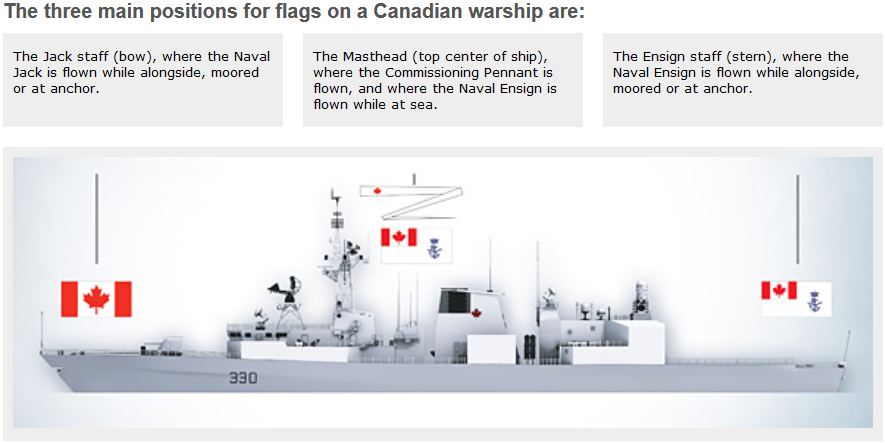
Halifax-class frigate HMCS Vancouver (FFH 331) and Iroquois-class destroyer HMCS Algonquin (DDH 283). Tugboats assist HMCS Vancouver (FFH 331) in departing from Pearl Harbor to participate in exercise Rim of the Pacific (RIMPAC) 2006.

Halifax-class frigate HMCS Vancouver (FFH 331) and Iroquois-class destroyer HMCS Algonquin (DDH 283). Tugboats assist HMCS Vancouver (FFH 331) in departing from Pearl Harbor to participate in exercise Rim of the Pacific (RIMPAC) 2006.

Obama’s afterthought appointment as US ambassador to Canada

Filed under: Cancon, USA — Tags: , , — Nicholas @ 09:13

Ezra Levant isn’t impressed with President Obama’s choice for ambassador:

Barack Obama waited nine months before replacing the last U.S. ambassador to Canada. The post was empty, and Obama just didn’t care.

He doesn’t much like Stephen Harper – compare Obama’s icy body language towards Harper, to Obama’s deep bow when he met the Saudi king, or his high fives with the Hugo Chavez, the late ruler of Venezuela.

Don’t feel singled out. That’s how Obama treats many of America’s traditional allies. He spied on German Chancellor Angela Merkel’s cellphone. The White House’s bust of Winston Churchill was returned to the United Kingdom when Obama became president.

Get used to it. Obama treats his friends worse than his enemies.

You’d think a $600-billion-a-year trade relationship between Canada and the U.S. would warrant sending a new ambassador quickly. Apparently not.

When Ottawa was finally blessed with Obama’s choice this month, it was yet another Chicago crony capitalist – Bruce Heyman, a former Goldman Sachs banker who, together with his socialite wife, bundled $1.7 million for Obama’s election campaign.

That’s what Obama thinks of the diplomatic corps: a reward for personal service, and an incentive to future donors.

April 21, 2014

Toronto subway delay due to “graffiti on exterior” of one train

Filed under: Cancon — Tags: , , — Nicholas @ 08:27

No, I don’t really get it either:

April 15, 2014

“You want to go into politics to fix public finances and put things in order? Fine. But to pump your fist and say you want a country? Tabarnac

Filed under: Cancon, Politics — Tags: , , , — Nicholas @ 07:30

In Maclean’s, Martin Patriquin reflects on the disaster for the separatist cause that was the Quebec election:

Sovereignty isn’t dead. It is impossible, sovereignists themselves often say, to kill a dream shared by a rock-ribbed 30 per cent of the population. Rather, Quebec’s sovereignty movement goes through fits and starts, peaks and valleys, a sleeping giant that can wake up and roar at a moment’s notice.

[…]

In this respect, the mortal enemy of the sovereignty movement isn’t the Liberal Party of Quebec, the Trudeau family, the federal government, Quebec’s immigrant population or any of the other central casting nightmares conjured up by the sovereignist movement over the years. No, the real enemy is the march of time.

As such, the sovereignty movement was pushed that much closer to obsolescence with the recent election. This Liberal win, like all Liberal wins past, means no serious talk of referendum, sovereignty or separation for four years at least. Decimated and leaderless, the PQ ranks will likely have to suffer through a wrenching leadership campaign before turning its sights on Philippe Couillard’s Liberals. PQ strategists will have to explain the party’s rudderless, error-prone election campaign that tanked its relative popularity in the space of a month. In the longer term, the PQ MNAs will have to answer for the party’s so-called Quebec values charter, which many feel targeted Quebec’s religious minorities­—and in all likelihood hurt the party’s chances of moving beyond its white, francophone base. All of this will take time, which isn’t on the PQ’s side.

It wasn’t supposed to be like this. Buoyed by a jump in the polls and a listless showing by Liberal Leader Couillard, Marois confidently called an election on March 5 with every expectation of getting a majority government. Instead, she (and the province) got a quick and nasty campaign dominated by referendum chatter and the short-term economic tremors it inevitably causes. The mere mention of an election last fall caused Montreal’s real estate market to dip.

Without a doubt, the turning point in the campaign was the press conference to introduce superstar PQ candidate Pierre Karl Péladeau:

The smart political strategist would do the following: put Péladeau on a stage and make him talk strictly about how he transformed Videotron from a Podunk cable company beset by labour troubles into the province’s leading cable and wireless concern. In the vacuum of a month-long election campaign, Péladeau the businessman could easily hide the red-ink-stained legacy of the PQ’s 18 months in power.

Instead, we got Péladeau the Quebec separatist. On a chilly Monday morning three days into the campaign, Péladeau took the stage with Pauline Marois and, after a 13-minute speech vaunting his economic record and the beauty of his riding of St-Jérôme, he uttered 30 words that would overshadow his campaign and that of his newly adopted party. “Finally, I end by telling you that my membership in the Parti Québécois is in line with my most profound and intimate values,” he said in French. “That is to say, make Quebec a country!”

[…]

In the immediate aftermath of Péladeau’s declaration, Marois mused that citizens of a separate Quebec would have their own Quebec passport; people and goods would flow freely over the open and undefended borders with Canada. Quebec would use the Canadian dollar, and lobby for a seat with the Bank of Canada. Her strategists quietly put an end to Marois’s flights of fancy within 48 hours, but the damage was already done. And it was irreversible.

In Quebec City, Péladeau’s candidacy should have hearkened a return of the PQ in what has been a bastion for the right-of-centre Action Démocratique du Quebec party and its successor, the CAQ, led by former PQ minister François Legault. Yet Péladeau seemingly did himself in with those 30 words in this surprisingly conservative and federalist region and beyond. “I’m so disappointed in the guy it’s ridiculous,” says Mario Roy, an insurance broker and sometimes radio DJ, who in 2010 worked on a campaign with Péladeau to bring an NHL team to Quebec City. “You want to go into politics to fix public finances and put things in order? Fine. But to pump your fist and say you want a country? Tabarnac.”

April 14, 2014

Queen’s student goes looking for racism, doesn’t find it, declares it’s happening anyway

Filed under: Cancon, Politics, Religion — Tags: , , , , — Nicholas @ 08:44

Your source of all sorts of odd news, the Daily Mail has this little gem from up the lake in Kingston, Ontario:

A Canadian college student recently conducted a social experiment to see if people treated her differently if she wore a hijab — a traditional Muslim veil that covers a woman’s head and chest — and what she discovered was a bit unexpected.

Anisa Rawhani, a third-year student at Queens University in Ontario, wore the traditional Muslim garb for 18 days in January as she worked at the university’s library, visited stores and restaurants near the campus and as she did volunteer work with local children.

According to Rawhani — who conducted the experiment to see if people in her community were racist towards minority groups — she noticed that people actually treated her more kindly and with more respect than when she didn’t wear the hijab.

Rawhani, who is not Muslim, wrote about her experience wearing traditional Muslim clothing in the March edition of the Queen’s Journal, where she works as a copy editor — the article is titled ‘Overt to Covert.’

Fortunately, as the Queen’s Journal account makes clear, she was able to get a clear explanation of the phenomenon from a professor:

Leandre Fabrigar, an associate professor in the department of psychology at Queen’s, cited “impression management” as a possible explanation for my experience.

He explained that often individuals who harbour biases, but fear social disapproval, will publicly act respectfully towards minorities. “Impression management is when [someone] very strategically, and usually quite deliberatively, tries to manage the impressions that others have of [them],” he said.

Impression management is focused on manipulating others’ perception of the self, but there are more genuine reasons why someone would be kinder towards minorities. Fabrigar said that sometimes individuals realize that they harbour biases, or other unwanted influences on their behaviour. Then, when interacting with members of minority groups, they experience an internal conflict between their negative biases and the egalitarian values that they believe in.

So the fact that Rawhani didn’t encounter overt forms of discrimination actually proves that the people she was interacting with in her Islamic disguise are hugely bigoted, hate-filled wretches who just don’t want to show it. Cool, got it, thanks.

You can tell it’s really Spring in Toronto

Filed under: Cancon — Tags: , , — Nicholas @ 08:10

The weather forecast for today and tonight contains a little bit of everything:

Update: The rest of the story:

With spring now well over three weeks old, the snow tires are off, the yard work has begun, and the boots and parkas are already at the back of the closet

However, winter weather is expected to make a comeback on Tuesday, as much of the province will see a major swing in temperatures and a mixed bag of precipitation.

Temperatures are expected to plummet from a high of 21 C on Monday to a low of -7 C on Tuesday night, with the potential for freezing rain and snow.

Ahead of winter’s reappearance, it will be a warm day for parts of southern Ontario on Monday as temperatures may reach the mid-twenties mark.

Environment Canada has once again issued a “special weather statement”, which they seem to do every other day recently. It’s not a storm warning or even a storm watch, but just a “hey, there’ll be some weather!” kind of thing. A communication tailored to the fact that weather is now treated like celebrity news in a lot of media markets.

Canada’s potential influence in East Asia

Filed under: Cancon, China, History — Tags: , , — Nicholas @ 00:01

In The Diplomat, Anthony V. Rinna looks at Canada’s rather history of diplomatic and cultural exchanges with China:

Canadian Prime Minister Stephen Harper has noticeably changed his stance toward China. Previously, the Conservative prime minister maintained a hard line against the PRC based on what he perceived as a poor human rights record. That position has softened over recent years. This seems to be part of a broader strategy aimed at transforming Canada, traditionally Atlanticist in its political leanings, into a leading actor in the Asia-Pacific. Specifically there is ample opportunity for Canada and China to enter into a symbiotic energy relationship. China of course desperately needs energy, and wants a diverse base of suppliers. Canada, in turn, is a major energy producer and exporter and would find a very willing customer in China.

Among the Western democracies, Canada has something of a history as a catalyst vis-à-vis the West’s relations with China. Canadian Prime Minister Pierre Trudeau was the first Western leader to open up to China, starting in 1970 when Canada officially recognized the government in Beijing as the legitimate government of the land (and the stage had been set for this by Trudeau’s predecessor, John Diefenbaker). Although Hugh Stevens of TransPacific Connections attributes Canada’s renewed interest in strengthening ties with China in part to following the lead of the U.S. “pivot” toward Asia, Canada has the potential to again be a leader and innovator in its own right. Canada’s own unthreatening position can only help.

While Canada’s relationship with China is largely based on trade and investment, military relations between Canada and China continue to develop apace, well beyond the conventional placement of military attachés at each country’s respective embassies in Beijing and Ottawa. In March 2012, then-Canadian Chief of Staff General Walter Natyncyk participated in a high-level visit to China and met with top brass from the People’s Liberation Army. In August 2013, Robert Nicholson, who had become Canada’s Minister of Defence only a month earlier, held talks with his Chinese counterpart Chang Wanquan on deepening Sino-Canadian military cooperation.

[…]

Canada has used its position to ease Asia-Pacific tensions in the past, for instance during the South China Sea Dialogues in the mid-1990s. James Manicom of the Centre for International Governance Innovation argues that the Track II-style of Canadian involvement in the 1990s may no longer be appropriate or effective given the rise in regional tensions. Nevertheless, as Canada’s military engagement with China increases, this still leaves the possibility of Canada playing a role in soothing regional tensions on an official level.

Ottawa has positive relations with the other states with territorial interests and disputes in the South China Sea. For instance, 49 percent of Indonesians say they have a positive view of Canada (and only 16 percent express a negative view). In line with its progressive stance toward China in the 1970s, Canada also recognized Vietnam diplomatically toward the end of the U.S.-led Vietnam War (whereas the U.S. only normalized relations with that country late in the administration of President Bill Clinton). Thus, Canada may be in a position to assist not only as a third node in a Canada-China-U.S. strategic triangle, but also to use its own diplomatic clout hand-in-hand with its growing military ties to China to work between China, the U.S. and U.S. partners in the region, many of whom have called for American assistance in counterbalancing China.

April 12, 2014

QotD: Canada’s “small country” syndrome

Filed under: Cancon, Europe, France, Quotations — Tags: , , — Nicholas @ 09:23

It’s been a decade since Robert Fulford popularized the term: “The Longest Undefended Neurosis in the World.” It’s about as accurate a description of Canada-US relations as has ever been offered. The eagerness which, even at this late date, we lap up any mention of Canada on US media is oddly pathetic. This is the sort of behaviour typically seen in small bankrupt countries. Any mention of Portugal outside of Portugal is almost immediately reported on the state broadcaster. There is a strange cloying quality about such reports. A desperate yelling: “Hey we used to be important!”

It’s a small country thing. When a big country thinks this way you get French-style arrogance: “Hey we still are important, it’s that you lot aren’t clever enough to realize that blindingly obvious fact.”

Today Rob Ford is probably the most famous Canadian in history, save William Shatner. Neither men’s careers has done much to change international perceptions of Canada. We’re boring and probably polite. From time to time we kill seals and moose, though not necessarily in that order. As a general rule we avoid doing evil things. Short of carpet bombing a small country, which is well beyond our military capabilities, nothing we do will change these perceptions. We could annex Buffalo, something within our military capabilities, but I suspect most Americans would probably be grateful. They might throw in Rochester as a parting gift.

Richard Anderson, “Talking With Americans About Canadians”, The Gods of the Copybook Headings, 2014-04-10

April 10, 2014

Former finance minister Jim Flaherty has died

Filed under: Cancon, Politics — Tags: , , — Nicholas @ 13:38

The former federal finance minister and MP for Whitby-Oshawa (my riding) is reported to have died earlier today:


Jim Flaherty, Canada’s finance minister, smiles while speaking during a press conference after releasing the 2014 Federal Budget on Parliament Hill in Ottawa, Ontario, Canada, on Tuesday, Feb. 11, 2014. Flaherty ramped up efforts to return the country to surplus in a budget that raises taxes on cigarettes and cuts benefits to retired government workers while providing more aid for carmakers. Photographer: Cole Burston/Bloomberg via Getty Images

Former finance minister Jim Flaherty has died. He was 64.

Emergency crews were called to his Ottawa home Thursday afternoon. The cause of death has not been released.

He was one of the longest serving finance ministers Canada has ever had and until he left politics, was the only one to ever serve under Prime Minister Stephen Harper. He stepped down on March 18.

A Conservative MP for the Toronto-area riding of Whitby-Oshawa, Flahery was first elected in 2006.

Flaherty has suffered over the last year from a rare and painful but treatable skin disorder. In his statement, Flaherty said his health did not play a part in his decision to quit politics.

My deepest condolences to his wife Christine Elliot, and their sons John, Galen, and Quinn (Galen and Quinn were players on soccer teams I coached a decade or so back).

New poll shows PCs leading Liberals in Ontario

Filed under: Cancon, Media, Politics — Tags: , , , , , , — Nicholas @ 08:46

As always with polls, take a big pinch of salt before you take them too seriously:

A new poll suggests Ontario’s Progressive Conservatives have taken the lead in popular support over the Liberals in the wake of the gas plant scandal, according to a published report.

A Forum Research poll conducted for the Toronto Star suggests Tim Hudak’s Tories have 38 per cent of support, versus 31 per cent for the Liberals. Andrea Howarth’s New Democrats are at 23 per cent.

Two weeks ago, Premier Kathleen Wynne’s Liberals led with 35 per cent of support, while the Tories were at 32 per cent and the NDP at 25 per cent.

The surge is attributed mainly to the simmering gas plants scandal.

“It’s almost all due to the scandal over the deletion of those emails concerning the gas plants,” Forum president Lorne Bozinoff told 680News.

The poll also reveals that 45 per cent of those surveyed believe Wynne knew about the alleged deleting of emails related to the gas plants.

It also found that 47 per cent believe she ordered deletions.

“We did ask was the premier aware — a lot of people believe the premier was aware,” Bozinoff said.

“We also asked if people think a crime has been committed and a lot of people also think a crime has been committed.”

Of course, as long as Horwath’s NDP continue to prop up the Liberals, there won’t be a provincial election … and I doubt Horwath sees much chance of improvement over the current poll numbers. The only way the Ontario NDP will topple the government is if the scandal gets worse: the NDP can get more of their agenda passed by the Liberals than they could in a Conservative legislature, but the NDP can’t afford to look as though they’re in any way complicit in covering up wrongdoing — that would offend their base even more than it would offend undecided voters.

Update: This is one of the reasons you need to take poll numbers with a degree of skepticism:

Erasing the 49th parallel? Not so fast…

Filed under: Books, Cancon, Media, USA — Tags: , — Nicholas @ 07:30

Froma Harrop reviews the latest hare-brained scheme geopolitical notion of Diane Francis:

What country do Americans overwhelmingly like the most? Canada.

What country do Canadians pretty much like the most? America.

What country has the natural resources America needs? Canada.

What country has the entrepreneurship, technology and defense capability Canada needs? America.

Has the time come to face the music and dance? Yes, says Diane Francis, editor-at-large at the National Post in Toronto. Her book Merger of the Century: Why Canada and America Should Become One Country is both provocative and persuasive.

“The genius of both societies is that they are very good at assimilating people from all over the world,” Francis told me. “So why can’t they do it themselves?”

Relatively small differences are why. Canadian intellectuals have long portrayed the United States as their violent, unruly twin. Many conservatives in this country, meanwhile, deride Canada as the socialistic land of single-payer medicine, gun control and other heavy regulation.

“I don’t buy the narrative of American exceptionalism or Canadian superiority,” says Francis, a dual citizen (born in Chicago). “Both have good points and bad points.”

Americans close to the border already think a lot like Canadians, she notes. Some northern states actually have more liberal laws and lower crime rates than Canada’s. “They are more Canadian than Canadians.”

We have a set of alliances that ensure continental security is underwritten by the world’s most powerful military. We have a free trade arrangement between the two countries that also includes Mexico. Our respective intelligence services co-operate (along with the UK, New Zealand, and Australia) at a very deep level — both for good (shared military surveillance, analysis, and security) and for ill (very significant individual privacy concerns).

Our economies are strongly inter-linked, but both are still subject to outside forces and inside stresses that affect each country differently.

In other words, aside from the minor convenience of not having to carry passports when moving from one country to the other (and the way the US is moving, that may no longer be true for Americans travelling domestically in a few years), we already have most of the benefits of a merger with none of the drawbacks: the American legal system is a terrifying beast to behold, US federal and state governments are far more intrusive and undemocratic in practice despite the legal framework of the Constitution and the Bill of Rights, and the US political system is if possible even more terrifying than their legal system.

Canada’s legal system could benefit from a few key reforms (getting rid of the human rights tribunals would be a good one, for example), but seem to work in a manner that is both faster and more visibly fair than their American counterparts. Our form of government looks (to American eyes) to be dictatorial, yet yields to democratic pressure from the voters most of the time (most recent example: Quebec). Our head of government is just a politician … and that’s all we expect of a Prime Minister. Our head of state doesn’t even live here, and we’re totally okay with that, too. Of course, if such a merger did take place, the head of state still wouldn’t live here…

A merger? I don’t think so.

April 8, 2014

“It’s important to understand the scale of the calamity that has befallen the Parti Québécois”

Filed under: Cancon, Politics — Tags: , , , — Nicholas @ 07:02

Paul Wells on the electoral catastrophe for the PQ in yesterday’s provincial election:

Its share of the popular vote, as I write this, is solidly below the 28% the party won in 2007 when André Boisclair was its leader. This is, in fact, the PQ’s worst election result, in share of popular vote, in 44 years. The only time it ever did worse was in 1970, the first campaign the party ever fought.

Philippe Couillard did not have a flawless campaign but he has a full majority term to get the hang of premiering. And Quebec usually re-elects incumbent governments once. In fact, Pauline Marois becomes the first Quebec premier to fail to be re-elected since the 1920s.

But these are garden-variety problems. The PQ’s woes go much deeper still. It is now 15 years since the party won more than 40% of the popular vote; the Liberals did so in 2008 and again tonight. This is because the PQ sits on a policy it cannot sell: secession from Canada. But now it has added a second unsellable policy to its kit bag: a plan to fire librarians and emergency-room physicians if it is possible to tell by looking at them which religious faith they practice.

[…]

On all three policies — secession, coercive state atheism, and university tuition — the PQ is stuck between an electorate that doesn’t agree, and a party base that will not retreat. Compounding the near-guarantee of further PQ grief still further is its insufferable belief in its own infallible mind meld with the Québécois collective conscience. The PQ knows better than anyone on sovereignty, secularism and higher education. Or so its members tell themselves. So it will not abandon policies the broader Quebec population, including much of the francophone majority, finds risible.

The PQ is in clear danger of becoming Quebec’s Tea Party: a fringe movement in thrall to esoteric mail-order theorists and proud of it, ensuring continued defeat and resistant to any attempts to fix it. I won’t be predicting the death of separatism; that’s a cliché. But I do predict an extended purgatory for a PQ that will wonder, for a very long time to come, why everyone points and giggles when its leaders proclaim the things they believe most profoundly.

I’m not sure the Tea Party Wells refers to exists in any form other than media stereotype (although there are lots of individual Tea Party activists who fit the bill), but the rest of the piece strikes me as being pretty accurate.

« Newer PostsOlder Posts »

Powered by WordPress