TimeGhost
Published on 24 Oct 2017In the summer of 1962, a war of words between the United States and the Soviet Union and a number of nuclear tests on both sides increased tensions that had been mounting for years. Both sides were living under increasing panic that the other would ‘press the button’ and launch a preemptive nuclear strike, possibly destroying the world in the process. When on October 14 1962 the US discovered missiles on Cuba, that fear increased and almost came true.
Simulate a nuclear bomb anywhere: http://nuclearsecrecy.com/nukemap/
Support us on Patreon: https://www.patreon.com/TimeGhostHistory
Hosted by: Indy Neidell
Written by: Spartacus Olsson
Produced and Directed by: Astrid Deinhard
Executive Producers: Bodo Rittenauer, Astrid Deinhard, Indy Neidell, Spartacus Olsson
Camera by: Jonas Klein
Edited by: Jonas Klein, Spartacus OlssonA TimeGhost chronological documentary produced by OnLion Entertainment GmbH
January 15, 2018
Day 0 Cuban Missile Crisis – Atomic Tests and Missiles Discovered
January 14, 2018
Prologue 2 Cuban Missile Crisis – The Cold War Heats Up
TimeGhost
Published on 19 Oct 2017For 13 days in October 1962 the world came closer to nuclear holocaust than ever before, but the Cuban Missile Crisis didn’t start in Cuba – it had its roots in Berlin, Italy and Turkey, the domestic political situation in the US facing the newly elected President John F Kennedy, and in the USSR, where Premier Nikita Khrushchev had taken leadership of the Soviet through a harsh four year power struggle after Stalin’s death in 1953.
Hosted by: Indy Neidell
Written by: Spartacus Olsson
Produced and Directed by: Astrid Deinhard
Executive Producers: Bodo Rittenauer, Astrid Deinhard, Indy Neidell, Spartacus Olsson
Camera and editing by: Jonas KleinA TimeGhost chronological documentary produced by OnLion Entertainment GmbH
January 13, 2018
Prologue 1 Cuban Missile Crisis – The Cold War Begins
TimeGhost
Published on 17 Oct 2017This series follows the Cuban Missile Crisis day, by day. In this initial prologue we explore some of the background to the crisis. During the 1950s the ideological divide between totalitarian Communism and democratic capitalism pits the USSR against the US as both super powers try to expand their sphere of influence. In parallel a series of misunderstandings and false assumptions heats up the nuclear arms race and sees the US pull further ahead of the USSR in military dominance. The increasing pressure on both sides eventually brings them head to head during several covert operations, proxy wars and, direct confrontations including the Berlin Crisis and eventually the Cuban Missile Crisis.
January 9, 2018
The Seven Years War: Crash Course World History #26
CrashCourse
Published on 19 Jul 2012In which John teaches you about the Seven Years War, which may have lasted nine years. Or as many as 23. It was a very confusing war. The Seven Years War was a global war, fought on five continents, which is kind of a lot. John focuses on the war as it happened in the Americas, Asia, and Africa. the “great” European powers were the primary combatants, but they fought just about everywhere. Of course, this being a history course, the outcomes of this war still resonate in our lives today. The Seven Years War determined the direction of the British Empire, and led pretty directly to the subject of Episode 28, the American Revolution.
January 4, 2018
HMS Ocean to be sold to Brazil
In The Register, Gareth Corfield sums up reports on the disposition of the Royal Navy’s current flagship after a 20-year service life:
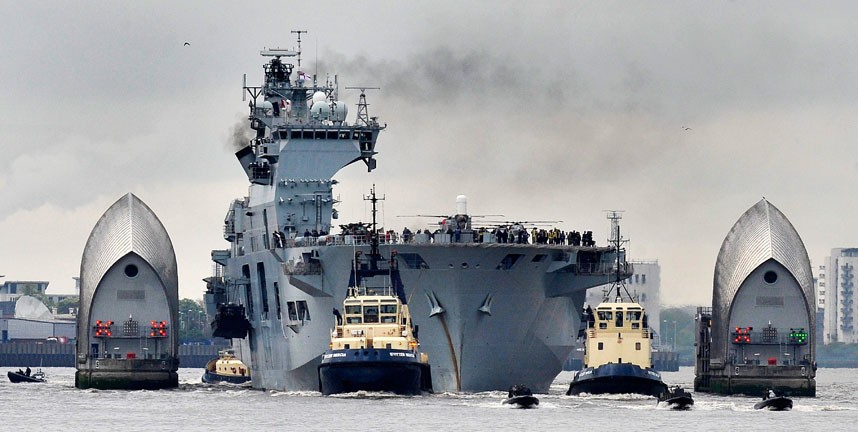
HMS Ocean at the Thames Barrier in 2012, being moved into position to support the Olympic Games in London.
The 22,000-tonne helicopter carrier, which returned from her last British deployment to the Caribbean just weeks ago, will be formally decommissioned from the RN in spring this year.
Although it was well known that Ocean was up for sale and that Brazil (as well as Turkey) were interested in buying the 20-year-old warship, confirmation of the deal and the purchase price were all “known unknowns” until now.
The news was broken by defence blog UK Defence Journal, citing a Brazilian journalist.
The Brazilian Navy’s end-of-year roundup statement, published on Christmas Eve 2017, also included the line: “Minister Raul Jungmann and the Brazilian Navy Commander Eduardo Bacellar Leal Ferreira took the opportunity to announce the purchase of the Royal Navy’s HMS Ocean multifunction vessel, valued at £84m sterling.”
A British Ministry of Defence spokesman told El Reg: “Discussions with Brazil over the long-planned sale of HMS Ocean are at an advanced stage, but no final decisions have been made. HMS Ocean has served admirably with us since 1998 and the revenue she generates will be reinvested in defence as we bolster our Royal Navy with two types of brand new frigates and two huge aircraft carriers.”
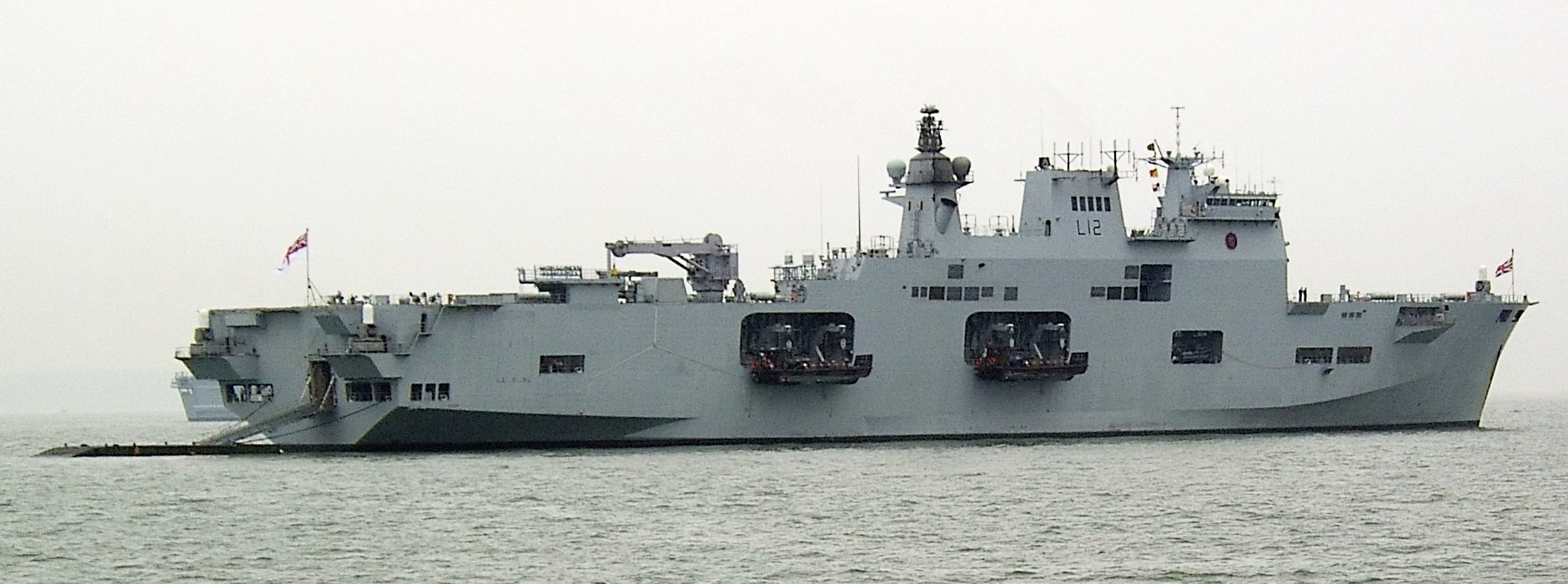
HMS Ocean at the 2005 International Fleet Review, showing Landing Craft on davits and Stern Ramp deployed.
Photo via Wikimedia.
At the Thin Pinstriped Line, Sir Humphrey explains why selling the ship now makes sense for the Royal Navy:
The big change to this requirement came in 2015, when the SDSR [Strategic Defence and Security Review]confirmed that the RN would keep both carriers in active service, and that neither would be CTOL [conventional take-off and landing]. Suddenly the RN found itself planning for a future where it would have two CVF available [the Queen Elizabeth class carriers], both of which would need to have manpower available to crew them. It also meant that the RN could make modifications to the ships to ensure that either of them could operate as an LPH [Landing Platform Helicopter] and carry helicopters and troops as well as a fixed wing airgroup.
This decision has had major ramifications for Ocean – suddenly the need for her to remain in service was gone. The LPH role that she would have done would now be filled by two newer and vastly more capable ships – the UK wasn’t losing capability but gaining it. In practical terms the RN actually would have more chance of an LPH being available without Ocean as CVF availability will be higher, both can role as an LPH (rather than CTOL which would not do this task) and with both platforms active, there is far less chance of the nightmare situation of both the CTOL carrier and the old LPH being stuck in refit at the same time.
From a capability perspective, the move to CVF makes a lot of sense. There are issues to be resolved (arguably the littoral manoeuvre capability offered by her landing craft, the vehicle issue and the question of what to do about afloat 1&2* command platforms and where to put them), but Ocean paying off is not going to remove the LPH capability from the UK toolkit.
The second problem has been that even if the RN wanted to run Ocean on, it has run out of manpower to do so. This year will see Queen Elizabeth at sea doing complex trials, drawing heavily on the Fleet Air Arm personnel to do so. As Prince of Wales (POW) stands up, more and more crew (usually very specialised engineers and the like) will be needed to bring her out of build. On the old plan this wouldn’t have been an issue – one would have gone straight into reserve. Now, the RN has to bring both carriers into service at roughly the same time (a helpful reminder of RN capability here is that it is the only navy in the world currently introducing two supercarriers into service at roughly the same time).
Ocean requires a lot of specialist crew who will be needed on QE and POW, and more importantly so will their reliefs. The manpower planners have not been working on the assumption of three carriers available and at sea (something the RN arguably has not done consistently for many years), and so the manpower structure is not designed to provide this. It could be changed, but would need many years to produce the right numbers of people in the right slots to deliver it without breaking manpower and causing retention challenges.
November 19, 2017
Missing Argentine submarine may have been located (Updated)
The BBC is reporting some hope for the 44 crew members of the Argentine Navy submarine ARA San Juan, which went missing on a routine mission this week:
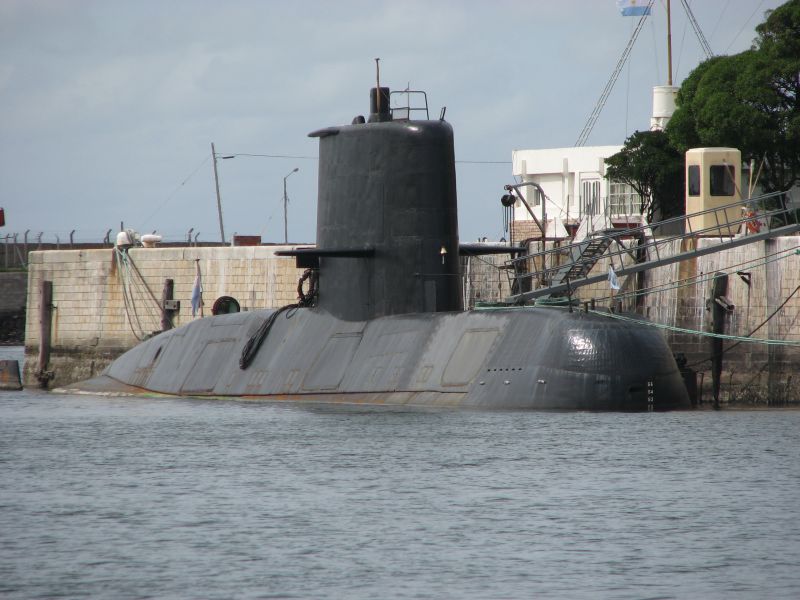
ARA San Juan in an undated photo at her base in Mar del Plata
Photo via Wikimedia.
Signals have been detected that are thought to have come from an Argentine submarine that went missing with 44 crew on board, officials say.
The defence ministry is now trying to trace the location of the seven failed satellite calls received on Saturday.
[…]
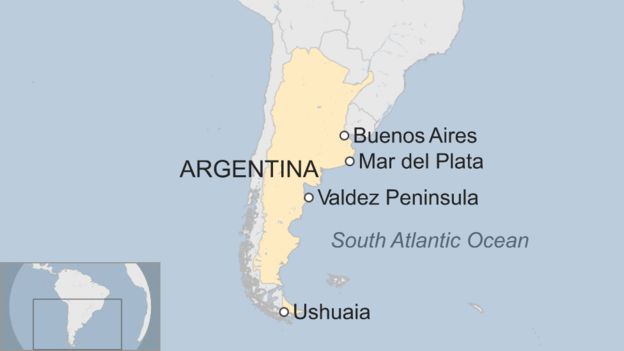
The ARA San Juan was returning from a routine mission to Ushuaia, near the southern-most tip of South America, to its base at Mar del Plata, south of Buenos Aires.
Its last contact with the navy command was on Wednesday morning.
An Argentine destroyer and two corvettes are conducting a search around the area of the sub’s last known position off the south-eastern Valdez peninsula.
But so far there are no clues about its whereabouts.
It is thought that the submarine may have had communication difficulties caused by a power cut.
Navy protocol dictates that a vessel should come to the surface if communication has been lost.
Update, 31 January 2018: Earlier this month, CDR Salamander shared a graphic summarizing the US Office of Naval Intelligence acoustic detection analysis of the ARA San Juan:

[Click to see full size image]
Update, 19 November, 2018: The New York Daily News reports that the remains of the ARA San Juan have definitely been located about 700 miles east of Puerto Madryn at a depth of over 2800 feet.
An Argentine submarine that vanished with 44 crew members aboard was found at the bottom of the South Atlantic Ocean a year and a day after it disappeared, authorities said.
The wreckage of the ARA San Juan was located 2,850 feet deep, and about 700 miles east of the city of Puerto Madryn.
“It appears to be complete, but it obviously imploded,” Argentine naval Capt. Gabriel Attis told reporters, CNN reported, adding the sub’s hull was “totally deformed, collapsed and imploded.”
The [220]-foot vessel vanished off the coast of Argentina on Nov. 15, 2017, as it traveled back to its base in the coastal city of Mar Del Plata.
November 9, 2017
QotD: The reputation of Che Guevara proves “the triumph of marketing over truth and reality”
The Irish Post Office has issued a stamp to commemorate the fiftieth anniversary of the death of Ernesto Guevara. This is, presumably, because he was both very famous and had some distant Irish ancestry. It is, however, a rather sinister philosophy that the worth of a man’s work or ideas, or his influence on the world, is much affected, either for the better or the worse, by his distant ancestry.
Guevara’s reputation is, of course, the triumph of marketing over truth and reality. There is probably no resort of mass tourism in the world where Guevara kitsch is not on sale and, one must presume, bought; and in an odd way this is only appropriate, for mass tourism makes lemmings seem like unreconstructed individualists, and Guevara was nothing if not an ardent promoter of mass conformity and unthinking obedience. Like many an adolescent psychopath, as he remained all his life, he dreamed of making mankind anew — not in his own image, exactly, for he thought of himself as a leader rather than a follower, but according to his own far-from-profound ideas of what mankind should be. The triumph of marketing is to have made this apostle of the most complete servitude into an apostle of the most complete freedom.
The triumph of marketing over truth and reality is nothing new, however. To expect people who are trying to sell you something also to tell you the truth, the whole truth, and nothing but the truth is to expect what never did happen and what never will happen. The buyer will always have to beware, no matter what legal protections are put in place for the unwary; the necessity is inscribed, as it were, in human nature itself.
Theodore Dalrymple, “The Way of Che”, Taki’s Magazine, 2017-10-28.
October 27, 2017
The ever-shrinking Royal Navy
In The Register, Gareth Corfield suggests that the Ministry is considering flogging off more RN ships to South America to try to balance the budget:
UK Defence Secretary Sir Michael Fallon has denied that vital British warships may be quietly sold to South American nations as part of the ongoing defence review, according to reports.
Helicopter carrier HMS Ocean, already earmarked for sale to Brazil when she is withdrawn from the Royal Navy next year, may be joined by Type 23 frigates, according to respected defence industry magazine Jane’s.
The Type 23s are the backbone of the Royal Navy’s anti-surface and anti-submarine capability. They are the fighting teeth of the RN, used to ward off potentially hostile surface ships and submarines alike.
Current plans are for the new Type 26 frigate to replace the ageing but capable Type 23s. These new ships are set to enter service from the middle of the next decade, with the old leaving service on the (approximate) basis of “one in, one out”.
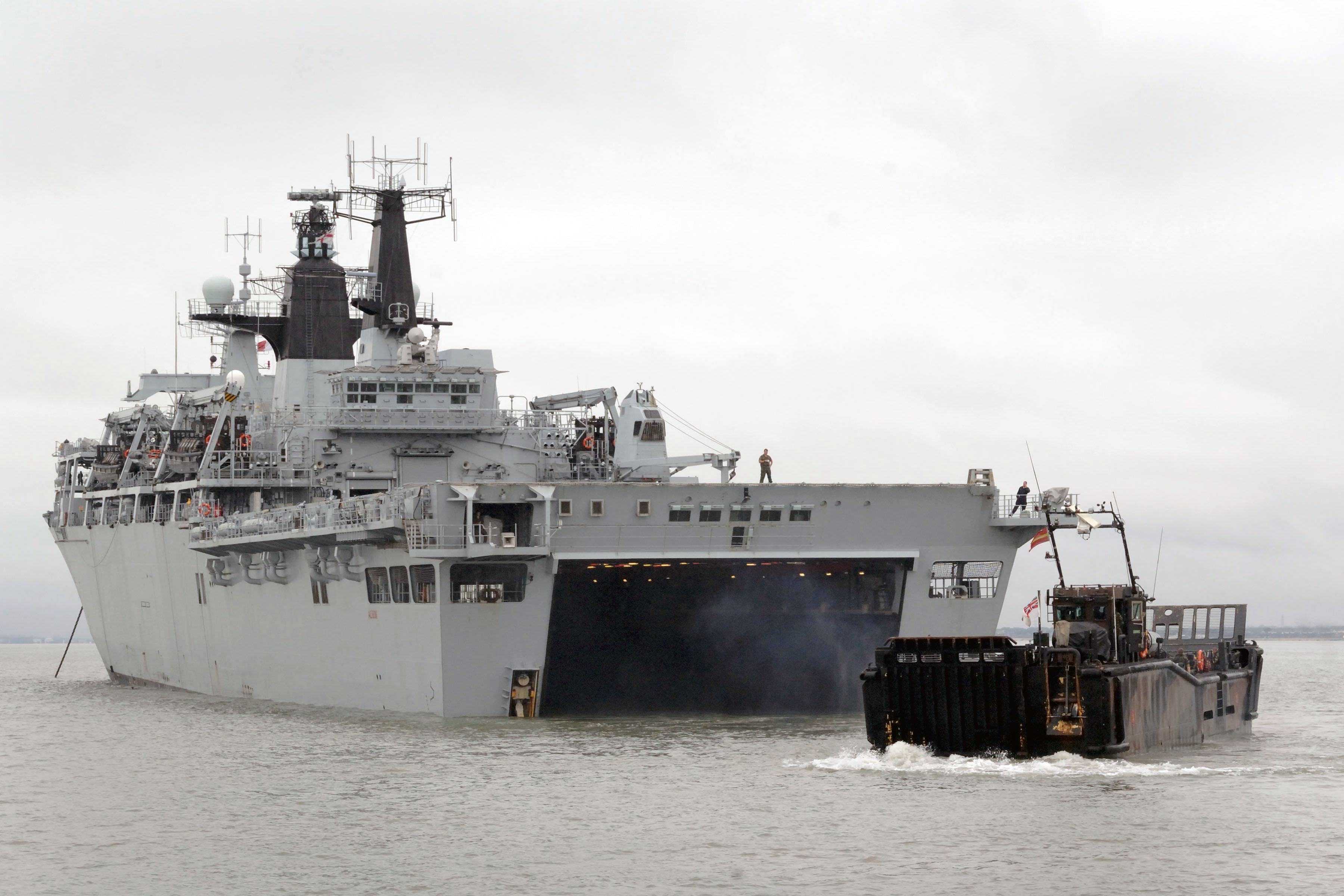
HMS Albion conducts amphibious operations with Landing Craft Utility (LCU) during Exercise Grey Heron off the coast of Portsmouth in 2007.
The Albion Class, Landing Platform Dock ships (LPD) primary function is to embark, transport, and deploy and recover (by air and sea) troops and their equipment, vehicles and miscellaneous cargo, forming part of an Amphibious Assault Force.
(Photo via Wikimedia)Two crucial amphibious warships, HMSes Albion and Bulwark, are rumoured to be on the chopping block of current defence cuts. Without these two ships, the Royal Navy cannot carry out amphibious landings, in the sense of “put Royal Marines in smaller boats that they can sail to beaches”. Both ships (only one is in service at any one time because we have neither the money nor manpower to run both at once) are fitted with big ramps and well docks allowing troops and vehicles aboard to be quickly loaded into landing craft.
Without its amphibious landing capability, the UK would not have been able to take the Falkland Islands back from Argentinian invaders after the 1982 invasion.
October 17, 2017
Brazil in World War 1 – The South American Ally I THE GREAT WAR Special
The Great War
Published on 16 Oct 2017Though joining the war later than most, Brazil was the only South American nation to play an active role, albeit a brief one. After initially declaring neutrality in August 1914, a series of sunken ships and dead Brazilians on behalf of the Germans’ submarines forced Brazil’s hand, as anti-German sentiment in the country rose during the first three years of the war. With newly acquired ships, Brazil was ready to join the war as a naval power. Her involvement may not have lasted long, but it did earn Brazil a seat at the table during the Versailles peace conference.
October 5, 2017
Four Reasons Financial Intermediaries Fail
Marginal Revolution University
Published on 26 Jul 2016As we’ve discussed in previous videos, financial intermediaries bridge savers and borrowers. When these bridges crumble, the effects can be disastrous. For businesses, credit shortages can lead to bankruptcy, or layoffs. For individuals, they rely on credit to invest in education or a new home or car. These negative effects show you how crucial intermediaries are to our lives.
Still, what exactly causes failed intermediation? Four answers:
First, insecure property rights. Simply speaking, when you save money at a bank, you expect the ability to pull out your funds when needed. But what if your deposits are frozen? Or confiscated altogether? For instance, in 2013 amidst a financial crisis, the government in Cyprus confiscated bank deposits to help pay down the country’s budget shortfall. You can see how insecure property rights can scare away potential savers.
Second, controls on interest rates. Interest rates are the price of borrowing. Thus, controls on interest rates, often called usury laws, are effectively price ceilings—they set the interest rate lower than the market equilibrium interest rate. With this forced lowering of interest rates, borrowers will want to borrow more, but lenders won’t want to lend. The effect? A lending shortage.
Third, politicized lending. Banks profit by assessing risk, and then loaning, based on that assessment. Banks that excel at assessment succeed. Those poor at it die out. Problems arise when the government intervenes to prop up failing banks, resulting in what we call “zombie banks.” In such cases, intervention undercuts normal competition, and intervention tends to favor banks that are politically connected. In fact, it’s been shown that there’s an inverse correlation between government ownership in banks and a country’s GDP per capita and productivity growth.
Fourth, you have runs, panics, and scandals. Remember, trust is vital to the financial system. When trust erodes, depositors may rush to withdraw their money from banks, causing what is known as a “bank run.” This can cause banks to fail, as we saw during the Great Depression. Scandals can also depress market confidence. Enron, WorldCom and Bernie Madoff may come to mind.
So, which of these four factors contributed to the Great Recession of 2008?
We’ll discuss that in our next video.
September 17, 2017
Mercenaries – War of the Pacific – Russian WW1 Remembrance I OUT OF THE TRENCHES
The Great War
Published on 16 Sep 2017It’s time for another episodes from the chair of wisdom, this week we talk about mercenaries in the war, the influence of the War of the Pacific and Russian WW1 war graves.
September 10, 2017
Special Air Service (SAS) – The Falklands Campaign
Published on 13 Jul 2016
Special Air Service (SAS) – The Falklands Conflict
When Argentina invaded the Falklands in April, 1982, Britain dispatched a large Naval Task Force to recapture the Falklands. Steaming south with the British fleet were D and G Squadron of the SAS, with supporting signals units.
September 7, 2017
Argentina expresses interest in laser death-beam-equipped USS Ponce
Those sneaky Argentines, trying to grab some surplus seagoing laser switchblade technology:
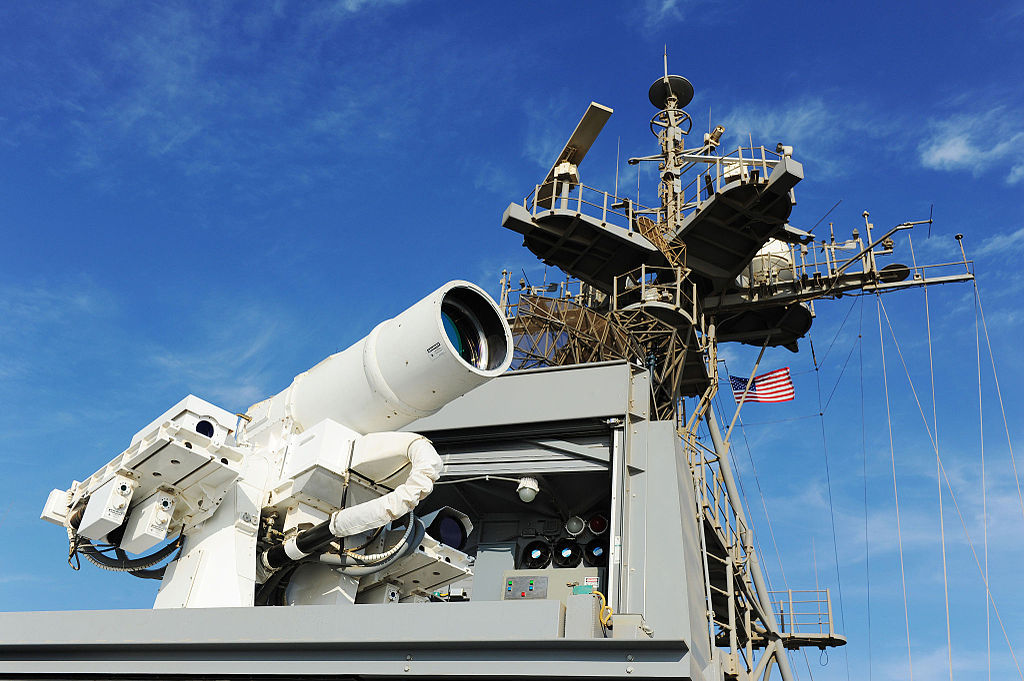
The U.S. Navy Afloat Forward Staging Base (Interim) USS Ponce (AFSB(I)-15) conducts an operational demonstration of the Office of Naval Research (ONR)-sponsored Laser Weapon System (LaWS) while deployed to the Arabian Gulf.
Date. 16 November 2014 (via Wikimedia)
Argentina reportedly wants to buy the US Navy’s laser death ray testbed warship, the fearsomely named USS Ponce.
According to the Mail on Sunday, the Argentinians are interested in buying the 46-year-old former landing platform (dock) from the American Navy when she is decommissioned next year.
“Senior Pentagon sources have confirmed talks are ongoing with the Argentinians over a Landing Platform Dock vessel capable of launching 800 troops, six helicopters and 2,000 tons of equipment into a war zone,” reported the paper, contrasting this with the Royal Navy’s HMS Ocean, which is very similar to the Ponce’s original configuration.
As regular readers know, the mighty Ponce has spent the last few years blasting various targets into bits using a shiny new $40m laser cannon and the US Navy even deployed her to the Gulf a few years ago.
To North American readers: if you’re wondering why this reads a bit oddly even by ordinary Register standards, it’s because the word “ponce” in British usage is a bit, um, odd. It’s taken as read that the primary purpose of an Argentine-flagged Ponce would sooner or later be intended for use in “liberating” the Falkland Islands:
The Ponce would be far from the first former US warship acquired by Argentina. In 1951 the Second World War cruiser USS Phoenix, a veteran of the Pearl Harbour attack by Japan, was bought by Argentina. She was renamed ARA General Belgrano – and sunk by British nuclear submarine HMS Conqueror during the 1982 Falklands War. Doubtless the same fate would befall the Ponce if Argentina tried the same trick again.
August 9, 2017
The Falklands War – A War for Lost Glory I THE COLD WAR
Published on 1 Jul 2015
The Falklands War was based on an old colonial struggle between two former world powers. When the military Junta in Argentina decided to claim the Falkland Islands in the South Atlantic they didn’t reckon with Great Britain’s Iron Lady Margaret Thatcher. The British Prime Minister unleashed full scale invasion. The Royal Navy and the British Army landed and ultimately took the capital Port Stanley. The Argentine Army surrendered shortly after that.
August 5, 2017
At least someone on the left is willing to find fault with Venezuela’s leadership
Of course, when I say “find fault”, I mean “criticize for not being even more horrible“:
Ken Livingstone, a former mayor of London, has blamed the turmoil in Venezuela on the unwillingness of the former president, Hugo Chávez, to execute “oligarchs” after he came to power.
Livingstone, who is suspended from the Labour party, also blamed the economic crisis in the country on the government’s failure to take his advice on investment in infrastructure, which he said would have reduced the Latin American state’s dependence on oil.
The former mayor, a longtime supporter of the late president Chávez and his successor Nicolás Maduro, said the socialist leader’s enemies wanted to restore their power.
“One of the things that Chávez did when he came to power, he didn’t kill all the oligarchs. There was about 200 families who controlled about 80% of the wealth in Venezuela,” Livingstone told Talk Radio.
“He allowed them to live, to carry on. I suspect a lot of them are using their power and control over imports and exports to make it difficult and to undermine Maduro.” When pressed, Livingstone said he was “not in favour of killing anyone”.
Livingstone visited Venezuela during his time in office as mayor of London, striking a cut-price oil deal with Maduro to supply Transport for London. The Labour leader, Jeremy Corbyn, has also regularly expressed his admiration for Chávez, saying in 2013 he was “an inspiration to all of us fighting back against austerity and neoliberal economics in Europe”.