
I didn’t intend to turn this into Machiavelli week, but after the discussion of correctly translating “virtù“ for modern audiences, here’s Krzysztof Szczawinski with more about that famous/infamous book:
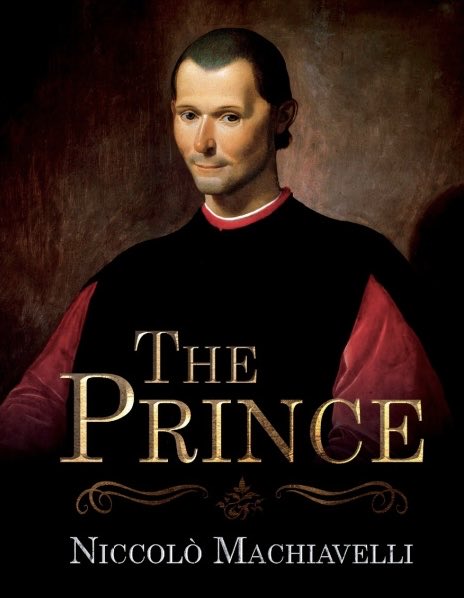
Niccolò Machiavelli wrote The Prince in 1513 as a practical manual for power. For five centuries, polite society has pretended to be shocked by it. Meanwhile, every successful political operator — on every side — has been quietly following it. The only people who haven’t read it are the ones who keep losing.
1. Machiavelli’s central insight is not that the ends justify the means. That is the misquote that lets comfortable people dismiss him. His actual insight is simpler and more disturbing: power has its own logic, independent of morality, and those who refuse to understand that logic will be defeated by those who do. The Prince is not a villain’s manual. It is a description of reality that makes virtuous people uncomfortable – because reality doesn’t care about their virtue.
2. The current progressive system applies Machiavelli more fluently than any of its opponents. His first rule: the appearance of virtue matters more than virtue itself. The DEI statement while systematically excluding dissent. The democracy rhetoric while suppressing opposition. The compassion branding while destroying careers. This is Machiavelli’s prince – not good, but performing goodness to maintain legitimacy. The performance is the power.
3. His second rule, which the current system also applies perfectly: cruelty, when necessary, should be delivered swiftly, completely, and early. Cancellation is Machiavellian – total, swift, exemplary. The point isn’t the individual being cancelled. The point is the ten thousand people watching who quietly adjust their behavior. One public destruction purchases a million private silences. Machiavelli would have recognized the mechanism immediately. He invented the theory.
4. Communism applied the fear side of Machiavelli with full conviction – Stalin made the explicit choice Machiavelli described: better to be feared than loved. The show trial is pure Machiavellian theater – a public demonstration of power functioning as a warning to everyone who isn’t on trial. But communism made his fatal mistake: it destroyed the people’s goodwill so completely that it generated not just fear but hatred. And Machiavelli is unambiguous – you can rule through fear, you cannot survive through hatred.
5. His most important democratic insight — the one nobody quotes — is that the prince who builds his power on the people is more secure than one who builds it on elites. Elites are few, demanding, and treacherous. The people are many, ask only not to be oppressed, and are a more stable foundation. The political movement that actually connects with ordinary people against the credentialed elite is applying Machiavelli more correctly than the elite relying on institutional capture alone.
6. What should we do? Stop bringing virtue to a knife fight. The chronic error of the opposition is the naive prince Machiavelli explicitly warns against – the leader who assumes truth wins automatically, who believes that being right is a strategy. It is not a strategy. It is a precondition. Being right gives you something worth fighting for. Machiavelli tells you how to fight: build your own power base, never rely entirely on others, control your narrative before your enemies do, and treat fortune as something to be seized, not waited for. Fortune favors the bold. Not the righteous. The bold.
7. Machiavelli is taught in universities as cynical amoralism – the thing decent people reject. This framing is itself Machiavellian – it keeps the manual out of the hands of the people who most need it. The current establishment didn’t reject Machiavelli. It institutionalized him, rebranded him in the language of social justice, and uses him daily. The opposition reads Augustine and loses. The system reads Machiavelli and wins. Until the side that is actually right decides that understanding power is not a betrayal of principle but a precondition for defending it – the result will be the same. Virtue without strategy is just a dignified way of losing.


