
The Critical Drinker
Published 14 Mar 2025It was overlooked in its own time, never finding the audience it deserved, but Firefly has gone on to become a cult classic with the most dedicated on fanbases. And now that I’ve finally arrived to the party 20 years late, I wanted to share my thoughts on Joss Whedon’s Firefly.
March 15, 2025
Firefly – We Didn’t Know How Good We Had It
Comments Off on Firefly – We Didn’t Know How Good We Had It
Eliminating “environmental justice” from the EPA
J.D. Tuccille suggests that you not take the New York Times coverage too literally as they wail about the Trump administration’s plans for the Environmental Protection Agency:

If you were to believe reporting from The New York Times — which is an increasingly unwise idea — the Trump administration is diverting the attention of the Environmental Protection Agency (EPA) from poor and minority communities that face “disproportionately high levels of pollution”. But if you scratch the surface even a bit, you find that what’s really being eliminated are “environmental justice” offices that infuse identitarian ideology into EPA enforcement efforts. Americans should welcome efforts to strip racial obsessions from the armory of regulators who already wield too much power.
Competing Takes on “Environmental Justice”
“The Trump administration intends to eliminate Environmental Protection Agency offices responsible for addressing the disproportionately high levels of pollution facing poor communities, according to a memo from Lee Zeldin, the agency administrator,” Lisa Friedman wrote for the Times. She added that the memo directed the reorganization and elimination of “offices of environmental justice at all 10 E.P.A. regional offices as well as the one in Washington”.
Contrast that with a press release from the EPA, which states “that EPA will immediately revise National Enforcement and Compliance Initiatives to ensure that enforcement does not discriminate based on race and socioeconomic status (as it has under environmental justice initiatives) or shut down energy production and that it focuses on the most pressing health and safety issues”.
Whatever you think of the Trump administration in general, EPA Administrator Zeldin is on the right side of this debate. As I wrote in 2022 when the Biden administration formally introduced “environmental justice” concerns to the EPA, the term refers to “a decades-old school of thought that seeks to graft identitarian politics onto environmental concerns. That allows practitioners to wield civil rights law in addition to traditional environmental laws against perceived malefactors. It also makes it possible to slam offenders as ‘bigots’ if their actions affect one community more than another.”
There’s no need to read between the lines to figure out what is meant by “environmental justice” — its advocates are quite clear about their meaning. In 2021, the Northeastern University School of Public Policy and Urban Affairs published A User’s Guide to Environmental Justice: Theory, Policy, & Practice by Ken Kimmell, Alaina Boyle, Yutong Si, and Marisa Sotolongo.
The Ideology’s History of Racial Obsessions
“The demand for ‘environmental justice’ (EJ) has gained substantial traction in the last few years, as well it should,” the authors wrote in their introduction. “A key pillar in EJ will be widespread, community-designed and community-supported investment in neighborhoods that have been economically and environmentally burdened by a long history of racist government and industry decisions.”
“The environmental justice movement has evolved in parallel with and in response to traditional environmentalism to focus on the unequal distribution of environmental harms among different people and communities,” the authors add in summarizing the history of the movement. “Research revealing the whiteness of the environmental community elevated concerns that social justice and racial justice were not prioritized in mainstream environmentalism.”
“Applying the Civil Rights Act of 1964, which prohibits discrimination based on race, color, or national origin … frontline communities and others began to use the term ‘environmental racism’ to focus on the unequal (social and spatial) distribution of environmental burdens,” they continue.
Comments Off on Eliminating “environmental justice” from the EPA
Canada’s Unique WW2 Rocket Artillery: The Land Mattress
OTD Military History
Published 12 Nov 2022The Land Mattress, officially known as Projector, Rocket 3-inch, No 8 Mk 1, was the Canadian rocket launcher used during World War 2. The last surviving example is on display at the @CanWarMus.
(more…)
Comments Off on Canada’s Unique WW2 Rocket Artillery: The Land Mattress
QotD: Strategy
It has become popular of late to associate strategy with a “theory of victory”. Many policy pieces and journal articles define this as a narrative explanation of why a particular strategy will work — something every strategy must contain, if only implicitly. Others go so far as to insist that a strategy is nothing more than a theory of victory. […]
Strategy itself is a slippery term, used in slightly different ways in different contexts. In everyday usage, it is simply a plan to accomplish some task, whereas formal military definitions tend to specify the particular end. The US joint doctrinal definition, for instance, is: “A prudent idea or set of ideas for employing the instruments of national power in a synchronized and integrated fashion to achieve theater, national, and/or multinational objectives”. If strategy is not quite a theory for victory, the connection between them is apparent.
There is a subtle problem with this definition, however. Victories are rarely won in precisely the way the victors anticipate. Few commanders can call their own shots, as Napoleon did in Italy or William Slim in Burma. Wars are complex and messy things, and good strategy requires constant adaptation to circumstance — a system of expedients, as Moltke put it. Even with the benefit of hindsight, the cause of a war’s outcome is not always perfectly clear, as the ongoing debate over strategic bombing bears witness.
Indeed, the very idea that strategy represents a plan is very recent. From the first adoption of the word into modern languages,1 strategy was defined more as an art: of “commanding and of skilfully employing the means [the commander] has available”, of “campaigning”, of “effectively directing masses in the theater of war”. The emphasis was decidedly on execution, not planning. As recently as 2001, the US Army’s FM 3-0 Operations defined strategy as: “the art and science of developing and employing armed forces and other instruments of national power in a synchronized fashion to secure national or multinational objectives”. Something one does, not something one thinks.
This is best understood by analogy to tactics, a realm less given to formalism and abstraction. What makes a good tactician? Devising a good plan is certainly part of it, but most tactical concepts are not especially unique — there are only so many tools in the tactical toolkit. The real challenge lies in execution: providing for comms and logistics, ensuring subordinates understand the plan, going through rehearsals, making sure that everyone is doing their job correctly, then putting oneself at the point where things are likely to go wrong and dealing with the unexpected.
Ben Duval, “Is Strategy Just a Theory of Victory? Notes on an Annoying Buzzword”, The Bazaar of War, 2024-12-01.
1. This was before Clausewitz’s inadvertent redefinition of strategy, when the term still referred to what we now call “operational art”.
Comments Off on QotD: Strategy
March 14, 2025
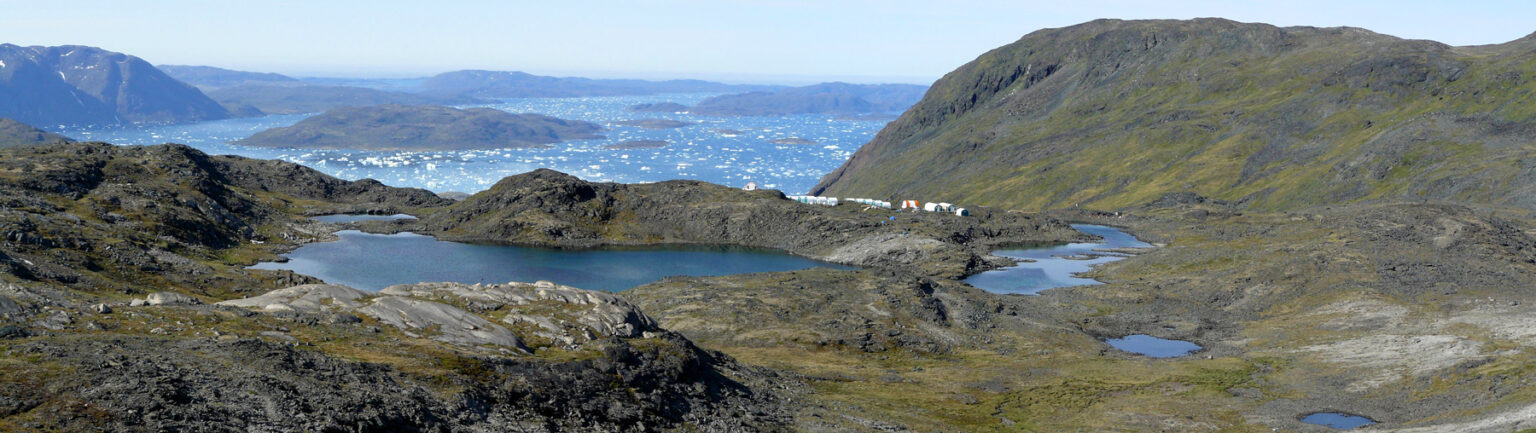
Greenland in the news again … and it’s not about Trump this time
Tim Worstall sums up coverage from The Guardian about a case involving the government of Greenland and a mining operation going to court for damages from the government’s change of policy:
So, here’s a case:
Fearing toxic waste, Greenland ended uranium mining. Now, they could be forced to restart — or pay $11bn
Gosh.
In 2021, Greenland went to the polls, in a contest to which uranium was so central, international media dubbed it “the mining election”. The people voted in a green, leftwing government, led by the Inuit Ataqatigiit party, which campaigned against uranium mining due to the potential pollution.
When it took power, the new government kept its campaign promise, passing legislation to ban uranium mining. While not primarily a uranium mine, the Kvanefjeld project would require unearthing the radioactive substance to extract its rare earth oxides, putting it in violation of the law.
Many Greenlanders celebrated the vote as a victory for health and the environment. But three years later, the company is suing Greenland for stopping its plans, demanding the right to exploit the deposit or receive compensation of up to $11.5bn: nearly 10 times the country’s 8.5bn krone (£950m) annual budget.
That part of it isn’t wholly biased. It is, roughly and around and about, true.
Just as an aside I think I met one of the lads behind the mining company once. Mickey Five Names was it? Management and all has changed since then but they were not, say, of the probity of the board of Rio Tinto. Just as an opinion, you understand.
Still, they signed a contract which allowed them to prospect and so they then spent money. The law stated that they would, naturally, advance to an exploitation licence. That’s what they got denied.
[…]
Everyone’s agreeing on what happened. Roughly they are at least. You Mr. Corporation can explore and if you find something you can dig it up and so make money back on your costs. Then the government changed its mind leaving the company facing the total loss of all it had spent.
So, who has to cough up here?
No one — really, no one at all — is saying that a government cannot change its mind. Or even that elections should not have consequences and that policy might change after having had one.
What is being said is that if you nick someone’s property then you’ve got to pay for it.
Well, is not issuing an exploitation licence that you said you would nicking someone’s property? That’s clearly arguable (I would say “Yes!” but then that’s me) so, where do we go to argue this?
Comments Off on Greenland in the news again … and it’s not about Trump this time
“CDU Chancellor hopeful Friedrich Merz is screwing up”
I don’t follow German politics closely, so I depend on regular updates from euygppius, like this post from the other day which I’m sure wasn’t popular among CDU voters or personal fans of Friedrich Merz, the likely next German Chancellor:

For some time now, I’ve wanted to catalogue in one place all the ways that CDU Chancellor hopeful Friedrich Merz is screwing up. His strategic failures are really a thing to behold; I’ve never seen anybody screw up this frequently and this dramatically before. Yet I have delayed writing this post, above all because I wanted Merz to reach the end of his present streak and stop screwing up for a while. I wanted to have a complete unit – a full collection of screwups – to present to my readers for analysis. I now accept that this is never going to happen, and that the coming months and years are going to provide nothing but an unending parade of screwups, one after the other, each more inexplicable and baffling than the last. We must begin the tiresome work of trying to understand Merz’s screwing up now, because there will only ever be more of this.
As with all deeply rooted phenomena, it is hard to tell where the present parade of screwing up began. There was the lacklustre CDU election campaign and Merz’s ill-advised flirtations with the Greens that began last autumn, which cost the Union parties precious points in the polls. None of that looked auspicious, but the screwing up did not begin in earnest until January, in the wake of Aschaffenburg – when Merz decided to violate the firewall against Alternative für Deutschland. For the first time in history, the CDU, the CSU and the FDP voted with AfD in the Bundestag, first in a successful attempt to pass a meaningless if sternly worded anti-migration resolution, and then in a failed attempt to pass an actual piece of legislation that would take real steps to stem the influx of asylees from the developing world.
This manoeuvre had the real glimmerings of strategy, and so we would do well to ascribe it to Merz’s underlings rather than to Merz himself. It was only superficially an attempt to stop the tide of voter defections to the AfD. Above all, it was an effort to gain leverage over the Greens and the Social Democrats in any future coalition negotiations. Merz and his CDU, sobered by polls showing a left so weakened that they feared having to govern in a nightmare Kenya coalition with the SPD and the Greens both, wanted to send a clear message: “We’re not afraid to achieve parliamentary majorities with the AfD if you won’t go along with our programme”. Had Merz stuck to this line, he’d be in a far better place than he is today. Alas, the man chose to screw up instead. Spooked by yet another wave of leftist protests “against the right” – a “right” which now included not only the AfD but also the CDU and the CSU – Merz lost himself in a string of disavowals. A minority government with AfD support would be unthinkable, he and his lieutenants said. The Union parties would never work with the AfD, he and his lieutenants said.
In this way, Merz’s firewall gambit succeeded only in outraging and energising his future coalition partners, while achieving nothing for himself or his own party. A lot of CDU voters would like to see some measure of cooperation between the Union parties and the AfD, and for his constant never-again-with-the-AfD rhetoric Merz paid a price. The CDU underperformed the polls, crossing the finish line with a catastrophic 28.5% of the vote on 23 February. The Greens whom Merz had spent months courting – at the cost of alienating his own base! – emerged from the vote too weak to give his party a majority, and so the man was left to deal with the Social Democrats, newly radicalised not only by their own dim showing but also by Merz’s firewall trickery.
Thus it came to be that Merz ceded the high ground in negotiations to the SPD, the biggest losers in the 2025 German elections. That is itself remarkable, the kind of thing you could not be certain of achieving even if you tried. And yet it is only the beginning!
Comments Off on “CDU Chancellor hopeful Friedrich Merz is screwing up”
Firefly and the Lost Cause
Feral Historian
Published 8 Nov 2024I’ve often been questioned for making Civil War comparisons when discussing Firefly. Here I explain why Firefly not only reflects but is based on the Lost Cause mythology of the Confederacy.
For further background on how secession was framed at the start of the American Civil War, battlefields.org has plain text copies of several of the Confederate States’ declarations of causes for secession up at https://www.battlefields.org/learn/pr…. You can see how slavery is mentioned a lot, but often framed in terms of the second-order effects of Northern policy damaging their economy, infringing on sovereignty, etc. It varied by state of course, Virginia kept it vague with references to the Federal government “perverting said powers” granted it, while Mississippi was very clear about slavery being the cause.
00:00 Intro
01:12 The Lost Cause
03:27 Selling the Peace
05:28 Causes
06:59 Firefly as a Lost Cause
Comments Off on Firefly and the Lost Cause
QotD: You can’t cut taxes without disproportionally benefitting “the wealthy”
Anybody who uses the phrase “tax cuts for the wealthy” to gin up opposition to lowering taxes is either a dupe or a villain.
How do I know this? Do some research. Find a graph of how income taxes paid segregates by wealth of the payer. I’d post one here, but X hates links.
The bottom 40% in income pay effectively nothing in income tax. The “rich” pay such a disproportionately high percentage of it that the tax take of entire states can be significantly affected by a handful of high-net-worth individuals moving out. In Europe this happens to small countries.
Because of this, it is effectively impossible to cut taxes in any way at all without disproportionately benefiting the “wealthy”.
When demagogues like Reich honk about “tax cuts for the wealthy”, what they actually mean is: taxes should never decrease. The state should confiscate and reallocate more and more wealth, forever and ever, amen.
March 13, 2025
This explains a lot … IRS employees aren’t issued personal computers (in 2025!)
You sometimes read a small item and the information in it is so unexpected, it’s like being suddenly dumped into icy cold water, like this little item from Reason‘s “Morning Roundup” email:

Everything’s computer! But not at the IRS.
“The upheaval at the IRS is already having real impacts,” reports The Washington Post, referring to plans (already underway) to reduce the workforce by half. “Sources familiar with the agency report that its level of phone service is falling, in part because employees are spending their time waiting to use shared computers to respond to [the Department of Government Efficiency’s] requests for weekly emails detailing their work. (Not all IRS employees are issued their own computers.) And they report that taxpayer behavior is already adjusting to the reality of a diminished IRS workforce: IRS receipts — taxes paid already and taxes the agency is scheduled to receive from those who have already filed — are significantly lower than they were at this point last filing season.”
Wait, back up. They don’t have their own computers? And they’re sitting in a queue like schoolchildren in the library, waiting to use a single shared computer to respond to Musk’s five-things-you-did-last-week emails? How long does it take to write those emails? And why don’t they have computers?
Look, I’m worried by the slapdash approach Elon Musk’s Department of Government Efficiency has taken. But the continued federal employee freakout over being asked to justify their jobs by detailing what they’ve done at work makes no sense to me.
I know a girl from college who is a “Work-Life Specialist and Mindfulness Facilitator” at the U.S. Department of Transportation. She leads yoga sessions and “meditation made simple” workshops for federal employees, per her LinkedIn. This is a job I don’t want my taxpayer dollars funding. For Musk to apply scrutiny to this type of thing is a huge win for the American people.
There are lots of legitimate criticisms to make about whether cuts in staffing will actually lead to a better IRS. Taxpayer services will surely suffer if there are fewer people available to answer phone calls and emails; refunds might be delayed, which comes at a real cost to people. Worse tax collection means less revenue for the government, and it’s not like spending is under control — expect the fiscal hole we’re in to get worse if this continues. But “we just can’t figure out how to ration computer use in the year 2025 to craft a bullet-pointed email” is an absurd line that elicits no sympathy, and just leaves me confused about what the hell they’ve been doing all this time. Everything’s not, in fact, computer in the federal government.
Comments Off on This explains a lot … IRS employees aren’t issued personal computers (in 2025!)
“Canadian liberalism has been regime ideology since at least Lester B. Pearson in 1963”
Fortissax on “Leaflibs & Puckstick Patriots”:

The past week has been very special because something happened in Canada. This something is not anything I could have anticipated, but I find myself not particularly surprised. Prime Minister Justin Trudeau propped up the husk of Jeff Douglas like an old Fisher King from some retelling of Arthurian legend. Jeff Douglas is famous for his appearance in the Molson Canadian beer commercial, released in the year 2000. This commercial was possibly the hardest-hitting, if not among the top hardest-hitting, propaganda pieces ever produced in service of regime ideology. That regime ideology is Canadian liberalism — a form of left-liberalism that emerged out of the Second World War, in direct contradiction to American right-liberalism.
Many American correspondents have asked me to explain why it seems like liberals are patriotic in Canada, while conservatives are not. The answer is simple: Canadian liberalism has been regime ideology since at least Lester B. Pearson in 1963, Pierre Trudeau’s predecessor, who laid the groundwork for a sinister, transformative cultural revolution — the likes of which I can only compare to the USSR or Communist China.
What occurred in this era was a complete and total restructuring of society — an absolutely Orwellian mind-wipe of Canadian identity, a retconning of Canadian history, culminating in the explicit purpose of erasing the historic Canadian nation. So successful was this cultural revolution that, for my entire 30 years of life, the narrative has been that Canada is an illegitimate, post-national state on stolen land. Paradoxically, the people are viciously patriotic toward the hollow state, whose newfound identity obsesses over its own dissolution, its symbols and icons mostly channeled into corporate brands and products, like Canadian Tire, fast food chains like Tim Hortons, and the timeless bread and circuses of hockey.
Canada was transformed into an international economic zone of individuals with relatively maximal allotments for personal fulfilment — including the most licentious, disgusting, and degenerate, as long as it remains acceptable within the Overton window of the time.
A cornerstone of this identity is precisely outdoing the U.S. in how liberal it can be — true to the end goal of transnational liberals like Francis Fukuyama in The End of History and the Last Man. In this 63-year era, there are two archetypes of the average man or woman. These archetypes manifest as more moderate, more common versions of the populist American wannabe or the neurotic DEI cultist I discussed in my other article. These are what I’ve coined “leaflibs” and “puckstick patriots”. They represent the centre-left liberal and centre-right liberal majority of Canada.
There is often overlap between the two, but what they have in common is an extreme ignorance of Canadian and world history and national identity. Both regularly partake in the communion of the left-liberal civic religion but do so in different ways. They are also united in that the vast majority of information they obtain about local, regional, and national politics comes from legacy media outlets like the Canadian Broadcasting Corporation (state-owned, publicly funded broadcaster), CTV, and Global News — old-school news outlets whose private owners and shareholders differ little in belief.
What the Canadian ruling classes have in common is that they are extremely insular and scarcely interact with the public. In many ways, Canada resembles European countries. Canadians were, for a long time, educated along stratified British class lines, and everyone knew their place. Canada’s national value is Order, not Liberty, and traditionally, society functioned as a collective, organic whole in a proper communitarian model, where the social expectation of the enlightened and powerful elites was to tend to their responsibilities of responsible government.
Let’s discuss these two “normie” archetypes. International readers, especially Americans, may notice parallels with their own mainstream liberal and conservative, yet otherwise ill-informed, media-consuming relations.
Comments Off on “Canadian liberalism has been regime ideology since at least Lester B. Pearson in 1963”
Leadership of HMCS Harry DeWolf take a TOUR of HMCS Haida National Historic Site, Parks Canada
Royal Canadian Navy / Marine Royale Canadienne
Published 10 Nov 2024Canada’s “most fightingest ship” served in our Navy for 20 years between 1943 and 1963. The last Tribal Class Destroyer in the world, it and its company persevered through the Second World War, Korean War and Cold War.
The ceremonial flagship of our Navy, HMCS Haida was saved from the scrapyards and now rests in Hamilton as a museum ship, a Parks Canada National Historic Site.
One of HMCS Haida‘s Captains was the Naval hero Harry DeWolf — the namesake of the Harry DeWolf Class of ships. The grandson of a Veteran who served on the ship recently took the leadership of HMCS Harry DeWolf for a tour after arriving alongside, showing the stark differences between the newest vessels of our fleet and this vintage destroyer showing the many differences between life in the Navy then and now.
#CanadaRemembers #HelpLeadFight
Comments Off on Leadership of HMCS Harry DeWolf take a TOUR of HMCS Haida National Historic Site, Parks Canada
QotD: Processing flax to make linen
The process for this is called retting and changed relatively little during the pre-modern period. The term “retting”, related to the Dutch reten shares the same root as English “rot” and that is essentially what we are going to do: we are going to rot away every fiber that isn’t the bast fibers themselves. The first step is to dry the stalks out, at least to a certain point. Then in the most common form of retting (called “water retting”) the partially dried stalks are submerged in stagnant or slow-moving waters (because you do not want too much water-motion action on the flax washing it away). Pliny (Natural History 19.17) notes the use of weights to hold the stalks down under the water. The water penetrates into the partially dried stalks, causing the pith to expand and rupture the skin of the stalk, which permits bacteria into the stalk. That bacteria then rots away the chemicals which bind the fibers together (this is pectin, located in the cell walls of the plant cells) allowing the fibers to be separated. This process takes around two to three weeks to complete, but has to be carefully controlled and monitored; over-retting will make the bast fibers themselves too weak, while under-retting will make it more difficult to separate the fibers.
By the Roman period at least, the potential benefits of retting in warm water were already well known (Pliny, NH 19.17). There is some evidence, for instance from Staonia and Saetabis, that at least by the Roman period specially built pools fed by small channels and exposed to the sun (so they would heat up) were sometimes used to speed the process. Very fine flax was in some cases double-retted, where stalks are partially retted, removed early, then retted a second time. Alternately, in water-poor regions, retting might instead be done via “dew retting” where the stalks are instead spread evenly and carefully on either grassy fields or even on the roofs of houses (e.g. Joshua 2:6), where the action of morning dew provides the necessary moisture for bacteria to break down the pectin. Dew retting generally seems to have taken rather longer as a process.
Once retted, the flax must be dried completely. The nest step is breaking, where the pith of the stalks is broken up by being beaten, sometimes with a wooden club (Pliny mentions a particular type of mallet, a stupparius malleus, or a “tow-club”, tow being the term for short broken fibers produced in the processing of flax, for this purpose, Pliny, NH 19.17). In some places (particularly in Northern Europe) it seems that stomping on the flax by foot or having horses do so was used for this purpose. Once broken up, the pith and other fibers may be separated from the bast using a wooden knife in a process called scutching (the knife is called a scutching knife). By the 1800s, this process was assisted through the use of a swingle, essentially a board stood upright with an opening at the top where the flax could be inserted and held, while the scutcher then strikes with the scutching knife downward against the board. Scutching is a fairly rapid process; Sir George Nicholas detailing flax production in the 1800s (in The Flax-Grower (1848), 45-6) reports that a skilled worker could scutch ten to fifteen pounds of flax a day by hand, though improper retting or low-quality flax might be more difficult to process. Scutching, when completed, left a bundle of fibers (sometimes slightly twisted to hold them together), with almost all of the other plant matter removed.
All of these steps, from planting to scutching, seem to have generally been done on the farm where the flax was being cultivated. At least in the early modern period, it was only once the flax had been scutched that the bundles might be sold (Nicholas, op. cit., 47). That said, our flax is not quite ready to spin just yet. The final step is hackling (also spelled heckling), where the bast fibers are combed along a special tool (a hackling board or comb) to remove the last of the extraneous plant matter, leaving just the bast fibers themselves. The hackling board itself is generally a wooden board with several rows of nails (the “teeth”) put through it, through the earliest hackles seem to have been made of bone or else a wood board using thorns or thistle as teeth (see Barber (1992), 14 for a reconstruction). The fibers that come out of this process are generally separated into grades; the “tow” fibers are short, loose or broken fibers that come loose from the longer strands of bast during scutching or hackling; these are gathered and spun separately and typically make a lower-quality linen thread when spun. They stand in contrast to the “line” of long bast fiber strands, which after hackling form long wavy coils of fibers called stricks; the small tangles give these fibers coherence and account for part of the strength of high quality linen, once spun. Pliny comments on the roughness of the entire process, quipping that “the more roughly treated [the linen is] the better it is” (Pliny NH 19.18). Nicholas, on this point, is explicit that the two grades ought to be kept separate, so as not to lower the value of the more useful fibers (op. cit., 47).
There was a significant amount of skill in the entire process. Pliny notes that the ratio of flax input to usable fiber output was skill dependent (NH 19.18) and that a good worker could get around fifteen Roman pounds (10.875lbs, 4.93kg) of usable fiber out of fifty Roman pounds (36.25lbs, 16.44kg) of raw flax. Nicholas agrees, noting that hand scutching skill was deemed sufficiently important for experienced scutchers to be sent to train workers elsewhere in the best methods (op. cit. 47). Pliny concludes on this basis that producing flax was a sufficiently skilled job as to befit free men (Nicholas also assumes a male worker, at least with his pronouns; he is explicit that breaking was done by men, though with women or children assisting by placing and retrieving the bundles of flax as they are broken), though it seems that much of this work was also done by women, particularly scutching and hackling. In each case it seems fairly clear that this work was done mostly on the flax farm itself, by many of the same people living and working on that farm.
The final result of all of this processing are bundles of individual flax bast filaments which are now quite smooth, with a yellow, “flaxen” color (though early pulled, very fine flax may be a quite pale yellow, whereas utilitarian late-pulled flax is a deeper near-brown yellow), ready to spin. We’ll deal with color treatment in a later post, but I should note here that linen is notoriously difficult to dye, but can be bleached, for instance by exposing the fibers to the sun during the drying process.
Bret Devereaux, “Collections: Clothing, How Did They Make It? Part II: Scouring in the Shire”, A Collection of Unmitigated Pedantry, 2021-03-12.
Comments Off on QotD: Processing flax to make linen
March 12, 2025
The Korean War 038 – The US President is Angry! – March 11, 1951
The Korean War by Indy Neidell
Published 11 Mar 2025Operation Ripper kicks off this week, and gains plenty of ground … but the enemy is almost nowhere to be found. Douglas MacArthur gives what becomes known as his “die for a tie” speech, which could have a serious negative effect on UN troop morale. But the Chinese are building up their forces for an eventual counterstrike, and the North Koreans even have a new Chief of Staff.
Chapters
00:00 Intro
00:50 Recap
01:15 Plans for Operation Ripper
04:45 Die for a Tie
06:34 MacArthur Won’t Toe the Line
08:17 The KPA Build-Up
10:38 Nam Il
12:31 The Chinese Build-Up
14:01 Ripper Begins
15:33 Summary
15:45 Conclusion
(more…)
Comments Off on The Korean War 038 – The US President is Angry! – March 11, 1951
Free speech in Canada takes yet another hit, as Palestinian activists granted special protections
In the National Post, Tristin Hopper outlines the jaw-dropping contents of the Guide to Understanding and Combatting Islamophobia published by the federal government recently:

The federal government has dropped a new guide that, according to critics, deems it “racist” to criticize Palestinian advocacy or extremism.
The guide also defines both “sharia” and “jihad” as benign terms that are misrepresented by Westerners, with sharia defined as a means “to establish justice and peace in society”.
It’s contained in “The Canadian Guide to Understanding and Combatting Islamophobia“, a document published last week by the Department of Canadian Heritage.
The report endorses the idea of “anti-Palestinian racism”, an activist term with such a broad definition that it technically deems any criticism of Palestinians or “their narratives” to be racist.
“Public discourse often unfairly associates Palestinian and Muslim identities with terrorism,” reads the guide.
The new guide specifically links to a definition of the term circulated by the Arab Canadian Lawyers Association. Their 99-word definition says that it’s racist to link the Palestinian cause to terrorism, to describe it as “inherently antisemitic” or to say that Palestinians are not “an Indigenous people”.
The term is broad enough that merely acknowledging the existence of Israel could fall under its rubric. The definition describes the Jewish state as “occupied and historic Palestine”, and its creation as “the Nakba” (catastrophe). “Denying the Nakba” is specifically cited as one of the markers of “anti-Palestinian racism”.
In a March 4 statement criticizing the new federal report, the Centre for Israel and Jewish Affairs (CIJA) said that the term is so vague that “denouncing Hamas – the terrorists behind the October 7 massacre – could be portrayed as an act of racism”.
The new report was praised, meanwhile, by the vocally anti-Israel Centre for Justice and Peace in the Middle East, which called Ottawa’s embrace of the term anti-Palestinian racism “groundbreaking.”
“We are extremely pleased that Canada, through this guide, finally recognizes the unique racism that Palestinians experience daily,” said the group’s acting president Michael Bueckert.
The federal government’s new guide writes that Canada’s “understanding of anti-Palestinian racism” is growing, and directs readers to a 2022 report on the phenomenon by the Arab Canadian Lawyers Association.
Comments Off on Free speech in Canada takes yet another hit, as Palestinian activists granted special protections
Colt Sidehammer “Root” Dragoon Prototype
Forgotten Weapons
Published 17 Nov 2016During the development of the 1860 Army revolver, Colt did consider mechanical options other than simply scaling up the 1851 Navy pattern. One of these, as evidenced by this Colt prototype, was an enlarged version of the 1855 Pocket, aka “Root”, revolver. That 1855 design used a solid frame and had been the basis for Colt’s revolving rifles and shotguns, and so it would be natural to consider it for use in a .44-caliber Army revolver. How extensive the experimentation was is not known, and I believe this is the only known surviving prototype of a Dragoon-size 1855 pistol. It survives in excellent shape, and is a really neat glimpse at what might have been …
Comments Off on Colt Sidehammer “Root” Dragoon Prototype


