Quotulatiousness

September 15, 2018

NDP leader Jagmeet Singh hits a rough patch

Filed under: Cancon, Media, Politics — Tags: , , , — Nicholas @ 05:00

Colby Cosh on the federal NDP leader’s travails:

The thing about being a New Democratic Party leader is that there’s an oh-so-fine class line to walk, a line that is easier for the leaders of less socially concerned parties. No one really expects that the leader of the NDP will actually be a working-class person, and since Ed Broadbent’s time, even the expectation that the leader will have been raised working-class has diminished. Jack Layton and Thomas Mulcair have so many politicians brachiating in their family trees that if they lived in the U.K. they would probably have had peerages to renounce.

But until Jagmeet Singh came along, there was a still norm of personal austerity to be observed — a natural limit to how expensively one could dress, and how much conspicuous consumption one could indulge, while still serving up an NDP leader’s generous portion of lectures against selfishness and greed. Singh is the son of a psychiatrist: the tuition for the private American high school from which he graduated is, for the 2018-19 school year, US$31,260. He has been in GQ for his bespoke suits, and owns (according to Toronto Life) two Rolexes.

(I confess that the watches set me off. Rolexes aren’t arty like a Patek Philippe; they don’t do anything cool. They’re mostly kind of ugly. They are a pure, cold signifier of brute pride in wealth.)

Making Singh leader of the federal NDP was audacious. If ordinary New Democrats had a problem with his image and tastes, they probably felt that, with Justin Trudeau leading the Liberals, they had plenty of wiggle room on the left for a handsome leader with some celebrity dazzle. Trudeau had appetizing potential to make ghastly errors of Richie Rich cluelessness, and has delivered.

But it seems Singh will not entirely be able to avoid the day of reckoning, the day of exposure to a stricter New Democratic standard. The leader, as you probably know, has a problem in Saskatchewan, the party’s traditional heart. In May he threw MP Erin Weir out of the national NDP caucus after an independent investigation “upheld” complaints of harassment, sexual and otherwise, against Weir. Weir’s many friends in Saskatchewan are unhappy with how the case was handled.

Battle of Saipan – Suicide Island – Extra History – #2

Filed under: History, Japan, Military, Pacific, USA, WW2 — Tags: , , , , — Nicholas @ 04:00

Extra Credits
Published on 13 Sep 2018

This series is brought to you by World of Tanks PC. Check out the game at the link below and use the invite code FORAGER for extra goodies. https://redir.wargaming.net/r06pve1j/…

As the ruthless clash of the Saipan invasion drags on into the second week, a unique and unlikely hero emerges. Marine scout Guy Gabaldon can speak Japanese. He deserts his post, not once but twice, to reach out to the enemy soldiers and civilians.

Maxime Bernier announces the name of his new federal party: the People’s Party of Canada/Parti Populaire

Filed under: Cancon, Politics — Tags: , , — Nicholas @ 03:00

The new party’s website is here.

Fitting the Castors | Paul Sellers

Filed under: Woodworking — Tags: , — Nicholas @ 02:00

Paul Sellers
Published on 24 Aug 2018

Fitting castors to your bench makes it much easier to move your bench around the shop with minimal effort. Paul shows how he fixed his in place.

More info on the Workbench can be downloaded here:
https://paulsellers.com/paul-sellers-…

There is more discussion on these videos on Woodworking Masterclasses. You can sign up (for free) here: https://woodworkingmasterclasses.com/…

Music credit:
Henry Horrell (https://soundcloud.com/henry-horrell)

For more information on these topics, see https://paulsellers.com or https://woodworkingmasterclasses.com

QotD: Churchill on brevity

Filed under: Britain, Bureaucracy, History, Quotations — Tags: , , — Nicholas @ 01:00

To do our work, we all have to read a mass of papers. Nearly all of them are far too long. This wastes time, while energy has to be spent in looking for the essential points.

I ask my colleagues and their staffs to see to it that their Reports are shorter.

  1. The aim should be Reports which set out the main points in a series of short, crisp paragraphs.
  2. If a Report relies on detailed analysis of some complicated factors, or on statistics, these should be set out in an Appendix.
  3. Often the occasion is best met by submitting not a full-dress Report, but an Aide-mémoire consisting of headings only, which can be expanded orally if needed.
  4. Let us have an end of such phrases as these: “It is also of importance to bear in mind the following considerations…”, or “Consideration should be given to the possibility of carrying into effect…”. Most of there woolly phrases are mere padding, which can be left out altogether, or replaced by a single word. Let us not shrink from using the short expressive phrase, even if it is conversational.

Reports drawn up on the lines I propose may at first seem rough as compared with the flat surface of officialese jargon. But the saving in time will be great, while the discipline of setting out the real points concisely will prove an aid to clearer thinking.

Winston Churchill, memorandum to the War Cabinet, 1940-08-09.

September 14, 2018

A sensible post-Brexit farming policy

Filed under: Britain, Bureaucracy, Business, Economics, Europe, Government — Tags: , , , — Nicholas @ 05:00

Tim Worstall linked to his 2016 post at the Adam Smith Institute that nicely summarizes the best post-Brexit farm policy for Britain:

We have an alternative policy framework to suggest. Let’s just not have a policy. No subsidies, no payments, no department, no Minister, nothing, nowt, zippedy dooh dah. The New Zealand option. You’ve had it good for a century or more now there’s yer bike and have a nice ride.

We would not swear that this is true but we have heard that it is so — British farming has long passed Parkinson’s Event Horizon. There are now more bureaucrats “managing” farming than there are farmers farming. Let’s not pay the farmers anything and thus we don’t need the bureaucrats paying it — a double saving. Instead of £2 to £3 billion a year in taxes going to the farmers, plus whatever the amount again to pay it to them, we could just keep that what, £5 billion? And go and buy food from whomever.

Sounds like a plan really and we recommend it to all. Let’s use Brexit to right some of the wrongs of our current system. One of those wrongs being the incessant whining and demands for bribery from the farming sector.

The correct design of the new domestic agriculture policy is that there isn’t one. And nor is there any funding for either it or its absence. In short Meurig, go away.

The Battle of Saint-Mihiel I THE GREAT WAR – Week 216

Filed under: Germany, History, Military, USA, WW1 — Tags: , , , , , — Nicholas @ 04:00

The Great War
Published on 13 Sep 2018

The American First Army joins the fray on the Western Front with the Battle of Saint-Mihiel. All along the Western Front, the Allies are attacking or planning new attacks. The situation for the Germans looks dire even as the first war reparations from Russia arrive.

The Mencken Society versus the alt-right “Mencken Club”

Filed under: History, Liberty, Media, Politics, USA — Tags: , , , — Nicholas @ 03:00

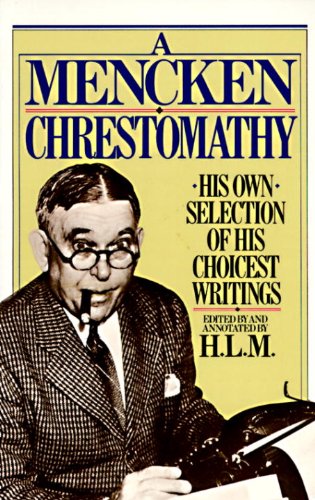
In the current issue of Reason, Mencken biographer Marion Elizabeth Rodgers explains why the great essayist would not welcome the adulation of the alt-right “Mencken Club”:

Libertarians and conservatives have always admired H. L. Mencken, the 20th century journalist and satirist famous for his literary and political commentary. Now the Baltimore author and editor, whose heydey lasted from the 1920s to the late 1940s, has become a hero to the alt-right, who have cherry-picked his views to support their white supremacist vision. For white nationalist leader Richard Spencer and fellow enthusiasts, Mencken embodies “worthy ideals,” namely, a questioning of “the egalitarian creed, democratic crusades, and welfare statism” that American democracy has become since the New Deal. Such is the essence of humor: It is hard to believe that Mencken would have ever given his worshippers the time of day.

[…]

Unlike the Mencken Society — a scholarly organization founded in 1976 in Baltimore that hosts talks on Mencken’s life and works by such luminaries as the late Christopher Hitchens, Arnold Rampersad, and Alfred Kazin — the Mencken Club holds pseudo-academic conferences ranging in themes as “The West: Is It Dead Yet?” or “The Right Revisited.” In 2016, the club focused on the populism of Donald Trump and the preservation of white Christian heritage through anti-immigration policies. White House speechwriter Darren Beattie spoke to members alongside Peter Brimelow, white nationalist and founder of the anti-immigrant website Vdare.com — a gig that ultimately cost Beattie his job.

Speakers rarely mention Mencken’s name at their meetings, except for random recitals from Chrestomathy or his earliest works: The Philosophy of Friedrich Nietzsche (1908), whom the alt-right see as a great visionary, and from Men Versus the Man: A Correspondence between Rives La Monte, Socialist, and H. L. Mencken, Individualist (1910), an epistolary debate where Mencken explores Social Darwinism, eugenics, heredity, and race. In the most offensive passage, Mencken defines “the American negro” as “a low-caste man,” and that the “superior white race will be fifty generations ahead of him.” In its podcast, club members touted Men Versus the Man as “a fun book” and asserted “race realists, anti-globalists, educational reductionists and immigration restrictionists can draw nourishment from Mencken … and his disdain for the low-caste man.”

In reality, Mencken would have shunned the white identity politics of the alt-right. To Mencken, Nietzsche’s “superior man” was the enlightened individual of honor and courage, regardless of race, creed, or social background. Soon after 1910, Mencken reversed his views of white superiority and began calling for civil rights for African Americans. Despite the fact that his Diary contains racial slurs and ethnic slang, Mencken rebelled against “the Aryan imbecilities of Hitler” and stated: “To me personally, race prejudice is one of the most preposterous of all the imbecilities of mankind. There are so few people on earth worth knowing that I hate to think of any man I like as a German or a Frenchman, a gentile or a Jew, Negro or a white man.”

He was especially contemptuous of white Anglo-Saxon Southerners, describing them as “shiftless [and] stupid,” and extolled African Americans as “superior to the whites against whom they are commonly pitted.” Unique for the mid-1900s and into the ’20s and ’30s, he collaborated with black intellectuals and was the first white editor to publish their work in his magazine, The American Mercury, and energetically promoted their writings in his books and columns and to his publisher Alfred Knopf. He was relentless in his campaigns against the Ku Klux Klan, and he joined forces with the NAACP to testify against lynching before the U.S. Congress. He repeatedly wrote against segregation; behind the scenes he discussed strategies with African-American leaders to promote civil rights.

Are Guards Historically Accurate? | Feature Enquiry

Filed under: Europe, History — Tags: , , — Nicholas @ 02:00

Feature History
Published on 22 Aug 2018

Use this link to get your first 2 months of Skillshare for FREE! http://skl.sh/featurehistory2
———————————————————————————————————–
Often fantasy and medieval media will show armoured guards patrolling settlements and enforcing the law. Is that historically accurate? No.
———————————————————————————————————–
Patreon
https://www.patreon.com/FeatureHistory
Twitter
https://twitter.com/Feature_History
Discord
https://discord.gg/Zbk4CvR
———————————————————————————————————–
I do the research, writing, narration, art, and animation. Yes, it is very lonely
Music by Epidemic Sound: http://epidemicsound.com

QotD: Free market capitalism

Filed under: Economics, Liberty, Politics, Quotations — Tags: , , — Nicholas @ 01:00

What is free-market capitalism? Allan Meltzer, an economist at Carnegie Mellon, a Hoover Institution scholar, and onetime advisor to President Ronald Reagan, offers a classic definition. “As long as you engage in actions where your actions don’t impinge upon other people, you’re free to buy and sell anything you want,” he says, adding that free-market capitalism protects private property. Thomas Coleman, a hedge-fund veteran heading up an economic-policy shop at the University of Chicago, adds another key element: free-market capitalism functions best when people and companies can trade “without systemic distortion of prices.” Deirdre McCloskey, until last year a professor at the University of Illinois, and author of the recent book Bourgeois Equality, says, “I don’t like calling it capitalism, anyway, which was a word invented by our enemies. … I call it instead market-tested betterment, innov-ism. … That’s what’s made us rich.” McCloskey says that the heart of “betterment” is Adam Smith’s ideal of “every man to pursue his own interest in his own way” — and that “doesn’t mean a large government sector,” she emphasizes.

Free-market capitalism isn’t the same thing as radical libertarianism. Stan Veuger, an American Enterprise Institute scholar and economics lecturer at Harvard, dismisses what he calls “the anarcho-capitalist ideal”: an economy with no regulations and zero taxation. “There are places like Somalia that score well” on such purist definitions of free markets, he points out. To work well, capitalism needs “an environment where people can concentrate on being productive,” rather than, say, having private armies to assure personal safety. Free-market capitalism requires laws and rules, more than ever, now that more people live in close proximity in dense cities than ever before. Human activity leads to disputes, and disputes can be solved, or at least moderated, by resolutions that govern behavior. We often forget that markets don’t make broad public-policy decisions; governments do. Markets allocate resources under a particular policy regime, and they can provide feedback on whether policies are working. If a city, say, restricts building height to preserve sunlight in a public park, free-market actors will take the restricted supply into account, raising building prices. This doesn’t mean that the city made the wrong decision; it means that the city’s voters will risk higher housing prices in order to preserve access to sunlight. By contrast, a city that restricts housing supply and restricts prices via rent regulation is thwarting market signals — it takes an action and then suppresses the direct consequences of that action.

Nicole Gelinas, “Fake Capitalism: It’s not free markets that have failed us but government distortion of them”, City Journal, 2016-11-06.

September 13, 2018

The Canadian Forces are suffering from obesity … in leadership and staff

Filed under: Bureaucracy, Cancon, Military — Tags: , , , , — Nicholas @ 05:00

Ted Campbell responds to requests to explain what he feels the Canadian Forces should do about our far-too-large military headquarters buttprint:

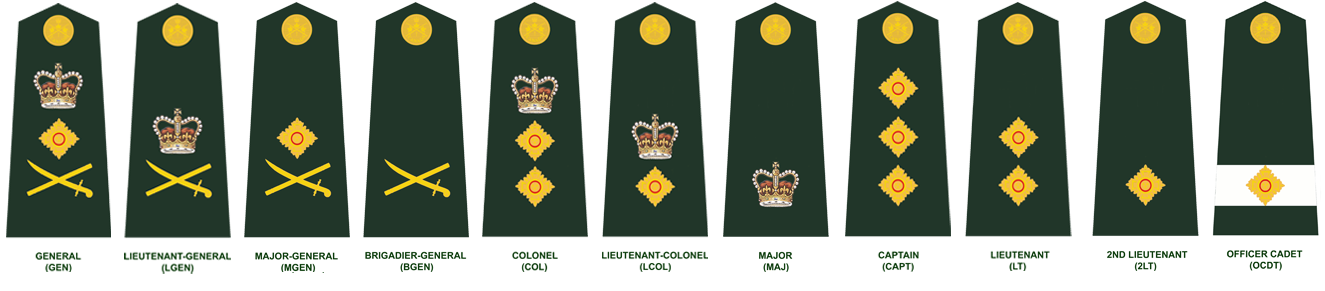
… let’s consider the command and control (C²) superstructure. I’m going to continue to argue that it is beyond “fat,” it is, now, morbidly obese and that condition actually poses a danger to our national defence. Too many cooks do spoil the broth and Canada has too many admirals and generals […] without enough real ‘work’ to keep them all productively busy; so they send each other e-mails and fabricate crises for their own HQ to solve and, generally, just make a nuisance of themselves. Fewer admiral and generals (and Navy captains and Army and RCAF colonels) will be busier and more productive and less dangerous.

I have a couple of concrete suggestions:

Start by reducing the rank of the Chief of the Defence Staff from four stars (admiral or general) to three stars, vice admiral or lieutenant general. We only have something like 65,000 regular force military members and 25,000 reserve force members. In about 1960 the Canadian Army, alone, had nearly 50,000 regular force members and something like 30,000 in the militia (reserve army) and it was commanded by one lieutenant general. Now, some will argue that times have changed and increased complexity means that higher ranks are needed. I call bullsh!t! The Israeli Defence Forces, today, has over 175,000 full time members and over 400,000 in reserve. Gadi Eizenkot, the Chief of Staff of the IDF holds the rank of Rav Aluf ~ lieutenant general, and he is the only Israeli officer to hold that high a rank. Now, let’s play a little mind game … suppose you are (four star) General Joseph Dunford of the United States Marine Corps, the Chairman of the Joint Chiefs of Staff, the most senior officer in the world’s most powerful military; now suppose, also, that your phone is ringing off the hook for some reason and your aide calls in on the intercom and says, “I have (four star) General Vance of Canada on line 1 and (three star) Rav Aluf Eizenkotof Israel on line 2, sir.” Which line does General Dunford pick up? Of course he isn’t impressed by Canadian General Jonathan Vance’s four stars; but he is mightily impressed by the size and power of the force that answers to three star Lieutenant General Eizenkot.

The argument that we need a four star CDS just because everyone else has one is specious … it’s rubbish. The Americans have several four star admirals and generals, they also have over 1¼ million active duty military personnel and 10 aircraft carriers and over 4,000 nuclear weapons. India has has a few four star officers, the Indian Army, with over 1 million regular, professional troops and with almost 1 million reserve soldiers, has one, only one, four star general. Canada does not need any four star officers on a regular basis … our lieutenant generals, vice admirals, rear admirals and so on, including Navy captains and Army colonels may all need generous pay raises but they do not need more gold on their shoulders and sleeves. Canada got its first four star officer back during World War II, when we had over 1 million men and women under arms. The rank returned in 1951, after our main allies, America (in 1947) and Britain (in 1939) established unified Chiefs of Staff committees to coordinate joint operations, when General Charles Foulkes was appointed to the post, which he would hold for almost a decade. Lowering the rank to three stars (vice admiral or lieutenant general) and raising the pay, would set a good example for the rest of the military and, indeed for all of government, in setting senior executive compensation, including perquisites, and status at reasonable levels.

Another thing, which I have mentioned before, is that back in the 1960s, when Defence Minister Paul Hellyer was upsetting every apple cart he and his team decided that the best way to set ranks and pay was to “benchmark” some military jobs with civil service equivalents. Now, in the civil service the appointment of “director” is, usually, the lowest level of executive ~ it is the point where technical expertise meets up with broader government wide responsibility and accountability, ‘ranks’ below that are specialists, ranks above it are, increasingly generalists. Now, anyone who knows much of anything about the military will agree that the first executive level in the Canadian Armed Forces is the captain of a major warship (a frigate, say) or the commanding officer of an Army regiment or battalion or of an Air Force squadron. Those ships and units are commanded by officers in the rank of commander or lieutenant colonel but for some reason, in the mid 1960s, the Hellyer team decided, probably just an error made in haste, that Navy captain and Army colonel and RCAF group captain were the appropriate ranks for directors and some very serious rank inflation was embedded inside the Canadian Armed Forces’ command and control (C²) superstructure … it’s an easy enough problem to fix although it will cause some short term disruption, and it means that the officers’ pay scales probably need to be reformed all the way down to the very bottom.

It has always seemed to me that the hallmark of a great army, of a great defence staff, especially, is a culture of excellence. The ranks of the staff don’t matter much, the staff act of behalf and in the name of the commander they serve. In fact, in a really good staff system the chain of command is always crystal clear because the senior staff are always, without fail, lower in rank (occasionally equal to) than the subordinate commanders. Thus, in an army corps (three or four divisions, perhaps 100,000 soldiers) the corps commander is a lieutenant general (three stars) and the subordinate commanders of divisions and of the corps artillery, are major generals (two star officers); in a proper corps the chiefs of staff of the operations and logistics branches, who control operations on behalf of the corps commander, are one star officers ~ brigadier generals. Ditto in the division (20,000+ soldiers) where the major general is the division commander and brigadier generals are the brigade commanders, the two chiefs of staff (operations, which includes intelligence, and logistics, which includes administration and personnel) are colonels … in each case the subordinate commanders outrank the senior staff officers. But the senior staff are listened to with great regard because they are excellent at their job and because they speak for the superior commander.


Mind Your Business Ep. 2: Aceable in the Hole

Filed under: Business, Technology, USA — Tags: , , , , — Nicholas @ 04:00

Foundation for Economic Education
Published on 11 Sep 2018

Believe it or not, parallel parking is not an impossible task. Meet Blake Garrett, the entrepreneur who is using VR to teach people how to drive, without actually getting behind the wheel.
____________
Produced & Directed by Michael Angelo Zervos
Executive Produced by Sean W. Malone
Hosted by Andrew Heaton
Original Music by Ben B. Goss
Featuring Blake Garrett

The lasting impact of Haida Nation vs. British Columbia

Filed under: Cancon, Government, History, Law — Tags: , — Nicholas @ 03:00

I was not aware that a single case had such a major influence on relations between the federal and provincial governments on the one hand and First Nations groups on the other. Barbara Kay explains just how we got to the point of overturning decades of settled legal practice in the wake of the Haida Nation decision:

In his newly published book, There is no Difference: An Argument for the Abolition of the Indian Reserve System, lawyer Peter Best devotes a chapter to unpacking the consequences of Haida Nation. It makes for fascinating reading.

Before this decision, Best says, it was understood “that aboriginal claims and rights over the land were more than ‘reconciled.’ In fact, Canadians, Indians and non-Indians alike, thought they were, especially in treaty areas, extinguished, plain and simple,” apart from the right to hunt, fish and trap on unoccupied wilderness Crown land, and even then with Crown sovereignty. Haida Nation – and cases decided since then – reversed the meaning of the treaties.

The SCC read in an intent “merely to ‘reconcile’ Indians’ prior sovereign occupancy of the land with the new sovereignty of the Crown.” That is, they were “instruments of power and land-sharing, not instruments of rights extinguishment.”

So it seems we are now in a never-ending power-sharing arrangement, “requiring the constant, expensive, uncertain fine-tuning and adjustment from time to never-ending time of the granted Crown rights with the retained sovereign Indian rights.” This new jurisprudence, Best says, decrees a devolution of Crown sovereignty to Indians – a handing back of previously surrendered power, effectively turning Indian bands into a third order of government.

The key words, “to consult and where appropriate, accommodate the Aboriginal interests…” give Indian bands across the country power over all kinds of economic development – mines, forestry, wind power installations, roads, and of course pipelines.

Following Haida Nation, any band that asserts a proposed off-reserve project affects an Indian interest, actual or projected, the “consultation and accommodation if necessary” process is automatically launched. No evidence has to be produced, no threshold of importance to be met. (“Sacred ground” is always effective – and what ground is not sacred to aboriginals who live on it?).

In most negotiations with conflicting interests, each party has a motive to see the deal done. But “consultation” is not negotiation, and aboriginals often have no particular reason to settle. Best notes that during consultations, there’s a great deal of travel, expense account living, important meetings and pleasant busywork, with most politicians lacking the courage to utter the words “not appropriate” with regard to further “consultation.”

There is also no incentive for aboriginals to settle for anything less than exactly what they want. The Lax Kw’alaams of B.C. turned down a billion dollars in exchange for their support of an industrial project. There was no downside for them. They had the power and knew it. No matter how long they held out, their transfer payments flowed in as usual, and they took no economic risks if the project failed. If one side has nothing to lose and the other side has everything to lose, Best says, “you don’t have negotiations – you have a shakedown.”

Broadsword and targe – how Highlanders fought

Filed under: Britain, History, Weapons — Tags: , , — Nicholas @ 02:00

Lindybeige
Published on 22 Aug 2018

A quick introduction to the use of this weapon combination, shot very quickly at Fight Camp 2018. Sorry about the background noise.
Support me on Patreon: https://www.patreon.com/Lindybeige

This was shot at the end of the last day, and I was a bit hoarse from shouting, camping, and beer. When the aircraft overhead gets very loud, I have added subtitles.

The targes we are using are the correct diameter, but the real things were a fair bit heavier, and offered some protection against even musketballs.

Lindybeige: a channel of archaeology, ancient and medieval warfare, rants, swing dance, travelogues, evolution, and whatever else occurs to me to make.

QotD: “God is dead”

Filed under: Books, Europe, Quotations, Religion — Tags: , , , , , — Nicholas @ 01:00

The life and work of the maverick German philosopher Friedrich Nietzsche (1844-1900) is associated with five interlinking ideas: the death of God; nihilism and the crisis in morality; the Superman; the will to power; and the eternal recurrence.

Nietzsche first announced that ‘God is dead’ in his 1883 work The Joyful Science. As with much that he wrote, this phrase of Nietzsche’s has subsequently been often misunderstood. Taken literally, it is obviously a nonsensical declaration, for either a Christian god is real and eternal, or else he never existed in the first place. What Nietzsche meant by the death of God was that European civilisation had lost its faith in Christianity, but was still living by values and a morality system based on it. For this reason he believed European civilisation was facing a crisis resulting from the approaching collapse in its morality system, and the dawn of the age of nihilism – hence the title of his 1886 work, Beyond Good and Evil, which was not the libertine manifesto it sounds like, but a contention that Christian values of good and evil have become redundant.

In this respect, Nietzsche was not a nihilist, another common misconception. He viewed the coming age of nihilism with much trepidation, fearing (rightly) that the result would be great wars in the 20th century. He believed that it was imperative that humanity create a new morality system for the coming post-Christian age. The solution, he believed, was a new individualistic morality system in which the strongest, bravest men would become their own masters and creators, and in turn would become philosopher kings and oligarchs of the spirit. This new man was to be embodied in his infamous, hypothetical Übermensch, or Superman (as Über means above and beyond in German, Nietzsche’s word used to be also translated as the Beyond-Man or Overman, but today is usually not translated at all. The Übermensch goes above and beyond.)

Patrick West, “Nietzsche and the struggle against nihilism”, Spiked, 2018-08-03.

« Newer PostsOlder Posts »

Powered by WordPress