Quotulatiousness

May 4, 2026

Chief Narcissist of the Supreme Court of Canada

Filed under: Cancon, Law, Media, Politics — Tags: , , , , — Nicholas @ 03:00

On the social media site formerly known as Twitter, David Knight Legg explains why the Chief Justice should recuse himself from deliberation on an upcoming Supreme Court case involving the Freedom Convoy 2022:

Canada’s Chief Justice Richard Wagner has installed a lifelike bronze bust of himself in our highest court.

It should be called “Narcissus Canadiannus

– There is no precedent for something this vulgar in the history of the Court. It should be taken down. Richard fancies himself.

– Richard also fancies his own opinion on things. He violated legal due process and the Court’s reputation by publicly accusing the Convoy — who protested backwards federal Covid policies that were soon dropped — of “anarchy” and “hostage taking”.

Now that the Convoy’s freedom of speech, assembly and due process rights have been asserted by lower courts the Supreme Court has to consider the appeal of the federal govt and weigh the rights of citizens against the decision of the federal government to impose the Emergencies Act to suspend those rights.

Wagner’s lack of judicial discretion in the first instance makes his recusal from such an important rights-defining case important because it signals not just fairness in the content of the decision but in the way the decision gets reached by the highest Court.

He has already shown his bias. Any decision against the convoy poisons the integrity of the Court if he remains present.

But Richard — the man with the bust of himself in our Court — doesn’t imagine himself under the law he imposes on others. He hasn’t completed any graduate work in law or published any academic work in law, philosophy or jurisprudence so it’s hard to know how he justifies himself in these matters.

Ironically, he has a reputation for warning others — including those far more qualified in formal jurisprudence than he is — not to critique Canadian judges like himself or their (increasingly bizarre and politicized) decisions.

But, from the Magna Carta onwards, Richard should know that in law as in politics dissent is democracy.

The dissent of the Convoy and the growing critique of Richards own bizarre behaviour and inability to articulate a judicial philosophy is exactly what’s needed to save Canada — and the Court’s reputation as a place where justice — not the ego of the Justices — is at stake.

Richard should recuse himself. And remove that vulgar bust from the Supreme Court.

#SCC #RuleOfLaw

Melanie in Saskatchewan also has concerns, expressed as an open letter to the Chief Justice:

To Chief Justice Richard Wagner,

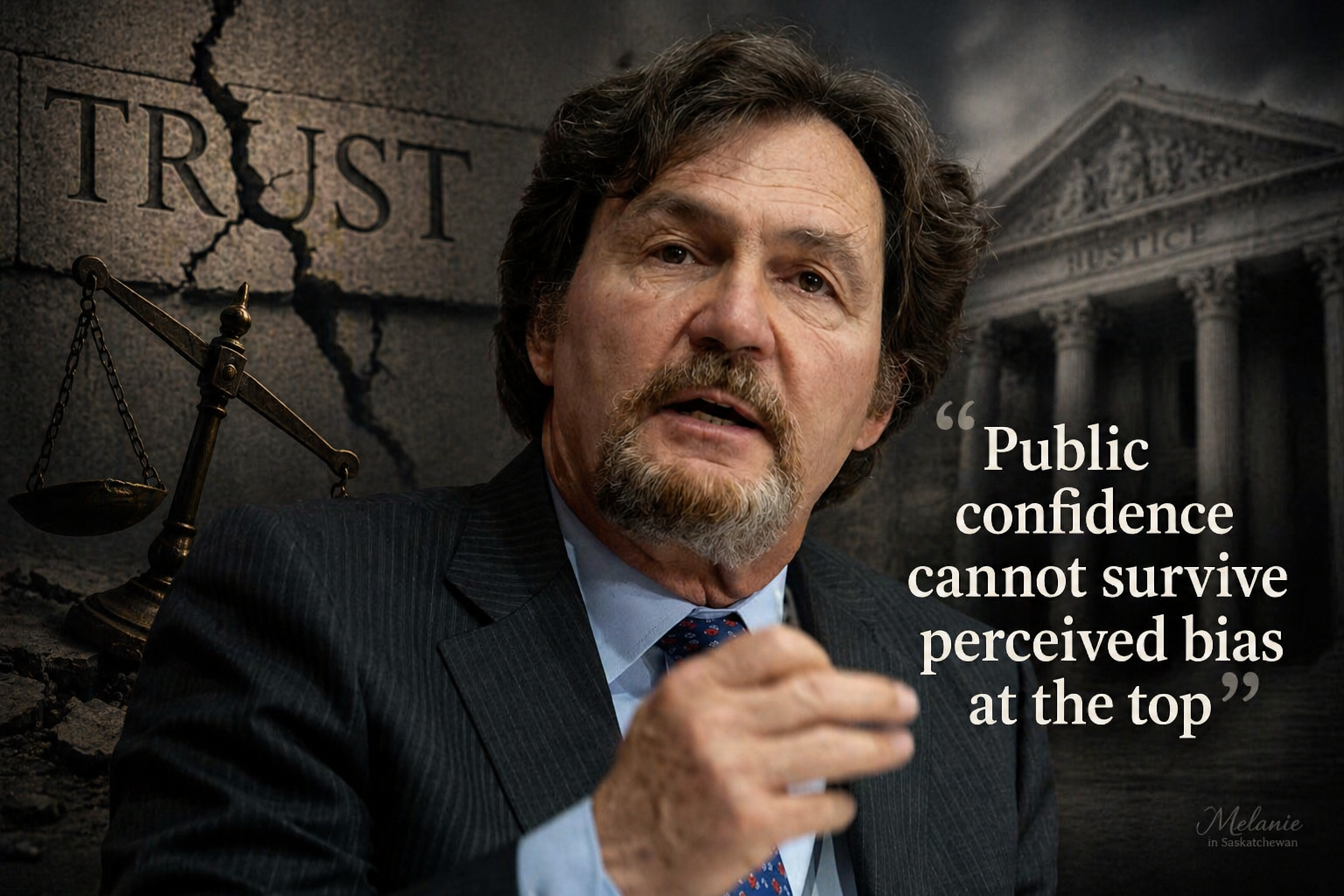
Your refusal to recuse yourself from the Emergencies Act appeal, as reported in the National Post, is not a demonstration of judicial confidence. It is a failure of judgment at a moment that demanded restraint.

Image from Melanie in Saskatchewan

You have justified your decision on the basis that your prior public comments did not address the specific legal questions before the Court. That argument may satisfy a narrow, technical reading of judicial conduct. It does not satisfy the standard Canadians are entitled to expect from the Chief Justice of the Supreme Court.

The governing principle is not whether you commented on the precise statutory interpretation of the Emergencies Act. It is whether a reasonable and informed person would conclude that your previously expressed views could influence your assessment of the case.

You publicly characterized the convoy as the “budding start of anarchy”, described residents as being “taken hostage”, and spoke in terms that conveyed clear condemnation of the events and participants. Those were not neutral observations. They were judgments about the nature, legitimacy, and perceived threat posed by the very situation now under review.

This appeal is not a retrial. It does not exist to rehear evidence or relitigate the convoy as though the past can be reset. Appellate review in Canada is focused on whether the law was correctly interpreted and properly applied to established facts, with significant deference given to the findings already made by the lower courts.

That distinction matters.

[…]

As Chief Justice, you are not merely a participant in this case. You are the steward of the reputation of the Supreme Court of Canada itself. That reputation rests not on assertions of impartiality, but on decisions that demonstrate it beyond reasonable doubt. In choosing not to recuse yourself under these circumstances, you have not strengthened that reputation. You have placed it at risk, at a time when public confidence in national institutions is already fragile. The damage may not be immediate, but it is real, and it is yours to own.

May 2, 2026

Cancelled chancellor?

Filed under: Germany, Government, Media, Politics — Tags: , , , — Nicholas @ 04:00

The German Chancellor’s future looks unhappy, and eugyppius notes that even the lapdog mainstream media outlets who praised him last year are now publishing calls for his ouster:

German Chancellor Friedrich Merz, 5 May 2025.
Photo by Sandro Halank for Wikimedia Commons.

Merz has always been just some loser. He’s a third-rate talentless politician and in this much like his predecessor, Olaf Scholz. Both are mere caricatures, what happens when you mimeograph overmuch the last century’s tired political styles. These kinds of chancellors will continue to exist only so long as they can be sold to the geezers of the Federal Republic’s care homes by the amateurish marketing campaigns of a complicit state media as the incarnation of far-sighted competence and (more importantly) bourgeois respectability.

Early in 2025, Merz had the chance to seize a measure of power for himself and make facts. He could have forged a deal with Alternative für Deutschland on the most important questions, established a minority government and set about force-marching the obese German state through necessary reforms. It might’ve torn his party apart, he might’ve failed, there would’ve been a huge fight, but whatever happened nobody would ever forget Chancellor Merz. Instead, the Pigeon Chancellor let a lot of deranged Antifa street protesters and screeching women with parareligious concerns about atmospheric carbon dioxide concentrations dissuade him from the only reasonable path. Instead of making history, he chose to spend the first year of his chancellorship making the Social Democrats fat and happy at the expense of the nation. Most don’t even hate Merz, because hate like love has to be be earned. He inspires nothing more than mildly scornful indifference.

Everyone who was not a complete idiot knew that Merz’s mad coalition with the Social Democrats could never work. Yet the man has been lionised in the international press and even in centre-right domestic papers like the Frankfurter Allgemeine Zeitung as a serious reformer. These people told us Merz would rebuild the Bundeswehr, reduce insane social spending, impose fiscal discipline, solve the migroid problem and restore economic growth. Even if the leftoid half of the German establishment press didn’t embrace all these myths, they nevertheless worked hard to make Merz seem presentable, serious and viable. He was worth a shot, he would do his best, and after the crazy Scholz years Germany was back on solid footing.

Now, in the the space of about two weeks, the entire myth of Chancellor Merz has collapsed. Major papers that used to defend his government and praise his prospects are suddenly saying it’s over. They’re writing front-page editorials in the spirit of stuff I was posting here over a year ago. Merz appears at town-hall meetings where he gets asked how he’s made life better in Germany and before he can answer the audience just laughs at his stupid ass. His coalition partners say he’s doing a terrible job. Back-benchers from his own party are calling his political strategy a failure to his face and leaking it afterwards to the press so everyone knows what they said.

Still worse, people from the Chancellery are talking to the tabloids. They’re explaining that Merz’s government has been hanging by a thread since at least last December; that his party thinks he’s a pushover whom the SPD constantly manipulates; that often Merz just absorbs the opinions of whatever person he last talked to and so his handlers have to limit his contacts to keep him from going off-message in insane ways; that Merz is now almost totally isolated, having burned through most of his close confidants; and that nobody has any solutions or ideas and increasingly everybody doubts that the Chancellor has the talents to save himself.

April 24, 2026

Defending Heinlein and his most controversial novel – Farnham’s Freehold

Filed under: Books, USA — Tags: , , , , , , — Nicholas @ 02:00

Grammaticus Books
Published 21 Nov 2025

An indepth review of Robert A. Heinlein’s most controversial novel. A novel sometimes referred to as Science Fiction’s most controversial novel, Farnham’s Freehold.

00:00 Intro
02:30 Why I Read Farnham’s Freehold
04:33 The Plot (Spoilers)
12:48 The Critics’ Complaints
21:40 Is it A Fun Read?

My Video on Time Enough for Love:
Heinlein’s MOST CONTROVERSIAL Novel – Time…

Update, 25 April: Welcome, Instapundit readers! Have a look around at some of my other posts you may find of interest. I send out a daily summary of posts here through my Substackhttps://substack.com/@nicholasrusson that you can subscribe to if you’d like to be informed of new posts in the future.

April 21, 2026

QotD: “Bibliophiles are massive losers, why can’t we just admit that?”

Filed under: Books, Humour, Quotations — Tags: , , , — Nicholas @ 01:00

It’s a conspiracy. Every piece of worthless advice I ever hear tells me I must, “Read, read, read”. I can’t even try to listen to music on YouTube without entrepreneurs, life coaches and other snake oil salesmen popping up on shouty adverts, posing alongside other people’s Lamborghinis and Learjets, asking me to guess how many books the world’s top fifty “Super Achievers” read each year. (It’s fifty-two, conveniently.) “The more you learn, the more you earn!” these morons confidently claim. As if reading books makes you a billionaire.

I don’t buy it. I bet billionaires don’t read at all. Not only because they don’t have the time, but because every big reader I know is broke. Without exception, books have overloaded their minds, and their lives are in total disarray. When they’re not consumed by tortuous examinations of Socialist Realism in the shallower subsections of the Baltic Canal between late October 1933 and early March 1934, they’re deconstructing turgid translations of 9th Century Glagolitic poetry from the White Carpathian territories of Great Moravia. On weekends, for light relief, they dip into obscure anthologies of critically-acclaimed feminist speculative fiction championing unsung writers born in the shadow of the Chappal Waddi in the Mambilla Plateau. What should have been their office hours are spent haggling with elderly volunteers in Oxfam bookshops over worthless, dogeared volumes of Dietrich Bonhoeffer’s early letters or needlessly exhaustive histories of the Sepoy Mutiny of 1857 in the Ganges-Brahmaputra basin. They own vast stacks of surplus, dust-magnet books, but they never own art, or cars, or houses. Bibliophiles are massive losers — why can’t we just admit that? There’s a clear correlation between reading and underachievement. There’s a reason homeless vagabonds line their coat pockets with paperbacks and newspapers. Our children must be warned, before it happens to them.

Reading is even less helpful to writers. If you write, you are incurably influenced by whatever garbage you happen to be reading at the time. For example, if I’m reading Hemingway, I finish this sentence here. Whereas, in the rare, transcending moments that I am reading, say, Henry James, I find, to my eternal chagrin, that I write — if, indeed, “write” is the morpheme, or mot juste, for which I rightly delve — in my lasting endeavours — my contention, if you will, against the ordained — in a spirit of refined demonstration, or braggadocio, as the case may be, that … Where was I?

Then, of course, there’s the snobbery associated with reading. “Read a book!” command the enlightened few, should you dare disagree with them on any trendy subject. It’s ridiculous, but if you read — or, better still, opine pretentiously about what you read — the chattering classes will clamber to pressgang you into their fanatical ranks. Nobody cares if you write anything, so long as you describe the latest high-status books as “vital”, “necessary”, “required”, or “essential”. Trust me, you can get away for years with pretending that you are “working on something big that I’d rather not talk about for fear of jinxing it” while freely enjoying all the wine and canapes you can stomach. But suggest you don’t read, and people quickly get suspicious.

Dominic Hilton, “All Booked Up”, The Critic, 2020-08-17.

April 19, 2026

Simple rules for judging commentary on the Iran situation

Filed under: Media, Middle East, Military, Politics, USA — Tags: , , , , — Nicholas @ 05:00

You’ve probably noticed that I don’t include a lot of content on Iran or Ukraine these days. That’s largely because the fog of war propaganda is too dense for much reliable information to come to us and be subject to any kind of fair analysis. Lorenzo Warby has a few rules to suggest to those of you trying to sift real information out of the noise — both specifically on the Iran conflict and also more generally for these kinds of low-signal/high-noise conflicts:

There is a lot of poor quality commentary about on the current Iran War — or, as the Chinese call it, the War in West Asia. Fortunately, there are two simple tests that winnows out much of the noise so you can focus on signal.

Locations struck by:
– United States and Israel (blue)
– Iran, Hezbollah, Houthis, and PMF (red)

First Easy Test

Would this commentator ever admit that Trump had done something positive?

If the answer is no, ignore them. They are not commenting on the War, they are commenting on Trump. They are just providing anti-Trump talking points for this particular issue.

Second Easy Test

Does this commentator pay any attention to the record of the Islamic Regime? Its record of domestic repression, including various mass executions and mass killings of protesters? Its record in supporting and constructing proxies: in Lebanon, in Gaza, in Yemen, in Iraq, in Syria, in …? The record of those proxies and how they disrupt and degrade those countries? Its record in promoting terrorism across the globe? Its record in massive economic and environmental dysfunction …?

If the answer is no, ignore them. This is especially so if what they do comment on is Israel. They are not commenting on the War, they are commenting on Trump and on Israel. They are just providing anti-Trump, anti-Israel talking points for this particular issue.

The more of a regime of internal exploitation the Islamic Regime has become, the more it has built up its proxy forces. The more it built up its proxy forces, the more disruptive and destructive it has become.

[…]

Third, More Subtle, Test

The third test is about how wars work. Does the commentator understand that good strategy in war is a decision-tree? If you do X and Y happens, then follow up with Z. If you do X and A happens, follow up with B.

If they do not understand that, if they treat successful war strategy as being able to operate according to some plan so what the opponent does in response to it does not matter, then they do not understand war, and you can ignore them.

A classic way to fail in military affairs, is to not treat military action as a decision-tree, but to continue with the previous plan of action despite some crucial change in circumstances.

April 8, 2026

QotD: Without You, There is No Us, by Suki Kim

Filed under: Asia, Books, Education, Quotations — Tags: , , , , , — Nicholas @ 01:00

Without You, There is No Us, by Suki Kim. Aka A Portrait of the Basic College Girl as a Young Woman. Be advised: Be current on your blood pressure meds before you check this one out from the library. Maybe have one of those defibrillator kits on hand, because it’ll get your blood boiling like no other. Kim scams an American missionary organization into sending her to North Korea as an English teacher. She’s well aware that the organization will be destroyed when she’s exposed. She’s also well aware that the young boys she’s teaching — the sons of high Party officials — are going to face potentially lethal consequences, along with their entire families. None of that bothers her a bit. No, her main problem is that all those North Korean boys find Mx. Suki Kim so irresistibly sexy, OMG, she just can’t even.

Also note the passages about Her Relationship. That’s how she refers to the poor bastard. It’s something along those lines, I forget — maybe it’s “My Ex” — but either way, he never even gets the goddamn common courtesy of being referred to by name … because to Mx. Kim, he really doesn’t have one. He’s just another interchangeable character in the all-encompassing soap opera that is her life.

Severian, “Recommended Reading”, Founding Questions, 2022-06-09.

March 27, 2026

The Greatest Scoundrel Story Ever Written

Filed under: Books, Britain, History, Humour, India — Tags: , , , — Nicholas @ 02:00

Lotuseaters Dot Com
Published 29 Nov 2025

Luca is joined by Dan to discuss Flashman by George MacDonald Fraser. They explore Fraser’s skill in writing historical fiction, the genius of the Harry Flashman character, and the sheer hilarity of the novel’s dark humour.

March 24, 2026

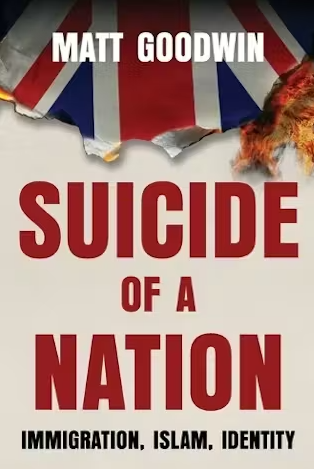
“Matt Goodwin’s Suicide of a Nation is a very bad book”

Filed under: Books, Britain, Media, Politics — Tags: , , , , , — Nicholas @ 04:00

In The Critic, Ben Sexsmith reviews a new book by Matt Goodwin, Suicide of a Nation: Immigration, Islam, Identity:

Here is an exceptionally easy argument to make:

  1. Mass migration is ensuring that the historical majority in Britain is becoming a minority.
  2. This is the result of policies that have been pursued regardless of popular opinion.
  3. This has had many kinds of destructive consequences.

The first claim is so obviously true that one might as well deny the greenness of the grass. The second is proven by decades of broken promises (see Anthony Bowles’s article “Immigration and Consent” for more). The third requires argumentation, but I think that it is clear if one considers hideous incidences of terrorism, grooming gangs and violent censoriousness, as well as broader trends of economic dependency and electoral sectarianism.

Again, this is not a difficult argument to make. So why is it made so badly?

Matt Goodwin’s Suicide of a Nation is a very bad book. It reads like the book of a political operator extending his CV. The left-wing commentator Andy Twelves caused a stir on social media by pointing out various factual mistakes and what appear to be non-existent quotes. Twelves speculates that these “quotes” are the result of AI hallucinations, which is plausible, if not proven, in the light of the fact that two of Mr Goodwin’s sparse footnotes contain source information from ChatGPT.

Inasmuch as Suicide of a Nation makes a form of the argument sketched out the beginning of this article, there is truth to it. But it contains a fundamental problem — it assumes that this argument is so true that there is no requirement to make it well.

“Slop” is an overused term but it feels painfully appropriate for a book that is spoon fed to its audience. Goodwin, who had a long academic career before becoming a successful commentator, is not a man who lacks intelligence. But he writes as if he thinks his audience lacks it. “I did not write this book for the ruling class”, writes Goodwin, “I wrote it for the forgotten majority”. Alas, he seems to think that the average member of the “forgotten majority” has the reading level of a dimwitted 12-year-old. As well as being stylistically simple, the book is full of annoying paternal asides. “In the pages ahead I shall walk you through what is happening to the country …” “In the next chapter we will begin our journey …” Thank you, Mr Goodwin. Can we stop for ice cream?

The book is terribly derivative, with a title that reflects Pat Buchanan’s Suicide of a Superpower and a subtitle — “Immigration, Islam, Identity” — that all but repeats that of Douglas Murray’s The Strange Death of Europe — “Immigration, Identity, Islam”. It is written in the humourless and colourless rhetorical style of AI. I’m not saying it was AI-generated. (Indeed, a brief assessment using AI checkers suggests that it was not.) I’m just saying that it might as well have been.

March 21, 2026

“None of the artistic -isms lasted very long. Today’s -ism soon becomes yesterday’s was-ism”

Filed under: History — Tags: , — Nicholas @ 03:00

Ted Gioia on “the shock of the old”:

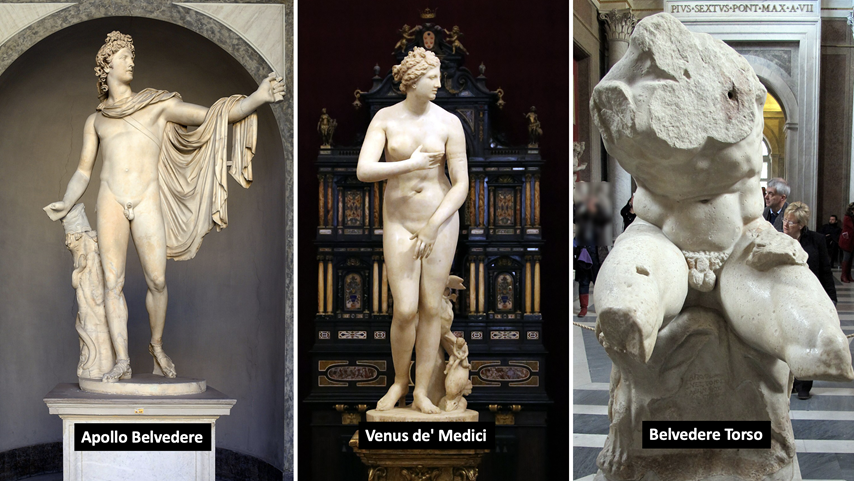
During the 15th century, the leading critics all agreed that the greatest works of art came from an unusual place. No, not a museum or church or palace — they were found, instead, underground and amid ruins, literally covered in dirt.

Before you could see them, you first had to dig them up.

Can we even imagine this attitude today? Our whole hierarchy of aesthetics would need to be reversed. Just consider the shame of admitting that our most cherished cultural legacy had been buried and forgotten by our ancestors. Art appreciation gets turned into some kind of exhumation.

But the reaction to this rediscovered art was just as interesting as the sculptures themselves. How do you feel when you look at these works?

You probably aren’t shocked by the nudity. You’ve seen more salacious stuff on Netflix. In fact, you probably aren’t shocked by anything here — these statues feel very old fashioned and antiquated.

That’s an interesting word, antiquated. It means “old, and no longer useful”. If the plumbing in your house is antiquated, you’re in big trouble. And it’s even worse if you are antiquated.

The word comes from the same root as antiquities — a term applied to arts and artifacts from the past. And most observers today would put the two ideas together, and say that these old statues might be charming to see in a museum, but have little or no relevance to us today.

But that’s not how Michelangelo, Raphael, and other Renaissance artists saw them.

These works were more than a thousand years old, but the leading 16th century artists believed they were worthy of study and imitation. Even more shocking, the great minds of the Renaissance believed that such works represented timeless standards of artistic excellence that could not be erased by the passing centuries.

In other words, evaluating art was like pursuing the good life. After you discovered the pathway to do that, you kept to the course. It didn’t go stale like a loaf of bread. It wasn’t a fad or a trend, but something enduring. The same thing is true of good health or a good marriage — you want them to endure, not get replaced by the next new thing.

Five hundred years later, leading critics believed the exact opposite. Standards were not timeless, but constantly in flux. During the 20th century, art was supposed to disrupt the standards from the past. If a work made you uncomfortable, all the better — you needed a kick in the ass. If the Venus de Milo hadn’t already lost her arms, some witty critic would probably suggest that we cut them off. That would give you a jolt, huh?

This notion of disruption was already prevalent a hundred years ago. And the kicks aimed at your posterior came from all directions. Critic Robert Hughes called this the “Shock of the New”.

The individual asskicks were the -isms.

There’s surrealism, dadaism, cubism, futurism, brutalism, fauvism, abstract expressionism, deconstructionism, postmodernism, serialism, minimalism, and so forth and so on. You could make a patter song from all of them.

Critics placed wagers on them, as if they were horses at the track. If they made a smart bet, they could reap a windfall. Their reputation was enhanced, and also their wallet. I’m reminded of the elite art critic who launched the careers of painters, and sent the market price of their works skyrocketing — but only after he had accumulated some choice specimens for his own collection. In the finance world, this is called insider trading.

The suffix -ism originally denoted a doctrine, theory, or worldview. Or even a religion, such as Judaism or Buddhism. These aesthetic -isms were also a bit like religions, inspiring fervent loyalty.

But there was a big difference. Religions like Judaism or Buddhism last for thousands of years. But aesthetic theories come and go. None of the artistic -isms lasted very long. Today’s -ism soon becomes yesterday’s was-ism.

That’s a little strange, because the advocates of the -isms all promised that they were delivering the blueprint for the future. And then we finally get to the future — and what do we see?

March 19, 2026

District 9 and the Story of “Race”

Filed under: Media, Politics — Tags: , , , , , , — Nicholas @ 02:00

Feral Historian
Published 14 Nov 2025

Modern society has become a bit obsessed with the idea of race. District 9 subverts some of these assumptions and points at some of the ways that the entire concept of race is a product of the modern era. This one meanders a bit, but I suppose there’s no way around that.

00:00 Intro
02:45 Meet Wikus
05:42 Subverting Race
08:35 Bacon’s Rebellion and Trans-Racial Wikus
12:32 Let’s Talk About Rhodesia
14:48 Perspectives and Narratives
(more…)

March 13, 2026

QotD: “I was one-shotted in my teens by Guns, Germs, and Steel

Filed under: Books, History, Quotations — Tags: , — Nicholas @ 01:00

I was one-shotted in my teens by the way Guns, Germs, and Steel ✨explained everything✨ and I’ve been chasing that dragon ever since. At this point honestly half the books I’ve reviewed could probably be described as arguments against Jared Diamond. But that’s okay. I can stop any time. Just one more sweeping transdisciplinary exploration of global history. Just let me see a map of British coalfields next to a chart of GDP per capita and I promise I’ll go back to that book about esoteric writing. C’mon, bro, I won’t ever talk about the Hajnal Line again, I swear. Just let me have one more study of an under-appreciated causal factor for the differing trajectories of human societies and I’m done. I have this under control.

Jane Psmith, “BRIEFLY NOTED: Further Arguments Against Jared Diamond”, Mr. and Mrs. Psmith’s Bookshelf, 2025-11-03.

March 10, 2026

Rolling toward disaster – North America’s trucking industry

Filed under: Australia, Books, Cancon, USA — Tags: , , , , , — Nicholas @ 05:00

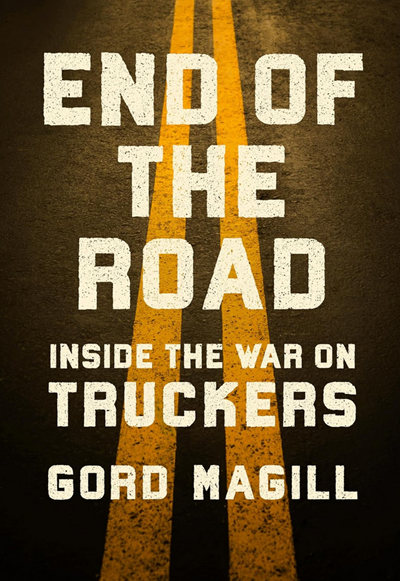
Donna Laframboise reviews a new memoir by Gord Magill, recounting his career in trucking in Canada, the United States, Australia and New Zealand:

… Gord has written a splendid book that belongs on Economics 101 reading lists everywhere. End of the Road: Inside the War on Truckers is chock-a-block with firsthand anecdotes. He tells us, for example, about traveling north into Canada from New York state during the 2022 Freedom Convoy protest, and feeling “drunk with patriotism, in love with every person I met, and they were in love with me”. After returning to his wife and daughters south of the border, he says he’d “never seen so many Canadian flags flying in the United States. It was unbelievable.” For a short time, “I was a minor celebrity simply for being from Canada”.

But this book is more than a collection of quirky tales about life behind the wheel. It’s a deep dive into shark-infested waters. For decades, but especially in recent years, experienced truckers have been treated like disposable widgets rather than skilled professionals. An industry upon which much of the North American economy depends has been undermined and hollowed out by perverse economic incentives, widespread fraud, and foolish policy. All of this makes our highways dangerous.

Gord explains that members of the public are three times more likely to be killed in a truck crash in America than down under partly because Australia has a graduated, quasi-apprentice licensing system. After driving smaller trucks for a year, people apply for the next level of trucking license, and then the next level, and then the next.

In North America these days, licenses seem to be given out like breath mints. The driver who blew through a stop sign in rural Saskatchewan in 2018, killing sixteen people associated with the Humboldt Broncos junior hockey team and injuring 13 others had less than one month of trucking experience. Yet he was behind the wheel of one of the largest configurations on the road (two interconnected trailers, known in the industry as a Super B-train). In Australia, that same driver would have needed a minimum of four years of experience and would have completed multiple courses and passed multiple tests before being entrusted with such a load.

Gord reminds us about the Ethiopian driver (on a work visa) who plowed into traffic that had slowed to a halt in a Texas construction zone last March. Five people — including a family of two parents and two young children — were killed, eleven others were sent to hospital, and seventeen vehicles were damaged. In that case, the driver reportedly had only four months of trucking experience.

Shortly afterward, in August 2025, three people died in Florida when, as Gord writes, “a tractor trailer attempted to pull an illegal U-turn through a small access point in the median … As the driver of the truck executed the turn, he pulled in front of a minivan, which ran into his trailer at high speed.”

The trucker in that case, an illegal immigrant from India, had somehow acquired commercial driver’s licenses in two US states. But when an English proficiency test was administered a few days after the accident, he answered only 2 of 12 verbal questions correctly and could identify only 1 of 4 traffic signs. It was later reported he’d failed his commercial trucking exam ten times during a two-month period.

Then there’s the trucker who drove an 18-wheeler weighing forty tons across a bridge with a clearly posted weight limit of six tons in rural Arkansas in 2018. The bridge collapsed and the truck sank into the river. It took seven months to extract it, while the bridge remained out-of-service for years.

March 8, 2026

QotD: Reading books versus remembering books

Filed under: Books, Humour, Quotations — Tags: , — Nicholas @ 01:00

As a gullible young man, I fell for the big lie that books are improving. “Reading develops the mind,” my parents told me when I begged for a TV in my bedroom. My teachers seconded the motion, as did one hundred per cent of the world’s self-serving authors. “Reading makes you smarter,” they all said. “Reading gives you endless knowledge and reduces stress. Reading makes you human.”

“What about people who can’t read?” I asked, thinking of all the illiterates in my year group at school. “Don’t they have human rights, too?”

My mother snorted with laughter, as if I’d told a dirty joke. “Oh, that’s precious!” she said, wiping her eyes, and I raced upstairs to bury my nose in the first book I could find.

To be fair, I’d no idea back then what the passage of time does to the brain; that knowledge is never accrued, only forgotten. As an adult, I’ve trudged my way through the entire oeuvres of a good number of literary giants, and not only do I remember bugger all about what I read in any of those books, I’ve entirely forgotten that I read the vast majority of those books at all. Worse, when people ask my opinion about one of their renowned authors, I frown bewilderedly and say, “Who?”, their very existence having somehow been completely blotted from my mind. In my lowest moments, I even add, “Oh, I’ve never heard of him/her. I’ll have to give him/her a try. Which book of his/hers would you recommend I start with?” Only when I’m several chapters into one of these titles does a muffled bell ring somewhere at the back of my broken brain. Hang on, I think, didn’t I read something a bit like this once before? Then I accuse Dostoyevsky of plagiarism.

Dominic Hilton, “All Booked Up”, The Critic, 2020-08-17.

March 4, 2026

Jean Raspail’s The Camp of the Saints

Filed under: Books — Tags: , , , , — Nicholas @ 05:00

Like many, I’ve heard of Jean Raspail’s novel The Camp of the Saints but I’ve never seen a copy of it for sale and I certainly haven’t actually read it myself. At Postcards From Barsoom, John Carter discusses a rare thing: a newly translated printing of the book that iscurrently available for sale:

To call The Camp of the Saints prescient undersells it. At times, Raspail seems to be downright prophetic. Pope Benedict XVI plays a prominent role (albeit this is a character who could not be more different from Cardinal Ratzinger). Raspail also correctly predicted that Rhodesia would become Zimbabwe, which may have been easily foreseeable when Raspail was composing the work but still did not formally happen until 1980, seven years after the novel’s publication; while Raspail was writing, the Rhodesian Bush War was still in full swing. The Rhodies fought until the bitter end to prevent the breadbasket of Africa from being turned into Africa’s basketcase.

The Camp of the Saints is sometimes described as a dystopian novel, which should be read alongside 1984, Brave New World, Fahrenheit 451, Slaughterhouse 5, and C. S. Lewis’ That Hideous Strength. There’s something to be said for this interpretation. You get a pretty good description of the modern world with the Venn diagram overlap of the total state’s panoptic tyranny, the flattening of the human spirit into a mass-produced Last Man via the endless consumption of mass-produced trivial amusements, the death of literary curiosity, the imposition of forced egalitarianism, demon-worshipping transhumanist technocracy, and Raspail’s civilizational collapse via obsequious moral inversion.

Like every good dystopia, however, The Camp of the Saints is first and foremost a satire of the modern world, a warning about where things will head if certain sociopolitical trends are taken to their natural conclusion. Raspail’s work does not take place in some science-fictional near future, as the majority of other dystopias do: its world is technologically and politically indistinguishable from the world Raspail lived in, and still all too recognizable to us. It has been derided as a far-right racist tract, and Raspail’s depiction of the third world horde that subsumes the West is far from flattering, but his venom is directed primarily at the West’s own spineless cultural thought-leaders and political elites, who he identifies as the true and only possible architects of the world-historic catastrophe that he predicts.

The Camp of the Saints also has all the key tropes of a zombie apocalypse story.

The third world horde is depicted as a vast, ravenous, mindless beast comprised of individual members who are not at all fearsome or intimidating, but which triumphs through sheer numbers and slow but relentless advance, and which is defended by its revolting appearance and overpowering, nauseating stench. The migrants are the most wretched products of the slums of Calcutta, malnourished and sickly, afflicted by every kind of congenital defect, infectious disease, infirmity, and skin infection. Their leader is a monstrous, drooling idiot dwarf with lidless eyes, a toothless sphincter for a mouth, and stumps for limbs, who rides about on the shoulders of a giant coprophage. They make their way from India packed like human sardines in a fleet of rusting, dilapidated plague ships, wallowing their way towards Europe through the nauseating miasma that arises from the swamp of corpse-littered shit that they leave in their wake, spending their days listlessly staring out to sea and mindlessly copulating amidst their own putrifying filth. Merely to look upon the migrant horde is to be transfixed with a kind of a religious terror, overcome by its ugliness, paralyzed by pity. Soldiers forced to take even the smallest of aggressive actions against the horde, with only a few exceptions, throw down their weapons and run, not because they are terrified of the horde itself, but because they are terrified of their own conscience should they strike down a defenseless, pitiable wretch. In a few cases, soldiers take their own lives after being made to shoot. The horde’s primary weapon is the crushing psychological pressure that slams down on the souls all who behold it; better to give up and accept the inevitable than suffer the torment of fighting against it.

When the horde encounters a westerner, one of two things happens. Either the westerner is immediately killed by being trampled underfoot or torn limb from limb, or he is smoothly assimilated into the horde, becoming by and by indistinguishable from the innumerable wretches that comprise it. The zombies either eat you, or turn you into a zombie. Women of course are assimilated by rape.

Not everyone succumbs right away, of course. At the end of the novel a small group of psychologically resilient Frenchmen led by an army colonel and a right-wing government minister fall back to an abandoned mountain village. Inside the village’s borders they establish a micocosm of the old, pre-invasion French civilization. They defend their redoubt simply by shooting any migrants or white “assimilates” (as they immediately take to calling them) who get too close. The migrants and assimilates are easily seen, a constant presence shambling in the distance; they are just as easily picked off, being slow and unarmed, and the village’s inhabitants soon take to treating the hunt as a sport. Of course this refuge does not last long: the French air force, in what is implied to be its last act (for the new world will not be able to maintain airplanes) wipes the last surviving Frenchmen out in an airstrike. Racism can’t be tolerated, you see.

Finally, there are the delusional lunatics who imagine that they can befriend or master the horde, turning it to their own purposes or making common cause with it, and who are therefore instrumental in opening the gates to their and everyone else’s doom. Upon actually encountering the horde the madmen find only death or assimilation; the horde is utterly indifferent to any expression of friendship.

February 21, 2026

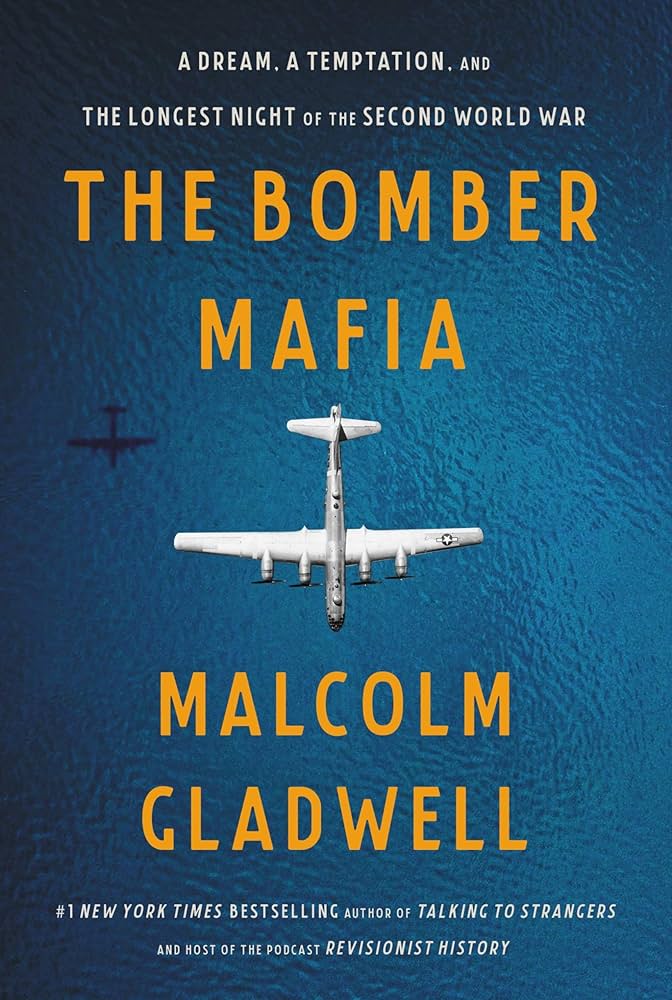
The Bomber Mafia by Malcolm Gladwell

Filed under: Books, Germany, History, Japan, Military, USA, WW2 — Tags: , , , — Nicholas @ 03:00

Based on the few books of his I’d heard of, I wouldn’t have expected Malcolm Gladwell to dip into military history … and from what Secretary of Defense Rock says, it might have been better if Gladwell had steered clear of this particular topic anyway:

I recently received The Bomber Mafia as a gift for my birthday, and it was bad, so bad that I felt compelled to write this review. In so many ways, the book is everything that is wrong with the “pop history” genre: a bestselling author with a massive built-in audience, with a hit podcast to cross-promote the material, and a framing promise to reveal a supposedly “great untold story” about the strategic and moral struggles of American airmen in World War II. The problem in this case is that Gladwell’s narrative about Curtis LeMay, Haywood Hansell, and the evolution of strategic bombing repeatedly collides with the existing scholarship and often ignores it altogether. From his treatment of the raids of Münster and Schweinfurt–Regensburg to his use of the United States Strategic Bombing Survey and his confident claims about what compelled Japan to surrender, The Bomber Mafia exemplifies the worst tendencies of popular history: sweeping pronouncements built on selective reading, caricatured context, and a startling indifference to both primary sources and a vast secondary literature.1

I was only vaguely familiar with Malcolm Gladwell and his work, but for those who don’t know (like me until recently), he has been a staff writer for The New Yorker since 1996, has written a bunch of New York Times bestselling books on sociology, psychology, and economics, and also hosts a very popular podcast called Revisionist History.2 This is all to say he is widely known and already has a big audience that is generally receptive to his projects. The book was originally based on four episodes he did on this topic in July 2020, and then turned into print, so it isn’t so much an actual book as it is a printed podcast.3

Unsurprisingly, both the audiobook and print editions were widely acclaimed upon release. Writing in the Wall Street Journal, Yale professor Paul Kennedy praised the book as “a wonderful book”.4 The journalist Michael Lewis described it as “a riveting tale”, while the bestselling biographer Walter Isaacson called it “a wonderful narrative”.5 The book was named a Kirkus Reviews Best Book of the Year and selected as an Editors’ Choice by The New York Times Book Review. It also enjoyed significant commercial success, reaching number two on The New York Times Best Sellers list.6 To promote the book, Gladwell made appearances on Jimmy Kimmel, MSNBC, and CBS’s Sunday Morning show. MSNBC even stated in the segment title that this is “A great untold story”, which is hilarious, given that I don’t know how much ink has been spilled on the strategic bombing campaigns.7

But it should be noted that the book has been criticized by virtually anyone who has seriously studied this topic. Much of the criticism of the book has come from the fact that it hardly focuses on the Japanese and German perspectives, misinterprets why members of the air tactical school focused on precision bombing, and the actual role strategic bombing played in the surrender of Japan.8 All of that is valid, but what was initially more startling to me was how little use was made of primary or secondary sources. So many important works are left out makes me wonder how much research Gladwell even put in.9 To write about strategic bombing in World War II and not include Michael Sherry’s The Rise of American Air Power, Richard Overy’s The Bombing War, Donald Miller’s Masters of the Air, Ken Werrell’s Blankets of Fire or Death From the Heavens, Geoffrey Perrett’s Winged Victory, and barely using any of the official histories is borderline negligence.10 Anyone doing research on strategic bombing and Air Power in World War II almost certainly would have come across these.


  1. Popular history is a form of historical writing aimed at broad audiences that usually prioritizes storytelling over real scholarship. See Gerald Strauss, “The Dilemma of Popular History,” Past & Present, no. 132 (1991): 130–49, and more recently, Ben Alpers, “The Promise and Perils of Popular History,” Society for U.S. Intellectual History, August 17, 2021.
  2. The show itself isn’t really a conversation with experts and historians (though they do appear) so much as storytelling.
  3. I would also preface that I generally don’t have a problem with this premise. There is definitely a segment of the historical profession that dislikes pop history for reasons tied as much to credentials as to content. Much “popular history” is produced by journalists, independent writers, or commentators rather than credentialed academic historians, and that fact alone generates suspicion. In some cases, this skepticism is warranted: weak sourcing, thin engagement with the scholarship, and overconfident claims do real damage. But the problem is not who writes history so much as how it is written. Plenty of non-historians have produced outstanding historical works by taking the craft seriously — immersing themselves in primary sources, engaging honestly with existing scholarship, and resisting the temptation to oversimplify for the sake of narrative punch. Conversely, academic credentials have never been a guarantee for insight or even accuracy. If a writer does the work, respects the evidence, and treats complexity as something to be explained rather than avoided, there is no real reason to dismiss the result simply because of the writer’s background.
  4. Paul Kennedy, “The Bomber Mafia’ Review: Architects of a Firestorm”, The Wall Street Journal, April 30, 2021.
  5. Summary of reviews in paperback.
  6. “Hardcover Nonfiction – May 16, 2021”. The New York Times.
  7. Malcolm Gladwell: ‘Bomber Mafia’ Looks At A Great Untold Story From WWII.
  8. Some critical reviews include David Fedman and Cary Karacas, “When Pop History Bombs: A Response to Malcolm Gladwell’s Love Letter to American Air Power”, Los Angeles Review of Books, June 12, 2021; Saul David, “Malcolm Gladwell’s The Bomber Mafia is misleading history-lite”, The Daily Telegraph, April 25, 2021, and Steve Agoratus, Air & Space Power History 68, no. 4 (2021): 52–53.
  9. This is also coming from a guy who famously wrote that achieving world-class expertise in any field is, to a large extent, a function of accumulating roughly 10,000 hours of deliberate practice, as described in his book Outliers: The Story of Success.
  10. Gladwell doesn’t really deal with British strategic bombing; there’s just a brief chapter on Arthur Harris. If interested, see Noble Frankland, Bomber Offensive, the Devastation of Europe (New York: Ballantine Books, 1971) Max Hastings, Bomber Command: The Myths and Reality of the Strategic Bombing Offensive, 1939-45 (New York: Dial Press/James Wade, 1979), and Norman Longmate, The Bombers: The RAF Air Offensive against Germany, 1939-1945 (London: Hutchinson, 1983).
Older Posts »

Powered by WordPress