
It’s increasingly clear that Millennials are like the Eloi in The Time Machine by H.G. Wells. Ignorant, pampered, incompetent, lazy, short attention span and incapable of productive work. They long for the continuance of the protective arm of government originally provided by their misguided parents.
Ayn Rand foretold such a circumstance in Atlas Shrugged. It’s time for us all to go away into the mountains and let the Millennials and their boosters face life without a productive economy. It won’t take long for it to all collapse, but we should wait another generation before returning to rebuild civilisation. Certainly there will be no Millennial worthy of a statue – it will be a reprise of the dark ages following the collapse of Mycenae.
Lucius Quinctius Cincinnatus, “Operation Atlas Shrugged”, Catallaxy Files, 2020-06-12.
November 23, 2025
QotD: “Operation Atlas Shrugged”
December 2, 2024
The question of our era
At PJ Media, Athena Thorne asks the most pertinent, relevant question of our times:
Is Donald Trump the Long-Awaited Messiah of the Band ‘Rush’ Era?
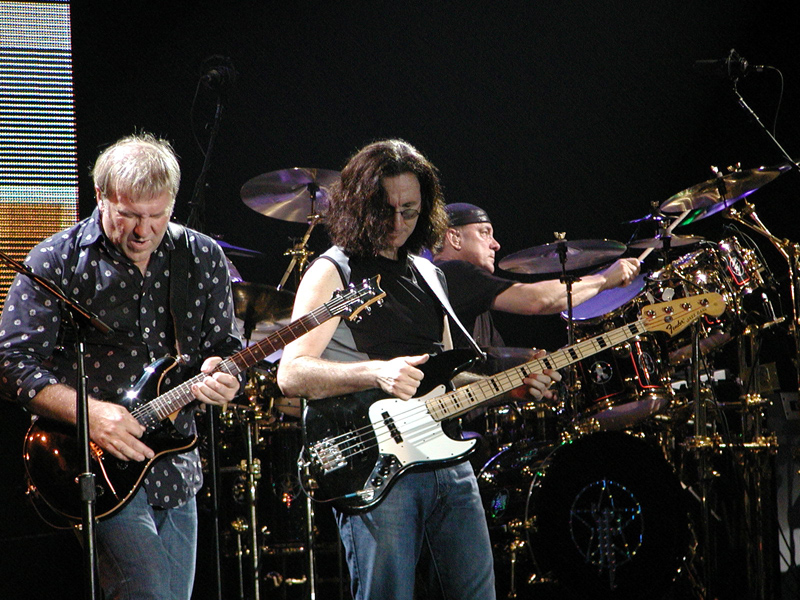
Rush in concert, Milan 2004.
Photo by Enrico Frangi, via Wikimedia Commons
Greetings, PJ readers! I hope you all had a wonderful Thanksgiving and are still feeling lazy and slovenly. In that vein, here is a tasty morsel of a column from a friend and fellow reader, Kato the Elder. He makes an excellent argument — one with which I heartily agree — that President-elect Donald Trump is the small-L libertarian hero of our time. Enjoy!
In a particular moment during my precocious, autodidact pre-teen years, I stumbled upon a copy of Ayn Rand’s novel Atlas Shrugged at an estate sale in an old New England barn. There, in a hay-covered stall, I found that dense brick of a book that seemed, in a creepy sort of way, to be waiting for me to pick it up and take it home — consequences be damned. It was like Guy Clark’s song about a haunted guitar, found in a pawn shop, with the name of the next victim to pick it up already written on the case. And, like Guy Clark’s guitar, Atlas Shrugged is one of those cultural objects that once picked up cannot be put down. Who could ever forget, on page 455, where it is asked, “What advice would you give Atlas if he became weary of holding up the world? Shrug.” A libertarian is born. I quickly worked my way through the remainder of Rand’s parables and then the essays.
Rand’s novella “Anthem” led to my discovery of the Canadian rock band Rush, which had adapted “Anthem” as the rock opera entitled 2112. It’s the story of a man who suffers under the autocratic rule of the Priests of the Temple of Syrinx, progressives who use computers to create a scientific, expert-driven utopia that does not recognize the value of the individual or the right to think and create and dissent. In “Anthem”, it is the protagonist’s discovery of an ancient incandescent light bulb that leads to the discovery of an earlier and freer society and puts the hero on a collision course with the collectivists. In the Rush version, the long-lost incandescent light bulb is replaced with a guitar, but of course it would be, because what kind of crazy government would take away someone’s light bulbs?
A very strong Randian libertarianism runs through Rush’s music; the heroes of many Rush songs are those individuals struggling, of course, against a government that is determined to pound the individualism and free thought out of its subjects, whether that individual is Tom Sawyer or teenagers living in subdivisions or the teen boy awaiting the world’s applause or the community suffering from mob violence and witch hunts. But Rush, and Rand, are not rejecting the Eisenhower-era type of corporate conformity, but rather the conformity of counter-culture which has taken power and proven the deficiency of the government-expert-knows-best mindset. The epitome of that strain of Randian libertarianism comes in the song “Red Barchetta”, a power ballad about a boy who, in conspiracy with his uncle, escapes to the countryside to race a classic, gas-powered Ferrari against a bland EV car of some kind that has supplanted the freedom and adrenalin rush of gas-powered freedom. Because what kind of crazy government would take away someone’s choice of car?
I saw Rush in concert at least 12 times, and every concert was full of people who looked like me, dressed like me, and sounded like me. We sang along with Rush at the top of our lungs about the freedom of music and the individualism which is closer to the heart. As we all grew older and grayer and our American society became less tolerant of dissent and more dependent on corporate/government cronyism, we could only wonder whether we would find our Howard Rourke, the nonconformist New York developer and architect of Rand’s novel The Fountainhead, who would lead us to the promised land.
March 7, 2023
QotD: The Stoic view of beauty
Like all materialists, then, Stoics had a real problem with things like beauty. If you’re a materialist, Beauty is either a refutation of your theory, or a tautology (“certain arrangements of atoms produce chemical reactions that our brains interpret as pleasant” is just a fancy way of saying “beautiful things are beautiful because they’re beautiful”). Back in grad school, in one of the deepest, darkest, most dungeon-like corners of the university’s book morgue, I discovered Ayn Rand’s attempt at an Objectivist aesthetics. Her conclusion, stripped of her inimitable self-congratulatory prose, is here:
At the base of her argument, Rand asserts that one cannot create art without infusing a given work with one’s own value judgments and personal philosophy. Even if the artist attempts to withhold moral overtones, the work becomes tinged with a deterministic or naturalistic message. The next logical step of Rand’s argument is that the audience of any particular work cannot help but come away with some sense of a philosophical message, colored by his or her own personal values, ingrained into their psyche by whatever degree of emotional impact the work holds for them.
Rand goes on to divide artistic endeavors into “valid” and “invalid” forms …
In other words, there’s no art, only propaganda. Looks like ol’ Marcus really missed a trick, statecraft-wise, doesn’t it?
Severian, “On Fine Writing Etc.”, Everyday Stoicism, 2020-05-04.
January 4, 2022
Ayn Rand: The Virtue of Selfishness
Biographics
Published 21 Jan 2021Pretty excited for our first weird comment section of 2021.
Simon’s Social Media:
Twitter: https://twitter.com/SimonWhistler
Instagram: https://www.instagram.com/simonwhistler/Source/Further reading:
Britannica biography: https://www.britannica.com/biography/…
Biography: https://www.biography.com/writer/ayn-…
American National Biography: https://www.anb.org/view/10.1093/anb/…
Biography via the Ayn Rand Institute: http://aynrandlexicon.com/about-ayn-r…
Claremont Review of Books, two biographies of Ayn Rand: https://claremontreviewofbooks.com/wh…
NY Mag: https://nymag.com/arts/books/features…
Slate, the liberal view, but some good details on her childhood: https://slate.com/culture/2009/11/two…
Rand and religion: https://www.wsj.com/articles/can-you-…
Rand and social security: https://www.snopes.com/fact-check/ayn…
Sex in The Fountainhead: https://medium.com/curious/discussing…
February Revolution in Russia: https://www.iwm.org.uk/history/what-w…
October Revolution in Russia: https://www.history.com/topics/russia…

December 12, 2021
“Say what you will about Rand, nobody ever described her as a light read”
In Quillette, David Cohen notes that we’re coming up on the 40th anniversary of Ayn Rand’s death, which will almost certainly help expose her work to a renewed audience of disaffected teens and freshman university students:
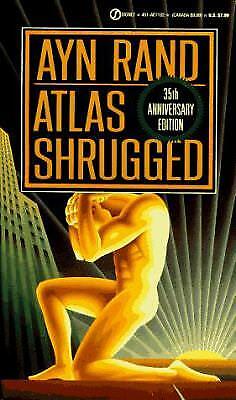
More than a half-century ago the great — and, alas, irreplaceable — American scholar Allan Bloom became aware of the spell she could cast. He first started noticing it around the time he became aware of a decline in serious reading among his students. As the University of Chicago professor later recounted in The Closing of the American Mind, it became particularly evident whenever he asked his large introductory classes which authors and books really mattered to them. Most of the undergrads fell silent, he wrote, or else were puzzled by the question. There was generally no text to which they looked “for counsel, inspiration or joy,” he remarked. But one exception kept popping up.
There always seemed to be, he marvelled, a student who mentioned Atlas Shrugged, a work “although hardly literature, which, with its sub-Nietzschean assertiveness, excites somewhat eccentric youngsters to a new way of life.” And rather more of them than did Allan Bloom or, indeed, pretty much anyone else in the United States who has ever tried to hawk philosophy to the masses. Rand’s book sales overall stand at around 30 million, with hundreds of thousands more each year, and probably rather more this coming year.
Not only is she sought-after for her two best-known novels — the other being The Fountainhead — but also for her nonfiction. Her slim volumes of collected essays and old newspaper columns and other outtakes comprise an apparently fathomless vault from which the Ayn Rand Institute routinely cobbles together regular offerings for the lucky kids. One survey by the Library of Congress listed Atlas Shrugged as second only to the Bible in terms of campus popularity; an incredible accomplishment. All the more so in an era of Twitter, Facebook, and all the other intimations of the shortened attention-span. Say what you will about Rand, nobody ever described her as a light read.
A random internet search throws up an impressive litany of fans from the entertainment world, including Oliver Stone, Rob Lowe, Jim Carrey, and Sandra Bullock. Even the late professional wrestler James Hellwig, better known as The Ultimate Warrior, bellowed her praises, which might add some context to those rollickingly individualistic pre-fight interviews he used to do back in the WWE glory days. Oh, and let’s not forget Brad Pitt and Vince Vaughn. Which is particularly interesting, I think, since Jennifer Aniston (also a Rand fan) replaced the first with the second after Pitt ran off with Angelina Jolie, who’s also on record enthusing about Rand’s “very interesting” take on the good life.
In politics and economics, Rand had her youthful followers, too, and here again one sees the youth-appeal angle. Probably her best-known disciple is the former Federal Reserve chairman Alan Greenspan, who is rather ancient now. But back when dinosaurs still roamed the Earth, Greenspan declared that the high empress of the libertarian Right “taught me that capitalism is not only practical and efficient but also moral.” Like the young and philosophically restless undergrads in Allan Bloom’s classes, the British health secretary Sajid Javid also discovered her early on, and apparently still reads the courtroom scene in The Fountainhead every year. Or rather, as the cool libertarian kids in the black jeans might prefer to put it, it still reads him.
June 6, 2020
QotD: The Fountainhead
Nora Ephron, The New York Times Book Review (1968), quoted in Reason Online
January 12, 2020
Neil Peart, RIP
I was very saddened to see the news, but it explains why the band retired:
Rush in concert, Milan 2004.
Photo by Enrico Frangi, via Wikimedia Commons
Neil Peart, the virtuoso drummer and lyricist for Rush, died Tuesday, January 7th, in Santa Monica, California, at age 67, according to Elliot Mintz, a family spokesperson. The cause was brain cancer, which Peart had been quietly battling for three-and-a-half years. A representative for the band confirmed the news to Rolling Stone.
Peart was one of rock’s greatest drummers, with a flamboyant yet precise style that paid homage to his hero, the Who’s Keith Moon, while expanding the technical and imaginative possibilities of his instrument. He joined singer-bassist Geddy Lee and guitarist Alex Lifeson in Rush in 1974, and his musicianship and literate, philosophical lyrics — which initially drew on Ayn Rand and science fiction, and later became more personal and emotive — helped make the trio one of the classic-rock era’s essential bands. His drum fills on songs like “Tom Sawyer” were pop hooks in their own right, each one an indelible mini-composition; his lengthy drum solos, carefully constructed and packed with drama, were highlights of every Rush concert.
In a statement released Friday afternoon, Lee and Lifeson called Peart their “friend, soul brother and bandmate over 45 years,” and said he had been “incredibly brave” in his battle with glioblastoma, an aggressive form of brain cancer. “We ask that friends, fans, and media alike understandably respect the family’s need for privacy and peace at this extremely painful and difficult time,” Lee and Lifeson wrote. “Those wishing to express their condolences can choose a cancer research group or charity of their choice and make a donation in Neil Peart’s name. Rest in peace, brother.”
A rigorous autodidact, Peart was also the author of numerous books, beginning with 1996’s The Masked Rider: Cycling in West Africa, which chronicled a 1988 bicycle tour in Cameroon — in that memoir, he recalled an impromptu hand-drum performance that drew an entire village to watch.
Peart never stopped believing in the possibilities of rock (“a gift beyond price,” he called it in Rush’s 1980 track “The Spirit of Radio”) and despised what he saw as over-commercialization of the music industry and dumbed-down artists he saw as “panderers.” “It’s about being your own hero,” he told Rolling Stone in 2015. “I set out to never betray the values that 16-year-old had, to never sell out, to never bow to the man. A compromise is what I can never accept.”
Update: At AIER Peter C. Earle pays tribute to Peart’s life and work.
The announcement of the death of Rush drummer Neil Peart came as a tremendous shock. Having only retired about four years ago, so many fans of Rush (myself included) had convinced ourselves that this was a temporary hiatus, and that in a year or two – eventually, at any rate – there would be an announcement of a new album, a short tour, or some other project. Surely musicians of their virtuosity and passion couldn’t stay away from the studio or stage for long. But now we know we were wrong, and we know why.
It was revealed that Neil had been battling a brain tumor for over three years. Characteristically, he, his family, and friends (among the closest of whom, Rush vocalist/bass player Geddy Lee and guitarist Alex Lifeson) upheld his desire for privacy. I haven’t done the math as to whether Neil’s illness was likely a causative factor in the decision to retire, or whether it seems to have come along not long after the decision to retire.
[…]
In his role as the lyricist of Rush, Peart took on such topics as pernicious nationalism (“Territories”), mass hysteria (“Witch Hunt”), the division between constructive and destructive belief (“Faithless”), the fall of Communism (“Heresy”), conflict and power (“The Trees”), the horrors of totalitarian rule (“2112,” “Red Sector A”) and many allusions to individual liberty (“Tom Sawyer,” “Anthem,” “The Analog Kid,” “Finding My Way,” “Caravan”). He did so via lyrics which artfully and passionately evinced those sentiments; sentiments which early on suggested Objectivist perspectives, but over time developed into what he called “Bleeding Heart” libertarianism:
I call myself a bleeding heart libertarian. Because I do believe in the principles of Libertarianism as an ideal – because I’m an idealist. Paul Theroux’s definition of a cynic is a disappointed idealist. So as you go through past your twenties, your idealism is going to be disappointed many many times. And so, I’ve brought my view and also – I’ve just realized this – Libertarianism as I understood it was very good and pure and we’re all going to be successful and generous to the less fortunate and it was, to me, not dark or cynical. But then I soon saw, of course, the way that it gets twisted by the flaws of humanity. And that’s when I evolve now into … a bleeding heart Libertarian. That’ll do.
Neil, through his lyrics, managed to do what so many lyricists and writers – even, perhaps especially, so many libertarian intellectuals – fail to do: make liberty neither an alien fixture, a flat slogan, or a utopian slog. It is a way of thinking and living, and one which not only doesn’t ignore, but embraces the flaws and frailty of humanity, tempering realism with hope and optimism.
May 3, 2019
QotD: The key difference between The Fountainhead and Atlas Shrugged
Reading Goddess of the Market much later in life, I finally met the woman behind the philosophy. Rand doesn’t start out so bad, at least in Burns’ telling. Who can blame the Russian-born Rand, watching helplessly as Communists seize her father’s pharmacy, for growing up to be a furious foe of collectivism (and realpolitik compromise), whose übermensch heroes fight back against the “parasites, moochers and looters“, and win?
Yet the sprinklings of patriotic, almost Capra-esque populism that softened The Fountainhead’s unavoidable elitism are absent entirely in her follow-up, Atlas Shrugged, replaced by an almost hallucinatory misanthropy. What happened, Burns wonders, in the intervening thirteen years?
The answer seems obvious to me now, rereading her book in my 50s:
Menopause.
Ayn Rand, the avatar of adolescence, was going through The Change.
“Now in her forties,” writes Burns of the author between novels, “Rand struggled with her weight, her moodiness, her habitual fatigue.” Already dependent on the crazy-making Benzedrine she’d been popping to help her meet her Fountainhead deadline, Rand was hurtling toward what we’d now recognize as a midlife crisis.
Enter Nathaniel Blumenthal. He’d begun corresponding with Rand while still a high school student, but unlike her thousands of other teenage fans, he’d even memorized The Fountainhead. At UCLA, he’d coauthored a letter to the campus paper, declaring that a professor with suspected Communist ties who’d killed himself deserved “to be condemned to hell.” Then he changed his surname to “Branden” because it had “Rand” in it.
So, basically a nut.
Kathy Shaidle, “The Danger of Ayn Rand”, Taki’s Magazine, 2017-04-18.
July 24, 2018
Ayn Rand and the Hollywood blacklist
In the August/September issue of Reason, Jesse Walker discusses the role Ayn Rand played in the House Committee on Un-American Activities’ anti-Communist hearings on Tinseltown’s great and good:
Ayn Rand was a blacklist truther. The novelist and screenwriter had been a friendly witness during the House Committee on Un-American Activities’ 1947 hearings on Hollywood subversion — the probe that prompted the studios to announce that they would not hire Communists. But when she was asked about her testimony two decades later, she claimed that the blacklist was a myth.
“I do not know of any red blacklisted in Hollywood,” Rand told a Boston audience in 1967.
“I do know, if the newspaper stories can be trusted, that many of those ‘blacklisted’ people … were working in Hollywood thereafter under assumed names.” The real victims, she insisted, were the hearings’ friendly witnesses. “You talk about the blacklisting of reds. I don’t know of one leftist who has suffered for his views, and conversely, I don’t know of one pro-capitalist who in one form or another did not have to suffer for his views.”
This was misleading, to put it mildly. The blacklist really did exist. It was an organized effort to remove people from the movie industry for their political opinions, and the federal government played a major role in launching it. Anyone who cares about free expression should object to that sort of censorship by proxy, both as it manifested itself in the early days of the Cold War and as it threatens to re-emerge in social media today.
Yes, some of the more talented blacklisted writers continued to find work under assumed names or behind fronts. Dalton Trumbo knew how to write a movie that audiences would pay to see, and so Trumbo’s screenplays remained in demand. But others didn’t do studio work for a long time or left the industry altogether. (Blacklistee Alvah Bessie wound up taking a job as stage manager in a San Francisco nightclub and writing novels on the side.) And even folks like Trumbo found themselves getting paid a lot less. The blacklist eventually dissolved, but that took years. It is simply untrue that no Communists, real or alleged, lost work because of it.
On the other hand, it is true that some of the friendly witnesses of ’47 fared pretty badly. Rand mentioned a few examples at that Boston speech, among them Morrie Ryskind, who worked for those other Marxes when he scripted three Marx Brothers movies. “In Hollywood, he was getting $3,000 a week, which at the time was top money for writers,” she said. But “he has not worked as a writer one day since appearing as a friendly witness.” In Show Trial (Columbia University Press), his engrossing new book about those hearings, the Brandeis historian Thomas Doherty lists several examples of his own, from Jack Moffitt, who stopped getting hired to write motion pictures and fell back on reviewing movies for The Hollywood Reporter, to Fred Niblo Jr., who wound up leaving Hollywood to write religious films for television and documentaries for the State Department. In risk-averse Hollywood, anyone who stuck his head out might lose work for his trouble, especially if he came from the low end of the industry’s totem pole.
But this should not be equated, Doherty writes, “with the state-coerced, institutionally enforced blacklist of Communists, fellow travelers, and stubborn liberals.” That was a more fearsome and intrusive beast.
April 12, 2018
Alex Tabarrok profiled in the Washington Monthly
Alex Tabarrok is a friend-of-a-friend (does that make us “friends once removed”?) I’ve read lots of his blog posts and watched many of his videos, but I’ve never actually met him in real life, so this profile was quite interesting:
Tabarrok came by his libertarianism early. When he was growing up in Toronto, his family would debate political and ethical issues over dinner every night. One evening the Tabarroks were debating the moral value of rock and roll. “I said, ‘Well, look at this band, Rush: they even quote this philosopher Ayn Rand in their songs,’ ” he recalled recently. “My mother said, ‘Oh yeah, you’d probably like her,’ and I felt embarrassed because I was using this in an argument and I actually hadn’t read any Ayn Rand before.” Tabarrok thinks his mother probably regrets her suggestion to this day.
Tabarrok made his way to the U.S. for graduate studies at George Mason, returning there as a professor in 2002. He now directs its Center for Study of Public Choice and is the economics chair at GMU’s Mercatus Center, a research institute heavily funded by Charles Koch and cofounded by Richard Fink, a former Koch Industries executive. The center, which boasts ties to prominent right-wing groups like the American Legislative Exchange Council, funds research to promote free-market policy solutions and the rollback of regulations. (Mercatus is Latin for “market.”) The Wall Street Journal has called Mercatus “the most important think tank you’ve never heard of.”
A few years ago, Tabarrok got a new toy to play with. Until recently, there was never great data available for researchers who wanted to empirically study the effects of regulation. But, in 2014, two other Mercatus Center research fellows developed a new public-use database called RegData, which captures everything published in the Code of Federal Regulations each year. Measuring regulation has always been surprisingly tricky, because when an agency puts out a rule, it can contain any number of new individual legal requirements. RegData addresses that problem by scrubbing the Code for key words such as “shall,” “required,” and “may not.” The theory is that this more accurately measures the number of regulations than simply counting the total number of pages in the Code, as past studies tended to do. RegData also uses artificial intelligence techniques to predict which industry each regulation will affect. The upshot is that, for the first time, economists could more confidently measure federal regulations over time and by industry. In theory, that would make it easier to build the case that regulations were hurting the economy.
March 15, 2018
October 20, 2017
August 27, 2017
April 29, 2017
QotD: Ayn Rand’s recurring “moment”
Last week, The Guardian reported with predictable snark that Ayn Rand’s work has been added to the U.K.’s politics A-level curriculum. They note that Rand is “achingly on trend” and “having a moment.” Oh, dear. By my amateur estimation, Rand’s “moment-having” has been reoccurring every seven or eight years since the end of the Second World War, yet is always heralded with the same air of surprise and alarm.
Not that I am an unalloyed fan of the woman. Of course, like countless conceited teenagers before and after me, I was relieved to learn of Rand’s very existence, let alone her staggering success — evidence, surely, that more of “us” were not only out there, somewhere, but right.
Especially for a particular variety of female, Rand’s mannish ambition and uncompromising idealism set a rare and welcome example. Unlike Florence King, who broke her braces trying to mimic The Fountainhead’s imperious heroine, I found Rand’s thick fictions impossible to swallow.
However, I eagerly read The Virtue of Selfishness while in high school. (I want to type “of course”; Could a book title better calculated to appeal to the adolescent mind possibly be conceived, other than perhaps 101 Ways to Murder Everyone Around You and Get Away With It?)
Kathy Shaidle, “The Danger of Ayn Rand”, Taki’s Magazine, 2017-04-18.
April 18, 2017
Examples of the “Paranoid Thriller” genre
In the latest Libertarian Enterprise, J. Neil Schulman discusses a type of book that he characterizes as the Paranoid Thriller:
It’s probably no surprise to anyone who’s read my books, but I’m a long-time fan of what might best be called the Paranoid Thriller.
“Paranoid Thriller” isn’t a book publishing category. You won’t find such a classification in the Library of Congress, or in the shelving system of Barnes and Noble. Amazon.com has the most cross-referenced indexing system of any bookseller I can think of and even it doesn’t seem to have that as a sub-category of fiction.
Technically — because these stories are often set in the “near future” or “the day after tomorrow” or sometimes in an alternate history — the Paranoid Thriller is a sub-genre of science fiction. But usually, beyond the element of political speculation, there are none of the usual tropes of science fiction — extraterrestrials, space, time, or dimensional travel, artificial intelligence, biological engineering, new inventions, scientists as action heroes, virtual realities, and so forth.
I’m sure even this list shows how outdated I am when it comes to what’s being published as science-fiction these days, which within the publishing genre has abandoned all those cardinal literary virtues of clarity, kindness to the reader, and just good storytelling in favor of all those fractal fetishes that previously made much of “mainstream” fiction garbage unworthy of reading: dysfunctional characters, an overwhelming sense of helplessness and despair, and of course hatred of anything ever accomplished to better the entire human race by old dead European-extraction white men.
[…]
The Paranoid Thriller is step-brother to the Dystopian novel, such as Yvgeny Zamyatin’s We, Ayn Rand’s Anthem, Aldous Huxley’s Brave New World, and George Orwell’s Nineteen-eighty-four, and brother to the espionage novel — everything from Ian Fleming’s James Bond novels to John Le Carre and Tom Clancy’s spy novels; and at least kissing cousin to alternate history thrillers like Brad Linaweaver’s 1988 Prometheus Award-winning novel, Moon of Ice, about a Cold War not between the United States and the Soviet Union but between a non-interventionist libertarian United States and a victorious Nazi Germany.
Some examples of the Paranoid Thriller:
In books, let’s start with Sinclair Lewis’s 1935 novel It Can’t Happen Here, the story of an American president who rises to power by enforcing a Mussolini-type fascism in America, published three years after the movie Gabriel Over the White House enthusiastically endorsed such a presidency, well into the presidency of Franklin Delano Roosevelt who did it for real, and a year after Adolf Hitler became the Führer of Germany.
Three years before Jack Finney’s novel The Body Snatchers was serialized in Colliers, Robert A. Heinlein’s 1951 Doubleday hardcover novel, The Puppet Masters crossed genre between futuristic science-fiction and the Paranoid Thriller — in effect creating an entire new genre of Paranoid Science-Fiction Horror — in which unlike H.G. Wells’ invaders from Mars in The War of the Worlds who had the decency to exterminate you, the alien invaders instead jumped onto your back and controlled your brain making you their zombie.
But then again, Heinlein had already created the Ultimate Paranoid Thrillers in his 1941 short story “They” and 1942 novella “The Unpleasant Profession of Jonathan Hoag” — over a-half-century before The Wachowski Brothers’ 1999 movie The Matrix — in which the entire world is a vast conspiracy to convince one man of its reality.
Jumping two decades forward I’ll use as my next example Ayn Rand’s 1957 epic Atlas Shrugged, in which the Soviet- refugee author warned how the United States — by following the path of a kindler, gentler socialism — could end up as the fetid garbage dump that had devolved from her once European-bound Mother Russia.


