Celina reviews a 1960s film I’d never heard of, and having read her review I can understand why it has been forgotten because it tells a brutal tale as the colonial European powers withdrew from their former colonies in Africa far too often leaving the newly independent peoples to settle old scores in bloody civil conflicts:
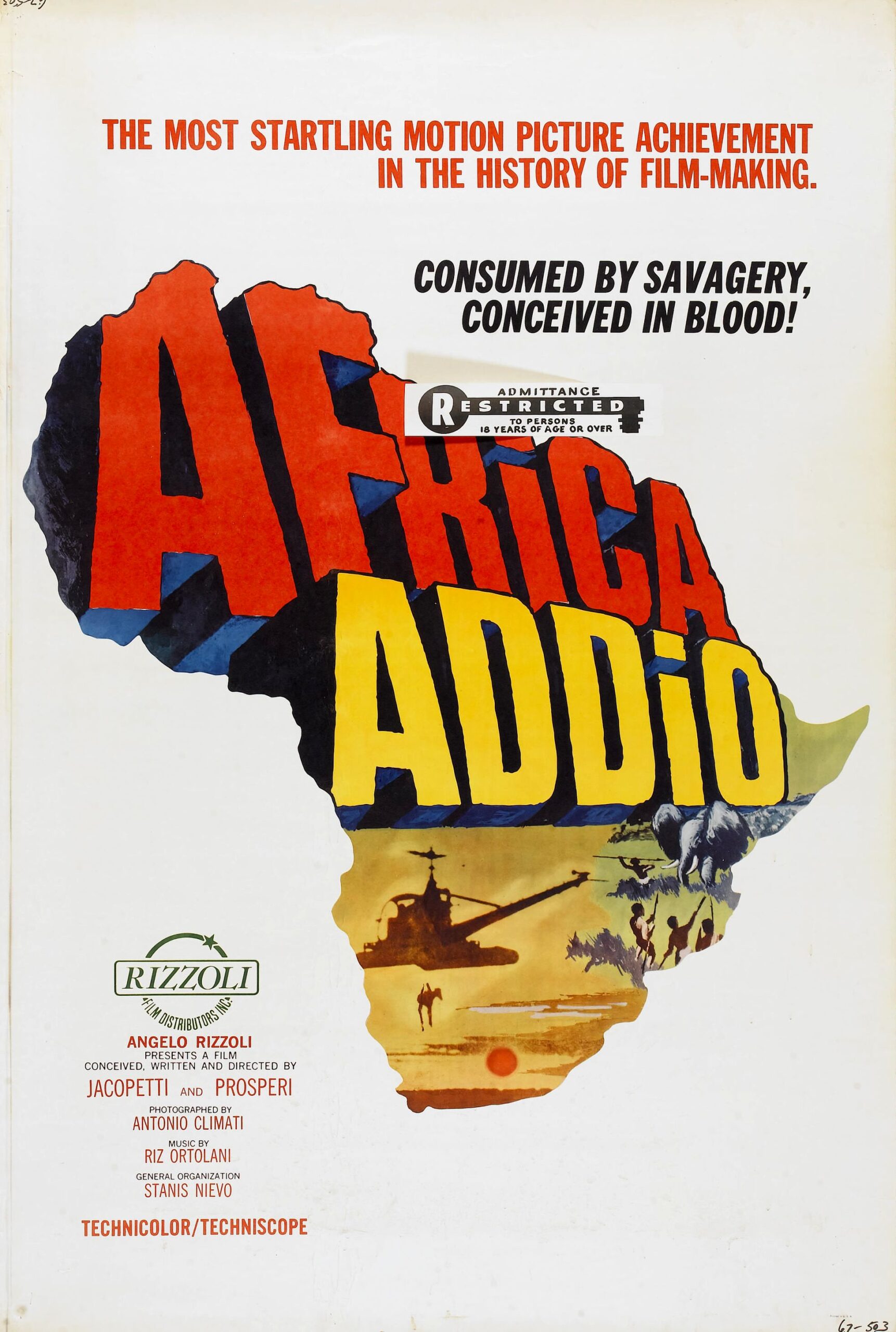
The 1966 Italian documentary Africa Addio (Goodbye Africa), directed by Gualtiero Jacopetti and Franco Prosperi of Mondo Cane fame, is a must-see for absolutely anyone who wants to understand the realities of African governance. Filmed in Kenya, Tanganyika, Zanzibar, Rwanda, Angola, the Belgian Congo, and South Africa between 1963 and 1965, Africa Addio captures the bloody upheavals accompanying the end of White colonial rule across much of the continent. It chronicles the withdrawal of the British and Belgian colonial powers, alongside Portugal’s efforts to retain its African colonies and White South Africans’ determination to preserve their rule.
The film itself is bewildering at moments, for much of the film a camera is mounted in a light aircraft, capturing the serenity of the azure waters and brilliant white sands of the Zanzibar archipelago. The visual splendour of the landscape is overwhelming in its beauty, it evokes the pristine imagery of a mid-century travelogue designed for European consumption.
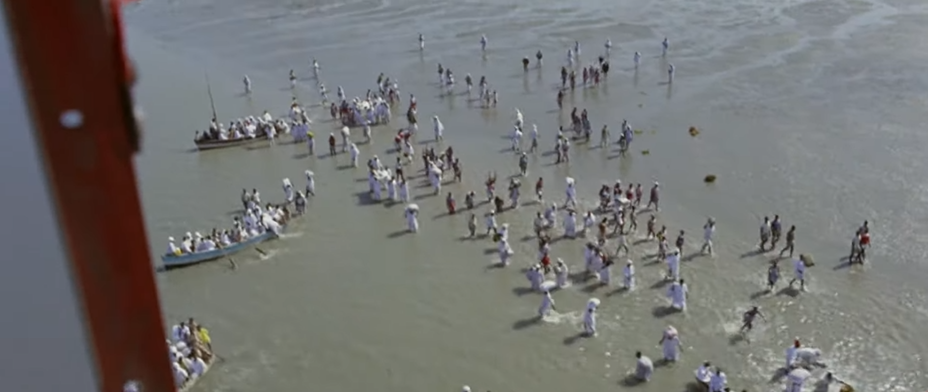
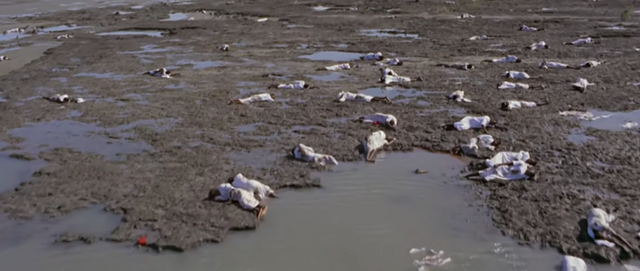
Nevertheless, as the aircraft gradually descends, the white sands are revealed to be peppered by dark, irregular shapes. As the telephoto lens finds its focus, the visual abstraction resolves into a horrifying, incontrovertible reality. The idyllic beaches are entirely strewn with the corpses of hundreds of Arab and Indian civilians, the victims of the January 1964 Zanzibar Revolution.
Screenshot from the film Africa Addio. 19 January 1964. Arab civilians attempting to flee revolutionaries.
Screenshot from the film Africa Addio. 20 January 1964. Bodies of Arab civilians at low tide, caught while trying to flee Zanzibar.
Accompanying this almost god-like, detached aerial survey of mass slaughter is the melancholic, and achingly beautiful orchestral score of the celebrated Italian composer Riz Ortolani.
This startling juxtaposition, which is only one of many in the film, feels immensely unsettling with the sheer, unfathomable scale of human atrocity paired with the romantic elegance of European orchestration. It encapsulates the disturbing essence of Africa Addio.
The opening sections focus primarily on Kenya. We see a series of trials of Mau Mau terrorists and their accomplices, who massacred White families and mutilated their cattle, and for some inexplicable reason also tortured and hung wild baboons. Most were sentenced to life in prison for these egregious crimes. A few years later, Jomo Kenyatta, the anti-colonial activist who served as Kenya’s Prime Minister from 1963 to 1964, pardoned the Mau Mau criminals.
[…]
If you decide to watch Africa Addio today, you will subject yourself to a gruelling, psychologically taxing endurance test of historical horror. The film explicitly positions itself as a visual archive of decolonisation in motion, capturing the violent and often utterly merciless transition from European empire to African independence.
After watching this film, you realise that it is a genuine civilisational artefact, yet somehow it still feels wrong to watch. It forces the viewer to confront the terrifying speed with which order can evaporate when a European hegemon suddenly withdraws. Through its seemingly endless catalogue of massacres, mercenary warfare, political assassinations, and ecological devastation, Africa Addio becomes an uncompromising mirror of the anxieties surrounding the collapse of the European imperial order.
[…]
The film highlights the horrific brutality of the new African order emerging across the continent. In conflicts such as the Congo rebellion, insurgents receiving Soviet-bloc or Communist Chinese support terrorised White civilians. Nevertheless, the violence depicted in Africa Addio does not end with Whites fleeing for safety from the militant communist backed African hordes: it extends to the massacre of other ethnic and political enemies.
In Zanzibar, the targets were Arabs who were associated collectively with the island’s history of slavery and Arab domination. In January 1964, the newly independent government was overthrown in a revolution involving pro-communist forces, followed by the massacre of thousands of Arab civilians. Some estimates place the death toll as high as 20,000, although the precise number remains disputed. Historian Abdullahi Ali Ibrahim explicitly argues that these killings constituted genocide, and that their recognition has been obstructed by the political narratives surrounding African liberation.