
I love competitive #Wokeness.
No, seriously — it’s high time you people out in the real world got to experience one of the defining joys of life in the ivory tower. In the ivy-covered halls of academe, the Marxist Postcolonialist Feminsts have longstanding beef with the Postcolonialist Feminist Marxists. They’d each happily feed the other into a wood chipper, even though to outsiders it would look like the pot executing the kettle for counterrevolutionary crimes. If you’re the sort who takes schadenfreudy delight in very obvious folly, university life is hilarious.
It’s even funnier if you take these buffoons at their word. Compared to the pronouncements of your average Angry Studies professor, Pol Pot was a sane and balanced man. In reality, of course, university people are so soft and coddled, they make the Eloi look like the Sons of Anarchy. Spending so much time around college folk is one of the main reasons for my mantra: “Today’s SJW is tomorrow’s obergruppenfuhrer.” They talk a fearsome game, these campus Ches, but they cry if the cafeteria is out of free trade sustainably sourced indigenous grown gluten free soy milk. When the zeitgeist shifts, they’ll be the first to knuckle under.
Severian, “The Reluctant Revolutionary”, Rotten Chestnuts, 2019-04-05.
May 7, 2019
QotD: Competitive Wokeness
April 19, 2019
QotD: The revolution will be YouTubed, which might snuff it out before it gets underway
I think that a number of factors will ultimately tamp it down [campus protests/riots]. The ability of people to record videos of police has been a tremendous spur to calls for reform. But police are not the only people who can be filmed in public; so can protesters. I suspect that as people discover what can happen when future employers google up videos of you shouting “[expletive deleted] the police” or screaming at professors and speakers, the costs of this sort of protest will rise, and there will be less of it. Moreover, I suspect that both alumni and state funding for schools where this sort of thing happens a lot will often decline, putting pressure on administrators to curb it.
Megan McArdle, “Ask Me Anything”, Reddit, 2017-04-10.
March 17, 2019
QotD: McGill University
… if the freedom to speak harsh truth and engage in adventurous social critique means nothing at McGill, it is doomed at younger universities — especially those that have materialized, or been promoted to new feudal rank, during the ongoing academic bubble era.
The stakes are high. We all enjoy a laugh at McGill’s perception of itself as the Canadian Harvard, but if there is one university from which others in our country are bound to take ethical and stylistic cues — well, McGill probably is Harvard.
Colby Cosh, “Scary Potter and the Chamber of Secrets: an alternate view of the storm engulfing McGill”, National Post, 2017-03-27.
March 16, 2019
QotD: Teaching critical thinking
Traditionally, the “critical” part of the term “critical thinking” has referred not to the act of criticizing, or finding fault, but rather to the ability to be objective. “Critical,” in this context, means “open-minded,” seeking out, evaluating and weighing all the available evidence. It means being “analytical,” breaking an issue down into its component parts and examining each in relation to the whole.
Above all, it means “dispassionate,” recognizing when and how emotions influence judgment and having the mental discipline to distinguish between subjective feelings and objective reason — then prioritizing the latter over the former.
I wrote about all this in a recent post on The Chronicle of Higher Education’s Vitae website, mostly as background for a larger point I was trying to make. I assumed that virtually all the readers would agree with this definition of critical thinking—the definition I was taught as a student in the 1980s and which I continue to use with my own students.
To my surprise, that turned out not to be the case. Several readers took me to task for being “cold” and “emotionless,” suggesting that my understanding of critical thinking, which I had always taken to be almost universal, was mistaken.
I found that puzzling, until one helpful reader clued me in: “I share your view of what critical thinking should mean,” he wrote. “But a quite different operative definition has a strong hold in academia. In this view, the key characteristic of critical thinking is opposition to the existing ‘system,’ encompassing political, economic, and social orders, deemed to privilege some and penalize others. In essence, critical thinking is equated with political, economic, and social critique.”
Suddenly, it occurred to me that the disconnect between the way most people (including employers) define critical thinking and the way many of today’s academics define it can be traced back to the post-structuralist critical theories that invaded our English departments about the time I was leaving grad school, in the late 1980s. I’m referring to deconstruction and its poorer cousin, reader response criticism.
Both theories hold that texts have no inherent meaning; rather, meaning, to the extent it exists at all, is entirely subjective, based on the experiences and mindset of the reader.
Rob Jenkins, “Why College Graduates Still Can’t Think”, The James G. Martin Center for Academic Renewal, 2017-03-23.
March 14, 2019
Life in the modern academic paradise
At Rotten Chestnuts, Severian recounts his time in the idyllic Ivory Tower of modern academia:
Imagine you’re some kind of Gulliver-type explorer, and you reach an island of perfect bliss. Clear air, gentle breezes, balmy temperatures, and all the delicious food you can eat. And the natives! They live to serve you, completely unconstrained by anything so antiquated as Western sexual morality. Limitless 5G internet. Anything you want to eat, drink, watch, read, do, say, insert, or have inserted, it’s all yours at the snap of your fingers. Got it?
Now imagine that the rulers of this little slice of paradise do nothing but sit on the side of the road all day, smashing their own toes with ball-peen hammers.
That’s life in a college town. The Left run everything. They set the admissions requirements. They have unlimited budgets, and since they do, the entire commercial ecosystem exists only for them. All cuisine is “fusion,” you have to drive to the next burg over to find milk that comes from cows, and every single item of public culture — from sidewalk graffiti to public radio to experimental theater troupe — does nothing but flatter them. There is no fetish so outre, no practice so bizarre, that you can’t find at least one other enthusiastic participant. It’s intersectional genderfluid heaven….
…. and every single person in it is miserable. I’m serious — if it’s not too far out of your way, drive down to your nearest college town, and just watch the faces. You might glimpse a grinning undergrad or two — they’re too young and dumb to know better; they’ll be fully reeducated by junior year — but you can spot the tenured faculty solely by their scowls. The only thing that temporarily alleviates the existential horror of their lives is getting outraged by something, which — since, again, they control everything — means tilting at windmills is their only sport; they play it with a cutthroat intensity the football coach can only dream of.
How can you not be fascinated by that? To utterly refute the view of man as homo economicus, all you have to do is watch the facial expressions of people who are “the 1%” by any measure that makes sense. It’s one hell of a show…
March 8, 2019
Education schools and the bloat of university administration
Remember the old joke:
Those who can, do.
Those who can’t, teach.
Those who can’t teach, teach gym educational studies.
As far as higher education is concerned, the joke is on us:
Though I didn’t realize it at the time, those were my first encounters with an alternate curriculum that was being promoted on many campuses, a curriculum whose guiding principles seemed to be: 1) anything that could be construed as bigotry and hatred should be construed as bigotry and hatred; and 2) any such instance of bigotry and hatred should be considered part of an epidemic. These principles were being advanced primarily, though not exclusively, by college administrators, whose ranks had grown so remarkably since the early 1990s.
Everyone knows about the kudzu-like growth of the administrative bureaucracy in higher education over the past three decades. What most don’t know is that at many colleges, the majority of administrators directly involved in the lives of students — in dorms, conduct hearings, bias-response teams, freshmen “orientation” programs, and the like — got their graduate degrees from education schools.
Ed schools, such as Teachers College at Columbia, or Penn’s Graduate School of Education, have trained and certified most of the nation’s public-school teachers and administrators for the past half-century. But in the past 20 years especially, ed schools have been offering advanced degrees in things like “educational leadership,” “higher education management,” and just “higher education” to aspiring college administrators. And this influx of ed school trained bureaucrats has played a decisive role in pushing an already left-leaning academy so far in the direction of ideological fundamentalism that even liberal progressives are sounding the alarm.
To anyone acquainted with the history and quality of American ed schools, this should come as no surprise. Education schools have long been notorious for two mutually reinforcing characteristics: ideological orthodoxy and low academic standards. As early as 1969, Theodore Sizer and Walter Powell hoped that “ruthless honesty” would do some good when they complained that at far too many ed schools, the prevailing climate was “hardly conducive to open inquiry.” “Study, reflection, debate, careful reading, even, yes, serious thinking, is often conspicuous by its absence,” they continued. “Un-intellectualism — not anti-intellectualism, as this assumes malice — is all too prevalent.” Sizer and Powell ought to have known: At the time they were dean and associate dean, respectively, of the Harvard Graduate School of Education.
More than three decades later, a comprehensive, four-year study of ed schools headed by a former president of Teachers College, Arthur Levine, found that the majority of educational-administration programs “range from inadequate to appalling, even at some of the country’s leading universities.” Though there were notable exceptions, programs for teaching were described as being, in the main, weak and mediocre. Education researchers seemed unable to achieve even “minimum agreement” about “acceptable research practice,” with the result that there are “no base standards and no quality floor.” Even among ed school faculty members and deans, the study found a broad and despairing recognition that ed school training was frequently “subjective, obscure, faddish, … inbred, and politically correct.”
March 6, 2019
QotD: Teaching evolution in the “Bible Belt”
I teach college in a small city in Arkansas, deep in the American Bible Belt. I am a historian of Africa and in my department that means that I also teach a world history survey. I always start with the expansion of modern humans out of Africa and their encounter with other types of humans: Neanderthals, Homo erectus, Denesovians and what seems like an ever-growing list of newly discovered human-like creatures. It’s less the case now, but when I started twenty years ago this part of the course was initially met with polite but firm resistance, which gradually gave way to a sort of furtive curiosity. I eventually realized that even my cleverest students knew very little about human evolution except that it was false and that they were supposed to reject it. They came to the university having been taught that evolution was part of a larger attack on their faith and values, but they had never really been exposed to anything but a sort of parody version of it. A small number of them accepted evolutionary theory, but being a Darwinian in rural Arkansas was usually more about youthful rebellion and non-conformity than it was about informed, rational consideration of evidence.
Once we got past the denunciation or acceptance of evolutionary theory as a form of tribal affiliation, I found students to be deeply curious about it. It was such a taboo subject that their high school teachers had only skimmed over it and often with some careful personal distancing from the material. So the opportunity to delve into the details of this forbidden knowledge was intellectually thrilling for them. Despite the excitement engendered by the topic only a few changed their minds; most did not.
My students had grown up in communities where evolutionary theory was so wrong, so contrary to the accepted worldview of all decent people, that the only acceptable way to talk about it was to denounce it or reject it. The result was that most of my students rejected evolution, but getting a chance to learn about it was profoundly exciting, even if most of them were too conformist (these were Honors students after all) to change their positions.
Erik Gilbert, “Liberal Orthodoxy and the New Heresy”, Quillette, 2019-02-04.
February 17, 2019
QotD: Nanotechnology and quantum computing
When I say Quantum Computing is a bullshit field, I don’t mean everything in the field is bullshit, though to first order, this appears to be approximately true. I don’t have a mathematical proof that Quantum Computing isn’t at least theoretically possible. I also do not have a mathematical proof that we can make the artificial bacteria of K. Eric Drexler’s nanotech fantasies. Yet, I know both fields are bullshit. Both fields involve forming new kinds of matter that we haven’t the slightest idea how to construct. Neither field has a sane ‘first step’ to make their large claims true.
Drexler and the “nanotechnologists” who followed him, they assume because we know about the Schroedinger equation we can make artificial forms of life out of arbitrary forms of matter. This is nonsense; nobody understands enough about matter in detail or life in particular to do this. There are also reasonable thermodynamic, chemical and physical arguments against this sort of thing. I have opined on this at length, and at this point, I am so obviously correct on the nanotech front, there is nobody left to argue with me. A generation of people who probably would have made first rate chemists or materials scientists wasted their early, creative careers following this over hyped and completely worthless woo. Billions of dollars squandered down a rat hole of rubbish and wishful thinking. Legal wankers wrote legal reviews of regulatory regimes to protect us from this nonexistent technology. We even had congressional hearings on this nonsense topic back in 2003 and again in 2005 (and probably some other times I forgot about). Russians built a nanotech park to cash in on the nanopocalyptic trillion dollar nanotech economy which was supposed to happen by now.
Similarly, “quantum computing” enthusiasts expect you to overlook the fact that they haven’t a clue as to how to build and manipulate quantum coherent forms of matter necessary to achieve quantum computation. A quantum computer capable of truly factoring the number 21 is missing in action. In fact, the factoring of the number 15 into 3 and 5 is a bit of a parlour trick, as they design the experiment while knowing the answer, thus leaving out the gates required if we didn’t know how to factor 15. The actual number of gates needed to factor a n-bit number is 72 * n^3; so for 15, it’s 4 bits, 4608 gates; not happening any time soon.
It’s been almost 25 years since Peter Shor had his big idea, and we are no closer to factoring large numbers than we were … 15 years ago when we were also able to kinda sorta vaguely factor the number 15 using NMR ‘quantum computers.’
I had this conversation talking with a pal at … a nice restaurant near one of America’s great centers of learning. Our waiter was amazed and shared with us the fact that he had done a Ph.D. thesis on the subject of quantum computing. My pal was convinced by this that my skepticism is justified; in fact he accused me of arranging this. I didn’t, but am motivated to write to prevent future Ivy League Ph.D. level talent having to make a living by bringing a couple of finance nerds their steaks.
Scott Locklin, “Quantum computing as a field is obvious bullshit”, Locklin on Science, 2019-01-15.
February 1, 2019
January 28, 2019
QotD: Inequality in academia
We’ve heard a lot about the problem of inequality in America over recent years. But most of that talk has ignored one of the very worst pockets of inequality in American society. I speak, of course, of the American university system and its treatment of adjunct professors and graduate students.
Academics seem to think that the business world is a feudal environment characterized by huge status differentials and abusive treatment of underlings. They think that because, to be honest, that’s a pretty good characterization of … the modern university, where serfs in the form of adjunct professors toil in the vineyards.
Glenn Reynolds, “Trump should pity the poor PhD: New president should target worker exploitation at American universities”, USA Today, 2017-02-16.
January 22, 2019
Ending India’s longstanding caste system privileges
In the Continental Telegraph, Tim Worstall outlines the political change that might end up undermining the caste system to a large degree:
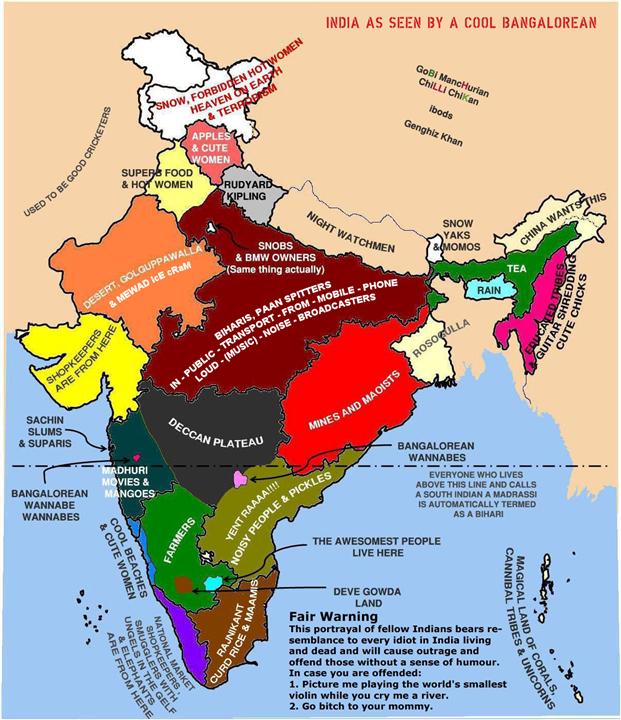
India has long had a series of reservations and quotas for varied classes. Dalits – formerly the untouchables – have long had privileges in access to university and government jobs for example. Over time, as such political systems do, the list of those classes privileged has grown.
Obviously enough, as such political systems do work, a major cause of unrest has been further classes, castes and groupings demanding that they be added to the list of groups that receive such privileges. And given electoral cycles that list has grown. The cynic will not be surprised to find that the surest method of a group being added to the list is to be the swing vote in a hotly contested election. We’re not talking about purity of motive here.
Of course, such a system eats away at the nation – we get into that communal division of the spoils rather than the lovely capitalist and free market game of increasing the spoils to be argued over. Which leaves us with a certain problem, leaves India with a certain problem.
[…]
If everyone’s covered by a reservation, if all are so privileged, then sure, we’ve an inefficient system still but we have also effectively abolished the value of having a reservation, a privilege. Thus the solution, the end game. So devalue the privilege as to make it effectively not exist by extending it to everyone.
January 13, 2019
December 27, 2018
QotD: The deep state
The deep state is no myth but a sodden, intertwined mass of bloated, self-replicating bureaucracy that constitutes the real power in Washington and that stubbornly outlasts every administration. As government programs have incrementally multiplied, so has their regulatory apparatus, with its intrusive byzantine minutiae. Recently tagged as a source of anti-Trump conspiracy among embedded Democrats, the deep state is probably equally populated by Republicans and apolitical functionaries of Bartleby the Scrivener blandness. Its spreading sclerotic mass is wasteful, redundant, and ultimately tyrannical.
I have been trying for decades to get my fellow Democrats to realize how unchecked bureaucracy, in government or academe, is inherently authoritarian and illiberal. A persistent characteristic of civilizations in decline throughout history has been their self-strangling by slow, swollen, and stupid bureaucracies. The current atrocity of crippling student debt in the US is a direct product of an unholy alliance between college administrations and federal bureaucrats — a scandal that ballooned over two decades with barely a word of protest from our putative academic leftists, lost in their post-structuralist fantasies. Political correctness was not created by administrators, but it is ever-expanding campus bureaucracies that have constructed and currently enforce the oppressively rule-ridden regime of college life.
In the modern world, so wondrously but perilously interconnected, a principle of periodic reduction of bureaucracy should be built into every social organism. Freedom cannot survive otherwise.
Camille Paglia, “Hillary wants Trump to win again”, Spectator USA, 2018-12-04.
December 11, 2018
QotD: Academia
Academia has an infantilizing effect. I understand that. Many professors dress and act like adolescents right up to the time they are ready to hand in their tenure and live off their generous pensions. The Peter-Pan aspect of academia is not entirely the professors’ fault. After all, the points at which the real world intrudes upon academia are so few and so tenuous that academics may be forgiven for some of their hyperbole and inadvertently comic displays of self-importance. They exist, like kept women of yore, entirely at the pleasure of an affluent society they despise. So in a way it is not surprising that they endeavor to transform their entire campus into a sort of existential boudoir, which is French for “room for pouting in.”
Roger Kimball, “A Modest Disposal”, PJ Media, 2017-01-15.
November 30, 2018
QotD: A university education is not for everyone
We went through a generation in this country where parents discouraged their children from going into trades, and they said to them, “the only way you will get ahead in life is to stay at school until year 12, go to university.” Year 12 retention rates became the goal, high year 12 retention rates became the goal. Instead of us as a nation recognising there are some people who shouldn’t go to university, and what they should do is at year 10, decide they are going to become a tradesman. They will be just as well off, and from my experience and observation, a great deal better off than many others. I think we have to change that, and it’s a very big challenge because 30 years ago, we started getting this foolish bind that everybody had to go to university. Everybody doesn’t have to go to university, and a lot of people will be a lot better off if they don’t go to university and they recognise that at age 15 or 16, and go down the technical stream.
John Howard, interviewed by Mark Riley, 2005-03-06.


