
The Korean War by Indy Neidell
Published 2 Jun 2026The Chinese continue their campaign of accusing the US of practicing germ warfare in North Korea and Manchuria. Meanwhile in South Korea, Syngman Rhee has declared martial law in Pusan as part of his campaign to remain in power.
00:00 Intro
00:50 Recap
01:23 Germ Warfare Charges
11:17 Bull Boatner
15:34 Holding POWs
17:58 Summary
18:13 Conclusion
19:21 Call to Action
June 3, 2026
The Korean War Week 102 – American Bioweapons on Korean Soil? – June 2, 1952
Comments Off on The Korean War Week 102 – American Bioweapons on Korean Soil? – June 2, 1952
May 27, 2026
The Korean War Week 101 – Another Week, Another POW Riot – May 26, 1952
The Korean War by Indy Neidell
Published 26 May 2026In the wake of the kidnapping of the Koje-Do POW camp commandant, UN Commander Mark Clark is busy really working on expanding security at all the POW camps in Korea and gaining total internal control of them. However, the damage done to the UN’s global reputation by the whole incident is considerable, and at the negotiating table the Communists denounce the UN and UN Chief Delegate Turner Joy leaves his post to return to the states. The war in the field goes on as always, with the Philippine Battalion Combat Team seeing success in the field.
Comments Off on The Korean War Week 101 – Another Week, Another POW Riot – May 26, 1952
May 20, 2026
The Korean War Week 100: Mark Clark in Command – May 19, 1952
The Korean War by Indy Neidell
Published 19 May 2026Mark Clark is the new UN Commander and will run the war in Korea, replacing Matt Ridgway, who leaves for Europe to take over NATO Command. The Koje-Do POW camp situation is resolved, but is a black eye for the UN, as are the allegations that the US has been practicing germ warfare in Korea and Manchuria, backed up by “confessions” from captured American airmen.
00:00 Intro
01:13 Recap
01:29 Demand and Response
05:35 What Went Wrong at Koje-Do?
12:06 Germ Warfare?
13:55 Mark Clark
15:45 ROK and Ammunition
19:53 Philippine Raids
21:16 Summary
21:28 Conclusion
22:09 Call to Action
Comments Off on The Korean War Week 100: Mark Clark in Command – May 19, 1952
May 17, 2026
Why the US Invaded Iraq
Real Time History
Published 21 Nov 2025The US invasion of Iraq was the culmination of several developments that started at the end of the Gulf War in 1991. In 2002, the Bush administration used the excuse of Weapons of Mass Destruction (WMDs) and claimed links between Saddam Hussein and al Qaeda to justify the invasion.
(more…)
Comments Off on Why the US Invaded Iraq
May 13, 2026
The Korean War Week 99: The War’s Most Humiliating Crisis – May 12, 1952
The Korean War by Indy Neidell
Published 12 May 2026The world turns it’s eyes to the UN POW camp at Koje-Do island when the Communist POWs in one of the compounds kidnap the Camp Commandant, an American General no less, and issue demands that they say must be met before his release. Can this be settled diplomatically, or is the army going in in force?
00:00 Intro
00:54 General Dodd Kidnapped
04:09 Koje-Do Phase Two
07:04 Dodd on Trial
13:18 The POWs Demands
18:30 Summary
19:03 Conclusion
19:54 Call to Action
Comments Off on The Korean War Week 99: The War’s Most Humiliating Crisis – May 12, 1952
May 6, 2026
The Korean War Week 98: No Peace at Panmunjom – May 5, 1952
The Korean War by Indy Neidell
Published 5 May 2026At the end of last week the UN presented a peace package proposal to the Communists at the peace talks, but that package has been rejected. The only issue still left to clear up is that of POW repatriation, but that seems insurmountable, at least for the time being. In the field, there are ambushes, skirmishes, and night patrols, but still no larger scale actions, and the temperature at Koje-Do POW camp continues to rise and rise, perhaps nearing a boiling point.
00:00 Intro
01:34 Recap
02:09 The Package Rejected
03:58 Night Patrols
08:32 The Fighting
14:13 Koje-Do
15:58 Summary
16:15 Conclusion
Comments Off on The Korean War Week 98: No Peace at Panmunjom – May 5, 1952
April 29, 2026
The Korean War Week 97: A Peace Proposal Package – April 28, 1952
The Korean War by Indy Neidell
Published 28 Apr 2026There is what should be major news this week as the UN gives the Communists a peace proposal package at long last that addresses the remaining three issues to solve. It does not seem that it will be accepted by the Communist side, though, with the only sticking point being the issue of POW repatriation. There’s also still more unrest and protest at Koje-Do POW camp. And it looks like we’ll be getting a new UN forces commander, since Matt Ridgway will soon head to Europe to take over NATO command there.
00:00 Intro
00:24 Recap
00:56 Truman and Ike
02:34 April 28th
07:14 POW Rations
10:37 Notes
11:05 Summary
11:20 Conclusion
Comments Off on The Korean War Week 97: A Peace Proposal Package – April 28, 1952
April 22, 2026
The Korean War Week 96: Korean Marines Leapfrog the Han – April 21, 1952
The Korean War by Indy Neidell
Published 21 Apr 2026UN Command completes its screening of the 170,000 military and civilian POWs they hold to see how many of them would violently resist repatriation, and it turns out it’s most of them. The Communists are furious. This cannot be good for the armistice negotiations. We also take a look at the defense possibilities the Marines have in their new positions and which Chinese forces oppose them.
00:00 Intro
00:55 Recap
01:32 POW Screening
07:26 The Marines
08:56 The Chinese
13:37 Summary
13:53 Conclusion
Comments Off on The Korean War Week 96: Korean Marines Leapfrog the Han – April 21, 1952
April 15, 2026
The Korean War Week 95: TWO THIRDS of POWs Refuse Repatriation – April 14, 1952
The Korean War by Indy Neidell
Published 14 Apr 2026US Marines begin to make contact with their Communist Chinese adversaries in their new position in the west of Korea, but a more insidious issue is beginning to threaten the UN war effort: dwindling stockpiles of ammunition. In fact, two-thirds of the US army’s procurement budget is going exclusively to ammunition, but production lag — the time between paying for something and actually getting it — is putting Eighth Army operations at risk. Elsewhere, POW screening begins, with results that might throw a wrench into the painstakingly negotiated armistice terms back at Panmunjom.
00:00 Hook
00:59 Recap
01:51 POW Screening
05:49 Ammunition
10:46 Marine Operations
14:07 Summary
14:57 Conclusion
(more…)
Comments Off on The Korean War Week 95: TWO THIRDS of POWs Refuse Repatriation – April 14, 1952
April 8, 2026
The Korean War Week 94: Mines, Marines, and Mayhem – April 7, 1952
The Korean War by Indy Neidell
Published 7 Apr 2026In order to try and make some progress on the thorny issue of POW repatriation, the UN offers to screen all the POWs they hold to get an exact number of who refuses to be sent back. The Communists agree and the plans are put in motion. Plans in the field are finishing up, with the US 1st Marine Division having moved to new positions in the west, but they now have to deal with the unforeseen issue of thousands of landmines. They did not see that coming.
00:00 Intro
00:47 Recap
01:27 POW Issues
05:58 New Operations
07:18 Marine Defenses
10:53 Landmines
14:18 Summary
15:01 Conclusion
Comments Off on The Korean War Week 94: Mines, Marines, and Mayhem – April 7, 1952
April 3, 2026
Eight years of Canadian government “international assistance” spending
On the social media site formerly known as Twitter, The Reclamare has a thread on examining what the Canadian federal government has been supporting through Global Affairs:
Biggie here – I took 8 years of Global Affairs spending, and made searchable databases🧵
It details
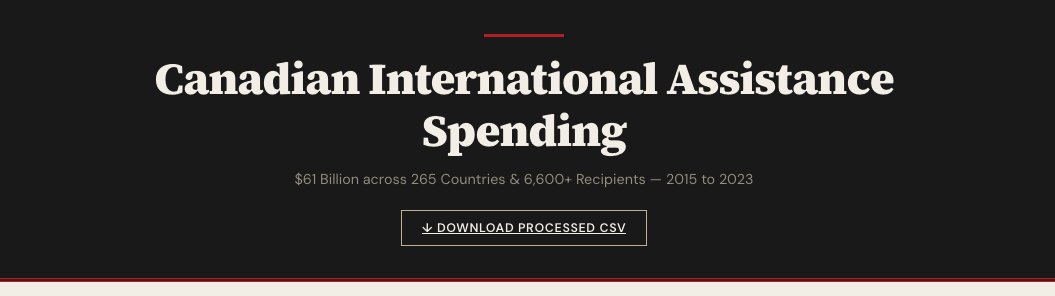
$61 billion spending
218,000 records
6,600 recipients around the world
https://thereclamare.github.io
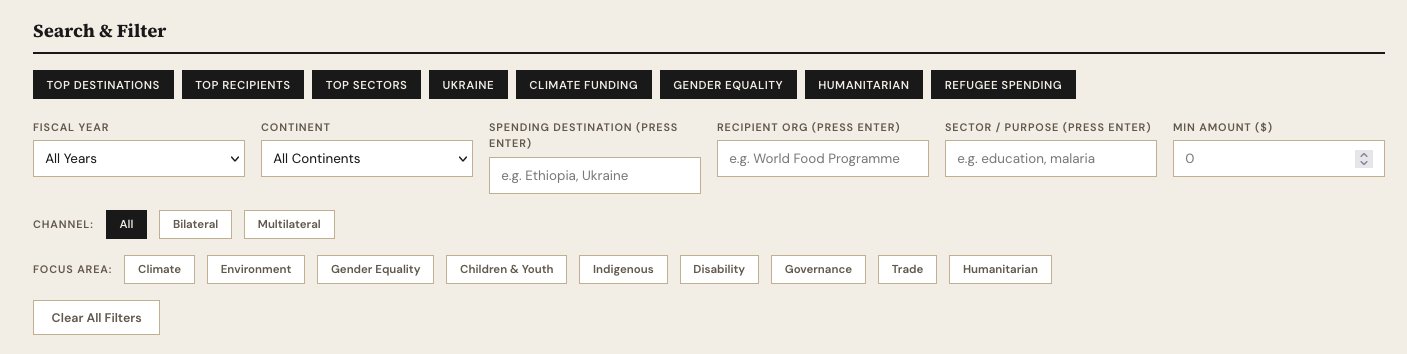
You can search by;
– Year
– Spending Destination (country where money is spent)
– Recipient
– Purpose
– Amount
– Continent
Govt data files will show a recipient as Simon Fraser University in BC
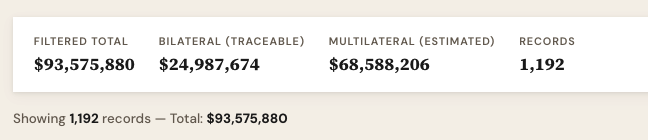
However, if SFU is spending the money on a project in China, its actually money destined for China
There is 1,192 spending records of our taxes being spent in China, totalling $93 million dollars
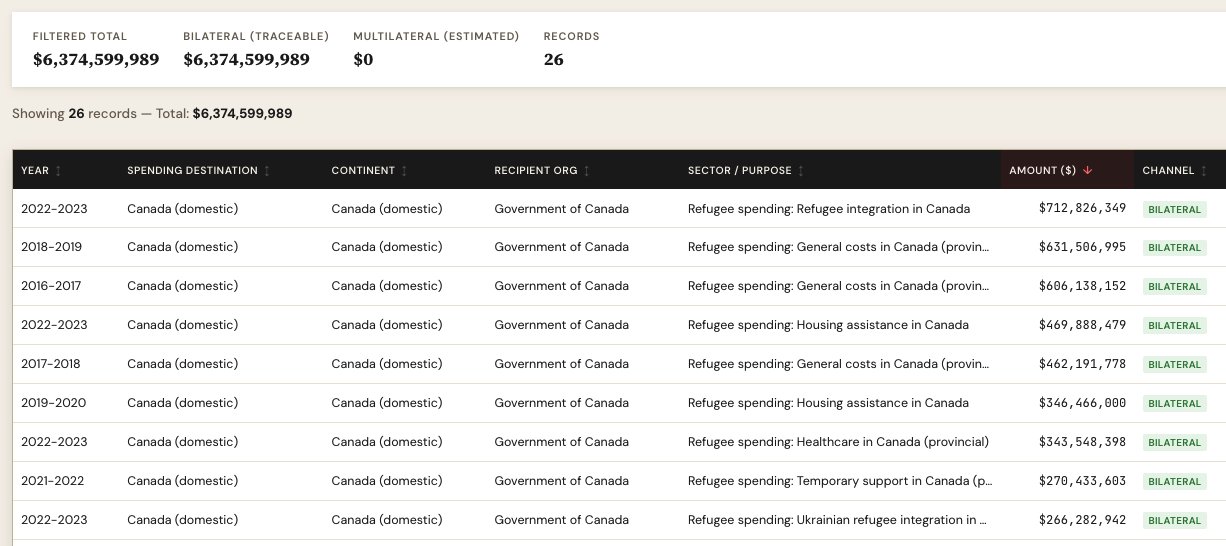
One of the largest entrees is Refugee spending, but its a bit dishonest
Global Affairs details all its spending on Refugees, except they are inside Canada
In 8 years there has been $6.4 billion tax dollars spent on refugees inside Canada, but shown as foreign affairs spending
You can search for specific organizations to see how Canada is helping fund terrorist connected organizations like UNRWA
A quick look shows $211 million in tax dollars given to UNRWA, to be spent in places like Syria for reason like Gender equality🤪
Government lists many programs under Gender Equality
You can search for those too – in 8 years Canada gave away $35 billion tax dollars to foreign countries around the world under the guise of “Gender”
This is for your interest and knowledge but also for the searchers and journos out there, who like me, can’t make heads or tails of published government data
Please have a look and share what you find:)
https://thereclamare.github.io/fin
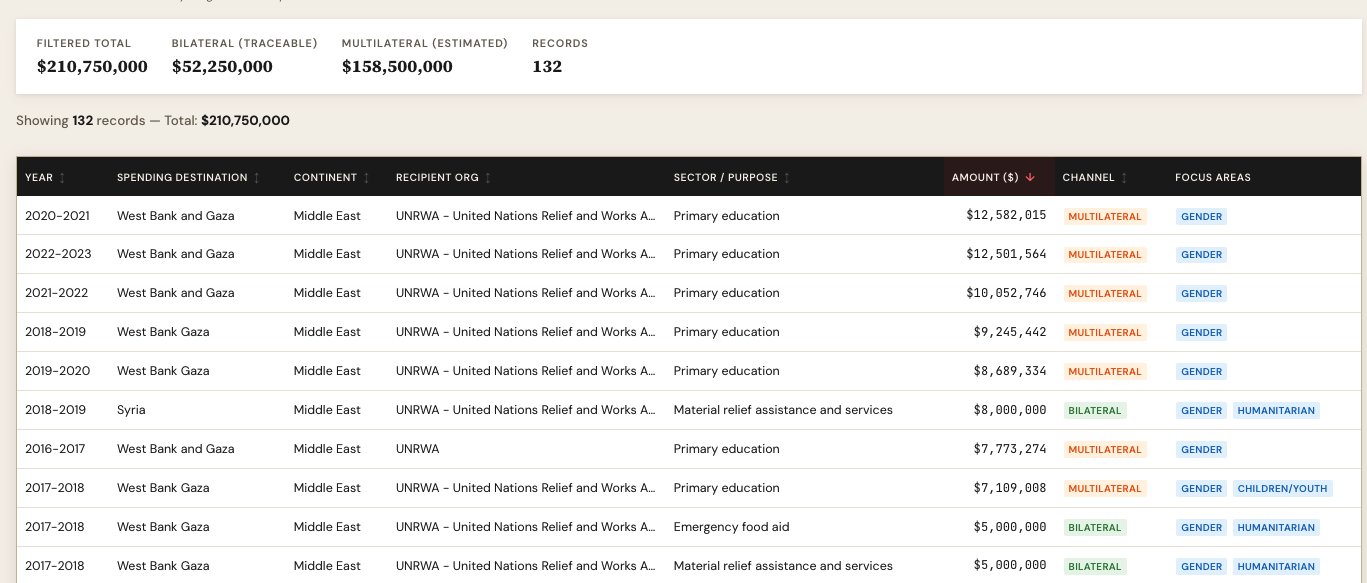
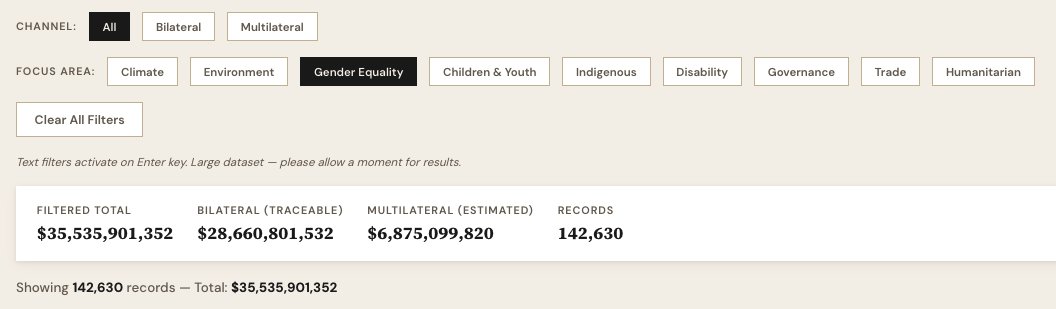
Comments Off on Eight years of Canadian government “international assistance” spending
March 25, 2026
The Korean War Week 92: Operation Mixmaster! – March 24, 1952
The Korean War by Indy Neidell
Published 24 Mar 2026The UN forces begin a huge operation to move the US 1st Marine Division to new defensive positions far to the west of the former ones, but this involves moving some 200,000 men back and forth along the lines. Behind the lines, the ROK continues building up force trying to turn itself into a well equipped and trained modern army, and above the lines the tech war marches on as the UN premieres a new night fighter.
00:55 Recap
01:40 The ROK Economy
06:40 Operation Mixmaster
07:39 Rotation Settled
10:31 Ridgway’s Recommendations
14:01 Overt or Covert POW Screening
15:54 Notes
16:22 Summary
16:34 Conclusion
(more…)
Comments Off on The Korean War Week 92: Operation Mixmaster! – March 24, 1952
UNDRIP’s malign power in Canada
The United Nations Declaration on the Rights of Indigenous Peoples (UNDRIP) has been adopted into law by the provincial government in British Columbia and the federal government. In BC, voters were assured that this was a purely symbolic act to advance reconciliation with First Nations groups in the province. But that was deliberate misdirection and lies:

During the debate on DRIPA [BC’s Declaration on the Rights of Indigenous Peoples Act] in the legislature in late 2019, government ministers of the day waxed lyrical that DRIPA and UNDRIP created no new rights, had no legal force, did not apply to private land, and did not provide a veto. Those assurances were used to justify passing DRIPA, which resulted in the B.C. Opposition unanimously supporting the legislation. It turns out that the government’s assessment and promises were neither correct in substance nor valid legally.
Much has been written lately about DRIPA, some of it wrong. Prior to the B.C. Court of Appeal decision in Gitxaala, some DRIPA defenders insisted it was merely a “process” piece of legislation that bound the government to an arguably undemocratic joint government and Indigenous leadership arrangement, set out in section 3, to evaluate every B.C. statute for conformity with the 46 Articles of UNDRIP and then amend statutes as deemed necessary to create that conformity.
DRIPA itself, though arguably highly undemocratic and perhaps unconstitutional, is not the real problem in this province. The real problem is that DRIPA has been effectively employed as a “smokescreen” by the B.C. NDP and certain of its allies, while the government, secretly and with no explicit public mandate, imposes the Articles of UNDRIP throughout B.C. as a fundamental matter of policy, as though they have the force of law.
Let’s be clear, this is a devious political manoeuvre, much of which is not underpinned in law by DRIPA or, more importantly, by Supreme Court of Canada jurisprudence at all.
Notwithstanding statements made to the legislature in 2019 to get DRIPA passed, the NDP government immediately chose to implement a policy approach to UNDRIP throughout B.C. under which UNDRIP Articles would be applied by the government and the public service as though they were, in fact, the law in this province, notwithstanding the fact that they are inconsistent in many respects with Canadian constitutional law.
In the wake of recent court decisions, there is no indication that the government’s policy approach has changed or that the Premier is thinking about backing away from it, even though there is now much greater public scrutiny of what the government has really been up to since 2019.
The Eby government claims to be upset that UNDRIP is now being applied by the courts as the law in B.C., which it knows will create utter chaos. What has upset it more, however, is that the courts have usurped the NDP government’s desire to quietly and secretly implement UNDRIP everywhere in the province as a matter of policy, a policy that they would like to be viewed as law but without being legally enforceable by judges.
This amounts to a policy of subterfuge by a government that has shown an inclination towards deception on matters concerning First Nations. It appears that a law is not a law unless the B.C. government says it is a law, but some laws, like DRIPA, can be used as a false “front” to allow the covert implementation of a complex UN-based policy that is clearly unfit for the Canadian context, with no one being the wiser.
In the National Post, Warren Mirko explains the murky theory that allows “indigenous ways of knowing” to be taken more seriously than science, history, and legal procedure:

Canada is rapidly abandoning a principle that has shaped western democracies since the Enlightenment: the idea that no person or group has privileged access to sacred or divine knowledge unavailable to everyone else.
Now, this principle is being threatened by Canada’s increasing embrace of “Indigenous Knowledge” — whereby knowledge is treated as collectively owned and restricted by ancestry rather than something open to examination and shared across society.
The governments of British Columbia and Canada — both of which have formally adopted the United Nations Declaration on the Rights of Indigenous Peoples (UNDRIP) — endorse “Indigenous Knowledge” as inherited, rooted in ancestral relationships to the land, and encompassing spiritual, cultural and metaphysical dimensions passed down through generations.
Remarkably, the defining quality to possess this knowledge is not study, training, time spent on the land, or lived experience by any individual alive today. Instead, it’s lineage itself.
That’s a paradigm shift. When knowledge is said to be possessed by birth rather than learned, its universality is replaced with mysticism and its value diminished.
This comes with real-world consequences: ancestry-based considerations are reshaping how public land and resources are managed on Canadians’ behalf.
In British Columbia, newly proposed changes to hunting and wildlife regulations are described as being informed by “the best available science and Indigenous Knowledge“. In practice, this means “Indigenous Knowledge” is being used to design a regulatory regime that falls almost entirely on non-Indigenous users. That’s because Indigenous harvesting rights are recognized under Section 35 of the Constitution, not bound by the same hunting seasons, bag limits, gear restrictions, or limited-entry systems that apply to the broader public.
The growing influence of this genetically transmitted, ancestry-qualified knowledge extends to matters of public safety and economic security, like nuclear regulation: “Indigenous ways of knowing and the Indigenous cultural context enhance the Canadian Nuclear Safety Commission’s understanding of the potential impacts of nuclear projects and strengthen the rigour of project reviews and regulatory oversight”, says the government of Canada website.
Governments championing the principles of UNDRIP insist that “Indigenous Knowledge” can be combined with “Western” science to produce better public policy. But this is a contradiction. Knowledge cannot at once be exclusive and universal.
Comments Off on UNDRIP’s malign power in Canada
March 18, 2026
The Korean War Week 91: The South Korean Economy is Dying – March 17, 1952
The Korean War by Indy Neidell
Published 17 Mar 2026There’s tension between allies as the ROK economy worsens and worsens, part of the problem being caused by all the South Korean currency printed to respond to the demand for it by the UN forces to buy “stuff”. Inflation is growing by leaps and bounds. However, at least some tension between enemies lessens, as one more point of the agenda at the Panmunjom Peace talks is settled.
00:55 Recap
01:40 The ROK Economy
06:40 Operation Mixmaster
07:39 Rotation Settled
10:31 Ridgway’s Recommendations
14:01 Overt or Covert POW Screening
15:54 Notes
16:22 Summary
16:34 Conclusionhttps://smithsonianassociates.org/tic…
(more…)
Comments Off on The Korean War Week 91: The South Korean Economy is Dying – March 17, 1952
March 11, 2026
The Korean War Week 90: No Surrender, No Armistice … No Hope? – March 10, 1952
The Korean War by Indy Neidell
Published 10 Mar 2026Ultimatums and blackmail! Well, sort of. US President Harry Truman is trying to strong arm South Korean President Syngman Rhee into accepting any armistice negotiated, but the armistice talks are taking forever, so there are those who wish to simply give the Communists a take it or leave it ultimatum. What might such an ultimatum be? Find out this week!
00:58 Recap
01:26 Inspection Teams
03:15 Ultimatums
05:08 Epidemic Disease
07:54 Syngman Rhee
10:57 ROK Training Programs
16:30 Summary
16:46 Conclusion
(more…)
Comments Off on The Korean War Week 90: No Surrender, No Armistice … No Hope? – March 10, 1952


