
The Great War
Published Feb 9, 2024In fall 1914, the British and French armies on the First World War’s Western Front were wrestling with a problem: unseen German riflemen were picking off any man who showed himself above the trench. Something had to be done about it – and the result was the birth of the modern sniper.
(more…)
June 4, 2024
Snipers in World War 1
Comments Off on Snipers in World War 1
May 21, 2024
Patchett Machine Carbine Mk I: Sten Becomes Sterling
Forgotten Weapons
Published Feb 14, 2024The Patchett Machine Carbine Mk I is the predecessor to the Sterling SMG. It was developed by George William Patchett, who was an employee of the Sterling company. At the beginning of the wear, Sterling was making Lanchester SMGs, and Patchett began in 1942 working on a new design that was intended to be simpler, cheaper, and lighter than the Lanchester. He used the receiver tube dimensions from the Sten and the magazine well and barrel shroud from the Lanchester. His first prototypes were ready in 1943, but it wasn’t until early 1944 that the British government actually issued a requirement for a new submachine gun to replace the Stens in service.
The initial Patchett guns worked very well in early 1944 testing, which continued into 1945. It ultimately came out the winner of the trials, but they didn’t conclude until World War Two was over — and nothing was adopted because of the much-reduced need for small arms. Patchett continued to work on the gun, and by 1953 he was able to win adoption of it in the later Sterling form — which is a story for a separate video.
The Patchett was not used in any significant quantity in World War Two. At most, a few of them may have been taken on the parachute drops on Arnhem — there are specifically three trials guns which appear referenced in British documents before Arnhem, but are never mentioned afterwards (numbers 67, 70, and 72). Were they taken into the field? We really don’t know.
(more…)
Comments Off on Patchett Machine Carbine Mk I: Sten Becomes Sterling
March 30, 2024
Extra Firepower for Vietnam: the Aussie “B!tch”
Forgotten Weapons
Published Dec 18, 2023Many of the special forces groups that operated during the Vietnam War found their standard issue weapons a bit unwieldy for use in confined jungle environments. They also found a need for something that could deliver an immediate large volume of fire to break contact during an ambush (or deliver an ambush of their own). The Australians were no exception, and with the typical Special Forces attitude towards customization a few guys made some improvements to what they were issued …
What we have today is a recreation (by Mark Graham of ARS, build on a DSA semiauto receiver) of an Australian L1A1 with its flash hider cut down and a second pistol grip mounted to the barrel. The real examples of these often had rather shorter barrels, and ones that began life as semiauto L1A1 rifles were typically converted to fully automatic (some began as L2A1 automatic rifles and did not require this extra step). Fitted with a large LMG magazine, they could deliver a lot of firepower in a very short time; just the ticket for a small jungle patrol.
(more…)
Comments Off on Extra Firepower for Vietnam: the Aussie “B!tch”
February 4, 2024
Johnson LMG: History & Disassembly
Forgotten Weapons
Published Feb 29, 2016The Johnson light machine gun is one of the lesser-known US military machine guns of WWII, although it seems to have been very popular with all those who used it in combat. Melvin Johnson made a commendable attempt to get his rifles adopted by the US military, but was unable to unseat the M1 Garand as American service rifle. However, he did make a significant sale of both rifles and light machine guns to the Dutch colonial army.
By the time those Dutch guns were ready to ship, however, the Japanese had overrun most of the Dutch islands. The guns were thus basically sitting on the docks with nowhere to go, and at that point the US Marine Corps took possession of them. Because of their short recoil action and quickly removable barrels, the Johnson guns were ideal for airborne Paramarines, and saw use in the Pacific with these forces. They were also used by the joint US/Canadian First Special Service Force in Italy.
In many ways, the Johnson LMG is similar to the German FG-42, although with more emphasis on full-auto use instead of shoulder rifle use. It fired from a closed bolt in semiauto and from an open bolt in full auto, and had a bipod both effective, light, and easily detachable. Overall the Johnson is a light, handy, and very easily dismantled weapon, and its popularity with combat troops seems well deserved.
Comments Off on Johnson LMG: History & Disassembly
February 2, 2024
The Sad Story of Churchill’s Iceman, Geoffrey Pyke
World War Two
Published Jan 31, 2024Geoffrey Pyke is remembered as an eccentric scientist who spewed out ideas like giant aircraft carriers made of icy Pykerete. But there was much more to him than that. He was a spy, a special operations mastermind, and his novel ideas contributed to the success of D-Day.
(more…)
Comments Off on The Sad Story of Churchill’s Iceman, Geoffrey Pyke
January 25, 2024
Finnish Jews, Polish Special Forces, and MREs – WW2 – OOTF 32
World War Two
Published 24 Jan 2024How did Finland treat its Jews, and what did Finnish people know about the Holocaust? Who were the mysterious Polish Silent Unseen? And, what sort of rations did soldiers carry? Find out in this episode of Out of the Foxholes.
(more…)
Comments Off on Finnish Jews, Polish Special Forces, and MREs – WW2 – OOTF 32
January 23, 2024
The battle of Sangshak, 1944
Dr. Robert Lyman discusses a new book by David Allison that covers one of the many small battles that made up the large Imphal-Kohima campaign:
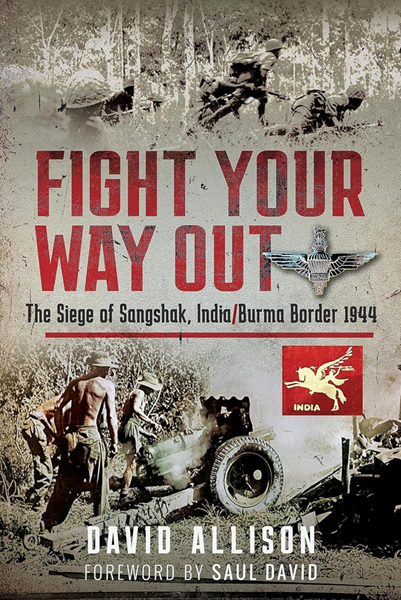
When Wavell, by then Viceroy of India, visited Imphal after the battle in October, to bestow knighthoods on the four victors — Lieutenant Generals Bill Slim (14 Army), Montagu Stopford (33 Corps), Geoffrey Scoones (4 Corps) and Philip Christison (15 Corps) — he admitted to Slim that he found the battle hard to follow, as it seemed to have been fought in “penny-packets”. In professing his ignorance of Slim’s great triumph, Wavell nevertheless hit the nail on the head. Sangshak was one of those penny-packet fights which cumulatively determined the outcome of Japan’s audacious invasion of India.
Like many battles in insufficiently examined wars, Sangshak has suffered over the years from a paucity of rigorous examination. Louis Allen’s magisterial The Longest War gave it short treatment in 1984, and very little else. Until now. I’m delighted to say that a Hong Kong-based Australian lawyer with a military background — David Allison — has produced a new account of this crucial battle, and it is absolutely outstanding. It can be purchased here. I recommend it very strongly. It’s not long: at 159-pages of text you can make your way through this in a couple of days, but it is diligently researched, well written and judiciously argued. For those who know something of the battle, the big arguments in the past about the state training of the 50 Indian Parachute Brigade, the temporary breakdown of its commander, Hope-Thomson and the supposed loss of the captured Japanese map and orders by HQ 23 Indian Division, are calmly and satisfyingly explained.
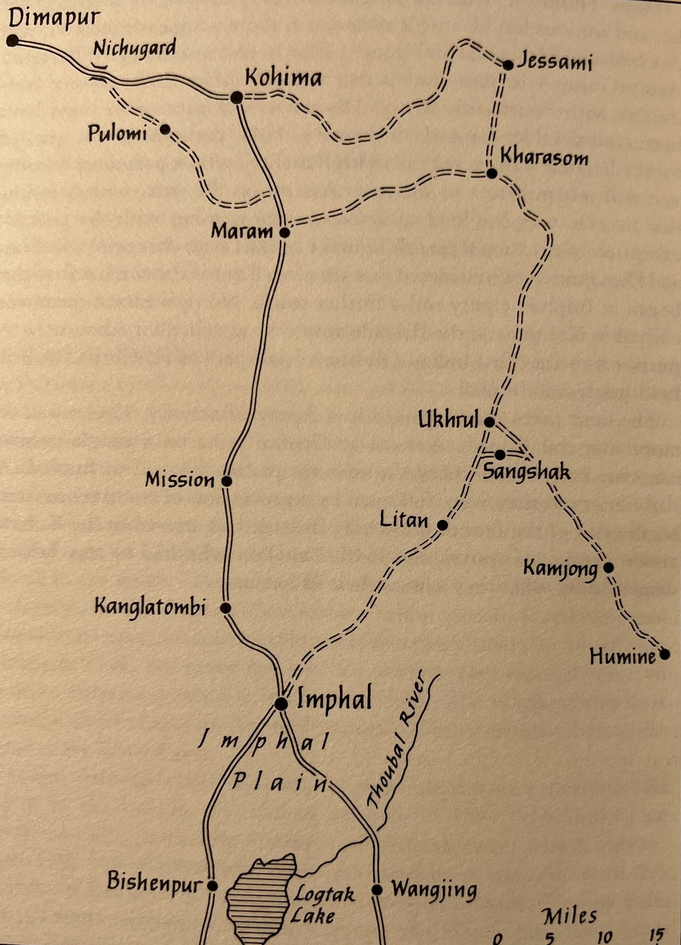
The story can be briefly told. The territory to the north-east of Imphal (centring on the Naga village of Ukhrul) had only the lightest of garrisons and no real defences. Until 16 March it was home to 49 Brigade, which was then despatched to the Tiddim Road to deal with the advance in the south of Lieutenant General Yanagida’s 33 Division. The brigade had considered itself to be in a rear area, and, extraordinarily, no dug-in and wired defensive positions had been prepared. It was one of the most serious British planning failures of the campaign. The entire north-eastern portion of Imphal lay effectively undefended. The gap left by the brigade’s departure had been filled in part by the arrival of the first of the two battalions of the newly raised 50 Indian Parachute Brigade (comprising the Gurkha 152 Battalion and the Indian 153 Battalion), whose young and professional commander, 31-year-old Brigadier M.R.J. (“Tim”) Hope-Thomson, had persuaded New Delhi to allow him to complete the training of his brigade in territory close to the enemy. The area north-east of Imphal was regarded as suitable merely for support troops and training. At the start of March, the brigade HQ and one battalion had arrived in Imphal and began the leisurely process of shaking itself out in the safety of the hills north-east of the town. To the brigade was added 4/5 Mahrattas under Lieutenant Colonel Trim, left behind when 49 Brigade was sent down to the Tiddim Road. To Scoones and his HQ, the area to which Hope-Thomson and his men were sent represented the lowest of all combat priorities. Sent into the jungle almost to fend for themselves, it was not expected that they would have to fight, let alone be on the receiving end of an entire Japanese divisional attack. They had little equipment, no barbed wire, and little or no experience or knowledge of the territory. No one considered it worthwhile to keep them briefed on the developing situation. To all intents and purposes, 50 Indian Parachute Brigade was an irrelevant appendage, attached to Major General Ouvry Roberts’ 23 Indian Division for administrative purposes but otherwise left to its own devices.
Before long, information began to reach Imphal that Japanese troops were advancing in force on Ukhrul and Sangshak. Inexplicably, however, this information appeared not to ring any warning bells in HQ IV Corps in Imphal, which was preoccupied with the developing threat in the Tamu area where the main Japanese thrust was confidently predicted. On the night of 16 March, the single battalion of 50 Parachute Brigade took over responsibility for the Ukhrul area from 49 Brigade, which was hastily departing for the Tiddim Road. They had no idea that an entire Japanese division of 20,000 men was crossing the Chindwin in strength opposite Homalin. On 19 March, large columns of Japanese infantry were reported advancing through the hills.
No one had expected them to be where they were. But the first shock came to the Japanese 3/58 battalion (Major Shimanoe), part of Lieutenant General Sato’s 31 Division – troops whose objective was Kohima, and not Imphal – who were bloodily rebuffed by the determined opposition of the young Gurkha soldiers at an unprepared position forward of Sheldon’s Corner. The 170 Gurkha recruits refused to allow the 900 men of 3/58 to roll over them and inflicted 160 casualties on the advancing Japanese. In the swirling confusion of the next 36 hours, Hope Thomson and his staff kept their heads, attempting to concentrate what remained of the dispersed companies of 152 Battalion and 4/5 Mahrattas back to a common position at the village of Sangshak, which dominated the tracks southwest to Imphal.
It was at this now-deserted Naga village that Hope-Thomson, on 21 March, decided to group his brigade for its last stand, his staff desperately attempting to alert HQ 4 Corps in Imphal to the enormity of what was happening to the north-east. The Japanese columns infiltrated quickly around and through the British positions, heading in the direction of Litan. The Japanese now began days of repeated assaults on the position in a battle of intense bravery and sacrifice for both sides. Hope Thomson’s men could only dig shallow trenches, which provided no protection from Japanese artillery.
Comments Off on The battle of Sangshak, 1944
December 31, 2023
The British army in Northern Ireland, 1966-1975
Patrick Mercer reviews Huw Bennett’s Uncivil War: The British Army and the Troubles, 1966-1975 for The Critic:
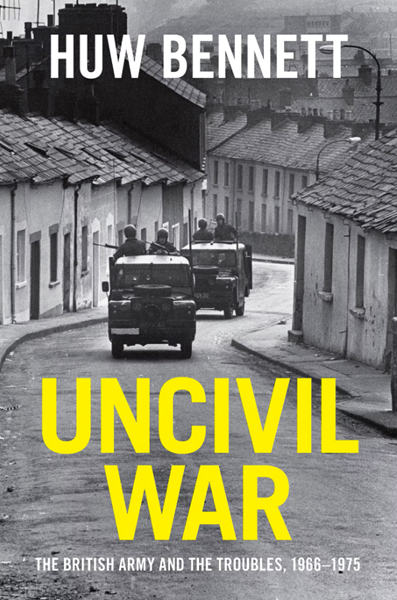
Seen from today’s perspective, the litany of campaigns Britain fought between the World Wars seems unimportant. Yet disasters such as the Jallianwala Bagh massacre in Amritsar in April 1919, and the depredations of the Auxiliaries or Black and Tans in Ireland at much the same time, imperilled imperial strategy. [Richard Dannatt & Robert Lyman’s] Victory to Defeat underlines the actions of relatively small numbers of troops which threatened to unhinge whole campaigns. It makes the perfect counterpoint to Huw Bennett’s Uncivil War, which covers the opening years of the crisis in Northern Ireland in meticulous detail.
Bennett looks at operations in Northern Ireland only up until 1975 — arguably the most intense period — with a promise of further volumes to follow. This is the first, comprehensive attempt to deal in parallel with the political aspects of the campaign as well as the purely military ones. Although densely written, Uncivil War gives a very readable account of the first of three decades of conflict which dominated the everyday life of most of the combat arms of the Army. It now seems ironic, though, that Ulster was always treated as something of a sideshow when compared with the “real soldiering” of deterring the Soviets in Germany.
Central to Bennett’s book is the debacle of “Bloody Sunday” in January 1972, when paratroopers ran amok in Londonderry at a point of the campaign when the IRA was exhausted and finding it almost impossible to recruit. Politically, there might have been a breakthrough; militarily the terrorists were teetering on collapse, but one black sheep unit and the ham-fisted response by the chain of command galvanised the IRA. With a rifle’s crack, they guaranteed bloodshed for years to come.
If ever a victory was turned into defeat in modern times, this was it. Bennett pulls no punches in pointing that out. The interesting contrast with Lyman and Dannatt’s work is that no matter how much had been learnt from the Second World War, the doctrine that emerged could only be tested by blank firing exercises in Germany. Whilst the highly unlikely possibility of a war in Europe was constantly analysed, very little strategic thinking was put into the grinding, long-term campaign in Ulster that was actually killing people.
Certainly there were political initiatives and the intelligence machinery was constantly evolving, but the many battalions and regiments who were charged with everyday deterrence and occasional attrition wandered the streets with little imagination or flair, often only seeming to provide targets for the terrorists. If war against the Soviets was remote, bombs, snipers and ambushes in Ulster were certain. By contrast, the Field Service Pocket Book (India) of 1930 laid out clear advice and principles for operations on the North-West Frontier. In Ulster, we just blundered on.
If the lessons of 1918 were neglected, those that led to victory in 1945 were carefully studied, although any coherent tactical doctrine took until the 1980s to be published. Perversely, the operations that followed both world wars were much the same: small, far-flung, post-imperial scuffles which owed little to “conventional” fighting. Indeed, it might be argued that the real lessons that the Army needed to heed after 1945 were not those of a European war, but those which might have prepared it for long years in Northern Ireland or the former colonies.
Comments Off on The British army in Northern Ireland, 1966-1975
December 24, 2023
The Siege of Bastogne Begins – WW2 – Week 278 – December 23, 1944
World War Two
Published 23 Dec 2023The German Ardennes Offensive, called by the Allies the Battle of the Bulge, is in full swing in Luxembourg and Belgium this week, and the Germans have the key junction town of Bastogne under siege. On the Allied side there comes a large American surrender, plans for counterattacks, and tension growing between British and American Commands. The fight in both Italy and the Philippines continues, and in Hungary the Soviets have nearly surrounded Budapest.
00:26 Intro
01:06 The Battle of the Bulge
03:54 The Malmedy Massacre
06:25 Bastogne
10:00 American Surrender on Schnee Eifel
12:06 Patton plans a counterattack
15:44 Bernard Montgomery and Omar Bradley
18:12 The Red Army advances around Budapest
21:39 Fighting in Italy and Greece
22:45 Leyte and Mindoro
25:07 Conclusion
(more…)
Comments Off on The Siege of Bastogne Begins – WW2 – Week 278 – December 23, 1944
December 22, 2023
Camouflage
World War Two
Published Dec 19, 2023Camouflage comes in many forms, shapes, disguises, and even processes, for there are indeed many ways to hide your soldiers, guns, tanks, and even ships at sea. Today we take a wee look at camouflage during the war.
(more…)
Comments Off on Camouflage
December 21, 2023
The Battle of Ortona
Army University Press
Published 20 Dec 2023Between 20 and 28 December 1943, the idyllic Adriatic resort town of Ortona, Italy was the scene of some of the most intense urban combat in the Mediterranean Theater. Soldiers of the First Canadian Infantry Division fought German Falschirmjager for control of the city, the eastern anchor of the Gustav Line. The Army University Films Team is proud to present, The Battle of Ortona, as told by Major Jayson Geroux of the Canadian Armed Forces.
Comments Off on The Battle of Ortona
October 14, 2023
Why Did the Vietnam War Break Out?
Real Time History
Published 10 Oct 2023In 1965, US troops officially landed in Vietnam, but American involvement in the ongoing conflict between the Communist North and the anti-Communist South had started more than a decade earlier. So, why did the US-Vietnam War break out in the first place?
(more…)
Comments Off on Why Did the Vietnam War Break Out?
October 2, 2023
Why France Lost Vietnam: The Battle of Dien Bien Phu
Real Time History
Published 29 Sept 2023After the French success in the Battle of Na San, the battle of Dien Bien Phu is supposed to defeat the Viet Minh once and for all. But instead the weeks-long siege becomes a symbol of the French defeat in Vietnam.
(more…)
Comments Off on Why France Lost Vietnam: The Battle of Dien Bien Phu
October 1, 2023
The End of Market Garden – WW2 – Week 266 – September 30, 1944
World War Two
Published 30 Sep 2023This week, Operation Market Garden comes to its unsuccessful conclusion, but there’s a lot more going on — the Soviets launch an offensive in the Estonian Archipelago, the Warsaw Uprising is on the ropes, the Allies advance in Italy, the Americans on Peleliu, and Tito and Stalin make plans to clear Yugoslavia of the enemy.
(more…)
Comments Off on The End of Market Garden – WW2 – Week 266 – September 30, 1944
September 25, 2023
Girardoni Air Gun (original 1780 example)
Forgotten Weapons
Published 7 Jun 2014The Girardoni (also spelled Girandoni) air rifle was a very advanced design adopted in 1780 by the Austrian Army. While the standard arm of the day was a single-shot flintlock, the Girardoni offered a massive firepower advantage to the men who carried it. The guns (designed by Bartholomäus Girardoni, of Vienna) had a magazine capacity of 22 round balls, which could all be fired within 60 seconds. The balls were .46 caliber, weighing approximately 153 grains, and were propelled at 400-450 feet per second. They were rumored to be silent, but actually had a loud report (although quieter than gunpowder firearms). One of these rifles was carried by the Lewis & Clark expedition into the American West.
The Austrian Army used them for a relatively short time — they were taken out of service by Imperial order in 1788, and issued back to Tyrolian sniper units only in 1792. The reasons for their replacement were more logistical than the result of any actual shortcoming with Girardoni’s design. The problem was that they required special training to use (compared to a normal firearm), required specially trained and equipped gunsmiths to repair and maintain, and difficulty maintaining them in combat conditions. Dr. Robert Beeman has written an outstanding illustrated article on Austrian airguns in general and the Girardoni in particular, which I highly recommend for anyone interested in more detail on these fascinating weapons:
http://www.beemans.net/Austrian%20air…
However, I am privileged to be able to share with you this video of an original 1780 Girardoni put together by Luke Haag for presentation at the 2014 AFTE conference in Seattle. Mr. Haag does a great job explaining the operation of the gun, its capabilities and accessories.
Comments Off on Girardoni Air Gun (original 1780 example)


