Think of all the traits and characteristics, most of them negative, associated with the Millennials in the popular mind. They are said to be unrealistic and have both the inflated expectations of life and the inflated perceptions of selves. They think the world owes them a living – a good one too – though without necessarily too much effort. Things came very easily to them when they were growing up; when that suddenly stops – when the reality finally intrudes – they get angry, frustrated, lost: the world is deeply unfair and is conspiring against them. They are narcissistic, self-possessed and self-obsessed. They expect instant rewards and instant gratification. Having been told their whole lives how special they are, they tend to be over-sensitive and find it difficult to cope with criticism or obstacles. They’re lazy, flighty and easily distracted. Remember: these are all generalisations, but stereotypes stick because they ring true.
So no, no surprises here. Their collective personality makes the Millennials unusually suited for the flirtation with socialism. They are a great match; if this was Tinder, Marx would be getting super liked all the time.
Socialism is the response of a spoiled child when faced with the world that does not genuflect to its every wish the way their parents did – the world as it is must therefore be evil and has to be changed to something radically different. Gen Y, of course, did not just magically became the way they are – they were brought up like that, so we all bear the blame and the responsibility for a generation who resents not being managers in their 20s and not being recognised as special anymore by all their elders. Clearly, the capitalism has failed when I’m not showered down with money after I graduate from my double in media and gender studies.
Arthur Chrenkoff, “Socialism as a Millennial religion”, The Daily Chrenk, 2019-02-19.
June 14, 2022
QotD: Generation snowflake
May 25, 2022
QotD: The “social responsibility” of business
When I hear businessmen speak eloquently about the “social responsibilities of business in a free-enterprise system,” I am reminded of the wonderful line about the Frenchman who discovered at the age of 70 that he had been speaking prose all his life. The businessmen believe that they are defending free enterprise when they declaim that business is not concerned “merely” with profit but also with promoting desirable “social” ends; that business has a “social conscience” and takes seriously its responsibilities for providing employment, eliminating discrimination, avoiding pollution and whatever else may be the catchwords of the contemporary crop of reformers. In fact they are — or would be if they or anyone else took them seriously — preaching pure and unadulterated socialism. Businessmen who talk this way are unwitting puppets of the intellectual forces that have been undermining the basis of a free society these past decades.
Milton Friedman, “The Social Responsibility of Business is to Increase its Profits”, New York Times, 1970-09-13.
May 18, 2022
From “Software as a Service” to “Property as a Service” then to “Hypercapitalism” aka Neo-Feudalism
Whenever I could, as the software I used to depend on switched from the old-fashioned “purchase a license” to “Software as a Service” model, I found something else to use or I didn’t bother “upgrading” from the last iteration before it went SaaS. My Microsoft Office installation is the 2007 version — after that I used Open Office (and now LibreOffice) for anything Microsoft-related. Even working in the software business, I hated SaaS and I try as much as I can to avoid products distributed that way. Imagine how I feel about the expansion of that toxic idea to other areas of life, as Chris Bray discusses here:
Twenty-two years ago, the economist and social critic Jeremy Rifkin warned about the emerging commodification of human experience. Markets have always exchanged private property, he wrote, and people have grown accustomed to the act of holding it personally – that is, of owning things. But in a new “hypercapitalist” world, he warned, ownership would be concentrated in a few corporate hands, and most people would pay to access property, “in the form of short-term leases, rentals, memberships, and other service arrangements,” rather than owning it. Remember that description about leasing all of your stuff in a series of service arrangements, because you’ll be seeing it again in a minute or two.
The man was not wrong about the degree to which businesses would aspire to turn one-time sales of stuff into endless monthly purchases of a service:
And then comes the politics:
The shift from a propertied regime based on the idea of broadly distributed ownership to an access regime based on securing short-term limited use of assets controlled by networks of suppliers changes fundamentally our notions of how economic power is to be exercised in the years ahead. Because our political institutions and laws are steeped in market-based property relations, the shift from ownership to access also portends profound changes in the way we will govern ourselves in the new century.
And this, and look closely for the most important sentences — two of them, short and adjacent:
In a society where virtually everything is accessed, however, what happens to the personal pride, obligation, and commitment that go with ownership? And what of self-sufficiency? Being propertied goes hand in hand with being independent. Property is the means by which we gain a sense of personal autonomy in the world. When we access the means of our existence, we become far more reliant on others. While we become more connected and interdependent, do we risk at the same time becoming less self-sufficient and more vulnerable?
The shift in the structuring of human relationships from ownership to access appears to invite a trade-off of sorts whose outcome is far from certain. Will we liberate ourselves from our possessions, only to lose a sense of obligation to the things we fashion and use? Will we become more embedded in networks of relationships, only to become more dependent on powerful networks of corporate suppliers?
Property is autonomy. That was a warning about your own life: less autonomous, more dependent. And it was, specifically, a warning about corporate capitalism on the subscription model, and the social and political effects of a concentration of property in increasingly few hands. Hypercapitalism would be the new feudalism, a system of lords and serfs.
March 29, 2022
A leading source of incompetence
My contacts on social media have probably gotten tired of me pointing out that any big organization will perform less well than a smaller one in the same activity, and governments across the western world have been growing bigger and less competent every year. Sarah Hoyt recalls the time she saw an almost Soviet display of big government incompetence on a visit to her native Portugal:
The last time I was in Portugal I got to witness (actually the time before last, while running through the Lisbon airport) something I’d only previously read about as being normal in the Soviet Union: structures that were being built and decaying, simultaneously, which seems impossible, but I assure you it’s not.
[…]
The question is: competence has existed, and had high marks. We know it existed at various times, because their works survive: the landscape of Europe is still littered with Roman bridges and aqueducts, not to mention Roman roads. Cathedrals and monuments abound. Our own country has marvels of engineering and construction still standing and you don’t have to fix daily.
So, where did that competence go? And why does no one seem to know how to do anything. (Here as an aside, almost everything I learned to do competently had to be learned on my own, and often against massive resistance.)
Well, for about a hundred years now, we’ve been under the ideological ascent of socialism. And socialism — international socialism, to be precise — is only good for creating picturesque ruins. (The romantics would have loved them.)
Note that I’m not defending national socialism. As I’ve pointed out before, when the government takes over the economic life of a country, and directs what the companies can or cannot do, the tendency is to quash innovation, and as a rule everyone becomes very poor.
It’s just that it depends. Like empires (which to an extent they are) national socialist regimes can do okay under an extraordinary ruler. I had a mini-dispute with Herb in the comments on whether Franco was or was not Fascist. He absolutely was, both in the economic, and in the repressive, take over every minutia of life aspect. He was also better than the average bear at directing the economic life of the country which is why before his death we used to go shop in Spain, where more and better goods were available than in Portugal.
Relatively speaking, Salazar was a softer leader. Or at least, he stomped less on the opposition (while making more noises about stomping. It’s the Portuguese way.) But as an economic leader (director of the economic life. Führer if you will. Or where did you think that came from?) he sucked. He sucked upside down and sideways and with his head in a sack. And that’s because he was raised by Jesuits, and got his economic theories from them. Which pretty much tells you everything you need to know. So over his rule, everyone became increasingly poorer. But weirdly not incompetent. (In fact, as a person who — there and here — likes to follow craftsmen around watching how they do things, the average craftsman who learned his trade under national socialism, was probably way better than anyone else.)
Which brings us to: how does international socialism/communism not only destroy competency but introduce incompetency and corruption to the degree it is enforced/implemented.
March 22, 2022
QotD: Epitaph for Yugoslavia
Born as a monarchy, died as a failed socialist state. Succumbed after a life-long illness at the age of 73. Survived by seven ungrateful and prodigal children, nation-states. Preceded in death by other fellow-socialist countries of Europe. Donations (still) welcomed to the impoverished, orphaned Yugonostalgic peoples of the region.
Maria Vivod, “A Late Obituary for a Country: Yugoslavia (1918-1991)”, Quillette, 2021-12-12.
March 10, 2022
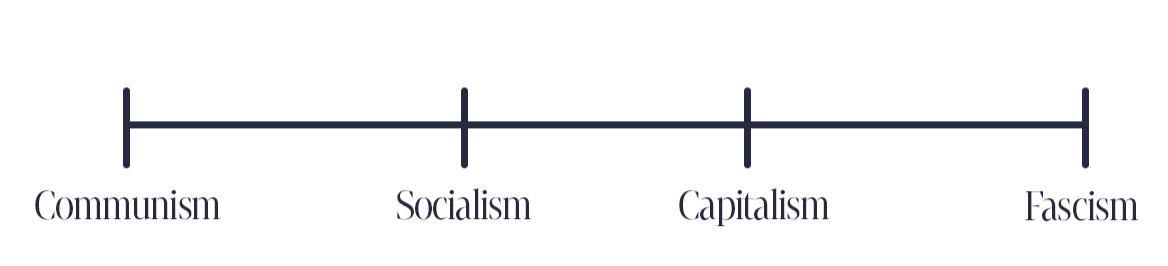
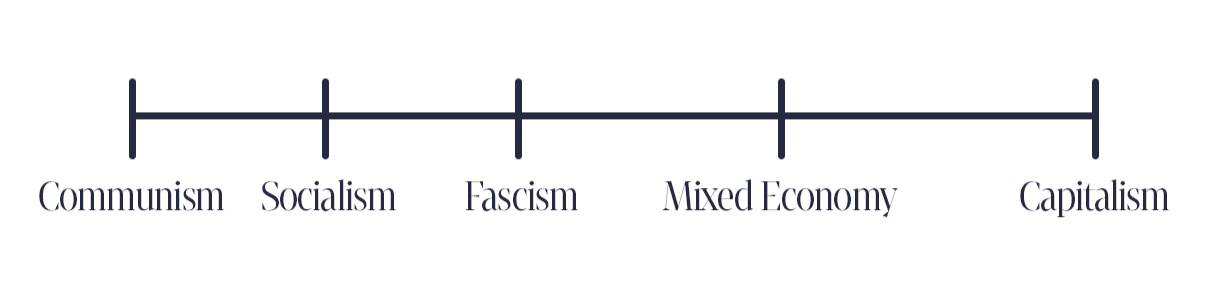
QotD: Orwell on Capitalism, Socialism, and Fascism
Socialism is usually defined as “common ownership of the means of production”. Crudely: the State, representing the whole nation, owns everything, and everyone is a State employee. This does not mean that people are stripped of private possessions such as clothes and furniture, but it does mean that all productive goods, such as land, mines, ships and machinery, are the property of the State. The State is the sole large-scale producer. It is not certain that Socialism is in all ways superior to capitalism, but it is certain that, unlike capitalism, it can solve the problems of production and consumption. At normal times a capitalist economy can never consume all that it produces, so that there is always a wasted surplus (wheat burned in furnaces, herrings dumped back into the sea, etc., etc.) and always unemployment. In time of war, on the other hand, it has difficulty in producing all that it needs, because nothing is produced unless someone sees his way to making a profit out of it. In a Socialist economy these problems do not exist. The State simply calculates what goods will be needed and does its best to produce them. Production is only limited by the amount of labour and raw materials. Money, for internal purposes, ceases to be a mysterious all-powerful thing and becomes a sort of coupon or ration-ticket, issued in sufficient quantities to buy up such consumption goods as may be available at the moment.
However, it has become clear in the last few years that “common ownership of the means of production” is not in itself a sufficient definition of Socialism. One must also add the following: approximate equality of incomes (it need be no more than approximate), political democracy, and abolition of all hereditary privilege, especially in education. These are simply the necessary safeguards against the reappearance of a class-system. Centralized ownership has very little meaning unless the mass of the people are living roughly upon an equal level, and have some kind of control over the government. “The State” may come to mean no more than a self-elected political party, and oligarchy and privilege can return, based on power rather than on money.
But what then is Fascism?
Fascism, at any rate the German version, is a form of capitalism that borrows from Socialism just such features as will make it efficient for war purposes. Internally, Germany has a good deal in common with a Socialist state. Ownership has never been abolished, there are still capitalists and workers, and – this is the important point, and the real reason why rich men all over the world tend to sympathize with Fascism – generally speaking the same people are capitalists and the same people workers as before the Nazi revolution. But at the same time the State, which is simply the Nazi Party, is in control of everything. It controls investment, raw materials, rates of interest, working hours, wages. The factory owner still owns his factory, but he is for practical purposes reduced to the status of a manager. Everyone is in effect a State employee, though the salaries vary very greatly. The mere efficiency of such a system, the elimination of waste and obstruction, is obvious. In seven years it has built up the most powerful war machine the world has ever seen.
But the idea underlying Fascism is irreconcilably different from that which underlies Socialism. Socialism aims, ultimately, at a world-state of free and equal human beings. It takes the equality of human rights for granted. Nazism assumes just the opposite. The driving force behind the Nazi movement is the belief in human inequality, the superiority of Germans to all other races, the right of Germany to rule the world. Outside the German Reich it does not recognize any obligations. Eminent Nazi professors have “proved” over and over again that only Nordic man is fully human, have even mooted the idea that non-Nordic peoples (such as ourselves) can interbreed with gorillas! Therefore, while a species of war-Socialism exists within the German state, its attitude towards conquered nations is frankly that of an exploiter. The function of the Czechs, Poles, French, etc., is simply to produce such goods as Germany may need, and get in return just as little as will keep them from open rebellion. If we are conquered, our job will probably be to manufacture weapons for Hitler’s forthcoming wars with Russia and America. The Nazis aim, in effect, at setting up a kind of caste system, with four main castes corresponding rather closely to those of the Hindu religion. At the top comes the Nazi party, second come the mass of the German people, third come the conquered European populations. Fourth and last are to come the coloured peoples, the “semi-apes” as Hitler calls them, who are to be reduced quite openly to slavery.
However horrible this system may seem to us, it works. It works because it is a planned system geared to a definite purpose, world-conquest, and not allowing any private interest, either of capitalist or worker, to stand in its way. British capitalism does not work, because it is a competitive system in which private profit is and must be the main objective. It is a system in which all the forces are pulling in opposite directions and the interests of the individual are as often as not totally opposed to those of the State.
George Orwell, “The Lion And The Unicorn: Socialism and the English Genius”, 1941-02-19.
March 2, 2022
QotD: George Orwell was a dedicated socialist
I began this book to the tune of German bombs, and I begin this second chapter in the added racket of the barrage. The yellow gun-flashes are lighting the sky, the splinters are rattling on the house-tops, and London Bridge is falling down, falling down, falling down. Anyone able to read a map knows that we are in deadly danger. I do not mean that we are beaten or need be beaten. Almost certainly the outcome depends on our own will. But at this moment we are in the soup, full fathom five, and we have been brought there by follies which we are still committing and which will drown us altogether if we do not mend our ways quickly.
What this war has demonstrated is that private capitalism – that is, an economic system in which land, factories, mines and transport are owned privately and operated solely for profit – does not work. It cannot deliver the goods. This fact had been known to millions of people for years past, but nothing ever came of it, because there was no real urge from below to alter the system, and those at the top had trained themselves to be impenetrably stupid on just this point. Argument and propaganda got one nowhere. The lords of property simply sat on their bottoms and proclaimed that all was for the best. Hitler’s conquest of Europe, however, was a physical debunking of capitalism. War, for all its evil, is at any rate an unanswerable test of strength, like a try-your-grip machine. Great strength returns the penny, and there is no way of faking the result.
When the nautical screw was first invented, there was a controversy that lasted for years as to whether screw-steamers or paddle-steamers were better. The paddle-steamers, like all obsolete things, had their champions, who supported them by ingenious arguments. Finally, however, a distinguished admiral tied a screw-steamer and a paddle-steamer of equal horsepower stern to stern and set their engines running. That settled the question once and for all. And it was something similar that happened on the fields of Norway and of Flanders. Once and for all it was proved that a planned economy is stronger than a planless one.
George Orwell, “The Lion And The Unicorn: Socialism and the English Genius”, 1941-02-19.
February 4, 2022
How the French Army Crushed the Socialist Paris Commune 1871 I GLORY & DEFEAT
Real Time History
Published 3 Feb 2022https://curiositystream.com/realtimeh… – get Nebula and CuriosityStream for less than $15 for an entire year.
The siege of Paris and the end of the Franco-Prussian War had brought social unrest in Paris (and other French cities) to a boiling point. Radical citizens take up arms and proclaim La Commune, a self-organized alternative to the French Republic. But soon the French Army is cracking down and Paris experiences a Week of Blood.
» THANK YOU TO OUR CO-PRODUCERS
John Ozment, James Darcangelo, Jacob Carter Landt, Thomas Brendan, Kurt Gillies, Scott Deederly, John Belland, Adam Smith, Taylor Allen, Rustem Sharipov, Christoph Wolf, Simen Røste, Marcus Bondura, Ramon Rijkhoek, Theodore Patrick Shannon, Philip Schoffman, Avi Woolf, Daniel L Garza, Chris Daley, Manfred Billenstein, Simdoom, Malcolm Swan» OUR PODCAST
https://realtimehistory.net/podcast – interviews with historians and background info for the show.» LITERATURE
Arand, Tobias: 1870/71. Der Deutsch-Französische Krieg erzählt in Einzelschicksalen. Hamburg 2018Bauer, Gerhard u.a. (Hrsg.): Ausst.-Kat. MHM Dresden‚ Krieg – Macht – Nation. Wie das deutsche Kaiserreich entstand. Dresden 2020
Buk-Swienty, Tom: Feuer und Blut. Hauptmann Dinesen. Hamburg 2014
Gouttman, Alain: La grande défaite. 1870-1871. Paris 2015
Horne, Alistair: Es zogen die Preußen wohl über den Rhein. Bern, München, Wien 1967
» SOURCES
Bernhardt, Sarah: Ma double vie. Memoires. Paris 1907
Déclaration de la Commune de Paris. (19 avril 1871) https://gallica.bnf.fr/ark:/12148/bpt…
Goncourt, Edmond de: Journal des Goncourts. II.1. 1870-1871. Paris 1890
Hérisson, Maurice d’: Nouveau Journal d’un officier d’ordonannce. Paris 1889
Hoppenstedt, Julius von: Ein neues Wörth. Ein Schlachtenbild der Zukunft. Berlin 1909
Hugo, Victor: Choses vues, 2e série. Ollendorf 1913.
Kühnhauser, Florian: Kriegs-Erinnerungen eines Soldaten des königlich-bayerischen Infanterie-Leib-Regiments. Partenkirchen 1898
Meisner, Heinrich Otto (Hrsg.). Kaiser Friedrich III. Kriegstagebuch 1870/71. Berlin, Leipzig 1926
Plitt, Franz: Rückerinnerungen eines Dreiundachtzigers. Kassel 1903
Zola, Émile: La Débâcle. Paris 1892
» OUR STORE
Website: https://realtimehistory.net»CREDITS
Presented by: Jesse Alexander
Written by: Cathérine Pfauth, Prof. Dr. Tobias Arand, Jesse Alexander
Director: Toni Steller & Florian Wittig
Director of Photography: Toni Steller
Sound: Above Zero
Editing: Toni Steller
Motion Design: Philipp Appelt
Mixing, Mastering & Sound Design: http://above-zero.com
Maps: Battlefield Design
Research by: Cathérine Pfauth, Prof. Dr. Tobias Arand
Fact checking: Cathérine Pfauth, Prof. Dr. Tobias ArandChannel Design: Battlefield Design
Contains licensed material by getty images
All rights reserved – Real Time History GmbH 2022
January 17, 2022
QotD: The British ruling class reaction to fascism and communism
They could not struggle against Nazism or Fascism, because they could not understand them. Neither could they have struggled against Communism, if Communism had been a serious force in western Europe. To understand Fascism they would have had to study the theory of Socialism, which would have forced them to realize that the economic system by which they lived was unjust, inefficient and out of date. But it was exactly this fact that they had trained themselves never to face. They dealt with Fascism as the cavalry generals of 1914 dealt with the machine gun – by ignoring it. After years of aggression and massacres, they had grasped only one fact, that Hitler and Mussolini were hostile to Communism. Therefore, it was argued, they must be friendly to the British dividend-drawer. Hence the truly frightening spectacle of Conservative M.P.s wildly cheering the news that British ships, bringing food to the Spanish Republican government, had been bombed by Italian aeroplanes. Even when they had begun to grasp that Fascism was dangerous, its essentially revolutionary nature, the huge military effort it was capable of making, the sort of tactics it would use, were quite beyond their comprehension. At the time of the Spanish Civil War, anyone with as much political knowledge as can be acquired from a sixpenny pamphlet on Socialism knew that, if Franco won, the result would be strategically disastrous for England; and yet generals and admirals who had given their lives to the study of war were unable to grasp this fact. This vein of political ignorance runs right through English official life, through Cabinet ministers, ambassadors, consuls, judges, magistrates, policemen. The policeman who arrests the “Red” does not understand the theories the “Red” is preaching; if he did, his own position as bodyguard of the monied class might seem less pleasant to him. There is reason to think that even military espionage is hopelessly hampered by ignorance of the new economic doctrines and the ramifications of the underground parties.
The British ruling class were not altogether wrong in thinking that Fascism was on their side. It is a fact that any rich man, unless he is a Jew, has less to fear from Fascism than from either Communism or democratic Socialism. One ought never to forget this, for nearly the whole of German and Italian propaganda is designed to cover it up. The natural instinct of men like Simon, Hoare, Chamberlain, etc. was to come to an agreement with Hitler. But – and here the peculiar feature of English life that I have spoken of, the deep sense of national solidarity, comes in – they could only do so by breaking up the Empire and selling their own people into semi-slavery. A truly corrupt class would have done this without hesitation, as in France. But things had not gone that distance in England. Politicians who would make cringing speeches about “the duty of loyalty to our conquerors” are hardly to be found in English public life. Tossed to and fro between their incomes and their principles, it was impossible that men like Chamberlain should do anything but make the worst of both worlds.
One thing that has always shown that the English ruling class are morally fairly sound, is that in time of war they are ready enough to get themselves killed. Several dukes, earls and what-not were killed in the recent campaign in Flanders. That could not happen if these people were the cynical scoundrels that they are sometimes declared to be. It is important not to misunderstand their motives, or one cannot predict their actions. What is to be expected of them is not treachery or physical cowardice, but stupidity, unconscious sabotage, an infallible instinct for doing the wrong thing. They are not wicked, or not altogether wicked; they are merely unteachable. Only when their money and power are gone will the younger among them begin to grasp what century they are living in.
George Orwell, “The Lion And The Unicorn: Socialism and the English Genius”, 1941-02-19.
December 29, 2021
Theodore Dalrymple reviews the latest work from Thomas Piketty, Time for Socialism
Thomas Piketty has been a big name among progressives since his first book hit the bestseller lists, so the release of his latest work calls for some consideration from Theodore Dalrymple:
Piketty still writes clearly, though without much imaginative verve, and he has obviously consulted a lot of data. He is intelligent, knowledgeable, and decent, with a very firm grasp of unreality. He believes in a world in which economic levers act frictionlessly, or to borrow the description a doctor of my acquaintance has used with regard to his own medico-legal reports: “You turn the handle and the sausage comes out.”
There is no difference in his world between investment and expenditure. Thus, when he correctly ascribes low productivity in Britain to the low educational level of the general population (such that, in a predominantly service economy, much of it is unable even to answer the telephone properly or with reasonable courtesy), he ascribes it to lack of expenditure on education. If only this were the case! But lack of expenditure cannot possibly explain why about a fifth of children leave school barely literate. Incidentally, France seems to be progressing, if that is quite the word, in this direction.
We read that “Research in the social sciences, of which economics is an integral part, whatever some may think, is and always will be hesitant and imperfect. It is not designed to produce ready-made certainties … we have to examine patiently to endeavour to draw some provisional and uncertain lessons.” Amen to that! But modesty or tentativeness is not Professor Piketty’s main characteristic, nor does prudence once enter into his proposals.
There is no awareness that deterioration is possible as well as improvement, or of the fragility of things. Nothing counts for him but equality. He is to taxation policy what Le Corbusier was to architecture: he wants to prescribe (and proscribe) for the whole world. Above all, no variation! He would tell us how much we may possess, how much we may leave to our descendants or receive from our ancestors, how much we may earn in a year.
As an egalitarian and firm anti-nationalist, he does not explain why redistribution should stop at national borders. But try telling the average Frenchman that from now on he must forgo half his wealth in order to raise up Somalia or South Sudan! The book sometimes reads as if it were written by an electoral propagandist for Éric Zemmour, acting as an agent provocateur.
Uniformity is for him the price of unity (his countryman, Frédéric Bastiat, did not make the same mistake). He has little regard for, or even awareness of, the potential political consequences of some of his proposals. In his European Assembly, for example, which would have real power (unlike the current European Parliament), France, Spain, and Italy could and probably would outvote Germany with regard to economic policy. It does not occur to him that there could be few better ways of arousing dormant German nationalism than this. Nothing is certain, but much is possible; and while he mentions the internationalism of Jean-Luc Mélanchon, the left-wing French politician, he might also have mentioned that M. Mélenchon wrote a book about Germany and Germans that could easily have been written by a patriotic Frenchman in 1916.
Piketty is a strong believer in taxes as tools to make people more equal, and objects to the elimination of the wealth tax by the French government recently. Were he given the power, he would not only re-implement it, but vastly expand the taxes demanded of the wealthy.
[…] To all this, Professor Piketty has one sovereign remedy: tax the rich.
He thinks this is democratic because many, perhaps a majority, would vote for it. He has no problems with majoritarian democracy (provided the majority agrees with him): How can democracy be tyrannous? Thus, he sees no drawbacks in Senator Warren’s proposal to set a wealth tax and to provide — provide! — “an exit tax equal to 40% of total wealth for those who choose to leave the country and relinquish American citizenship.” Moreover, “the tax would apply to all assets, with no exemptions, with dissuasive sanctions for persons and governments who do not transmit appropriate information on assets held abroad.” Not only is this tyrannous with regard to individuals, but it is tyrannous with regard to international relations, providing a justification for American jurisdiction over the whole world. Needless to say, China, Russia, and India would never accept this, and might find allies. Conflict could become endless.
The answer to this little problem is obvious to Professor Piketty: a wealth tax worldwide, such that there would be nowhere for anyone to hide. There might be a few little teething problems with implementation — for example, who is to oversee it all — but think of the benefits: lie back and think of England! Professor Piketty has found the elixir of life, and it is taxation.
December 12, 2021
QotD: Britain’s alienated intelligentsia of the 1930s
In intention, at any rate, the English intelligentsia are Europeanized. They take their cookery from Paris and their opinions from Moscow. In the general patriotism of the country they form a sort of island of dissident thought. England is perhaps the only great country whose intellectuals are ashamed of their own nationality. In left-wing circles it is always felt that there is something slightly disgraceful in being an Englishman and that it is a duty to snigger at every English institution, from horse racing to suet puddings. It is a strange fact, but it is unquestionably true that almost any English intellectual would feel more ashamed of standing to attention during “God save the King” than of stealing from a poor box. All through the critical years many left-wingers were chipping away at English morale, trying to spread an outlook that was sometimes squashily pacifist, sometimes violently pro-Russian, but always anti-British. It is questionable how much effect this had, but it certainly had some. If the English people suffered for several years a real weakening of morale, so that the Fascist nations judged that they were “decadent” and that it was safe to plunge into war, the intellectual sabotage from the Left was partly responsible. Both the New Statesman and the News-Chronicle cried out against the Munich settlement, but even they had done something to make it possible. Ten years of systematic Blimp-baiting affected even the Blimps themselves and made it harder than it had been before to get intelligent young men to enter the armed forces. Given the stagnation of the Empire, the military middle class must have decayed in any case, but the spread of a shallow Leftism hastened the process.
It is clear that the special position of the English intellectuals during the past ten years, as purely negative creatures, mere anti-Blimps, was a by-product of ruling-class stupidity. Society could not use them, and they had not got it in them to see that devotion to one’s country implies “for better, for worse”. Both Blimps and highbrows took for granted, as though it were a law of nature, the divorce between patriotism and intelligence. If you were a patriot you read Blackwood’s Magazine and publicly thanked God that you were “not brainy”. If you were an intellectual you sniggered at the Union Jack and regarded physical courage as barbarous. It is obvious that this preposterous convention cannot continue. The Bloomsbury highbrow, with his mechanical snigger, is as out-of-date as the cavalry colonel. A modern nation cannot afford either of them. Patriotism and intelligence will have to come together again. It is the fact that we are fighting a war, and a very peculiar kind of war, that may make this possible.
George Orwell, “The Lion And The Unicorn: Socialism and the English Genius”, 1941-02-19.
December 10, 2021
Shovel-ready infrastructure we’re already busy working on … the superhighway to serfdom
Jacob T. Levy considers the warning about authoritarian solutions to societal problems given by Friedrich A. Hayek in The Road to Serfdom and shows just how little we heeded his concerns:
It is well-known that the classical liberal economist F.A. Hayek dedicated The Road to Serfdom to “socialists of all parties”, and wrote the book “as a warning to the socialist intelligentsia of England.” I suspect we now understate the importance of these facts. After decades of the Cold War and self-conscious conservative-libertarian “fusionism” in both the U.S. and Britain, what sticks in our memory of The Road to Serfdom is its defense of liberal open markets against economic planning and regulation of the sort advocated on the left. That is of course how it was wielded in the post-2008 surge in interest in it, in the wake of the financial crisis and the subsequent bailouts and stimulus packages: as a weapon of the right.
But if Hayek’s argument characterized socialist planning and regulation as a slippery slope, the slope did not only slope down toward the left. Fascist Italy and Germany figure even more prominently than the USSR in the book’s image of the despotism being risked:
It is necessary now to state the unpalatable truth that it is Germany whose fate we are now in some danger of repeating … students of the current of ideas can hardly fail to see that there is more than a superficial similarity between the trend of thought in Germany during and after [World War I] and the present current of ideas in the democracies … And at least nine out of every ten of the lessons which our most vociferous reformers are so anxious we should learn from this war are precisely lessons which the Germans did learn from the last war and which have done so much to produce the Nazi system … [A]t an interval of fifteen to twenty-five years we seem to follow the example of Germany.
In the face of resurgent right-wing populist and nationalist authoritarianism in the world, it is worth reconsidering the legacy of The Road to Serfdom and of Hayek’s work to bolster liberalism.
Hayek warned of centralizing and authoritarian urges of both the left and the right, but it’s in the “permanent” government — the civil servants who remain in office regardless of electoral outcomes — that much of the danger to individual liberty lies:
Throughout Hayek is concerned for constitutional parliamentary government and the rule of law, and their protection against arbitrary government. The idea that freedom requires clear and general rules of conduct anonymously applicable to all — that government run by ad hoc edict is oppressive — was to be the major theme of his subsequent works in political theory, The Constitution of Liberty and Law, Legislation, and Liberty; but it is central to the argument of Road to Serfdom as well.
In the preface to the 1956 edition, Hayek described the postwar Labour government as having created a bureaucratic “despotism exercised by a thoroughly conscientious and honest bureaucracy for what they sincerely believe is the good of the country. But it is nevertheless an arbitrary government, in practice free from parliamentary control; and its machinery would be as effective for any other than the beneficent purposes for which it is now used.”
Here one hears a predecessor of the widespread classical liberal “we told you so” after the election, blaming the Obama administration for increasing the presidential power that the Trump administration would now inherit. But it is worth emphasizing that Hayek still called the purposes pursued by the left-wing bureaucratic state “beneficent”.
The tone Hayek adopts here is not the schadenfreude of contemporary whataboutism. Now that “hot socialism is probably a thing of the past” (hardly what one would expect Hayek to say were he the determinist caricature sometimes embraced by fans as well as critics), the welfare state calls for “careful sorting out” in the pursuit of its “practical and laudable” aims. He calls for the welfare state and social insurance to be implemented through general rules and fiscal policy rather than administrative coercion, nationalization, and direct economic planning, because the latter instruments “are not compatible with the preservation of a free society.”
H/T to Tamara Keel for the link.
November 29, 2021
Giovanni Gentile, “the ideological father of Fascism”
Emmanuel Rincón on the Italian philosopher who created the ideological underpinnings of Benito Mussolini’s Fascist movement:
Giovanni Gentile, a neo-Hegelian philosopher, was the intellectual author of the “doctrine of fascism”, which he wrote in conjunction with Benito Mussolini. Gentile’s sources of inspiration were thinkers such as Hegel, Nietzsche, and also Karl Marx.
Gentile went so far as to declare “Fascism is a form of socialism, in fact, it is its most viable form.” One of the most common reflections on this is that fascism is itself socialism based on national identity.
Gentile believed that all private action should be oriented to serve society. He was against individualism, for him there was no distinction between private and public interest. In his economic postulates, he defended compulsory state corporatism, wanting to impose an autarkic state (basically the same recipe that Hitler would use years later).
A basic aspect of Gentile’s logic is that liberal democracy was harmful because it was focused on the individual which led to selfishness. He defended “true democracy” in which the individual should be subordinated to the State. In that sense, he promoted planned economies in which it was the government that determined what, how much, and how to produce.
Gentile and another group of philosophers created the myth of socialist nationalism, in which a country well directed by a superior group could subsist without international trade, as long as all individuals submitted to the designs of the government. The aim was to create a corporate state. It must be remembered that Mussolini came from the traditional Italian Socialist Party, but due to the rupture with this traditional Marxist movement, and due to the strong nationalist sentiment that prevailed at the time, the bases for creating the new “nationalist socialism”, which they called fascism, were overturned.
Fascism nationalized the arms industry, however, unlike traditional socialism, it did not consider that the state should own all the means of production, but more that it should dominate them. The owners of industries could “keep” their businesses, as long as they served the directives of the state. These business owners were supervised by public officials and paid high taxes. Essentially, “private property” was no longer a thing. It also established the tax on capital, the confiscation of goods of religious congregations and the abolition of episcopal rents. Statism was the key to everything, thanks to the nationalist and collectivist discourse, all the efforts of the citizens had to be in favor of the State.
November 4, 2021
QotD: The “Righteousness Fallacy”, California style
… the righteousness fallacy, which Barry Brownstein noted is rampant in modern politics and a key driver of democratic socialism.
The Righteousness Fallacy (also known as the fallacy of good intentions) is described by author Dr. Bo Bennett as the idea that one is correct because their intentions are pure.
It recently occurred to me that California is a perfect example of this fallacy. Consider these three facts about the Golden State:
- California spends about $98.5 billion annually on welfare — the most in the US — but has the highest poverty rate in America.
- California has the highest income tax rate in the US, at 13.3 percent, but the fourth greatest income inequality of the 50 states.
- California has one of the most regulated housing markets in America, yet it has the highest homeless population in American and ranks 49th (per capita) in housing supply.
That politicians would persist with harmful policies should come as little surprise. The Nobel Prize-winning economist Milton Friedman once observed the uncanny proclivity of politicians “to judge policies and programs by their intentions rather than their results”.
In his book Capitalism and Freedom, Friedman described the danger of such thinking.
[The threat comes] from men of good intentions and good will who wish to reform us. Impatient with the slowness of persuasion and example to achieve the great social changes they envision, they’re anxious to use the power of the state to achieve their ends and confident in their ability to do so. Yet … Concentrated power is not rendered harmless by the good intentions of those who create it.
Jon Miltimore, “Data Show California Is a Living Example of the Good Intentions Fallacy”, Foundation for Economic Education, 2019-01-09.
September 15, 2021
Narendra Modi apparently doesn’t inspire mere biographies … he gets hagiographies
Scott Alexander reviews Andy Marino’s gushingly admiring Modi: A Political Biography:
The author begins by writing about how Modi let him ride with him in his private helicopter and gave him unprecedented access to have “open-ended conversations” about “every aspect of his life”. The cover promises an objective evaluation, but on page 2, the author notes that “Objectivity does not mean flying in the face of incontrovertible evidence”, adding that “Modi has been the subject of the longest, most intense — and probably the most vituperative — campaign of vilification.” Marino promises to replace this campaign with “a narrative that is balanced, objective, and fair — but also unsparingly critical of [Modi’s] foibles” — which is an interesting construction, given how it contrasts criticism with fairness — and also pre-emptively declares the flaws he will be criticizing “foibles”. I’m not sure we ever get around to the criticism anyway, so it doesn’t really matter.
I am still going to summarize and review this book, but I recommend thinking of it as Modi’s autobiography, ghost-written by Andy Marino. I hope to eventually find another book which presents a different perspective, and an update for the past six years (M:APB ends in 2014, right when Modi was elected PM). Until then, think of M:ABP as a look into how Modi sees himself, and how he wants you to see him.
[…]
In 1975 the Emergency happened.
For thirty years, since its independence, India had been a socialist state. Not the cool kind of socialist where you hold May Day parades and build ten zillion steel mills. The boring kind of socialist where the government makes you get lots of permits, then taxes you really heavily, and nothing really ever gets done. “Even today the Representation of the People Act requires all Indian political parties to pledge allegiance not only to the Constitution but also to socialism.” The RSS [Rashtriya Swayamsevak Sangh] and its collection of associated right-wing nationalist parties supported Hindu nationalism plus socialism. Their arch-enemy, the center-left-to-confused-mishmash Congress Party, supported secularism plus socialism. Non-socialism was off the table.
In unrelated news, there was a food shortage. Indians took to the streets protesting Prime Minister Indira Gandhi (no relation to Mahatma Gandhi). Gandhi was heavy-handed in crushing the protests, which caused more protests, one thing led to another, and finally Gandhi declared martial law, a period which has gone down in history as the Emergency.
Gandhi immediately moved to arrest all her political enemies and shut down all newspapers that criticized her. The RSS was one of Gandhi’s main enemies and had to go underground quickly. Gujarat became a center for the resistance. So Modi, as an official in Gujarat’s RSS, ended up right in the middle of this. He remained a paper-pusher, but now he was a paper-pusher for freedom, scheduling meetings of resistance leaders, maintaining a master list of safe houses and trusted operatives, and keeping lines of communication open.
During a capital-e Emergency even paper-pushers can have greatness thrust upon them, and Modi ended up with responsibilities way outside his formal job description:
Chhayanak Mehta tells of how, after Deshmukh’s arrest, it was discovered that the papers he was carrying were still with him. These contained plans for the future actions of the [resistance], and it was essential to somehow retrieve them. To this end, Modi planned a distraction with the help of a female swayamsevak from Maningar. They went to the police station where Deshmukh was being held. While she posed as a relative and contrived a meeting with the prisoner, Modi somehow took the documents from under the noses of the police.
Or:
Modi was also responsible for transportation and travel to Gujarat of those opponents of Indra still at liberty … Modi too, in the course of his duties, was compelled to travel, often with pamphlets that could have got him arrested. To minimize the risk he became a master of disguise, something that came naturally to one who always paid attention to his appearance. On one outing, he would appear as a saffron-robed sanyasi; on another, as a turbaned Sikh. One time he was sitting in a railway carriage, hiding behind a thick black beard, when his old schoolteacher sat down next to the grown-up “urchin”. The disguise worked perfectly, but some years afterwards the teacher attested that as Narendra disembarked, he introduced himself and offered a hearty saluation.
Still, the Emergency ground on. One aspect the book doesn’t stress, but which I was surprised to read about when Googling the period, was the forced sterilizations. Under pressure from the US and UN to control exponentially rising populations, Indira had started various population control efforts in the 60s, all ambiguously voluntary. Over time, the level of pressure ratcheted up, and during the Emergency the previously-ambiguous coercion became naked and violent. “In 1976-1977, the programme led to 8.3 million sterilisations, most of them forced”.
How did this end? Gandhi called an election — during which she was predictably voted out completely and her party lost more thoroughly than any party has ever lost anything before. Her opponents’ campaign was based on things like “she just forceably sterilized 8 million people and you could be next”, which is honestly a pretty compelling platform. The real question is why she gave up her emergency dictatorship and called an election at all. According to the book:
It is more likely that in ending the Emergency Indira was thinking of herself, not India. She was aware of her growing international reputation as a tyrant, the daughter of a great democratic leader whose legacy she had damaged. As the journalist Tavleen Singh points out, the pressure to end the Emergency came simply from Indira Gandhi finding it unbearable that “the Western media had taken to calling her a dictator.”
(but before you interpret this as too inspiring a story of the victory of good over evil, Indira Gandhi was voted back in as prime minister three years later. We’ll get to that.)
Modi came out of the Emergency a rising star, appreciated by all for his logistical role in the Resistance. In the newly open political climate, the RSS was devoting more attention to their political wing and asked Modi to come on as a sort of campaign-manager-at-large, who would travel all around India and help friendly politicians get elected. He turned out to be really good at this, and rose through the ranks until he was one of the leading lights of the new BJP (Bharatiya Janata Party, “Indian People’s Party”). He spent the next two decades running campaigns, traveling the country, and getting involved in internal backstabbing (which he had a habit of losing in ways that got him kicked out of the party just before something terrible happened, leaving him as the only person untarnished by the terrible thing when they inevitably invited him back). Finally some of Modi’s political enemies failed badly in the leadership of Gujarat — one was expelled for corruption, another suffered several natural disasters which he responded to poorly. Modi had been accepted back into the party. He was beloved by Gujaratis, who still remembered his heroic work during the Resistance. He was the only person untarnished by various terrible things. By the rules of Indian politics, it was the party’s choice who would replace the resigning incumbent as Chief Minister of Gujarat, and as Modi tells it, everyone else just kind of agreed he was the natural choice (his enemies say he did various scheming and backstabbing at this point). So on October 7 2001, Narendra Modi was sworn in as Chief Minister of Gujarat, India’s fifth-largest state.