
11. Everything is air-droppable at least once.
12. A soft answer turneth away wrath. Once wrath is looking the other way, shoot it in the head.
13. Do unto others.
14. “Mad Science” means never stopping to ask “what’s the worst thing that could happen?”
15. Only you can prevent friendly fire.
16. Your name is in the mouth of others: be sure it has teeth.
17. The longer everything goes according to plan, the bigger the impending disaster.
18. If the officers are leading from in front, watch out for an attack from the rear.
19. The world is richer when you turn enemies into friends, but that’s not the same as you being richer.
20. If you’re not willing to shell your own position, you’re not willing to win.Howard Tayler, quoted by Rodney M. Bliss in “New Maxims Revealed For The First Time”, Rodney M. Bliss, 2015-12-18.
September 27, 2017
QotD: Maxims 11-20 of Maximally Effective Mercenaries
September 26, 2017
QotD: Maxims 1-10 of Maximally Effective Mercenaries
1. Pillage, then burn.
2. A Sergeant in motion outranks a Lieutenant who doesn’t know what’s going on.
3. An ordnance technician at a dead run outranks everybody.
4. Close air support covereth a multitude of sins.
5. Close air support and friendly fire should be easier to tell apart.
6. If violence wasn’t your last resort, you failed to resort to enough of it.
7. If the food is good enough, the grunts will stop complaining about the incoming fire.
8. Mockery and derision have their place. Usually, it’s on the far side of the airlock.
9. Never turn your back on an enemy.
10. Sometimes the only way out is through … through the hull.Howard Tayler, quoted by Rodney M. Bliss in “New Maxims Revealed For The First Time”, Rodney M. Bliss, 2015-12-18.
September 14, 2017
The art of leadership and other secrets
In Taki’s Magazine, Steve Sailer remembers the late Jerry Pournelle, including a helpful leadership tip he once shared:
I didn’t meet Jerry until 1999, but I’d known his son Alex in high school. The Pournelle family asked me to go with them to Kansas City in August 1976 to the science-fiction convention at which Heinlein, the central American sci-fi writer of the 20th century, received his lifetime achievement award. (But I had to be at college that week.)
But Jerry, one of the great Southern California Cold Warriors, had a remarkable number of careers, starting as a teenage artillery officer during the Korean War, which deafened him in one ear. (At the lunch table, he’d choose his seat carefully to position his one remaining good ear next to his guest.)
He once recalled a question from the Army Officer Candidate School test:
Q. You are in charge of a detail of 11 men and a sergeant. There is a 25-foot flagpole lying on the sandy, brush-covered ground. You are to erect the pole. What is your first order?
The right answer is:
A. “Sergeant, erect that flagpole.”?
In other words, if the sergeant knows how to do it, then there’s no need for you to risk your dignity as an officer and a gentleman by issuing some potentially ludicrous order about how to erect the flagpole. And if the sergeant doesn’t know either, well, he’ll probably order a corporal to do it, and so forth down the chain of command. But by the time the problem comes back up to you, it will be well established that nobody else has any more idea than you do.
He also quotes Dave Barry’s breakdown of Pournelle’s monthly columns for Byte magazine:
In 1977 Jerry paid $12,000 to have a state-of-the-art personal computer assembled for him, supposedly to boost his productivity. By 1980 that led to his long-running “Chaos Manor” column in Byte magazine in which he would document his troubles on the bleeding edge of PC technology. As fellow word-processing aficionado Dave Barry explained jealously, Jerry got paid to mess around with his computers when he should be writing:
Every month, his column has basically the same plot, which is:
1. Jerry tries to make some seemingly simple change to one of his computers, such as connect it to a new printer.
2. Everything goes hideously wrong…. Sometimes there are massive power outages all over the West Coast. Poor Jerry spends days trying to get everything straightened out.
3. Finally…Jerry gets his computer working again approximately the way it used to, and he writes several thousand words about it for ‘Byte.’
I swear it’s virtually the same plot, month after month, and yet it’s a popular column in a magazine that appeals primarily to knowledgeable computer people.
I like to imagine Steve Jobs circulating “Chaos Manor” columns to his executives with scribbled annotations suggesting that some people would pay good money to not have to go through all this.
September 9, 2017
Dr. Jerry Pournelle, 1933-2017
I saw this brief notice at Instapundit last night and shared it with my Facebook friends:
ALEX POURNELLE TEXTS:
Hi
I’m afraid that Jerry passed away
We had a great time at DragonCon
He did not suffer. Please feel free to post this news.Rest in peace, Jerry. You will be missed.
I met Dr. Pournelle at SF conventions a couple of times, but you can’t say you knew someone on the basis of fleeting contacts like that. We did have a few minutes of discussion at one convention on the topic of why Harrison Ford’s portrayal of Indiana Jones was/was not a faithful characterization of how most people viewed archaeologists … which was highly entertaining. Although I enjoyed his SF writing, I actually thought of him more as a computer journalist, as I was a huge fan of his Chaos Manor columns in Byte magazine. As with George Orwell’s “As I please” columns, Pournelle didn’t let himself be limited to just bits and bytes and the range of topics was sometimes far outside the normal range for the magazine.
Here is his Wikipedia page.
September 8, 2017
QotD: Never ask where writers get their inspiration
My Dark Age adventure, Shieldwall: Barbarians! is Young Adult, meaning, in this case, Sharpe or Conan but without the shagging, and with slightly more moral compass — really you can read it as being “in the tradition of” Harold Lamb and the Pulpmeisters of Yore and ignore the YA tag. When I wrote it, I had in my head “Robert E Howard does Rosemary Sutcliff (but not that way (though they would have made a lovely couple))”.
M Harold Page, “Shieldwall: Barbarians! Writing and self-publishing an old school boy’s young officer story set in Attila’s invasion”, Charlie’s Diary, 2015-06-03.
September 1, 2017
QotD: Writing as a profession
“Changing the world” or even “changing the world of science fiction” was never my goal, fortunately. “Not getting my utilities cut off for nonpayment of bills” was. That, happily, turned out to be a more feasible aim.
It is the nature of the book market that one cannot be financially successful without also being well-known, one’s name being one’s brand-name, more or less. Which is felt to be the means and which the end will vary from writer to writer, natch. And whether one really needs “rich and famous” or if “self-supporting and well-known in my field” will do. Beware those moving goalposts, which can always make one feel artificially bad.
“How high is up?” is one of those dangerous questions that each writer must answer for themselves. Setting goals unrealistically high guarantees frustration, too low risks not challenging oneself to do as well as one otherwise might. (As a rule of thumb, it is also better to focus on what you can do, and not on other people’s non-controllable responses. “Finish a book” is controllable, “sell a book” less so, “become a bestseller or win an award” still less so. Unhappy is the writer who boards this train wrong way round.)
As for time, it passes at exactly the same rate for everyone, regardless of how one chooses to apportion it. It’s all choices and tradeoffs. Some prices might really be too high, some rewards too meager; only the person who is leading that life can decide.
That said, when I contemplate the ever-upthrusting mountain range of reading matter in the world, effectively infinitely more than I could ever read in my remaining lifetime, I do sometimes wonder why on earth I’m trying to make more, yeah — if that were my only motivation. Except that writing is in itself an intrinsic pleasure for me, if a weird one — I sometimes wonder if writing fiction ought to be classified as a dissociative disorder. So I would likely still be making up stories even if no one else wanted them, only with less social approval.
Lois McMaster Bujold, “Ask the Author: Lois McMaster Bujold”, Goodreads, 2015-04-21.
August 31, 2017
“… as if millions of future lit-crit students suddenly cried out in terror and were suddenly silenced”
The late Sir Terry Pratchett hatched a cunning plan to thwart the inchoate plans of uncounted would-be literary ghouls:
A hard drive containing the unfinished books of Terry Pratchett has been destroyed by a steamroller, in fulfilment of the late author’s last wishes.
The works were crushed by a vintage John Fowler & Co steamroller at the Great Dorset Steam Fair, ahead of the opening of a new exhibition about the author’s life and work. It is thought up to 10 incomplete novels were flattened.
Friend Neil Gaiman, with whom Pratchett cowrote Good Omens, had revealed in 2015 that Pratchett had instructed that he wanted “whatever he was working on at the time of his death to be taken out along with his computers, to be put in the middle of a road and for a steamroller to steamroll over them all”.
Pratchett’s former assistant Rob Wilkins tweeted that he was “about to fulfil [his] obligation to Terry”.
The hard drive will go on display as part of a major exhibition about the author’s life and work, Terry Pratchett: HisWorld, which opens at the Salisbury Museum in September.
About to fulfill my obligation to Terry @SalisburyMuseum @Wiltshire_flo pic.twitter.com/B0xr3V5Cbg
— Terry Pratchett (@terryandrob) August 25, 2017
There goes the browsing history… Many thanks to @steamfair. Soon to be on display at @SalisburyMuseum in September https://t.co/Di8tvTO4Hi pic.twitter.com/onGGWLDYL4
— Terry Pratchett (@terryandrob) August 25, 2017
August 24, 2017
Heinlein’s “Crazy Years”
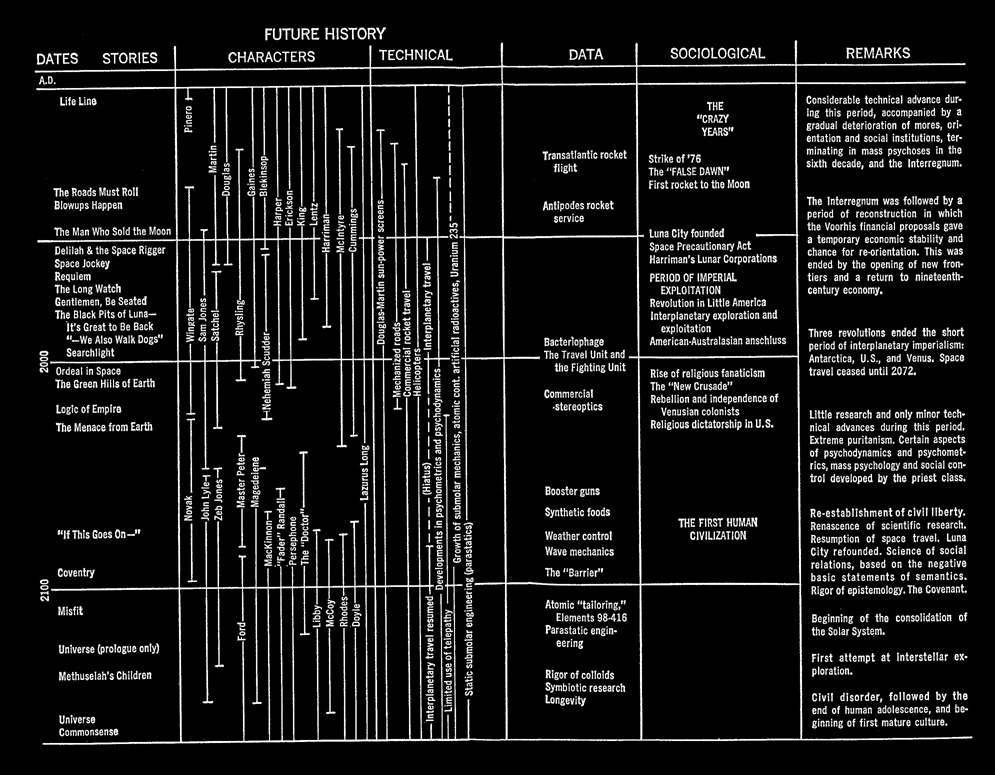
In his recent USA Today column, Glenn “Instapundit” Reynolds gives a shout-out to Robert A. Heinlein’s pre-WW2-era “Future History” timeline which included a segment presciently called “The Crazy Years”:
Very early in his writing career, about 1940, science fiction writer Robert Heinlein outlined a “future history” around which much of his writing would revolve, extending from the mid-twentieth century to the 24th century. Much of what he outlined hasn’t come to pass, but he nailed it in one respect: We live in the “Crazy Years.”
The Crazy Years, in Heinlein’s timeline, were when rapid changes in technology, together with the disruption those changes caused in mores and economics, caused society to, well, go crazy. They ran from the last couple of decades of the 20th Century into the first couple of decades of the 21st. In some of his novels set in that era — Time Enough for Love, for example — he includes random assortments of headlines that may have seemed crazy enough back then, but that seem downright tame today.
I’m not the first to make this connection — science fiction writers John C. Wright and Sarah Hoyt have remarked on it, and as Hoyt notes, “these are the Crazy Years” has become something of a stock joke among Heinlein fans.
But what does that mean? As Wright observes — invoking not only Heinlein but his contemporary A.E. Van Vogt, “craziness” comes when beliefs don’t match facts:
“Craziness can be measured by maladaptive behavior. The behavior the society uses to solve one kind of problem, when applied to an incorrect category, disorients it. When this happens the whole society, even if some members are aware of the disorientation, cannot reach the correct conclusion, or react in a fashion that preserves society from harm. As if society were a dolphin that called itself a fish: when it suffered the sensation of drowning, it would dive. But a dolphin is a mammal, a member of a different category of being. When dolphins are low on air, they surface, rather than dive. Putting yourself in the wrong category leads to the wrong behavior.”
QotD: Reader demands
Readers often ask for more of the same, but I think in many cases that’s not what they mean; what they are really saying is, “Give me a story that will make me feel the way that one did!” Which may actually be quite a different thing, but is much harder to articulate.
(Or, for all those fractal follow-ups, there’s always Fanficwoman. To the rescue!)
Lois McMaster Bujold, “Ask the Author: Lois McMaster Bujold”, Goodreads, 2015-04-21.
August 21, 2017
QotD: The (long-running) decline of written science fiction
The problem with the Rabbits is not that left-wing politics is dessicating and poisoning their fiction. While I have made the case elsewhere that SF is libertarian at its core, it nevertheless remains possible to write left-wing message SF that is readable, enjoyable, and of high quality – Iain Banks’s Culture novels leap to mind as recent examples, and we can refer back to vintage classics such as Pohl & Kornbluth’s The Space Merchants for confirmation. Nor, I think, is the failure of Rabbit fiction to engage most SF fans and potential fans mainly down to its politics; I think the Evil League is prone to overestimate the popular appeal of their particular positions here.
No, I judge that what is dessicating and poisoning the Rabbit version of SF is something distinct from left-wing political slant but co-morbid with it: colonization by English majors and the rise of literary status envy as a significant shaping force in the field.
This is a development that’s easy to mistake for a political one because of the accidental fact that most university humanities departments have, over the last sixty years or so, become extreme-left political monocultures. But, in the language of epidemiology, I believe the politics is a marker for the actual disease rather than the pathogen itself. And it’s no use to fight the marker organism rather than the actual pathogen.
Literary status envy is the condition of people who think that all genre fiction would be improved by adopting the devices and priorities of late 19th- and then 20th-century literary fiction. Such people prize the “novel of character” and stylistic sophistication above all else. They have almost no interest in ideas outside of esthetic theory and a very narrow range of socio-political criticism. They think competent characters and happy endings are jejune, unsophisticated, artistically uninteresting. They love them some angst.
People like this are toxic to SF, because the lit-fic agenda clashes badly with the deep norms of SF. Many honestly think they can fix science fiction by raising its standards of characterization and prose quality, but wind up doing tremendous iatrogenic damage because they don’t realize that fixating on those things (rather than the goals of affirming rational knowability and inducing a sense of conceptual breakthrough) produces not better SF but a bad imitation of literary fiction that is much worse SF.
Eric S. Raymond, “SF and the damaging effects of literary status envy”, Armed and Dangerous, 2014-07-30.
August 18, 2017
QotD: “Justifying” the Holocaust
… that underlying tone of “Of course what Hitler and the Nazis did was unjustifiable, they were wrong about what was going on around them” whenever the topic of the Holocaust is discussed implies that, if they had been right, what they did would have been, at least, justifiable. In other words, there’s an acceptance of the underlying logic of collective justice going on there, and when you put adjectives in front of justice, you almost never get justice.
Which brings us to the current brawl in SF/F and the wider culture. There’s a very large swathe, of Western society that has regressed, though they call it progress, to the idea that one should deliberately punish all members of a group for the actions, real or imagined, of a few members, and to the idea that because members of a group are over-represented in a particular area that it is a deliberate choice on the part of the group, rather than an accident of history.
You see it nearly everywhere. The idea that SF was somehow filled with racist, sexist hatemongers until … well, as near as I can tell, around five years ago is ludicrous when you have H. Beam Piper writing stories where racial intermarriage has turned almost all of humanity a nice shade of brown and there are heroic characters with names like Themistocles M’Zangwe. But, even if that were true — what, we should stop reading (and buying books from) straight white male authors for an entire year? Because a bunch of people they never even met were theoretically jerks?
Sarah Hoyt, “Social Injustice – 60 Guilders”, According to Hoyt, 2015-07-31.
August 12, 2017
QotD: The decline and fall of art
It also turns out that when that sort of revolutionary who believes in tearing down for its own sake, gets power, all they can do is keep tearing down, until the product manages to be, objectively, both repulsive and boring to any sane person. […] In painting this is very obvious. The shock that doesn’t shock anyone does manage, nonetheless, to turn the normal, sane human being off the “art” being displayed. (Though even there most of it is just boring. Really, the Denver museum of art paid millions for a bunch of twisted together kitchen implements? Without the little card explaining what it is and how it relates to domestic dissatisfaction, that “art” evokes “my drawer got stuck again.”)
So this avant garde of the past aged without doing more than throwing continuous artistic tantrums at the world that refused to conform to their visions. Some of the early ones, when they still weren’t the establishment were magnificent and are probably art, just because, well, art includes tantrums too. BUT after they became the establishment all they could do was chase the thrill and shock that no longer existed ever further, off the plank of sanity and into the ocean of irrelevance.
When they realized this — when the museums emptied of the middle-brow and the print runs fell — they chased relevance by erecting ever more exacting rules saying “this you shall not do, that you shall not say, this thing you shall not even think.” This ranges from political correctness to the sort of stultifying mandates on style and manner that are the last gasp of any dying artistic movement. (I’m still sticking my middle finger up at the minimalists and the idiots who think first person is always bad. )
Which brings us to science fiction. Since science fiction in its heyday was not considered art or literature, it was just… what people wrote for fun. (Kind of like Shakespeare in his day.) There would be some reflexive classical references, which were the equivalent of Kit Marlowe putting his stage directions in Latin, just to prove his education wasn’t wasted. However, they weren’t exactly following any school.
Then came… the deluge. Or at least the “if we destroy all the rules and shock everyone, it will be literature and amazing.” And when they took over the establishment, the same thing followed as in the rest of the art.
Now… Now they — even those marginally younger than I — are the establishment. They are the authorities still vainly rebelling against an establishment that doesn’t exist, that probably never existed except in their heads. Which is probably why they attract so many people with issues with daddy or teacher or other authority figures who didn’t let them have their bugs and eat them too in childhood. (It also explains a certain fascination with the contents of their metaphorical diaper, now I think about it.) They must be FOREVER the first woman to write non-binary sex, even if it has been done for decades before they were born. They must be forever the most shocking thing Evah! even if what they’re doing was done better and more apropos by their grandparents’ generation. It’s all they have.
Sarah A. Hoyt, “Avant-Garde”, According to Hoyt, 2015-09-26.
August 9, 2017
Lois McMaster Bujold’s latest novella is out in ebook format
Any book by Lois McMaster Bujold is an automatic buy for me, but with her current “Penric” series, I have to wait until it appears in hardcover (the first two were published by Subterranean Press, and I expect they’ll eventually get this one into print as well).
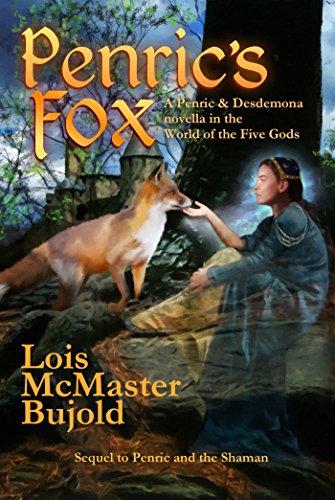
Penric’s Fox: a Penric & Desdemona novella in the World of the Five Gods. Book 3.
Some eight months after the events of Penric and the Shaman, Learned Penric, sorcerer and scholar, travels to Easthome, the capital of the Weald. There he again meets his friends Shaman Inglis and Locator Oswyl. When the body of a sorceress is found in the woods, Oswyl draws him into another investigation; they must all work together to uncover a mystery mixing magic, murder and the strange realities of Temple demons.
Penric and the Shaman was a 2017 Hugo Award nominee in the novella category.
For those of you who are all up-to-date and twenty-first-centurying like there’s no tomorrow, you can get the Kindle version here.
July 25, 2017
Great Man Theory? No. Impersonal Forces of History? No. How about the Bond Villain Theory?
Charles Stross may have cracked the mystery of what the heck is happening in our particularly odd time period:
History: is it about kings, dates, and battles, or the movement of masses and the invisible hand of macroeconomics?
There’s something to be said for both theories, but I have a new, countervailing theory about the 21st century (so far); instead of the traditional man on a white horse who leads the revolutionary masses to victory, we’ve wandered into a continuum dominated by Bond villains.
Consider
threefourfive, taken at random:Mr X: leader of a chaotic former superpower with far too many nuclear weapons, Mr X got his start in life as an agent of
SMERSHthe KGB. Part of its economic espionage directorate, tasked with modernizing a creaking command economy in the 1980s, Mr X weathered the collapse of the previous regime and after a turbulent decade of asset stripping rose to lead a faction of billionaire oligarchs, robber barons, and former secret policemen. Mr X trades on his ruthless reputation — he is said to have ordered a defector murdered by means of a radioisotope so rare that the assassination consumed several months’ global production — and despite having an official salary on the order of £250,000 he has a private jet with solid gold toilet seats and more palaces than you can shake a stick at. Also nuclear missiles. (Don’t forget the nuclear missiles.) Said to be dating the ex-wife of Mr Y. Exit strategy: change the constitution to make himself President-for-Life. Attends military parades on Red Square, natch. Bond Villain Credibility: 10/10Mr Y: Australian multi-billionaire news magnate. (Currently married to a former supermodel and ex-wife of Mick Jagger.) Owns 80% of the news media in Australia and numerous holdings in the UK and USA, including satellite TV channels, radio stations, and newspapers. Reputedly had Arthur C. Clarke on speed-dial for advice about the future of communications technology. Was the actual no-shit model upon whom Elliot Carver, the villain in “Tomorrow Never Dies”, the 18th Bond movie, was based. Exit strategy: he’s 86, leave it all to the kids. Bond Villain Credibility: 10/10
[…]
I think there’s a pattern here: don’t you? And, more to the point, I draw one very useful inference from it: if I need to write any more near-future fiction, instead of striving for realism in my fictional political leaders I should just borrow the cheesiest Bond villain not already a member of the G20 or Davos.
July 17, 2017
QotD: Utopias
All efforts to describe permanent happiness […] have been failures. Utopias (incidentally the coined word Utopia doesn’t mean ‘a good place’, it means merely a ‘non-existent place’) have been common in literature of the past three or four hundred years but the ‘favourable’ ones are invariably unappetising, and usually lacking in vitality as well.
By far the best known modern Utopias are those of H.G. Wells. Wells’s vision of the future is almost fully expressed in two books written in the early Twenties, The Dream and Men Like Gods. Here you have a picture of the world as Wells would like to see it or thinks he would like to see it. It is a world whose keynotes are enlightened hedonism and scientific curiosity. All the evils and miseries we now suffer from have vanished. Ignorance, war, poverty, dirt, disease, frustration, hunger, fear, overwork, superstition all vanished. So expressed, it is impossible to deny that that is the kind of world we all hope for. We all want to abolish the things Wells wants to abolish. But is there anyone who actually wants to live in a Wellsian Utopia? On the contrary, not to live in a world like that, not to wake up in a hygenic garden suburb infested by naked schoolmarms, has actually become a conscious political motive. A book like Brave New World is an expression of the actual fear that modern man feels of the rationalised hedonistic society which it is within his power to create. A Catholic writer said recently that Utopias are now technically feasible and that in consequence how to avoid Utopia had become a serious problem. We cannot write this off as merely a silly remark. For one of the sources of the Fascist movement is the desire to avoid a too-rational and too-comfortable world.
All ‘favourable’ Utopias seem to be alike in postulating perfection while being unable to suggest happiness. News From Nowhere is a sort of goody-goody version of the Wellsian Utopia. Everyone is kindly and reasonable, all the upholstery comes from Liberty’s, but the impression left behind is of a sort of watery melancholy. But it is more impressive that Jonathan Swift, one of the greatest imaginative writers who have ever lived, is no more successful in constructing a ‘favourable’ Utopia than the others.
The earlier parts of Gulliver’s Travels are probably the most devastating attack on human society that has ever been written. Every word of them is relevant today; in places they contain quite detailed prophecies of the political horrors of our own time. Where Swift fails, however, is in trying to describe a race of beings whom he admires. In the last part, in contrast with disgusting Yahoos, we are shown the noble Houyhnhnms, intelligent horses who are free from human failings. Now these horses, for all their high character and unfailing common sense, are remarkably dreary creatures. Like the inhabitants of various other Utopias, they are chiefly concerned with avoiding fuss. They live uneventful, subdued, ‘reasonable’ lives, free not only from quarrels, disorder or insecurity of any kind, but also from ‘passion’, including physical love. They choose their mates on eugenic principles, avoid excesses of affection, and appear somewhat glad to die when their time comes. In the earlier parts of the book Swift has shown where man’s folly and scoundrelism lead him: but take away the folly and scoundrelism, and all you are left with, apparently, is a tepid sort of existence, hardly worth leading.
George Orwell (writing as “John Freeman”), “Can Socialists Be Happy?”, Tribune, 1943-12-20.


