
World War Two
Published 22 Apr 2023Japan Launches Operation Ichigo in China, their largest offensive of the war … or ever, but over in India things are not going well for the Japanese at Imphal and Kohima. The Allies also launch attacks on the Japanese at Hollandia, while over in the Crimea, the German defenses at Sevastopol are cracking under Soviet pressure.
(more…)
April 23, 2023
The Biggest Offensive in Japanese History – WW2 – Week 243 – April 22, 1944
Comments Off on The Biggest Offensive in Japanese History – WW2 – Week 243 – April 22, 1944
April 9, 2023
New Offensive in the Crimea – WW2 – Week 241 – April 8, 1944
World War Two
Published 8 Apr 2023The Soviets are finally going to try and push the Axis out of Sevastopol and the Crimea. They also continue to drive the Axis back in Transnistria. Over in Burma and Northeastern India, the Japanese have the Allies under siege at not one, but two towns, and are also attacking Imphal from several points, but the Japanese have way bigger future plans up their sleeves in China.
(more…)
Comments Off on New Offensive in the Crimea – WW2 – Week 241 – April 8, 1944
March 26, 2023
Germany Invades Hungary – WW2 – Week 239 – March 25, 1944
World War Two
Published 25 Mar 2023Germany occupies Hungary this week to prevent any possible Hungarian defection from the war, the Soviets continue pushing back the Axis in Ukraine, pressing them ever more toward Romania, the Japanese advance on Imphal and Kohima continues, but Allied attacks in Italy and Japanese ones on Bougainville come to their ends.
(more…)
Comments Off on Germany Invades Hungary – WW2 – Week 239 – March 25, 1944
March 5, 2023
MacArthur and Nimitz Go Head-to-Head – Week 236 – March 4, 1944
World War Two
Published 4 Mar 2023The American attacks against the Admiralty Islands are successful, but this causes real tensions between commanders Douglas MacArthur and Chester Nimitz. Much of this week is taken up by planning and meetings on both sides — Adolf Hitler plans the occupation of Hungary, Josef Stalin plans new offensives in Ukraine, and the Allies plan to reconfigure their whole front in Italy. It’s all the prelude to an explosion of action.
(more…)
Comments Off on MacArthur and Nimitz Go Head-to-Head – Week 236 – March 4, 1944
February 26, 2023
Tojo Takes Control – Week 235 – February 25, 1944
World War Two
Published 25 Feb 2023Now that the Americans have seized the Marshall Islands, they can bypass the Japanese base at Truk. This impels Prime Minister Hideki Tojo to shake up both army and navy command, and he even takes personal control over the Japanese Army. On the Anzio Front, Lucian Truscott replaces John Lucas as Allied Commander. In the field, the Allies win a big victory in Burma, and in Ukraine, the Soviets are still on the move.
(more…)
Comments Off on Tojo Takes Control – Week 235 – February 25, 1944
November 26, 2022
Britain’s experiment with mass immigration since 2014
Ed West considers the legacy media’s quick dismissal of conservative concerns about rising immigration from poorer European countries in 2014 with the reality only eight years later:
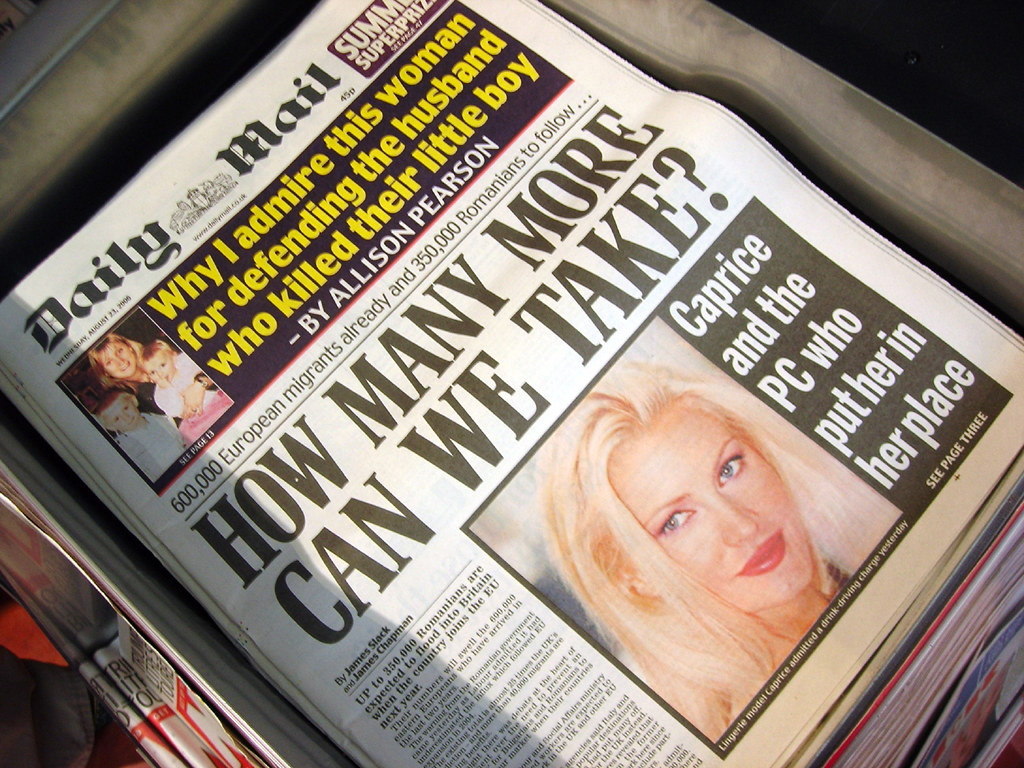


It was a sort of mini-publicity stunt by Vaz, but all for a good cause: a response to fear mongering by the Right-wing press who warned that we’d be “flooded” by Romanians, and predictions by MigrationWatch that’d we have 50,000 new arrivals a year from the A2 countries (as Romania and Bulgaria were called).
Twitter that day was full of journalists and other public intellectuals laughing about how we were going to be “swamped”. Why would Romanians, after all, want to come here, to this miserable rainy island?
“We’ve seen no evidence of people who have rushed out and bought tickets in order to arrive because it’s the 1st of January,” Vaz concluded.
Various publications, with the ill-founded confidence so often found in the journalist trade, soon declared that the Romanian influx was a conservative fantasy.
“Eastern European invasion comes to nothing”, the Independent declared on the day, just a tad prematurely you might say.
A Guardian commentator suggested the year before that the number of Romanians and Bulgarians arriving might actually fall following accession, and that “all the ‘invasion’ predictions … have more in common with astrology than demography.”
[…]As it turned out, in the year to September 2015, 206,000 Romanians and Bulgarians took out a National Insurance number, meaning they were registering to work here. By late 2017, there were 413,000 Romanian and Bulgarians living in Britain, suggesting 90,000 had arrived each year since January 2014, while just 6,200 Britons had made the opposite journey.
By mid-2018, there were more than 400,000 Romanians in Britain, making them one of the largest national minorities in England. The real figure is hard to tell, because the British state has lost the capacity or will to count the number of foreign residents, and it may be higher.
[…]
The scale of immigration in the 2000s and 2010s led to the rise of Ukip, the referendum and the political chaos that followed; what follows now we can’t yet say, but no one has seemed to have learned the lesson: that in the 21s century, because of easier travel, smartphones, smuggling networks and establishment communities in the West, the sheer scale of potential migration is astronomical. Yet people often have a very 20th or even 19th century understanding of how much people are able and willing to move, which makes them vastly underestimate the potential numbers arriving.
The Turkish Cypriots of north London are a case in point, the example Paul Collier used in Exodus to show the huge extent of potential migration between countries with different levels of wealth.
Because of colonial links, North Cyprus had free movement with Britain and so provided a test case: as a result, there are now more Turkish Cypriots in Britain than in Cyprus. In fact, not only did the majority of Turkish Cypriots move, but back in their homeland they become outnumbered by arrivals from a third, even poorer country, mainland Turkey, who are permitted to settle there.
In a theoretical world of open borders, Britons would be outnumbered very quickly; infrastructure would start to buckle under the strain, and governments would find it difficult to increase the necessary number of houses, schools, hospitals and other services for this expanded population, because society would now lack the social capital and cohesion to make the personal sacrifices. People would begin to lose faith in the police, a difficult role in such a transient and diverse society, and politics would become increasingly unstable and aligned along ethnic lines.
Comments Off on Britain’s experiment with mass immigration since 2014
November 18, 2022
Baltic Peoples Join the SS – War Against Humanity 087
World War Two
Published 17 Nov 2022Hitler forces Himmler to betray his promise of independence for the Baltic states, despite giving the Waffen-SS 40,000 of their young men. Ion Antonescu of Romania decides to save the remaining Romanian Jews to save his own ass.
(more…)
Comments Off on Baltic Peoples Join the SS – War Against Humanity 087
October 8, 2022
Prelude to WW1 – The Balkan Wars 1912-1913
The Great War
Published 7 Oct 2022The Balkan Wars marked the end of Ottoman rule in Southeastern Europe, and they involved several countries that would join the First World War just a few years later. A complicated alliance between Serbia, Montenegro, Bulgaria and Greece imploded over disagreement of the war spoils after defeating the Ottomans. This led to the 2nd Balkan War and also created much resentment that would play a role between 1914 and 1918 too.
(more…)
Comments Off on Prelude to WW1 – The Balkan Wars 1912-1913
August 7, 2022
Allied Tidal Wave in Romania – WW2 – 206 – August 6, 1943
World War Two
Published 6 Aug 2022The Allies bomb the Romanian oil fields, a major Axis source of oil, but it does not go well for the attackers. They do advance in both Sicily and the Solomon Islands — where a future President has one heck of an adventure, and in the USSR a huge Soviet counteroffensive begins, taking Belgorod after just a few days and threatening Kharkov.
(more…)
Comments Off on Allied Tidal Wave in Romania – WW2 – 206 – August 6, 1943
May 30, 2022
QotD: The end of Nicolae Ceaușescu
On the morning of the 21st of December, 1989, Romanian General Secretary Nicolae Ceaușescu was in a foul mood. The Berlin Wall had fallen, and Mikhail Gorbachev and George H.W. Bush had recently announced the end of the Cold War, making the end of Ceaușescu’s rule inevitable, though he couldn’t see this yet. Worse, his security leaders had just failed to violently put down protests in the city of Timisoara, a fact that enraged his wife Elena.
“You should have fired on them, and had they fallen, you should have taken them and shoved them into a cellar,” she said. “Weren’t you told that?”
Long one of the world’s most vicious dictators, Ceaușescu’s most recent plan for winning over the heartland was forcing half the country’s villagers to destroy their own homes — with pick-axes and hammers, if they couldn’t afford a bulldozer — and packing them into project apartments in new “agro-industrial towns”, for a “better future”. Despite this, and his long history of murder, terror, and spying, Ceaușescu to the end did not grasp that his unpopularity had an organic character. He was convinced ethnically Hungarian “terrorists” were behind the latest trouble.
After reaching the balcony of Bucharest’s Central Committee building to give a speech that December day, he’s genuinely surprised when the crowd turns on him. When he tells them to be quiet, he’s befuddled by their refusal, saying, “What, you can’t hear?” Elena jumps in and yells, “Silence!”, to which Ceaușescu, hilariously, replies, “Shut up!” The crowd listens to neither of them.
Paul Kenyon’s Children of the Night describes the morbid black comedy that ensued. The Ceaușescus and a motley gang of undead apparatchiks that included the “morbidly obese Prime Minister, Emil Bobu” later tried to load into a single helicopter — Bobu “waddled, walrus-like, to the rear” Kenyon writes — but there were too many of them, and the copter barely got off the ground. “Where to?” asked the pilot, and nobody knew, because there was no plan, since none of them had ever considered the possibility of this happening.
The sky was full of stuff, including other helicopters, which were dropping leaflets on the crowd giving what Kenyon described as a Marie Antoinette-like order to ignore “imperialist conspiracies” and return home “to a Christmas feast”. Four days later, a firing squad put the Ceaușescus against a wall and gave them their final, solid lead Christmas presents.
Ceaușescu’s balcony will forever be a symbol of elite cluelessness. Even in the face of the gravest danger, a certain kind of ruler will never be able to see the last salvo coming, if doing so requires any self-examination. The neoliberal political establishment in most of the Western world, the subject of repeat populist revolts of rising intensity in recent years, seems to suffer from the same disability.
Matt Taibbi, “Justin Trudeau’s Ceausescu Moment”, TK News by Matt Taibi, 2022-02-10.
Comments Off on QotD: The end of Nicolae Ceaușescu
April 16, 2022
Tank Chats #143 | Hetzer | The Tank Museum
The Tank Museum
Published 31 Dec 2021Our Patreons have already enjoyed Early Access and AD free viewing of our weekly YouTube video! Consider becoming a Patreon Supporter today: https://www.patreon.com/tankmuseum
The Munich Agreement averted the outbreak of war but for Czechoslovakia, it meant giving way to German occupation. Join David Willey to discover how Germany was able to use the country’s existing military outputs to build the tank destroyer, Hetzer.
00:00 – Intro
00:28 – The history of the tank destroyers name
14:55 – Wartime production
(more…)
Comments Off on Tank Chats #143 | Hetzer | The Tank Museum
April 10, 2022
Mussolini is Tired of War – WW2 – 189 – April 9th , 1943
World War Two
Published 9 Apr 2022Adolf Hitler meets with Benito Mussolini to hopefully restore his flagging morale and convince him that the Axis can hold out in North Africa, but the situation there grows more precarious and this week there the Allies advancing from the west and the east link up for the first time. The Axis are also holding out in the Caucasus, as new Soviet attacks to take Krymskaya begin.
(more…)
Comments Off on Mussolini is Tired of War – WW2 – 189 – April 9th , 1943
January 2, 2022
The Schmeisser MP41: A Hybrid Submachine Gun
Forgotten Weapons
Published 2 Sep 2017Most people think that the MP41 is simply an MP40 in a wooden stock, but this is actually not the case — and unlike the MP40, the MP41 can be accurately called a Schmeisser — because it was Hugo Schmeisser who designed it.
The MP41 is actually a combination of the upper assembly of an MP40 with the lower assembly of an MP28 — the gun which was Schmeisser’s improved version of the MP18 from World War One. Where the MP40 fires only in fully automatic mode, the MP41 has a push-through selector switch located above the trigger which allows either semi-auto or full auto function.
For the typical user, however, this mechanical distinction is not particularly important, as the MP41 handles very much like the MP40. It has the same relatively low 500 rpm rate of fire, and weighs about 8.2 pounds (3.7kg). It uses the same magazines as the MP40, although the magazines made and sold with the MP41 were marked “MP41”. As with many other SMG designs, the MP41 was never formally adopted by the German military. In this case, the majority of MP41 production (26,000 guns in 1941 and another 1,800 or so in 1944) went to Romanian troops.
http://www.patreon.com/ForgottenWeapons
Cool Forgotten Weapons merch! http://shop.bbtv.com/collections/forg…
If you enjoy Forgotten Weapons, check out its sister channel, InRangeTV! http://www.youtube.com/InRangeTVShow

Comments Off on The Schmeisser MP41: A Hybrid Submachine Gun
November 24, 2021
Tank Chats #133 | Renault UE Chenillette | The Tank Museum
The Tank Museum
Published 6 Aug 2021In this weeks Tank Chat, Curator David Willey talks about the Renault UE Chenillette. A light tracked armoured carrier produced by France between 1932 and 1940.
(more…)
Comments Off on Tank Chats #133 | Renault UE Chenillette | The Tank Museum
November 21, 2021
The Red Army Kicks Ass – Operation Uranus! – WW2 – 169 – November 20th, 1942
World War Two
Published 20 Nov 2021After months of stubborn defense the time has finally come for the Soviet counterstroke, but is it in time to save Stalingrad? And can the Allies reach Tunis and take all of North Africa before the Axis can reinforce?
(more…)
Comments Off on The Red Army Kicks Ass – Operation Uranus! – WW2 – 169 – November 20th, 1942


