Jabzy
Published 25 Jan 2015Finally broke into the Ancient Period
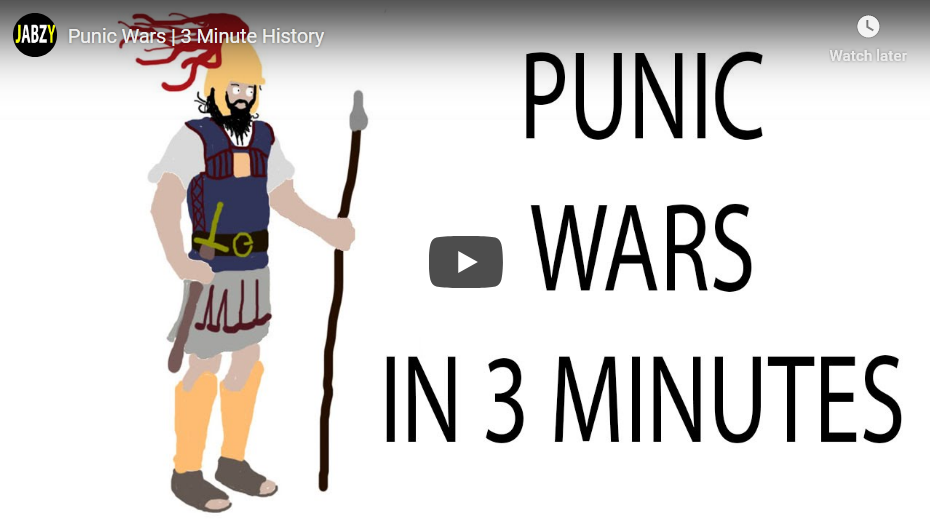

Jabzy
Published 25 Jan 2015Finally broke into the Ancient Period
Invicta
Published on 12 Sep 2016The Battle of Ecnomus in 256 BC is arguably the largest naval battle in history with 680 warships and an estimated 290,000 rowers and marines participating! This monumental clash was fought during the First Punic War between Rome and Carthage along the coast of Sicily.
Fleet Anatomy: https://www.youtube.com/watch?v=7PhRp…
Fleet Operation: https://www.youtube.com/watch?v=397-i…
Fleet Tactics: https://www.youtube.com/watch?v=VOc8m…More Classical Antiquity Documentaries: https://www.youtube.com/playlist?list…
Literary Sources:
Uniforms of the Roman World by Kevin Kiley
Republican Roman Warships by Osprey Publishing
The Fall of Carthage by Adrian Goldsworthy
Augustus by Anthony EverittGame Engine:
Total War: Rome IIGame Mods:
Devide et Impera
Realistic Ship Colors
Ave_Gigas.pak
From the comments:
Invicta
2 years ago
It has been a real pleasure to research and produce the documentary series on the Roman Navy. This video is a culmination of that exploration into the little-covered world of ancient naval combat which I hope has been equally enlightening and entertaining. It is also worth mentioning that the battle maps I created for this video individually show the 680 vessels from both sides. Though this was painstaking to do, it was worth it to convey the insane scale of this encounter at sea.I’d also like to point out that I tried using new effects in this video. I will continue to try new styles and adapt my presentations in the future and greatly appreciate any and all feedback. Thank you all for your support and help thus far. Its a true joy to have an audience for this passion of mine : )
The Study of Antiquity and the Middle Ages
Published on 16 Mar 2018This lecture aimed towards High School students features the battle of Cannae.
The Battle of Cannae (/ˈkæniˌ-neɪˌ-naɪ/[) was a major battle of the Second Punic War that took place on 2 August 216 BC in Apulia, in southeast Italy. The army of Carthage, under Hannibal, surrounded and decisively defeated a larger army of the Roman Republic under the consuls Lucius Aemilius Paullus and Gaius Terentius Varro. It is regarded both as one of the greatest tactical feats in military history and as one of the worst defeats in Roman history.
Having recovered from their losses at Trebia (218 BC) and Lake Trasimene (217 BC), the Romans decided to engage Hannibal at Cannae, with roughly 86,000 Roman and allied troops. They massed their heavy infantry in a deeper formation than usual, while Hannibal used the double-envelopment tactic. This was so successful that the Roman army was effectively destroyed as a fighting force. Following the defeat, Capua and several other Italian city-states defected from the Roman Republic to Carthage.
William Brooke Stallsmith explains how Hannibal’s amazing string of battlefield successes still ended up meaning little in the larger war between Rome and Carthage:
Hannibal Barca of Carthage was one of history’s most remarkable commanders. In 218 BCE, at the start of the Second Punic War, he led an army of Carthaginian regulars, barbarian allies, and mercenaries — not to mention a few elephants — over the Alps into Italy and over the next few years nearly brought Rome to its knees. Hannibal scored a series of victories, which climaxed at the Battle of Cannae in August 216 BCE, where his 50,000 soldiers enveloped and destroyed nearly twice as many Roman legionnaires, including both consuls of the Roman Republic.
After Cannae, Hannibal controlled nearly all of Italy. Roman military forces on the peninsula were in tatters, and the republic was on the verge of panic. But this great triumph — still studied today as the model for a battle of complete annihilation of the enemy — turned out to be a strategic dead-end. Its aftermath was 15 more years of war and a harsh Roman-dictated settlement that ended centuries of Carthaginian power in the Western Mediterranean.
I think the reasons for Hannibal’s ultimate defeat lay not so much in any failings on his part as in the resilience and flexibility of the Roman Republic. Resilience was built into the nature of the state and the character of its citizens. This fundamental trait made it possible for Rome’s Senate and other institutions to shake off their initial panic and adapt to the new situation created by Cannae. They mobilized the Republic’s manpower and other resources with a ruthless efficiency would have made Albert Speer blink. While new legions were being formed and trained, Roman command in Italy went to a septuagenarian ex-consul, Quintus Fabius Maximus. He refused to engage his limited forces in pitched battle against Hannibal and focused instead on pinprick harassment and the disruption of Carthaginian supply lines.
When the Romans had regained strength and confidence, new adaptations were made. Roman institutions harnessed the energy and lust for glory of an aggressive young commander, Publius Cornelius Scipio Africanus. Scipio led an offensive into the Carthaginian heartland in North Africa and inflicted the final defeats on Hannibal’s army that ended the war on Roman terms.



Powered by WordPress