Quotulatiousness

May 28, 2020

Wuhan Coronavirus versus Canadian government planning and implementation

As Chris Selley illustrates, this was a clear failure for the various levels of government:

When Ontarians look back on the COVID-19 pandemic as the moment when their government finally ponied up the big bucks and fixed the province’s long-term care system, they will likely also wonder what the hell took so long. As appalled as everyone quite rightly is by the Canadian Forces’ report into the state of five long-term care homes that were in dire enough shape to require military intervention, we really shouldn’t be shocked. As the Ottawa Citizen in particular has reported in recent years, the system’s staffing levels were designed for a much less old, much less sick and much less Alzheimer’s-afflicted population than lives in them today — and it led to some terrible outcomes in normal times.

Perhaps it was easy to blame such incidents on individual villains: Ottawa support worker Jie Xiao, who was caught on video punching 89-year-old Georges Karam 11 times in the face; or Elizabeth Wettlaufer, one of Canada’s most prolific and yet somehow least-famous serial killers, who murdered at least eight senior citizens in long-term care homes during her red flag-festooned nursing career. Perhaps tales of society’s most vulnerable being forced to wallow in their own filth, or even just left alone in confusion and misery, are too much for the human mind to contemplate at length.

In any event, it only stood to reason that a virus as potent as the one that causes COVID-19 would exploit weak points in a long-term care system. Between wandering patients, fans circulating air throughout facilities and a lack of basic sterilization control, you would almost think these five facilities wanted the virus to spread. It’s a wretched understatement to say we can do better.

We shouldn’t fool ourselves, though: Long-term care homes will always be uniquely vulnerable. And as the economy reopens, it’s essential we keep focusing on them. It’s essential that we focus, period.

There is a tendency among media in Central Canada to treat “Canada’s COVID-19” outbreak as a single thing affecting all of society. It clearly isn’t. The numbers are all over the map. Quebec has reported by far the most cases and deaths: 5,655 and 480 per million population, respectively. Ontario is at roughly one-third of that: 1,778 cases per million and 144 deaths per million. At 1,569 cases per million, Alberta has a comparable number of cases to Ontario — but far fewer deaths, at just 31 per million. British Columbia has the same death rate as Alberta, but with only one-third as many cases. Saskatchewan, Manitoba, Newfoundland and New Brunswick have reported just 18 deaths between them. Quebec has nearly 30,000 active cases; Ontario has just over 6,000; Manitoba has 16.

May 27, 2020

Comprehensive planning and communication failures are the hallmark of Canada’s response to the Wuhan coronavirus epidemic

Filed under: Bureaucracy, Cancon, Government, Health — Tags: , , , , , — Nicholas @ 05:00

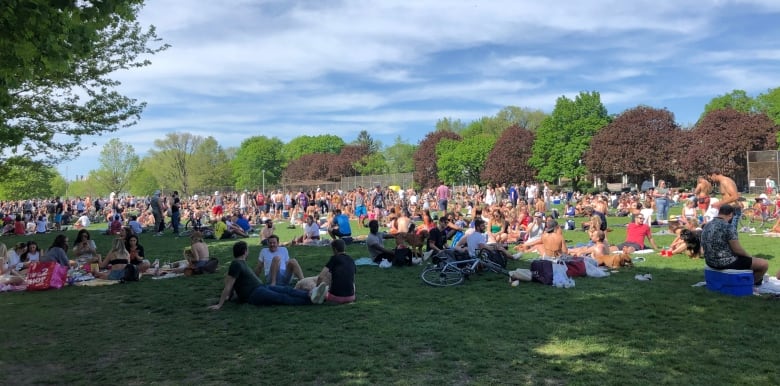
Chris Selley understands why the internet shaming community is dunking on the apparently large number of people who crowded into Toronto’s Trinity-Bellwoods park over the weekend but doesn’t feel the need to join them:

Screencap from a CBC report on unorganized social distancing civil disobedience at Toronto’s Trinity-Bellwoods Park on Saturday.

Human beings need to get outside and socialize. They have breaking points, and many are very understandably at them. (An aside: I can’t help noticing how many people venting fury on social media have also treated their followers to images of their back-patio office setups, or updates on their new vegetable gardens.) There is also no surplus of parkland in downtown Toronto. Photographic evidence suggests other neighbourhood greenspaces were very busy as well, though not to the same extent.

In other words, this was always going to happen. So the time is long past when politicians like Ontario Premier Doug Ford or Toronto Mayor John Tory should be able to cluck their tongues or stamp their feet at such people and expect their constituents to nod along in solidarity.

Jurisdictions facing significant COVID-19 outbreaks had one finite period of time in which to try to knock this bastard virus down. After that period of time, the socioeconomic costs of the shutdown would become unsustainable and the economy would have to reopen. We’re seeing that happen all over the world right now: in essence, countries are rolling the dice. If they did well in the allotted time, fewer people will have to die in the name of getting back to normal.

The federal, Ontario and Toronto governments have not done well — certainly not to any extent that justifies their leaders’ soaring approval ratings.

The feds have been abysmal since even before Day One, with Chief Public Health Officer Theresa Tam actively downplaying the threat. We shipped 16 tonnes of personal protective equipment to China with no viable plan to replace it. Whatever you think of travel bans as an anti-pandemic measure, the government undermined its own credibility by insisting they don’t work, then changing course 180 degrees over the course of a weekend. Most astonishingly, the feds at first utterly failed to communicate the most basic advice to returning travellers — advice such as “don’t stop for groceries or at the pharmacy on your way home.”

And Tam’s initial ludicrous “masks don’t work” narrative has grudgingly evolved to support the use of non-medical masks “where social distancing is not possible.” But the federal government’s official advice on “safe shopping” — indeed the entire web page titled “COVID-19 and food safety” — still doesn’t mention masks, even as the berth shoppers give each other seems to narrow by the day. This anti-mask stance seems to be ideological, bred in the bone.

May 22, 2020

The NFL’s (tentative) plan for the 2020 season

Filed under: Business, Football, Health — Tags: , , , , — Nicholas @ 05:00

At FEE, Jon Miltimore explains what the league’s officials are thinking based on the announcement earlier this week:

Football fans around the world have been anxiously waiting for signs as to whether the NFL season will kick off in September despite concerns about the COVID-19 pandemic.

This week, they got the “burning bush” of signs.

The NFL on Tuesday had a soft opening of sorts, opening a number of facilities around the country to personnel, owners, and players rehabilitating from injuries. But it was in a post-meeting conference call with media that NFL officials delivered a bombshell of sorts.

According to multiple reports, NFL executive vice president Jeff Miller and Allen Sills, the NFL’s chief medical officer, told reporters the NFL fully expects to have COVID-19 cases during the NFL season, and are planning accordingly.

“We have a task force working very diligently on that,” Sills told reporters. “We fully well expect that we will have positive cases that arise because we think that this disease will remain endemic in society. And so it shouldn’t be a surprise if new positive cases arise. Our challenge is to identify them as quickly as possible and to prevent spread to any other participants. So we’re working very diligently on that, and we’ll have some detailed plans to share about that at a later time.”

It did not take long for reporters to process and interpret what the NFL was saying.

“You didn’t even have to read deeply between the lines,” said Charles Robinson, Yahoo’s senior NFL reporter. “What I just heard from the NFL was, ‘Hey, guess what? We are going to open. There is going to be a season. And we are going to have some people test positive for coronavirus once that season begins. And we’re working on a plan to not stop anything. We’re going to work through it.'”

Terez Paylor, a senior writer who also covers the NFL for Yahoo, concurred.

“He’s saying they’re going to play,” Paylor said in a podcast with Robinson. “Basically [they’re saying], ‘People are gonna get it. We’ll try to deal with it the best we can.'”

To be clear, the NFL has made no official decision yet. That being said, it looks like they are heading in that direction.

While some will say it would be reckless to hold the NFL season during a pandemic, it appears the NFL is making its decision based on some of the same assumptions Sweden used in its unique approach to COVID-19.

Anders Tegnell, Sweden’s top infectious disease expert and the architect of its “soft-approach” strategy, said one of the reasons he rejected sweeping lockdowns is because the measures simply are not sustainable, considering COVID-19 is going to be with us for years.

May 18, 2020

Safetyism

Matthew Crawford:

Safetyism is a disposition that has been gaining strength for decades and is having a triumphal moment just now because of the virus. Public health, one of many institutions that speak on behalf of safety, has claimed authority to sweep aside whole domains of human activity as reckless, and therefore illegitimate.

I suspect the ease with which we have lately accepted the authority of health experts to reshape the contours of our common life is due to the fact that safetyism has largely displaced other moral sensibilities that might offer some resistance. At the level of sentiment, there appears to be a feedback loop wherein the safer we become, the more intolerable any remaining risk appears. At the level of bureaucratic grasping, we can note that emergency powers are seldom relinquished once the emergency has passed. Together, these dynamics make up a kind of ratchet mechanism that moves in only one direction, tightening against the human spirit.

Acquiescence in this appears to be most prevalent among the meritocrats who staff the managerial layer of society. Deferring to expert authority is a habit inculcated in the “knowledge economy”, naturally enough; the basic currency of this economy is epistemic prestige.

Among those who work in the economy of things, on the other hand, you see greater skepticism toward experts (whether they make their claim on epistemic or moral grounds) and less readiness to accept the adjustment of social norms by fiat ­– whether that means using new pronouns or wearing surgical masks. I am regularly in welding supply stores, auto parts stores and other light-industry venues. Nobody is wearing masks in these places. They are very small businesses: an environment largely free of the moral fashions and corresponding knowledge claims that set the tone in large organisations. There is no HR in a welding shop.

A pandemic is a deadly serious business. But we would do well to remember that bureaucracies have their own interests, quite apart from the public interest that is their official brief and warrant. They are very much in the business of tending and feeding the narratives that justify their existence. Further, given the way bureaucracies must compete for funding from the legislature, each must make a maximal case for the urgency of its mission, hence the necessity of its expansion, like a shark that must keep moving or die. It is clearer now than it was a few months ago that this imperative of expansion puts government authority in symbiosis with the morality of safetyism, which similarly admits no limit to its expanding imperium. The result is a moral-epistemic apparatus in which experts are to rule over citizens conceived as fragile incompetents.

But what if this apparatus were revealed to be not very serious about safety, the very ideal that underwrites its authority? What then?

May 12, 2020

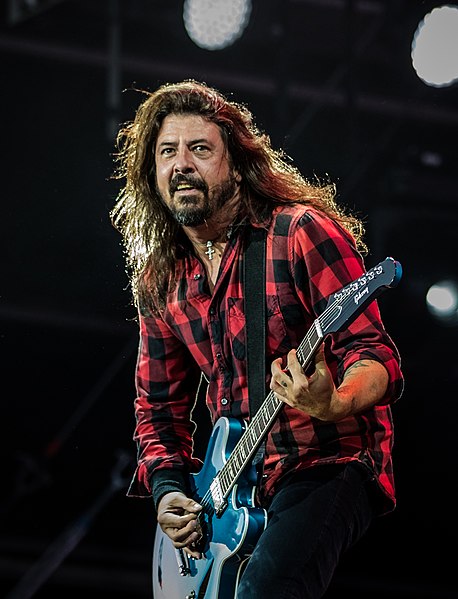
Dave Grohl on live music

Filed under: Government, Health, Media — Tags: , , , , , — Nicholas @ 03:00

Writing in The Atlantic, he regrets having to miss a particular event:

Dave Grohl and the Foo Fighters at Rock am Ring, 3 June 2018.
Photo by Andreas Lawen via Wikimedia Commons.

Where were you planning to be on the Fourth of July this year? Backyard barbecue with your crankiest relatives, fighting over who gets to light the illegal fireworks that your derelict cousin smuggled in from South Carolina? Or maybe out on the Chesapeake Bay, arguing about the amount of mayonnaise in the crab cakes while drinking warm National Bohemian beer? Better yet, tubing down the Shenandoah with a soggy hot dog while blasting Grand Funk Railroad’s “We’re an American Band”?

I know exactly where I was supposed to be: FedExField, outside Washington, D.C., with my band Foo Fighters and roughly 80,000 of our closest friends. We were going to be celebrating the 25th anniversary of our debut album. A red, white, and blue keg party for the ages, it was primed to be an explosive affair shared by throngs of my sunburned hometown brothers and sisters, singing along to more than a quarter century of Foo.

Well, things have changed.

Unfortunately, the coronavirus pandemic has reduced today’s live music to unflattering little windows that look like doorbell security footage and sound like Neil Armstrong’s distorted transmissions from the moon, so stuttered and compressed. It’s enough to make Max Headroom seem lifelike. Don’t get me wrong, I can deal with the monotony and limited cuisine of quarantine (my lasagna game is on point!), and I know that those of us who don’t have to work in hospitals or deliver packages are the lucky ones, but still, I’m hungry for a big old plate of sweaty, ear-shredding, live rock and roll, ASAP. The kind that makes your heart race, your body move, and your soul stir with passion.

There is nothing like the energy and atmosphere of live music. It is the most life-affirming experience, to see your favorite performer onstage, in the flesh, rather than as a one-dimensional image glowing in your lap as you spiral down a midnight YouTube wormhole. Even our most beloved superheroes become human in person. Imagine being at Wembley Stadium in 1985 as Freddie Mercury walked onstage for the Live Aid benefit concert. Forever regarded as one of the most triumphant live performances of all time (clocking in at a mere 22 minutes) Freddie and Queen somehow managed to remind us that behind every rock god is someone who puts on their studded arm bracelet, absurdly tight white tank, and stonewashed jeans one pant leg at a time just like the rest of us. But, it wasn’t necessarily Queen’s musical magic that made history that day. It was Freddie’s connection with the audience that transformed that dilapidated soccer stadium into a sonic cathedral. In broad daylight, he majestically made 72,000 people his instrument, joining them in harmonious unison.

May 9, 2020

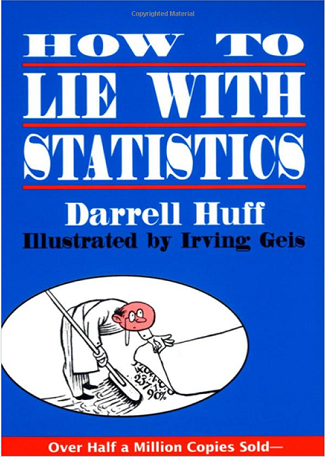
Lies, damned lies, and even-more-damned statistics

Filed under: Government, Health, Science — Tags: , , , — Nicholas @ 05:00

David Warren does not trust “the numbers” (and I think he’s quite right to doubt):

At some point — but it is seldom a discrete moment in space or time — the weight of the anecdotal in science, or that of the circumstantial in law, becomes overwhelming. This is the opposite of a statistical fact, in part because there are no statistical facts. I am reminded of this whenever the “scientific” control freaks of statistics lay down some law, indifferent to the Law in nature. The difference between 999,999 and one million is, in any imaginable situation, not a difference at all. Where it is made the basis for a decision, that decision is arbitrary, and not infrequently, cruel. By contrast, such differences as those between pregnant and not pregnant, dead and not dead, are unchallengeably significant. They are in the realm of meaning.

I am reminded of this hourly or better, these days, when consulting the news. All readers of the mass media (accurately described by Trump as “fake news”) are being covered, constantly, by the vomit of statistics — few with any context, and many knowingly false. They “look scientific,” which is to say, they answer to the moron’s conception of science. In “disciplines” like economics, today, and throughout the other social sciences, the participants sleepwalk. Nobel prizes are given out for numerical sludge, presented to the purpose of selling one destructive “policy” or another, that will be imposed on real, live, particular human beings. The same is true of the “mathematical biology” that has disinformed all our public health “professionals.”

The Red Chinese Batflu, now transforming our world, is a spectacular case in point. Not only the epidemiological projections, but even the counts of dead and wounded, are taken on faith — from people who are characteristically faithless. Information on prevention and cures is hostage to the work of statisticians. “Double blind tests,” which would be absolutely immoral — wicked — on human subjects facing life or death — are demanded by our medical apes.

May 8, 2020

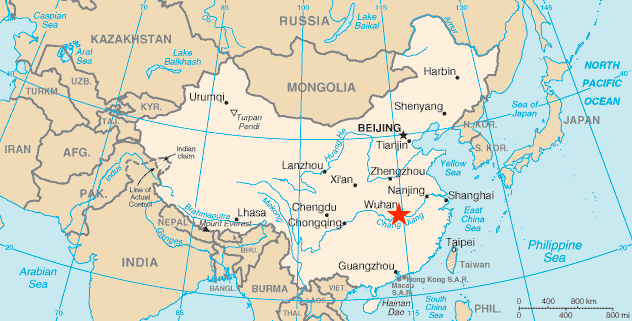
The Wuhan Coronavirus lockdown – “perhaps the worst policy mistake ever committed by Western governments during peacetime”

Toby Young on the fall of “Professor Lockdown”, the former top advisor to the British government on the response to the Wuhan Coronavirus epidemic:

The reason for looking into the political affiliations of the scientists and experts who’ve been advising governments across the world during this crisis is that it may throw some light on why those governments have made such poor policy decisions. Will the vast majority of those advisers turn out to be left-of-centre, like Professor Ferguson? I’m 99% sure of it, and I think that will help us to understand what’s happened.

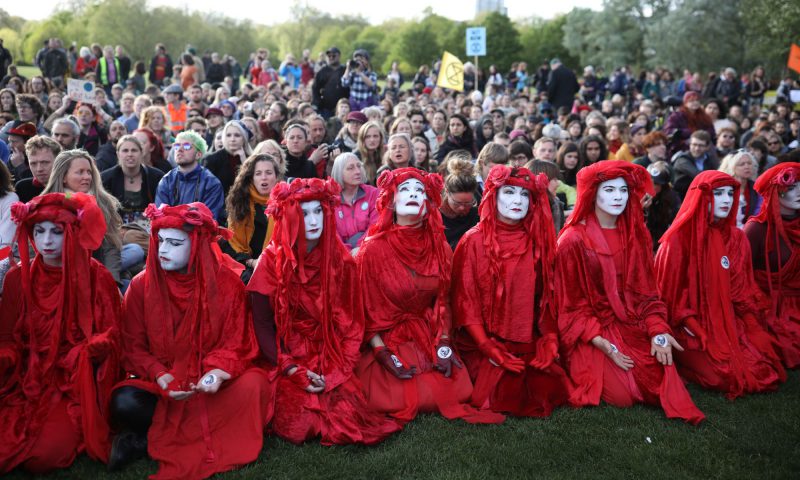
I don’t mean they’ve deliberately given right-of-centre governments poor advice in the hope of wrecking their economies for nefarious party political reasons or because they’re members of Extinction Rebellion and want to destroy capitalism. Nor do I believe in any of the conspiracy theories linking these public health panjandrums to Bill Gates and Big Pharma and some diabolical plan to vaccinate 7.8 billion people. I have little doubt they’ve acted in good faith throughout – and that’s part of the problem. The road they’ve led us down has been paved with all the usual good intentions.

The mistakes these liberal policy-makers have made are depressingly familiar to anyone who’s studied the breed: overestimating the ability of the state to solve complicated problems as well as the capacity of state-run agencies to deliver on those solutions; failing to anticipate the unintended consequences of large-scale state interventions; thinking about public policy in terms of moral absolutes rather than trade-offs; chronic fiscal incontinence, with zero inhibitions about adding to the national debt; not trusting in the common sense of ordinary people and believing the only way to get them to avoid risky behaviour is to put strict rules in place and threaten them with fines or imprisonment if they disobey them (and ignoring those rules themselves, obviously); arrogantly assuming that anyone who challenges their policy preferences is either ignorant or evil; never venturing outside their metropolitan echo chambers; citizens of anywhere rather than somewhere… you know the rest. We’ve seen it a hundred times before.

More often than not, the “solutions” these left-leaning experts come up with make the problems they’re grappling with even worse, and so it will prove to be in this case. The evidence mounts on a daily basis that locking down whole populations in the hope of “flattening the curve” was a catastrophic error, perhaps the worst policy mistake ever committed by Western governments during peacetime. Just yesterday we learnt that the lockdowns have forced countries across the world to shut down TB treatment programmes which, over the next five years, could lead to 6.3 million additional cases of TB and 1.4 million deaths. There are so many stories like this it’s impossible to keep track. We will soon be able to say with something approaching certainty that the cure has been worse than the disease.

May 2, 2020

Drawing some conclusions from our Wuhan Coronavirus experiences

At Catallaxy Files, Justinian the Great provides an expanded list of nine lessons we should learn from our still ongoing Wuhan Coronavirus (aka “Chinese Batflu”, “Kung Flu”, “Bat-biter Bronchitis” and other names our betters insist we not use):

1. Models are not infallible.

When dealing with complex subject matter involving lots of uncertainties, unknowns and data gaps, modelling will almost certainly be wrong. That doesn’t make them worthless but nor does it mean they should be elevated to infallible status and acted upon as though they constitute proof of something.

If we can’t get epidemiological models right involving trajectories of months what is the chance of climate models being correct considering they involve substantially greater uncertainty, unknowns and data problems involving trajectories of decades to centuries?

[…]

2. Experts can get it wrong.

The pandemic has shown that epidemiologists and health experts the world over have got COVID-19 wrong at one stage or another.

The most famous example is the Imperial College model that forecast 2.2m deaths in the United States and over 500,000 deaths in the UK. Critics have argued this was never plausible but it was the catalyst for UK lockdown policy.

[…]

3. Experts can disagree

Experts can disagree and this is normal in science (and policy making).

During the pandemic, health experts across the world have disagreed over epidemiology models (e.g. R0) ranging from thousands of deaths to millions, over treatments (i.e. the efficacy of anti-virals and anti-malarials), over who and how to test (targeted (symptomatic) versus broad based (even antibody testing), how to record cases and fatalities (e.g. Italy counting deaths with COVID the same as due to COVID, Belgium recording deaths suspected to be COVID related but not verified), the origin and nature of the virus (laboratory/synthetic or wet market/natural), over what the public health response should be (full lockdowns, targeted lockdowns, Sweden (minimal) or something in-between), and the susceptibility of children to the virus, leading to divergence on school closures.

[…]

4. The Precautionary Principle – No such thing as a free lunch

The COVID-19 crisis is a classic case of the precautionary principle in action. The policy measures put in place have been justified by the worse case scenarios of epidemic models forecasting mass deaths and hospital systems in collapse. These scenarios have been hyped up by an alarmist media presenting such scenarios / predictions as established fact.

Part of the problem stems from politicians abdicating responsibility for decision-making and hiding behind health experts as human shields. These experts have nothing to gain and everything to lose from underestimating the epidemic. No-one wants to be blamed for hundreds of thousands of preventable deaths.

[…]

5. If you can’t trust the WHO in a pandemic why would you trust the IPCC on climate change?

The neo-liberal (in international relations terms) notion that the UN (and other international institutions) are independent actors working altruistically for the global good has been blown to bits during the COVID-19 pandemic.

The conduct of the WHO and its complicity with China throughout the pandemic has demonstrated what realists have always known, i.e. international institutions are not independent actors, but instead reflect the interests of great powers in the international system.

[…]

6. If you can’t trust the Chinese in a pandemic how can you trust them on climate?

The COVID crisis also demonstrates why should not trust a communist dictatorship to act truthfully, transparently or ethically, much less put global interests above national interests even in times of an international crisis.

If we can’t believe China about infection rates, how can we believe their carbon accounting? If we can’t trust China to reduce the spread of a virus, how can we trust China to reduce the growth in CO2 emissions? If we believe China has captured/corrupted the WHO how do we know it hasn’t captured/corrupted the IPCC? If China will prioritise national interest in a health crisis, why won’t China prioritise national interest in a climate crisis? If we don’t believe China action/excuses in a pandemic why would we believe China action/excuses on climate change? If we can acknowledge China is trying to exploit the health crisis geo-strategically (i.e. South China Sea military manoeuvres) and geo-economically (belt and road and coercive threats), why will it not exploit climate change in the exact same way?

May 1, 2020

Theodore Dalrymple on the authoritarian innovations we’ve so meekly accepted thanks to the Wuhan Coronavirus epidemic

Filed under: Britain, Government, Health, Law, Liberty — Tags: , , , , , — Nicholas @ 03:00

Getting back to “normal” is going to be much more difficult now that the powers-that-be know for certain that we’re all quite comfortable tugging the forelock and bending the knee given the right kind of orders:

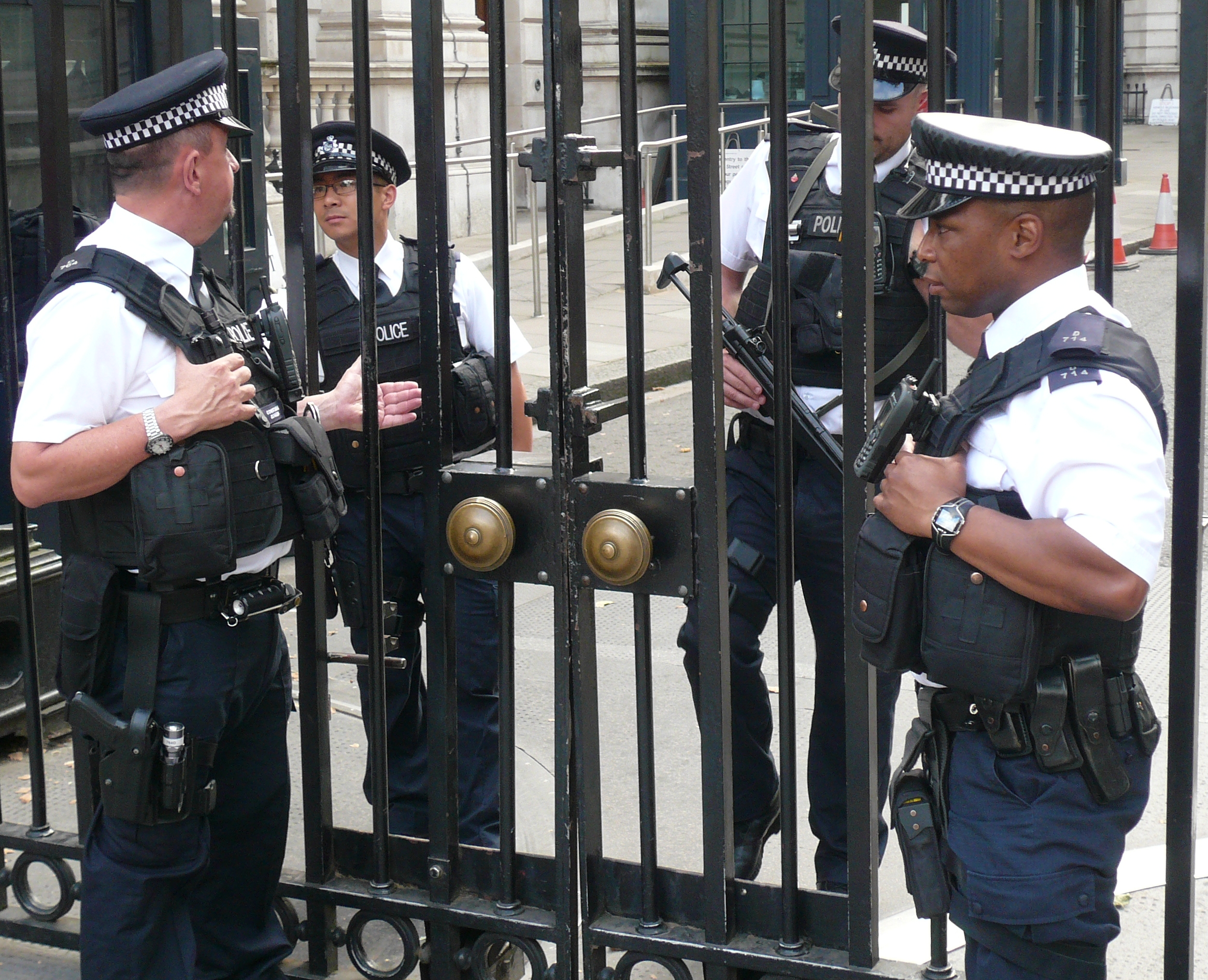
Armed Metropolitan Police near Downing Street in London.
Photo by Stanislav Kozlovskiy via Wikimedia Commons.

As for the collective or political lessons of the epidemic, I fear them more than rejoice in them. They seem to me likely to reinforce a tendency to authoritarianism, and to embolden bureaucrats with totalitarian leanings. One of the surprising things (or perhaps I should say the things that surprised me) was how meekly the population accepted regulations so drastic that they might have made Stalin envious, all on the say-so of technocrats whose opinions were not completely unopposed by those of other technocrats. There was, as far as I can tell, no popular demand for the evidence that supposedly justified the severe limitations on freedom that were imposed on the population. I suppose an encouraging interpretation of this readiness of the population to do as it was told is that it demonstrated that, all the froth and foam of opposition to political leaders notwithstanding, fundamentally the authorities were trusted by the population to do the right thing. Much as we lament, therefore, the intellectual and moral level of our political class, there are limits to how much we despise it. In other words, we believe that our institutions still work even when guided or controlled by nullities.

A less optimistic interpretation, as usual, is possible. Our population is now so used to being administered, supposedly for its own good, under a regime of bread and circuses, that it is no longer capable of independent thought or action. We have become what Tocqueville thought the Americans would become under their democratic regime, namely a herd of docile animals. Only at the margins — for example, the drug-dealers of banlieues of Paris — would the refractory actually rebel against the regulations, and that not for intellectual reasons or in the name of freedom, but because they wanted to carry on their business as usual. (I should perhaps mention here that I number myself among the sheep.)

In Britain, at any rate, the epidemic revealed how quickly the police could be transformed from a civilian force that protects the population as it goes about its business into a semi-militarised army of quasi-occupation. This transformation is not entirely new, alas; it has been a long time since the policeman was the decent citizen’s friend. Under various pressures, not the least of them emanating from intellectuals, he has become instead a bullying but ineffectual keeper of discipline, whom only the law-abiding truly fear.

I first sensed this development many years ago this when a traffic policeman asked to see my licence. “Well, Theodore …” he started, calling me by my first name when a few years before he would have called me “Sir.” This change was significant. I had gone from being his superior, as a member of the public in whose name he exercised his authority, to being a kind of minor, whom it was his transcendent right to call to order. He was now the boss, and I was now the underling.

The change in uniform, too, has worked in the same direction. Traditionally, since the time of Sir Robert Peel, the uniform of the British policeman was unthreatening, deliberately so, his authority moral rather than physical. Now, he is festooned with the apparatus of repression, if not of oppression, though in effect he represses very little of what ought to be repressed in case it fights back. The modern police intimidate only those who do not need deterring; those who do need it know that they have nothing much to fear from these whited sepulchres, these empty vessels. Incidentally, the French police have undergone a similar deterioration in appearance: gone is the reassuring képi in favour of the moron’s baseball cap, and some of them now dress in jeans with a black shirt with the word POLICE across its back, which is not difficult to imitate and makes it impossible to know whether a policeman really is a policeman or a lout in disguise.

French Gendarmerie at the Eurockéennes of 2007.
Photo by Rama via Wikimedia Commons.

The Covid-19 epidemic has come as a great boon to the British police. Increasingly criticised for their concentration on pseudo-crimes such as hate speech at the expense of neglecting real crimes such as assault and burglary, to say nothing of organised sexual abuse of young girls by gangs of men of Pakistani origin, they could now bully the population to their heart’s content and imagine that in doing so they were performing a valuable public service, preserving the law and public health at the same time. Thus they transformed their previous moral and physical cowardice into a virtue.

Of course, in bullying the average citizen who was very unlikely to retaliate they took no risks, unlike with genuine wrongdoers and law-breakers, who tend to be dangerous; but the fact remains that most individual policemen joined the force motivated by some kind of idealism, a desire to do society some service, though they soon had these naïve fantasies knocked out of them by the morally corrupt or bankrupt leadership of the hierarchy which owes its ascendency to its willingness to comply with the latest nostrums of political correctness. The faint embers of the policeman’s initial idealism were no doubt rekindled by the opportunity to prevent the spread of the virus, as they supposed that they were doing, but some of them, at least, far exceeded even their flexible and vaguely-defined authority and began to inspect citizens’ shopping bags to determine whether they were hoarding goods that might be in short supply. This was a step too far, and at last there were protests; the police desisted.

April 26, 2020

“If it saves just one life…”

Filed under: Economics, Government, Health, Liberty — Tags: , , , , — Nicholas @ 03:00

Hector Drummond illustrates the moral failure of falling back on the “if it saves just one life” trope as a justification for any and all restrictions on free people:

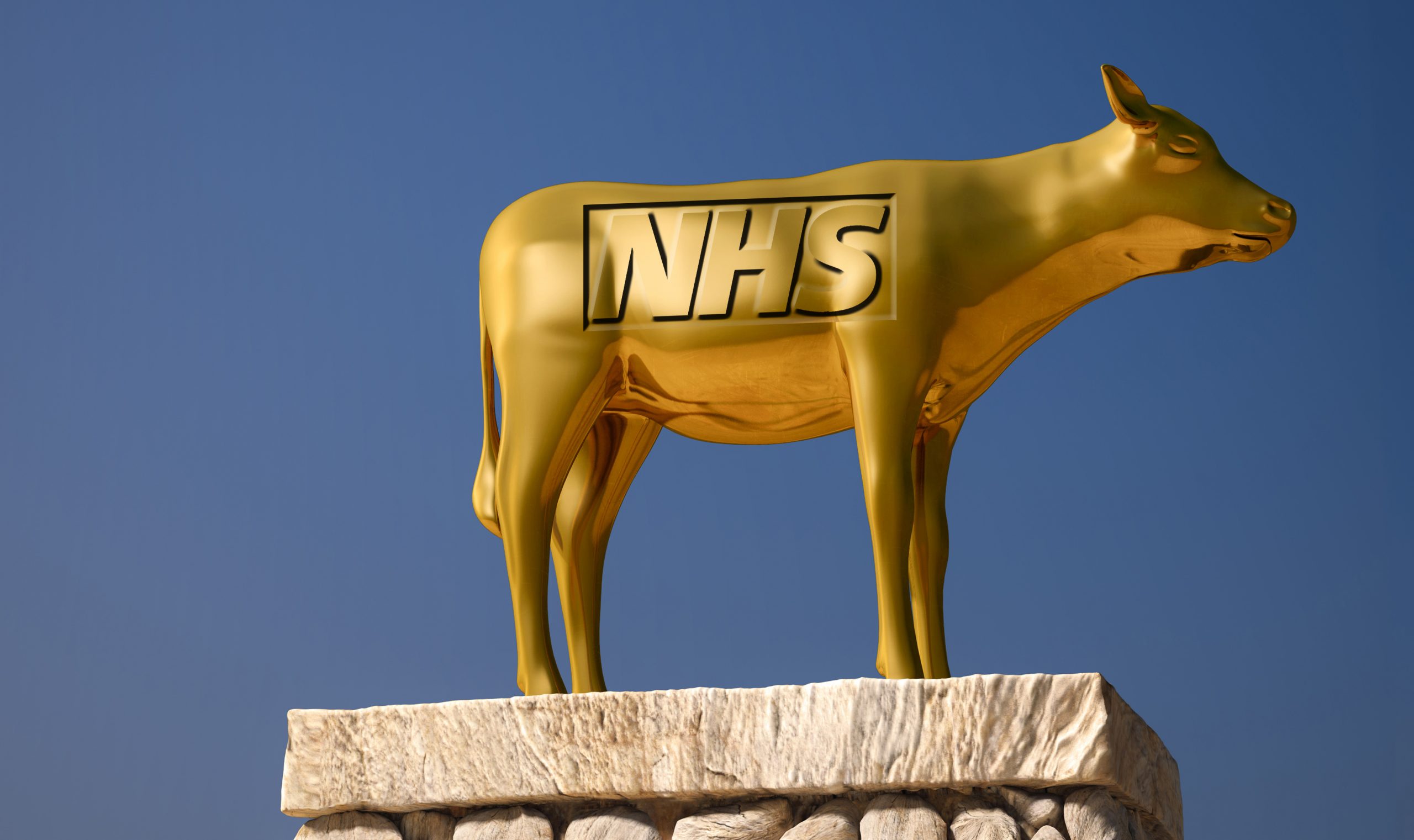
Not actually the official symbol of Britain’s National Health Services … probably.

Let me ask you a question. Would you give up your job, your savings, your kids’ economic future, your pension, your parents’ current pension, your house, and your mental health, if I told you that doing so may possibly extend my old, sick grandfather’s life by a year or two? I don’t suppose you’d be too keen, would you? In fact, even the most mild-mannered of people is likely to get angry at the sheer effrontery of such a request.

What if I told the world the same thing? What if I told the world that if everyone in every country gave up their wordly possessions, and spent the rest of their lives in grinding poverty, then it’s possible that my grandfather might get to see Christmas? And suppose that there was some bare plausibility to this, based on a computer model developed by scientists at Imperial College. What do you think the world is likely to say to me? The polite response would be, “Sorry to hear about your grandfather, but we’re not going to do this”. The less polite response would be more like … well, just incredulous laughter, and slammed doors.

The reason I bring up these hypothetical scenarios, though, is that all over social media we are hearing about the Covid-19 lockdown being “worth it if it saves just one life”. But would the people saying this really be willing to give up, say, their own house, car and possessions and teenage daughter to someone who is suicidally depressed over their lack of prospects in life? No. Would they be prepared to serve ten years in jail if it saved the life of someone at risk of being killed by gangsters? No. Would they be happy with having the government forcibly remove a kidney from them to extend the life of someone with failing kidneys? No. Economic ruin and loss of liberty is not something we generally regard as a fair trade for a stranger’s life. Generally even the bleeding hearts among us will say, and rightfully so, “I’m sorry for this person, but they are not entitled to this, and I will not damage my life to any great extent for them”. Charitable donations are one thing. So is volunteer service. But that’s it.

Another thing I am seeing is people who say, “Anything is worth it if it saves lives”. Anything? Really? Shall we ban alcohol then? Because some people die from alcohol. Cars? Paracetamol? Steak knives? Shall we ban mobile phones, because terrorists might use them to communicate with? Shall we lock up for life anyone convicted of a minor juvenile crime, in case they turn out to be a killer? The whole idea is too ridiculous for words, yet all over the world there are fearful people hiding in their homes and posting such thoughts. It is one thing to feel sorry for them, but their stupid ideas shouldn’t pass unchallenged.

April 21, 2020

One of the few good things happening during the Wuhan Coronavirus epidemic – deregulation

Filed under: Bureaucracy, Government, Health, USA — Tags: , , , , — Nicholas @ 03:00

Patrick McLaughlin, Matthew D. Mitchell, and Adam Thierer on the benefits of suspending many existing regulations during the ongoing epidemic:

As the COVID-19 crisis intensified, policymakers at the federal, state, and local levels started suspending or rescinding laws and regulations that hindered sensible, speedy responses to the pandemic. These “rule departures” raised many questions. Were the paused rules undermining public health and welfare even before the crisis? Even if the rules were well intentioned or once possibly served a compelling interest, had they grown unnecessary or counterproductive? If so, why did they persist? How will the suspended rules be dealt with after the crisis? Are there other rules on the books that might transform from merely unnecessary to actively harmful in future crises?

In many cases, rule departures or partial deregulations undertaken during the crisis are tantamount to an admission by policymakers that some policies that were intended to serve the public interest fail to do so. “The explanation for many of these problems is that outdated 20th-century rules stymie 21st-century innovation,” noted former Florida Governor Jeb Bush in a recent Wall Street Journal editorial. “In an emergency, many of those rules can be waived by executive order. After the crisis, there will be momentum to challenge the stale rules that hindered our response. This is likely to go well beyond dealing with pandemics,” he argued. Similarly, lawyer and commentator Philip K. Howard has asserted that “the same kind of energy and resourcefulness will be needed to get America’s schools, businesses, government agencies and nonprofits up and running again” and has suggested the need for a “temporary Recovery Authority with a broad mandate to identify and waive unnecessary bureaucratic hurdles to recovery.” In addition, Wall Street Journal columnist and Brookings Institution Senior Fellow William A. Galston has called for a “Coronavirus 9/11 Commission” to study the governance failures witnessed during the crisis, arguing that “the immediate effects of Covid-19 are bad enough. Failing to learn from it would be criminal negligence for which future generations won’t forgive us.”

The crisis has been a stress test for American institutions. It has laid bare the outdated, overlapping, and often contradictory morass of rules that make it difficult for public and private organizations to respond to changing circumstances. In many cases, these rules persist not because they protect the public from danger but because they protect organized interest groups from new competition. Rules also persist because agencies rarely prioritize retrospective reviews aimed at eliminating unnecessary or potentially harmful rules. On the contrary, agencies typically have a vested interest in maintaining regulations that often took years to generate. Agency employees who have developed expertise in those rules, just like their counterparts in the private sector, have a financial interest in preserving these rules. In this way, “Agencies are stakeholders with respect to their own regulations.”

Once the COVID-19 crisis subsides, there is likely to be considerable momentum to review the rules that have slowed down the response. Some of those rules should probably be permanently repealed and others amended to allow for more flexible responses in the future.

April 20, 2020

“New York City subways were ‘a major disseminator — if not the principal transmission vehicle — of coronavirus infection'”

Filed under: Government, Health, Politics, Railways, USA — Tags: , , , , , — Nicholas @ 05:00

Randal O’Toole wonders why the lone sacred cow of mass transit is still running, despite its potential role in spreading disease:

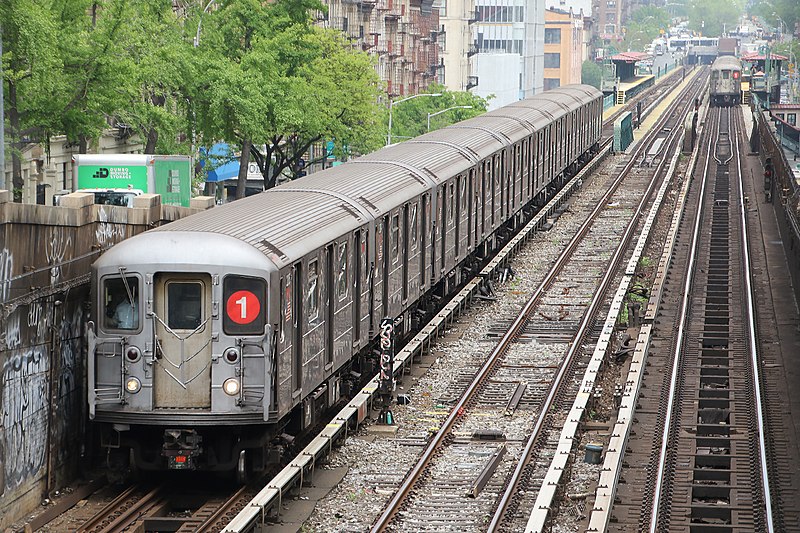
MTA NYC Subway 1 trains at 125th St., 14 May, 2018.
Photo by Mtattrain via Wikimedia Commons.

Sit‐​down restaurants and bars have been shut down. Public officials are discouraging or even forbidding people from doing “unnecessary travel,” even if it is to visit a second home where they might be able to socially distance themselves better than in their first, more urban home. All sorts of other rules are being passed, all supposedly for our own good.

So why are urban transit systems still running? A 2018 study found that “mass transportation systems offer an effective way of accelerating the spread of infectious diseases.” A 2011 study found that people who use mass transit were nearly six times more likely to have acute respiratory infections than those who don’t. Not surprisingly, a study published a few days ago found that New York City subways were “a major disseminator — if not the principal transmission vehicle — of coronavirus infection.”

Transit agencies say they are helping “essential workers” go about their business. But if they are so essential, isn’t it important to find them a safe way of getting to work? If we truly cared about people’s safety, then transit services should have shut down at the same time we closed other non‐​essential businesses and asked people to stay at home.

[…]

Unfortunately, the transit lobby has successfully turned government‐​subsidized transit into a sacred cow. Transit is supposedly greener than driving when in fact it’s an energy hog. Transit is supposedly needed to help poor people get to work when in fact the people most likely to commute by transit are those earning more than $75,000 a year.

When the pandemic took away most of transit’s customers, instead of shutting down, which would have been the responsible thing to do, transit agencies demanded that Congress give them $25 billion, tripling federal support to transit this year. Thanks to transit’s sacred cow status, Congress agreed without any serious debate.

Effectively, Congress rewarded the agencies for spreading disease. It would have been better to use that money to help transit‐​dependent essential workers buy a car so they could have a safe way of getting to work.

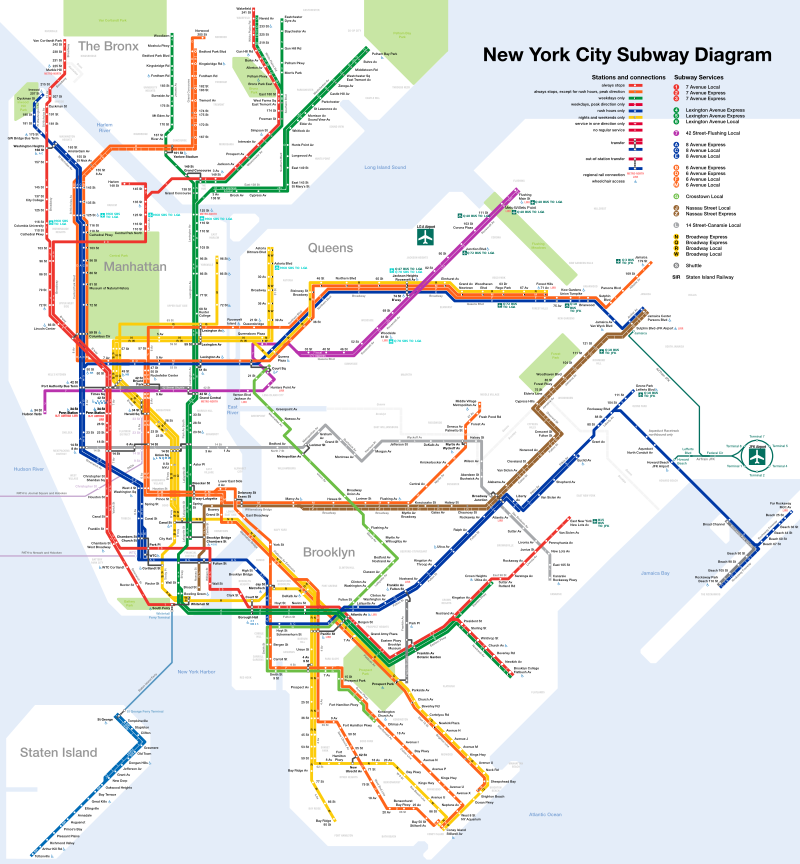
New York City subway system.
Image by Jake Berman (maps.complutense.org) based on information from the MTA, via Wikimedia Commons.

April 19, 2020

In healthcare matters, Confederation is working as intended

Filed under: Cancon, Europe, Government, Health — Tags: , , — Nicholas @ 03:00

Chris Selley on the viewing-with-alarm concerns that we don’t have a single nation-wide standard of care, and why the Swedish approach to the Wuhan Coronavirus epidemic is worth observing closely:

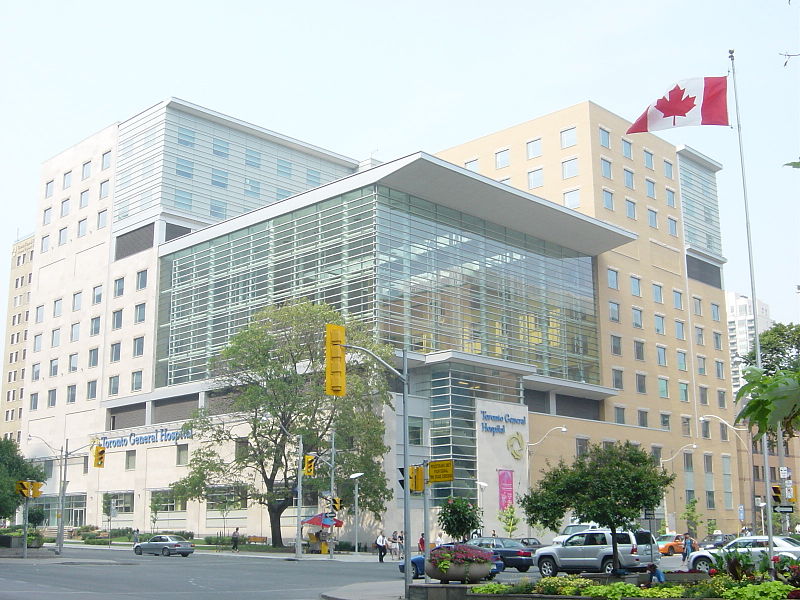
Front view of Toronto General Hospital in 2005. The new wing, as shown in the photograph, was completed in 2002.
Photo via Wikimedia Commons.

Last week, Maclean’s reported on a group of University of Ottawa researchers who had found, to their consternation, that each province offers different advice to people who think they might be showing coronavirus symptoms. “Even in a cross-Canada pandemic as devastating as this, there is not a single, evidence-based Canadian standard of care simply for self-assessment,” the researchers wrote.

It’s strange how many Canadians seem uncomfortable with the most basic design of their country, which is that of a federation. What the U of O researchers find alarming is not just a matter of Canada operating as it was intended to operate, but also a good example of the benefits. Provinces and territories can shape their responses to the needs of their populations. They can learn from each other what works. It’s a living laboratory.

In the same vein, assuming things don’t go catastrophically wrong, we should be thankful that Sweden is sticking to its guns in avoiding a total lockdown. That, too, will provide very useful data in preparation for COVID-the-next.

It is important to realize that lockdowns take a human toll, sometimes fatal, just like coronaviruses (though probably not on the same scale). Emergency room doctors are worried about their lack of business nowadays, the National Post‘s Richard Warnica reported Friday. “Doctors believe … patients who are afraid of contracting COVID-19 are just waiting (to seek treatment) and getting sicker,” Warnica reported. The head of a Vancouver ER department noted that opioid overdose deaths are up, even as his hospital treats far fewer. Are they overdosing alone, whereas before they might have been saved? When we postmortem this pandemic, we will hear about sexual and domestic assaults, suicides and other isolation-related harms. They will need to be weighed against the risks inherent in a less draconian approach.

Sweden’s strategy has been somewhat caricatured. High schools and universities closed; people aged 70 or older were advised to self-isolate; large gatherings ceased. Easter travel was down a reported 90 per cent. More Swedes have reportedly filed for unemployment benefits than during 2008 crash. Restaurants, pubs and cafés remain open, which seems unfathomable to a Canadian. But “it’s a myth that it’s business as usual,” as Sweden’s deputy prime minister Isabella Lovin told the Financial Times this week.

April 17, 2020

Chris Selley – “… if John Q. Bylaw is hassling you just for taking a walk, for heaven’s sake get your smart phone out and make a righteous stink”

Our proto-surveillance society is moving rapidly toward all-surveillance, all the time and the current justification is to fight the Wuhan Coronavirus epidemic:

For civil libertarians, these are alarming times — but less alarming than they might be. During a pandemic, when everyone agrees life cannot go on as normal, people who place maximum value on individual freedom are liable to look rather selfish. “Trust our leaders” types get a big boost.

But if Canadian officialdom has not botched its response to this crisis, neither has it excelled. Theresa Tam’s defenders are right that official advice will naturally change over the course of a pandemic — but nothing justifies her proactive downplaying of the COVID-19 risk at a time when several Canadian governments were, we now know, woefully unprepared. The pandemic doesn’t care that Prime Minister Justin Trudeau went to Harrington Lake, against advice from three governments including his own to stay away from any second homes — but it would have been so bloody easy for him not to go, to set an example. It’s equally inconsequential that Andrew Scheer added six more human beings than necessary to a government charter flight from Regina to Ottawa — and it would have been equally easy for him not to bring his family along.

Meanwhile, certain big Canadian cities have so obviously overstepped the mark, by cracking down on perfectly safe behaviours — walking in parks, notably — as to highlight the value of some don’t-tread-on-me pushback. An unscientific survey of social media suggests not a single real human being supports the City of Ottawa’s latest ridiculousness: Days after its bylaw officers threatened a father and son for kicking a ball around [noted here], fined a man $880 for walking his dog, and allegedly assaulted a man questioning his eviction from a park — none of which seems to be supported by the provincial emergency act they were ostensibly enforcing — a public health official now advises against exchanging properly distanced outdoor pleasantries with one’s neighbours lest it “turn into a parking lot or backyard party.” (Don’t laugh: Studio 54 was a cozy little jazz bar before Mick Jagger and Debbie Harry showed up one night with some records and a pound of blow.)

For civil libertarians who remember life before smart phones, meanwhile, the plan Google and Apple are working on to help governments control COVID-19 might as well be custom-designed to induce heebie-jeebies. The basic idea is that your phone’s operating system would reach out to other phones via Bluetooth and record the date, time, duration and location of the meeting. No personal information need be attached to those data points, just the identity of the device. When someone reports a COVID-19 diagnosis on an app, using a code provided by their public health department, devices that had been nearby would receive a warning that their owners might have been exposed, and should take such measures as local authorities advise.

It could be the stuff of dystopian sci-fi. You can just see the guy with the giant translucent computer screen shouting “magnify! Enhance!” Really, though, this comes down to a simple question: Whom do you least distrust? A co-production between Google, which is not at all known for respecting users’ privacy, and Apple, which at least seems to make an effort? Or governments?

April 12, 2020

Minimum alcohol pricing – a policy so good you have to lie about it

Filed under: Britain, Economics, Government, Health, Wine — Tags: , , , , , — Nicholas @ 05:00

Scotland has had legal minimum prices for alcoholic beverages since mid-2018. If you read a random selection of mainstream media coverage, you’d know that it’s been a huge success, with vastly improved public health results at a price to consumers measured in mere pennies. As with all propaganda efforts, if you tell the lies often enough, people may believe you:

There has been all sorts of rubbish written about minimum pricing since it was introduced in Scotland in May 2018. Nicola Sturgeon has lied about in the Scottish Parliament. The BBC has gone to extraordinary lengths to spin the policy as a success. The public have been told that alcohol-related hospital admissions have gone down when they have gone up. We have seen the media fall for blatant cherry-picking. We have been told that rates of problem drinking have gone down when we don’t have any evidence either way.

One of the few solid facts — that there were more alcohol-related deaths recorded in Scotland in 2018 than in 2017 — has been sidelined. Instead, the media have focused on a disputed, and relatively small, decline in alcohol sales as if that were an end in itself. Any port in a storm (fortified wine sales have definitely benefited from minimum pricing).

Figures from the calendar year of 2018 are of limited use because minimum pricing didn’t begin until May 1st. Today, for the first time, I can reveal the monthly mortality figures for Scotland, England and Wales. They show that there was no difference between the change in annual death rates from alcohol-related causes, regardless of whether the country had minimum pricing in place. Both England/Wales and Scotland saw a decline between May and December of seven per cent (compared to the previous year).

This graph is published in a new briefing paper I have written for the IEA. It summarises all the evidence gathered to date on deaths, hospitalisations and sales, plus exclusive new data.

Importantly, it contains estimates of the costs to consumers. Among the more outlandish claims made by the Sheffield modellers was the idea that moderate and low income consumers would be barely affected by minimum pricing. They predicted that a low income moderate drinker would only pay an extra 4p a year! This was never realistic, not least because it was based on the minimum price being set at 45p and they defined a moderate drinker as someone consuming the equivalent of just two pints of lager a week, but it worked from a PR perspective because it quelled politicians’ fears about the policy being regressive.

« Newer PostsOlder Posts »

Powered by WordPress