Quotulatiousness

September 5, 2020

Kareem Shaheen on the shame of mask-shaming

In The Line, Kareem Shaheen — who is a mask-wearer and was one before they were made mandatory — explains why shaming anti-maskers is a terrible way to encourage compliance, but a great way to virtue-signal:

“Covid 19 Masks” by baldeaglebluff is licensed under CC BY-SA 2.0

The mask shaming mirrors the way social media has warped our culture. The Twitter and ‘gram “in crowd” flaunt its mask use to demonstrate an ostensibly superior grasp of morals and science — and to bully those who don’t follow its cues. Those who perceive themselves to be on the outside of this circle can’t help but cringe at the manipulation and grandstanding behind these seemingly well-intentioned gestures.

Mask resistance, then, becomes a virtue signal of its own.

And, of course, Twitter itself has been a cesspool of counter-productive shame. Back in July, the hashtag #NoMasks trended, which gave the illusion of a groundswell of opposition against mandatory masking laws. But an analysis by First Draft, a nonprofit based in the United Kingdom, examined 8,000 Twitter accounts that used the hashtag. It found that the majority of people who tweeted #NoMasks were actually pro-mask. Their condemnation of the supposed anti-mask contingent actually boosted #NoMasks, bringing more people in contact with related conspiracy theories and arguments against wearing masks.

The moralizing is all the more galling because our own governments were forced to do an embarrassing about-face on their efficacy.

In the early weeks of the pandemic, health agencies in Canada and the United States recommended against wearing masks because there was insufficient evidence that they could prevent the spread of the virus, remember? They said that masks would provide a sense of false security, and suggested that we were all too dumb to know how to wear them properly.

This despite widespread use of masks in Asia, and while there was a growing consensus in hard-hit parts of Europe that they were effective and necessary.

With so much confused messaging, it’s no mystery that so many people are now skeptical about wearing masks. Sure, some of the most ardent mask-haters are also Q-Anon-spouting, anti-vaxxer crystal-healing masks-are-fascism conspiracy theorist kooks. But not all them fit that description.

And the problem with all of this is that if you’re actually trying to convince people to wear masks — as opposed to merely demonstrating your own superior morality via the veil — shame is one of the least effective methods of persuasion.

August 29, 2020

QotD: Britain’s most sacred of sacred cows

If it is possible to kowtow to a sacred cow, that is exactly what Boris Johnson did on leaving St Thomas’ Hospital after he had been treated there for Covid-19. The NHS, he said, was “Britain’s greatest national asset”, as if, had he fallen ill in any country other than Britain, he would not have been treated so well or simply left to die.

This was an unintended insult to the doctors and nurses of other countries, as if in their benighted lands without the NHS they did not work with skill or devotion. The NHS is neither necessary nor sufficient for medical and nursing staff to show devotion. The parents of a well-taught schoolchild do not thank the Ministry of Education.

No doubt the prime minister’s praise of the NHS was politically shrewd — one casts no doubt on the perfection of the Koran in Mecca — but in the long run such praise does no service to the nation, which at some time or other ought to face up to the fact that its healthcare system is at best mediocre by comparison with that of other countries at a similar level of economic development, and that being ill and seeking treatment is a more unpleasant experience in Britain than in it is many civilised countries.

Untold numbers of people receive excellent care under the NHS. One must neither exaggerate nor catastrophise. But there is another side to the coin as well, and it is surely not a coincidence that no one in Europe would choose Britain as their country of medical care, rather the reverse. If a German were to say, “For God’s sake, get me to the NHS!”, a psychiatrist would be called.

Theodore Dalrymple, “Empire of conformists”, The Critic, 2020-04-29.

August 16, 2020

This is a “hockey stick” graph you can believe

Filed under: Economics, Health, History — Tags: , , , , , — Nicholas @ 03:00

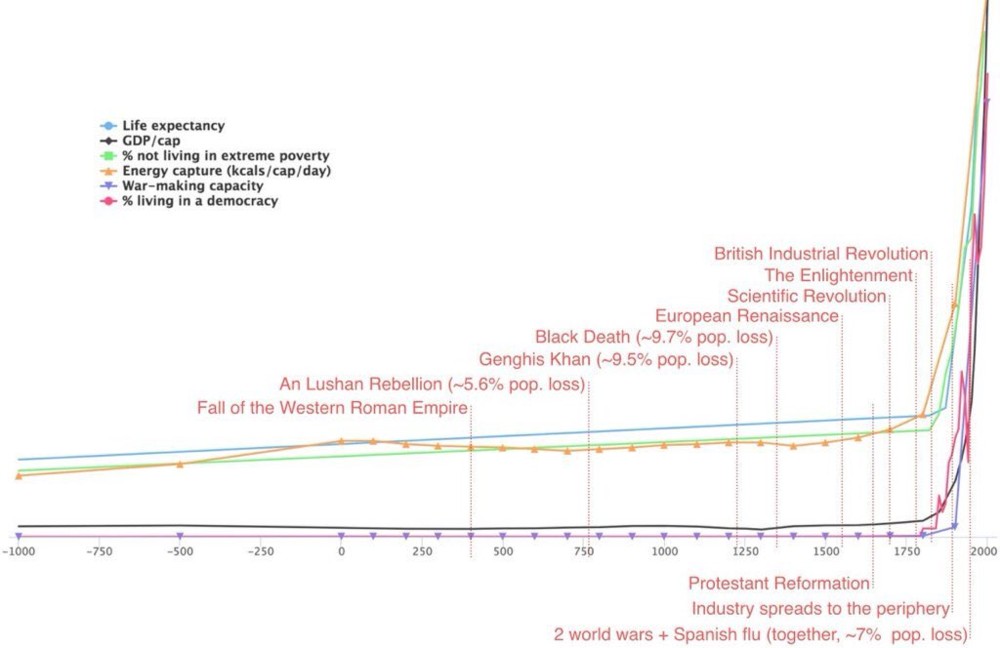
Brian Micklethwait says this graph, unlike the more famous (debunked) “hockey stick”, shows one of the most important moments in human history:

If that graph, or another like it, is not entirely familiar to you, then it damn well should be. It pinpoints the moment when our own species started seriously looking after its own creature comforts. This was, you might say, the moment when most of us stopped being treated no better than farm animals, and we began turning ourselves into each others’ pets.

Patrick Crozier and I will be speaking about this amazing moment in the history of the human animal in our next recorded conversation. That will, if the conversation happens as we hope and the recording works as we hope, find its way to here.

I’m not usually one for podcasts, in the same way that I’m not an audiobook user: I find I’m unable to do other things while listening to the spoken word, and it’s always far faster to read a text than to have it read to you. In this particular case, I might try to make an exception, and give up hope of doing anything else productive while I listen.

August 4, 2020

Ontario’s COVID Alert app

Filed under: Cancon, Government, Health, Technology — Tags: , , , , — Nicholas @ 03:00

Michael Geist explains why he has installed the Canadian government’s COVID App on his phone, despite the privacy concerns such government tracking apps present:

The Canadian COVID Alert app is ultimately as notable for what it doesn’t do as for what it does. The voluntary app does not collect personal information nor provide the government (or anyone else) with location information. The app merely runs in the background on an Apple or Android phone using bluetooth technology to identify other devices that come within 2 metres for a period of 15 minutes or more. Obviously, the distance and timing are viewed as the minimum for a potential transmission risk. If this occurs, a unique, random identifier is stored on each person’s device for a period of 14 days. After the 14 day period, the identifier is deleted from the device.

The identifier does not identify a specific person or location information, and is not sent to any centralized database. If a person tests positive for the virus, they are given a key code to input into the app. Once the key code is inputted, anyone that was identified as being potentially exposed over the prior 14 days receives a notification that this has occurred and they should consider testing and/or self-isolating.

From a privacy perspective, this is very low risk. Indeed, the government’s position – confirmed in the Privacy Commissioner of Canada’s analysis – is that there is no collection of any personal information and therefore the Privacy Act does not apply. The Privacy Commissioner rightly points out this raises some concerns about the state of the law (arguing it should be sufficiently robust to allow for reviews of this kind), however, the use of random identifiers ensures that identification of individual is very unlikely. Moreover, the Privacy Commissioner’s review concludes that “there are very strong safeguards in place” with security of the data, commitments limiting use, independent oversight, and a pledge to de-commission the app (including deletion of all data) within 30 days of the Chief Public Health Officer of Canada declaring the pandemic over.

The Ontario Information and Privacy Commissioner was also engaged in the review process. Her recommendation letter points to commitments for potential ongoing issues, including ensuring that the app is effective, that there is monitoring of third party components such as the Google-Apple Exposure Notification System, and public transparency associated with the app and its use.

While the app passes legal muster, its introduction reinforces the problems with social inequities that COVID-19 has laid clear. Much like the connection between socio-economic status and infection risk, the app itself is only accessible to those who can afford newer Apple and Android devices. That obviously means that those with older phones or no wireless access at all are unable to use it. While I don’t think that is reason to abandon the initiative, the government should be exploring alternatives to allow all citizens to implement these safeguards.

August 1, 2020

Masking stupidity

Filed under: Government, Health, Law, Liberty, Science — Tags: , , , — Nicholas @ 05:00

In The Critic, Patrick Fagan talks about the dehumanizing aspect of mandatory facemask orders:

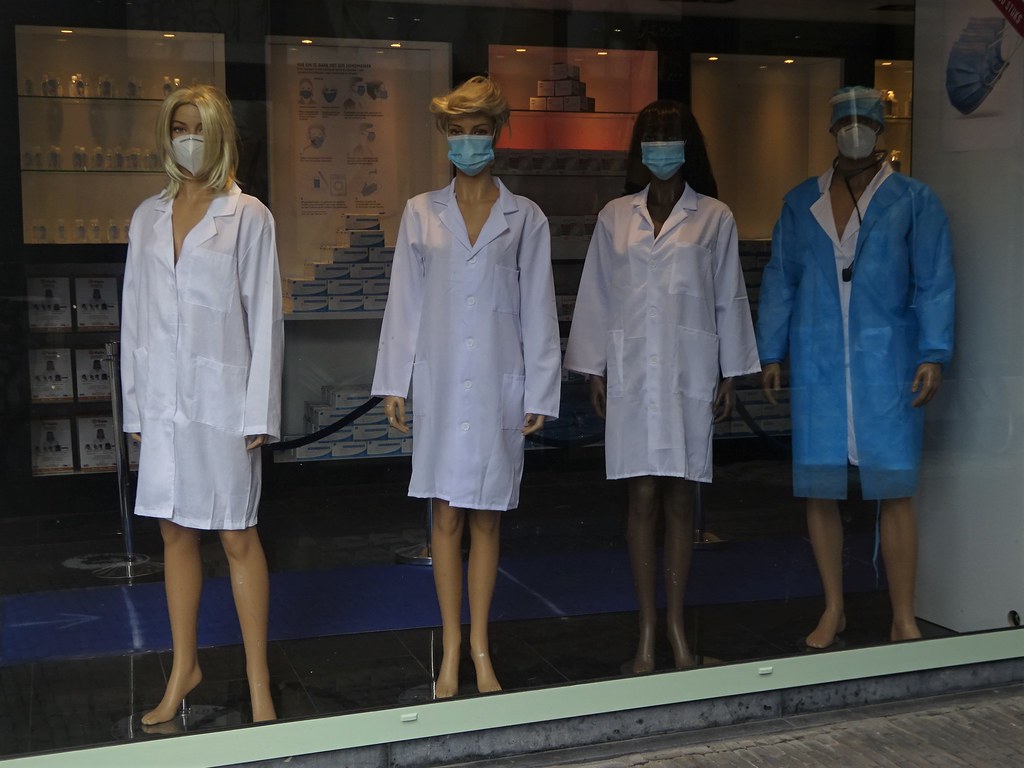
“Utrecht: Facemask Store” by harry_nl is licensed under CC BY-NC-SA 2.0

In Joost Meerloo’s analysis of false confessions and totalitarian regimes, The Rape of the Mind, he coins a phrase for the “dumbing down” of critical resistance – menticide. “In the totalitarian regime,” he wrote, “the doubting, inquisitive, and imaginative mind has to be suppressed. The totalitarian slave is only allowed to memorise, to salivate when the bell rings.”

[…]

Face masks can now be added to the list of mandates that make you stupid. As if Piers Morgan feverishly promoting them weren’t evidence enough, here are the facts on why you absolutely, categorically should not wear a face mask. They make you suggestible; they make you more likely to follow someone else’s direction and do things you wouldn’t otherwise do. In short, they switch off your executive function – your conscience.

A great example comes from a study by Mathes and Guest (1976), who asked participants how willing they would be, and how much they would have to be paid, to carry a sign around the university cafeteria reading “masturbation is fun” (this being 1976, doing such a thing would be considered embarrassing; these days it will probably earn you a course credit!). The results showed that when people wore a mask, they were more likely to carry the sign and required less money to do so ($30 compared to $48, on average).

Meanwhile, Miller and Rowold (1979) presented Halloween trick-or-treaters with a bowl of chocolates and told them they were allowed to take only two each. When the children thought they weren’t being watched, they helped themselves. Children without a mask broke the rule, taking more chocolates, 37% of the time, compared to 62% for masked children. The authors concluded that masks “lead to lower restraints on behaviour”.

The effect has similarly been found online: the online disinhibition effect refers to the tendency for people to act antisocially when anonymous online (Suler, 2004). There is even an infamous trolling movement calling itself Anonymous and using a mask as its symbol.

The disinhibiting effects of wearing a mask are described by psychologists in terms of a suspension of the superego’s control mechanisms, allowing subconscious impulses to take over. Saigre (1989) wrote that masks “short-cut” conscious defence systems and encourage “massive regression” to a more primitive state; Castle (1986) wrote that eighteenth century masquerades allowed mask-wearers to release their repressed hedonistic and sexual impulses; and Caillois (1962) similarly wrote about European masked carnivals involving libidinal activities including “indecencies, jostling, provocative laughter, exposed breasts, mimicking buffoonery, a permanent incitement to riot, feasting and excessive talk, noise and movement”. In the 12th Century, Pope Innocent III banned masks as part of his fight against immorality; and in 1845, New York State made it illegal for more than two people to wear masks in public, after farmers wore masks to attack their landlords.

From a neuroimaging perspective, masks are known to inhibit identity and impulse control – both associated with executive function in the prefrontal cortex (e.g., Glannon, 2005; Tacikowski, Berger & Ehrsson, 2017). In other words, masks silence the Jiminy Cricket in the brain.

July 30, 2020

“Muzzling” scientists only ever happens under Conservative governments…

… so even though the circumstances might look remarkably similar to the layman’s eyes, Justin Trudeau can’t possibly be accused of doing the same thing as that evil, anti-science Stephen Harper:

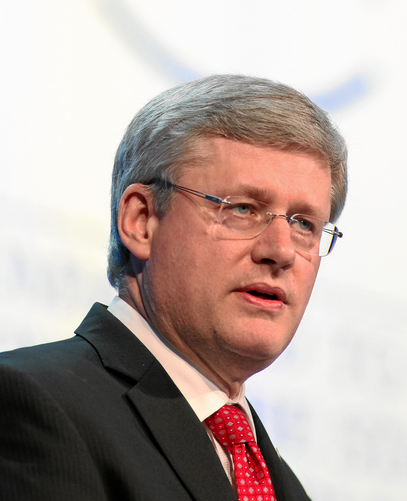
Prime Minister Stephen Harper speaking at the Annual Meeting 2012 of the World Economic Forum at the congress centre in Davos, Switzerland, January 26, 2012.
World Economic Forum photo via Wikimedia Commons.

In fact, Grant Robertson reports, the Trudeau regime effectively shuttered a small, cheap (less than $3 Million dollars ~ petty cash in Canada’s government) research and early warning team called the Global Public Health Intelligence Network (GPHIN) which

    was among Canada’s contributions to the World Health Organization, and it operated as a kind of medical Amber Alert system. Its job was to gather intelligence and spot pandemics early, before they began, giving the government and other countries a head start to respond and – hopefully – prevent a catastrophe. And the results often spoke for themselves.

Unfortunately, by the time the COVID-19 pandemic was getting started, just when the GPHIN should have provided “early warning,” it had been told, by the Trudeau regime, to focus on domestic issues. But global pandemics don’t often start in Canada, do they? The GPHIN sifted through data from around the world, often from places like China, Iran and Russia which hide or manipulate medical information, conducting something akin to military reconnaissance so that Canadian (and global (WHO)) officials could “see” what might be headed our way.

Did Justin Trudeau give the order to “muzzle” the GPHIN scientists? No, of course not … no more than Stephen Harper gave the order to “muzzle” scientists in Environment Canada. The decision to “refocus” the GPHIN on useless, domestic busywork was likely made by an Assistant Deputy Minister who was acting on yet another demand from the Treasury Board Secretariat to justify every programme dollar … again.

You should be glad that the Treasury Board Secretariat casts a sceptical eye on every single government programme and is a constant thorn in the side of operational people (like I was when I was serving and like the GPHIN folks were, too). They, skilled, hard-working civil servants, are just trying to ensure that your tax dollars are not being wasted. They are good people doing good work. But sometimes the wheat gets tossed away with the chaff. That appears to have been the case with the GPHIN. In retrospect, it seems almost criminally stupid to have deprived Canada of a valuable medical reconnaissance agency just because there had not been an “attack” recently. But that appears to have been the bureaucratic justification ~ it’s like me saying that since my house hasn’t burned down recently we should disband the fire department.

Did Justin Trudeau muzzle scientists? No.

Did Justin Trudeau’s government disable a valuable (and cheap) “early warning” system just to make its own wild spending look a little less careless? Yes, that’s what the Globe and Mail‘s investigation says ~ and we have paid a horrendous price in lives for that decision.

This story, it seems to me, is very much like the “Harper muzzles scientists” stories from a few years ago … but minus the massive media attention. It appears very evident, from Mr Robertson’s investigations that bureaucrats, acting on their own, internal priorities, emasculated the GPHIN just when we needed it most. That, bureaucratic action, was I believe what was, mainly, behind the “Harper muzzles scientists” stories, too. But in the 2010s much of the mainstream media was in a sort of undeclared war against Stephen Harper and so the claims of climate activists became “news” and opinions were treated as facts.

July 25, 2020

QotD: The real life implications of “positive” rights

… these same people want the government to provide them with free health care, and if they got their full way, other “positive liberties” (to quote Obama) including free college, free housing, free food, guaranteed income, guaranteed jobs.

[…] the moment all your necessities are furnished by someone else, someone else gets to make all the decisions for you. I mean, if your health is paid for by the taxes of your fellow citizens, and the government aka the nation looks after your every need: should they pay for your health if you insist on smoking or drinking? Or should those resources be husbanded for people who take better care of themselves? Okay, Sarah, but isn’t there a point to individual responsibility? Why shouldn’t you be required to take minimal care of yourself, so you get the benefits of the government’s care, which as you say someone else pays for.

Ah, but there’s the rub. See, ultimately, there’s always something some of us say or do that can be used to justify denying care or giving only palliative care. For instance, I’m overweight, which seems to be one of the remaining sins in the current lexicon. Sure, I gained tons of weight over 20 years of untreated hypothyroidism, even though I was starving myself for a long portion of those. But hey, I allowed myself to be overweight. So my prognosis is poor. Why spend money on me, when someone else could have better results?

Hell, even when it comes to my autoimmune. I’m a poor prospect, so why give me top of the line care?

If the government controlled other things, it would be exactly the same. Food? Sure, I break out in eczema all over when I eat a diet rich in carbs. But hey, flour and rice are cheap, and why should I get a specialized diet, since I’m only a writer who isn’t even a leftist or a supporter of the state, and besides my prospects of survival are poor?

College? Sure you want to be an economist, but your teachers say you’re cheeky and talk back, and the state doesn’t need that. What we need right now are pipe fitters. Here, you can take this six week course.

When the state is paying the bill, the state gets to decide what is better for you. The European constitution gives you the right to “death with dignity” because death with dignity is much cheaper than expensive treatments with a low chance of survival. After all this money is for everyone, you know?

And like the NHS, in Britain, they won’t even let you seek treatment outside their tender mercies. Why should they? They pay for you. That means in the end they decide what to spend on you. They own you. And if you went outside their system and your kid got cured? It would look pretty bad for them, wouldn’t it? Why should they allow you to do that? And besides, peasant, you have a bad attitude.

Sarah Hoyt, “Slouching Into Shackles”, According to Hoyt, 2018-04-27.

July 20, 2020

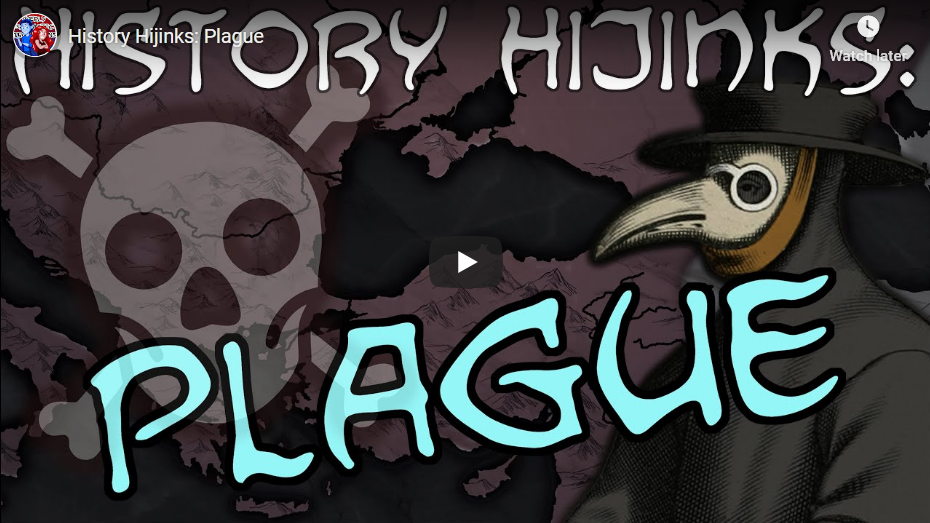
History Hijinks: Plague

Filed under: China, Europe, Health, History, Humour — Tags: , , , , — Nicholas @ 06:00

Overly Sarcastic Productions
Published 17 Jul 2020

Escape the worries of our modern world by visiting the high middle ages and learning about something esoteric and irrelevant: Plague!

In this video, I attempt to actually teach you something about how the medieval world worked and how it responded to this existential threat, rather than dredging up 3rd grade plague facts for easy views. Oops, did I say that out loud?

SOURCES & Further Reading: The Black Death: The World’s Most Devastating Plague via The Great Courses by Dorsey Armstrong, “From Plague Doctor to PPE” by Bernadette Banner (https://youtu.be/ZniriC-jTHg), “Biological Warfare at the Siege of Caffa” from the CDC (https://wwwnc.cdc.gov/eid/article/8/9…)

This video was edited by Sophia Ricciardi AKA “Indigo”. https://www.sophiakricci.com/

Our content is intended for teenage audiences and up.

DISCORD: https://discord.gg/kguuvvq

PATREON: https://www.Patreon.com/OSP

MERCH LINKS: https://www.redbubble.com/people/OSPY…

OUR WEBSITE: https://www.OverlySarcasticProductions.com
Find us on Twitter https://www.Twitter.com/OSPYouTube
Find us on Reddit https://www.Reddit.com/r/OSP/

July 7, 2020

Taking stock after the worst of the Wuhan Coronavirus epidemic

David Warren discusses an intractable “problem”:

I do not suppose it makes any practical difference what I have to say about a public health problem that invades the lives of billions; nor that readers will take me for a reliable epidemiologist when I say that the worst danger of that Batflu has now passed. (Infection rates spike, but the power of the virus to torture and kill has relented. The death rates continue downward.)

Nevertheless, I think there is some value in stating, even restating, the obvious — when what is obvious is in conflict with sensational reports, and the aggressive distortions of mass media, profiting from panic.

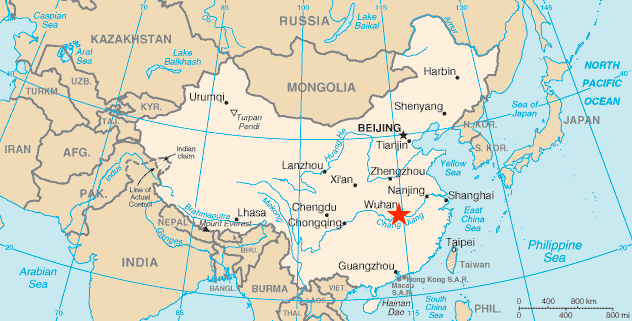
This Batflu became — more than any previous epidemic — a political issue, instantaneously. This is evident in the way it was spread, quite intentionally, by the Communist Party of China. (They shut down everything in Wuhan, except flights to Europe and America.) In all countries with democratic institutions, the disease became the centre of political attention, and unprecedented lockdowns were ordered. Likewise, unprecedented schemes of surveillance have significantly changed the relation between governments and governed, entirely for the worse. By means of current technology, the former will be able to perpetuate these changes, leaving those who wish to recover old liberties nowhere to hide.

Moreover, this is done by public demand. “The peeple” are easy to manipulate, once they have been frightened. The great majority of men, now and through the past, never cared about freedom. It has always been a minority concern, “for the intellectuals.” The “silent majority” will take their freedom, but only after their comfort and safety have been assured. The right to choose among consumer products is enough for them.

There are revolutions, such as the one that is now being attempted by the Left, but these never last. Either they are extinguished, under the wet blanket of public apathy, or the revolutionists succeed in installing a truly monstrous regime. Only thus, can they prolong their evil. Two generations of half-educated, indoctrinated, university grads favour a doctrinal dictatorship. Those still young are full of malign energy.

July 6, 2020

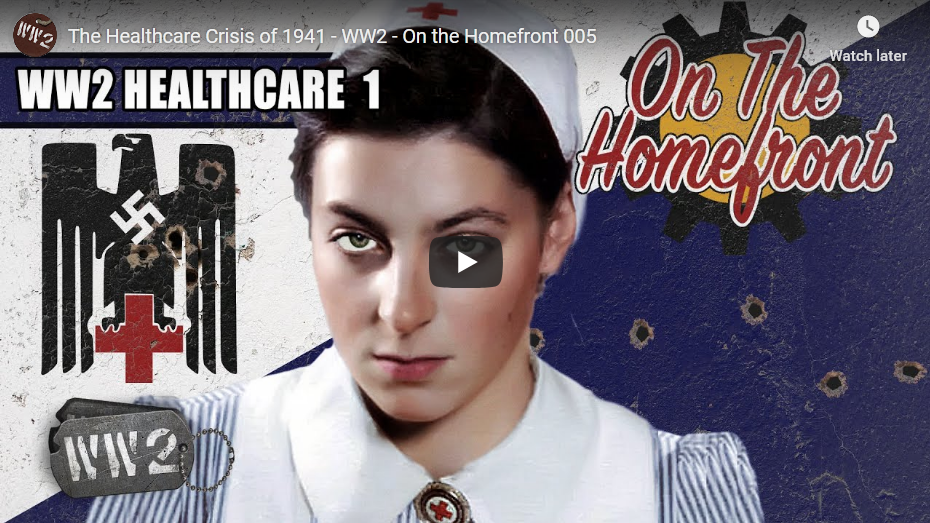
The Healthcare Crisis of 1941 – WW2 – On the Homefront 005

Filed under: Britain, Germany, Health, History, WW2 — Tags: , , , , — Nicholas @ 04:00

World War Two
Published 2 Jul 2020

When WWII breaks out many parts of the world are still missing population-wide healthcare. The pressure of the war deteriorates healthcare services even further. By 1941, both the British Commonwealth and Germany are facing an outright healthcare crisis on the home front.

Join us on Patreon: https://www.patreon.com/TimeGhostHistory
Or join The TimeGhost Army directly at: https://timeghost.tv

Follow WW2 day by day on Instagram @World_war_two_realtime https://www.instagram.com/world_war_two_realtime
Between 2 Wars: https://www.youtube.com/playlist?list…
Source list: http://bit.ly/WW2sources

Hosted by: Anna Deinhard
Written by: Fiona Rachel Fischer and Spartacus Olsson
Director: Astrid Deinhard
Producers: Astrid Deinhard and Spartacus Olsson
Executive Producers: Astrid Deinhard, Indy Neidell, Spartacus Olsson, Bodo Rittenauer
Creative Producer: Joram Appel
Post-Production Director: Wieke Kapteijns
Research by: Fiona Rachel Fischer
Edited by: Mikołaj Cackowski
Sound design: Marek Kamiński
Map animations: Eastory (https://www.youtube.com/c/eastory)

Sources:
IWM D 2373, D 2318, B 14299, D 2315, D 2078, D 14318, D 2334
Narodowe Archiwum Cyfrowe
Bundesarchiv
Wellcome Images no. L0028759
From the Noun Project: london by Pablo Fernández Vallejo, Patient by Miho Suzuki-Robinson, Patient by Binpodo, Doctor by Wilson Joseph, Hospital by Hare Krishna, School by David, Apartment by Victoruler, Bus by Eucalyp
University of Liverpool Faculty of Health & Life Sciences

Soundtracks from the Epidemic Sound:
Farrell Wooten – “Blunt Object”
Johannes Bornlof – “Deviation In Time”
Skrya – “First Responders”
Gunnar Johnsen – “Not Safe Yet”
Johannes Bornlof – “The Inspector 4”
Jon Bjork – “For the Many”
Reynard Seidel – “Deflection”
Rannar Sillard – “March Of The Brave 4”
Cobby Costa – “From the Past”
Fabien Tell – “Last Point of Safe Return”
Cobby Costa – “Flight Path”
Andreas Jamsheree – “Guilty Shadows 4”
Jo Wandrini – “Puzzle of Complexity”

Archive by Screenocean/Reuters https://www.screenocean.com.

A TimeGhost chronological documentary produced by OnLion Entertainment GmbH.

From the comments:

World War Two
2 days ago (edited)
It might be surprising that the global healthcare crisis of 2020 has an immediate relationship to WW2, but it does. Although, when you look at it, it’s logical — with every crisis humanity learns a little — it was still a little bit of a surprise to us how direct this relationship was when researching and writing this episode. Was it surprising to you too?

On the topic of writing, this is the first episode by our new co-writer, Fiona Rachel Fischer, who will now be a regular contributor to the On the Homefront series — please give her a warm welcome.

July 5, 2020

QotD: Gandhi and sanitation

Filed under: Health, History, India, Quotations — Tags: , , , — Nicholas @ 01:00

It should be plain by now that there is much in the Hindu culture that is distasteful to the Western mind, and consequently is largely unknown in the West — not because Hindus do not go on and on about these subjects, but because a Western squeamishness usually prevents these preoccupations from reaching print (not to mention film). When Gandhi attended his first Indian National Congress he was most distressed at seeing the Hindus — not laborers but high-caste Hindus, civic leaders — defecating all over the place, as if to pay attention to where the feces fell was somehow unclean. (For, as V.S. Naipaul puts it, in a twisted Hindu way it is unclean to clean. It is unclean even to notice. “It was the business of the sweepers to remove excrement, and until the sweepers came, people were content to live in the midst of their own excrement.”) Gandhi exhorted Indians endlessly on the subject, saying that sanitation was the first need of India, but he retained an obvious obsession with excreta, gleefully designing latrines and latrine drills for all hands at the ashram, and, all in all, what with giving and taking enemas, and his public bowel movements, and his deep concern with everyone else’s bowel movements (much correspondence), and endless dietary experiments as a function of bowel movements, he devoted a rather large share of his life to the matter. Despite his constant campaigning for sanitation, it is hard to believe that Gandhi was not permanently marked by what Arthur Koestler terms the Hindu “morbid infatuation with filth,” and what V.S. Naipaul goes as far as to call the Indian “deification of filth.”

Richard Grenier, “The Gandhi Nobody Knows”, Commentary, 1983-03-01.

June 20, 2020

“What did you do in the Wuhan Coronavirus war, Daddy?”

Filed under: Bureaucracy, Cancon, Government, Health — Tags: , , , , — Nicholas @ 05:00

Chris Selley metaphorically dons the garb of a war correspondent to report on how the Canadian government systematically mishandled the epidemic “war”:

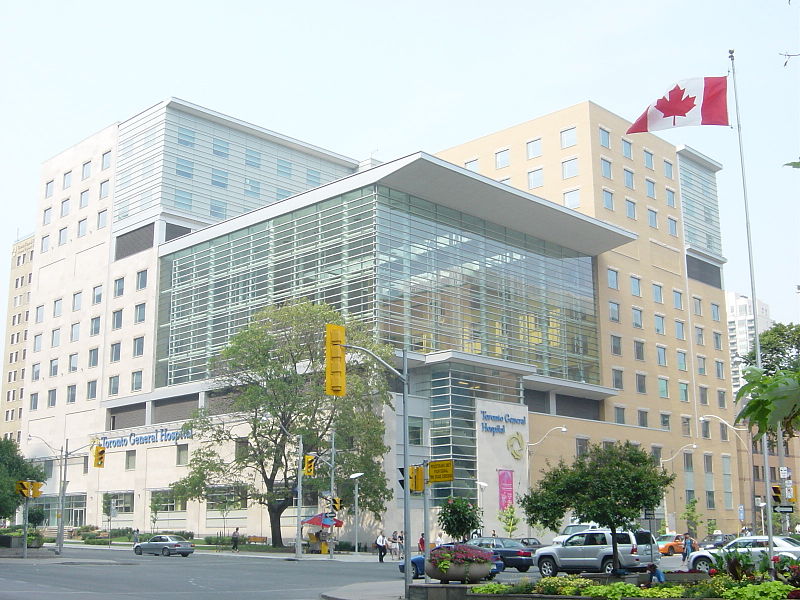
Toronto General Hospital.
Photo via Wikimedia Commons.

At first, comparisons to wartime seemed a bit silly. All we were being asked to do, after all, was stay indoors. As the World Health Organization was declaring a pandemic 100 days ago, the commanders had everything under control: the borders, the epidemiology, the strategy, support for shuttered businesses and their employees. Traditionally, wartime puts those of us left on the home front to work whether we like it or not. This was entirely the opposite: the worst we would have to put up with — in theory, assuming government aid was as advertised — was the indignity of idleness. Collective inaction would flatten the curve, the forces of COVID-19 would be beaten back, and summer would be saved. Peace in our time.

And then it instantly turned to quagmire. Canadians watched slack-jawed as COVID-19 breached our most fundamental defences. You don’t need Sun Tzu’s perspicacity to inform people arriving in Canada of their responsibility to self-isolate, and exactly what self-isolation means — go directly home, do not stop for groceries, do not receive visitors. I just did it, right there, in half a sentence. But we couldn’t manage it: Where information was distributed at all, it was excessively complex even as it failed to deliver the central message. Provincial forces threatened mutiny. Alberta Commander-in-Chief Jason Kenney stormed into the Edmonton airport demanding answers. It took weeks to sort out.

[…]

If it didn’t seem like a war before, it sure did once the real live army was drafted in to bail out long-term care homes in Ontario and Quebec that had descended into horrifying squalor. We learned the appalling details from leaked military reports. And now, in an almost poetic act of military pigheadedness, the Ottawa Citizen reports the Armed Forces are trying to hunt down and punish the leakers.

The war must go on. But sitting here in still-locked-down Toronto, stewing in my own bile, I cannot say this is filling me with patriotic fervour. I find myself simultaneously envious of other provinces that are in the process of reopening, and sympathetic to their residents: If it weren’t for the two sick men of the federation [Ontario and Quebec] dominating the narrative, they would likely have reopened much earlier.

Indeed, jealousies have bloomed as weeks turned to months. Apartment dwellers envy other apartment dwellers who have balconies. All apartment dwellers envy homeowners. Everyone envies cottage-owners. Some cottage-country mayors have told cottage-owners to stay put and keep their infestations to themselves. People cooped up with their kids sometimes envy those with time to themselves; singletons who have had enough alone time to last a decade occasionally envy those trying to juggle kids with working from home. The pleasant novelty of Zoom-based socializing faded ages ago, as everyone realized that Zoom-based socializing sucks.

More than 8,200 Canadians are dead, most having lived long lives but many having died in grim and lonely circumstances. In future, considerably more deaths and distress will be associated with the lockdown itself. The psychological effects of this will be studied for decades. If war isn’t quite the right analogy, it’s certainly closer to a war than anything that has been contested on Canadian soil in my or my parents’ lifetime, and it will come at a greater cost to the whole of society than any actual war that Canadian forces have fought over that time. It’s a terrible shame that as a nation, we didn’t win.

June 14, 2020

Healthcare is a provincial responsibility … thank goodness

Chris Selley reminds us that despite all the attention the media pays to every twitch of the federal government, it’s the provinces that are actually responsible for the healthcare systems in their territory:

Front view of Toronto General Hospital.
Photo via Wikimedia Commons.

Here in Canada, however, astonishing scenes continue. On Thursday the Toronto Transit Commission announced it intends to make masks mandatory for riders — no word of a lie — in three weeks, on July 2. That’s assuming the commission approves the measure … next Wednesday. TTC CEO Rick Leary was at pains to stress the rule would never be enforced.

Meanwhile Theresa Tam, Canada’s chief public health officer, could not appear more reluctant to endorse mask wearing unless she advised against wearing them altogether — which was, famously, her original position. On Wednesday, she unveiled a four-bullet-point plan for getting safely back to semi-normal under the moniker “out smart.” The word “masks” does not appear. Supplementary text only concedes they “can be used … when you can’t maintain physical distance of two metres.”

This is a strange qualification: The official federal advice stresses you shouldn’t touch your mask except to take it off at home and immediately wash your hands. You shouldn’t be taking it on and off while you’re out and about, when social distancing suddenly becomes impossible. But it’s not as strange as the qualification Tam offered on her Twitter account, where she offered a link to an instructional video but only “if it is safe for you to wear a non-medical mask or face covering (not everyone can).”

It is true that some people with asthma or severe allergies have trouble wearing masks. Presumably they know who they are, and would not risk suffocating themselves when mask-wearing isn’t even strongly recommended, let alone mandatory. Blind people will struggle to keep two metres’ distance from others. People with aquagenic urticaria can’t wash their hands with water. People without arms can’t cough into their sleeves. Those “out smart” recommendations aren’t qualified, because that would be silly — as is the qualification on masks.

I would be lying if I said I had any idea what the hell is going on. But this never-ending weirdness is doing us a favour, in a way. The fact is, we have been paying far too much attention to the feds throughout this ordeal. Canada’s COVID-19 experience was always much too different from region to region to justify everyone taking their cues from a single public health agency — let alone one that comprehensively botched something as simple as issuing self-isolation advice to returning foreign travellers.

Canada is a federation by design, not by accident, and thank goodness for that: Far better that most provinces’ authorities did a good job knocking down COVID-19 than that a single one screwed it up for the whole country. It’s something Liberals and New Democrats should bear in mind next time they find themselves demanding yet another “national strategy” in a provincial jurisdiction.

June 3, 2020

Fanatics gonna fanatic … they can’t help it

It’s funny that no matter what the claimed crisis, the answers always go in the same direction, as Kristian Niemietz points out with the demands to turn our still unending lockdown toward “protecting the environment”:

The change, superficially, is to encourage “a safe return to work” allowing more social distancing between pedestrians, but more substantially in order to preserve the cleaner air that has resulted from the lockdown.

The health and safety excuse for the policy change can be largely dismissed. The simple truth of the pandemic and national policy is that if social distancing matters, the centre of London is not safe to return to work. It is too densely populated and almost entirely reliant on mass transit which cannot operate above 10-15% capacity with 2m exclusion rules. With average commutes over 9 miles each way, substitution effects to walking and cycling will be extremely limited and temporary.

It is then hard to see then how the policy’s architects imagine the streets will fill up to the extent urgent measures are needed. Conversely, if social distancing does not matter (and it will cease to matter eventually), then a policy to enable more social distancing outside by widening the pedestrian streetscape is redundant. If it is safe to sit on a crowded train, it is safe to walk on a crowded pavement. It is not hard then to cut through the pandemic packaging to note that the motive for this policy is opportunistic, to accelerate a pedestrianisation plan that is the dream of many an urban planner.

Many will see this as self-evidently a good thing. Removing vehicle traffic from densely populated narrow streets will reduce air pollution, congestion and road traffic accidents. As a policy it will have more supporters than opponents; very few people drive into the centre of London to commute and there is very little capacity for parking. London’s leaders are not wrong to think that this is the future, the question is really one of timing and how they go about it, which is far more difficult and does not have anything to do with managing a coronavirus.

What the pandemic allows is the ability to use emergency powers for something that is not an emergency. This matters, in normal times it took several years to close one dangerous junction at Bank to most traffic, and this under a hail of protests from local businesses and taxi drivers. The same result can now be achieved in a few weeks across many streets. The democratic checks and balances that differentiate the UK from authoritarian states can be ditched and London officialdom granted extraordinary powers to do as they please. If the protestors don’t like it this time, they should note the right to protest has also been suspended, at least for now.

May 29, 2020

The contagion of fear and the progressive loss of perspective in the modern world

Filed under: Britain, Government, Health, Media — Tags: , , , , , — Nicholas @ 03:00

In the Hector Drummond Magazine, Dan C. discusses what he calls the “comfort of fear”:

Not actually the official symbol of Britain’s National Health Services … probably.

This is the sort of glib response (akin to “so you WANT people to die then?”) that has essentially hijacked all conversation and debate since the start of the Coronavirus outbreak. I didn’t respond, partly because I didn’t have the energy for an argument with a friend (at least Twitter rows tend to be anonymous) and quite frankly, what does one say to this? That we shouldn’t send out children back to school ever again in case one child happens to pass away from any illness or disease? That we should continue in lockdown until we cure death itself?

My concern is that this bizarre way of thinking is commonplace right now for many parents. Locked inside their houses for weeks on end, soaking up an endless stream of Netflix programs, mawkish Instagram feeds and daily Government briefings, convinced that Black Death Mk II has landed outside their front door, paid by the state to stop working and lapping up every rainbow-based hashtag that emerges from “our NHS”, all sense of balance and perspective has vanished. With such an unprecedented paradigm shift, this new state of heightened safety has led many to consider their view on illness and risk for the very first time in their lives and unfortunately the concept of critical thinking has been found lacking. Real life, which has been slowly eroded for many decades, has suddenly been switched off completely overnight and the worst of it is that most people don’t seem to care.

The scary part of all of this is that if the adults in the room have suddenly lost their desire to engage in the outside world, to have meaningful human interaction, to take risks (don’t get me started on the definition of “risk”) and to live their lives in the fullest possible way then what chance do children stand? After all, you can’t miss what you’ve never had.

Historians will look back in bewilderment at this period, noting that it took no more than a month during the spring of 2020 for fearlessness to completely evaporate in society. In its place is a comfortable sense of fear.

« Newer PostsOlder Posts »

Powered by WordPress