
The search for authenticity is not only futile but actively harmful, both psychologically and socially, for in general, authenticity is thought to require behavior without the restraints of normal civilized conduct, amongst which are the capacity and willingness on occasion to be hypocritical and insincere. Of course, the precise amount of hypocrisy and insincerity that one should indulge in is always a matter of judgment, but authenticity is brutish if it means saying and doing whatever one wants whenever one wants it.
Shakespeare knew that authenticity, in this sense, is for most people impossible and in all cases undesirable. The first few lines of Sonnet 138 should be enough to prove it:
When my love swears that she is made of truth,
I do believe her, though I know she lies,
That she may think me some untutored youth,
Unlearnèd in the world’s false subtleties.
Thus vainly thinking that she thinks me young,
Although she knows my days are past the best,
Simply I credit her false speaking tongue:
On both sides thus is simple truth suppressed.Should Shakespeare abandon his love because he knows she is inauthentic in what she says? Of course not:
Oh, love’s best habit is in seeming trust …
Away, then, with your self-esteem, your true self and your authenticity, and all the bogus desiderata of modern psychology.
Theodore Dalrymple, “Lose Yourself”, Taki’s Magazine, 2018-11-10.
November 26, 2022
QotD: The search for “authenticity”
November 25, 2022
QotD: Cults, conspiracy theories, progressives, and “the death wish”
… but alas, he does NOT lose his neuroses, his death wish. That becomes all-consuming.
When the very smart boys in the sociology departments first started studying cults, they assumed — being very smart boys — that cult members would all be dumb, mal-educated yokels. After all, those are the only kind who believe in Magic Sky Fairies, no? But because the urge to suppress or falsify research findings that don’t fit their pre-chosen Narrative hadn’t entirely permeated the academy yet, they actually published their “counterintuitive” findings — the average cult member is smarter, and much better educated, than the hoi polloi.
Which should’ve been obvious by the fact that cults as a general rule don’t bother trying to recruit in slums, or out in the sticks, but DO focus almost their entire recruiting effort near college campuses. They could’ve skipped the fieldwork entirely, and just looked around at the very obvious cult of “Leftism” that they and all their colleagues were already in, but self-awareness has never been a thing on the Left, and that goes triple for the egghead set.
The other thing that becomes immediately obvious in the academic study of cults is that the phrase “suicide cult” is redundant. They’re all suicide cults. Lots of them do us the great favor of admitting it, one way or the other, but THE cult belief is in the imminent immanentizing of the eschaton. The world’s gonna end, and they’re going to be the Big Guy’s right-hand persyns in the new dispensation. The Big Guy could be God, Jesus, the saucer people, Cthulhu, Satan, the Proletariat, whatever — they have a bewildering variety of mythologies, but the underlying belief is exactly the same, every time, and there’s only that ONE belief:
The world is gonna end in their lifetimes, and they themselves are helping to make it happen sooner.
Thus to pscircle back to [the] question: “has there been a historical situation where there is a generalised cult mentality which is attached and detached to a serial cult sequence (coof, ukraine, trump, etc).”
The way I’m interpreting this (please correct me if I’m wrong) is that the Juggalo Cult, unlike all the other known cults throughout history, seems to be able to change its mythology on a dime. We’re all familiar with Festinger, yeah? If not, go read When Prophecy Fails at the nearest opportunity — it’s short, and surprisingly readable for academic sociology. The UFO cult Festinger studied predicted the end of the world. When it didn’t happen, lots of members left the cult … but lots didn’t, and in fact they doubled down — it was only their constant vigilance, they said, that kept the saucer people from destroying the earth as originally planned.
(This is where the phrase “cognitive dissonance” comes from, by the way. Festinger coined it).
Note that the UFO cultists didn’t suddenly flip mythologies as a way to deal with their cogdis — oh, we were wrong, it wasn’t the saucer people, it was the Illuminati. And that seems to apply to any “disconfirmation” of any cult belief. Everything that happens, or doesn’t happen, gets folded in. In the same way, there’s only ever one Devil. See e.g. every conspiracy theory on the Internet, ever. When ___ happens, the guys who think the Freemasons control the world blame the Freemasons, the guys who think it’s the saucer people blame it on the saucer people, etc., same as it ever was.
But if the Freemasons step up and take credit for it, the guys who think it’s the saucer people don’t shrug and say ooops. Rather, they build it in — ok, ok, yeah, technically it was the Freemasons, but we all know who really controls the Freemasons! (It’s the saucer people and the RAND Corporation, in conjunction with the reverse vampires. We’re through the looking glass here, people).
In a sense, of course, the Juggalo Cult does do that — Whitey is always the Devil (do a find-and-replace, swapping in “White supremacy” for “capitalism”, and you could republish the entire Collected Works of V.I. Lenin, verbatim, as your dissertation and no one would be the wiser). But the Juggalos also seem to be unique in that the Apocalypse changes on a dime, too. Festinger’s cult all agreed that the saucer people were still going to destroy the world; they just hadn’t gotten around to it yet, because reasons.
The Juggalo Cult, by contrast, lurches from apocalypse to apocalypse. Global Cooling! Global Warming! Global Climate Change! Reagan! Boooosh! Drumpf! Covid! Ukraine! The Supreme Court! THE CURRENT THING!!!!
This, I think, is the reversion to bicamerality — the “digital clock effect” […] The Juggalo Cultists are still oppressed by their two-millennia-old sense of the passage of linear time — it’s baked into their DNA at this point — but they’ve been acculturated to the Endless Now of social media. There is no past on Twitter, nor any future — there’s just retweets and upvotes and replies, and what’s at the top of the news feed is all that is or could ever be, world without end amen.
They’re trapped in an endless loop — everything they do immanentizes the eschaton, because immanentizing the eschaton is simply a matter of tweeting it. And yet, the eschaton never comes. The tweet is merely replaced by another tweet, which is the only thing in the universe. It’s like what some old “paranormal researchers” said ghosts are — little loops of “film”, endlessly replaying the same thing forever. Time passes — the haunted house is bought and sold, remodeled, added to, stripped to the bricks and rebuilt, bought and sold again — but the ghost is still there, endlessly replaying the same scene, because it’s just static, just energy discharge from some kind of psychic dry-cell battery.
The difference being, of course, that these ghosts can actually pull the nuclear trigger … and they won’t even know they’re doing it, in the same way that the ghosts don’t realize they’re scaring the “occupants” of the “haunted house”, because there ARE no occupants, no house. It’s just the flickering, endlessly repeating NOW.
Severian, “The Ghosts”, Founding Questions, 2022-05-17.
November 21, 2022
QotD: Socialism is nihilism
That seems bizarrely wrong, considering how much effort Socialists put into saving the world. But look at it objectively, comrade (heh heh), and you’ll see that Save-the-World-ism, of whatever flavor, always boils down to Destroy-the-World-ism. Always. It doesn’t matter how the world gets “saved;” it always gets blown up in the process. You still can’t find a better primer on chiliastic psychology than Norman Cohn’s The Pursuit of the Millennium. The specifics of each loony doctrine changed, but the underlying presumption was always the same: Kill everyone, destroy everything, and then Jesus comes.
This is true even of millennialists whose doctrines don’t obviously entail killing everyone. Calvinists, for example. I spent decades trying to explain Calvinism to undergrads, and never once succeeded. The gulf between their words and their actions is too vast for the adolescent mind. There are only two logical responses to the doctrine of “double predestination”: quietism, or hedonism. They knew it, too, which is why they started burning people at the stake the minute they got any real power. Look at what they did, not what they said, and you’ll see nihilism plain as day. Calvin’s Geneva was the nearest thing to a police state that could be achieved with 16th century technology. The ideal Calvinist would say nothing, do nothing, think nothing, as he sat in the plain pews of his unadorned chapel, waiting for death and the Final Judgment. Calvinists wanted to grind the world to a halt, not blow it up, but once again the mass extinction of the human race is a feature, not a bug.
Take Jesus out of the equation, and you end up at pure shit-flinging nihilism in less than three steps. Marxism is perhaps the most exquisitely pointless doctrine ever devised. It’s more pleasant to have than to have not, I suppose, but no matter how much everyone has, we’re still just naked apes, living the brief days of our vain lives under an utterly indifferent sky. Marxists are a special kind of stupid, so they don’t realize it, but … they won. Modern Western “poor” people keel over from heart disease while fiddling with their smartphones in front of 50″ plasma tvs. While wearing $200 sneakers. We’re so far from being “alienated” from the fruits of our labor that “labor” is an all-but-meaningless concept for lots of us — and the further down the social scale you go, the more meaningless it gets. The modern ghetto dweller simply is Marx’s ideal proletarian. Does he look self-actualized to you? Ecce homeboy.
I assure you, the SJWs know this. Calvinists to the core, they know better than anyone the utter futility of all human effort. So they do what the original Calvinists did: Displace, displace, displace. Don’t take it from me, take it from a card-carrying Marxist. The end result is the same: Whether you’re a Puritan or an SJW, the only way to escape the crushing meaninglessness of your condition is to spend every moment of every day contemplating your pwecious widdle self.
Throw in the transitive property of equality, and you’ve got people like Hillary Clinton. If Socialism is Nihilism, then Nihilism is Socialism. Far from arguing against the idea … that Hillary et al are motivated solely by hatred, I’m 100% behind it. In fact, I’d argue that the Nihilism comes first — people who have convinced themselves that life is pointless always, always, embrace the biggest and most all-encompassing form of collectivism on offer. What could be crueler, than to be given all this for nothing? It’s not even a sick joke, since a joke implies a joker.
How can you not hate this world, then, and everything in it? More to the point: how can you not hate yourself, for seeing the world as it really is? Ignorance is bliss … but how can you not hate them, too, those poor deluded motherfuckers who still think stuff like God and love and family and the designated hitter might somehow mean something? Vanity, vanity, all is vanity … and if I have to face the existential horror of it all, then fuck it, so do you. “Capitalism,” the “free market,” “representative government” — call it what you will, it’s all just vanity, just another way for the sheeple to keep deluding themselves. Fuck it, and fuck them. Burn it down. Burn it allllll down.
Severian, “A Tyranny of Nihilism”, Rotten Chestnuts, 2019-10-22.
November 18, 2022
QotD: Therapism
Theodore Dalrymple, “Bad counsel”, The New Criterion, 2005-06-23.
November 16, 2022
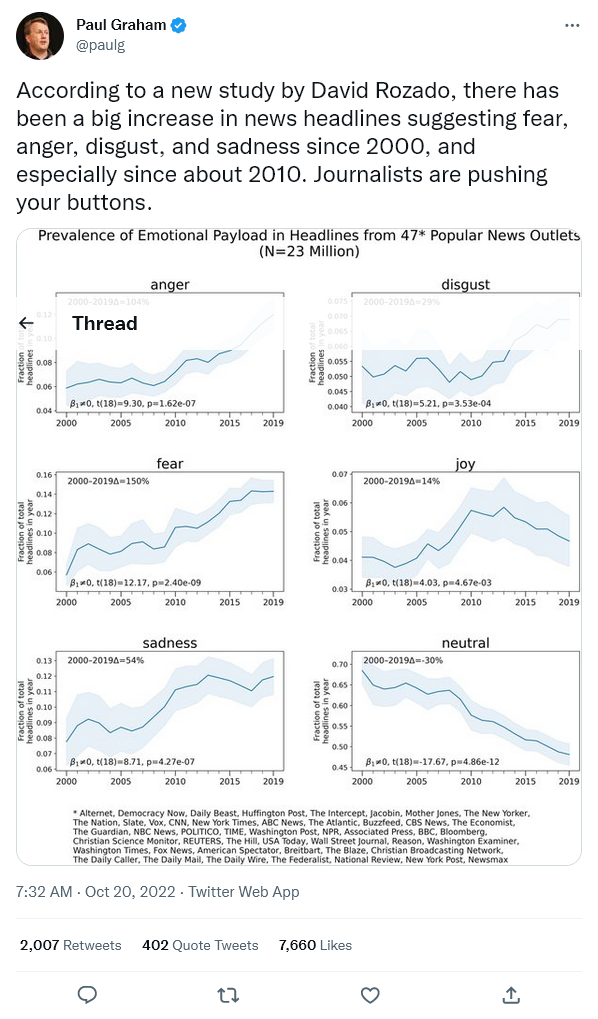
“Angertainment is unlikely the sole cause of US political polarisation, but it certainly hasn’t helped”
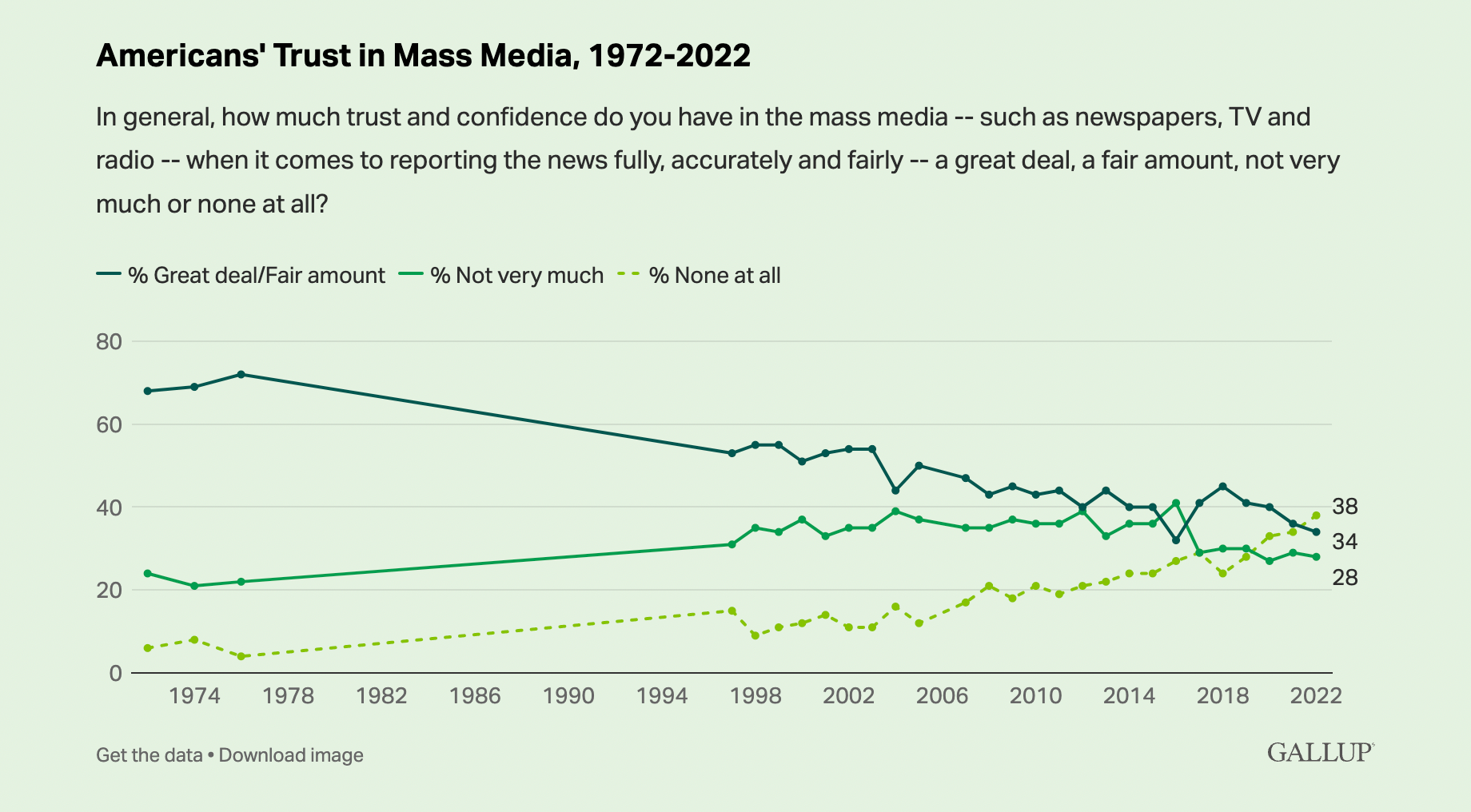
At Quillette, Claire Lehmann rounds up the rising distrust/disgust among the American public in their views of the legacy media:
In October, a study published in PLOS One provided some fresh insight into how and why American media has become so dysfunctional. Over the past 20 years, the study reported, headlines that convey anger, fear, sadness, and disgust have been increasing, while headlines conveying neutrality or joy have been in decline. These trends have coincided with a massive drop in trust in news journalism, particularly in the US.
According to Gallop polling, seven percent of Americans say they have “a great deal” of trust in the media, while 38 percent say they have none at all. As angertainment has increased, trust has decreased. As one political tribe provides angertainment for its loyal readers and viewers, the other becomes increasingly alarmed and disgusted. Angertainment may be profitable for journalism in the short-term but over the long-term it trashes the integrity of the profession.
Angertainment is unlikely the sole cause of US political polarisation, but it certainly hasn’t helped. Just as mad cow disease was caused by feeding bovine-meal to cows, angertainment feeds on polarisation which in turn feeds on angertainment. It’s a cannibalistic cycle.
[…]
The incentives for journalism are broken. This is not always the fault of individual journalists, although some strive for truth and accuracy with more sincerity than others. Nor is it solely the fault of media companies, although many of them prioritise profit and engagement over rigour and fairness. It is not even the fault of “Big Tech”, even though social media companies have built the machine on which these broken incentives run.
It’s the fault of all of us. We are the ones who devour angertainment and get high on watching our enemies suffer. We are the ones who want to see various idiots eviscerated and dismembered by the bayonets of Twitter. We are the ones who clamour after content which makes us feel virtuous, complacent, and like we belong. The 20-year incline in headlines denoting fear, anger, disgust, and sadness in American media would not have occurred if audiences had not been rewarding it. In a competitive eco-system, media organisations must adapt to their audiences, feed them what they want, or die. But like the cows feeding on the meat-and-bone meal of other cows, this feedback loop creates the cultural equivalent of a neurodegenerative disease.
I have been just as guilty of this as any other publisher, consumer, or creator of media. But in recent months I’ve largely stepped back from social media, stood outside this machine, and have watched it whir and whizz from the sidelines. It is possible to disengage and reconsider the machine from a safe distance, starving it of fuel. And every day at Quillette I am reminded by my writers and readers and subscribers that it is possible to publish and create journalism that is appreciated for its analytical and aesthetic value, rather than for the artillery it provides in a never-ending culture war. It’s a war in which facts and reputations exist merely as cannon fodder, and where truth is less important than tribe. The media’s incentives may be broken, but we as individuals do not have to be.
November 13, 2022
QotD: Your “true self”
Unfortunately, the search for the true self has a tendency to go on for years or even for decades. I used to ask my patients who said that they were in search of themselves how they would know when they had found it. The true self, after all, is not like a mislaid pair of cuff links. They said that their unhappiness would fall away when they found it, presumably like the outer mold of a casting. But they had no real idea of what a better life than the one they were leading would be like. Mostly they thought of the better life as one of luxury and more consumption, bathing in ass’ milk rather than in mere water. When I suggested that they needed to lose rather than to find themselves, they asked how one lost oneself.
“By being interested in something outside of and other than oneself,” I said.
“How do you do that?” I asked.
Here the weakness of my advice became apparent to me. I have been interested in many different things in my life, usually in succession, and my library is a testimony to my tendency to serial monomania; but I have never been interested in nothing, and therefore have no idea how people develop the capacity to be interested in something (that is to say, in anything) ex nihilo, so to speak, nor do I have any recollection of how I did so myself. I suspect (though I cannot prove) that modern education, which lays emphasis on the relevance of what is taught to children’s present lives rather than, as it should be, on its irrelevance, is partly to blame for the very large numbers of people who cannot lose themselves, and therefore are left to the vagaries of entertainment provided for them under our current regime of bread and circuses. The unassuageable thirst for entertainment is both a manifestation and a symptom of a profound boredom with the world. Indeed, entertainment is also one of the greatest causes of boredom in the world, inasmuch as everyday reality can now rarely compete in raw sensation with entertainment. But since dealing with everyday reality remains a necessity for most people, it results in boredom because it is compared with entertainment. Only a deeper engagement with the world can avoid or overcome this problem.
Theodore Dalrymple, “Lose Yourself”, Taki’s Magazine, 2018-11-10.
November 7, 2022
“We are the descendants of good team players”
Rob Henderson considers the Male-Warrior hypothesis:

The male-warrior hypothesis has two components:
- Within a same-sex human peer group, conflict between individuals is equally prevalent for both sexes, with overt physical conflict more common among males
- Males are more likely to reduce conflict within their group if they find themselves competing against an outgroup
The idea is that, compared with all-female groups, all-male groups will (on average) display an equal or greater amount of aggression and hostility toward one another. But when they are up against another group in a competitive situation, cooperation increases within male groups and remains the same among female groups.
Rivalries with other human groups in the ancestral environment in competition for resources and reproductive partners shaped human psychology to make distinctions between us and them. Mathematical modeling of human evolution suggests that human cooperation is a consequence of competition.
Humans who did not make this distinction — those who were unwilling to support their group to prevail against other groups — did not survive. We are the descendants of good team players.
It used to be accepted as a given that males were more aggressive toward one another than females. This is because researchers often used measures of overt aggression. For instance, researchers would observe kids at a playground and record the number of physical altercations that occurred and compare how they differed by sex. Unsurprisingly, boys push each other around and get into fights more than girls.
But when researchers expanded their definition of aggression to include verbal aggression and indirect aggression (rumor spreading, gossiping, ostracism, and friendship termination) they found that girls score higher on indirect aggression and no sex differences in verbal aggression.
The most common reasons people give for their most recent act of aggression are threats to social status and reputational concerns.
Intergroup conflict has been a fixture throughout human history. Anthropological and archaeological accounts indicate conflict, competition, antagonism, and aggression both within and between groups. But violence is at its most intense between groups.
A cross-cultural study of 31 hunter-gatherer societies found that 64 percent engaged in warfare once every 2 years.
Men are the primary participants in such conflicts. Human males across societies are responsible for 90 percent of the murders and make up about 80 percent of the victims.
The evolution of coalitional aggression has produced different psychological mechanisms in men and women.
Just as with direct versus indirect aggression, though, homicide might be easier to observe and track with men. When a man beats another man to death, it is clear what has happened. Female murder might be less visible and less traceable.
Here’s an example.
There’s a superb book called Yanoama: The Story of Helena Valero. It’s a biography of a Spanish girl abducted by the Kohorochiwetari, an indigenous Amazonian tribe. She recounts the frequent conflicts between different communities in the Amazon. After decades of living in various indigenous Amazonian communities, Valero manages to leave and describes her experiences to an Italian biologist, who published the book in 1965.
In the book, Helena Valero describes arriving in a new tribe. Some other girls were suspicious of her. One girl gives Valero a folded packet of leaves containing a foul-smelling substance. She tells Valero that it’s a snack, but that if she doesn’t like it she can give it to someone else. Valero finds the smell repulsive and sets it aside. Later, a small child picks up the leaf packet, takes a bite, and falls deathly ill. The child tells everyone that he got the leaf packet from Valero. The entire community accuses Valero of trying to poison the child, and banishes her from the tribe, with some firing arrows at her as she runs deep into the forest.
The girl who gave Valero the poisonous leaf packet formed a win-win strategy in her quest to eliminate her rival:
- Valero eats the leaf packet and dies
- Or she gives it to someone else who dies and she is blamed for it, followed by being ostracized or killed by the community
This is some high-level indirect aggression. Few men would ever think that far ahead (supervillains in movies notwithstanding). For most men, upon seeing a newcomer they view as a potential rival, they would just physically challenge him. Or kill him in his sleep or something, and that would be that.
Point is, this girl would have been responsible for Valero’s demise had she died. But no one would have known. If a man in the tribe, enraged at the death of the small child, had killed Valero, then he would be recorded as her killer. Or if Valero had been mauled by a jaguar while fleeing, then her death wouldn’t have been considered a murder.
Interestingly, the book implies that Valero was viewed as relatively attractive by the men, which likely means the girl who attempted to poison her was also relatively attractive (because she viewed her as a rival). Studies demonstrate that among adolescent girls, greater attractiveness is associated with greater use of aggressive tactics (both direct and indirect) against their rivals.
November 5, 2022
Psyops in theory and practice
Theophilus Chilton on the development of psyops and some examples of their use in US civilian contexts in recent years:
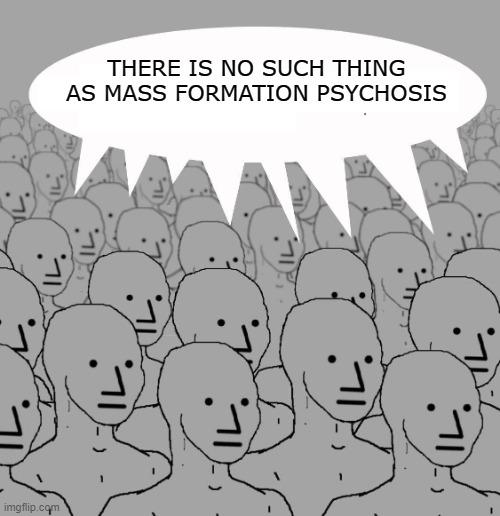
I trust that most readers are familiar with the concept of a “psyop”, a psychological operation designed to sway its targets in certain desired directions. Many of the mechanics of psyops were pioneered by the CIA and other intelligence agencies during the Cold War but have now been turned against civilian populations in the USA and elsewhere in an effort by the Regime to maintain control and minimise opposition to its various agendas. However, I’d like to make the point that psyops qualitatively differ from standard, run-of-the-mill propaganda such as governments have used for millennia.
The difference is primarily that of the time preferences involved. Whether it’s designed to whip up a population against an enemy or to try to obfuscate the truth about some particular event that has occurred, propaganda tends to operate on a shorter timescale and with more limited and simple policy goals in mind. It’s not surprising that modern propaganda techniques share a lot in common with commercial advertising designed to induce an “impulse buy” response in potential customers. Propaganda generally operates the same way — create a monodirectional response to a particular stimulus.
Psyops, on the other hand, are quite a bit more complex and generally involve the building of a narrative memeplex over the course of months, years, or even decades. Psyops are, of course, also fake but theirs is a fakeness that builds upon constant, repetitious narrative-building that lays out a foundational lens through which any individual incident or act can be systematically interpreted, adding them to the overall saga being told.
With conventional propaganda, the aim is to communicate Regime diktat to the average citizen. However, it does not necessarily expect the recipients to believe the propaganda, but merely comply with the goals. The Powers That Be in such cases don’t care why Havel’s greengrocer puts the sign up in his window, but merely that he does so. The primary purpose of psyops, on the other hand, is to ensure compliance by convincing the target to self-comply, rather than it having to be done by outside force or persuasion. It’s always touch and go when you’re making someone outwardly comply but inwardly they’re dissident. When the mark can be convinced to willingly self-police, this makes the government’s job easier since they don’t have to worry about this closet dissidence. The true believer is the best believer.
In essence, propaganda aims for immediate reactive persuasion while psyops seek long-term groundlaying that gives more all-inclusive means of maintaining overarching narrative control.
Now, a lot of people out there like to think they’re immune to psyops because “hurr durr I don’t beleeb da media!!” But they’re not. Indeed, a lot of these boomercon types are just as susceptible to psyops as anyone else when the right buttons are pushed. This is because they’ve been primed for it by the systematic, society-wide preparation of the psychological battle space without their ever realising it. In many cases, the foundations for a psyop are so culturally systematic that people don’t even realise what is happening.
For example, there are a ton of people out there who would pride themselves on being independent thinkers who nevertheless believed everything that was peddled during the covid and vaccine psyops. The reason for this is because they want to think of themselves as smart, knowledgeable about science, etc. Smart People believe the Right Things, after all. That, in turn, is the result of decades of psyops that have ensconced “science” as the arbiter of morality and truth in post-Christian America. So even when the science is fake or wrong, it is still accorded a moral authority that it does not deserve.
October 31, 2022
QotD: The True Believer
Why? From the Wiki summary, believers will persist in the face of overwhelming disconfirmation if:
- A belief must be held with deep conviction and it must have some relevance to action, that is, to what the believer does or how he or she behaves.
- The person holding the belief must have committed himself to it; that is, for the sake of his belief, he must have taken some important action that is difficult to undo. In general, the more important such actions are, and the more difficult they are to undo, the greater is the individual’s commitment to the belief.
- The belief must be sufficiently specific and sufficiently concerned with the real world so that events may unequivocally refute the belief.
- Such undeniable disconfirmatory evidence must occur and must be recognized by the individual holding the belief.
- The individual believer must have social support. It is unlikely that one isolated believer could withstand the kind of disconfirming evidence that has been specified. If, however, the believer is a member of a group of convinced persons who can support one another, the belief may be maintained and the believers may attempt to proselytize or persuade nonmembers that the belief is correct.
This is Leftism in a nutshell, and it explains why SJWs are impervious to factual, rational argument. Boiled down as far as it will go: Group identity is so important to the Leftist that, faced with the choice between continued group membership and the evidence of xzhyr own lying eyes, xzhey will pick group membership, every time. This sets up its own feedback mechanism, such that disconfirmations of their dogmas actually increase their commitment — only the truest, holiest believers would keep believing in the face of the facts.
Severian, “What Happens if the UFO Actually Comes?”, Rotten Chestnuts, 2019-09-25.
October 25, 2022
QotD: How con-men and charlatans use the Forer Effect
- You have a great need for other people to like and admire you.
- You have a tendency to be critical of yourself.
- You have a great deal of unused capacity which you have not turned to your advantage.
- While you have some personality weaknesses, you are generally able to compensate for them.
- Your sexual adjustment has presented problems for you.
- Disciplined and self-controlled outside, you tend to be worrisome and insecure inside.
- At times you have serious doubts as to whether you have made the right decision or done the right thing.
- You prefer a certain amount of change and variety and become dissatisfied when hemmed in by restrictions and limitations.
- You pride yourself as an independent thinker and do not accept others’ statements without satisfactory proof.
- You have found it unwise to be too frank in revealing yourself to others.
- At times you are extroverted, affable, sociable, while at other times you are introverted, wary, reserved.
- Some of your aspirations tend to be pretty unrealistic.
- Security is one of your major goals in life.
… most people will agree that the statements accurately describe them. In fact, most people will feel like they’re unusually accurate descriptions, which is how astrologers get you.
What statements show a Forer effect? Wikipedia just says they should be vague and somewhat positive. Can we do better?
A lot of Forer statements above are about the contrast between internal experience and outward behavior — for example “disciplined and self-controlled outside, you tend to be worrisome and insecure inside”. All of this is implicitly comparative — since there’s no objective measure for how disciplined you should be, “disciplined” implicitly means “more disciplined than other people”. Take this into account, and you can rephrase many of these statements as “Although everyone else is really X, you are Y pretending to be X”.
Now the trick is obvious. You can access your internal experience, and you know what kind of things you’re pretending. But you can only access everyone else’s external presentation, which (absent specific evidence otherwise) you mostly believe. So whenever everyone is Y pretending to be X, it will feel like “although everyone else is really X, I am Y pretending to be X”.
Consider the fifth statement above: “Your sexual adjustment has presented problems for you”. Everyone has to go through their own sexual adjustment. But usually they hide it from everyone else except maybe some unlucky early sexual partners. Sexual adjustment is terrible, and so without any opportunity to calibrate, most people assume it can’t possibly be quite that bad for other people. So if an astrologer reads a star-chart and predicts “I bet you had an unusually tough sexual adjustment”, most people will agree the astrologer is right.
Scott Alexander, “Forer Statements as Updates And Affirmations”, Astral Codex Ten, 2022-07-27.
October 24, 2022
The rise of “Queer Theory”
In City Journal, Christopher F. Rufo provides the background that has lead to the widespread phenomenon of “Drag Queen Story Hour”:
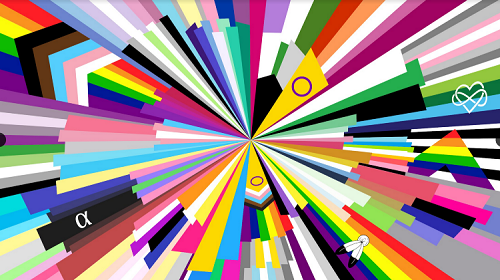
Start with queer theory, the academic discipline born in 1984 with the publication of Gayle S. Rubin’s essay “Thinking Sex: Notes for a Radical Theory of the Politics of Sexuality”. Beginning in the late 1970s, Rubin, a lesbian writer and activist, had immersed herself in the subcultures of leather, bondage, orgies, fisting, and sado-masochism in San Francisco, migrating through an ephemeral network of BDSM (bondage, domination, sadomasochism) clubs, literary societies, and New Age spiritualist gatherings. In “Thinking Sex”, Rubin sought to reconcile her experiences in the sexual underworld with the broader forces of American society. Following the work of the French theorist Michel Foucault, Rubin sought to expose the power dynamics that shaped and repressed human sexual experience.
“Modern Western societies appraise sex acts according to a hierarchical system of sexual value,” Rubin wrote. “Marital, reproductive heterosexuals are alone at the top erotic pyramid. Clamouring below are unmarried monogamous heterosexuals in couples, followed by most other heterosexuals. … Stable, long-term lesbian and gay male couples are verging on respectability, but bar dykes and promiscuous gay men are hovering just above the groups at the very bottom of the pyramid. The most despised sexual castes currently include transsexuals, transvestites, fetishists, sadomasochists, sex workers such as prostitutes and porn models, and the lowliest of all, those whose eroticism transgresses generational boundaries.”
Rubin’s project — and, by extension, that of queer theory — was to interrogate, deconstruct, and subvert this sexual hierarchy and usher in a world beyond limits, much like the one she had experienced in San Francisco. The key mechanism for achieving this turn was the thesis of social construction. “The new scholarship on sexual behaviour has given sex a history and created a constructivist alternative to” the view that sex is a natural and pre-political phenomenon, Rubin wrote. “Underlying this body of work is an assumption that sexuality is constituted in society and history, not biologically ordained. This does not mean the biological capacities are not prerequisites for human sexuality. It does mean that human sexuality is not comprehensible in purely biological terms.” In other words, traditional conceptions of sex, regarding it as a natural behavior that reflects an unchanging order, are pure mythology, designed to rationalize and justify systems of oppression. For Rubin and later queer theorists, sex and gender were infinitely malleable. There was nothing permanent about human sexuality, which was, after all, “political”. Through a revolution of values, they believed, the sexual hierarchy could be torn down and rebuilt in their image.
There was some reason to believe that Rubin might be right. The sexual revolution had been conquering territory for two decades: the birth-control pill, the liberalization of laws surrounding marriage and abortion, the intellectual movements of feminism and sex liberation, the culture that had emerged around Playboy magazine. By 1984, as Rubin acknowledged, stable homosexual couples had achieved a certain amount of respectability in society. But Rubin, the queer theorists, and the fetishists of the BDSM subculture wanted more. They believed that they were on the cusp of fundamentally transforming sexual norms. “There [are] historical periods in which sexuality is more sharply contested and more overtly politicized,” Rubin wrote. “In such periods, the domain of erotic life is, in effect, renegotiated.” And, following the practice of any good negotiator, they laid out their theory of the case and their maximum demands. As Rubin explained: “A radical theory of sex must identify, describe, explain, and denounce erotic injustice and sexual oppression. Such a theory needs refined conceptual tools which can grasp the subject and hold it in view. It must build rich descriptions of sexuality as it exists in society and history. It requires a convincing critical language that can convey the barbarity of sexual persecution.” Once the ground is softened and the conventions are demystified, the sexual revolutionaries could do the work of rehabilitating the figures at the bottom of the hierarchy — “transsexuals, transvestites, fetishists, sadomasochists, sex workers”.
Where does this process end? At its logical conclusion: the abolition of restrictions on the behavior at the bottom end of the moral spectrum — pedophilia. Though she uses euphemisms such as “boylovers” and “men who love underaged youth”, Rubin makes her case clearly and emphatically. In long passages throughout “Thinking Sex”, Rubin denounces fears of child sex abuse as “erotic hysteria”, rails against anti–child pornography laws, and argues for legalizing and normalizing the behavior of “those whose eroticism transgresses generational boundaries”. These men are not deviants, but victims, in Rubin’s telling. “Like communists and homosexuals in the 1950s, boylovers are so stigmatized that it is difficult to find defenders for their civil liberties, let alone for their erotic orientation,” she explains. “Consequently, the police have feasted on them. Local police, the FBI, and watchdog postal inspectors have joined to build a huge apparatus whose sole aim is to wipe out the community of men who love underaged youth. In twenty years or so, when some of the smoke has cleared, it will be much easier to show that these men have been the victims of a savage and undeserved witch hunt.” Rubin wrote fondly of those primitive hunter-gatherer tribes in New Guinea in which “boy-love” was practiced freely.
Such positions are hardly idiosyncratic within the discipline of queer theory. The father figure of the ideology, Foucault, whom Rubin relies upon for her philosophical grounding, was a notorious sadomasochist who once joined scores of other prominent intellectuals to sign a petition to legalize adult–child sexual relationships in France. Like Rubin, Foucault haunted the underground sex scene in the Western capitals and reveled in transgressive sexuality. “It could be that the child, with his own sexuality, may have desired that adult, he may even have consented, he may even have made the first moves,” Foucault once told an interviewer on the question of sex between adults and minors. “And to assume that a child is incapable of explaining what happened and was incapable of giving his consent are two abuses that are intolerable, quite unacceptable.”
Rubin’s American compatriots made the same argument even more explicitly. Longtime Rubin collaborator Pat Califia, who would later become a transgender man, claimed that American society had turned pedophiles into “the new communists, the new niggers, the new witches”. For Califia, age-of-consent laws, religious sexual mores, and families who police the sexuality of their children represented a thousand-pound bulwark against sexual freedom. “You can’t liberate children and adolescents without disrupting the entire hierarchy of adult power and coercion and challenging the hegemony of antisex fundamentalist religious values,” she lamented. All of it — the family, the law, the religion, the culture — was a vector of oppression, and all of it had to go.
October 19, 2022
Jonathan Kay reviews 18 Months by Shannon Thrace
At Quillette, a review of a new book on the breakdown of a once-happy marriage when one partner decides that mere transvestism isn’t enough any more and becomes transgendered:
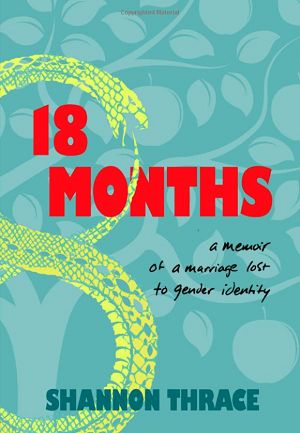
The trans community is diverse, especially when it comes to attitudes toward sex. As writer Angus Fox noted in a seven-part Quillette series, When Sons Become Daughters, some biologically male trans-identified teenagers live a sexless existence; and are drawn to puberty blockers and androgynous aesthetics precisely because they seem to offer safe harbour from male sexual development. In the case of middle-aged men who abruptly adopt a trans identity later in life, on the other hand, it can be the opposite: the presentation is often hyper-sexualized.
(more…)
October 18, 2022
“On average, a twenty-five year old man has the same level of impulse control as a 10 year old girl”
Rob Henderson considers how early humans managed to overcome violent tendencies as human communities got larger, and specifically considers the social role of young men, then and now:
One challenge to overcome involves the behavioral tendencies of young males.
[Oxford evolutionary psychologist Robin] Dunbar writes:
When males (and younger males, in particular) are deprived of social, economic, and mating opportunities, they are prone to behaving in ways that both stress other group members (especially reproductive females) and threaten the stability and cohesion of the group. This is as true of the more social primates as it is of humans, and is often associated with high mortality rates. Under these circumstances, males are also likely to indulge in raiding neighbouring groups, which can result in poor inter-community relations as well as retaliation. Managing male behaviour may, thus, be critical to maintaining an environment conducive to successful reproduction.
Young males are (unknowingly) experts at disrupting social cohesion. To be fair, they are also required to maintain and defend it. They’re a mixed bag.
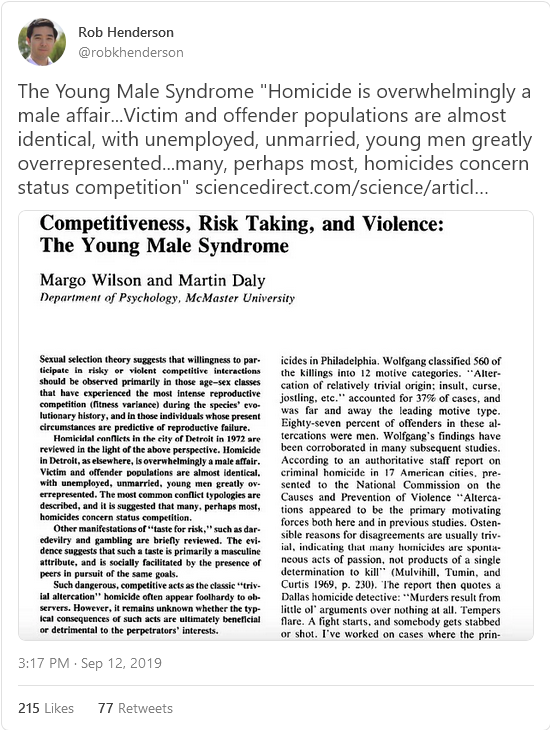
Disputes that spill over into violence and homicide have been an ever-present risk in both contemporary and pre-modern small scale societies. Young men make up the overwhelming majority of such conflicts, both as perpetrators and as victims.
[…]
The vast majority of violence is carried out by young men.
Psychologically, a key reason for this is that women are more sensitive than men to penalties. Men are more inclined to take risks, oblivious to the punishments they may receive. Men also have lower levels of empathy and a higher tolerance for pain.
The psychologist Simon Baron-Cohen has posited the hypothesis of the “extreme male brain”, suggesting that males are at higher risk for a clinical diagnosis of autism because of the constellation of traits men tend to score higher on (e.g., systematizing over empathizing, favoring things over people, etc). It also implies that most males may be a little bit autistic. Of course, some women score highly on these traits, and there are girls and women who are diagnosed with autism. Just at much lower rates than males.
I have wondered if, in addition to autism, the idea of the “extreme male brain”, could just as easily apply to psychopathy.
For both psychopathy and autism, the ratio of males to females is about three to 1.
Men (especially young men) are more pronounced than women on just about every trait that characterizes psychopathy.
Relatively low impulse control, low empathy, low fear, high sensation seeking, relatively shallow emotions, need for stimulation, proneness to boredom, violent fantasies, desire for revenge, and increased likelihood of criminality. Of course, some women score highly on these traits, and there are women who are psychopaths. But far fewer than males.
The psychologist John Barry has pointed out that when he was a student, he learned he couldn’t use standard adult psychopathy tests to administer to teenage boys. The reason? Because adult tests might give teen males a false positive.
Just as (relative to women) most men might be a little bit autistic, most (young) men might be a little bit psychopathic.
On average, a twenty-five year old man has the same level of impulse control as a 10 year old girl.
October 14, 2022
QotD: High school
You didn’t understand this back then, of course, but your parents did, and — crucially — your teachers did. If you wanted to be a Metalhead this semester, they’d treat you like a Metalhead, complete with the “Why are you wasting your potential (and ruining your ears) with that godawful noise?” They’d make a show of having a Very Serious Conversation with you about the dangers of drugs and satanism … knowing full well that you weren’t on drugs, weren’t sacrificing virgins to Moloch (if for no other reason than you didn’t actually know any girls), and would, in fact, come back as a clean-scrubbed Preppie after summer break your junior year.
The key word in “adolescent rebellion”, after all, is adolescent. All of that stuff was just practice. If it proceeded in the normal way, what going through all the permutations of high school identity taught you was:
- you’re a fairly normal person; and
- that’s ok.
In other words, you are not a collection of externals — clothes, music, hairstyles. You’re you. The externals can change, fairly radically — remember that one summer you broke your nose trying to be a skater? — but there’s a core in there that’s you. Which is great, because it means that you are just a person who takes customer service calls in a cubicle farm to pay the bills; they’re not going to put “Here lies Bill, a Customer Service Representative” on your tombstone.
Severian, “The Basic College Girl”, Rotten Chestnuts, 2019-07-24.
October 12, 2022
QotD: Luxury beliefs
An easy way to show that you’re not a member of the riff-raff, the masses, is to hold the opposite opinion, or a strange opinion that maybe doesn’t make sense, because it shows you’re not one of them. It’s not just the opinion itself, but the way that you express it. If you express it using vocabulary that no-one has ever heard of, for example … You often are not paying the price for your luxury beliefs, but even if you do, it’s still not nearly the same as the cost inflicted on the lower classes if they were to adopt those luxury beliefs too. […]
I talked to a friend of mine who was telling me, “When I set my Tinder radius to one mile, just around the university, and I see the bios of the women, a lot of their profiles say things like ‘poly’ or ‘keeping it casual’ – basically, they’re not interested in anything too serious.” He says something like half of them have something like that in their bio. And then he said, “But when I expand the radius on my Tinder to five miles, to include the rest of the city and the more run-down areas beyond the university bubble, half the women are single moms.” And basically, the luxury beliefs of the former group, the educated group, trickled down and ended up having this outsize effect on the people who are less fortunate, who don’t have the [social and] economic capital of the people who can afford that belief.
David Thompson, quoting from the transcript of a TRIGGERnometry interview with Rob Henderson, David Thompson, 2022-07-11.


