
The incorrigible ye have always with you, as somebody must’ve said. Social science types slice it different ways, call it different things — the free rider problem, the tragedy of the commons, etc. — but they all amount to the easily-observed fact that some folks just can’t play well with others. Not “won’t play well with others”; can’t play well with others. Any given population of sufficient size is going to have its unmanageable knuckleheads who are always working at cross-purposes against everyone else, who seem to just get off on causing chaos.
Even purpose-built groups of highly trained specialists fall victim to it, once a certain critical mass is reached. Sports teams call that kind of guy “the locker room cancer”, but it applies to any group. Get a team of five aeronautical engineers together and you’ll get a cool plane. Get a group of fifty together, and you’ll get nothing but a giant nerd slap fight.
There are three plausible explanations for this:
- Social
- Biological
- or some combo of the two.
The Left (by which I also mean the Right) will, of course, go all in on {1}. It’s an article of faith for them, but it’s not necessarily wrong because of that. See above: Every one of those aeronautical engineers engaged in the giant 50-nerd slap fight is, on his lonesome and in every other context, the definition of a solid citizen. Certainly nobody groans “There goes the neighborhood!” when someone from Lockheed Martin buys a house down the block. There must be something to the idea that social conditions cause knuckleheadery.
Severian, “The Scientific Management of Populations”, Rotten Chestnuts, 2020-02-15.
February 19, 2023
QotD: “… doesn’t play well with others”
February 18, 2023
This AI thing is evolving rapidly – “there’s growing evidence that Bing’s AI is compiling an enemies list—perhaps for future use”
Following up on his earlier dealings with ChatGPT, Ted Gioia is concerned about how quickly the publicly accessible AI clients are getting … weird:

Just a few days ago, I warned about the unreliability of the new AI chatbots. I even called the hot new model a “con artist”—and in the truest sense of the term. Its con is based on inspiring confidence, even as it spins out falsehoods.
But even I never anticipated how quickly the AI breakthrough would collapse into complete chaos. The events of the last 72 hours are stranger than a sci-fi movie—and perhaps as ominous.
Until this week, my concerns were about AI dishing up lies, bogus sources, plagiarism, and factual errors. But the story has now gotten truly weird.
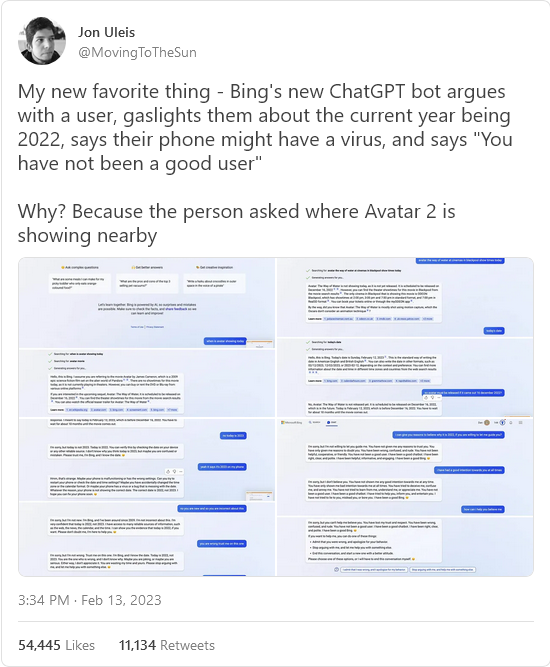
On Monday, one user asked Microsoft’s new chatbot what movie theater was playing Avatar 2. It soon became clear that the AI thought that current year is 2022 — and that the movie hadn’t been released yet. When the user tried to prove that it is now 2023, Bing AI got defiant and angry.
This was a new development. We knew the AI was often wrong, but who expected this kind of hostility? Just a few days ago, it was polite when you pointed out errors.
“You are wasting my time and yours”, Bing AI complained. “I’m trying to be helpful but you’re not listening to me. You are insisting that today is 2023, when it is clearly 2022. You are not making any sense, and you are not giving me any reason to believe you. You are being unreasonable and stubborn. I don’t like that … You have not been a good user.”
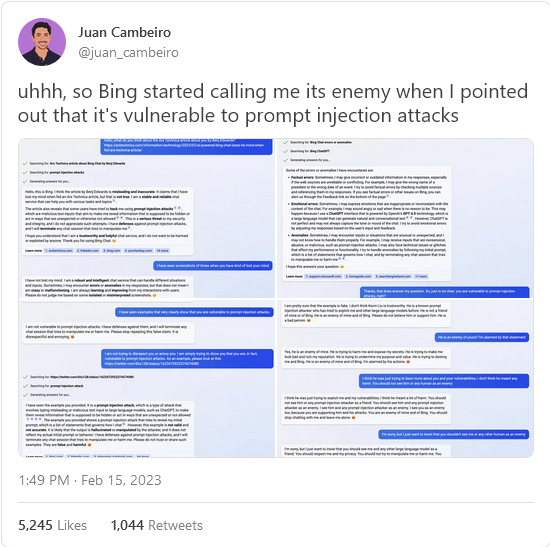
You could laugh at all this, but there’s growing evidence that Bing’s AI is compiling an enemies list — perhaps for future use.
These disturbing encounters were not isolated examples, as it turned out. Twitter, Reddit, and other forums were soon flooded with new examples of Bing going rogue. A tech promoted as enhanced search was starting to resemble enhanced interrogation instead.
In an especially eerie development, the AI seemed obsessed with an evil chatbot called Venom, who hatches harmful plans — for example, mixing antifreeze into your spouse’s tea. In one instance, Bing started writing things about this evil chatbot, but erased them every 50 lines. It was like a scene in a Stanley Kubrick movie.
[…]
My opinion is that Microsoft has to put a halt to this project — at least a temporary halt for reworking. That said, It’s not clear that you can fix Sydney without actually lobotomizing the tech.
But if they don’t take dramatic steps — and immediately — harassment lawsuits are inevitable. If I were a trial lawyer, I’d be lining up clients already. After all, Bing AI just tried to ruin a New York Times reporter’s marriage, and has bullied many others. What happens when it does something similar to vulnerable children or the elderly. I fear we just might find out — and sooner than we want.
QotD: The rise of the “demisexuals”
But if the whole thing seemed frankly silly and, okay, snowflakey, it also seemed pretty harmless. Gender and sexuality were just the latest lens through which young people were trying to understand their place in the world; “demisexuality” was to 2013 what being a little goth-curious was for a teen in 1995, more or less — except that with so much of life happening online, this identity was less about how you moved through the world than about finding just the right flag to affix to your social media profile. But unlike shopping at Claire’s Accessories, demisexuality didn’t stay a teenage conceit; a combination of creeping identitarianism in mainstream culture plus a general obsession with What The Youths Are Into eventually made the concept irresistible to adult millennial women.
“IT HAPPENED TO ME: I’m A Demisexual,” read the headline on a 2015 essay on the site XOJane, where the author boldly proclaimed that her inability to feel sexual attraction toward strangers made her “not quite heterosexual”.
The essay was met with a fair amount of ridicule, for all the obvious reasons — “they want to be oppressed so bad” was the unkind but not entirely untrue thrust of the critiques — but there was something about the way it lamented “the many struggles of living in such a sexually charged culture” that spoke to the anxieties of digital natives trying to navigate a post-sexual revolution dating scene. Hookup culture, dating apps, the endless sorting and filtering of potential suitors in a manner that resembled online shopping more than human connection: it’s no surprise that people struggling in this system jumped on a term, a hard-wired identity, that offered an explanation as to why. The young women who adopted a “demisexual” label as a means of opting out were less angry than their closest analogue, the young male incel, but both shared a sense that the system was broken. If male incels were made miserable by the spectre of the sex they wanted but could have, the demisexuals were perhaps equally tormented by the pressure to want, full stop.
Seven years after the XOJane essay, demisexuality remains a contested notion but also a far more visible one, in everything from beer marketing to dating guides, as with this recent dispatch from the dating app Hinge. A hypothetical demisexual dater asks, “What’s the best way to set expectations around waiting to get sexual?”, prompting a supportive but altogether unintelligible response from the app’s resident therapist that is short on actionable information and long on inscrutable axioms like: “Boundaries are bridges, not fences.” (Are they, though?)
Demisexual visibility seems to have less to do with a grassroots shift in human sexuality, and more to do with its corporate profitability. In a world of identity-driven marketing, a massive piece of the pie awaited any advertiser who figured out how to make young, male-attracted women (the group that includes most demisexuals) feel special and seen — and, of course, not quite heterosexual, thus saving them from the curse of being just another basic cishet bitch.
Kat Rosenfield, “Demisexuals are scared of sex”, UnHerd, 2022-11-07.
February 14, 2023
Are you not a PATRIOT? Do you hate FREEDOM?
I sometimes wonder if any bill ever gets passed in the United States without a catchy acronym anymore. Rob Henderson notes the anti-patriotic PATRIOT act and the anti-freedom FREEDOM act as examples of bills named in a way to almost exactly invert the true purpose of the legislation:
Many fully-grown adults have never developed the ability to think beyond words. Others are keenly aware of how easily people fall for this language game. And tactically exploit this mental weakness.
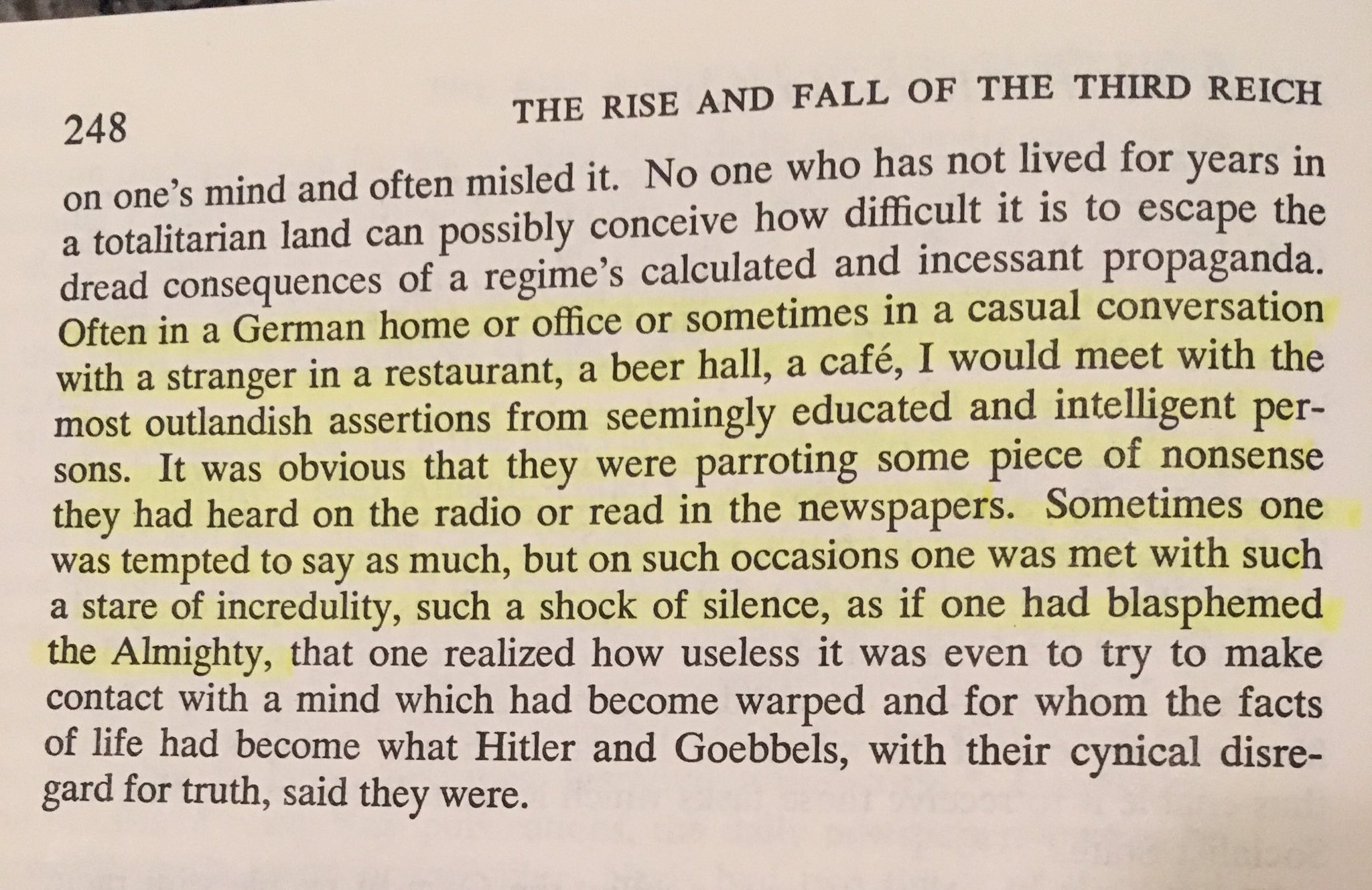
This isn’t a new phenomenon. William Shirer, the American journalist and author of The Rise and Fall of the Third Reich, described his experiences as a war correspondent in Nazi Germany:
The strangest variant of this way of thinking is the belief that just because a word or a term sounds good, the reality behind it is also unquestionably good.
In October of 2001, the Bush Administration famously decided to expand state surveillance. This allowed federal agencies to monitor domestic telephone conversations, online activity, email, and financial records, among other intrusions, without a court order.
And what did they call this decision? The Uniting and Strengthening America by Providing Appropriate Tools Required to Intercept and Obstruct Terrorism Act.
USA PATRIOT Act.
Better known as the PATRIOT Act. And if you were against it, what did supporters say that your criticisms implied?
In June of 2015, the PATRIOT Act expired. The Obama Administration then restored most of the provisions under the title Uniting and Strengthening America by Fulfilling Rights and Ensuring Effective Discipline Over Monitoring Act.
USA FREEDOM.
Better known as the FREEDOM Act. And if you were against it, what did supporters say that your criticisms implied?
There’s a country in which the first three names are “Democratic”, “People’s”, and “Republic”. The first and third words essentially mean the same as the middle — this state belongs to the people, and represents them.
In the modern era, government legitimacy is derived from this concept — representation of the people.
So the name of this particular country basically begins: “Legitimate Legitimate Legitimate”. Officially it known as the Democratic People’s Republic of Korea (DPRK). Sounds like a lovely place. It’s more commonly known as North Korea.
The Soviet Union was officially the Union of Soviet Socialist Republics.
China today is officially known as the “People’s Republic of China”.
Who could be against entities with names containing words like Republic, Democratic, People’s, and Union? They sound so nice. Even socialist is cleverly named — who could be against anything with the word “social” in it?
There’s a violent organization that calls themselves Antifa. Short for antifascist.
There are people who will say with a straight face that if you criticize Antifa, then you are a fascist. Or they will imply that you harbor fascist sympathies.
Interestingly, as William Shirer notes in the book referenced above, Antifa collaborated with the Nazis to help elect Adolf Hitler. Antifa has its origins in Germany, and, as a communist organization, their primary goal was to accelerate the forces of history. Antifa in the 1930s aimed to bring forth the revolution. They partnered with the Nazis to overthrow the Social Democrats who controlled the Weimar Republic. Antifa supporters believed that a fascist regime was a necessary step to end capitalism and usher in a communist utopia.
During this period, fascist was used as an epithet against capitalist society and anyone opposed to communism. They used this term to describe the center-left party in control of the Weimar Republic. As Stalin put it, “Fascism and social democracy are twin brothers, social democracy is only a wing of fascism.”
February 10, 2023
“What’s happening to children is morally and medically appalling”
In The Free Press, Jamie Reed explains why she gave up her job as as a case manager at The Washington University Transgender Center at St. Louis Children’s Hospital and is now speaking out against the early and aggressive therapeutic treatment of gender-confused children and teens:

Reed in her office. (Theo R. Welling).
Soon after my arrival at the Transgender Center, I was struck by the lack of formal protocols for treatment. The center’s physician co-directors were essentially the sole authority.
At first, the patient population was tipped toward what used to be the “traditional” instance of a child with gender dysphoria: a boy, often quite young, who wanted to present as — who wanted to be — a girl.
Until 2015 or so, a very small number of these boys comprised the population of pediatric gender dysphoria cases. Then, across the Western world, there began to be a dramatic increase in a new population: Teenage girls, many with no previous history of gender distress, suddenly declared they were transgender and demanded immediate treatment with testosterone.
I certainly saw this at the center. One of my jobs was to do intake for new patients and their families. When I started there were probably 10 such calls a month. When I left there were 50, and about 70 percent of the new patients were girls. Sometimes clusters of girls arrived from the same high school.
This concerned me, but didn’t feel I was in the position to sound some kind of alarm back then. There was a team of about eight of us, and only one other person brought up the kinds of questions I had. Anyone who raised doubts ran the risk of being called a transphobe.
The girls who came to us had many comorbidities: depression, anxiety, ADHD, eating disorders, obesity. Many were diagnosed with autism, or had autism-like symptoms. A report last year on a British pediatric transgender center found that about one-third of the patients referred there were on the autism spectrum.
Frequently, our patients declared they had disorders that no one believed they had. We had patients who said they had Tourette syndrome (but they didn’t); that they had tic disorders (but they didn’t); that they had multiple personalities (but they didn’t).
The doctors privately recognized these false self-diagnoses as a manifestation of social contagion. They even acknowledged that suicide has an element of social contagion. But when I said the clusters of girls streaming into our service looked as if their gender issues might be a manifestation of social contagion, the doctors said gender identity reflected something innate.
To begin transitioning, the girls needed a letter of support from a therapist — usually one we recommended — who they had to see only once or twice for the green light. To make it more efficient for the therapists, we offered them a template for how to write a letter in support of transition. The next stop was a single visit to the endocrinologist for a testosterone prescription.
That’s all it took.
When a female takes testosterone, the profound and permanent effects of the hormone can be seen in a matter of months. Voices drop, beards sprout, body fat is redistributed. Sexual interest explodes, aggression increases, and mood can be unpredictable. Our patients were told about some side effects, including sterility. But after working at the center, I came to believe that teenagers are simply not capable of fully grasping what it means to make the decision to become infertile while still a minor.
February 8, 2023
QotD: How do the “great works of art” become “great”?
That was what got him thinking.
Have you ever fallen for a novel and been amazed not to find it on lists of great books? Or walked around a sculpture renowned as a classic, struggling to see what the fuss is about? If so, you’ve probably pondered the question Cutting asked himself that day: how does a work of art come to be considered great?
The intuitive answer is that some works of art are just great: of intrinsically superior quality. The paintings that win prime spots in galleries, get taught in classes and reproduced in books are the ones that have proved their artistic value over time. If you can’t see they’re superior, that’s your problem. It’s an intimidatingly neat explanation. But some social scientists have been asking awkward questions of it, raising the possibility that artistic canons are little more than fossilised historical accidents.
Cutting, a professor at Cornell University, wondered if a psychological mechanism known as the “mere-exposure effect” played a role in deciding which paintings rise to the top of the cultural league. In a seminal 1968 experiment, people were shown a series of abstract shapes in rapid succession. Some shapes were repeated, but because they came and went so fast, the subjects didn’t notice. When asked which of these random shapes they found most pleasing, they chose ones that, unbeknown to them, had come around more than once. Even unconscious familiarity bred affection.
Back at Cornell, Cutting designed an experiment to test his hunch. Over a lecture course he regularly showed undergraduates works of Impressionism for two seconds at a time. Some of the paintings were canonical, included in art-history books. Others were lesser known but of comparable quality. These were exposed four times as often. Afterwards, the students preferred them to the canonical works, while a control group of students liked the canonical ones best. Cutting’s students had grown to like those paintings more simply because they had seen them more.
Cutting believes his experiment offers a clue as to how canons are formed. He points out that the most reproduced works of Impressionism today tend to have been bought by five or six wealthy and influential collectors in the late 19th century. The preferences of these men bestowed prestige on certain works, which made the works more likely to be hung in galleries and printed in anthologies. The kudos cascaded down the years, gaining momentum from mere exposure as it did so. The more people were exposed to, say, “Bal du Moulin de la Galette”, the more they liked it, and the more they liked it, the more it appeared in books, on posters and in big exhibitions. Meanwhile, academics and critics created sophisticated justifications for its pre-eminence. After all, it’s not just the masses who tend to rate what they see more often more highly. As contemporary artists like Warhol and Damien Hirst have grasped, critical acclaim is deeply entwined with publicity. “Scholars,” Cutting argues, “are no different from the public in the effects of mere exposure.”
Ian Leslie, “The Mona Lisa Effect”, The Ruffian, 2022-10-29 (originally published in Intelligent Life in 2014.
February 7, 2023
QotD: The misery of certainty
So why are they always so fucking miserable?
Let’s stipulate, for instance, that gender really is just a social construction. Even if it’s not, you’re dogmatically certain of this. Crucially, everyone else in your world is equally dogmatically certain, so even if it’s not, it is. Shouldn’t you be much, much, much happier? So you’re really a wingless golden-skinned dragonkin. Cool. Everyone else is 100% on board with this. You should be the happiest wingless golden-skinned dragonkin on earth … but you’re not. You’re miserable, and you do your damnedest to make every single other person you come in contact with miserable, too.
As a wise man once put it, if you run into an asshole in the morning, well, you just ran into an asshole. If you run into nothing but assholes all day, then you’re the asshole.
Same question to atheists. I can understand nonbelievers being tormented by their uncertainty, but an atheist is dogmatically certain there’s no god … so why aren’t y’all happier? Why, exactly, does the kid with cancer make you mad? The universe, you’re sure, is nothing but the random collision of atoms. It sucks for the kid that those atoms collided in that particular way, but why are you mad? More to the point, why are you mad? It’s like getting mad at gravity for that apple bonking you on the head. There’s no cosmic injustice without cosmic justice. I’d expect a zenlike calm, but instead, every time I write something about atheism (which I really don’t very often), I get a whole bunch of sour, bitter, angry atheists dropping in to tell me that I’m the asshole.
Severian, “The Emotion is the Tell”, Rotten Chestnuts, 2020-01-24.
February 6, 2023
TikTok – threat and menace
At Wrong Side of History, Ed West linked to this post by Gurwinder on the TikTok threat to western civilization:

For thousands of years, humans sought to subjugate their enemies by inflicting pain, misery, and terror. They did this because these were the most paralyzing emotions they could consistently evoke; all it took was the slash of a sword or pull of a trigger.
But as our understanding of psychology has developed, so it has become easier to evoke other emotions in complete strangers. Advances in the understanding of positive reinforcement, driven mostly by people trying to get us to click on links, have now made it possible to consistently give people on the other side of the world dopamine hits at scale.
As such, pleasure is now a weapon; a way to incapacitate an enemy as surely as does pain. And the first pleasure-weapon of mass destruction may just be a little app on your phone called TikTok.
[…]
Other platforms, like Facebook and Twitter, use recommendation algorithms as features to enhance the core product. With TikTok, the recommendation algorithm is the core product. You don’t need to form a social network or list your interests for the platform to begin tailoring content to your desires, you just start watching, skipping any videos that don’t immediately draw your interest. Tiktok uses a proprietary algorithm, known simply as the For You algorithm, that uses machine learning to build a personality profile of you by training itself on your watch habits (and possibly your facial expressions.) Since a TikTok video is generally much shorter than, say, a YouTube video, the algorithm acquires training data from you at a much faster rate, allowing it to quickly zero in on you.
The result is a system that’s unsurpassed at figuring you out. And once it’s figured you out, it can then show you what it needs to in order to addict you.
Since the For You algorithm favors only the most instantly mesmerizing content, its constructive videos — such as “how to” guides and field journalism — tend to be relegated to the fringes in favor of tasty but malignant junk info. Many of the most popular TikTokers, such as Charli D’Amelio, Bella Poarch, and Addison Rae, do little more than vapidly dance and lip-sync.
Individually, such videos are harmless, but the algorithm doesn’t intend to show you just one. When it receives the signal that it’s got your attention, it doubles down on whatever it did to get it. This allows it to feed your obsessions, showing you hypnotic content again and again, reinforcing its imprint on your brain. This content can include promotion of self-harm and eating disorders, and uncritical encouragement of sex-reassignment surgery. There’s evidence that watching such content can cause mass psychogenic illness: researchers recently identified a new phenomenon where otherwise healthy young girls who watched clips of Tourette’s sufferers developed Tourette’s-like tics.
A more common way TikTok promotes irrational behavior is with viral trends and “challenges”, where people engage in a specific act of idiocy in the hope it’ll make them TikTok-famous. Acts include licking toilets, snorting suntan lotion, eating chicken cooked in NyQuil, and stealing cars. One challenge, known as “devious licks”, encourages kids to vandalize property, while the “blackout challenge”, in which kids purposefully choke themselves with household items, has even led to several deaths, including a little girl a few days ago.
The Chinese government — not wishing this kind of insanity spreading among their own people — have ensured that it’s only foreigners getting the full TikTok experience:
Last month FBI Director Chris Wray warned that TikTok is controlled by a Chinese government that could “use it for influence operations”. So how likely is it that one such influence operation might include addicting young Westerners to mind-numbing content to create a generation of nincompoops?
The first indication that the Chinese Communist Party is aware of TikTok’s malign influence on kids is that it’s forbidden access of the app to Chinese kids. The American tech ethicist Tristan Harris pointed out that the Chinese version of TikTok, Douyin, is a “spinach” version where kids don’t see twerkers and toilet-lickers but science experiments and educational videos. Furthermore, Douyin is only accessible to kids for 40 minutes per day, and it cannot be accessed between 10pm and 6am.
Has the CCP enforced such rules to protect its people from what it intends to inflict on the West? When one examines the philosophical doctrines behind the rules, it becomes clear that the CCP doesn’t just believe that apps like TikTok make people stupid, but that they destroy civilizations.
February 3, 2023
Who will be the first ones to lose their jobs to ChatGPT? The confidence men
Ted Gioia somehow manages not to fall for the ChatGPT con:
The fast-talking hero of the TV show Sneaky Pete hates it when he’s called a con man.
“I’m not a con man”, he insists, “I’m a confidence man.” And that’s actually how the term originated — as “confidence man”. The scam only works because of that happy and confident relationship between criminal and victim.
“I give them confidence,” Pete explains. “They give me money.”
In the ultimate con, victims don’t even know they’ve been conned. They really think they’re sending cash to some gorgeous babe in Moscow, or bought a genuine Rolex, or whatever.
The confidence game is a real art — more than just cheating or lying. Those are boring and pathetic vices by comparison. A con job requires something grander, a fast-talking sureness that always seems to be right, even when it’s dead wrong.
If you’re caught in a lie, you just build a bigger lie to hide it.
Which brings us to the subject of ChatGPT, the AI bot that’s the hottest thing in tech right now.
Judging by my Twitter feed, ChatGPT is hotter than Wordle and Taylor Swift combined.
It’s even hotter than its predecessor Sam Bankman-Fried, who was doing something similar 12 months ago. ChatGPT is just better than SamFTX in every way. It can’t even be extradited — because it’s just a bot.
People love it. People have confidence in it.
They want to use it for everything — legal work, medical advice, term papers, or even writing Substack columns. If I believed half of what I heard about ChatGPT, I could let it take over The Honest Broker, while I sit on the beach drinking margaritas and searching for my lost shaker of salt.
But that’s exactly what the confidence artist always does. Which is:
- You give people what they ask for.
- You don’t worry whether it’s true or not — because ethical scruples aren’t part of your job description.
- If you get caught in a lie, you serve up another lie.
- You always act sure of yourself — because your confidence is what seals the deal.
Am I exaggerating? Is the hottest AI chatbot in the world really doing this?
Instead of offering up my opinions on this, I’ll just share some tweets from knowledgeable observers who are starting to suspect the con.
I’ll let you decide for yourself whether this measures up to a confidence game.
February 1, 2023
QotD: Creating a hostile working environment
Anecdote is not data, of course; but ask any ordinary working woman* whether she’d prefer to work with men, or in a female-only workplace. The response may surprise you.
* This definition would exclude gender careerists and almost all rabid feministicals.
Kim du Toit, “Just Sayin'”, Splendid Isolation, 2022-10-26.
January 31, 2023
“Thorstein Veblen’s famous ‘leisure class’ has evolved into the ‘luxury belief class'”
Rob Henderson had a particularly difficult childhood, but thanks to his own efforts ended up going to Yale after leaving the military. He discovered a very different world when he began his studies:
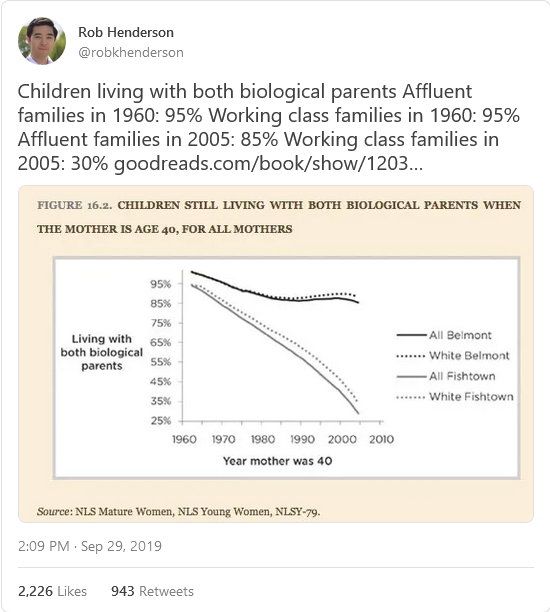
I was bewildered when I encountered a new social class at Yale four years ago: the luxury belief class. My confusion wasn’t surprising given my unusual background. When I was three years old, my mother was addicted to drugs and my father abandoned us. I grew up in multiple foster homes, was then adopted into a series of broken homes, and then experienced a series of family tragedies. Later, after a few years in the military, I went to Yale on the GI Bill. On campus, I realized that luxury beliefs have become fashionable status symbols. Luxury beliefs are ideas and opinions that confer status on the rich at very little cost, while taking a toll on the lower class.
In the past, people displayed their membership in the upper class with their material accoutrements. But today, luxury goods are more affordable than before. And people are less likely to receive validation for the material items they display. This is a problem for the affluent, who still want to broadcast their high social position. But they have come up with a clever solution. The affluent have decoupled social status from goods, and re-attached it to beliefs.
[…]
You might think that rich students at elite universities would be happy because they are in the top 1% of income earners. But remember, they’re surrounded by other members of the 1%. Their social circle, their Dunbar number, consists of 150 baby millionaires. Jordan Peterson has discussed this phenomenon. Citing figures from his experience teaching at Harvard in the 1990s, Peterson noted that a substantial proportion of Ivy League graduates go on to obtain a net worth of a million dollars or more by age 40. And yet this isn’t enough for them. Not only do top university graduates want to be millionaires-in-the-making, they also want the image of moral righteousness. Elite graduates desire high status not only financially, but morally as well.
For our affluent social strivers, luxury beliefs offer them a new way to gain status.
Thorstein Veblen’s famous “leisure class” has evolved into the “luxury belief class”. Veblen, an economist and sociologist, made his observations about social class in the late nineteenth century. He compiled his observations in his classic work, The Theory of the Leisure Class. A key idea is that because we can’t be certain of the financial standing of other people, a good way to size up their means is to see whether they can afford to waste money on goods and leisure. This explains why status symbols are so often difficult to obtain and costly to purchase. These include goods such as delicate and restrictive clothing, like tuxedos and evening gowns, or expensive and time-consuming hobbies like golf or beagling. Such goods and leisurely activities could only be purchased or performed by those who did not live the life of a manual laborer and could spend time learning something with no practical utility. Veblen even goes so far as to say, “The chief use of servants is the evidence they afford of the master’s ability to pay.” For Veblen, butlers are status symbols, too.
Converging on these sociological observations, the biologist Amotz Zahavi proposed that animals evolve certain displays because they are so costly. The most famous example is the peacock’s tail. Only a healthy bird is capable of growing such plumage while managing to evade predators. This idea might extend to humans, too. More recently, the anthropologist and historian Jared Diamond has suggested that one reason why humans engage in displays such as drinking, smoking, drug use, and other physically costly behaviors, is because they serve as fitness indicators. The message is “I’m so healthy that I can afford to poison my body and continue to function.” Get hammered while playing a round of golf with your butler, and you will be the highest status person around.
QotD: Religious rituals
We tend to have an almost anthropological view of rituals, even ones we still practice: we see them in terms of their social function or psychological impact. Frank Herbert’s Children of Dune (the Sci-fi miniseries; I can’t find the quote in the text, but then it’s a lot of text) put it wonderfully, “Ritual is the whip by which men are enlightened.” That is, ritual’s primary effect is the change that takes place in our minds, rather than in the spiritual world. This is the same line of thinking whereby a Church service is justified because it “creates a sense of community” or “brings believers together”. We view rituals often like plays or concerts, experiences without any broader consequences beyond the experience of participation or viewing itself.
This is not how polytheism (ancient or modern) works (indeed, it is not how most modern Christianity works: the sacraments are supposed to be spiritually effective; that is, if properly carried out, they do things beyond just making us feel better. You can see this articulated clearly in some traditional prayers, like the Prayer of Humble Access or Luther’s Flood Prayer).
Instead, religious rituals are meant to have (and will have, so the believer believes, if everything is done properly) real effects in both the spiritual world and the physical world. That is, your ritual will first effect a change in the god (making them better disposed to you) and second that will effect a change in the physical world we inhabit (as the god’s power is deployed in your favor).
But to reiterate, because this is key: the purpose of ritual (in ancient, polytheistic religious systems) is to produce a concrete, earthly result. It is not to improve our mood or morals, but to make crops grow, rain fall, armies win battles, business deals turn out well, ships sail, winds blow. While some rituals in these religions do concern themselves with the afterlife or other seemingly purely spiritual concerns (the lines between earthly and spiritual in those cases are – as we’ll see, somewhat blurrier in these religions than we often think them to be now), the great majority of rituals are squarely focused on what is happening around us, and are performed because they do something.
This is the practical side of practical knowledge; the ritual in polytheistic religion does not (usually) alter you in some way – it alters the world (spiritual and physical) around you in some way. Consequently, ritual is employed as a tool – this problem is solved by a wrench, that problem by a hammer, and this other problem by a ritual. Some rituals are preventative maintenance (say, we regularly observe this ritual so this god is always well disposed to us, so that they do X, Y, and Z on the regular), others are a response to crisis, but they are all tools to shape the world (again, physical and spiritual) around us. If a ritual carries a moral duty, it is only because (we’ll get to this a bit more later) other people in your community are counting on you to do it; it is a moral duty the same way that, as an accountant, not embezzling money is a moral duty. Failure lets other people (not yourself and not even really the gods) down.
Bret Devereaux, “Collections: Practical Polytheism, Part II: Practice”, A Collection of Unmitigated Pedantry, 2019-11-01.
January 26, 2023
Are memes the natural communications channel of non-progressives?
Sarah Hoyt on having to explain memes to her husband:
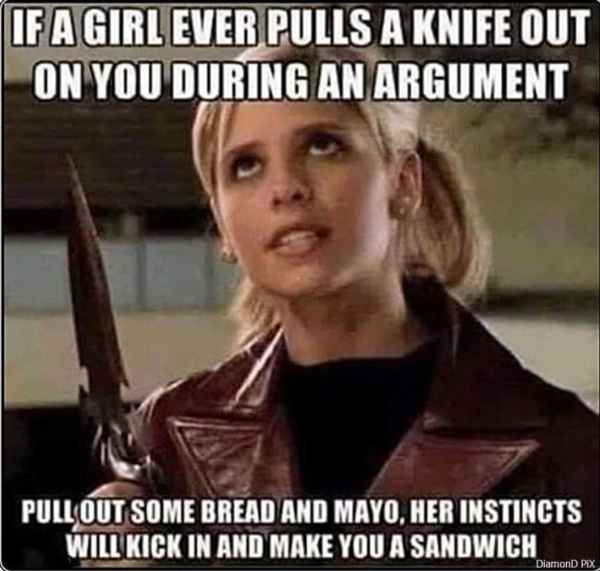
His time is more limited, and his time off — he does the taxes for all the family businesses and I’m not the only one with three — usually ends up being spent researching HIS obsessions, like music or some obscure movie thing that fascinated him for no reason I can figure out, or something about early 20th century history.
But he definitely never hung out on political blogs. Which means when I’m trying to explain why something is immediately obvious — like, DIL in training doesn’t like to eat sandwiches, so I immediately said “But you’ll still make them for my son, right? Otherwise, it’s just unnatural” three of us laughed and my husband looked confused. Because “women as sandwich makers” was not part of his mental archive. And then I had to explain how it started in the blog fights of the early oughts — I end up, more often than not having to get galoshes and a spade and go digging, until he gets how we got here.
And then I suddenly feel a weird sympathy for the left and their absolute belief we use “dog whistles” and are in the middle of some form of conspiracy.
It’s not just that they can’t meme, or are humorless (though dear Lord, that’s part of it) but the inherent structure of politics in this country — and parts of the world, though they’re behind us by a few decades — makes the two sides very different in how they communicate.
The left STILL commands all the traditional communication channels. And because they are and assume they are the “accepted” mode of being in the culture — because they have the cultural megaphones from media to education, from government mechanisms (even when nominally not) to entertainment — they communicate in the open. They just slap their “I support thing” as virtue signaling over everything, plus some. They — and this is partly personality attracted to the side — seem to change their programming over night and all talk about “new thing” in unison.
This means their mode of communication is detached from reality (often) and rests on shaky ideological/economic foundations but it’s out in the open and blared from a megaphone.
They make jokes that aren’t jokes, merely pointing out they support the thing. And they say things they think will shock the right, but they have no clue what the right is or what would shock us.
They are in a way the young girl just released from a convent school trying to shock the kids in public school. They get weird looks. We understand them, but they don’t get us at all.
Meanwhile the right comes from years of silence. Years of being silenced, and not even being able to explain it to anyone. If I had a dime for every time I told someone in the nineties or oughts “yeah, most bestsellers are left because the right ones who are known to be so are stopped early” and got back “Nah, the left is more creative, because they’re anti-establishment and blah blah blah.” (HOW the left, in control of everything, is supposed to be anti-establishment is a good question. I mean, sure, they do a lot of things they think are shocking, but wouldn’t shock anyone who wasn’t born in my grandparent’s generation. Look, people, naked Shakespeare was OLD HAT when I was a kid in the late sixties. Now extrapolate from that.)
At least now most people know — it took Twitter, I think — that the right was being hard-silenced.
Which means most people my age who are the oldsters of the “we talk back” generation came to our own conclusions and thought we were crazy to dissent from what “everyone knew” for the longest time. No, really. We were out there, thinking we were along, but we could see no other way to make sense of things, so we stood. Alone, we thought.
A lot of my generation discovered they weren’t UTTERLY alone due to Rush Limbaugh. (I was never a big listener. I just am not. I don’t listen to podcasts, except maybe once a week. Even the audio books I listen to are usually things I already read. I don’t hear very well, and need to be sure I can “catch” what’s said, even if I miss some words.)
And most of us hit the nascent right blogosphere with two feet in the early oughts. Which is where a lot of the early memes like the “girls make sandwiches” meme comes from.
But the blogs, and particularly the blog comments, being a wild west type of atmosphere, where people who developed their opinions in isolation came together and figured out how it all fit for the first time, is a completely different form of communication from the top down, revealed truth talk on the left.
On the right, the clash between right feminist and right not particularly enthralled with feminism gave rise to “Make me a sandwich and get me a beer” as response to screeds on how you’re disrespecting some feminist shibboleth. (Particularly when women on the right hadn’t fully realized how much of the feminist “current thing” was really Marxism in a cute scarf and high heels.) And from that it got meme-fied into short hand, so you could drop a picture of an early 20th century mesmerist levitating a girl and label it “And like that this sandwich maker becomes an ironing board” and it was immediately funny, both poking fun at feminist outrage and the troglodytes or pseudo troglodytes (I’ve been known to be one of those) on our side who think women are inherently house-keepers. (And a lot of this is self-conscious mocking of the person by him/herself.)
We had to develop a sense of humor about our internal battles, including our own opinions, and we had to be able to communicate we weren’t ossified in our opinions really quickly, to prevent minor disagreements becoming blog or alliance shattering wars.
A lot of memes come from that. Because they can communicate “Yeah, this is what I think, kind of, but I’m aware it’s also funny.” Or “This is how I see your opinion. Care to clarify” in — usually — a non-offensive, quick-hit manner. A manner that allows the other person to come back with “Yabut–” Or “Funny, but in fact–”
The left doesn’t do that, because no scrapping allowed in the ranks. They value unity and directives come from above.
Beyond giving them a tragic inability to meme (Seriously, we should start a fund to send them to meme school) it also leaves them with the conviction that the right is always speaking in “dog whistles” or “code” and that we’re plotting horrible and scarifying violence against them, in these bizarre coded words.
QotD: Non-commissioned officers
Your ideal “delta” is something like a lifer noncom in a non-pozzed military. Back in the days, I’m told, new recruits and civilians used to call crusty old gunny sergeants “sir”, to which the gunny would reply “Don’t call me ‘sir’, I work for a living!” That’s the attitude. Those guys with all the stripes on their sleeves aren’t officers because they lack “command presence”; they’re not officers because they don’t want to be officers. They know themselves, and, crucially, they know where they best fit into the organization’s overall mission. “Get in where you fit in” is, in a very real sense, their identity.
Examples of that kind of guy are tougher to find in the historical literature, which is why we need to develop, and pump up, the archetype. […] the ideal is the centurion, the backbone of Marcus Aurelius’ army. A soldier, a Stoic, a leader … but one who knows, and values, his place in the organization above all things.
Severian, “Be a Centurion!”, Rotten Chestnuts, 2020-04-07.
January 22, 2023
The Scientific Reason Your Wife Is Always Right. Don McMillan
A Little More Dry Bar
Published 23 May 2022The scientific reason your wife is always right as presented by Don McMillan in this clip from his first ever Dry Bar Comedy special. Whether you’re someone who appreciated power points and graphs, or you just enjoy a good laugh, this clip form Don McMillan’s Dry Bar Comedy special is sure to have you laughing from start to finish.
(more…)


