Quotulatiousness

October 27, 2018

The Progressive case for Americans to pay higher drug prices than the rest of the world

Filed under: Business, Economics, Health, USA — Tags: , , , — Nicholas @ 03:00

Tim Worstall carefully explains — in full compliance with Progressive philosophy and pointing out that Trump is wrong (which is extra bonus Progressive points) — why Americans should continue to pay more for drugs that are cheaper in other countries:

Working out which drugs work and how is expensive. There’s then another expensive in actually proving this well enough to gain a licence. All in costs are in the $1 to $2 billion range dependent upon who you want to listen to. Unfortunately, once you’ve done all that and paid all that anyone could just come along and copy your drug. Which means you don’t make your $2 billion back – that in turn meaning that no one does spend $2 billion, we don’t get new drugs and we all die in ditches.

This is a classic public goods problem and the solution we use – not the only one, not even the only viable one – is patents. You get about 10 years, the time between approval and patent expiry, to make your $2 billion back. Then anyone can copy it and we all get cheap copy drugs.

For this system to work it is not necessary that everyone pay these high patent protected prices. There’s no point in trying to charge some farm worker in S Africa $10,000 a year for HIV retrovirals anyway, they don’t have the cash and demanding it will gain nothing except their death. We just need some group to pay the high prices so that drug development still happens. Everyone else can get drugs at some margin above their manufacturing, not development, costs.

So, who is it who should be carrying this cost of producing this public good? Good progressive principles tell us that it should be the rich folk. Imagine that we used some other system of drug development, maybe taxpayers cough up for it all. It’ll still be the rich doing the paying, right? So, patents, where the rich pay full freight for drugs, the poor don’t, this meets our equity criterion.

And who are the rich in this global sense, for we’re talking about a global public good here? That would be the citizens of the richest large nation, the largest rich nation, the United States of America. So, yes, Americans should be paying high prices for drugs and the rest of us shouldn’t.

Do note that we’ve used impeccable redistributionist logic to reach this conclusion. It’s only if you think the rich shouldn’t be paying to benefit the poor that this is a bad idea. Which might be why Trump is agin it but it still puzzles as to why the progressives would be.

October 2, 2018

It’s time to “fix” the Nobel Prize system, because reasons

Filed under: Politics, Science — Tags: , , — Nicholas @ 03:00

Tim Worstall on the demand that the Nobel prizes be awarded more “equitably”:

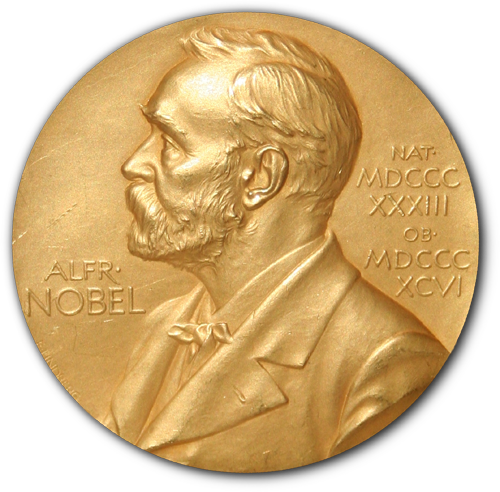
We have a nice example of the standard left wing perniciousness here with this complaint that the Nobels have to be changed because reasons. The pernicity being that instead of doing the honourable thing – go off and create your own – the demand is that an extant part of society be coopted into the Borg and run as those who didn’t create it insist. We do rather see this all around society, don’t we? Google’s search functions must operate as the social justice warriors insist, Facebook and Twitter must not allow anyone not on message to ever say anything publicly, Nobels must be awarded for environmental sciences. And to women. And groups. And as we insist, dammit!

    Why Nobel prizes fail 21st-century science

After all, something that’s been around a century and more, gained vast repute by being so, cannot be allowed to continue untamed, can it? That would just be so conservative! Leave this sort of thing alone and people might even think the nuclear family is a pretty good idea. Or clans, tribes, or something.

    But many now question this deification of scientists and believe Nobel prizes are dangerously out of kilter with the processes of modern research. By stressing individual achievements, they say, Nobels encourage competition at the expense of cooperation. They want the system to be changed.

Because you didn’t build that, after all. Clearly, the entire society should be awarded prizes for contributing. Just as is true with any form of financial capital, so with human. We all contributed, all should gain the baubles. Filtered through the pure and just who are the nomenklatura, obviously.

September 30, 2018

Moral panic à la mode: Witch hunt, 2018

Barrett Wilson compares a moral panic that convulsed the Wilson family (Satanic lyrics and overt sexual messages in contemporary movies and rock music) with today’s moral panic:

When my very Christian parents tried to throw away my 14-year-old sister’s heavy metal records, she ran away to her friend’s house. I cried for days. It felt like the end of everything. My sister would be gone forever. I would now live in what was referred to at the time as a “broken home.” I imagined that I’d be reunited with my sister in a few years—on the mean city streets after I’d been forced into a life of crime.

Both my parents and sister seemed to make good arguments. My mother and father tried to trash the records because they loved my sister, while my sister ran away because of her love for Dee Snyder. My parents wanted my sister to be safe. My sister wanted to express her individuality through music. My parents claimed that heavy metal was the cause of my sister’s rebellious behavior. My sister said that Judas Priest rocked, and elevated Ozzy Osbourne to secular sainthood. My parents thought my sister had fallen victim to satanic messages encoded in vinyl, while my sister believed my parents were enslaved to religious dogma printed in the Bible.

I remember the Bible studies and prayer groups well. There was a uniformity of belief and cause that united my parents and their pious peers. There was a collective smugness and sense of superiority that led members of the church to purge the culture (or what parts of the culture they could control) of dangerous and unholy influences. They wanted culture to be safer. Their targets: violence and overt sexuality in movies, music and video games.

So that was then, back in the benighted dark ages before the cell phone and broadband internet and all-consuming social media — they knew so little back then. We, as a culture, have grown so wise and mature that we’d never fall back into that kind of moral panic … oh, damn.

The right-left pro-censorship alliance that Gore formed three decades ago has its modern equivalent in the Twitter era. Right-wing men’s rights advocates and hyper-progressives found common cause in an online shaming campaign targeting Canadian feminist Meghan Murphy, for instance, after she dared suggest that women born into their female bodies might have reason to see themselves differently from those born with penises. And the recent de-platforming of second-wave feminist icon Germaine Greer on the basis of perceived transphobia would be met with gleeful applause by stridently conservative Australians as much as by stridently progressive gender-studies post-docs. The tactics used by right-wing Twitter trolls such as Mike Cernovich to get James Gunn fired from Disney are identical to those used by the left to get Twitter troll Godfrey Elfwick de-platformed. Their crime was the same: tweeting controversial jokes.

But while all forms of social panic tend to resemble one another, there are some stark differences between now and then. For one thing, young people today seem more naturally censorious and culturally conservative than their parents. Peace, love, freedom, and experimentation have been replaced by an obsession with emotional safety. Today’s young men and young women seem scared to death of each other. The LGBT community has fractured into its alphabetic constituent parts. And racial tensions are fed by a steady diet of online microaggressions. Everyone feels at risk, despite the fact the free world has never been safer.

Of course, moral panics are not based on facts but fears. In Stanley Cohen’s 2002 introduction to Folk Devils and Moral Panics, he writes that in moral panics, “the prohibitionist model of the ‘slippery slope’ is common … [and] crusades in favor of censorship are more likely to be driven by organized groups with ongoing agendas.” They are driven by organized groups, yes, but they are facilitated by well-meaning, ill-informed actors such as activists, therapists, and law enforcement officers. From the censorship of comic books, to video games, to music, we’ve known about the agendas of these special interests for a very long time. So why do we keep falling for it?

Moreover, there seems to be more hypocrisy at play in 2018 than there was during the moral panics of the 1980s. Many Christians who embraced Tipper Gore’s campaign truly were sincere anti-sex and anti-violence crusaders. But the world that people inhabit in 2018 is at once hyper-explicit and puritanical. In one browser tab, we’re typing about how words are violence, while in the other tab, we’re engaging in malicious gossip that could ruin someone’s career.

A feverish approach that seeks to sanitize culture is harmful but is also futile. Forbidding people from consuming content can often serve to make that content more desirable to consumers, something similar to the Streisand Effect. This phenomenon is named after Barbra Streisand’s futile attempt to keep photos of her Malibu mansion off of the internet. The harder she tried to stop people from posting photos, the more photos appeared. Paternalistically making music and art “forbidden content” makes it sexier, and elevates its status. The PMRC’s Filthy Fifteen is chockfull of rock and roll classics that went on to make millions. My parents’ disdain for heavy metal certainly did not make my sister pop Perry Como into her Walkman – she just rocked harder. Fans and free speech advocates rally around Tyler, the Creator today now more than ever.

Update:

September 22, 2018

“This is the religion of Wokeness, and this is the era of the Great Awokening”

Filed under: Media, Politics, Religion, USA — Tags: , , , , — Nicholas @ 03:00

Have you heard the word of Social Justice? Social Justice can save you, you know:

From the sun-blanched beaches of California to the snow-covered cities of New England, a religious fervor is sweeping the United States. PhD-toting preachers spread the faith with righteous zeal, denouncing those who violate its sacred principles. Sinners are threatened not by an angry god, but by a righteous mob. The impenitent among them are condemned to be outcasts, while the contrite, if they properly mortify themselves and pledge everlasting fealty to the faith, can secure enough lost status to rejoin society, perhaps forever marked by a scarlet epithet. Racist. Sexist. Ableist. This is the religion of Wokeness, and this is the era of the Great Awokening.

In the following article, we will explore this quasi-religion, Wokeness, as a status system that functions predominantly to distinguish white elites from the white masses (whom we will call hoi polloi). It does this by offering a rich signalling vocabulary for traits and possessions such as education, intelligence, openness, leisure, wealth, and cosmopolitanism, all of which educated elites value (for a similar analysis, see Rehain Selam’s August essay in the Atlantic, discussed by David French in the National Review article linked above). From this perspective, the preachers of the Great Awokening — those who most ardently and eloquently articulate the principles of Wokeness — obtain status because they (a) signal the possession of desired traits and (b) promulgate a powerful narrative that legitimizes the status disparity between white elites and hoi polloi. The elites, according to these preachers, are morally righteous and therefore deserve status, whereas hoi polloi are morally backward and deserve obloquy and derision.

It’s important to note before we begin that this perspective does not contend that all the actors in this status system are cynical charlatans. In fact, it insists that many legitimately believe their assertions about pervasive racism, sexism, transphobia, et cetera, and feel compelled to preach their doctrine so as to make society more just. Sincere belief and status motives often conspire. For example, the famous preachers of the Great Awakening (from whom we derived our title) almost certainly believed the urgency of their message and the elaborate metaphysics of their faith, but also obtained status from their books and sermons.

Wokeness

Before analyzing Wokeness as a status system, we must understand it as a quasi-religious doctrine. Unlike scientific theories or other empirical claims, the basic tenets of Wokeness are held with sacred fervor. Those who challenge them are not debated; rather, their motives are denounced, and they are cast out of polite society like heretics. To take just one example, when someone objects to the Woke principle that “diversity is a strength,” committed believers rarely greet the objection as an opportunity for argument. Instead, they attack the apostate for his sacrilege, and accuse him of unspeakable moral treachery (see table below for other examples).

September 7, 2018

A model modern university syllabus

Filed under: Education, Politics — Tags: , , , — Nicholas @ 03:00

Philip Carl Salzman outlines what the modern university strives to impart to students:

Universities in the 20th century were dedicated to the advancement of knowledge. Scholarship and research were pursued, and diverse opinions were exchanged and argued in the “marketplace of ideas.”

This is no longer the case. Particularly in the social sciences, humanities, education, social work, and law, a single political ideology has replaced scholarship and research, because the ideology presents fixed answers to all questions. And, although the most important thing in universities today is the diversity of race, gender, sexual practice, ethnicity, economic class, and physical and mental capability, there is no longer diversity of opinion. Only those committed to the ideology are admitted to academic staff or administration.

Universities have been transformed by the near-universal adoption of three interrelated theories: postmodernism, postcolonialism, and social justice. These theories and their implications will be explored here.

The courses may not be as transparently labelled as Salzman says, but the content will be remarkably similar:

Postmodernism: In the past, academics were trained to seek truth. Today, academics deny that there is such a thing as objective Truth. Instead, they argue that no one can be objective, that everyone is inevitably subjective, and consequently everyone has their own truth. The correct point of view, they urge, is relativism. This means not only that truth is relative to the subjectivity of each individual, but also that ethics and morality are relative to the individual and the culture, so there is no such thing as Good and Evil, or even Right and Wrong. So too with the ways of knowing; your children will learn that there is no objective basis for preferring chemistry over alchemy, astronomy over astrology, or medical doctors over witch doctors. They will learn that facts do not exist; only interpretations do.

[…]

Postcolonialism, the dominant theory in the social sciences today, is inspired by the Marxist-Leninist theory of imperialism, in which the conflict between the capitalist and proletariat classes is allegedly exported to the exploitation of colonized countries. By this means, the theory goes, oppression and poverty take place in colonies instead of in relation to the metropolitan working class. Postcolonialism posits that all of the problems in societies around the world today are the result of the relatively short Western imperial dominance and colonization. For example, British imperialism is blamed for what are in fact indigenous cultures, such as the South Asian caste system and the African tribal system. So too, problems of backwardness and corruption in countries once, decades ago, colonies continue to be blamed on past Western imperialism. The West is thus the continuing focus on anti-imperialist and anti-colonialist sentiment. Your children will learn that our society is evil, and the cause of all the evil in the wider world.

[…]

Social justice theory teaches that the world is divided between oppressors and victims. Some categories of people are oppressors and other are victims: males are oppressors, and females are victims; whites are oppressors, and people of color are victims; heterosexuals are oppressors, and gays, lesbians, bisexual, etc. are victims; Christians and Jews are oppressors, and Muslims are victims. Your sons will learn that they are stigmatized by their toxic masculinity.

[…]

“intersectionality” is an idea invented by a feminist law professor. It argues that some individuals fall into several victim categories, for example, black, female lesbians have three points in the victim stakes, as opposed to male members of the First Nations who receive only one point. Further, on the action front, members of each victim category are urged to unite and ally with members of other victim categories, because sharing the victim designation is the most important status in the world. This leads to some anomalies. Black victims of racism are urged to unite with Arab victims of colonialism, even though Arabs have been and still are holders of black slaves.

Female victims of sexism are urged to support Palestinian victims of “white” colonialism, even though Palestinian women have always been and continue to be subordinated to men, and are subjected to a wide range of abuse. Your children will learn that to be accepted, they must assume victim status or become champions of victims, and ally with other victims.

September 5, 2018

The continuing paranoid style in American politics

Filed under: Media, Politics, USA — Tags: , , , — Nicholas @ 03:00

John Gray discusses the mass psychosis that gripped the left in November 2016 and still has not slackened that grip:

Visiting New York a few weeks after Trump’s victory in the presidential election, I found myself immersed in a mass psychosis. The city’s intelligentsia was possessed by visions of conspiracy. No one showed any interest in the reasons Trump supporters may have had for voting as they did. Quite a few cited the low intelligence, poor education and retrograde values of the nearly 63 million Americans who voted for him. What was most striking was how many of those with whom I talked flatly rejected the result. The election, they were convinced, had been engineered by a hostile power. It was this malignant influence, not any default of American society, that had upended the political order.

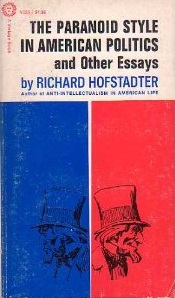
Conspiracy theory has long been associated with the irrational extremes of politics. The notion that political events can be explained by the workings of hidden forces has always been seen by liberals as a sign of delusional thinking. A celebrated study by the political scientist Richard Hofstadter, The Paranoid Style in American Politics (1964), linked the idea with the far Right. Yet in New York in December 2016, many of the brightest liberal minds exhibited the same derangement. Nearly two years later, they continue to reach to conspiracy theory as an explanation for their defeat.

The former lead book reviewer at the New York Times, Michiko Kakutani, devotes several pages to Hofsfadter’s work in her short polemic, The Death of Truth. Citing him approvingly, she notes that “the modern right wing” has “tended to be mobilised by a sense of grievance and dispossession”. As Hofstadter put it, they feel that “America has been largely taken away from them.” The charm of this citation is the lack of self-awareness it reveals. It would be difficult to find a better description of the anguish of liberals such as Kakutani, who feel they have been robbed of their historically appointed role as the moral and intellectual leaders of society.

For those who embrace it, a paranoid style of liberalism has some advantages. Relieved from any responsibility for the debacles they have presided over, the liberal elites that have been in power in many western countries for much of the past 30 years can enjoy the sensation of being victims of forces beyond their control. Conspiracy theory implies there is nothing fundamentally wrong with liberal societies, and places the causes of their disorder outside them. No one can reasonably doubt that the Russian state has been intervening in western politics. Yet only minds unhinged from reality can imagine that the decline of liberalism is being masterminded by Vladimir Putin. The principal causes of disorder in liberal societies are in those societies themselves.

August 28, 2018

QotD: Being woke

Filed under: Politics, Quotations — Tags: , — Nicholas @ 01:00

I suppose the woke-lings’ signature shunning and hair-trigger indignation makes a kind of sense if you bear in mind the fact that being woke is largely about pretending. It’s a world of vanity and make-believe. And so, if someone in the vicinity isn’t willing to pretend – or worse, says “Hey, these guys are pretending” – then the collective pretence, and all of the pretenders, are in danger of being revealed.

And so everyone must play, or be blocked, or immediately denounced.

David Thompson, commenting on “Shatner, You Monster”, David Thompson, 2018-08-08.

August 22, 2018

“The current spate of Jew-baiting is … like a Lord Of the Flies of the Woke”

Filed under: Britain, Media, Politics — Tags: , , , , — Nicholas @ 05:00

Julie Burchill‘s latest column at Spiked:

As a lifelong cheerleader for the Jewish people, these recent months have been bittersweet for me; a highly unusual example of not wanting to be proved right. I resigned from the Guardian a whopping 15 years ago in protest over what I perceived as its slimy anti-Semitism – and, it must be admitted, the offer of three times the wages from The Times. I often wonder how the left-wing Jewish half-wits who slammed me then feel now that they’ve been well and truly trashed by the bullies they sucked up to.

The current spate of Jew-baiting is interesting in that it’s like a Lord Of the Flies of the Woke; raised on tofu and now high on the taste of blood, the snowflakes have finally found a minority group it’s fine to demonise, and my gosh, doesn’t that Two Minute Twitter Hate feel good! (The meekness of the diaspora Jews makes them honorary women in the eyes of the left – then the toughness of the Israelis sends the brosocialists into a maelstrom of cognitive dissonance a gogo.) But I’m hoping my Jewish chums and I can put the unpleasantness out of our minds for a few tuneful hours when Trevor Nunn’s revival of Fiddler On The Roof opens in December, just in time for Hanukkah.

This heart-warming story follows the fortunes of a Jewish milkman living in a Russian village with his wife and five daughters as he fights to hold on to his dignity among growing anti-Semitism – what a relief that times have changed! In the spirit of keeping an open mind, I’m going to apply the popular PC theory of extreme type-casting to my appreciation of the new Fiddler, and sincerely trust that JEWS ONLY will be cast in the main roles – I don’t mind if Gentiles play such minor roles as Russian Official and Priest. After all, the singer Sierra Boggess, after being judged too pallid for the role of West Side Story’s Puerto Rican heroine Maria in the BBC Proms production, recanted in a positively Orwellian fashion after social-media monstering. As did Scarlett Johansson recently after being being bullied out of a putative role as a cross-dresser. Women, eh? Even the divas among us are so used to saying sorry that it’s a wonder we ever got the vote – imagine the Suffragettes today, going around apologising to racehorses for being insufficiently sensitive to their shared cultural oppression!

August 18, 2018

“The urge to erase the past is totalitarian”, especially when “it’s the current year”

Filed under: Cancon, History — Tags: , , , — Nicholas @ 05:00

Mark Steyn on the most recent efforts to obliterate the past:

I’m with Blatch – the great Christie Blatchford, my esteemed colleague from the glory days of The National Post. She’s had enough of it, and so have I – whether it’s the toppling of Field Marshal Smuts in Cambridge, President McKinley in California, Sir John A Macdonald in Victoria. The urge to erase the past is totalitarian. Yet what Pol Pot did, by re-making the world and proclaiming Year Zero, is now the default setting of every social-justice nitwit.

[…]

I’m sick of replacing something – “the Langevin Block”, “the Langevin Bridge” – with nothing – “the Office of the Prime Minister and the Privy Council”, “the Reconciliation Bridge”. The latter is just fatuous pap, and the former is not a name but merely a description of what’s taking place inside the building. But that’s all we can do, because we can’t even take the risk of re-naming the joint. Because today’s hero-of-the-day – the first transgender nominee for Governor of Vermont, say – will inevitably be revealed in thirty years’ time to have been unsound on intersexual Muslima cloning or whatever. Because getting “woke” is one thing, but staying “woke” and “woke”-to-the-minute is all but impossible:

‘Queer Eye’ Star Jonathan Van Ness Under Fire After Saying ‘Not All Republicans Are Racist’

The “leaders of violence” are those engaged in a systematic assault on not just national history but our entire civilizational inheritance. And the wimp conservatives who string along with this are merely licensing the next provocation. In Canada, much of this drivel derives from fainthearted ninnies twenty years ago who meekly accepted charges of “cultural genocide” – which is exactly like genocide, except for the peripheral detail of not requiring any actual corpses. Here’s me two decades ago:

    Only a generation or two back, governments thought they were doing native children a favour by teaching them the English language and the principles of common law and the great sweep of imperial history, that by doing so they were bringing young Indians and Inuit ‘within the circle of civilised conditions’. It’s only 40 years ago, but that’s one memory the government of Canada will never recover. No civilised society legislates retrospectively: if you pass a seat-belt law in 1990, you don’t prosecute people who were driving without them in 1980. Likewise, we should not sue the past for non-compliance with the orthodoxies of the present.

But we did. So surrendering on “residential schools” led to the re-classification of Canada’s first prime minister as “a leader of violence” by the City of Victoria. And, if Sir John is a leader of violence, how can the very city be named for the Queen who knighted him and sent a wreath to his funeral? Shouldn’t Victoria be renamed Reconciliationville? Or, per the Langevin Block, “the City of the Office of the Mayor and the Municipal Council”?

And what about Casimir Gzowski, who laid Her Majesty’s wreath upon the “leader of violence”‘s coffin? Shouldn’t his busts and memorials be removed, too? And Sir Casimir Gzowski Park in Toronto be renamed Transgender Bathroom Park?

And what about Sir Casimir’s great-great-grandson, beloved Canadian radio host Peter Gzowski? Shouldn’t he be removed from the CBC archives? Or at any rate shouldn’t Gzowski College at Trent University and the Gzowski branch of Georgina public libraries be renamed just in case somebody is triggered by the thought that they might be named not after Peter but after the great-great-grandpa who had the effrontery to lay the queen of violence’s wreath of violence on the leader of violence’s grave or violence?

This is not an assault on historical figures; this is an assault on history itself – on the very idea that ancient societies have a past, or roots, or historical continuity, or anything other than the fashions of the moment.

August 16, 2018

Mainstreaming misandry

Filed under: Media, Politics, USA — Tags: , , , , — Nicholas @ 05:00

Somehow the notion that it’s totally okay — even praiseworthy — to preach hatred of men has re-entered the mainstream and, worse, is being taken seriously by people who should know much, much better:

“You can’t hate all men can you? Actually I can,” writes Suzanne Moore, a British feminist, in the New Statesman in 2016. “As a class, I hate men.” Men are not a class but this doesn’t deter Moore from continuing her peroration. “I think any intelligent woman hates men,” she continues. She even comes up with a hash tag in the hope that this blanket condemnation will catch on – #yesallmen.

Meanwhile, in ‘The Cut’ section of the New York magazine, a member of the public writing in complains to the ‘agony aunt’ – the journalist Heather Havrilesky – that she “hates men” and is in danger of becoming a “cranky old bitch”. Heather suggests in reply that she simply embrace her inner bitch. “Most men are terrible,” she says. “Most men are shit.”

In addition, two articles on Medium – not quite as mainstream as New York magazine, the Washington Post, and the New Statesman, but certainly not fringe – echo the theme. Turns out, it’s not only (self-defined) man-hating women who have turned towards hate as a response to gender inequality. So have some men – like Anthony James Williams who writes in Medium that, “Women don’t have to like us, and history shows us that they have a right to hate us.”

In the charmingly titled ‘When You Can’t Throw All Men Into The Ocean And Start Over, What CAN You Do? Ijeoma Oluo – the mother of two boys, God help them – writes,

    This society is doing everything it can to create rapists, to enable rapists, and to protect rapists. This society is broken, abusive, patriarchal (and white supremacist, ableist, hetero-cisnormative) trash. This entire patriarchal society is responsible for every single sexual assault that occurs.

If reading such hatred is exhausting, actually generating it must be even more so. I suspect hate is a young person’s game (although Danuta Walkers and Moore are not exactly spring chickens). It is tempting to shrug off this new misandry as just silly and something of a sideshow, but it’s possible that it represents a real strand of rising consciousness. If that is the case, it is not merely silly – it is dangerous. I have occasionally indulged in group hatred – ISIS in their racist, faithist, head-hacking, innocent-slaughtering prime, the Conservative Party in the 1980s, anyone involved in Prog Rock – but it’s not a very healthy principle to base your life around.

What does it mean to hate an otherwise random and unrelated group of people, as opposed to a specific individual? We can all enjoy hating, say, Nazis, pedophiles, and ISIS executioners beheading an aid worker. Hate can be reassuring, which is why it is so seductive. But when one is hating Nazis, one is hating people who subscribe to an ideology, an idea. Pedophiles and ISIS executioners are historically smaller groups, but they are also defined by a particular idea – sexual attraction to children and the cult of death. At some level, they’ve made a choice. No one is born a Nazi or an Islamist murderer, and even if Pedophilia is genetically influenced, that doesn’t absolve its perpetrators of guilt. However, hating men is not hating an idea or an abhorrent form of behaviour. It is hating half the world’s population, rich and poor, kind and cruel, black and white, gay and straight, just because they happen to have a Y chromosome.

To hate such a disparate group seems – is – demented. However, there is a prism through which it makes perfect sense, the prism constructed by the odd and contradictory fusion of neo-Marxism and post-modernism.

August 2, 2018

QotD: Economic complexity

Filed under: Economics, Quotations — Tags: , , — Nicholas @ 01:00

“Progressives” mistake as “science” their habit of lumping countless idiosyncratic individuals and things, each always in an ever-changing set of deeply nuanced circumstances, into catch-all categories (such as “consumers,” “labor,” “government,” “the environment,” “the health-care sector,” “the money supply,” “the unemployment rate,” “the capital stock,” and “imports”) and then theorizing about how these big blobs of people and things interact with each other, and how these interactions can be “improved” by an apolitical, loving, intelligent, ever-diligent scientific guiding hand. That professors and their graduate students can assemble data on each of these big blobs of people and things, can write intricate equations describing mathematically how the professors and their graduate students imagine these blobs interacting with each other, and use the gathered data and sophisticated software to “test” the equation-ladened “models” seems oh-so-objective and truly scientific.

Yet most such exercises are b.s. Far too many of these exercises, when done by economists, are done in utter disregard of the meaningful, if impossible to observe from afar, differences that separate from each other each of the individuals and things that comprise each constructed blob. Far too many of these exercise are done by people whose impressive, deep, and vast knowledge of econometric techniques does not begin to compensate for their innocence of price theory, of history, and of formal and informal institutions.

Correctly taught and understood, economics reveals that reality is vastly more complex than the economically untutored mind realizes. Yet this message of complexity is unwelcome by those who want to rule and command. The reason is that to understand the reality of reality’s complexities is to understand that ruling and commanding – the actions of the “man of system” – can only worsen most individuals’ lives. Ruling and commanding of the sort that “men – and women – of system” itch to do can only disrupt for the worse, and not improve for the better, the spontaneous forces of society.

Don Boudreaux, “Quotation of the Day…”, Café Hayek, 2016-09-20.

July 29, 2018

QotD: The third Great Awakening

Filed under: Politics, Quotations, Religion, USA — Tags: , , , — Nicholas @ 01:00

We are now — in the Me Decade — seeing the upward roll (and not yet the crest, by any means) of the third great religious wave in American history, one that historians will very likely term the Third Great Awakening. Like the others it has begun in a flood of ecstasy, achieved through LSD and other psychedelics, orgy, dancing (the New Sufi and the Hare Krishna), meditation, and psychic frenzy (the marathon encounter). This third wave has built up from more diverse and exotic sources than the first two, from therapeutic movements as well as overtly religious movements, from hippies and students of “psi phenomena” and Flying Saucerites as well as charismatic Christians. But other than that, what will historians say about it?

The historian Perry Miller credited the First Great Awakening with helping to pave the way for the American Revolution through its assault on the colonies’ religious establishment and, thereby, on British colonial authority generally. The sociologist Thomas O’Dea credited the Second Great Awakening with creating the atmosphere of Christian asceticism (known as “bleak” on the East Coast) that swept through the Midwest and the West during the nineteenth century and helped make it possible to build communities in the face of great hardship. And the Third Great Awakening? Journalists (historians have not yet tackled the subject) have shown a morbid tendency to regard the various movements in this wave as “fascist.” The hippie movement was often attacked as “fascist” in the late 1960s. Over the past several years a barrage of articles has attacked Scientology, the est movement, and “the Moonies” (followers of the Reverend Sun Myung Moon) along the same lines.

Frankly, this tells us nothing except that journalists bring the same conventional Grim Slide concepts to every subject. The word fascism derives from the old Roman symbol of power and authority, the fasces, a bundle of sticks bound together by thongs (with an ax head protruding from one end). One by one the sticks would be easy to break. Bound together they are invincible Fascist ideology called for binding all classes, all levels, all elements of an entire nation together into a single organization with a single will.

The various movements of the current religious wave attempt very nearly the opposite. They begin with … “Let’s talk about Me.” They begin with the most delicious look inward; with considerable narcissism, in short. When the believers bind together into religions, it is always with a sense of splitting off from the rest of society. We, the enlightened (lit by the sparks at the apexes of our souls), hereby separate ourselves from the lost souls around us. Like all religions before them, they proselytize — but always on promising the opposite of nationalism: a City of Light that is above it all. There is no ecumenical spirit within this Third Great Awakening. If anything, there is a spirit of schism. The contempt the various seers have for one another is breathtaking. One has only to ask, say, Oscar Ichazo of Arica about Carlos Castaneda or Werner Erhard of est to learn that Castaneda is a fake and Erhard is a shallow sloganeer. It’s exhilarating! — to watch the faithful split off from one another to seek ever more perfect and refined crucibles in which to fan the Divine spark … and to talk about Me.

Whatever the Third Great Awakening amounts to, for better or for worse, will have to do with this unprecedented post-World War II American development: the luxury, enjoyed by so many millions of middling folk, of dwelling upon the self. At first glance, Shirley Polykoff’s slogan — “If I’ve only one life, let me live it as a blonde!” — seems like merely another example of a superficial and irritating rhetorical trope (antanaclasis) that now happens to be fashionable among advertising copywriters. But in fact the notion of “If I’ve only one life” challenges one of those assumptions of society that are so deep-rooted and ancient, they have no name — they are simply lived by. In this case: man’s age-old belief in serial immortality.

Tom Wolfe, “The ‘Me’ Decade and the Third Great Awakening”, New York Magazine, 1976-08-23.

July 22, 2018

QotD: A touching naivety

Filed under: Economics, Government, Quotations — Tags: , , — Nicholas @ 01:00

… the typical “Progressive” continues to imagine the state to exist in the same way that a four-year old child imagines Santa Claus to exist: as a super-human force for good that possesses a supernatural capacity for pursuing and achieving that good. There is, in practice, no epistemological difference between the belief of many children that dusk on December 24th causes reindeer to fly and the belief of many adults that minimum-wage legislation causes the incomes of all low-skilled workers to rise. Higher-skilled workers, and the labor unions that represent them – as well as some firms that use fewer low-skilled workers than are used by their competitors – are only too happy to promote this juvenile fantasy.

Don Boudreaux, “Bonus Quotation of the Day…”, Café Hayek, 2016-09-04.

July 20, 2018

QotD: The modern mission of the university

Filed under: Education, Humour, Quotations — Tags: , — Nicholas @ 01:00

God makes a portion of each generation intelligent well above the average, and despite the best efforts of our state school systems, His handiwork is hard to suppress. The task of the modern progressive university is therefore to corrupt and unbalance the intelligent; to pit their minds against their common sense; to adapt their brains as a useful putty — a kind of “semtex” or plastic explosive to press into the folds and corners of the society the progressive must destroy to rule.

David Warren, “Halls of memory”, Essays in Idleness, 2016-10-01.

July 16, 2018

Deconstructing Zinn’s People’s History of the United States

Filed under: Books, History, Politics, USA — Tags: , — Nicholas @ 03:00

Alex Usher took to the Twitters to explain why you shouldn’t bother reading Howard Zinn’s ?popular? history book:

Rather than slowing down your page loading speed, here’s the rest of that Twitter thread as a screen grab:

« Newer PostsOlder Posts »

Powered by WordPress