
TimeGhost History
Published 19 Oct 2025From the ashes of Nazi Germany to the launch pads of the American desert, the story of the nation’s first ballistic missile is one filled with contradiction. A man who once served the SS soon became a celebrated figure in the United States, and his weapon of war was transformed into a symbol of progress. Here, we will explore how this unlikely journey unfolded and what it reveals about science, power, and morality in the modern age.
(more…)
October 20, 2025
From Hitler’s Rockets to America’s Arsenal – W2W 049
Comments Off on From Hitler’s Rockets to America’s Arsenal – W2W 049
October 7, 2025
How a Myth Started the Nuclear Arms Race – W2W 47
TimeGhost History
Published 5 Oct 2025The Bomber Gap: a mid-1950s panic that convinced Washington the USSR was outproducing the U.S. in long-range strategic bombers — and triggered a massive nuclear buildup. This episode traces Eisenhower’s New Look, Curtis LeMay and SAC’s push for jets, the Dulles brothers’ influence, the M-4 “Bison” bluff, and the Symington hearings that turned bad intel into national policy. Learn how politics, optics, and deliberate Soviet deception combined to accelerate the arms race and reshape deterrence for decades.
[NR: At Dominion Review, Palmiro Campagna discusses the missile gap and how it impacted the decision to cancel the Avro Arrow.]
(more…)
Comments Off on How a Myth Started the Nuclear Arms Race – W2W 47
August 14, 2025
“Just war” theory and nuclear weapons practice
On Substack, Nigel Biggar discusses the postwar argument about whether the use of nuclear weapons against Japan was justified or not:
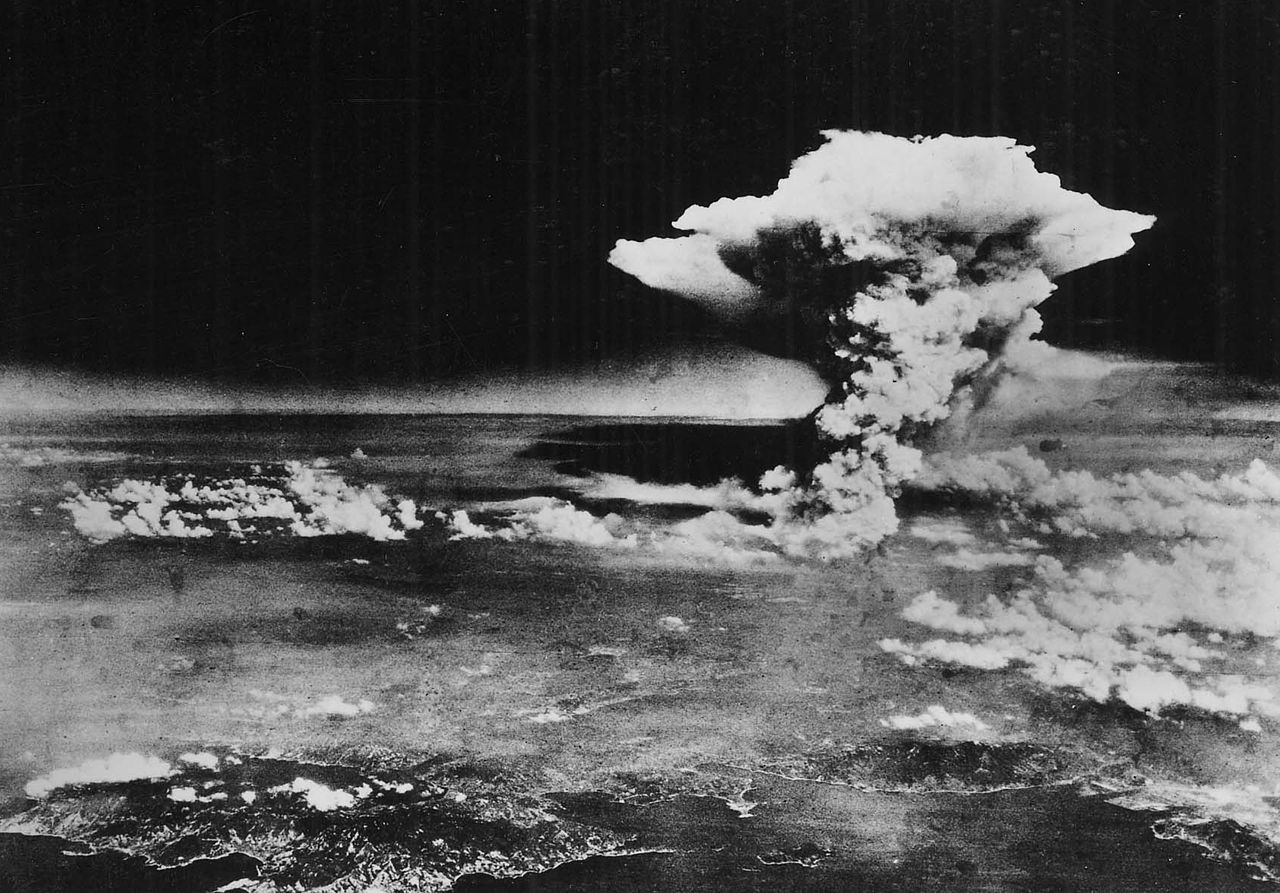
Atomic cloud over Hiroshima, taken from “Enola Gay” flying over Matsuyama, Shikoku, 6 August, 1945.
US Army Air Force photo via Wikimedia Commons.
For pacifists, Christian or otherwise, the answer is clear: since any deliberate killing is wrong, the dropping of atomic bombs on Hiroshima and Nagasaki on 6 and 9 August 1945 was wrong about two hundred thousand times over.
But that clear answer generates further questions whose answers aren’t so obvious. If killing is always wrong, then the United States should never have gone to war against Imperial Japan and therefore its ally, Hitler’s Germany. What, then, would have stopped the triumph of brutally racist Japanese imperialism in Asia and massively murderous Nazism in Europe? The noble witness of innocent non-violence?
Unfortunately, the historical evidence is that the kind of people who ran the slave-labour camps in Burma, and the likes of Dachau in Germany and Auschwitz in Poland, were not at all shamed by the face of vulnerable innocence; on the contrary, it excited their lust for domination and they fed upon it.
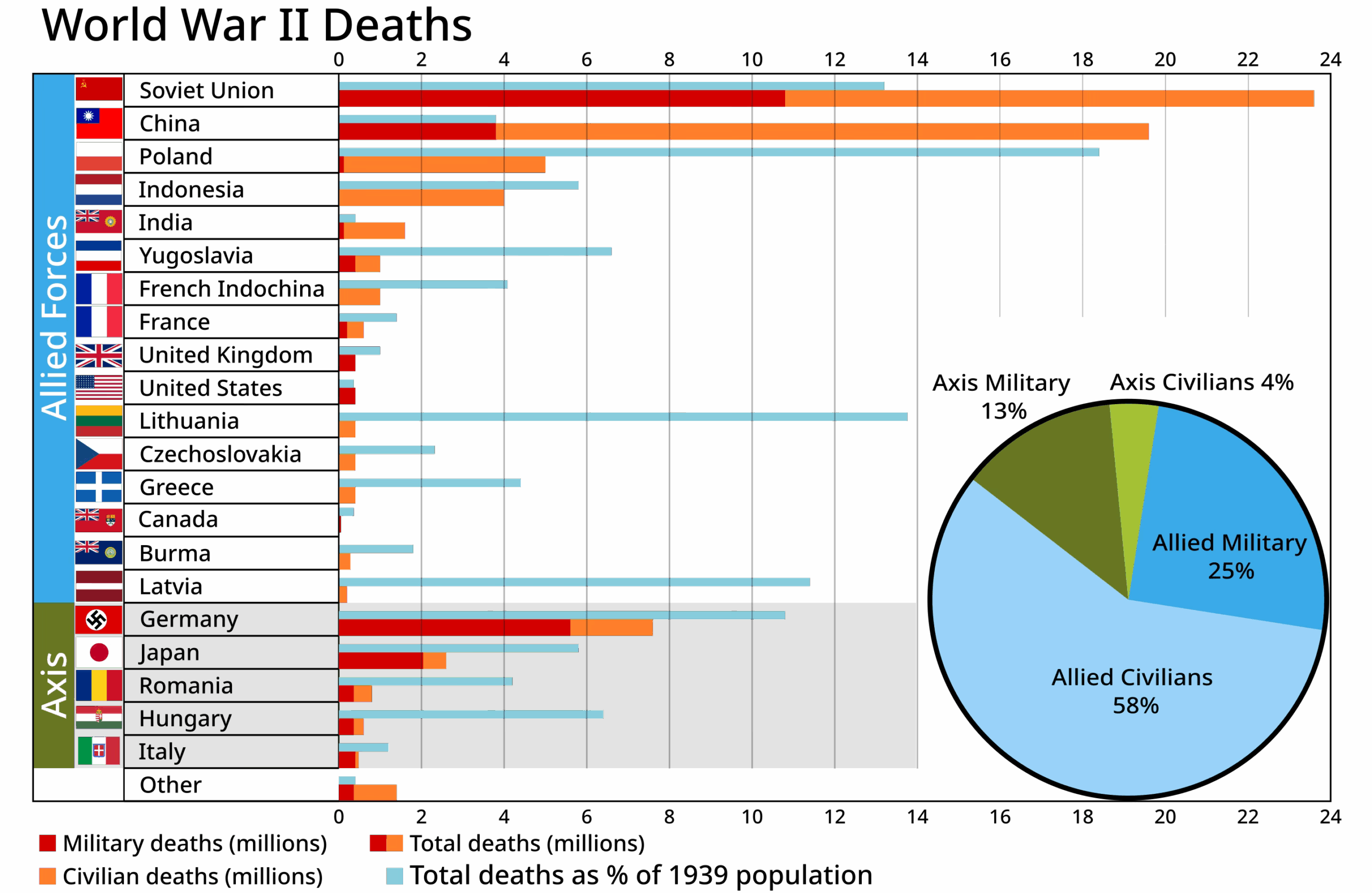
On the other hand, those who think that war can sometimes be justified, might judge that the mass killing of civilians by the atomic bombs was, simply by its massive extent, indiscriminate and therefore unjust. But there are two problems here. The first is that the vast majority of people, certainly in the UK and the USA, regard the war against Hitler and his allies as morally justified, notwithstanding the fact that that cost between 60 and 80 million deaths, well over half of them civilian.
Image credit – Wikipedia
And the second problem is that the ethical tradition of “just war” thinking doesn’t say that we may not kill civilians, even on a massive scale; it only says that we may not kill them intentionally. If a military objective can’t be achieved except by risking the possible or probable deaths of civilians, then it may still be attempted, provided that the objective is sufficiently important, militarily, and that all reasonable measures are taken to avoid or minimise the side-effect of civilian casualties. The reason for this permissiveness is that in most circumstances just war would be impossible to prosecute otherwise.
So, for the “just war” proponent, if the intention in dropping the atomic bombs on Japan was to destroy vital military or military-related targets, and if there was no more discriminate way of achieving that end, then the bombing was morally justified. It was deeply, deeply tragic—but nevertheless just.
Comments Off on “Just war” theory and nuclear weapons practice
August 8, 2025
Debunking the idea that Japan was about to surrender anyway
Dr. Robert Lyman on the common misunderstanding of Japan’s situation in July and August of 1945 — no, they weren’t “on the brink of surrender so atomic bombing was unjustified” … instead, they were intending to make the assault on the Home Islands the biggest bloodbath ever:
Atomic cloud over Hiroshima, taken from “Enola Gay” flying over Matsuyama, Shikoku, 6 August, 1945.
US Army Air Force photo via Wikimedia Commons.
It’s the anniversary of Hiroshima again today. I wasn’t going to write anything to mark the event (more coming next week on VJ Day), but I’ve been triggered already by nonsense on the radio which suggests that the atomic bombs on Hiroshima and Nagasaki were unnecessary, because Japan was about to surrender.
Nonsense. There is not a shred of real evidence to support this idea. In fact, the evidence that Japan wanted to keep on fighting is irrefutable. And yet this lie persists, despite the deluge of scholarly work demonstrating Japan’s commitment to the ritual suicide of its entire nation right until the end, when Hirohito pulled the plug. If you are in any doubt about the facts of the case, as opposed to the propaganda, read Toland’s Rising Sun (1970), Frank’s Downfall (2001), Spector’s In The Ruins of Empire (2007), Pike’s Hirohito’s War and, more recently, Stewart Binn’s Japan’s War (2025). All are excellent, clear, analytical and well researched. There are lots more, too.
Why does this canard keep on popping up? Is it because people don’t read? Or is it that they just don’t want to believe in the necessity of such a dramatic event to force Japan to surrender and thus bring about an end to the greatest man-made tragedy the world has ever suffered? The origins of this wishful myth in fact derives from hard right nationalist propaganda in post-war Japan (driven by Admiral Suzuki himself), quickly lapped up by the gullible and wishful thinkers in the West. Its one of the most enduring of the Hiroshima and Nagasaki myths, in part because it seems palatable to many, and because it is inherently anti-American.
What is the real story? In short, the Allies tried hard to persuade Japan to surrender. They demonstrated unequivocally to Japan that it was going to lose the war by defeating its armies and by beginning the long, slow and painful crawl towards the Japanese home islands. All the books I’ve mentioned note the extreme chaos of Japanese decision-making before and during the war. Who really was in charge? Who could one talk to, to secure a commitment to negotiate? In any case, the chaotic government under Koiso which replaced that of General Tojo following the fall to the Americans of Saipan in 1944, made not a single effort to engage with the Allies to seek terms. This government also collapsed on 5 April 1945. The replacement prime minister was Admiral Suzuki, and it was from this man that the myth seems to have arisen, after the war, that Japan was considering surrender and that the A-bombs were unnecessary. This is not true. During his entire time as Prime Minister he resolutely refused to do anything but continue to fight, unless the ending of the war could be secured on Japan’s terms. There were some initiatives to persuade the Suzuki government to surrender, but none of them amounted to much, because they didn’t engage directly with the government in Tokyo, and they didn’t derive from the Allied powers. The evidence that peace-feelers were being put out by various sources (such as the Vatican) in 1944 and 1945 is evidence only that the Japanese government ignored them. None were taken seriously in Tokyo.
Indeed, throughout the period of the Suzuki government, the war parties were dominant. In early June the military Supreme Command submitted a paper entitled The Fundamental Policy to be Followed Henceforth in the Conduct of the War, in which it demanded that the government confirmed that Japan would fight to the very last Japanese in an act of national suicide leading to the “honourable death of the hundred million”:
With a faith born of eternal loyalty as our inspiration, we shall – thanks to the advantages of our terrain and the unity of our nation, prosecute the war to the bitter end in order to uphold our national essence, protect the Imperial land and achieve our goals of conquest.
The proposition was passed, not unanimously, but overwhelmingly nonetheless.
There were some in the government – interestingly including Tojo himself – who saw that this was self-defeating, and that Japan must negotiate to secure acceptable peace terms. Naively, it was hoped that this would enable it to retain parts of its empire. Suzuki was part of this group who thought that Japan could negotiate favourable terms to end the war, in the form of a negotiated settlement such as that had brought about the end of the Russo-Japanese war in 1905, but when he suggested this in parliament on 13 June he was shouted down by the war mongers. Hirohito then endorsed an approach to the Soviets in late June. Bizarrely – though Moscow was neutral in the Far Eastern war at this point – Tokyo’s emissaries suggested that the USSR and Japan join forces to rule the world. It was yet more evidence of how Tokyo fundamentally misunderstood the world, and its enemies, and the way the war would have to end: complete and utter surrender by Japan.
Moscow, of course, scorned these “negotiations” as meaningless.
Comments Off on Debunking the idea that Japan was about to surrender anyway
June 23, 2025
US strikes against Iranian nuclear facilities
One of the most frustrating aspects of internet culture today is the need for instantaneous “analysis” of military events. We all understand the desire for such insight, but the accuracy of information available in the immediate aftermath of any event is highly variable. Between the need to control the narrative on the part of the participant powers, the propaganda value of being “first” to report, and the impossibility of accurate damage assessment, it’s a wise move to discount almost everything you hear about a big event for some time. Chris Bray suggests that the old “72 hours rule” may be insufficient for something like the US bunker busting strikes against Iranian nuclear research facilities:
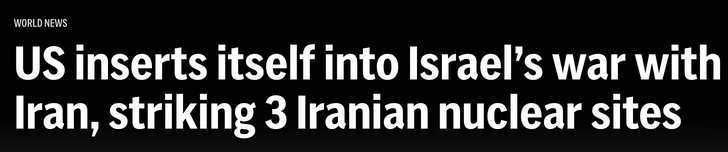
First, wait a while. Sean Hannity just announced that “a source” told him the attack was a complete success, and all of Iran’s nuclear sites were fully destroyed. I’d hesitate to believe that, is the gentle way to put it. I’d also hesitate to believe the stories being told from the other direction, and don’t forget that Trump’s attack on Qasem Soleimani produced a full week of OH NO WORLD WAR III JUST BEGAN stories in the establishment media. The likelihood is that none of what you’re hearing this week is fully true. Wait and watch. I hope that Iran and the US are backchanneling while engaging in belligerent public posturing, but by definition we’re not going to see the backchanneling. We’ll see. The 72 Hour Rule is in effect, here, at the very least.
Second, the ludicrous story in which Trump is violating law and political norms with unilateral military action is, as always, a deliberate performance of political amnesia. These are our political norms, for crying out loud.
We should probably fix that. But the people who tolerated an American war in Libya without direct congressional authorization, and who tolerated an American war in Yemen without direct congressional authorization, and who tolerated an American war in Syria without direct congressional authorization, aren’t actually going to impeach a president over military strikes in the Middle East undertaken without direct congressional authorization. It’s a show. The More Than a Week Rule requires us to view this action in the longer and generally quite unfortunate context of American foreign policy, and the politicians who are outraged by unilateral military action in the Middle East have zero standing on that score.
Third, and related, the 2001 Authorization to Use Military Force is still in effect, and still being stretched and massaged beyond its intent and meaning, but note that Congress still hasn’t repealed it. A Congress that wished to restrain presidential military action in the Middle East would probably start there, and they haven’t.
Glenn “Instapundit” Reynolds has a few thoughts on the matter:
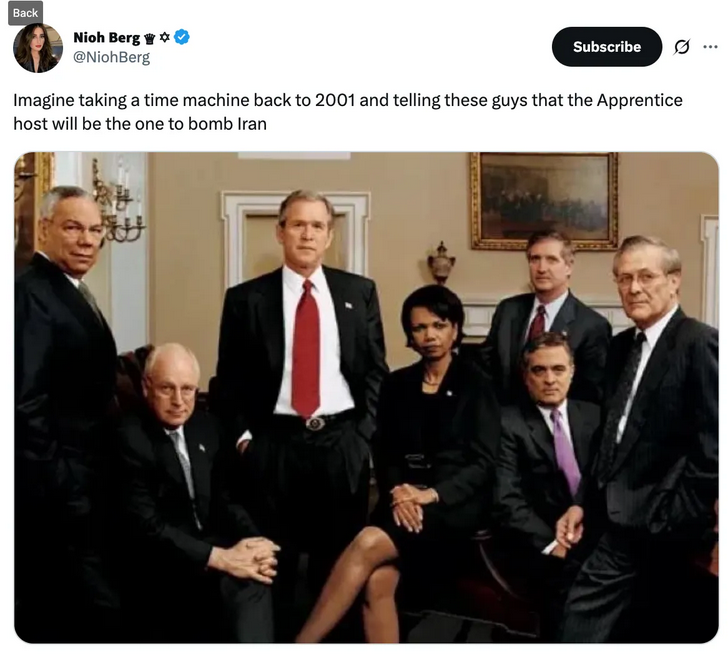
People have been singing about it since 1980, but yesterday’s bombing raids on Iranian nuclear facilities were the first bombing attack since the 1979 hostage seizure.
Despite numerous calls for action against the Islamic Republic, Operation Midnight Hammer was the first U.S. military action against important Iranian assets on Iranian territory. The bombs fell less than 24 hours ago, but here are a few preliminary takes.
Competence. The most striking thing about the attacks was the extreme competence displayed by the Air Force, the Defense Department under Secretary Pete Hegseth, the various intelligence assets involved, the State Department, and the entire administration. There were no leaks. (How did they avoid leaks? Basically, they didn’t tell any Democrats what was coming. Take note.)
Not only were there no leaks, but President Trump and the diplomatic apparatus kept the Iranians in the dark, giving the impression of waffling in the White House even as things were being lined up. They received unintentional help in this from Sen. Charles Schumer, who had been for some time pushing the “TACO” acronym — Trump Always Chickens Out — in the service of a storyline that Trump was all bluster and no follow-through. The Iranians, apparently dumb enough to believe Democrats and the mainstream news media (but I repeat myself) were snookered.
New Diplomacy: In dealing with the Iranians in the 1980s, Donald Regan told President Reagan that America had been repeatedly “snookered” by a bunch of “rug merchants”. The Iranians were in fact very good at leading Americans down the garden path, invoking (often imaginary) splits between “hard-line” and “moderate” Islamists in their government as excuses for delay and backtracking.
In truth, as Henry Kissinger once said, “An Iranian moderate is one who has run out of ammunition“. After these raids, and the many Israeli attacks that led up to them, all of Iran is out of ammunition.
Comments Off on US strikes against Iranian nuclear facilities
June 10, 2025
How Moscow Got the Atomic Bomb – W2W 31
TimeGhost History
Published 8 Jun 2025In 1949, the Soviet Union detonates its first atomic bomb — years ahead of Western expectations. This episode dives into how the USSR mobilized former Nazi scientists, forced Soviet physicists into secret cities, and relied on intelligence from spies like Klaus Fuchs. While Stalin pushes for rapid progress, Beria enforces brutal discipline, and Soviet scientists race to meet an impossible deadline. The nuclear balance of power is about to shift — forever.
(more…)
Comments Off on How Moscow Got the Atomic Bomb – W2W 31
June 6, 2025
Former Putin advisor claims nuclear strike is an appropriate reaction to Ukraine attacks
Mark Steyn surveys the media reaction to Sergey Markov’s foaming-at-the-mouth threats of nuclear escalation in the Russo-Ukraine conflict:
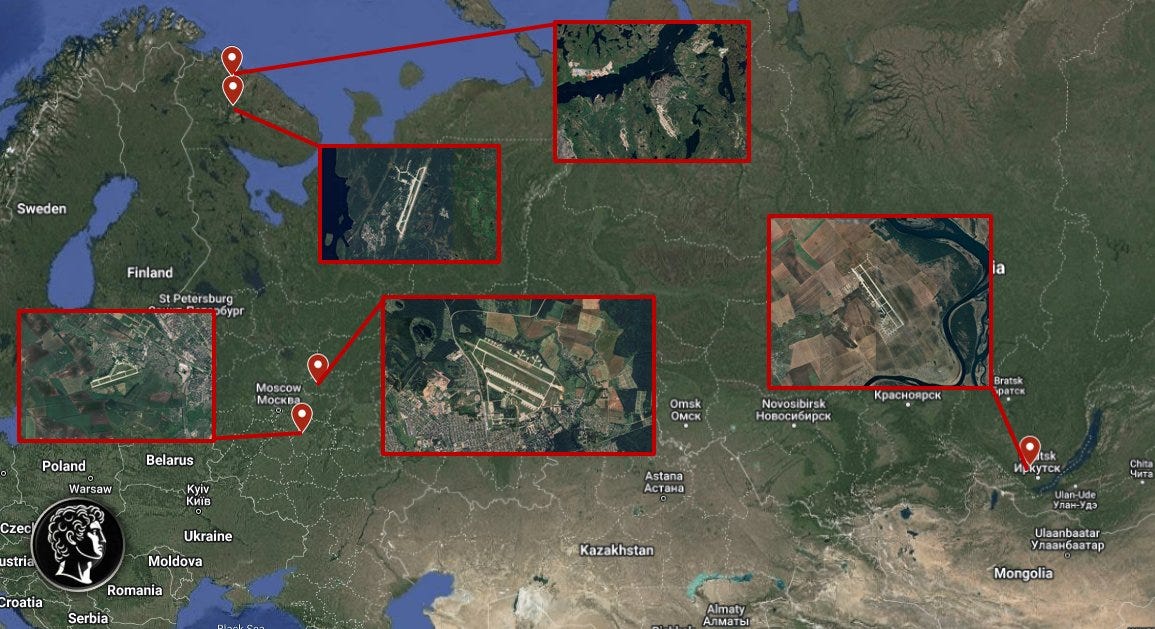
Here’s a cheery headline from the Russian press:
Markov: an attack on Russia’s strategic aviation is grounds for the use of nuclear weapons.
That would be Sergey Markov, former advisor to Tsar Vlad, who admittedly is somewhat partial to nuke-rattling: in the early stages of the Ukraine war, he threatened to nuke the UK, for what reason I forget — the exciting new Islamic blasphemy laws? the paedo rape gangs?
This time, however, Mr Markov was responding to the weekend’s Ukrainian drone strike deep inside Russia. By “deep”, I mean Siberia. Which supposedly took out forty of Putin’s 120 strategic bombers using drones smuggled into the country via trucks which then fanned out and parked within range of various air bases.
Which is brilliant and innovative, in the sense that Castro blowing up a third of the USAF during the Cuban missile-crisis negotiations would have been. Right now, the only thing standing between the planet and the Third World War is Vladimir Putin’s forbearance. And, as all the smart people assured us in the spring of 2022, the Russian not-so-strongman was “dying” (Christopher Steele, sole proprietor of Dossiers R Us) or dead, either of which condition can make one’s nuclear-war judgment a little erratic. Headline from the UK Daily Mirror, almost exactly three years ago:
Vladimir Putin may already be dead with body double taking his place, MI6 chiefs claim
That headline is 100 per cent accurate if you remove the words “Vladimir” and “Putin” and replace them with “Joe” and “Biden” respectively. Incidentally, analyse each nation’s advances in body-double technology by comparing “Biden”‘s ability to host a G7 with “Putin”‘s ability to host a BRICS summit. That’s the way to bet if it comes to World War Three. Sen. Lindsey Graham (R – Zakarpattia), was in Kiev to meet with Zelenskyyyy the day before Operation Bring It On. He had the affect of a chap who knew what was coming — although one notes he has yet to make good on his comparatively less ambitious pledge to sink Greta Thunberg’s Gaza boat.
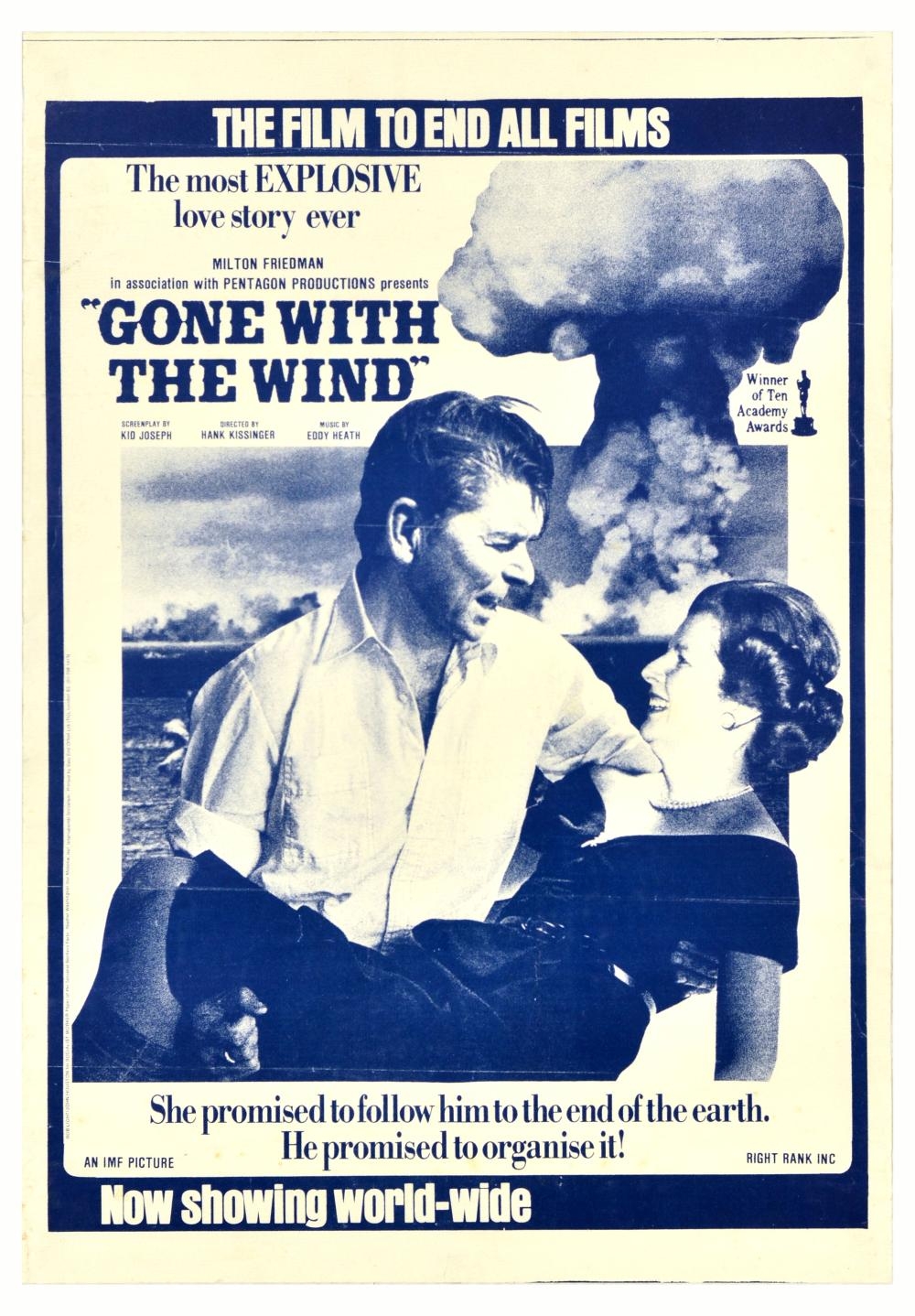
Forty years ago, everybody claimed to be super-worried about imminent mushroom clouds. A bestselling poster of the day:
Anyone care to remake the above with Senator Graham and Victoria Nuland, She-Wolf of the Donbass? Ah, but maybe it doesn’t work as well with Deep State non-household-names in the leads. It’s not so long since Lindsey was telling Zelenskyyyy to resign, but he’s apparently back on board. And, more generally, most western media were happy to report the drone strike as more of a poke in the eye to Trump than to Putin. Headline from National Review:
Country That Allegedly Had No Cards to Play Keeps Finding New Cards to Play
This is in reference to Trump’s jibe from February that Ukraine had “no cards to play”. The question then arises: Where did Z find these “new cards”? When Pete Hegseth took over as US Defence Secretary, he quickly confirmed what every sentient creature had long suspected — that the Pentagon had been micro-managing Ukraine’s end of the war for the previous three years. Are they still doing so? In defiance of their nominal commander-in-chief?
Comments Off on Former Putin advisor claims nuclear strike is an appropriate reaction to Ukraine attacks
April 27, 2025
Nuking the Reich: What If the War Had Dragged On? – Out of the Foxholes Live
World War Two
Published 26 Apr 2025Indy and Sparty bring you another episode of Out of the Foxholes Live! Today they talk about Thailand’s relationship with Japan, ask why the Americans firebombed Japanese cities even after cutting off the country’s supplies, and they tackle a big one: would the Allies have nuked Germany?
(more…)
Comments Off on Nuking the Reich: What If the War Had Dragged On? – Out of the Foxholes Live
April 23, 2025
This Way Toward Enemy – How The Bomb Didn’t Quite Go Boom
HardThrasher
Published 17 Feb 2023I can do nothing about the way I say Nuclear. If that upsets you please don’t bother commenting
A brief history of the many ways that nuclear weapons nearly killed us all
(more…)
Comments Off on This Way Toward Enemy – How The Bomb Didn’t Quite Go Boom
April 22, 2025
QotD: Fear, uncertainty, and doubt from the Reagan era
Leafing through an old Idler magazine, during my own compulsory isolation, I was reminded of the scary age of Reagan. If my reader is old enough, he will remember nuclear annihilation. Did I know, I was then told, that the superpowers had enough A-bombs to vaporize everyone on the planet ten times over? — provided they were efficiently deployed, and we all held still. But as I argued then, there were other terrifying threats to human life.
“There is, for instance, enough water in the planet to drown everyone four thousand times; there are enough matches to set fire to every wooden building; enough kitchen knives to murder all the husbands of the world; enough hairspray (if drunk) to poison all their wives; enough pillows to smother the entire population of Asia; enough pencils to put out everyone’s eyes; enough fishbones to choke the combined population of France and Italy; enough ties, belts, suspenders, and pyjama draw strings to hang everyone over the age of forty; enough cigarettes (if eaten) to make everyone in Africa south of the Sahara throw up; enough stairs for all the toddlers in the world to fall down; enough statues to crush the inhabitants of the fourteen largest cities in the American Midwest; enough piano wire to garrot three-quarters of the population of Roumania; enough frozen lamb chops to club to death the entire Scottish aristocracy.”
Granted, the weight of human suffering. Granted, that we all progress to biological death, after a brief illusion of invincibility. But would it be entirely irresponsible, to dance our way through the interim? Even while the vultures are circling in the sky?
David Warren, “Be afraid, be very afraid”, Essays in Idleness, 2020-04-14.
Comments Off on QotD: Fear, uncertainty, and doubt from the Reagan era
March 6, 2025
The Iron Curtain Descends – W2W 10 – News of 1946
TimeGhost History
Published 5 Mar 20251946 sees the world teetering on the brink of a new global conflict. George Kennan’s long telegram outlines Moscow’s fanatical drive against the capitalist West, while our panel covers escalating espionage, strategic disputes over Turkey, and the emerging ideological battle between the U.S. and the USSR. Tune in as we break down the news shaping the dawn of the Cold War.
(more…)
Comments Off on The Iron Curtain Descends – W2W 10 – News of 1946
February 24, 2025
Dawn of the Atomic Age – W2W 007
TimeGhost History
Published 23 Feb 2025In 1946, the world’s fate is rewritten in fire. The first peacetime nuclear tests shake the Pacific, while Stalin accelerates the Soviet push for the bomb. With the power to destroy the entire world now a reality, global leaders face a defining choice — will the bomb usher in the peace of our time, or lead to nuclear doom? The arms race has begun, and there’s no turning back.
(more…)
Comments Off on Dawn of the Atomic Age – W2W 007
February 23, 2025
How WW2 Changed Espionage Forever
World War Two
Published 22 Feb 2025In their struggle to defeat German and Japanese espionage efforts, the Allied intelligence agencies of the KGB, CIA, MI6 and DGSE are all transformed into modern, global, espionage forces. But even as East and West work together to defeat the Axis, they are fighting the first underground battles of a new Cold War against one another.
(more…)
Comments Off on How WW2 Changed Espionage Forever
February 20, 2025
The Space Race Begins – W2W 006
TimeGhost History
Published 19 Feb 2025The Space Race has begun. As Stalin’s USSR and Truman’s U.S. compete for technological dominance, the Pentagon prepares for a future of missile warfare. Project Diana shatters barriers by bouncing radar off the Moon, proving space can be conquered — whether for exploration or war.
(more…)
Comments Off on The Space Race Begins – W2W 006
February 7, 2025
Justice for WW2?! – W2W News 1945
TimeGhost History
Published 6 Feb 2025Join SPARTACUS and INDY on the War2War 1945 Newscast as we explore a world tumbling from war to war. European colonies face fresh conflicts and groundbreaking polymer innovations spark industrial revolutions. All the while Nazi war criminals are brought to justice at the Nuremberg Trials.
(more…)
Comments Off on Justice for WW2?! – W2W News 1945


