
Forbrukerrådet – Norwegian Consumer Council
Published 27 Feb 2026Digital products and services keep getting worse. In the new report Breaking Free: Pathways to a fair technological future, the Norwegian Consumer Council has delved into enshittification and how to resist it. The report shows how this phenomenon affects both consumers and society at large, but that it is possible to turn the tide.
Read more on: https://www.forbrukerradet.no/breakin…
(more…)
March 2, 2026
A Day in the Life of an Ensh*ttificator
Comments Off on A Day in the Life of an Ensh*ttificator
February 20, 2026
The Canadian Patrol Submarine Project
The Royal Canadian Navy is planning to replace its four current conventional submarines, the British-built Victoria class with a dozen new conventional submarines from either South Korea or Germany (a joint German-Norwegian design). Michael J. Lalonde, a former Canadian intelligence officer, goes through the requirements for the new submarines, the two contending designs’ strengths and weaknesses, and makes his own recommendation for the RCN’s next submarine class:
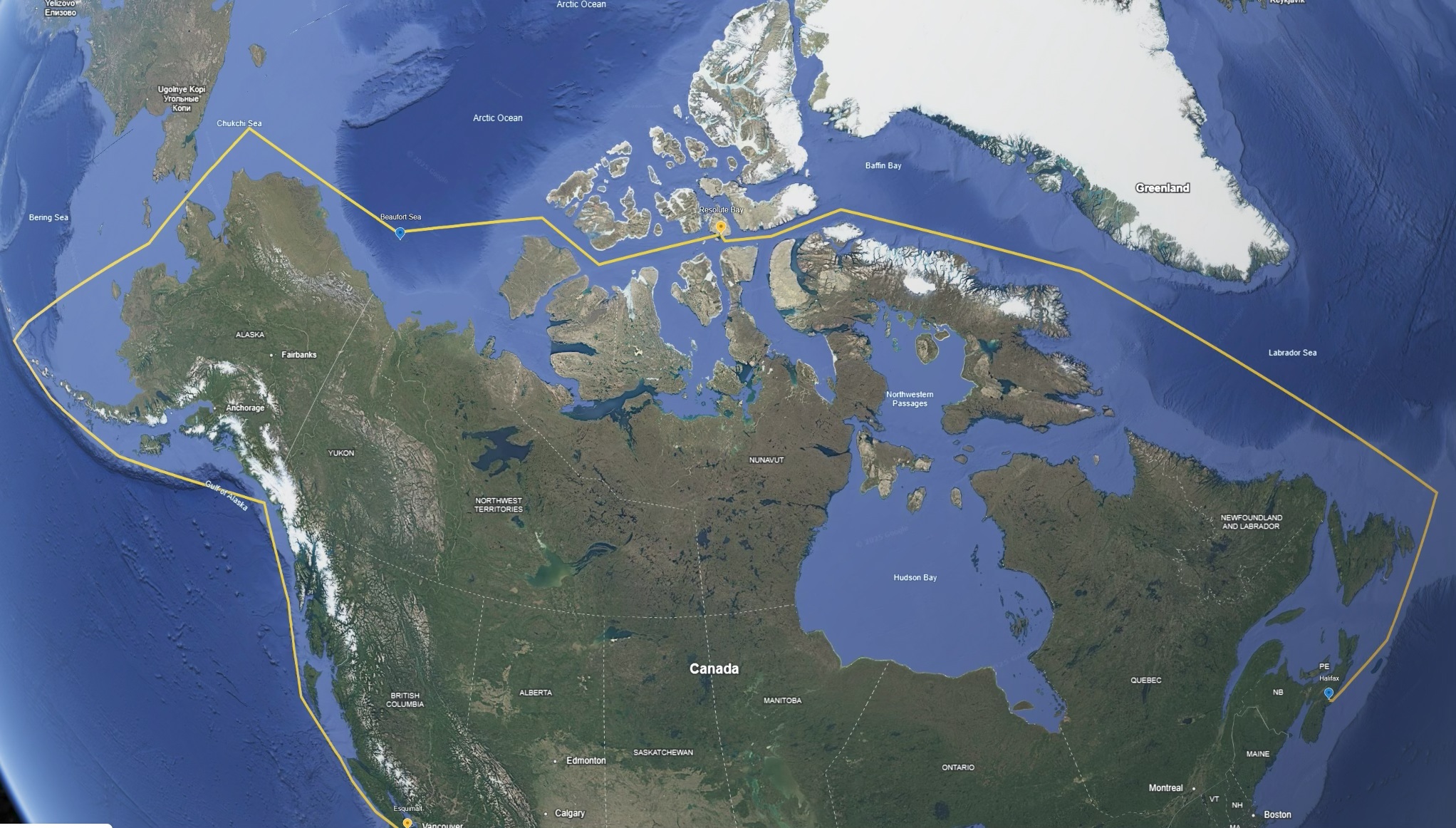
Rough transit routes to Canada’s Arctic from Esquimalt BC and Halifax NS
The first step is to assess what the Government of Canada wants out of its new submarine fleet and what capabilities it will need to achieve its objectives. I’m starting here because there is a common misconception that Canada needs submarines exclusively for Arctic patrol and surveillance, which is false. While it’s true that Arctic sovereignty and security are quite rightfully a preoccupation for the government, patrolling Canada’s Arctic is not the only capability Canada needs out of its new fleet. However, it is the most common argument in favour of a submarine fleet since Arctic sovereignty remains popular within Liberal and Conservative circles alike, along with mainstream media.
Unfortunately, this narrative forces a lopsided conversation about the role these new boats will be expected to play over the coming decades. In addition to Arctic operations, these subs will be expected to deploy far into the North Atlantic with NATO and push across the Pacific to support the Indo-Pacific Strategy. Ottawa’s own defence policy update ties submarine recapitalization to contributions with allies in both theatres.
This implies a blue-water capability, which means these conventionally powered submarines must be able to deploy and fight in the open ocean, far from home ports and daily logistics, for extended periods. This requires long range and endurance for transoceanic transits, sustained submerged persistence through air independent propulsion (AIP) and high-capacity batteries to minimize snorkelling, and habitability and maintenance margins that keep the crew and systems effective past the 30- to 60-day mark. Simply put, the new boats must be able to cross an ocean, remain covert and lethal on station, and deliver effects.
The government further stipulated specific capabilities that the new submarines must have in one of its press releases stating “Through the Canadian Patrol Submarine Project (CPSP), Canada will acquire a larger, modernized submarine fleet to enable the Royal Canadian Navy to covertly detect and deter maritime threats, control our maritime approaches, project power and striking capability further from our shores, and project a persistent deterrent on all three coasts.”
What caught my attention here is the ability to project power and striking capability further from our shores. Power projection is synonymous with a blue-water capability; however, a striking capability, which I take to mean a land strike capability, is not typical for a conventionally powered SSK, which are typically armed only with torpedoes to take out other submarines or surface vessels.
To sum up, Canada’s new subs must be able to:
- Patrol the Arctic with under-ice capability year-round
- Deploy with NATO in the North Atlantic and support Canada’s commitment to the Indo-Pacific Strategy – A blue-water capability
- Remain submerged for three weeks or more at a time
- Covertly detect and deter maritime threats
- Control Canada’s maritime approaches
- A range of 7000 + nautical miles
- Project power far from home ports
- Anti-surface and subsurface warfare
- Land-attack capability via cruise and/or non-nuclear ballistic missiles
- Insert Tier-1 special operators on coastal infiltration missions
- Conduct intelligence, surveillance, and reconnaissance in Canadian maritime approaches and abroad.
With that out of the way, let’s look at what each submarine can do.
He outlines the two competing designs and how they could meet the RCN’s needs and then plumps for the South Korean KSS-III for its stronger case for meeting those needs in the wider ocean environments than the German/Norwegian Type 212CD:
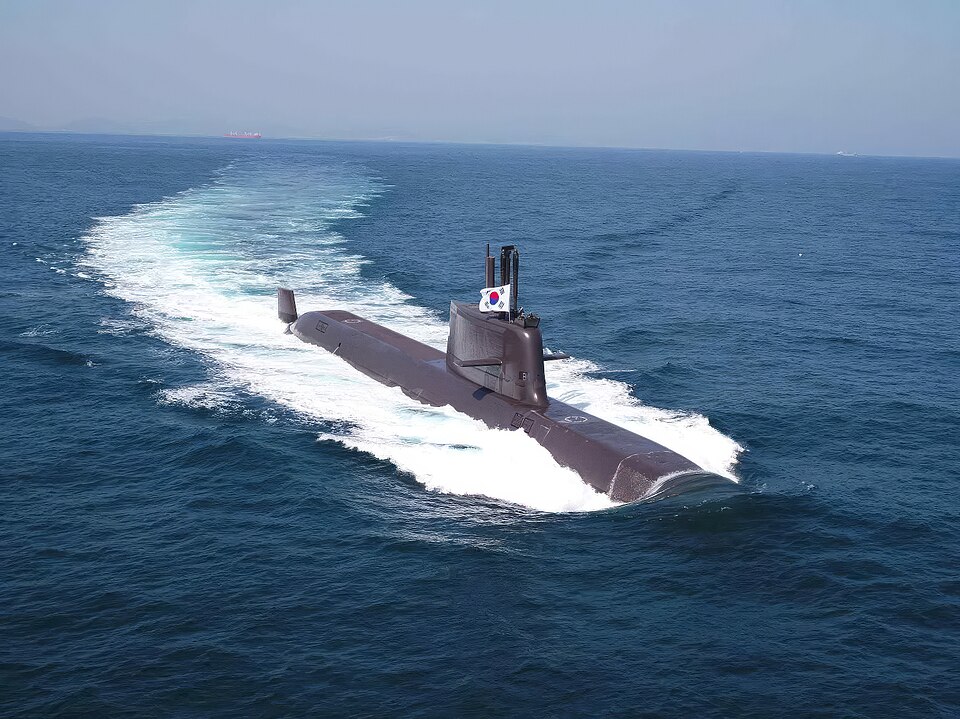
ROKS Shin Chae-ho, a KSS-III submarine at sea on 4 April, 2024.
Photo from the Defense Acquisition Program Administration (DAPA) via Wikimedia Commons.
The KSS-III is the only conventional submarine that can meet all of Canada’s requirements. It combines the blue-water reach and endurance demanded by transoceanic tasking with a vertical launch system that enables credible land-attack and complex anti-surface strike options, supported by lithium-ion batteries that lengthen quiet submerged persistence and improve sortie tempo on distant stations. Its larger hull and higher automation provide the habitability and crew margin needed for 30 to 60 day deployments from Halifax and Esquimalt to the North Atlantic, the Indo-Pacific, and the Arctic ice edge, while remaining within the conventional, non-nuclear profile Canada has set. The design’s modern combat system and sensor suite can be integrated with Canadian and allied command, control, and targeting architectures, and the bilateral sustainment framework required with South Korea can be structured by contract to include full technical data access, in-country training pipelines, and an industrial workshare that anchors through-life support domestically. The delivery cadence proposed for a 2026 award would shorten Canada’s reliance on the Victoria class and reduce associated sustainment exposure during transition, while an initial Canadian order of up to twelve boats would give Ottawa a controlling voice over configuration management, growth paths, and export-variant standards for the life of the class.
Comments Off on The Canadian Patrol Submarine Project
August 17, 2025
Battle of Norway, 1940
Real Time History
Published 7 Mar 2025The Battle of Norway in Spring 1940 cemented the reputation of the daring and invincible German war machine under Adolf Hitler. But while Denmark and Norway were successfully occupied by Germany, the campaign came at a heavy cost. This was especially true for the German Kriegsmarine which lost a significant amount of warships including the Blücher — losses that essentially crippled them for the remainder of the war.
(more…)
Comments Off on Battle of Norway, 1940
May 22, 2025
Landstad 1900: A True Semiautomatic Revolver
Forgotten Weapons
Published 3 Jul 2024The Landstad Model 1900 is a magazine-fed, semiautomatic revolver designed by Norwegian Halvard Folkestad Landstad, who lived in Kristiana (now called Oslo). He designed the gun on his own dime, and presented it to military trials in 1901, which it failed miserably. The gun has a six-round detachable box magazine of 7.5mm Nagant cartridges, a two-chamber cylinder, and a simple blowback action. Its firing cycle is to chamber a round from the magazine into the bottom cylinder chamber by manually cycling the action. The trigger is a long double-action type which rotates the cylinder 180 degrees so the cartridge is in line with the barrel and releases the striker to fire the round. Upon firing, the bolt cycles open, extracting and ejecting the empty case, rechecking the striker, and chambering a new round from the magazine into the bottom of the cylinder.
The purpose of this overly complex system was to provide a semiauto action which did not ever leave a live cartridge under the striker, in the name of safety. Only one example was made, and its bolt broke after just 5 or 6 rounds fired. It was repaired almost immediately, but the Norwegian military had was not interested in further development, and nothing more came of the program. A few years later in 1908 Norway would institute a more serious semiauto pistol trials program which led to adoption of the Kongsberg 1914 (a slightly modified Colt 1911).
Thanks to Jan for allowing me to disassemble and film this one-of-a-kind piece for you!
(more…)
Comments Off on Landstad 1900: A True Semiautomatic Revolver
May 16, 2025
QotD: Marxist and socialist revolutions
Professor Chirot’s theory is that revolutions break out when an outmoded governments refused to recognise their own outmodedness and hence to reform. This obviously has some similarities with the Marxist idea that revolutions occur when the relations of production of a society can no longer contain its productive forces, and is in contradiction to Tocqueville’s idea that revolutions break out not when rigid and dictatorial regimes are at their most oppressively rigid and dictatorial, but when they begin to reform and meet the demands of those who demand change. This is not to say that Professor Chirot is wrong, but one might have expected him to make allusion to the two theories.
The collapse of communist regimes in Eastern Europe, which he is happy to call revolutionary, also does not support his rough schema. It is not that the communist regime refused to reform, it is that it was incapable of reform for the same reason that a woman can’t be a little bit pregnant. If a regime makes the kind of claims for itself that the communist regime made, even if the leaders had themselves long since ceased to believe them, namely that it is the ineluctable denouement of all history, if not that of the universe itself, it cannot retreat, all the more so because its crimes, which one could and would have been claimed as a step in the march of history, would thereafter be seen for what they were: the choices of fanatical psychopaths avid for total power.
Professor Chirot seems to have a slight soft spot (admittedly only implicit) for socialism, that is to say for something more than mere social democracy. In his discussion of the case of Angola, in which a revolutionary movement emerged triumphant, but whose post-revolutionary regime was a pure kleptocracy under cover of Marxist rhetoric, he says: “Much more could have been done through either a market-friendly or a genuinely more socialist approach to economic development”.
This surely implies that somewhere, at some time, there was a socialist regime that would have handled Angola’s oil bonanza better, in which case one would have liked an example that it might have followed. Norway, perhaps? But Norway is not socialist, it is social democratic. Besides, Norwegians and Angolans are scarcely the same in a very large number of ways. I would have thought that the chances of Angola following the Norwegian model were, and are, approximately, and perhaps even exactly, zero.
Theodore Dalrymple, “Longing for Revolution”, New English Review, 2020-05-13.
Comments Off on QotD: Marxist and socialist revolutions
December 11, 2024
Norway finds the perfect tool to drive away those pesky entrepreneurs
Don’t you just hate having all these bothersome start-up companies in your country, creating new jobs and new investment opportunities? Norway sure does, but good news: they’ve found an almost perfect way to not only deter existing entrepreneurs but to punish those who try to leave after they’ve been successful:
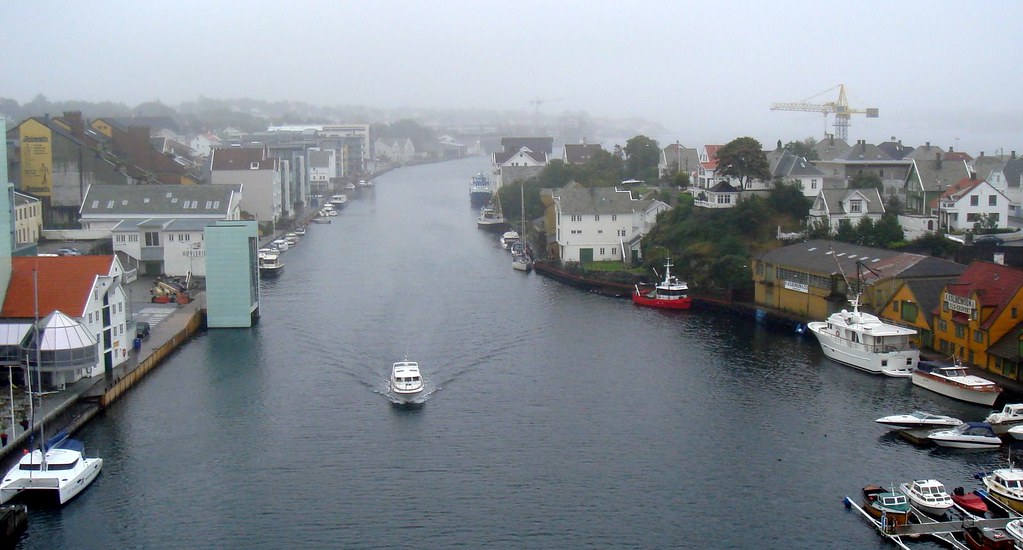
Norway is a fantastically beautiful country, but lately they’ve decided they want as few new companies as possible.
“Norway” by Nouhailler is licensed under CC BY-SA 2.0 

 .
.
Norway’s entrepreneurs are disappearing. In the past two years alone, 100 of Norway’s top 400 taxpayers, representing about 50 percent of that group’s wealth, have fled the country to protect their businesses.
In Atlas Shrugged, Ayn Rand paints a vivid picture of a dystopian society where government overreach and socialist policies kill innovation and demonize entrepreneurs. Present-day Norway mirrors this scenario in unsettling ways. The Nordic countries have long operated on an egalitarian ideal—citizens pay high tax rates for a generous safety net and effective public services. But Norway has taken the ideal to destructive and bizarre extremes.
Norway spends 45 percent more than Sweden on healthcare per capita with approximately the same health outcomes. Norway spends 50 percent more than Finland on primary and secondary school with worse results. And it splurges on green virtue-signaling with, for example, a $3.2 billion offshore wind project that industry experts believe is financially unworkable. That $3.2 billion, by the way, is roughly equivalent to the total revenue raised by the wealth tax.
To socialist politicians in Norway, entrepreneurs are mere piggy banks to be raided for ever more spending. When confronted with the reality that you can’t pay taxes with money you don’t have, the response is a vague moralism like “those with the broadest shoulders must bear the heaviest burdens.” Any dissent is waved away, deemed invalid because. . . free healthcare.
Earlier this year, instead of scaling back the tax blowout, the government doubled down, not only increasing the wealth tax but adding a vise grip on business owners in the form of an “exit tax” on unrealized gains as well. That means if you move from Norway, you’re immediately liable to pay 38 percent of the market value of your assets. It doesn’t matter if you have no cash on hand, if your assets are risky and could plummet in value, or even if your company fails after you leave—you still owe the tax. (Luckily for me, I left before this tax became law.)
The intent is to corral entrepreneurs inside Norway, impeding them from heading for the exits. The inevitable result: They’ll leave even before starting their businesses. After shooting itself in one foot, the government is now aiming a bazooka at the other one.
Comments Off on Norway finds the perfect tool to drive away those pesky entrepreneurs
May 5, 2024
M98kF1 ZF41: Norway Recycles Germany’s Worst Sniper Rifle
Forgotten Weapons
Published Jan 29, 2024When Germany capitulated at the end of World War Two, several hundred thousand German soldiers were stuck in Norway (thanks to the efforts of the Norwegian Resistance preventing them from moving south to reinforce against Allied landings in Normandy). These solders’ arms were surrendered to the Norwegians, and they formed the basis of Norwegian Army and Home Guard armaments for many years. With hundreds of thousands of K98k rifles to choose from, the Norwegians were able to pick out plenty in good condition. This included 400 ZF41 DMR/sniper rifles that were kept intact and taken into Norwegian service. Three different branches used the rifles, and they are marked on the chamber with either HAER (Army), FLY (Air Force), or K.ART (Naval Artillery).
In 1950, Norway began to get US military aid in .30-06, and they decided to rebarrel these Mausers to that cartridge. The process began in 1952 and they were all converted by the end of 1956. The new barrels are marked “KAL 7.62”, for 7.62x63mm. There was only a small amount of experimental further conversion to 7.62mm NATO. The ZF-41 models like this one were also given a new serial number tag riveted onto the scope mount with the rifle’s serial number (150001 through 150400).
Converted Mausers served in the Home Guard until the early 1970s, when they were replaced by the AG3 (HK91).
(more…)
September 1, 2023
Will the Resistance Smash Nazism or Build Communism? – War Against Humanity 112
World War Two
Published 31 Aug 2023The hour of resistance is here. Across Western Europe, armies of resistance fighters rise up to meet the Allied armies and sabotage the Axis war machine. In Slovakia, a secret army fights to restore Czechoslovak independence. But against this hopeful backdrop, the Axis forces strike back hard. And, all around, the spectre of communism strikes fear in the Western Powers.
(more…)
Comments Off on Will the Resistance Smash Nazism or Build Communism? – War Against Humanity 112
June 14, 2023
The sinking of Norwegian frigate HNoMS Helge Ingstad in 2018
CDR Salamander must follow Norwegian court cases more closely than I do … which is “not at all” in my case. Oddly, I was just thinking about the loss of HNoMS Helge Ingstad last week, and here’s follow-up information from the appeals process:
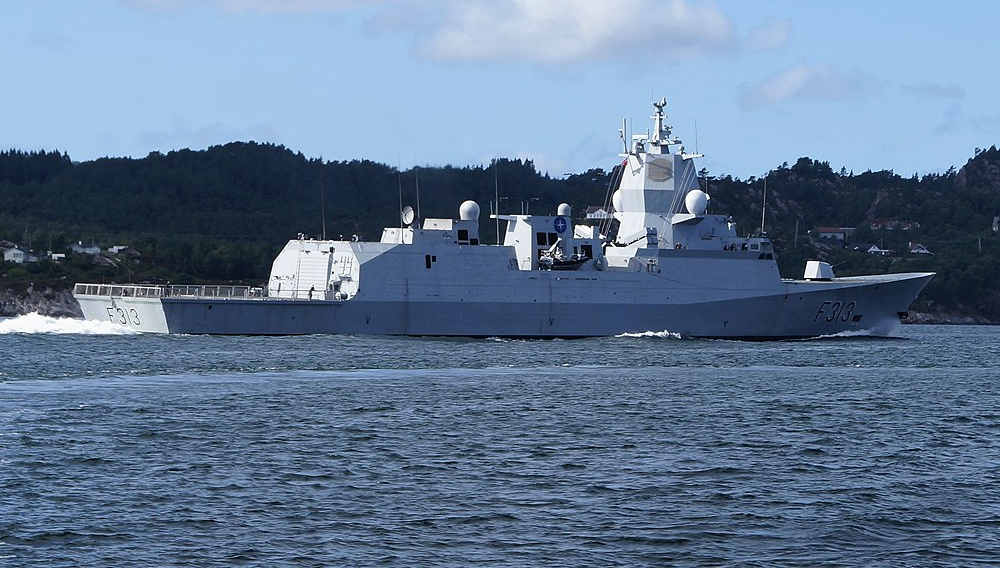
HNoMS Helge Ingstad, a Fridtjof Nansen-class frigate commissioned in 2009.
Photo detail via Wikimedia Commons.
The court case against the officer of the watch (vaktleder) and its appeals has brought the issue back to the front in Norway.
In yesterday’s Forsvarets Forums article (remember to translate it), retired Norwegian naval officer with multiple command tours, Hans Petter Midttun, outlines a must read wire brushing of the entire “optimal manning” concept.
You will see that his view of what it caused to the Norwegian Navy’s nightmare is a direct parallel of that happened to the US Navy in that horrible month of 2017; too much to do with too little people with too thin training.
Let’s dive in;
The Ministry of Defense (FD), the Defense Staff (FST) and the Norwegian Navy (SST) have, in my opinion, knowingly or unknowingly breached the prerequisites for proper operation of the frigates.
My claim is rooted in 23 years of frigate competence. I have held most of the operational positions in the frigate force. This includes the positions as ship commander at KNM Narvik and KNM Roald Amundsen, as well as a period at the Navy’s competence center and two periods as staff officer for the “shipowner”.
That is the extended way of saying, “I know you because I am you“. He’s raising his voice here because it is personal and he wants to go on the record that there are causes to this mishap much deeper than just the one officer on trial.
In light of the extensive changes that lay before the Armed Forces in 2004, we considered it crucial to describe the assumptions on which the staffing concept was based. It was not a new concept. It just hadn’t been described before. It had been developed as a consequence of continuous efficiency measures in the 90s.
One of our main messages was:
The Lean Manning Concept was not chosen because it was operationally smart. It was chosen because it enabled the Navy to man and sail (at the time) a balanced structure. It was an absolute minimum crew that could only work if all the prerequisites were met.
The last part — here on the Front Porch we describe that as “exquisite“. Everything — and everyone — has to work just right to make the formula work.
It doesn’t work that way outside the briefing room. Never does.
During a five-year period, the crew sailed one year less than what Nato considered necessary to maintain the operational level (for a frigate with a larger crew). But in addition, the crews never reached more than a maximum of 80 percent of their expected combat power. This meant that each year the training activity started at a lower level than the previous year.
You design minimum manning — and you get 80% of the minimum. It might work for awhile in peace — but it unquestionably won’t work in combat. Exactly the stew that contributed to the McCain & Fitzgerald collisions. Senior leaders try to convince everyone that 9-to-11 month deployments are a “new normal” and humans can do 100-hr work weeks for weeks to months on end with no downside. Just sadistic malpractice.
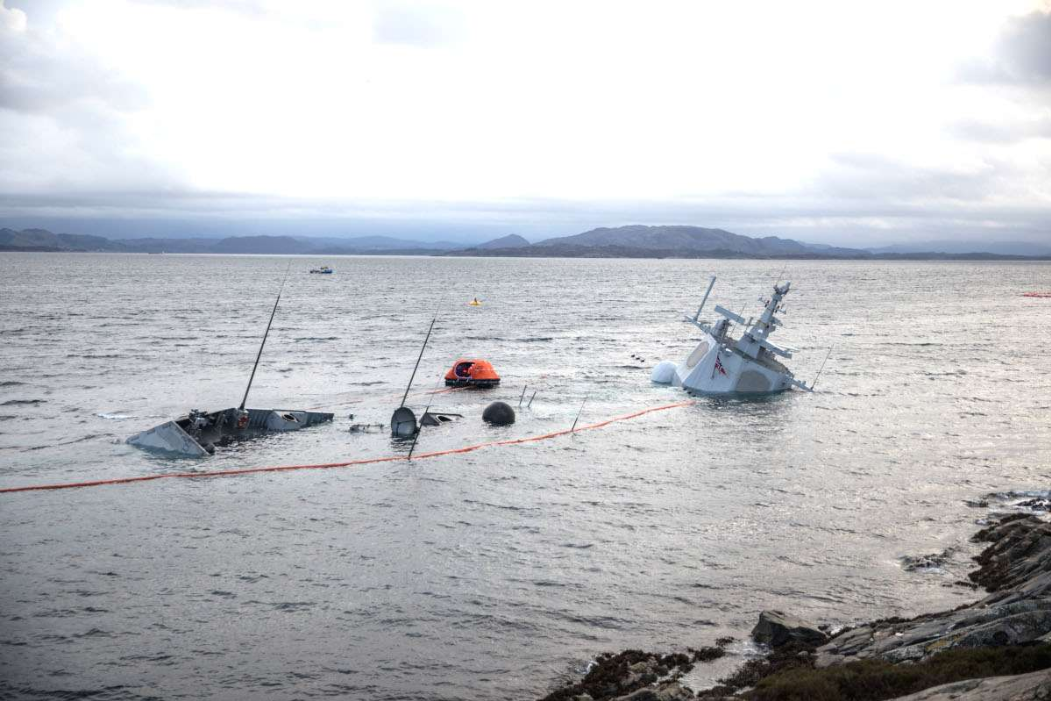
HNoMS Helge Ingstad after grounding, 13 November 2018. Immediately after the collision, the ship was run ashore to prevent it sinking, but she slowly slid down and eventually was almost completely underwater.
Photo via The Drive.
Comments Off on The sinking of Norwegian frigate HNoMS Helge Ingstad in 2018
January 12, 2023
Early royal “spares” in English history
Ed West considers the time-honoured Ottoman habit of strangling the new Sultan’s half-brothers on his accession to the throne and notes that after the practice was discontinued, many notables in the empire thought it also marked a down-turn in the quality of later Sultans. The British crown never had such a formal tradition, although brotherly love seems to have been in very short supply a thousand years ago:
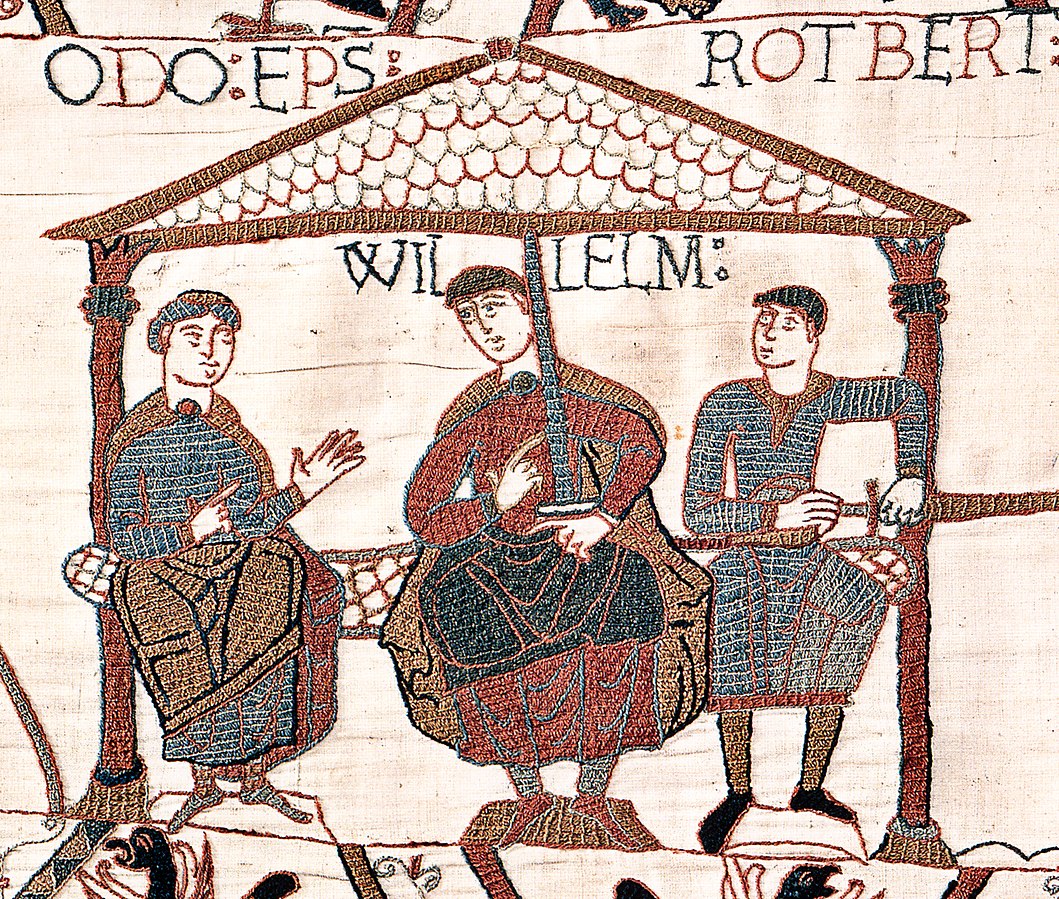
Panel from the Bayeux Tapestry – this one depicts Bishop Odo of Bayeux, Duke William, and Count Robert of Mortain.
Scan from Lucien Musset’s The Bayeux Tapestry via Wikimedia Commons.
Tales of royal brothers at war are a common theme, a staple of Norse sagas in particular, a recent example being the television series Vikings, and the brothers Ragnar and Rollo. William and Harry’s own family story in England begins with a tale told in one 14th century Icelandic saga, Hemings þáttr, which draws on older Norwegian stories to recall two royal brothers who became deadly rivals, Harold and Tostig.
Harold, as Earl of Wessex and the second most powerful man in England, had had his brother installed as Earl of Northumbria, where he had made himself immensely unpopular and provoked an uprising. When in 1065 Harold did a deal with the northerners to remove his sibling — presumably in exchange for the Northumbrians supporting his claim to the throne when the ailing King Edward passed away — Tostig fled abroad, embittered and determined to get revenge. Later accounts suggest that Harold and Tostig were rivals from an early age, one story having the young brothers fighting at the royal court as youngsters. Who knows, maybe Harold got the bigger room.
Tostig, now an exile, travelled around the North Sea looking for someone to help him invade England, finally finding his man with the terrifying Norwegian giant Harald Hardraada. Tostig had told all the Norwegians he was popular back home, but when they arrived in York they found that their English ally was in fact widely despised, and that not a single person came out to greet the former earl.
Tostig was killed soon after, in battle with his brother, having first (supposedly) exchanged words in this legendary meeting.
Harold himself would follow soon, victim of the English aristocracy’s great forefather William the Conqueror, whose success is illustrated by the naming patterns that followed. Harold’s brothers were Sweyn, Tostig, Gyrth, Leofwine and Wulfnoth; the Conqueror’s sons Robert, Richard, William and Henry. We haven’t had any Prince Wulfnoths recently.
The Conqueror’s son Richard having died in a hunting accident, the surviving Norman brothers had similarly fallen out, by one account the feud starting with a practical joke where William and Henry had poured a bucket of urine over eldest brother Robert. But mainly it was over land and power: after their father’s death Robert was made Duke of Normandy, the middle brother became William II of England, while Henry had to make do with just a cash payment.
Yet when William died in a mysterious hunting accident in the New Forest in 1100, Henry was conveniently close enough to reach the Treasury at Winchester within an hour to claim the crown. Six years later he invaded Normandy, with a partly English army, and captured his surviving brother, keeping Robert imprisoned for the rest of his life.
Henry I ruled for 35 years, but his long reign was followed by a civil war between his daughter Matilda and nephew Stephen, resulting in the rise of a new dynasty, the House of Anjou, or Plantagenets — so defined by internal conflict that Francis Bacon called them “a race much dipped in their own blood”.
Matilda’s husband Geoffrey Plantagenet had his brother Elias imprisoned, and Geoffrey’s son, King Henry II, had also gone to war with his younger brother, also Geoffrey. Even Geoffrey Plantagenet’s grandfather Fulk “the Quarreller” had spent over 30 years fighting for control of the county with his older brother, yet another Geoffrey.
Henry II in contrast fought his four sons and, after his death, his heir Richard I would also face rebellion from his younger brother John. When the Lionheart returned from crusade to deal with his deeply unlovable sibling he was remarkably forgiving, telling him: “Think no more of it, brother: you are but a child who has had evil counsellors.” This was despite John being 27 at the time.
More than two centuries later the House of Plantagenet came crashing down with a war pitting cousin against cousin, although brothers also fell out in the form of Edward IV and George, Duke of Clarence.
Both men were tall, blond and handsome, and both had a cruel and violent streak, but here the younger brother was impulsive, vain and foolish. He lacked maturity or self-control, was easily flattered and tempted into unwise decisions. He had been given vast estates and a lavish household but resented his older brother, who had also blocked his marriage to the daughter of the country’s largest landowner.
So Clarence had joined in the overthrow of Edward in 1470, while the youngest brother Richard, Duke of Gloucester, had remained loyal. However, when Edward returned to England the following March and Clarence led 4,000 men out to fight him, he was talked into changing sides again.
Clarence was forgiven, but the two brothers looked upon each other “with no very fraternal eyes”, and five years later he seems to have lost his mind after his wife died during childbirth. He accused the king of “necromancy” and of poisoning his subjects, and when brought before his brother made things much worse by claiming that Edward was a bastard. He was put to death.
Apparently, a soothsayer had also told King Edward that “G” would take his crown, and this must have fuelled his paranoia about George; after all, his other brother, the loyal Richard of Gloucester, would never do such a thing.
Such fraternal feuding ended with the rise of the Tudors and the conflicts between the House of Stuart and Parliament. There would be no more point in younger brothers threatening the monarch because the monarch no longer really had power; the royal family had evolved into a business, “the firm”, one in which hierarchies were clear and immovable, and the fortunes of family members were clearly joined.
Comments Off on Early royal “spares” in English history
November 20, 2022
A Conspiracy to kill America’s President? – WW2 – 221 – November 19, 1943
World War Two
Published 19 Nov 2022A torpedo attack against the President; a Marine invasion in the central Pacific that turns very bloody in a hurry; German counterattacks in the Soviet Union; a bombing raid in Italy against a secret weapons site — all of that this week.
(more…)
Comments Off on A Conspiracy to kill America’s President? – WW2 – 221 – November 19, 1943
November 12, 2022
Climate imperialism
Michael Shellenberger on the breathtaking hypocrisy of first world nations’ rhetoric toward developing countries’ attempts to improve their domestic energy production:
What’s worse, global elites are demanding that poor nations in the global south forgo fossil fuels, including natural gas, the cleanest fossil fuel, at a time of the worst energy crisis in modern history. None of this has stopped European nations from seeking natural gas to import from Africa for their own use.
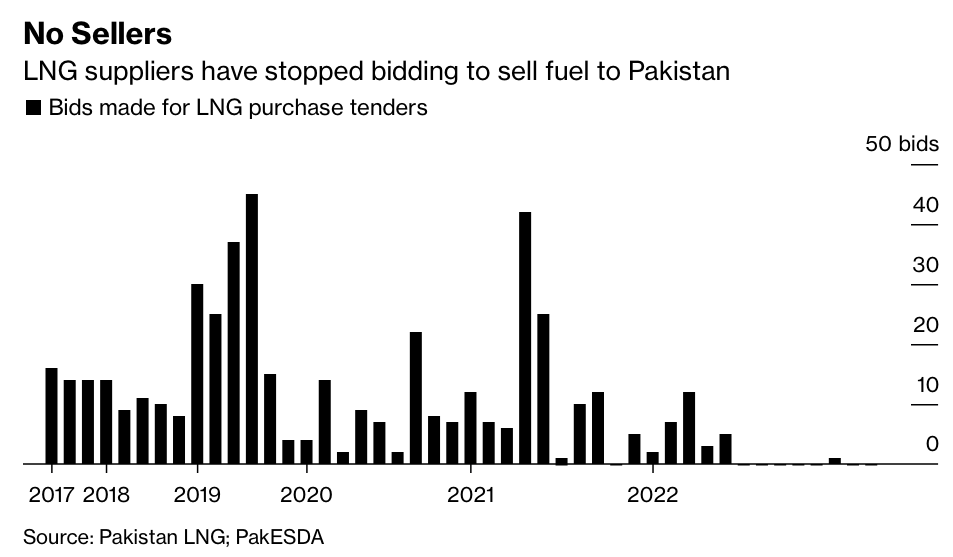
Rich nations have for years demanded that India and Pakistan not burn coal. But now, Europe is bidding up the global price of liquified natural gas (LNG), leaving Pakistan forced to ration limited natural gas supplies this winter because Europeans — the same ones demanding Pakistan not burn coal — have bid up the price of natural gas, making it unaffordable.
At last year’s climate talks, 20 nations promised to stop all funding for fossil fuel projects abroad. Germany paid South Africa $800 million to promise not to burn coal. Since then, Germany’s imports of coal have increased eight-fold. As for India, it will need to build 10 to 20 full-sized (28 gigawatts) coal-fired power plants over the next eight years to meet a doubling of electricity demand.
This is climate imperialism. Rich nations are only agreeing to help poor nations so long as they use energy sources that cannot lift themselves out of poverty.
Consider the case of Norway, Europe’s second-largest gas supplier after Russia. Last year it agreed to increase natural gas exports by 2 billion cubic meters, in order to alleviate energy shortages. At the same time, Norway is working to prevent the world’s poorest nations from producing their own natural gas by lobbying the World Bank to end its financing of natural gas projects in Africa.
The IMF wants to hold hostage $50 billion as part of a “Resilience and Sustainability Trust” that will demand nations give up fossil fuels and thus their chance at developing. Such efforts are working. On Thursday, South Africa received $600 million in “climate loans” from French and German development banks that can only be used for renewables. The Europeans hope to shift the $7.6 billion currently being invested by South Africa in electricity infrastructure away from coal and into renewables.
Celebrities and global leaders say they care about the poor. In 2019, the Duchess of Sussex, Meghan Markle, Prince Harry’s wife, told a group of African women, “I am here with you, and I am here FOR you … as a woman of color.” Why, then, are they demanding climate action on their backs?
Comments Off on Climate imperialism
September 13, 2022
The Greatest Escapes of World War Two – WW2 Special
World War Two
Published 12 Sep 2022This is an intimate story inspired by real events (notably inspired by the story of a member of the Danish resistance and grandmother of Hans von Knut Skovfoged, Head of Development at PortaPlay. A story told not on the front line, but in the intimate setting of a small Danish village.
(more…)
Comments Off on The Greatest Escapes of World War Two – WW2 Special
March 5, 2022
No Nazi Atomic Bomb – Operation Gunnerside – WW2 Special
World War Two
Published 3 Mar 2022By 1943 the German “Uranium-Club” was hoping to harvest the energy of the atoms. One of the things they still needed for their experiments was the moderator “heavy water”, which was produced for them in the hydro-plant “Vemork” in occupied Norway. British High Command authorized a top-secret mission to prevent it from ever reaching Germany. A group of highly trained commandos was to parachute in and destroy the heavy water facility by any means necessary.
(more…)
Comments Off on No Nazi Atomic Bomb – Operation Gunnerside – WW2 Special
February 26, 2022
Tank Chats #140 | M24 Chaffee | The Tank Museum
The Tank Museum
Published 19 Nov 2021Our Patreons have already enjoyed Early Access and AD free viewing of our weekly YouTube video! Consider becoming a Patreon Supporter today: https://www.patreon.com/tankmuseum
David Fletcher is back with another Tank Chat on the M24 Chaffee. Learn all about this American light tank and how it was used at the end of the Second World War and in post-WW2 conflicts.
(more…)
Comments Off on Tank Chats #140 | M24 Chaffee | The Tank Museum


