Quotulatiousness

September 1, 2025

“… these two [books] are ‘perfect bound’, which is a misleading name for a crappy technique”

Filed under: Books, Business, Media, Technology, Woodworking — Tags: , , — Nicholas @ 03:00

Chris Schwarz on the frustrations of a (physical) book reader with far too many modern printed books:

Dammit, Norton!

I don’t read much for pleasure these days. I spend about three hours a day reading manuscripts, draft blog entries, old woodworking texts, academic papers and contracts. When the workday is done, the last thing I want is someone else’s voice chattering in my head.

But I love books and have always been a voracious reader. So I keep a stack of books that I probe and pick at, like a 5-year-old forking through chop suey, looking for something to consume.

This month has been great. I’m in the middle of “The Overstory” by Richard Powers and “A Swim in a Pond in the Rain” by George Saunders. Both books were written with an exquisite pen, and I lose track of time when I’m reading them.

But both books also make me want to burn down the headquarters of Norton and Random House publishing. Because both books are made like dogshit.

Like most books these days, these two are “perfect bound”, which is a misleading name for a crappy technique. Like if we called a “butt joint” the “excellent end-grain joint,” or if we called miters the “super slanty joint”.

What’s perfect binding? Take a stack of individual sheets of paper, like the stack of pages you put in your printer. Slather some glue on one edge and press the goo into the pages. While the glue is still wet, slap the book’s cover to the glue on the spine. Trim the pages, sell the book and make an obscene amount of money.

I don’t know a binding technique that is crappier than perfect binding. Even loose-leaf pages in a Trapper Keeper are better because they can be repaired.

Perfect-bound books are – like a Ryobi drill – a product that has an expiration date. After two or three readings, the pages will start to fall out of the glue. You don’t even have to mistreat the binding for this to happen. The glue gets brittle, then you turn a page like a normal person and the leaves fall like it’s autumn.

Do not fool yourself and think that book publishers are suffering and need to cut corners in the manufacturing department. They aren’t. Book publishing is still one of the most profitable businesses, as far as margin is concerned. It’s not unusual for a publisher to have margins of 30 to 35 percent. (Note: Lost Art Press keeps a margin of about 15 percent – much lower because we pay more in royalties and pay a lot more for manufacturing.)

My paperback copy of “The Overstory” is the 23rd printing of the title since it was released in 2018. Norton is literally printing money at this point with the book. The book’s retail is $18.95. Manufacturing cost (at a plant in the United States): I’d guess is about $3.80.

Norton can do better. But it doesn’t have to. Customers are happy to pay $18.95 for an impermanent book.

July 28, 2025

QotD: The technology ecosystem

Filed under: Books, Business, Quotations, Technology, USA — Tags: , , , — Nicholas @ 01:00

A lot of thinkfluencers will describe technology as an “ecosystem” without grappling with the full implications of that term. Most often when they say it they’re referring to a cluster of consumer-facing businesses that rent space or other capabilities from a “platform” provider, like apps on an App Store. But that isn’t an ecosystem, that’s a shopping mall. Real ecosystems have energy and nutrient flow both up and down the food chain, as well as laterally; they have vast swarms of bottom feeders, fungi, and other detritivores that recycle matter through decomposition and make its constituents bioavailable once more; they also have a constant source of energy input (usually the sun) to make up for the constant entropic drag that would otherwise grind things to a halt. One of the great discoveries of modern ecology is that apex predators, macrofauna, the plants and animals we notice and admire are perched precariously atop a vast network of invisible supports. A tiger is the temporary result of too many worms gathering in one place.

Technology is also an ecosystem, not the way bluechecks talk about it, but in this more profound sense. A Boeing or a Google is like a tiger: the highly-visible culmination of a vast subterranean drama. Turn over a spade and you’ll find them — the suppliers and subcontractors, investor networks, tooling manufacturers, feeder universities, advisors, researchers, shipping and packaging experts, friendly bankers and government officials, producers of upstream technological inputs, and a vast collection of lower-tier companies in related markets that act like an economic flywheel, absorbing and releasing excess labor as the economy shudders through its fits and starts.

In nature, it’s energy and nutrients that move through the food webs. Here their analogues are capital and knowledge. It’s hard to miss the money sloshing back and forth — world-changing companies are nurtured through their awkward adolescence by sophisticated and patient pools of capital, and the high-flying champions of those companies become the next generation’s venture investors after cashing out. Harder to see but even more influential is the vast economic dark matter made up of professionals who struck it rich enough to live comfortably but not rich enough to fly private. These unobtrusive capitalists are the first to hear through professional whispernets that so-and-so has quit his job to work on such-and-such. Since they’re still in the rat-race, they can have an informed opinion on the caliber both of the idea and of the team around it, and are usually the early champions of the most unusual and speculative ventures. And finally, money sloshes around between the companies themselves through a complicated network of deals, joint ventures, and strategic investments.

The money is more visible, but the way knowledge moves is more important. Part of it is academic, propositional knowledge or technical data whose discovery is accelerated when a dozen different teams are on its scent, sometimes racing each other to the prize, sometimes egging each other on and celebrating each others’ victories. But the bulk of what makes this ecosystem hum, the true currency that drives nearly every barter or exchange, is practical, process knowledge of the sort that 莊子 first described and Michael Oakeshott later re-popularized for our benighted and ignorant age. What makes process knowledge unusual is that by its very nature it cannot be separated from people, cannot be digitized or divorced or attached to an email. It is at once the nous of a technological ecosystem and the thing that makes it fundamentally illegible — an immaterial, intangible essence that inheres only in individuals, like a mind or a soul.

John Psmith, “REVIEW: Flying Blind by Peter Robison”, Mr. and Mrs. Psmith’s Bookshelf, 2023-02-06.

July 27, 2025

Shooting a .276 Pedersen PB Rifle

Filed under: History, Military, USA, Weapons — Tags: , , , , — Nicholas @ 02:00

Forgotten Weapons
Published 11 Aug 2015

Thanks to Alex C. at TheFirearmBlog, I recently had an opportunity to do some shooting with a .276 caliber Vickers-Pedersen model PB rifle. This was one of the very first rifles Vickers built when they thought the Pedersen would be adopted by the US military and could be further marketed worldwide — after only about 16 PB rifles they made some changes and started making the improved PA model instead (the two main improvements being the use of a reversible clip and the addition of a mechanism to allow ejection of a partially-full clip).

Anyway, in addition to Alex and myself, we were joined by Nathaniel F (a TFB writer) and Patrick R (from the TFBTV video channel). Between us we put about 60 rounds of original 1920s wax-lubricated Frankfort Arsenal .276 Pedersen ammo through the rifle.

July 13, 2025

Tiger II: What was the point?

Filed under: Germany, History, Military, Weapons, WW2 — Tags: , , , — Nicholas @ 04:00

The folks at the Tank Museum at Bovington put together a video comparing the Tiger II to the earlier Tiger I and the typical allied tanks they faced on the battlefield. On the social media site formerly known as Twitter, historian Jonathan Ware posted a long thread about both the topics the Tank Museum’s video raised and where he feels they should have added more context:

And here’s the Tank Museum’s video itself:

FEATURING FOOTAGE OF TIGER I AND TIGER II RUNNING TOGETHER AT TANKFEST 2025 – with thanks to Musée des Blindés and World of Tanks.

It’s absurdly large, heavy, expensive, and difficult to build. So, you have to ask; what is the point of Tiger II when you already have the biggest, toughest and meanest beast on the block – Tiger I.

Whilst the Tiger I has maintained a legendary status since its appearance on the battlefield, there were many aspects of this tank’s design that were pretty much dead ends. The turret couldn’t be resized to fit a more powerful gun. And adding extra weight in the form of armour would put a huge amount of strain on the internal mechanics. So, a new tank was needed to ensure the German’s could maintain their edge against Allied armour.

Enter the Tiger II, otherwise known as the King Tiger. Heavily armed, the Tiger II could take on any Allied tanks that it faced, with its KwK 43 able to penetrate the frontal armour of a Sherman at 1,800m. Its thick sloped armour was incredibly dependable, and no Allied tank commander would willingly engage a Tiger II in a head-to-head fight.

The Tiger II’s battlefield presence came at a significant cost. A single Tiger II could take up to 400,000 hours to build at a price of RM 321,500 – up to 100,000 more hours than a Tiger I, and over twice the cost of a Panther. A while the Allies were churning out tanks that were “good enough”, the Germans were committed to quality and ensuring their tanks would always have the edge against enemy armour.

The Tiger II has often been described as a tactical success for its battlefield prowess, but a strategic failure for being so resource-hungry, expensive and relatively low in number. Given their cost, it forces us to question whether the German war machine should have dropped Tigers altogether in favour producing tanks that were cheaper and easier to build

00:00 | Introduction
00:55 | Durchbruchswagen
06:15 | Tiger I vs Tiger II
12:52 | The Numbers Game
17:34 | Was Tiger II a Success?

This video features archive footage courtesy of British Pathé.

In this film, Chris Copson breaks down the differences between two legendary tanks – the Tiger I and Tiger II. Whilst Tiger I was an impressive tank, certain areas of its design were an evolutionary dead-end. Its boxy turret couldn’t be enlarged to fit a bigger gun, and the hull couldn’t be up armoured without adding stress to the drive train. So, Tiger II ordered in 1943, including even thicker, sloped armour and a much more destructive gun. With mixed success on the battlefield, difficulties in maintaining its complex mechanics and reliance on dwindling supply lines, the Tiger II ended up being a tactic success, but a strategic failure.

Want to learn more about the Tiger I and Tiger II? Here are some of the sources we used to make this film:

Panzer Tracts No.23 – Panzer Production from 1933 to 1945 by Thomas Jentz and Hilary Doyle, 2011
Germany’s Tiger Tanks, DW to Tiger I: Design, Production and Modifications by Thomas Jentz and Hilary Doyle, 2000
Germany’s Tiger Tanks, VK45.02 to Tiger II: Design, Production and Modifications by Thomas Jentz and Hilary Doyle, 1997
Encyclopedia of German Tanks of World War Two, Revised Edition by Peter Chamberlain and Hilary Doyle, 1993
Tigerfibel. English translation by The Tank Museum, 2022
Panther and its Variants by Walter Spielberger, 1978
Armored Champion: The Top Tanks of World War II by Steven Zaloga, 2015
www.tankarchives.com
www.forum.axishistory.com
www.achtungpanzer.com
www.feldgrau.net

Q&A: Finland and Finnish Small Arms (From Berdan to New Sako AR)

Forgotten Weapons
Published 19 Feb 2025

Today’s Q&A is brought to you by the fine folks at Patreon!

I figured that Finland would be a good subject for this month’s Q&A, as I am visiting the country to shoot Finnish Brutality this month. In fact, this video was filmed during the trip (the match took place last weekend, and its video coverage will be coming soon!).

00:39 – Development of the Suomi and PPSh-41 submachine guns
03:24 – Oldest guns used in Finnish Independence War
04:40 – Biggest strength and weakness of the Suomi
06:43 – Soviet use of captured Suomis?
08:52 – Finnish Maxim guns
11:41 – Finnish alcohol
17:05 – Finnish small arms that could have been globally popular but weren’t?
20:04 – Benefits of a small invaded country using the same weapons as its invader?
23:07 – Favorite and least favorite Finnish customs?
25:57 – Finnish Mosin Nagant book by Matt DiRisio
27:26 – Sisu movie
28:28 – Are the Finns masters of improving other peoples’ guns?
30:08 – Pre-independence Finnish arms production
31:47 – Shower beer or sauna beer?
32:20 – Why so few RK95 rifles made, and RK95 vs RK62M?
35:35 – Swedish Mausers in Finland
37:54 – Commercial Sako rifles before and after Beretta bought Sako
39:19 – Finnish gun laws, specifically CCW
40:58 – Interlude: Finnish Brutality 2025 match update w/ Jari Laine
42:24 – Did Finland improve the PKM and SVD like they did the AK and Mosin?
44:57 – 7.62x54R vs 7.62x53R
47:56 – Thoughts on new Sako AR for Swedish and Finnish militaries
(more…)

July 7, 2025

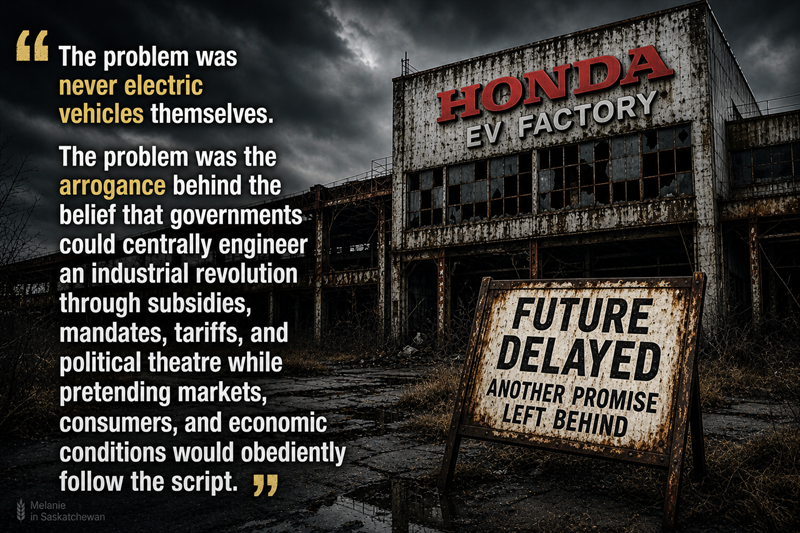
The federal government’s EV mandate cannot stand

Following its established pattern, the Canadian government will seek any possible path other than economic reality, especially when it comes to things like mandating that all vehicles sold in Canada must be EVs by 2035:

Nissan Leaf electric vehicle charging.
Photo by Nissan UK

It’s not always the unexpected that gets governments in trouble — often enough it’s their own bad judgement, poor timing or general clumsiness that gets in the way. But the unanticipated does happen a lot.

Parties and politicians put time and effort into concocting a set of policies aimed at winning votes by proposing remedies to problems identified as occupying top rungs of current voter concern. If they’re lucky they get elected, presumably intending to put those policies into effect at the earliest opportunity. Then the world shifts and pulls the rug from under them.

Former prime minister Justin Trudeau was a big fan of the attention-getting promise. Especially if it was a pledge timed well into the future when he was unlikely to still be around to be held responsible. Carbon reductions too ambitious to be realistic. Budget targets too unlikely to be believed. Statist planning projects that tended increasingly to the surreal.

Mark Carney is left with the detritus and the problem of what to do about it. As prime minister he’s already acted on a few of the problematic leftovers, ditching the carbon tax even though he’d previously supported it as a good idea; scrapping an increased tax on capital gains although the Treasury could certainly use the money; “caving,” as the Trump administration so tastefully put it, on a digital services tax that was a bad idea to begin with but pushed through by the Trudeau government anyway.

There’s an argument to be made, and not a bad one, that each retreat was the right move for the moment. And if there are mistakes that need abandoning, the early days of a new government is proverbially the best time to do it.

But righting wrongs has confronted Carney with a new predicament, in that there are so many Trudeau-era wrongs that need righting. Washington was still in the midst of its victory dance over its digital tax triumph when Canada’s auto industry came along to plead for similar treatment from Ottawa, insisting automakers couldn’t possibly meet previously-set electric vehicle targets and urging the new Liberal government to backtrack post haste.

Carney hosted the session with Canada’s chief executives for Ford, Stellantis and General Motors. Brian Kingston, chief executive of the Canadian Vehicle Manufacturers Association, was blunt in identifying the targets set for electric vehicle (EV) production as the main topic.

“The EV mandate itself is not sustainable. The targets that have been established cannot be met,” he said on arriving for the meeting. Afterwards he told Politico‘s online news site, “At a time when the industry is under immense pressure, the damaging and redundant ZEV mandate must be urgently removed”.

June 29, 2025

The oddity of Donald Trump’s personal “golden share” in US Steel

Filed under: Business, Government, Japan, USA — Tags: , , — Nicholas @ 04:00

In the National Post, Colby Cosh points out the weirdest element of President Trump’s deal with Nippon Steel for the takeover of venerable US Steel:

A “golden share” is a special kind of equity that gives its holder veto power over specified corporate decisions. It is often used in privatizations to give governments some vestige of control over corporate entities originally created by the state (or, in Canada, the Crown) for public purposes. In this unusual case, the U.S. government is magically gaining a golden share in exchange for permitting the sale of one private company to another. The government will be given the right to choose some U.S. Steel board directors, to forbid any name change, and to veto factory closures, offshoring, acquisitions and other moves.

As the Cato Institute immediately pointed out, this is a de facto nationalization of U.S. Steel — the sort of thing that would have had Cold War conservatives climbing the walls and hooting about socialism. But at least socialism professes to be social! Yesterday a lefty energy reporter named Robinson Meyer was nosing around in the revised corporate charter for the newly-acquired U.S. Steel, and he discovered a remarkable detail that the Cato folks had missed: the decision powers of the golden share have been legally assigned to Donald Trump in person and by name for the duration of his presidency. Only after Trump has left the White House do those golden-share powers revert to actual U.S. government departments (Treasury and Commerce).

The stench of banana-republicanism here is truly overwhelming. Again, any species of government foreign-investment review is bound to have a personal character, but such decisions are not supposed to involve the legally explicit assignment of a valuable corporate asset to the decision-maker in his own person. Can this be described as anything but legalized, open bribery — assuming that U.S. courts will find it legal if the terms of sale are challenged? Where in the U.S. Constitution, or in the history of the United States, can any warrant for this extraordinary behaviour conceivably be found? And will unholy bargains of this nature soon become routine?

June 15, 2025

America’s Forgotten SMG: The Hyde/Marlin M2

Filed under: History, Military, USA, Weapons, WW2 — Tags: , , , , , — Nicholas @ 02:00

Forgotten Weapons
Published 4 Oct 2019 #36270

The United States went into World War Two with the Thompson submachine gun — a weapon far too heavy and too expensive for its role. The British went to the other extreme with the Sten and while the US did not want a gun quite that crude, the Sten did spur a desire for something cheaper than the Thompson. George Hyde (then working for the Inland Division of GM) had worked on submachine gun designs in the 1930s, and he put together a weapon that would fit US needs. It was much cheaper than the Thompson and weighed in a full 2 pounds lighter. At tests in the spring of 1942, it also proved to be much more accurate in automatic firing, as it had a much more ergonomic stock design than the Thompson. The weapon was approved as the M2 submachine gun in 1942, and a contract went to Marlin to produce it (Inland had no extra production capacity at the time).

The receiver of the M2 was made through a metal sintering process, and Marlin had trouble getting this properly tooled up. The first gun delivery didn’t actually happen until May of 1943, and by that time Hyde had finished designing the M3 “Grease Gun”, which was cheaper still, and more attractive to the military. The contract for the M2 was cancelled in June of 1943, with only 400 guns delivered. There are only six known surviving examples today, split between private collections, museums, and military institutions.
(more…)

May 25, 2025

BD-44: The New Semiauto Sturmgewehr from D-K Productions

Filed under: Germany, History, Military, USA, Weapons, WW2 — Tags: , , , — Nicholas @ 02:00

Forgotten Weapons
Published 13 Jan 2025

D-K Productions is a collaboration between the German company Sport System Dittrich (SSD) and an American partner. SSD has been making reproductions of German World War Two small arms for something like 20 years — including Sturmgewehrs. Their guns are really good recreations of the 1940s originals, but there have long been issues importing them into the US. This was solved at last by forming a US company and doing the receiver manufacturing here in the States. While the company has plans to offer a whole bunch of different models, the one currently available is the BD-44, a copy of the standard production model of MP-44/StG-44.

I was really impressed by the use of not-finish-machined forgings for parts like the stacking rod and gas block, correctly duplicating the original German production. The stampings look good, and the handling matches the original guns (don’t expect it to be AR-level ergonomic!). The gut “feel” of the gun is an excellent match for an original MP-44. The 8×33 chambering and use of original magazines (alongside new-production magazines made by D-K) is the correct choice, of course.

I did not like the mismatch between the magazine well and magazine stops, and I did have a couple malfunctions in the two magazines I ran through it so far. Note that the gun I have at the range is my second one; the first one (which is what you see on the table) had consistent feed problems and D-K replaced it when I sent it back to them.

Whether the gun is worth the steep asking price is a personal decision, naturally. Hopefully this video gives you the information necessary to make your decision if you were considering getting one!
(more…)

May 21, 2025

The Butt Report – Nadir of the RAF – The Bomber War Episode 3

HardThrasher
Published 15 Dec 2023

As the powers that be on YT have decided that this video is Evil and naughty they’ve removed the ads — which, like, is great from your point of view but a bit shite from mine. So if you wanted to it’d be awesome if you’d consider either hitting the Super Thanks button or consider becoming a super cool kid and joining my Pateron.

If you’d like to email me send a message to lordhardthrasher@gmail.com

In this episode, the Butt Report, what happened next and the arrival of Bomber Harris. Despite this being more than 50 minutes, I’ve skipped some detail e.g. The Singleton Report which basically said “eh – bit difficult this bombing thing” nor Tizard’s rubbishing of Cherwell’s Memorandum, nor really the detail of the Cherwell Memorandum. You’ll live. However if you want more on the subject then I recommend the Official History of Bomber Command to get more into the civil service fire fights.
(more…)

April 30, 2025

How Is Ammunition Made? A Tour of Sellier & Bellot’s Factory

Filed under: Business, Europe, Military, Weapons — Tags: , , , , — Nicholas @ 02:00

Forgotten Weapons
Published 30 Dec 2024

Today I am in Vlašim in the Czech Republic, where Sellier & Bellot has allowed me to film a tour of their ammunition plant. This is one of the largest ammo manufacturers in the world, and they start with basic raw material like lead, copper, and brass and ship out complete case ammunition. The machines involved in this process are really interesting — let’s have a look!
(more…)

April 19, 2025

QotD: Allied air and sea operations won WWII

In [How the War Was Won author Phillips Payson] O’Brien’s methodology, we should look at what the Axis spent its productive effort making and consider what Allied actions slowed that productive effort. In both theaters, the answer is shocking. The Germans spent relatively little productive effort on tanks, focusing far more on aircraft, submarines, and vengeance weapons (i.e., proto-cruise missiles and rockets). The Japanese spent heavily on aircraft as well, but also a tremendous amount on freighters and oil tankers.

The Allies won the war by using air power to destroy the German and Japanese capacity both to produce military equipment and to transport it to the battlefield. By 1944-45, the Germans and Japanese could not use their economies to arm and supply their armies on the battlefield, leading to their inevitable defeat.

In the European war, American and British airpower: (a) directly destroyed a significant amount of productive capacity, (b) rendered remaining capacity far less efficient, (c) made it impossible for the Germans to defeat western ground forces, and (d) compelled the Germans to waste tremendous resources on air defense and exorbitant, ultimately ineffective vengeance weapons.

In the Pacific, the United States used carrier-based airpower, submarines, and bomber-deployed mines to isolate Japan from the resources of the empire it conquered in 1941-42. American bombers also directly destroyed factories and transportation systems, leading to similar levels of economic dysfunction as in Germany.

Anonymous, “Your Book Review: How the War Was Won“, Astral Codex Ten, 2024-08-09.

April 4, 2025

Wine, Urine, Paperclips: America’s Secret Weapons of WWII

World War Two
Published 3 Apr 2025

Today Astrid and Anna explore the Simple Sabotage Field Manual, a top-secret WWII guide that taught ordinary people how to disrupt the Nazi war machine. From factory slowdowns to derailed trains, they show how small acts of sabotage targeted Hitler’s regime, and how resistance often came from unexpected places.
(more…)

March 25, 2025

“Grey Ghost” – The French Occupation Production P38 Pistol

Filed under: France, Germany, History, Military, Weapons, WW2 — Tags: , , , — Nicholas @ 02:00

Forgotten Weapons
Published 23 Nov 2024

When the French took over control of the Mauser factory complex in May 1945, the plant had some 85 tons of pistol parts on hand — 7.3 million individual components in various stages of production. This was enough to make a whole lot of guns, even if many of them were not completed parts. So alongside K98k rifles, HST and Luger pistols, the French restarted P38 pistol production at Mauser.

German military production ended at about serial number 3000f in April 1945, and the French chose to start back up at 1g. They would make a total of 38,780 P38s by the early summer of 1946, completing the G, H, and I serial number blocks and getting mostly through K as well. A final batch of 500 were numbered in the L series after being assembled back in France at the Chatellerault arsenal.

French production P38s are generally recognized by the French 5-pointed star acceptance marks on the slides. They will have slide codes of svw45 and svw46 (the French updated the code to match the year in 1946). Many of the parts used were completed prior to occupation, and various German proof marks can be found on some parts.
(more…)

March 17, 2025

QotD: Myths from Norman Rockwell’s America

Filed under: Economics, Government, History, Politics, Quotations, USA, WW2 — Tags: , , , , , , — Nicholas @ 01:00

I’ve seen complaints on X that a factory worker’s single income used to be enough to raise a family on but isn’t anymore. It’s true; I grew up in those days.

The complaint generally continues that we were robbed of this by bad policy choices. But that is at best only half true.

World War II smashed almost the entire industrial capacity of the world outside the U.S., which exited with its manufacturing plant not only intact, but greatly improved by wartime capitalization. The result was that for about 30 years, the US was a price-taker in international markets. Nobody could effectively compete with us at heavy or even light manufacturing.

The profits from that advantage built Norman Rockwell’s America — lots of prosperous small towns built around factories and mills. Labor unions could bid up salaries for semi-skilled workers to historically ridiculous levels on that tide.

But it couldn’t last. Germany and Japan and England recapitalized and rebuilt themselves. The Asian tigers began to be a thing. U.S. producers facing increasing competitive pressure discovered that they had become bloated and inefficient in the years when the penalty for that mistake was minimal.

Were there bad policy choices? Absolutely. Taxes and entitlement spending exploded because all that surplus was sloshing around ready to be captured; the latter has proven politically almost impossible to undo.

When our windfall finally ended in the early 1970s, Americans were left with habits and expectations formed by the long boom. We’ve since spent 50 years trying, with occasional but only transient successes, to recreate those conditions. The technology boom of 1980 to 2001 came closest.

But the harsh reality is that we are never likely to have that kind of advantage again. Technology and capital are now too mobile for that.

Political choices have to be made within this reality. It’s one that neither popular nor elite perception has really caught up with.

Eric S. Raymond, X (the social media platform formerly known as Twitter, 2024-07-08.

« Newer PostsOlder Posts »

Powered by WordPress