Quotulatiousness

January 18, 2019

Xenophon’s Anabasis, Memorabilia, and Symposium

Filed under: Greece, History, Middle East — Tags: , , , , , — Nicholas @ 03:00

I’ve read an English translation of Xenophon’s Anabasis, but I only know a little bit about the Memorabilia, so Eve Browning‘s essay at Aeon was quite interesting:

The Anabasis is the first military memoir in the history of Western literature, and it recounts Xenophon’s experiences in the Persian campaign of Cyrus against his brother King Artaxerxes, and the long march ‘up country’. Since Xenophon waited several decades to commit these memories to writing, some have argued that they cannot be accurate. But as anyone who has listened to combat veterans will know, there’s a lot about the remembrance of past tours of duty that time cannot soften nor the years wear away.

Xenophon also wrote histories, portraits of leaders, practical treatises on horse training, hunting and running a household, among other things. An enduring theme that runs through much of his writing, and which has received scholarly attention in recent years, is that of leadership. What makes a good leader? What kind of leader can induce humans to endure hardships and expend effort toward a common goal? What exemplary traits mark out a leader and allow him or her to execute the requisite tasks with skill, induce a harmonious fellowship among those for whom he is responsible, maintain loyalty and mission clarity among the ‘troops’, whomever they might be? It is not difficult to see the formative roots of these questions, and of Xenophon’s answers to them, in that literally death-defying, embattled 2,000-mile march up-country to the sea.

Xenophon also wrote down his remembrances of a local philosopher named Socrates. Those who know Socrates mainly through the writings of Plato – Xenophon’s near-exact contemporary – will find Xenophon’s Socrates something of a surprise. Plato’s Socrates claims to know nothing, and flamboyantly refutes the knowledge claims of others. In the pages of Xenophon’s Memorabilia, however, Socrates actually answers philosophical questions, dispenses practical life advice, provides arguments proving the existence of benevolent gods, converses as if peer-to-peer with a courtesan, and even proposes a domestic economy scheme whereby indigent female relatives can become productive through the establishment of a textile business at home.

Socrates’ conversation, according to Xenophon, ‘was ever of human things’. This engaged, intensely practical, human Socrates can be refreshing to encounter. Anyone who has felt discomfort at how the opponents of Plato’s Socrates suffer relentless public refutations and reductions to absurdity can take some comfort in Xenophon’s Socrates who ‘tries to cure the perplexities of his friends’.

For instance, what could be more enchanting than a Socrates who solo-dances for joy and exercise, so unlike the Socrates we know from Plato? In Xenophon’s Symposium, Socrates asks the Phoenician dance-master to show him some dance moves. Everyone laughs: what will you do with dance moves, Socrates? He replies: ‘I’ll dance, by God!’ A friend of Socrates then tells the group that he had stopped by his house early in the morning, and found him dancing alone. When questioned about it, Socrates happily confesses to solo-dancing often. It’s great exercise, it moves the body in symmetry, it can be done indoors or outdoors with no equipment, and it freshens the appetite.

Another surprising side of Xenophon’s Socrates is shown through his encounter with a person who not only doesn’t honour the gods, but makes fun of people who do. To this irreligious person, Socrates presents a careful and persuasive line of reasoning about the designed usefulness of all elements of creation. For humans and many other animals, there are ‘eyes so that they can see what can be seen, and ears so that they can hear what can be heard’, eyelids, eyelashes, molars and incisors, erotic desire to aid procreation; all these are ‘the contrivance of some wise craftsman who loves animals’. And what about the cosmos as a whole? ‘Are you, then, of the opinion that … those surpassingly large and infinitely numerous things are in such an orderly condition through some senselessness?’ Human beings even have the spiritual capacity to perceive the existence of gods, ‘who put in order the greatest and noblest things’, and ‘they worry about you!’

H/T to Never Yet Melted for the link.

January 9, 2019

QotD: When the solution to one problem becomes a bigger problem

Filed under: Cancon, Military, Quotations — Tags: , , , — Nicholas @ 01:00

A couple of weeks ago I posted an article about the important of “junior leadership” in the military, especially, but, by extension, in all enterprises. My point was that if one lays a good, firm, foundation of “junior leadership” (tank and rifle section and troop and platoon commanders in the Army) then everything else ~ senior leadership, management, operations and even strategy ~ will probably thrive, but, if the foundation is weak, poorly laid, then success is unlikely in anything, and, if it does occur, it will be by accident.

I am reminded that back in the 1960s one of the (many) problems than then Minister of National Defence Paul Hellyer wanted to solve was pay. The Navy, Army and Air Force were having some trouble recruiting in the late 1950s and early 1960s: the post war recessions were over, the economy was growing, the threat of war seemed to be receding and military pay was quite low … all those things made recruiting and retaining the right people more difficult ~ especially for a military that was changing, rapidly, into a technologically sophisticated organization. There had been several boards and panels, reporting to both Prime Ministers Diefenbaker and Pearson, recommending new, better, higher pay scales for the military but little action had been taken because there was no public appetite for military pay raises. Paul Hellyer decided to ‘work around’ the problem by changing the definitions of “junior leadership.” Whereas, prior to the mid 1960s, the tank or infantry section commander had been a corporal (a rank that one could, theoretically, achieve after only 18 months of training ~ and 20 or 21 year old corporals were not rare, I was one) and the platoon or troop commanders were lieutenants, Mr Hellyer changed the rank of tank and section commander to sergeant (a rank that, typically, takes 10 years to achieve) and made promotion to corporal automatic, subject only to passing a trade/speciality skill course, and he made troop and platoon commanders captains and lowered the time that had to be spent as a lieutenant.

The effect was to debase the rank of corporal ~ which still retained its status as a “non commissioned officer” rank in the National Defence Act and Queen’s Regulations ~ by making privates and corporals interchangeable as “workers,” and, equally, to debase the captain rank by making captains and lieutenants interchangeable as first level combat commanders. In effect, while trying to solve one problem, Mr Hellyer created another ~ which I believe might be more serious.

Ted Campbell, “The foundation (2)”, Ted Campbell’s Point of View, 2017-02-21.

December 16, 2018

Mackenzie King at war

Ted Campbell remembers Canada’s Second World War Prime Minister:

Prime Minister Winston Churchill greets Canadian PM William Lyon Mackenzie King, 1941.
Photo from Library and Archives Canada (reference number C-047565) via Wikimedia Commons.

I was born in 1942, William Lyon Mackenzie King was the prime minister; my mother often said that, in the 1940s, it seemed that he would never cease to be prime minister, and she thoroughly detested him; it wasn’t all of his policies she hated, it was, mainly, how he approached the war, and a few other things ~ she was, later, fond of the Canadian poet F.R. Scott’s rather bitter epitaph:

He seemed to be in the centre because we had no centre,
No vision to pierce the smoke-screen of his politics.

Truly he will be remembered wherever men honour ingenuity,
Ambiguity, inactivity, and political longevity.

Let us raise up a temple to the cult of mediocrity,
Do nothing by halves which can be done by quarters.

Now, Canada fought a good war, we made four absolutely vital contributions:

  • We were the true “breadbasket of the empire,” our farmers fed our large Army and much of Britain’s, too;
  • We were a major part of the “arsenal of democracy,” our factories and shipyards turned out all of the things, from tanks and trucks and bombers and corvettes to Bren guns and grenades that were needed to help defeat the Axis powers;
  • We managed the all important British Commonwealth Air Training Plan that was a key element in the allies’ eventual success; and
  • We played a huge and a significant leadership role in the Battle of the Atlantic ~ the only battle Churchill said that he really feared losing.

But under King we did each with apparent reluctance, seemingly trying to never serve any vital interest if there was even a remote chance that any political constituency might be offended ~ something that reminds me of Justin Trudeau in 2018. Our large and entirely commendable war efforts were, in the main, directed, sometimes despite King, by the indefatigable C.D. Howe, and the national unity concerns were assuaged by recruiting the universally respected Louis St Laurent.

The King era was characterized by extraordinarily tepid leadership at the top but brilliant work by strong ministers in a small cabinet. It also began Phase 1 of a national political civil war. I think that in the First World War many Canadians had either understood or had been, largely, indifferent to Quebec’s objections to conscription. But in the 1940s we had better mass communications and many Canadians were less understanding of Quebec’s reluctance to participate in that war, especially as Canadian casualties mounted after Hong Kong and then in Italy and then in France, Belgium and Holland. Louis St Laurent did not try to explain French Quebec’s misgivings to English Canada, his job was to maintain, by force of his own stellar reputation and personality, just enough support in Quebec and, as he easily did, to “outclass” the vocal, crypto-fascist, French Canadian opponents to the war. But there was another division fomenting inside the Liberal Party of Canada: both Howe and St Laurent had a new vision for Canada in the post war world; both saw Canada as an important actor on the world stage; both were frustrated by King’s timid leadership; it is very probable that had St Laurent, the foreign minister, rather than King, [been] the prime minister, led Canada’s delegation to the UN’s founding conference in San Francisco in June of 1945 that Canada, not France, would have been the fifth member of the Security Council (or that it would have had only four members. as originally planned). St Laurent, especially, was known, liked and respected in both London and Washington; both he and Howe were highly regarded as leaders and as statesmen … King was not; Churchill distrusted him because he has actively supported Chamberlain’s appeasement policy and it seems to me that both Churchill and Roosevelt saw him as little more than an errand boy.

December 12, 2018

WW1 World Leaders & Generals After The War I THE GREAT WAR Epilogue

Filed under: Europe, History, Military, USA, WW1 — Tags: , — Nicholas @ 04:00

The Great War
Published on 10 Dec 2018

The First World War was a historic event that challenged established power structures, political and military leaders. It also catapulted new ideas, new leaders and new officers onto the world stage. In this video we briefly explore what happened to them after the Great War.

November 11, 2018

QotD: “Chateau” generals and the modern Canadian Army

Filed under: Cancon, History, Military, Quotations, WW1 — Tags: , , — Nicholas @ 01:00

… the great British strategist, one of the “fathers” of modern armoured-mechanized-mobile warfare, Major General JFC “Boney” Fuller, wrote in the mid 1930s called Generalship: Its Diseases and Their Cure: A Study of the Personal Factor in Command. In it Fuller was harshly critical of what he saw as an old, fat (quite literally) and out of touch military command structure that was intent on fighting the last war, or even the one before that, and was unable to innovate or accept change. Too many generals, he suggested, were physically and mentally unfit for the stresses of modern war, they could not “rough it” with soldiers and actually needed to be in nice warm chateaux behind the lines while soldiers and colonels fought in the mud. This is related to something that the brilliant British soldier-scholar Field Marshal Lord Wavell said in his comments on “generalship:” commanders need to be “robust … able to withstand the shocks of war.” Fuller, especially, went to great lengths, and back two thousand plus years in history, to say that wars and military leadership require physical and mental vigour and that young people, often very young people can master both war and leadership. I suspect that both Fuller and Wavell would look at our modern Canadian Army, especially at our seasoned, experienced and relatively old sergeant section and tank commanders and so, “No, no, no! You’re wasting all that good training and experience at too low a level. Section commanders need only half that much training; those sergeants should be doing more and more important things.”

I believe that we, the Canadian public, need and deserve a more efficient and cost effective Army, and one way to make it so is to lower the ranks of junior leaders: tank and rifle section and tank troop and rifle platoon commanders. It should be harder but quicker for young soldiers to achieve the ranks of lance corporal, corporal and master corporal and command a tank or a rifle section ~ but the corporals and master corporals should be paid more. Junior officers should spend longer in the ranks of second lieutenant and lieutenant, and be paid more, while they are given the opportunities to master the basics of their profession. If you have first rate platoon commanders you’ll get good generals without too much trouble … if you don’t have a plentiful supply of really good tank troop and rifle platoon commanders then good generals will only appear now and again, by happy accident.

Ted Campbell, “The foundation (2)”, Ted Campbell’s Point of View, 2017-02-21.

November 6, 2018

George Patton & Douglas MacArthur In World War 1 I WHO DID WHAT IN WW1?

Filed under: History, Military, USA, WW1 — Tags: , , , , , — Nicholas @ 06:00

The Great War
Published on 5 Nov 2018

Check out Dessert Operations: http://bit.ly/TheGreatWar_DO

George S. Patton and Douglas MacArthur both served as senior officers in the First World War 1, a conflict that shaped their understanding of military strategy and tactics and formed them into the men that would become legends 20 years later.

October 26, 2018

Italy Attacks – The Battle of Vittorio Veneto I THE GREAT WAR Week 223

Filed under: Europe, Germany, History, Italy, Military, WW1 — Tags: , , , , , — Nicholas @ 04:00

The Great War
Published on 25 Oct 2018

After the Battle of the Piave, the Italian front had been relatively quiet and stable. But just as unrest and instablity spread through the Austro-Hungarian Empire, the Italian Army and its allies attack along the whole front. From Monte Grappa and across the Piave, the Austro-Hungarians are caught off guard.

October 19, 2018

The Battle of the Selle – Ludendorff Resigns I THE GREAT WAR Week 221

Filed under: Europe, Germany, History, Italy, Military, WW1 — Tags: , , , , — Nicholas @ 04:00

The Great War
Published on 18 Oct 2018

As the Germans are retreating further and further during the Battle of the Selle, Erich Ludendorff – the German Quartermaster General, one half of Germany’s military dictatorship and mastermind behind the last big German offensive in spring 1918 – resigns under pressure by the Kaiser and the Reichstag. The German upper class realizes that their days might be numbered if the war continues in the current form and Austria-Hungary’s Emperor Karl has the same epiphany.

October 16, 2018

Crown Prince Rupprecht & Erich Ludendorff – Westerner vs. Easterner I WHO DID WHAT IN WW1?

Filed under: Germany, History, Military, WW1 — Tags: , — Nicholas @ 06:00

The Great War
Published on 15 Oct 2018

A Prussian Quartermaster General and a Bavarian Crown Prince. The tactician in the east and the strategist in the west. Two deeply different characters and approaches to warfare. Erich Ludendorff and Rupprecht of Bavaria.

September 13, 2018

The Canadian Forces are suffering from obesity … in leadership and staff

Filed under: Bureaucracy, Cancon, Military — Tags: , , , , — Nicholas @ 05:00

Ted Campbell responds to requests to explain what he feels the Canadian Forces should do about our far-too-large military headquarters buttprint:

… let’s consider the command and control (C²) superstructure. I’m going to continue to argue that it is beyond “fat,” it is, now, morbidly obese and that condition actually poses a danger to our national defence. Too many cooks do spoil the broth and Canada has too many admirals and generals […] without enough real ‘work’ to keep them all productively busy; so they send each other e-mails and fabricate crises for their own HQ to solve and, generally, just make a nuisance of themselves. Fewer admiral and generals (and Navy captains and Army and RCAF colonels) will be busier and more productive and less dangerous.

I have a couple of concrete suggestions:

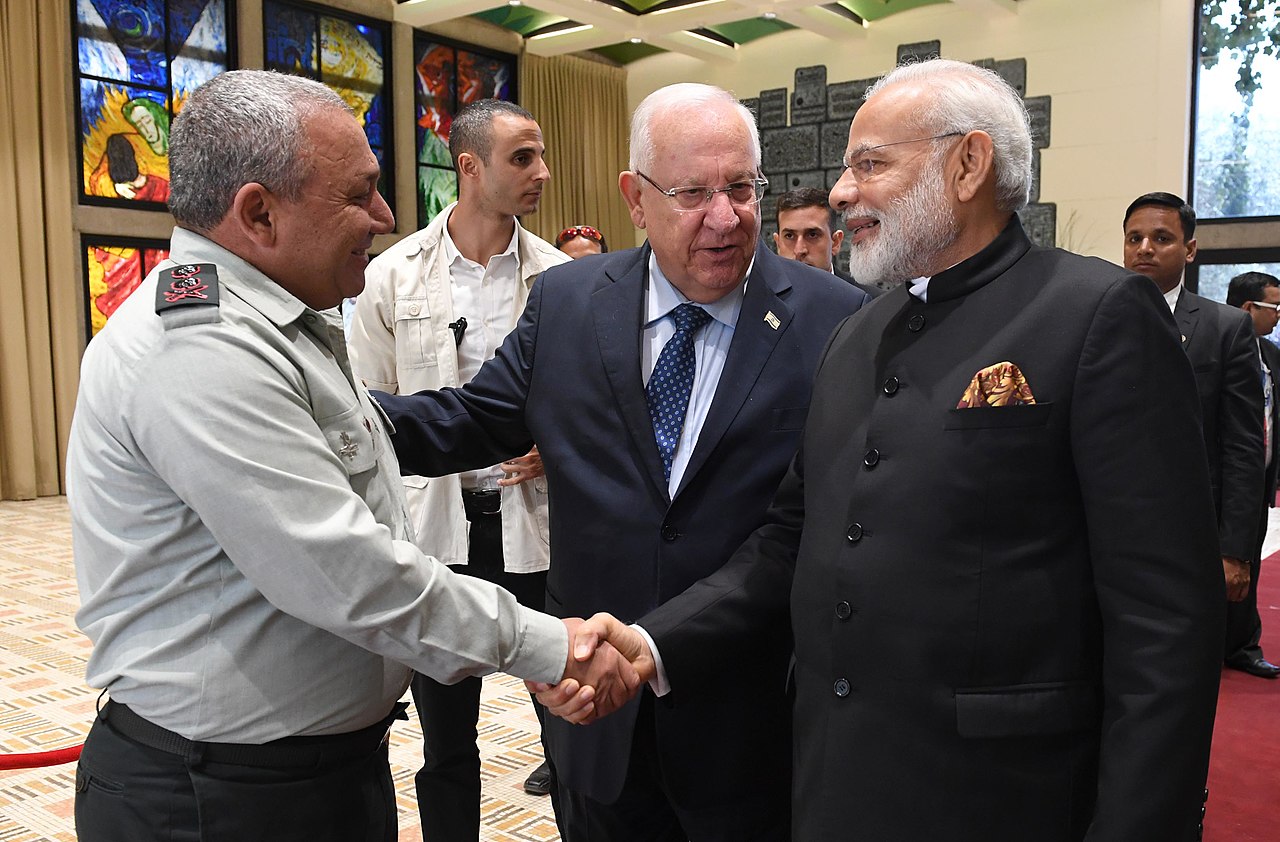
Start by reducing the rank of the Chief of the Defence Staff from four stars (admiral or general) to three stars, vice admiral or lieutenant general. We only have something like 65,000 regular force military members and 25,000 reserve force members. In about 1960 the Canadian Army, alone, had nearly 50,000 regular force members and something like 30,000 in the militia (reserve army) and it was commanded by one lieutenant general. Now, some will argue that times have changed and increased complexity means that higher ranks are needed. I call bullsh!t! The Israeli Defence Forces, today, has over 175,000 full time members and over 400,000 in reserve. Gadi Eizenkot, the Chief of Staff of the IDF holds the rank of Rav Aluf ~ lieutenant general, and he is the only Israeli officer to hold that high a rank. Now, let’s play a little mind game … suppose you are (four star) General Joseph Dunford of the United States Marine Corps, the Chairman of the Joint Chiefs of Staff, the most senior officer in the world’s most powerful military; now suppose, also, that your phone is ringing off the hook for some reason and your aide calls in on the intercom and says, “I have (four star) General Vance of Canada on line 1 and (three star) Rav Aluf Eizenkotof Israel on line 2, sir.” Which line does General Dunford pick up? Of course he isn’t impressed by Canadian General Jonathan Vance’s four stars; but he is mightily impressed by the size and power of the force that answers to three star Lieutenant General Eizenkot.

The argument that we need a four star CDS just because everyone else has one is specious … it’s rubbish. The Americans have several four star admirals and generals, they also have over 1¼ million active duty military personnel and 10 aircraft carriers and over 4,000 nuclear weapons. India has has a few four star officers, the Indian Army, with over 1 million regular, professional troops and with almost 1 million reserve soldiers, has one, only one, four star general. Canada does not need any four star officers on a regular basis … our lieutenant generals, vice admirals, rear admirals and so on, including Navy captains and Army colonels may all need generous pay raises but they do not need more gold on their shoulders and sleeves. Canada got its first four star officer back during World War II, when we had over 1 million men and women under arms. The rank returned in 1951, after our main allies, America (in 1947) and Britain (in 1939) established unified Chiefs of Staff committees to coordinate joint operations, when General Charles Foulkes was appointed to the post, which he would hold for almost a decade. Lowering the rank to three stars (vice admiral or lieutenant general) and raising the pay, would set a good example for the rest of the military and, indeed for all of government, in setting senior executive compensation, including perquisites, and status at reasonable levels.

Another thing, which I have mentioned before, is that back in the 1960s, when Defence Minister Paul Hellyer was upsetting every apple cart he and his team decided that the best way to set ranks and pay was to “benchmark” some military jobs with civil service equivalents. Now, in the civil service the appointment of “director” is, usually, the lowest level of executive ~ it is the point where technical expertise meets up with broader government wide responsibility and accountability, ‘ranks’ below that are specialists, ranks above it are, increasingly generalists. Now, anyone who knows much of anything about the military will agree that the first executive level in the Canadian Armed Forces is the captain of a major warship (a frigate, say) or the commanding officer of an Army regiment or battalion or of an Air Force squadron. Those ships and units are commanded by officers in the rank of commander or lieutenant colonel but for some reason, in the mid 1960s, the Hellyer team decided, probably just an error made in haste, that Navy captain and Army colonel and RCAF group captain were the appropriate ranks for directors and some very serious rank inflation was embedded inside the Canadian Armed Forces’ command and control (C²) superstructure … it’s an easy enough problem to fix although it will cause some short term disruption, and it means that the officers’ pay scales probably need to be reformed all the way down to the very bottom.

It has always seemed to me that the hallmark of a great army, of a great defence staff, especially, is a culture of excellence. The ranks of the staff don’t matter much, the staff act of behalf and in the name of the commander they serve. In fact, in a really good staff system the chain of command is always crystal clear because the senior staff are always, without fail, lower in rank (occasionally equal to) than the subordinate commanders. Thus, in an army corps (three or four divisions, perhaps 100,000 soldiers) the corps commander is a lieutenant general (three stars) and the subordinate commanders of divisions and of the corps artillery, are major generals (two star officers); in a proper corps the chiefs of staff of the operations and logistics branches, who control operations on behalf of the corps commander, are one star officers ~ brigadier generals. Ditto in the division (20,000+ soldiers) where the major general is the division commander and brigadier generals are the brigade commanders, the two chiefs of staff (operations, which includes intelligence, and logistics, which includes administration and personnel) are colonels … in each case the subordinate commanders outrank the senior staff officers. But the senior staff are listened to with great regard because they are excellent at their job and because they speak for the superior commander.

August 31, 2018

The American First Army Gears Up – Germany Retreats I THE GREAT WAR – Week 214

Filed under: Britain, France, Germany, History, Military, USA, WW1 — Tags: , , , — Nicholas @ 04:00

The Great War
Published on 30 Aug 2018

As the German Army withdraws along the Western Front, the Entente prepares for ever more offensives. This includes the newly founded American First Army which will have the task to attack the Germans in the Meuse-Argonnes area.

August 26, 2018

Australia’s most recent (as of Saturday) spill

Filed under: Australia, Politics — Tags: , , — Nicholas @ 05:00

Mark Steyn on the rather different and abrupt Australian method of defenestrating the sitting Prime Minister:

If you saw me on stage for our live show from the Manning Conference in Ottawa last year, you’ll know I was doing a lot of Canadian sesquicentennial gags that day: “It’s a hundred and fifty years since the Tory leadership race began…” and so forth. That was a very slight exaggeration, but it is a fact that the post-Harper Conservative Party decided to have a multi-year campaign to succeed him. In Australia, by contrast, a leadership race in the (supposedly) right-of-center Liberal Party lasts 150 seconds, if you’re lucky. They’re called “spills”, which is not a reference to the blood on the floor but is an Aussie coinage of at least three quarters of a century’s vintage for a suddenly called election: Like many of the Lucky Country’s contributions to the language, it’s very good, conveying the sense not of an ordered poll but of something more spasmodic, capricious and convulsive.

Don’t ask me why the two senior dominions of the Westminster system wound up with diametrically opposed systems of selecting their leaders.

New Australian Prime Minister Scott Morrison (photo from January 2014).
Via Wikimedia Commons.

Their chums in the UK Tories have much calmer contests in which all the alternative candidates self-destruct leaving Theresa May to inherit by default. The former Foreign Secretary, William Hague, has just said he doesn’t think increasing the party membership (I believe there are still seven nonagenarian paying subscribers) is the answer because a lot of beastly UKIP types might sign up and there goes the neighborhood. Given the results of these various contests, you might as well shuffle the winners and systems randomly between the three countries and see if you could do any worse.

At any rate, on Friday the latest Canberra spillage broke out and kiboshed the PM, Malcolm Turnbull. Unlike the American three-month “peaceful transfer of power”, under which the Deep State has all the time in the world to set up its plans to subvert the incoming leader, in the Australian system the new bloke has twenty minutes to freshen up in the men’s room before he’s sworn in […]

Malcolm Turnbull is Australia’s most famous republican, so he’ll appreciate Oliver Cromwell’s famous words to the Rump Parliament in 1653:

    You have sat too long for any good you have been doing lately. Depart, I say; and let us have done with you. In the name of God, go!

It’s remarkable how long it took Turnbull’s Rump to say as much to him. I wrote yesterday that, just as Tony Abbott had been toppled by Malcolm Turnbull, so Turnbull has now been toppled by Scott Morrison. And immediately a gazillion antipodean members of The Mark Steyn Club wrote to explain that no, no, Turnbull was toppled by Peter Dutton, the conservative who moved against him, but, before he could ascend the drive-thru throne, Dutton was himself toppled by Morrison, who was a so-called compromise candidate put up by frantic Turnbullites as they were being fitted for their lamppost ropes. So, if you’ll forgive the analogy, if Turnbull is Mrs Thatcher, Scott Morrison is the John Major put up to ward off Peter Dutton’s Michael Heseltine. My old pal Julie Bishop, meanwhile, after years of serving as loyal deputy to Malcolm Turnbull, Tony Abbott, Malcolm Turnbull (first time round), Brendan Nelson, Andrew Peacock, Malcolm Fraser, Sir William McMahon, Harold Holt, Sir Robert Menzies, etc, etc, finally ran for the leadership herself, and came a poor third: She had become the Black Widow of the Liberal Party – she mates, she kills – but this time it all went awry and she shot the venom into her own leg. It’s hard to remember that in some polls of 2015, when she agreed to support Turnbull’s overthrow of Abbott, she was more popular than either man. A mere three years on from what was supposed to be a swift cleansing knife in the back, the entire party is gangrenous and pustulating.

The Wolseley Expedition and the making of Canada

Filed under: Cancon, History, Military — Tags: , , , , — Nicholas @ 02:00

The History Guy: History Deserves to Be Remembered
Published on 2 May 2018

In the early days of the Canadian confederation, one of the greatest officers of the British Victorian Army takes 1000 soldiers on an impossible march through the wilderness that helps to define modern Canada.

All events are described for educational purposes and are presented in historical context.

Patreon: https://www.patreon.com/TheHistoryGuy

The History Guy: History Deserves to be Remembered is the place to find short snippets of forgotten history from five to fifteen minutes long. If you like history too, this is the channel for you.

August 25, 2018

Why was Italy so Ineffective in WWII? | Animated History

Filed under: Economics, Europe, History, Italy, Military, Technology, WW2 — Tags: , , , , , — Nicholas @ 02:00

The Armchair Historian
Published on 27 Jul 2018

Potential History’s Video: https://youtu.be/QB2GINNs3Aw

Our Patreon: https://www.patreon.com/armchairhistory

Our Twitter: https://twitter.com/ArmchairHist

Sources:
The Rise and Fall of the Third Reich, William L. Shirer
Fascist Italy’s Military Struggles from Africa and Western Europe to the Mediterranean and Soviet Union 1935-45, Frank Joseph
Hitler’s Italian Allies: Royal Armed Forces, Fascist Regime, and the War of 1940-1943, MacGregor Knox

August 21, 2018

Creating An American Army – John J. Pershing I WHO DID WHAT IN WW1?

Filed under: Europe, History, Military, USA, WW1 — Tags: , , — Nicholas @ 04:00

The Great War
Published on 20 Aug 2018

Check Out Desert Operations: https://desertoperations.gamigo.com/

John Pershing already had a long career in in the US forces when World War 1 broke out. When 1917 came around he was tasked with the monumental challenge of creating and expanding the American Expeditionary Forces and send them over to Europe.

« Newer PostsOlder Posts »

Powered by WordPress