Quotulatiousness

July 23, 2010

The fully networked infantry comes a step closer

Filed under: Britain, Military, Technology — Tags: , , , — Nicholas @ 08:57

Strategy Page reports on the US Army’s Rifleman Radio project:

The U.S. Army recently conducted a successful field test of their new Rifleman Radio (RR), a 1.1 kg/2.5 pound voice/data radio for individual infantrymen. By itself, the two watt RR has a range of up to five kilometers. But it can also automatically form a mesh network, where all RRs within range of each other can pass on voice or data information. During the field tests, this was done to a range of up to 50 kilometers. The RR can also make use of an aerostat, UAV or aircraft overhead carrying a RR to act as a communications booster (to other RRs or other networks.) The mesh network enables troops to sometimes eliminate carrying a longer range (and heavier) platoon radio for the platoon leader.

The RR has just gone into production, for use as basic communications for individual troops. But in the next 5-10 years, the mesh and data (pictures, maps, at about ten times the speed of dial up Internet) capability will be phased in. During the recent field test, company commanders were able to take a video feed from a UAV, extract a single frame (basically showing where the enemy was), and transmitting this to troops using RRs.

Somewhat surprisingly, the British were pioneering this kind of kit for the troops in Afghanistan in 2002:

Six years ago, the marines bought a thousand Personal Role Radios (PRR) used by British troops since early 2002. These first saw combat use in Afghanistan later that year. The $670 radio set allows infantry to communicate with each other up to 500 meters (or three floors inside a building). The earpiece and microphone are built to fit comfortably into the combat helmet. The radio set itself, about the size and weight of a portable cassette player, hangs off the webbing gear on the chest. Two AA batteries power the radio for 24 hours. The users have 16 channels to choose from and a form of frequency hopping is used to make it very difficult to listen in on transmissions. A small, wireless, “talk” button is affixed to the soldiers weapon so that operation of the radio is hands free. The British have since adopted an improved, and more expensive, version.

Being able to communicate directly with fellow troops in combat is a huge advantage, but the weight and relative delicate nature of earlier radios meant that only platoon leaders and above were routinely provided with radios in the field (usually carried by someone else, not the commander himself).

January 24, 2010

Canadian infantry to get new personal equipment

Filed under: Cancon, Military, Technology — Tags: , , — Nicholas @ 13:25

Strategy Page reports that the Canadian Forces will be introducing new equipment for infantry soldiers next year:

Canada is joining its NATO allies in providing its infantry with new basic equipment, including electronic gear that, until quite recently, no one saw the troops getting for a decade or more. The Canadian gear set is called ISSP (Integrated Soldier System Project). The first components of ISSP will be issued next year. ISSP contains the usual elements of improved infantry gear. New uniforms, that incorporate improvements the troops have been demanding for years, plus new helmets and protective vests, that are lighter and provide improved shielding from bullets and fragments. New communications gear gives each soldier a link with everyone in his unit, while individual GPS is something troops have already provided for themselves. As other armies have discovered, the troops have already bought a lot of the new gear that is now proposed for the new standard issue.

A lot of this new stuff is commercial, with the military taking the best and most appropriate gear designed for outdoor living. This is particularly true of stuff marketed to the demanding mountain climbing and winter sports enthusiasts. Canada isn’t plunging into unknown territory here. The U.S., France, Germany and most other major NATO countries have already gone this route, and left a lot of practical experience in their wake. Thus the major goal is to get all the most useful gear, and reduce the weight of stuff the infantry have to carry into combat. It’s much easier to find new gear that works better, than it is to find stuff that’s lighter, and still gets the job done.

This is very good news, although there’s always a trade-off between “useful stuff to have” and “weight to be carried”. Modern computer gear is far lighter than it used to be, except for batteries, but there’s always the temptation on the part of the planners to add “just one more” neat bit of kit to the burden already being humped across the field by the infantry.

There’s also the challenge of making the technology both useful and as non-distracting as possible. As Robert Heinlein wrote back in the late 1950’s, “If you load a mudfoot down with a lot of gadgets he has to watch somebody a lot more simply equipped — say with a stone axe — will sneak up and bash his head in while he is trying to read a Vernier.”

October 20, 2009

The infantryman’s dilemma: trading carry weight for capability

Filed under: Military — Tags: , , — Nicholas @ 17:00

The US army belatedly listens to the complaints from the field about the excess weight infantry troops have to carry when dismounted from their vehicles:

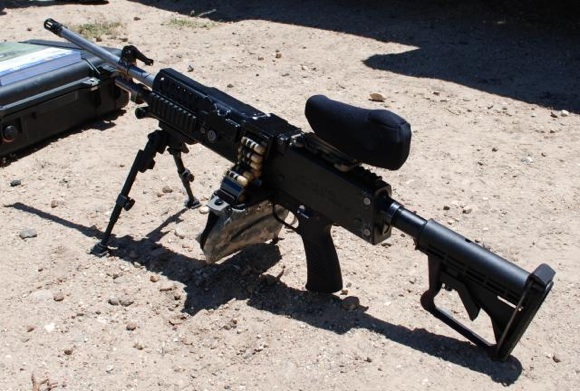
In an effort to lessen the weight infantry have to carry in Afghanistan, several hundred commando style Mk 48 7.62mm machine-guns are being sent. These are nine pounds lighter that then standard, 27.6 pound, M240 machine-guns they will replace. SOCOM (Special Operations Command) has been using the Mk 48 for eight years now. SOCOM troops need the light weight for commando operations. But that light weight comes at the expense of durability. The lighter components don’t last as long. For example, the M240 bolt and receiver are both good for 100,000 rounds fired. But on the Mk 48, the bolt has to be replaced after 15,000 rounds and the receiver after 50,000. This was not a problem with the commandos, who made sure they had plenty of spares available, and kept track of the (approximate) number of rounds fired. Not so hard to do, you just have to pay attention.

The nine pound savings with the Mk 48 makes all the difference when it comes to carrying a 7.62mm machine-gun with you. The M240 is so heavy, that troops rarely take them away from the vehicles they are usually mounted on. But the Mk 48 is less heavy enough to justify hauling with you up those Afghan hills.

« Newer Posts

Powered by WordPress