
World War Two
Published 16 Oct 2022The German Nazis and their helpers are facing increasing resistance, this week in Rome from the Vatican, and at the Sobibor extermination camp from their victims.
(more…)
October 18, 2022
CENSORED: The Great Escape from Death Camp Sobibor – October 16, 1943 – WAH 082
Comments Off on CENSORED: The Great Escape from Death Camp Sobibor – October 16, 1943 – WAH 082
October 13, 2022
The Nazis’ Justification for the Genocide – October 9, 1943 – WAH 081
World War Two
Published 12 Oct 2022This week the Nazis go on the record about their genocide of the Jews. Meanwhile the Jews in Denmark are coming closer to safety, and the Roman Jews are again at peril.
(more…)
Comments Off on The Nazis’ Justification for the Genocide – October 9, 1943 – WAH 081
October 4, 2022
Sweden: The Jews’ Salvation? – WAH 080 – October 2, 1943
World War Two
Published 2 Oct 2022As the Allies advance in southern Italy, the people of Naples join them in fighting the Wehrmacht. In Denmark, the biggest rescue operation of Jews thus far begins.
(more…)
Comments Off on Sweden: The Jews’ Salvation? – WAH 080 – October 2, 1943
October 3, 2022
Nazis Go Fascist Hunting – WAH 079 – September 25, 1943
World War Two
Published 2 Oct 2022The Wehrmacht continues Operation Axis and its slaughter of Italian soldiers. In Western Europe, the situation of the Jews becomes increasingly precarious, especially so in Denmark.
(more…)
Comments Off on Nazis Go Fascist Hunting – WAH 079 – September 25, 1943
September 20, 2022
Hannah Arendt in postwar Germany
In Quillette, Roger Berkowitz discusses what Hannah Arendt found when talking to Germans after the Second World War, which she characterized as their collective “escape from reality”:
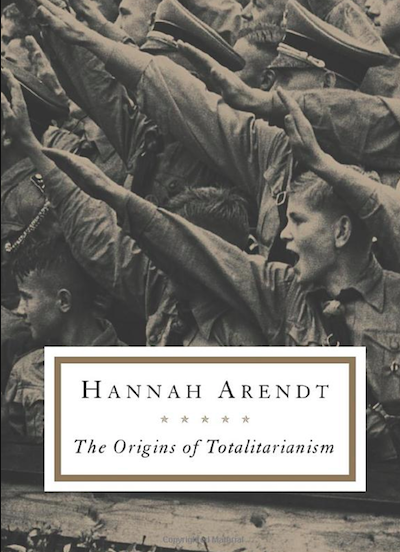
In 1949, when Hannah Arendt (1906–1975) went to Germany as part of the New York-based Jewish Cultural Reconstruction Commission, she was struck by the way the Germans showed an “at times vicious refusal to face and come to terms with what really happened”. This “escape from reality”, as Arendt named it, meant that the reality of the Holocaust and the death factories was spoken of as a hypothetical. And when the truth of the Holocaust was admitted, it was diminished: “The Germans did only what others are capable of doing”.
The Germans, at times, simply denied the facts of what had happened. One woman told Arendt that the “Russians had begun the war with an attack on Danzig”. What Arendt encountered was a “kind of gentleman’s agreement by which everyone has a right to his ignorance under the pretext that everyone has a right to his opinion”. The underlying assumption for such a right is the “tacit assumption that opinions really do not matter”. Opinions are just that, mere opinions. And facts, once they are reduced to opinions, also don’t matter. Taken together, this led to a “flight from reality”.
The focus of Arendt’s lifelong engagement with the human flight from reality was her encounter with ideologies, specifically Nazism and Bolshevism. In The Origins of Totalitarianism and other texts (especially her essay, “On the Nature of Totalitarianism“), Arendt defines an ideology as a system that seeks to explain “all the mysteries of life and the world” according to one idea. Nazism is an ideology that blames economic disaster, political loss, and the evils of modernity on the Jews — inhuman flotsam who must be exterminated to allow a master race to flourish. Bolshevism, on the other hand, “pretends that all history is a struggle of classes, that the proletariat is bound by eternal laws to win this struggle, that a classless society will then come about, and that the state, finally, will wither away”. The bourgeoisie are not simply class traitors, they are a dying class, and killing them only supports a law of history. As ideologies, both Nazism and Bolshevism insist on explaining the events of the world according to theories “without further concurrence with actual experience”. The result, Arendt argues, is that such ideologies bring about an “arrogant emancipation from reality”.
Because an ideology “looks upon all factuality as fabricated”, it “no longer knows any reliable criterion for distinguishing truth from falsehood”. As reality recedes, ideologies organize society to transform their ideas into living reality. If antisemitism as an ideology says that all Jews are beggars without passports, the fact of wealthy and established Jews must be eliminated. If Bolshevism says that the bourgeoisie are corrupt, they must admit their corruption or be killed. The realization of such ideological realities can be accomplished, of course, through terror.
But even before a totalitarian movement takes power and mobilizes the secret police in the machinery of terror, ideological movements can employ propaganda to deny and nullify facts, or change them. The Nazis, she writes, “did not so much believe in the truth of racism as desire to change the world into a race reality”. Similarly, the Bolshevist ideology that classes were dying was not something real, but something that had to be made real. The purges and terror that Stalin unleashed were supposed to “establish a classless society” by exterminating all social groups that might develop into classes. In both instances, the purpose of the ideology was to transform a mere opinion — race consciousness or class consciousness — into the “the lived content of reality”.
The point, as Arendt concludes, is that “ideological consistency reducing everything to one all-dominating factor is always in conflict with the inconsistency of the world, on the one hand, and the unpredictability of human actions, on the other”. What ideology demands is that man — an unpredictable and spontaneous being — cease to exist as such, that all humans be subjected to laws of development that follow ideological truth. That is why the turn from an unreliable reality to coherent fantasy requires an absolute elimination of human spontaneity and freedom.
Comments Off on Hannah Arendt in postwar Germany
September 19, 2022
Albania – Hitler’s Latest Ally? – WAH 078 – September 18, 1943
World War Two
Published 18 Sep 2022The German Nazi Genocide of the Jews surpasses four million deaths, while the Soviet Union and US step up oppression against some their own citizens.
(more…)
Comments Off on Albania – Hitler’s Latest Ally? – WAH 078 – September 18, 1943
September 15, 2022
Italy Switches Sides in World War Two – WAH 077 – September 11, 1943
World War Two
Published 14 Sep 2022When Italy leaves WW2, The Nazi German Reich immediately begins occupying the country, and the occupied nations it has held until now.
(more…)
Comments Off on Italy Switches Sides in World War Two – WAH 077 – September 11, 1943
September 13, 2022
The Greatest Escapes of World War Two – WW2 Special
World War Two
Published 12 Sep 2022This is an intimate story inspired by real events (notably inspired by the story of a member of the Danish resistance and grandmother of Hans von Knut Skovfoged, Head of Development at PortaPlay. A story told not on the front line, but in the intimate setting of a small Danish village.
(more…)
Comments Off on The Greatest Escapes of World War Two – WW2 Special
September 10, 2022
QotD: “Working toward the Führer“
Sir Ian Kershaw was broadly right about how the Third Reich operated. He says Nazi functionaries were “working towards the Führer“. In other words, the Führer — the idealized, mythologized leader, not Adolf Hitler the individual — made it known that “National Socialism stands for X“. Hitler was famously averse to giving direct orders, so that’s often the only thing big, important parts of the government had to work from — the Führer‘s* pronouncement that “National Socialism means X“. It was up to them to put it into practice as best they could.
This had several big advantages. First, it’s in line with Nazi philosophy. The Nazis were Social Darwinists. Social Darwinists hold that “survival of the fittest” applies not only to humans as a whole, but to human social groups as well. Any given organization, then, must exist to do something, to advance some cause, to reach some goal. Ruthless competition between groups, and inside each group, is how the goal works itself out (you should be hearing echoes of Hegel here). The struggle refines and clarifies what the group’s goal is, even as the individual group members compete to reach it. The end result gets forced back up the system to the Führer, such that, dialectically (again, Hegel), “National Socialism means X” now encompasses the result of the previous struggle.
[…]
As with philosophy, “working towards the Führer” fit well with German military culture. Auftragstaktik is a fun word that means “mission-type tactics.” In practice, it delegates authority to the lowest possible level. Each subordinate commander is given an objective, a force, and a due date. High command doesn’t care how the objective gets taken; it only cares that the objective gets taken. Done right, it’s a wonderfully efficient system. It’s the reason the Wehrmacht could keep fighting for so long, and so well, despite being overpowered in every conceivable way by the Allies. The Allies, too, were constantly flabbergasted by their opponents’ low rank — corporals and sergeants in the Wehrmacht were doing the work of an entire Allied company command staff (and often doing it better).
Consider the career of Adolf Eichmann. In the deepest, darkest part of the war, this man pretty much ran the Reich’s rail network. Say what you will about the Nazi’s plate-of-spaghetti org chart, that’s some serious power. He was a lieutenant colonel.
The final great advantage of “working towards the Führer” is “plausible deniability”. Let’s stipulate Atrocity X. Let’s further stipulate that we’re in the professional historian’s fantasy world, where every conceivable document exists, and they’re all clear and unambiguous. It’s a piece of cake to pin Atrocity X on someone … and that someone would, in all probability, be a corporal or a sergeant. Maybe a lieutenant. What you wouldn’t be able to do is trace it up the chain any higher. Everyone from the captain to Hitler himself could / would give you the “Who, me?” routine. “I didn’t tell Sergeant Schultz to execute those prisoners. All I said was to go secure that objective / defeat that army / that National Socialism means fighting with an iron will.”
*I’m deliberately conflating them here — to make it clearer how confusing this could be — but in talking about this stuff the terminology is crucial. Adolf Hitler, the man, played the role of The Führer. What Hitler the man wanted was often in line with what the Führer role required, of course, but not always. This is one of the footholds Holocaust deniers have. Did Hitler-the-man actually put his name to a liquidation order? No. Did Hitler-the-man actually want it to happen? Unquestionably yes, but like all men, Hitler-the-man vacillated, had second thoughts, doubted himself, etc., and you can find documented instances of that. But The Führer very obviously wanted it to happen, and it was The Führer that motivated the rank-and-file. The man created the role, but very soon the role started playing the man …
Severian, “Working Towards the Deep State”, Rotten Chestnuts, 2020-01-06.
Comments Off on QotD: “Working toward the Führer“
September 5, 2022
Amon Göth: The Super Nazi – WAH 076 – September 4, 1943
World War Two
Published 4 Sep 2022While the Allies give up on the first Battle of Berlin, Amon Göth goes on a murderous rampage in the Tarnow Ghetto.
(more…)
Comments Off on Amon Göth: The Super Nazi – WAH 076 – September 4, 1943
August 29, 2022
The Astonishing Nazi Underground Slave Factories – WAH 075 – August 28, 1943
World War Two
Published 28 Aug 2022While the RAF and USAAF continue to try to bomb Germany into submission, the German Nazis move their war production underground. In the process they create an underground slave camp that defies imagination.
(more…)
Comments Off on The Astonishing Nazi Underground Slave Factories – WAH 075 – August 28, 1943
August 23, 2022
Greece Burns Under Nazi Occupation – WAH 074 – August 21, 1943
World War Two
Published 21 Aug 2022The aerial bombing of Germany takes a new turn but continues to fail to bring long-term results. In occupied Greece and Poland, over a thousand children are murdered by the Nazis.
(more…)
Comments Off on Greece Burns Under Nazi Occupation – WAH 074 – August 21, 1943
August 17, 2022
Amazing Money Heist by Polish Resistance – WAH 073 – August 14, 1943
World War Two
Published 14 Aug 2022The reality of war finally seeps through to the majority of Germans, and it didn’t match up with the propaganda. Meanwhile resistance is increasing, and part of that is a classic money carriers when the Polish Home Army robs a money transport.
(more…)
Comments Off on Amazing Money Heist by Polish Resistance – WAH 073 – August 14, 1943
August 13, 2022
The Great Escape from a Death Factory – WAH – August 7, 1943
World War Two
Published 12 Aug 2022While enslavement, and mass murder continues unabated in August 1943, at the Treblinka Death Factory the forced laborers decide that enough is enough, and bring battle to the SS in a daring escape attempt.
Huge thanks to Purple Purple, Steven Yarnell, Pieter Kleij and Ruben Alikhanyan for their support during the episode premiere.
(more…)
Comments Off on The Great Escape from a Death Factory – WAH – August 7, 1943
August 1, 2022
Hamburg’s Citizens Burnt Alive – WAH 071 – July 31, 1943
World War Two
Published 31 Jul 2022In Italy the Fascists fall from power in a peaceful coup, while in Germany the RAF and USAAF bring down a rain of fire of biblical proportions in Operation Gomorrah, launching the Firestorm of Hamburg.
(more…)
Comments Off on Hamburg’s Citizens Burnt Alive – WAH 071 – July 31, 1943


